U.S. rail volumes continue to drop
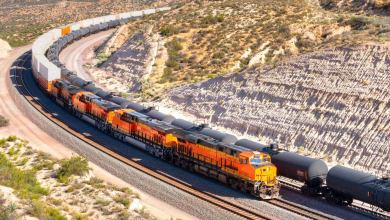
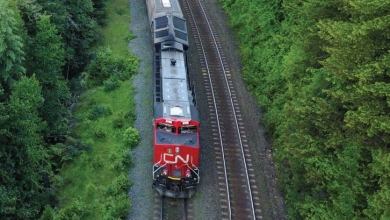
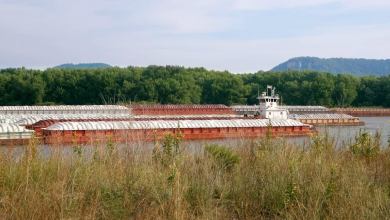
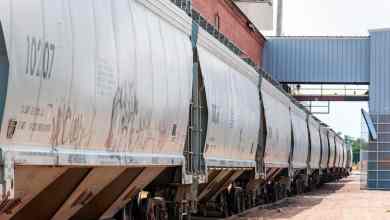
Year-to-date U.S. rail volumes fell again amid a loosening truck market, receding floodwaters in the Midwest and overall economic uncertainty.
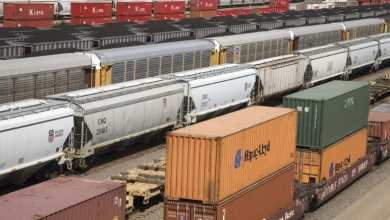
Railroads continue to play a significant role in North America’s economic infrastructure. According to the U.S. Department of Transportation Federal Railroad Administration, the U.S. rail freight network covers almost 140,000 route miles and is generally considered the largest, safest, and most cost-efficient freight system in the world. In addition, says the FRA, the almost $80 billion rail freight industry creates more than 167,000 jobs across the country.
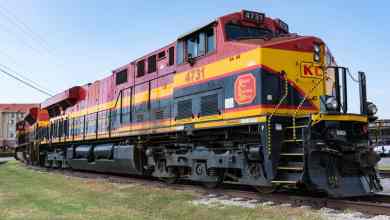
In essence, rail freight companies charge businesses to carry cargo across their network of rails. Their rates are overseen by the Surface Transportation Board, a federal agency that regulates financial aspects of surface transportation. Major railroads in North America include Union Pacific Railroad, BNSF Railway, CSX, Norfolk Southern, Canadian Pacific Kansas City and Canadian National Railway.
Keep up with the latest news, trends and reports concerning rail freight transport here!
Year-to-date U.S. rail volumes fell again amid a loosening truck market, receding floodwaters in the Midwest and overall economic uncertainty.
Intermodal giant sees rail and truck as better than option than truckload into
An additional $300 billion in proposed U.S. tariffs against China could result in lower railroad freight volume , but economic uncertainty and competition from trucks appear so far to be bigger threats for rail volumes.
Amendment would hinder LNG export plans by New Fortress Energy
UPS is hosting workshops to help women-owned small businesses gain access to global export markets.
Market expert Jim Blaze writes about the railroads’ transportation of fracking sand, as well as stone and gravel, aggregates and phosphates.
Should the Class I railroads see U.S. rail volumes sustainably increase, furloughed workers could be called back to meet network capacity needs, resulting in a bump up of headcount levels. But another factor that could affect headcount levels in the long-term is the deployment of automation technologies.
There are an enormous number of price relationships that will ultimately determine the supply and demand of fuels compliant with IMO2020.
The implementation of precision scheduled railroading has contributed to dwindling morale and could result in creating unsafe working conditions should the federal government withhold intervention, according to union witnesses at a June 20th Congressional hearing on rail safety.
The Trump administration is considering levying tariffs on the remaining $300 billion of Chinese exports to the United States so far unaffected by duties. Freight Intel, FreightWaves’ proprietary research group, has just published a study warning that such a move would disrupt trade flows far beyond what has occurred so far. Freight Intel Group research […]
Mexico became the first country to ratify the United States-Mexico-Canada Agreement (USMCA) when its Senate approved it by a vote of 114 in favor to 4 against on June 19. Mexican President Andres Manuel Lopez Obrador described the ratification as “very good news.” “We celebrate the approval in the Senate of the [USMCA], to maintain […]
Autonomous trains might be fully running in remote Australia, but it will take awhile before those kinds of trains will be rolling down the North American countryside.
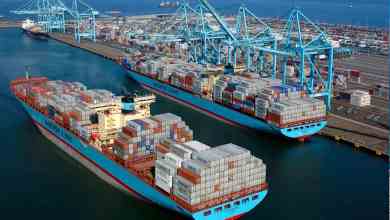
The Port Authority of New York and New Jersey said this week that it is ready to be the second largest port in the U.S., thanks to the completion of the ExpressRail Port Jersey facility at the GCT Bayonne marine terminal. The Port Authority said in a none-too-subtle way that it “bolstered its already lofty […]
The FreightWaves Freight Intel Group is producing research culled from FreightWaves SONAR and other sources. Read about its first several research papers and how to learn more.
U.S. rail volumes trended downward again for the week ending June 15, with weekly volumes falling over 5 percent and year-to-date volumes declining nearly 3 percent, according to the latest data from the Association of American Railroads.
Historic flooding in the Midwest and poor demand from electric utilities are stranding coal hoppers west of the Mississippi, pushing up prices for storing railcars. The American Association of Railroads said last week that weekly coal volumes were down 16 percent from a year earlier to 71,526. The week prior number of 70,737 railcars marked […]
The US logistics industry is making strides in overcoming macro volatility by a focus on IT improvements and shipper-carrier relationships
North Dakota’s lawmakers are fighting Washington state’s new crude-by-rail law, saying it could curtail shipments of state-produced Bakken crude oil.
Market expert Jim Blaze writes about the movement of coal by rail. He explores the history of rail-coal; more importantly, he writes about what the future may hold for coal in the U.S. and how that will impact the railroads.
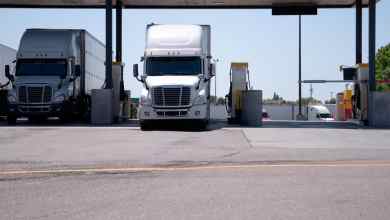
Trans-border freight totaled $107.2 billion in March, with trucks moving 63 percent of all freight by value with United States trading partners Canada and Mexico, according to data released by the U.S. Department of Transportation’s Bureau of Transportation Statistics (BTS). Trucks carried $67.4 billion of United States freight in March 2019, compared to $66.5 billion […]