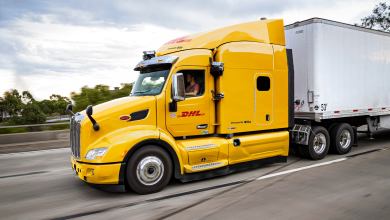
How carriers can keep their fleets running into 2022
After a couple of oddball years, shippers and carriers alike are anxious to see how the market rebalances — or doesn’t — after the new year.


Full customs formalities will be required on goods moving into the U.K. from the EU after the new year. If you’re not prepared, expect congestion, delays and learning curves.
Relying on a single data source to predict pricing is risky in the best of times. Right now, brokers and shippers are already facing high — and highly variable — rates. A lack of true insight in the mix only makes the situation more chaotic.
Reliance Partners’ Brian Runnels reacts to Central Freight’s closure and shares his thoughts on the drivers’ next steps on FreightWaves’ WHAT THE TRUCK?!?.
CCO Sean Burke shares results from Echo’s recent survey on shipper sentiment for the RFP season.
The COVID-19 response, labor shortages and strained capacity will continue into the New Year, but there is hope. Jim Monkmeyer, President of Transportation & LLP, DHL Supply Chain, shares some advice on how to retain talent, where to invest and how to stay positive during this unprecedented time.
It’s these kinds of advances that will push the industry toward complete visibility and decarbonization.
A strong freight market and manufacturer backlogs have ignited demand for leased equipment from fleets far surpassing supply. This extraordinary demand could continue to outstrip supply well into 2022.
It’s important for LSPs, cargo owners, warehouse operators and other stakeholders in the supply chain to understand their insurance programs, contractual agreements and best practices to properly protect their businesses.
The white paper tests a hypothesis that shippers struggle to move beyond green initiatives that coincide with what is also financially beneficial.
Some of the larger TMS providers cost four times what EKA charges and without as many features.
AV manufacturers are quickly building evidence to prove the safety of autonomous driving technology.
At a high level, there are four restrictions: Don’t take our secrets, don’t take our employees, don’t take our customers, and don’t work in this industry at all.
You’re only as strong as your weakest link. Don’t let back-office issues bring down the rest of your supply chain.
The trucking industry is in need of new talent. But don’t expect sign-on bonuses to attract drivers in it for the long haul.
During an initial trial of Convoy’s technology, CHEP was able to reduce empty miles by 50%.
“You’ve got to have your own technology to get your own data and control your destiny,” said Jim Best.
Digital RFPs allow shippers to award bids faster and perform far less manual labor, bolstering their bottom lines and allowing them to repeat the RFP process more often.
We are expecting seasonal slowdowns and a lower sense of shipper urgency following the holidays to allow easing rate pressures, however, capacity constraints are expected to remain in place.
Efficiency is the key to keeping costs low and customer satisfaction high. This becomes more and more relevant as consumer expectations shift and strengthen in light of the coronavirus pandemic.