





Alan Adler
Thursday, September 26, 2019
Used truck prices drop for first time since January 2018
Used truck sales continue to fall but for the first time since January 2018, so are the prices asked for them.
Used truck sales continue to fall but for the first time since January 2018, so are the prices asked for them.

Lyft wants to be a one-stop-shop for all urban transit options, which might turn Google Maps into more of a competitor than Uber.

Amazon.com recently acquired cloud-based startup INLT, a move designed to simplify importing goods into the United States for Amazon’s online merchants, according to Reuters. INLT, which the company said stands for IN:LET, makes software for merchants to manage the costs of customs clearance on cross-border shipments. Terms of the acquisition, which was announced Sept. 24, were not […]

Change could reduce congestion caused by accidents and inferior road design.

The Federal Maritime Commission approves the ocean container carrier organization’s petition to eliminate publication of essential terms but retains the requirement to file the actual service contracts.

Allcargo Logistics is in talks to acquire Indian express logistics firm Gati to increase its share of the Indian warehousing market.

Universal Logistics reported that it has agreed to a $36 million settlement for an accident that involved a “marginal driver.”
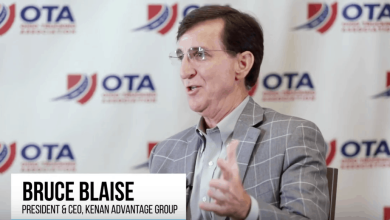
Kenan Advantage CEO and president focuses on driver retention and safety in keeping his fleet running smoothly.

Perception may not be reality, according to the American Transportation Research Institute, which says “discrimation” is the wrong word to use.

Fatigue symptoms can be gathered by measuring the brain waves of truckers, which can be used to sound early warnings before drivers show visible signs of fatigue.

Ryder has expanded its Ryder Assist Now customer support center nationally, giving customers a single source to get all their questions answered and service issues resolved.

Carriers face prospect of hiring more company drivers should they fail the ABC test.
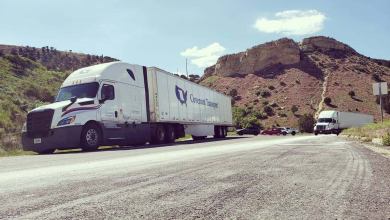
Covenant Transport has decided to end all service to the interior of Mexico, citing dropping spot market pricing, increasing detention times and an inability to gain the freight density needed to balance costs. “After five years servicing the interior of Mexico, Covenant Transport Services will, in coming months, end our Mexico service offering,” said Andy […]
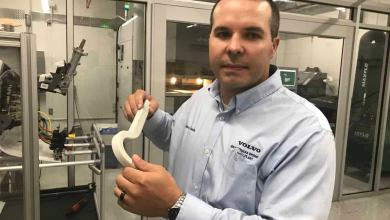
Additive manufacturing, also known as 3D printing is no longer a fad in truck making. Companies are making greater use of the technology to save time and money although the technology itself is still expensive.

Trade lanes will come to a halt if the U.K. exits the EU on October. 31, believes the Secretary-General of the European Shippers Council.

Blackstone Group forms what it calls largest last-mile logistics real estate firm in Europe, Mileway

Technology is posed to assist the LTL shipping sector and in some cases, already has.

The governor signs two bills, one accelerating clean truck technologies, the other creating a smog check program.

The new Supply Chain Hall of Fame will be located at the University of Arkansas.

Program funding has increased annually from $38 million awarded in 2013.