




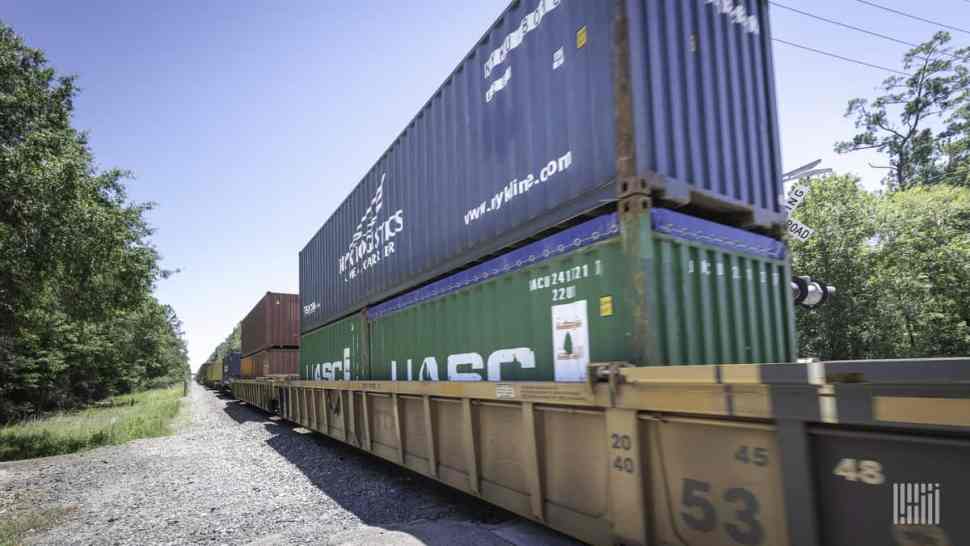
North American containerized grain shippers are feeling the effects of the tight container market and there’s no relief in sight.
“It’s very difficult to get containers to move grain,” said Greg Northey, vice president of corporate affairs for Pulse Canada. About 30% of what Canadian pulse producers export travels via containers.
Rates have gotten so high that it makes the whole supply chain uncompetitive, Northey said. Pulse producers can book a container, but they risk not having any containers available at the ports, he said.
High container rates are the result of ocean shipping companies wanting to meet demand for containerized imports, according to agricultural consultant Jay O’Neil and recent FreightWaves reports. The ocean carriers want fast turnarounds of the containers once they have reached inland U.S. and Canada, and so instead of collecting grain shipments for the trip back to the coastal ports, the ocean carriers transport empty containers back to the ports.
Indeed, Hapag-Lloyd has canceled agricultural container shipments from North America for the time being to cope with container demand, according to the Specialty Soya and Grains Alliance.
“Allowing the return of empty inland containers in the U.S. to be delayed, even for a day or two, is now very inconvenient and uneconomical. Providing containers filled with grains a week or more time to unload at Asian destinations is even more inefficient in these tight times,” O’Neil said. “So from an ocean shipping company’s perspective, backhaul grain shipments are no longer as attractive as they have been. This has obviously caused problems, and increased costs, for sellers of U.S. containerized grains.”
Meanwhile, although containerized soybeans comprise only about 5-7% of U.S. soybean exports, the perfect storm of a high-volume peak season because of warehouse backlogs and the upcoming winter holidays, coupled with the accelerated growth of e-commerce, is putting a strain on the container market — at least for shippers, according to Mike Steenhoek, executive director of the Soy Transportation Coalition.
“All these things are coming together to create this surge in container shipping and you’re seeing that reflected in rates. The ability to get a container is challenging right now,” Steenhoek said.
Soybean producers that are in close proximity to a loading facility, such as those in Chicago, might be able to get a container, but those in farther away places like Minneapolis might not, he said.
Despite the difficulties in getting containers, O’Neil said there are signs that the containerized grain market is persevering, at least for now.
“The good news, however, is that we are still seeing containerized export shipments of grains and improved interest for such from Asian buyers. The increased rates and difficult logistics have not yet stopped this type of business. But stay tuned,” O’Neil said.
Rail service for grain so far
Rail service for grain overall has been adequate this fall, according to a handful of shippers, although some concerns remain as the winter season approaches.
Despite the record movements of grain in Canada this fall, Northey said competition from other commodities for rail assets and service limited how much grain could be shipped.
“There’s a lot left on the table,” Northey said. Network flows are also still adjusting from the labor strike at the Port of Montreal in September, he said. Meanwhile, the Port of Vancouver has adequate capacity for grain volumes, but the bottlenecks into Vancouver will likely continue to be an issue.
As winter approaches, having adequate network capacity will be one concern for his group’s members, Northey said. He noted that rail service overall has been “positive” so far.
O’Neil noted that grain car values in the secondary car market reflected some tightness and temporary logistical issues in early- to mid-October, but those issues have since subsided.
“Overall rail grain car availability and logistics have been very good considering the big export program we have this year,” he said.
Meanwhile, another concern heading into winter will be how and if the COVID-19 pandemic affects staffing for train crews. Although the Class I railroads in their third-quarter earnings calls were cautiously upbeat about rail volumes in the fourth quarter and into the start of the new year, rising pandemic caseload levels are causing the railroads to monitor and ensure adequate staffing levels.
“We’re seeing a lot of cases around the network, specifically right now in the Midwest. We’ve seen some hot spots of employees that are having to go out because they’ve got the disease. And so we’re dealing with it. We’re managing the best [we can],” said CSX’s (NASDAQ: CSX) Mark Wallace at the Baird investor conference last Thursday. Wallace is CSX’s executive vice president for sales and marketing.
Subscribe to FreightWaves’ e-newsletters and get the latest insights on freight right in your inbox.
Click here for more FreightWaves articles by Joanna Marsh.
Related articles:
Containers are ‘the new gold’ amid ‘black swan’ box squeeze
Canadian railways crush October grain records amid export boom
Port of Brownsville wins grant to expand grain exports
Hapag-Lloyd: Box boom, capacity crunch may last into 2021
American exporters want end to erratic container return dates
Blank sailings threaten to sink heartland ag exports
Ag shippers want more container ‘free time’ during coronavirus outbreak
Brokerage Compliance Symposium
The day before F3. Every compliance issue you face - fraud exposure, carrier liability, FMCSA rules, cargo theft, insurance gaps - navigated by attorneys and operators defining best practices in a changing industry.
F3 Awards Dinner
The night before F3. FreightTech100 companies honored. FreightTech 25 and Shipper of Choice winners revealed live. Cocktail reception into dinner and live music - 300 industry leaders in one purpose-built room.
F3: Future of Freight Festival
Industry-defining keynotes, rapid-fire technology demos, and industry leaders networking in experiences across Chattanooga - plus the inaugural F3 Awards Dinner featuring the FreightTech and Shipper of Choice reveals.
The day before F3. Every compliance issue you face - fraud exposure, carrier liability, FMCSA rules, cargo theft, insurance gaps - navigated by attorneys and operators defining best practices in a changing industry.
The Signal at Chattanooga Choo Choo • Chattanooga, TN Register NowThe night before F3. FreightTech100 companies honored. FreightTech 25 and Shipper of Choice winners revealed live. Cocktail reception into dinner and live music - 300 industry leaders in one purpose-built room.
The Signal at Chattanooga Choo Choo • Chattanooga, TN Register NowIndustry-defining keynotes, rapid-fire technology demos, and industry leaders networking in experiences across Chattanooga - plus the inaugural F3 Awards Dinner featuring the FreightTech and Shipper of Choice reveals.
The Signal at Chattanooga Choo Choo • Chattanooga, TN Register Now