




WASHINGTON — A revamped version of a bill introduced last year that was aimed at amending federal trade laws has been streamlined into an enforcement measure that would give President Trump exclusive power to designate “prohibited” ports and terminals located in foreign countries.
The original version of the Defending American Property Abroad Act, a bipartisan bill introduced in July 2025 by Reps. August Pfluger, R-Texas, and Terri Sewell, D-Ala., sought to punish foreign governments that violate U.S. trade agreements, and in retaliation of Mexico’s efforts over the last several years to seize control of a deepwater port in Mexico owned by Vulcan Materials Co., a U.S.-based construction company.
“Under the leadership of Mexico’s previous president, Manuel Lopez Obrador, and now the current president, Claudia Sheinbaum, the Mexican government is committing a blatant theft against a major American company and, by extension, the United States itself,” commented Sen. Bill Hagerty, R-Tenn, in introducing companion legislation to the original bill last year. “No nation should be allowed to bully an American firm without consequences.”
The new version of the bill, introduced on Thursday, strips out the trade restrictions and replaces them with restrictions on foreign ports and the vessels that call on them.
Specifically, the legislation empowers the U.S. president to designate any port, harbor, or marine terminal in a Western Hemisphere country as “prohibited” if a foreign trade partner has nationalized or expropriated property owned by a U.S. citizen or corporation. The port or terminal must also be accessible through land that is owned, held, or controlled by a U.S. citizen or corporation.
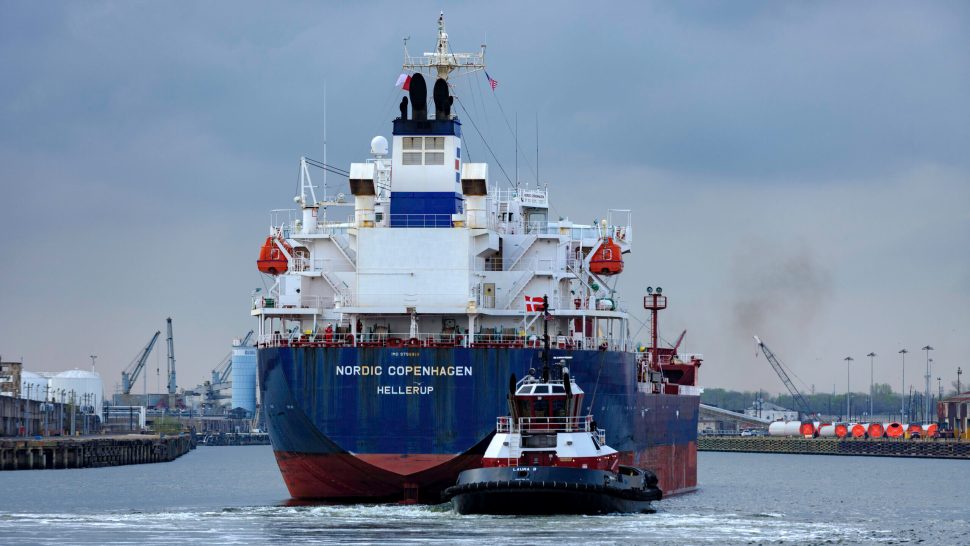
The 2026 bill emphasizes that a vessel’s transit through an expropriated terminal can trigger a total ban from U.S. waters, creating a deterrent for international carriers that was not included in the original bill.
The new language is designed to protect specific supply chains – particularly for bulk industrial materials – by identifying specialized “port infrastructure” like conveyor systems and silos as protected assets.
The legislation requires that the president lift the U.S. port entry ban and remove the designation of a port, harbor, or marine terminal if any of the following conditions are met:
- The initial conditions that led to the designation are no longer present.
- The foreign country has officially returned the property to the owner and has ended all measures that resulted in the seizure of that property’s ownership.
- The foreign country has provided “adequate and effective compensation” for the seized property.
- The underlying dispute has otherwise been resolved in a manner that is “satisfactory” to the president.
Once the designation is removed, vessels that previously transited the facility would no longer be subject to port entry restrictions, according to the legislation.
Related articles:
Brokerage Compliance Symposium
The day before F3. Every compliance issue you face - fraud exposure, carrier liability, FMCSA rules, cargo theft, insurance gaps - navigated by attorneys and operators defining best practices in a changing industry.
F3 Awards Dinner
The night before F3. FreightTech100 companies honored. FreightTech 25 and Shipper of Choice winners revealed live. Cocktail reception into dinner and live music - 300 industry leaders in one purpose-built room.
F3: Future of Freight Festival
Industry-defining keynotes, rapid-fire technology demos, and industry leaders networking in experiences across Chattanooga - plus the inaugural F3 Awards Dinner featuring the FreightTech and Shipper of Choice reveals.
The day before F3. Every compliance issue you face - fraud exposure, carrier liability, FMCSA rules, cargo theft, insurance gaps - navigated by attorneys and operators defining best practices in a changing industry.
The Signal at Chattanooga Choo Choo • Chattanooga, TN Register NowThe night before F3. FreightTech100 companies honored. FreightTech 25 and Shipper of Choice winners revealed live. Cocktail reception into dinner and live music - 300 industry leaders in one purpose-built room.
The Signal at Chattanooga Choo Choo • Chattanooga, TN Register NowIndustry-defining keynotes, rapid-fire technology demos, and industry leaders networking in experiences across Chattanooga - plus the inaugural F3 Awards Dinner featuring the FreightTech and Shipper of Choice reveals.
The Signal at Chattanooga Choo Choo • Chattanooga, TN Register Now