




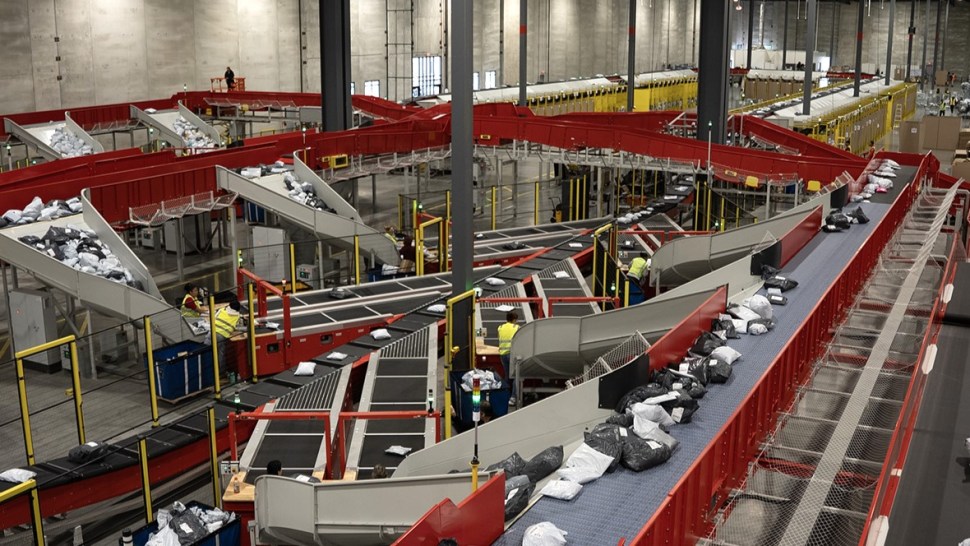
Delivery service SpeedX has opened an e-commerce superhub in Chicago capable of processing up to 500,000 shipments per day, culminating a blistering expansion for the three-year-old company this year.
The investment underscores how independent parcel carriers in the crowded delivery space are trying to build national networks and chip away at the market once dominated by FedEx and UPS.
SpeedX, which provides last-mile delivery of domestic and international parcels for retailers, marketplaces and logistics providers such as Shein, Temu, TikTok Shop and Amazon, said Wednesday that the new parcel sortation center supports faster, more efficient delivery to shoppers in the Midwest and beyond. The startup courier currently delivers about 1 million parcels per day across the United States using gig drivers with their own vehicles.
The Chicago parcel terminal has been running at full capacity for two months under a long-term lease, said Anthony Pizza, vice president for business growth and innovation, in an email. China-based Damon Technology Group installed the automated sorting system, its first parcel-system integration project in the United States, according to an October news release.
SpeedX has invested hundreds of millions of dollars to build out its U.S. footprint over 18 months. In the past 12 months it has established more than 50 new facilities. The parcel carrier’s network now covers about three-quarters of the country, with a hole in the Great Plains region. In October, it said on LinkedIn that it plans to serve more than 15,000 U.S. zip codes by the first quarter of 2026. It currently covers more than 12,000 zip codes, according to its website.
The 200,000-square foot sortation center, located minutes from Chicago O’Hare International Airport and staffed with 75 employees, can process up to 30,000 parcels per hour. It offers extra dock doors and floor space to accommodate both parcel and freight shipments. Startup costs for the Chicago facility were about $25 million, including the sortation system, rent, equipment and supporting infrastructure, Pizza said. The company is using its own cash flow and financing to pay for the capital expenditure.
“Chicago is both a prime global air gateway and one of the most important hubs for U.S. e-commerce and freight. By investing here, we’re strengthening our operational control and enhancing the efficiency of our network. This superhub is also central to our strategy of connecting SpeedX facilities nationwide through transcontinental linehaul, creating a more resilient and scalable delivery network for the future,” said Chris Zheng, founder and CEO of SpeedX, in the announcement.

U.S. e-commerce sales are expected to reach $1.3 trillion this year, up 9% from 2024, and are projected to reach nearly $3 trillion by the end of the decade, according to Statista. But the rate of growth has slowed from double digits in the previous decade, and the pandemic-fueled spike in 2020, to single digit growth.
Other low-cost parcel carriers are also rapidly building out delivery footprints. Veho, Gofo, OnTrac and UniUni have increased their sortation infrastructure and coverage areas this year. Veho, for example, expanded parcel sorting capacity by over 50% in key markets, highlighted by the opening of a 150,000-square foot sort center near Atlanta. Gofo moved into a 400,000-square foot parcel center in Newark, New Jersey, and a superhub in Los Angeles this fall.
Some market watchers question if there is enough business to go around for all the small players at a time when Amazon, Walmart and Target are also growing their own in-house delivery services.
Click here for more FreightWaves stories by Eric Kulisch.
Sign up for the biweekly PostalMag newsletter The Delivery here.
RECOMMENDED READING:
Independent parcel carriers continue network, tech investments
Veho beefs up parcel sorting capacity for peak season, future growth
Brokerage Compliance Symposium
The day before F3. Every compliance issue you face - fraud exposure, carrier liability, FMCSA rules, cargo theft, insurance gaps - navigated by attorneys and operators defining best practices in a changing industry.
F3 Awards Dinner
The night before F3. FreightTech100 companies honored. FreightTech 25 and Shipper of Choice winners revealed live. Cocktail reception into dinner and live music - 300 industry leaders in one purpose-built room.
F3: Future of Freight Festival
Industry-defining keynotes, rapid-fire technology demos, and industry leaders networking in experiences across Chattanooga - plus the inaugural F3 Awards Dinner featuring the FreightTech and Shipper of Choice reveals.
The day before F3. Every compliance issue you face - fraud exposure, carrier liability, FMCSA rules, cargo theft, insurance gaps - navigated by attorneys and operators defining best practices in a changing industry.
The Signal at Chattanooga Choo Choo • Chattanooga, TN Register NowThe night before F3. FreightTech100 companies honored. FreightTech 25 and Shipper of Choice winners revealed live. Cocktail reception into dinner and live music - 300 industry leaders in one purpose-built room.
The Signal at Chattanooga Choo Choo • Chattanooga, TN Register NowIndustry-defining keynotes, rapid-fire technology demos, and industry leaders networking in experiences across Chattanooga - plus the inaugural F3 Awards Dinner featuring the FreightTech and Shipper of Choice reveals.
The Signal at Chattanooga Choo Choo • Chattanooga, TN Register Now