Motive’s $150M War Chest Signals All-Out Assault on Fleet Tech Dominance

(The author of this article is also an independent contributor of content for Motive. The thoughts and opinions in this do not reflect the opinions of FreightWaves.)

Motive Technologies is declaring war on fragmented fleet technology. The San Francisco-based company closed a $150 million funding round this week led by Kleiner Perkins, positioning the AI-powered platform for an aggressive expansion that could reshape how fleets manage everything from driver safety to fuel cards.

The latest round, which includes participation from new investor AllianceBernstein alongside existing backers, gives the company significant firepower to accelerate the future of physical operations.

According to the company’s announcement, the funding will enable Motive to accelerate growth by further expanding AI capabilities, scaling internationally, and sustaining momentum with enterprise customers.

What started as a fleet management company a few short years ago has evolved into something approaching the “everything app” for commercial fleets. Motive now operates across five core verticals: fleet management, driver safety, equipment monitoring, spend management, and workforce management, all unified under what the company calls its AI-powered Operations Platform.

Fleets can manage AI-powered dashcams that detect everything from fatigue and distraction to smoking in cab, fuel cards with fraud protection guarantees up to $250,000, workforce management tools that track driver qualifications and training, and preventive maintenance systems, all feeding into a single analytics dashboard that promises natural language queries by year-end.

Motive’s competitive moat lies in its AI capabilities, built on data from nearly 100,000 customers and 1.3 million drivers across industries from transportation to construction. The platform captures billions of miles of driving data monthly, feeding machine learning models that the company says achieve accurate detection rates for high-severity behaviors. Recent AI innovations include Motive AI Coach, the industry’s first AI avatar delivering personalized driver coaching at scale. The system analyzes weekly driver performance across safety, fuel efficiency, and compliance metrics, then generates customized feedback through virtual coaching sessions.

The platform’s latest AI features detect driver fatigue through multiple indicators, including yawning, eye rubbing, and abnormal speed changes. Lane swerving detection and unsafe parking alerts add additional layers of safety monitoring, while fraud detection combines vehicle telematics with payment data to automatically decline suspicious fuel card transactions.

The funding comes as fleet technology markets consolidate around comprehensive platforms rather than point solutions. The competitive dynamics extend beyond traditional telematics providers. Microsoft, Google, and Amazon are all investing heavily in commercial vehicle AI, while startups like Samsara have raised billions for competing platforms. Motive’s response appears focused on depth over breadth, building superior AI models through data advantages rather than racing to new market segments.

The new capital will fund aggressive international expansion, with Motive officially launching in the UK this August. The company has already gained recognition in the region, being named one of Built In’s “7 Hardware Companies in the UK to Know” ahead of its formal market entry.

The UK expansion represents Motive’s first major European market entry and reflects growing international demand for AI-powered fleet management solutions. The company is already seeing rapid growth in Mexico, driven by rising demand for fleet safety and sustainability solutions across North America.

Enterprise customers represent Motive’s fastest-growing segment, with the platform now serving global leaders. Industry analysts note that companies are finally ready to move beyond patchwork solutions to unified platforms, with Motive’s comprehensive approach well-positioned to capitalize on this trend.

Motive’s platform strategy generates multiple revenue streams from single customer relationships. A fleet might start with dashcams for safety compliance, add fuel cards for spend management, then integrate workforce management and equipment monitoring. Each additional module increases customer lifetime value while creating switching costs that protect market share.

The funding will accelerate development of what Motive calls its AI-first architecture. Unlike competitors retrofitting AI onto existing platforms, Motive has rebuilt core systems around machine learning models that improve continuously through real-world data collection.

The platform’s analytics capabilities represent the next frontier. Motive Analytics promises to unify insights from safety, maintenance, and spend management into natural language interfaces that let fleet managers ask complex questions and receive instant answers. 

Company executives emphasize that the focus extends beyond data collection to actionable automation that makes fleets safer and more profitable without requiring additional human oversight.

Bloomberg reported last year that the company could go public by the end of 2025. The latest funding round maintains Motive’s position as one of the most valuable private companies in fleet technology, with earlier rounds valuing the business at $2.85 billion.

The path to public markets appears increasingly clear. Motive serves nearly 100,000 customers across multiple industries, demonstrating the scale and diversification that public investors demand. The platform’s recurring revenue model, combined with expanding customer lifetime values, provides the predictable growth metrics that support premium valuations.

Motive’s funding success is a broader trend that’s reshaping commercial transportation. Fleets are moving beyond compliance-focused technology toward platforms that optimize operational efficiency, driver retention, and financial performance. The integration of AI, telematics, and financial services represents a fundamental shift in how transportation companies view technology investment.

The implications extend beyond trucking. Construction, oil and gas, utilities, and other physical economy sectors face similar challenges around workforce management, equipment monitoring, and operational efficiency. Motive’s platform approach could provide a template for technology adoption across industries where physical assets and mobile workforces dominate, with the UK expansion serving as a test case for broader European market penetration.

For competitors, the funding round intensifies competition in markets that many considered mature. Traditional telematics providers, focused on location tracking, now face platforms that promise comprehensive operational transformation. The question becomes whether established players can match Motive’s AI capabilities or risk losing customers to more sophisticated alternatives.

What seems inevitable is that Motive’s comprehensive platform approach, combining safety, operations, and financial management in a single AI-powered system, represents the future of fleet technology. The funding provides resources to execute that vision at a global scale, potentially reshaping how millions of commercial vehicles operate across the physical economy.

For an industry long defined by fragmented technology solutions, Motive’s integration strategy could prove as transformative as the AI capabilities that power it. The $150 million funding round ensures the company has the resources to execute its vision of comprehensive fleet technology platforms at a global scale.
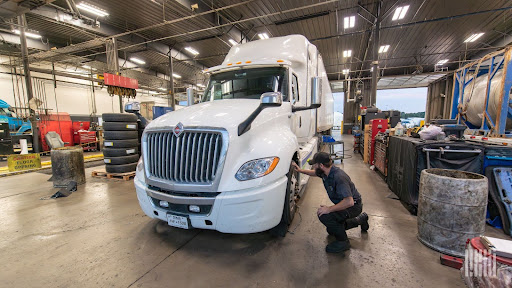

Best Field Service Management Software 

Let’s be clear—manual dispatch boards, whiteboards in the shop, and scribbled notes on the back of receipts don’t cut it anymore. Not if you’re serious about running a field-based operation that’s efficient, accountable, and scalable. Whether you’re managing roadside service trucks, mobile technicians, or heavy equipment repairs, the right field service management (FSM) software will determine if your business grows—or stalls.

And let me say this upfront: not all FSM platforms are created equal. A lot of the tools out there are built for plumbing, HVAC, or lawn care—not trucking or logistics. You don’t need cute icons and color-coded widgets. You need scheduling, dispatching, asset tracking, parts management, invoice generation, and technician accountability all in one clean system.

In this article, I’m breaking down the best field service management platforms out there—not based on hype, but based on real usability, industry fit, and how well they play in the trenches. No fluff. Just straight talk.

What Real Field Service Management Software Should Do

Before we get into the list, let’s get something straight: field service software isn’t just about scheduling jobs. A real FSM platform should be the operational nerve center for your service fleet.

Here’s what it needs to handle—day in and day out:

  • Real-time technician dispatching with GPS tracking
  • Work order creation with service history, parts used, and notes
  • Mobile access for field techs to clock in, update jobs, and capture signatures
  • Inventory and parts tracking across trucks and warehouses
  • Automated billing and invoicing tied to completed service calls
  • Customer communication through texts, emails, or branded portals
  • Dashboards and reporting so you can spot what’s costing you time and money

If your current system doesn’t check these boxes—or worse, you’re piecing it together with spreadsheets and texts—you’re setting your techs (and your profit) up to fail.

Now let’s break down the top performers that are actually built to deliver results.

Top Field Service Management Platforms That Deliver

We looked at the FSM software that supports industries with mobile fleets, technicians, and high-stakes service delivery—especially in transportation, logistics, and heavy-duty operations.

Here’s how they stack up.

1. Service Fusion

Best For: Growing service companies that need robust features without enterprise pricing
Why It Works: Service Fusion hits that sweet spot between affordability and power. You get drag-and-drop dispatching, a full customer CRM, mobile apps for techs, inventory management, and QuickBooks integration—without the clunky interfaces that kill productivity.

Their mobile app is one of the best in the game. Your techs can clock in, view jobs, add notes, capture customer signatures, and even process payments—all from their phone or tablet.

Standout Features:

  • No per-user pricing (flat rate means predictable monthly costs)
  • Field tech mobile access with real-time updates
  • GPS tracking and job history by customer
  • Easy integration with QuickBooks and phone systems

Who It’s For: Small to mid-size operations looking to modernize fast without a five-figure rollout.

2. Housecall Pro

Best For: Service businesses that want modern design, fast onboarding, and automated workflows
Why It Works: While originally built for home services, Housecall Pro adapts well to mobile fleet operations that need clean scheduling, easy communication, and end-to-end service tracking. The interface is modern, intuitive, and techs pick it up with minimal training.

If you’re handling 10–50 service calls a day and want to tighten your operations without hiring extra admin staff, this tool gives you that lift.

Standout Features:

  • Real-time job updates and “on my way” texts
  • Batch invoicing and same-day payment collection
  • Drag-and-drop calendar with color-coded views
  • Built-in review requests and customer follow-ups

Who It’s For: Field ops with a heavy customer-facing component that want automation, not spreadsheets.

3. FieldEdge

Best For: High-volume operations that need dispatching and service agreement automation
Why It Works: FieldEdge is the veteran in the game—and it shows. Their system is built for businesses with complexity: recurring service contracts, asset history per location, multi-truck fleets, and tight schedules. The platform connects to QuickBooks in real-time (not batch sync) and gives you granular control over dispatch, quoting, and profitability by job.

If you’ve got a full calendar and want fewer mistakes, faster billing, and cleaner data, FieldEdge handles it.

Standout Features:

  • Live QuickBooks integration
  • Technician scorecards and time tracking
  • Customizable forms and checklists
  • Strong asset and location-level service history

Who It’s For: Midsize to large service teams running multiple jobs per tech, per day.

4. ServiceTitan

Best For: Operations ready to scale aggressively and invest in enterprise-level software
Why It Works: This is the heavyweight. ServiceTitan is packed with tools, automations, and analytics that can run a 500-person service business or power a 10-truck shop like an enterprise. It’s not cheap—but if you want every detail tracked, reported, and optimized, this is your play.

From call booking to technician dispatch to financing offers—ServiceTitan runs your entire front and back office on one platform. And the dashboards give you near real-time insight into job profitability, technician efficiency, close rates, and more.

Standout Features:

  • Industry-best dashboards and analytics
  • Dynamic pricing by customer or job type
  • Built-in financing options and customer SMS
  • End-to-end automation (from booking to billing)

Who It’s For: Teams ready for a serious software backbone to drive revenue and scale. If you’re still “managing by memory,” this will change the game.

5. Kickserv

Best For: Small teams that need something fast, functional, and affordable
Why It Works: Not every service business needs enterprise power. Kickserv focuses on the essentials: job scheduling, customer management, technician notes, and invoicing. It’s easy to set up, easy to train on, and it gets the job done without bogging your team down.

You can be up and running in a day—and your techs won’t need a manual to figure it out.

Standout Features:

  • Mobile-friendly, with offline mode
  • QuickBooks integration and easy estimate-to-invoice
  • Clean job tracking and customer notes
  • Easy scheduling tools for fast-moving teams

Who It’s For: Owner-operators or small service shops that want to stop running the business on sticky notes and text messages.

What to Watch For (Red Flags in FSM Software)

Not every platform deserves your data—or your money. Here’s what to avoid:

  • Overpriced for your size – Don’t let a flashy demo convince you to spend $15K/year for features you’ll never use. Right-size the platform to your team and your growth plan.
  • No offline access for techs – If your techs lose access in bad coverage areas, that’s a liability. Your software should work where your trucks go.
  • No reporting tools – If you can’t pull a clean report on completed jobs, parts usage, or technician hours, the system’s working against you.
  • Weak mobile app – Your field team lives on mobile. The app shouldn’t be an afterthought.
  • No automation – If you’re still manually sending reminders or double-entering data, your software is wasting time.

How to Choose the Right FSM Software for Your Business

Don’t get stuck chasing features you’ll never use. Focus on these five areas:

  1. Size of your operation – Are you running solo with 1 truck or managing a fleet of 20 techs? Your software should match your scale without overcomplicating things.
  2. Type of service you provide – Roadside repair? On-site inspections? Equipment installations? Make sure the software supports the service types you run.
  3. Accounting integration – If it doesn’t plug cleanly into QuickBooks or your ERP, expect a lot of wasted time.
  4. Mobile usability – Your techs should be able to update jobs, get signatures, and check their schedules without calling dispatch every five minutes.
  5. Support and training – Implementation matters. Make sure your team gets onboarded quickly—and that support isn’t a black hole.

Final Word

In trucking and logistics, field service is more than just a side hustle—it’s a core function that deserves real systems. The right FSM platform gives you control, accountability, and visibility at every level of your business. It helps you spot wasted time, protect your margins, and deliver a better experience to your customers—without chasing down paperwork or micromanaging your team.

Don’t wait until your calendar’s full and your techs are drowning in paper to make the switch. Choose a platform that grows with you, supports your workflows, and puts you back in the driver’s seat.

Because out here, clarity, speed, and execution matter. And the right tools are what separate the busy from the profitable.

FAQ’s

1. What are the primary benefits of implementing Field Service Management (FSM) software for my business? FSM software offers numerous benefits, including improved efficiency through automated scheduling and dispatching, optimized routes, and real-time communication between the office and field technicians. It also leads to enhanced customer satisfaction by providing accurate appointment times, real-time updates, and faster issue resolution, ultimately boosting productivity and reducing operational costs.

2. What key features should I prioritize when choosing field service management software? Look for features such as intelligent scheduling and dispatching (often AI-powered), mobile access for technicians (including offline capabilities), robust work order management, real-time tracking (GPS), inventory and parts management, customer communication tools (e.g., automated notifications), invoicing and payment processing, and comprehensive reporting and analytics to track performance.

3. Which industries or types of businesses typically benefit most from using Field Service Management software? FSM software is highly beneficial for any business that dispatches technicians or personnel to customer locations or remote job sites. This includes industries like HVAC, plumbing, electrical services, IT services, telecommunications, property management, fire and security, appliance repair, and even healthcare for equipment delivery and maintenance. It helps streamline operations for small businesses and large enterprises alike.

Descartes buys e-commerce inventory management platform for $40M

ocean containers stacked at a port

Supply chain software provider Descartes Systems Group announced it has acquired cloud-based inventory management company Finale Inventory. The deal includes an upfront payment of approximately $40 million and a potential post-acquisition earnout of up to $15 million.

California-based Finale Inventory helps e-commerce companies manage inventory levels across multiple sales and fulfillment channels. The company provides visibility to merchants, allowing them to better scale their operations and avoid inaccurate restocking. Its platform interfaces directly with users, providing them with end-to-end automation of key functions like shipping and accounting.

“Finale expands the depth of our ecommerce solution suite by addressing a critical inflection point for growing ecommerce sellers,” said Mikel Richardson, general manager of e-commerce solutions at Descartes, in a Monday news release. “As inventory complexity and risk of overselling increase, Finale provides the control and visibility merchants need to grow with confidence.”

Descartes (NASDAQ: DSGX) continues to expand its network through acquisition.

Earlier in the year, the Ontario, Canada- and Atlanta-based global supply chain SaaS provider acquired 3GTMS, a provider of cloud-based transportation management solutions, for approximately $115 million. That deal was aimed at expanding Descartes’ capabilities in optimizing domestic truckload, less-than-truckload and parcel shipments.

According to Descartes’ CEO, Ed Ryan, the acquisition of Finale complements the company’s other e-commerce investments focused on inventory, warehousing and shipping management.

“Together with Descartes Sellercloud, Finale furthers our mission to support ecommerce businesses through all phases of their growth, from a single product startup to a global, multi-channel enterprise,” Ryan said. “We’re thrilled to welcome Finale’s customers, partners and team of domain experts into the Descartes family.”

The acquisition was funded with cash on hand. An earnout of up to $15 million is tied to revenue-based targets and would be paid in fiscal years 2027 and 2028.

More FreightWaves articles by Todd Maiden:

UP-NS merger puts intermodal giants on the wrong side of the map

The proposed Union Pacific-Norfolk Southern merger leaves three major intermodal customers — J.B. Hunt, Schneider, and STG Logistics — in the awkward position of having their tents pitched in the wrong railroad camps.

J.B. Hunt, the largest domestic truckload intermodal operator, uses BNSF Railway in the west and relies primarily on Norfolk Southern (NYSE: NSC) in the east. Containers for third-ranked Schneider and number four STG Logistics ride Union Pacific (NYSE: UNP) and CSX (NASDAQ: CSX) trains.

This leaves the companies unable to tap the benefits of coast-to-coast single-line service should the merger receive regulatory approval. Rival and second-place Hub Group (NASDAQ: HUB) sits in the sweetspot, using UP and NS.

Intermodal analyst Larry Gross is among the industry observers who believe that J.B. Hunt ( NASDAQ: JBHT), Schneider (NYSE: SNDR), and STG ultimately will swap rail partners in the east. “I see it as inevitable because the one theoretical advantage of this merger is single-line haul,” Gross said.

J.B. Hunt and BNSF have a permanent partnership, which means that its option for single-line service would be to jump to CSX. CSX already handles some J.B. Hunt traffic, generally in lanes that are not served by NS.

Schneider, meanwhile, left BNSF for UP in 2023 and would be unlikely to return to BNSF, where it did not like playing second fiddle to J.B. Hunt. So it’s expected to shift to Norfolk Southern.

Intermodal train navigating switches A westbound CSX intermodal train carrying Schneider containers crosses under a bridge for Metra’s Rock Island District at Blue Island, Ill., on Aug. 21, 2024. (Photo: Trains/David Lassen)

Given the exclusive J.B. Hunt-BNSF relationship and higher intermodal volume in the west, it’s also likely that STG would shift carriers in the east, trading CSX for NS.

“It’s not like there’s a necessity — a requirement — that they shift, but I think it just probably makes sense,” Gross said. “But these things are not easy. 
We’re talking major dislocation here.”

Schneider executives, speaking on the company’s earnings call Thursday, said they are still weighing the potential impacts of Tuesday’s UP-NS merger announcement.

“We’re pro-competition and we’re pro-customer, and to the degree that any of this helps us achieve those, then that’s kind of where we’ll come down,” Chief Executive Mark Rourke said. “We don’t have enough information at this time to take an official position.”

J.B. Hunt declined to comment. STG representatives did not immediately respond to a request for comment.

“I would expect the long-term relationship BNSF and J.B. Hunt have maintained to carry over into any potential merged environment involving BNSF,” a former Class I railroad chief operating officer said. “BNSF has continued to demonstrate a willingness to invest in intermodal capacity for growth and I would expect BNSF to invest in markets of demand beyond current capabilities.”

STG Logistics, which has the fourth-largest domestic container fleet among intermodal marketing companies, uses Union Pacific in the west and CSX in the east. (Photo: STG)

Hub Group, in a statement released with its financial results late Thursday, said it backs the UP-NS merger.

“The announced transaction would further accelerate our long-term growth opportunity,” Hub said. “Specifically, a transcontinental network removes friction in gateways, reduces transit times, provides access to new markets, and increases competition with truck volume through new single-line service.”

About 30% of Hub’s intermodal business is transcontinental.

An eastbound Norfolk Southern stack train with a Union Pacific locomotive in the consist rolls through Cassandra, Pa., in April 2022. Hub Group’s green boxes are among those on board. (Photo: Trains/Bill Stephens)

UP CEO Jim Vena and NS CEO Mark George, speaking to the trade media on Tuesday, said they want to retain their existing intermodal customers.

“We want customers to have more choice. We want them to win. We want them to stay with us, whoever’s with us, and we want to grow with them,” Vena says. “And the best railroad, the best companies win.”

George echoed those sentiments.

“We love Hunt as a customer. We want to retain Hunt. We want to grow Hunt … We don’t know anything about their agreements with BNSF, but there’s just room to grow for all of those partners,” George said.

With a UMAX container on the first well car, a CSX intermodal train cruises north along the River Subdivision in the Hudson Valley of New York in October 2021. (Photo: Trains/Bill Stephens)
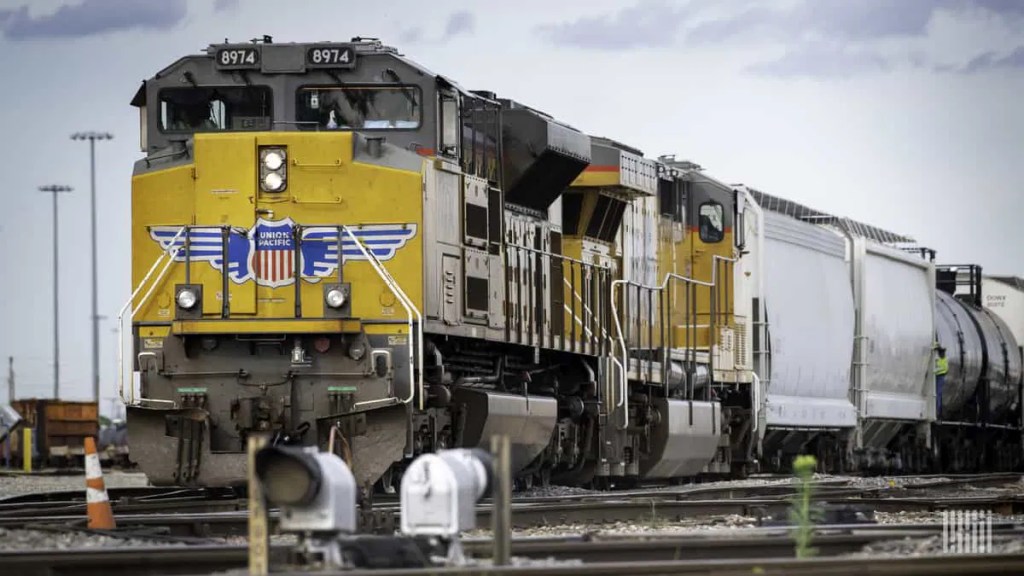

Another domestic intermodal wrinkle from the proposed merger: The UP-CSX UMAX joint container pool is unlikely to survive. “That’s definitely going to go away,” Gross said.

And that means that intermodal marketing companies that don’t have their own container fleets will lose a competitive option, said Gross.

If CSX ultimately merges with BNSF, it would potentially further reduce options for non-asset IMCs. BNSF is a BYOB railroad — as in bring your own box — while CSX Intermodal has its own fleet along with the UMAX containers. “If CSX ends up with BNSF, then I think CSX probably is out of the equipment provision business,” Gross said.

Rick LaGore, CEO of InTek Intermodal Logistics, says it’s too early to determine how a UP-NS merger would affect non-asset IMCs.

“At first glance, I see more upside on the carload side of the business. Intermodal is a bit messier due to existing alliances, shared assets, and the various railroads that asset IMCs rely on,” LaGore said.

As for the big truckload intermodal players, LaGore said “it’s not a given that STG or Schneider will have to make major moves, although for price and service reasons it will probably make sense over time.”

J.B. Hunt will have to make a decision sooner rather than later, LaGore contended, because UP will have visibility into J.B. Hunt’s business with NS as it works through the financials of the merger.

Intermodal marketing companies likely will want to keep their competitive options open despite the benefits of the larger single-line network a UP-NS combination would offer.

“On the partnership side, I still believe there will be handoffs within the UP–NS network that shippers and IMCs will want to maintain. In some markets, walking away from certain switches would make intermodal less competitive due to additional drayage,” LaGore said. “These connections may not be as smooth as within the merged network, but they’ll remain necessary because they work. And as long as price and service are there, shippers will expect them, and railroads will want the revenue.”

Ultimately, a transcon merger would lead to growth that would require an expansion of domestic container fleets.

“if business growth materializes, partnerships and boxes could proliferate throughout the network and no one will talk about the current box sharing programs. The bigger questions, for me anyway, are: Where do additional boxes come from and how they’re positioned to support demand is first in my mind. Who owns what pool is a secondary question,” LaGore said. “Who knows, maybe InTek starts owning boxes. All said, the box story will be written if intermodal were to double because of the merger. Personally, I’m skeptical that operational efficiencies alone will trigger that level of growth as I see more immediate benefits coming on the carload side.”

Subscribe to FreightWaves’ Rail e-newsletter and get the latest insights on rail freight right in your inbox.

Related coverage:

Hub Group is fully behind a potential UP-NS transcontinental railroad creation

Report: CSX talks with investment bank about merger options

Rail deal will open new markets for top US container port 

Activist investor may target CSX, citing slumping financial performance

Rail merger will bring ‘dismal service,’ ‘high rates’, says shippers group

A trade group representing 3,500 chemical, manufacturing, agriculture, and energy companies warned that past history shows that a proposed merger of Union Pacific and Norfolk Southern will push up shipping costs without improving service.  

“The Freight Rail Customer Alliance (FRCA) has long been opposed to continued consolidation in the rail industry based on past experiences resulting in increased rates, higher fees and unreliable service,” said FRCA President Emily Regis, in a release.

UP (NYSE: UNP) and NS (NYSE: NSC) on July 29 announced the $85 billion stock-and-cash deal to create a transcontinental system with more than 50,000 route-miles of track in 43 states. The carriers said the acquisition would improve service by cutting up to 48 hours from a loaded railcar’s total travel time from departure to arrival, know as dwell, while simplifying paperwork and creating a seamless journey for trains moving from coast to coast. 

The FRCA pointed out that since the Staggers Rail Act of 1980 deregulated freight railroads, the industry has shrunk from 40 Class I carriers to six, with four handling 90% of U.S. rail freight.

“This demonstrated market power is a continuing concern as the railroads have lost market share to trucks over the past 20-plus years due to their dismal service and high rates, but the railroads keep increasing their profits and reducing their operating ratios,” said   FRCA spokesperson Ann Warner, in the release. “This growth in and exploitation of railroad market power has also included forcing shippers into contracts that not only fall outside the Surface Transportation Board’s (STB) regulatory jurisdiction but also lack protection from poor service and increased fees.  Any efficiencies achieved under so-called Precision Scheduled Railroading (PSR) have NOT been passed through to shippers – only retained by the railroads and their shareholders to Wall Street’s applause.”

The adjudicatory authority of the STB, which will either accept or reject the UP-NS deal, covers published tariff rates and not confidential contracts between railroads and shippers. 

As far as service is concerned, unlike shippers who move goods by the carload, the FRCA observed that it is unclear how the STB’s tougher merger rules would benefit its larger shippers who move bulk freight such as coal or grain in trains dedicated to a single commodity, known as unit trains.

Regis stated that “particularly important to FRCA members is that a transcontinental merger provides enhanced competition for those who ship via unit train, typically point-to-point, and can utilize only a single rail carrier.”

About half of the 1.5 billion tons of freight shipped annually on U.S. rail are bulk commodities. 

“In the end, shippers, particularly captive shippers, need guaranteed competitive solutions that are workable, effective, and enforced by the STB. Even if this imperative can be achieved in a transcontinental merger, there are concerns about how long it would take for the improvements to be successfully implemented and whether the integration problems and service meltdowns of past mergers can be avoided,” Regis said.

Werner said that the “FRCA looks forward to participating in the review and comment period once a formal merger application(s) has been filed.”

Subscribe to FreightWaves’ Rail e-newsletter and get the latest insights on rail freight right in your inbox.

Related coverage:

UP-NS merger puts intermodal giants on the wrong side of the map

Hub Group is fully behind a potential UP-NS transcontinental railroad creation

Report: CSX talks with investment bank about merger options

Rail deal will open new markets for top US container port 

All Nippon Airways finalizes takeover of Nippon Cargo Airlines

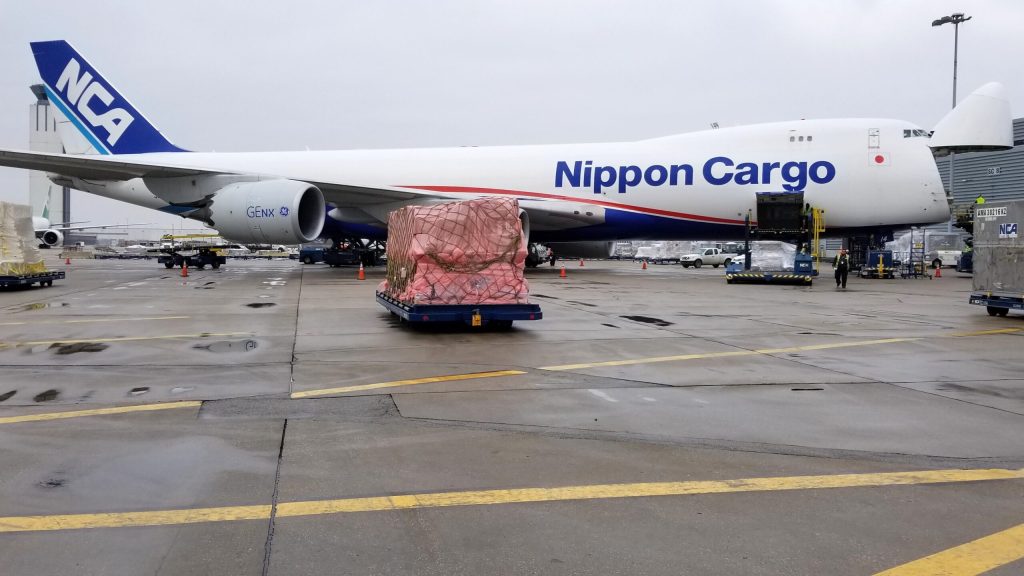
A Nippon Cargo Airlines jumbo jet freighter with its nose cone open at an airport, loading containers.

All Nippon Airways has finally acquired Nippon Cargo Airlines, the company announced late Sunday, ending a two year saga and creating the world’s 14th largest airline group by tonnage transported. 

ANA postponed completing the deal eight times because of delays in regulatory reviews. Chinese competition authorities approved the deal, with conditions, in early July. The Japan Fair Trade Commission approved the transaction in January.

The acquisition will help All Nippon Airways, which operates six Boeing 767 freighter aircraft and two Boeing 777 freighters, in addition to managing cargo carried by the company’s passenger aircraft, expand its international air cargo network and related products to better support shippers. In 2023, ANA had nine 767 cargo jets in the fleet. 

Nippon Cargo Airlines operates eight Boeing 747-8s. It also owns seven 747-400, five of which are on lease to Atlas Air to fly on its behalf and two of which are flown by ASL Airlines.

Japanese ocean and transport company Nippon Yusen Kabushiki Kaisha, also known as NYK Line, agreed in March 2023 to sell NCA to ANA, saying it faced challenges making the investments necessary to maintain the fleet as operating margins contracted.

The companies took much longer than expected to finalize the deal because of difficulty receiving all approvals from nations where the companies operate, according to a high-level source with one of the companies. After initial delays, executives anticipated deal closure to happen in February 2024.

Earlier this year, ANA said it expected to complete the transaction on May 1. 

“The strategic integration of NCA’s freighter network and specialized cargo expertise with the ANA Group’s existing infrastructure will greatly improve our capability to serve our customers’ needs,” said Koji Shibata, president and CEO of ANA Holdings. “We are committed to leveraging this expanded capacity and combined knowledge to deliver exceptional value in our cargo transport solutions globally.”

The final transfer of NCA shares to ANA occurred on Friday. Financial terms were not disclosed.

ANA international cargo revenue for the fiscal year first quarter ended June 30 slipped 2% to $286.2 million despite a 2.5% increase in traffic volume. Demand fell for shipments from China to North America, but ANA offset the decline with more shipments from the rest of Asia to North America. 

Click here for more FreightWaves/American Shipper stories by Eric Kulisch.

Amazon launches dedicated cargo service to Colombia with 21 Air

BNSF earnings gain on lower costs

BNSF Railway reported pre-tax earnings increased 11.5% in the second quarter to $2 billion from $1.8 billion,and 8.6% to $3.8 billion from $3.5 billion in the first six months of 2025 compared to 2024.

Operating revenues for the Fort Worth-based subsidiary of holding company Berkshire Hathaway increased slightly in both the second quarter and the first six months, to $5.73 billion from $5.71 billion and $11.4 billion from $11.3 billion y/y as lower operating costs offset weaker revenue per car, to $3.7 billion from $3.9 billion, and $7.5 billion from $7.8 billion.

Net earnings climbed to $1.5 billion from $1.2 billion y/y in the quarter, and to $2.7 billion from $2.4 billion in the first six months of the year.

Freight volumes edge higher by 1.4% and 2.7% in the second quarter and first half, respectively, y/y. Average revenue per car declined 1.4% in the second quarter and 2.6% y/y, on lower fuel surcharge revenue and unfavorable business mix, partially offset by core pricing gains. 

Coal volumes improved by 13.7% and 7.3% for the quarter and half, respectively, while consumer products was up by 0.6% and 4.5%. Agricultural and energy carloads were 0.6% better in the quarter but by just 0.1% for the half. Shipments of industrial products fell by 0.6% and 0.1%, respectively.

The company did not comment on the proposed acquisition of Norfolk Southern (NYSE: NSC) by western rival Union Pacific (NYSE: UNP). Berkshire Hathaway earlier denied reports that it was assessing a possible merger with CSX (NASDAQ: CSX).

Borderlands Mexico: Latin America poised for global trade growth, experts say

Borderlands Mexico is a weekly rundown of developments in the world of United States-Mexico cross-border trucking and trade. This week: Latin America poised for global trade growth, experts say; DSV begins construction of logistics hub in Texas; and COIM USA acquires acreage at TexAmericas Center.

Latin America poised for global trade growth, experts say

The resilience of Mexico’s economy, along with the growth of other Latin American countries, will continue to attract foreign investments in the second half of 2025 and beyond, trade experts said.

“First and foremost, things that investors are watching right now is the extraordinary resilience of Latin American economies,” Ernesto Revilla, managing director and chief economist for Latin America at Citi, said during a webinar titled “Overlooked trends that could transform Latin America and the Caribbean.”

“In fact, we are about to increase the forecast for Mexico this year because the economy has been a little bit more resilient than expected. Brazil has been extraordinarily resilient with super high nominal and real rates.”

The webinar held on Thursday was hosted by the Atlantic Council, a Washington, D.C.-based think tank focused on transatlantic trade.

In addition to Revilla, the panel included William Maloney, chief economist for Latin America and the Caribbean World Bank Group; Luz Maria de la Mora, director of the international trade division at the United Nations Conference on Trade and Development; and Ana Paula Vescovi, chief economist and partner at Santander Brazil.

The panel was moderated by Jason Marczak, vice president and senior director of the Adrienne Arsht Latin America Center at the Atlantic Council.

Revilla said economists are bullish on Latin America’s biggest economies.

“Nobody’s forecasting a recession just yet, and [Mexico’s] economy is still expected to span 2.2%,” Revilla said. “And Argentina, even if it’s slowing down at the margin, is still very resilient and forecasters have increased the growth forecast. So for the second half of the year, you still have to go with the traditional high frequency activity indicators.”

Countries in Latin America and the Caribbean have an opportunity to grow their economies through the global transition to low carbon energies, de la Mora said.

“There’s a global transition today to a low carbon economy, and this has placed Latin America in the spotlight,” de la Mora said.

“Almost every country in South America, in addition to Mexico, is home to some of the world’s most critical minerals. For example, lithium, copper, manganese, nickel, graphite, and a few rare earths. These are essential components for electric vehicles, electric batteries, renewable energy, and obviously the digital technologies that we all use all the time, our devices, the smartphones, laptops.”

De la Mora said a surge in demand for the critical minerals has resulted in foreign direct investment coming into Latin America and the Caribbean.

“We recently published a report called the state of commodity dependence 2025. We identified that in almost one quarter, 23% of the foreign direct investment that Latin America received in 2024 was directed to investment in critical mineral projects,” de la Mora said.

Maloney said that Latin America and the Caribbean have historically been some of “the slowest growing regions of the world,” but is changing through education and technology.

“This goes back to our reaction to the second industrial revolution, when we were not able to identify, adopt, and implement the latest technologies in our key sectors, and we weren’t able to enter into new sectors,” Maloney said. “As a result, we didn’t have the takeoff that a lot of our contemporaries in the 1900s had, namely Sweden, Denmark, Germany, France, all of which had similar levels of income to, for instance, Uruguay and Chile and Argentina.”

Maloney recently co-authored a report titled “Reclaiming the Lost Century of Growth: Building Learning Economies in Latin America and the Caribbean.” Other co-authors of the report include Xavier Cirera and Maria Marta Ferreyra.

Education and adapting emerging technologies will help Latin America and the Caribbean speed up economic growth, Maloney said.

“We need to attack this fundamental inability to learn how to learn about the new technological opportunities that are offered in the region,” he said.

DSV begins construction of logistics hub in Texas

Logistics giant DSV has begun construction of a 900,000-square-foot distribution center in Laredo, Texas, according to a news release.

“This property serves to solidify DSV’s position at the U.S.-Mexico border and reinforces its commitment to cross-border logistics and warehousing solutions,” the company said in a statement.

The hub will be located on 49 acres in Port Grande, a 1,990-acre master-planned industrial park along Interstate 35. It will include 853,000-square-feet of warehousing space, 40-foot clearances, 85 dock doors, four ramp doors, pallet racking and floor storage.

The facility represents a relocation and expansion of DSV’s existing operations in Laredo’s existing. It will support a variety of industries, including consumer products, technology, and industrial equipment.

Construction is scheduled to finish by mid-2026.

Denmark-based DSV was founded in 1976. The company offers air, ocean and road freight solutions, along with contract logistic services in over 80 countries.

COIM USA acquires acreage at TexAmericas Center

COIM USA, a leading specialty chemical manufacturer, announced the acquisition of a 20-acre site at the TexAmericas Center in New Boston, Texas.

The acquisition includes existing logistics infrastructure, as well as a renewable polyol product line, consisting of materials made principally from rapidly-renewable cashew nutshell liquid, according to a news release

“This acquisition represents a significant milestone in COIM USA’s long-term growth strategy,” Michelangelo Cavallo, president of COIM USA, said in a statement. “The New Boston location broadens our geographic reach, expands our sustainable portfolio, and enhances COIM USA’s ability to serve customers with greater speed, efficiency, and resiliency.” 

The TexAmericas Center is a mixed-use industrial park located in the northeast corner of Texas, about 20 miles west of Texarkana, and 180 miles east of Dallas. The center is located near Texas’ borders with Arkansas, Louisiana and Oklahoma.

The center has about 12,000 acres of development-ready land and 3.5 million square feet of commercial and industrial space for commercial tenants.

“This investment is not only a win for COIM USA, but also another step forward for TexAmericas Center as a hub for green industries,” Eric Voyles, executive vice president and chief economic development officer at TexAmericas Center. “Texarkana has a proud legacy as a manufacturing center, but we’re greener than you might think. Projects like this move us closer to becoming a recognized Eco-Industrial Park.”

COIM USA, based in West Deptford, New Jersey, is a specialty chemical manufacturer. The company is part of the COIM Group, an Italy-based producer of polyesters and polyols.

Best Trucking Bookkeeping Services

Let’s set the record straight—bookkeeping is not some behind-the-scenes admin task you push off until tax season. In trucking, your books are your compass. Without clean, organized, and trucking-specific financials, you’re not just driving blind—you’re making decisions that could sink your business. I’ve seen too many good carriers fall apart not because of bad freight, but because they didn’t know their numbers.

Here’s the hard truth: if you’re running a trucking company and you don’t know your cost per mile, your fixed versus variable expenses, or how much profit you’re making per truck—then it’s only a matter of time before the wheels fall off. And most of the time, the problem starts with your bookkeeping partner.

Too many so-called “professionals” will take your money and give you QuickBooks spreadsheets that don’t even break out fuel, tolls, or truck payments the right way. They don’t understand that running authority is different from being leased on. They can’t tell a 2290 from a 941, and when it comes to IFTA—they’re lost.

That’s why choosing the right trucking bookkeeping service is non-negotiable. You don’t just need someone who does books. You need someone who understands the business of trucking inside and out—and builds your finances like your business depends on it. Because it does.

Why Most Bookkeeping Services Fail Trucking Businesses

Let’s be blunt—most traditional bookkeeping services are built for restaurants, salons, or local retail. Not for a cash-heavy, regulation-strangled, asset-dependent industry like trucking.

Your average bookkeeper doesn’t understand mileage-based cost structures. They don’t know how to categorize fuel card advances. They can’t explain what line haul revenue is versus FSC. And when you ask them for a clean P&L broken down by unit, they act like you’re asking for a rocket launch.

The result? You get monthly reports that look nice but mean nothing. Your truck payments get coded as “loan liability” but don’t show up on your operating costs. Your maintenance gets lumped in with personal expenses. And when tax season rolls around, you’re stuck scrambling, paying too much, or worse—getting flagged in an audit.

You need more than a paper pusher. You need a strategic partner.

What Real Trucking Bookkeeping Looks Like

A true trucking-focused bookkeeping service should give you financial clarity—not just compliance. They should hand you reports that tell you:

  • How much each truck is actually making or losing
  • Your true cost per mile, including fixed and variable
  • Cash flow forecasts so you’re not blindsided by insurance or IRP
  • Proper fuel and maintenance tracking to inform your trade-in cycles
  • Up-to-date IFTA calculations and mileage logs
  • Accurate P&Ls that show freight revenue, fuel surcharge, accessorials, and deductions

And most importantly, they should help you understand what the numbers mean. It’s not about dumping spreadsheets in your inbox—it’s about showing you which loads, lanes, and customers are actually profitable. It’s about helping you answer questions like:

  • Can I afford to add another truck?
  • Should I refinance this equipment or hold off?
  • Am I running too much deadhead in certain markets?
  • Where can I trim overhead without cutting into operations?

Bookkeeping should help you run your business better—not just file taxes.

Top Trucking Bookkeeping Services That Actually Get It

Let’s walk through the players who are actually worth your time and money. These aren’t generalists. These are firms that live and breathe trucking. They understand compliance. They understand cost-per-mile. And most importantly—they know what it’s like to operate a small fleet in today’s market.

1. TruckersBookkeeping.com

Best for: Owner-Operators and small fleets just getting started
Why it works: TruckersBookkeeping.com is purpose-built for trucking. They don’t try to be everything to everyone—they focus on helping drivers and small carriers stay financially organized and DOT compliant. From day one, they’re collecting your settlement statements, your ELD reports, and your fuel receipts.

They know how to build a chart of accounts that works for trucking. Not something they copied from a bakery or dry cleaner. Their team is proactive, communicative, and familiar with the common traps most small carriers fall into—like mixing personal and business expenses or misclassifying truck leases.

Standout Features:

  • Monthly cost-per-mile analysis
  • Driver pay tracking
  • Full IFTA and 2290 support
  • DOT compliance tie-in
  • Fixed and variable cost breakdowns

Who it’s for: If you’re in year 1–3 of your business and need structure, this is a solid place to start. Simple, clean, trucking-focused.

2. Rigbooks

Best for: Carriers with multiple trucks who want to manage loads and books in one place
Why it works: Rigbooks isn’t just bookkeeping—it’s a simple TMS (transportation management system) with built-in accounting features that are trucking-specific. If you’re looking for a way to log your loads, calculate profitability, track expenses, and generate reports without jumping between five systems, Rigbooks brings it all under one roof.

What sets them apart is how seamlessly they track cost-per-load and cost-per-mile in real time. You can see what a particular customer is really worth to your business—not just what the gross rate says.

Standout Features:

  • Per-load profitability tracking
  • Integrated fuel and expense logging
  • Clean, no-frills interface
  • Great for owner-operators adding trucks

Who it’s for: If you’ve got 2–10 trucks and want more control over your numbers and dispatching without a full-blown TMS, Rigbooks bridges the gap.

3. Equinox Owner-Operator Solutions

Best for: Owner-operators and S-corp carriers who want financial strategy

Why it works: Equinox combines bookkeeping with tax strategy and business consulting—all tailored to the trucking industry. They’re one of the few firms that will actually walk you through S-corp setups, per diem optimization, and how to pay yourself properly.

They’re built around educating the driver. That means explaining deductions, breaking down reports, and helping you structure your entity in a way that supports long-term growth and protects you during audits.

Standout Features:

  • S-corp optimization and payroll
  • Tax coaching and entity structuring
  • Bookkeeping reports built for trucking
  • Monthly consultations

Who it’s for: If you’re a serious owner-operator looking to maximize take-home pay while staying audit-proof, Equinox gives you both numbers and strategy.

4. ATBS (American Truck Business Services)

Best for: Leased-on owner-operators who want plug-and-play support
Why it works: ATBS has been in the trucking bookkeeping game for over 25 years. They’ve served tens of thousands of owner-operators and understand the unique needs of leased drivers. If you’re running under someone else’s authority, but still want visibility and tax prep support, ATBS gives you structure without the learning curve.

They provide monthly reports, tax preparation, business coaching, and even retirement planning services—all trucking-specific.

Standout Features:

  • Customized profit plans
  • Real-time bookkeeping dashboard
  • Quarterly tax estimates and filing
  • Dedicated tax advisor

Who it’s for: Perfect if you’re leased on, focused on staying organized, and want a full-service partner that doesn’t require you to babysit the process.

5. SmartHop with Bookkeeping Add-On

Best for: Tech-savvy fleets using dispatch automation
Why it works: If you’re already dispatching through SmartHop or using their fuel card, their bookkeeping add-on integrates your load data, fuel expenses, and settlement info into clean reports. While it’s not as hands-on as a full bookkeeping firm, it’s a great fit for tech-forward carriers who want automation and insight.

Standout Features:

  • Built-in fuel and load data sync
  • Real-time margin tracking
  • Integrated TMS + financial dashboard

Who it’s for: Fleets who want to scale using automation tools but still need visibility into their numbers.

Red Flags to Watch Out For

If you’re shopping around, don’t get fooled by polished websites or flat rates. Here’s what to avoid:

  • Generic firms with no trucking experience
    If they don’t know what IFTA is or how to categorize lumper fees, they’re not ready for your business.
  • Delayed reporting
    If your P&L takes two months to arrive, you’re already behind the curve. Monthly reports should land fast and be actionable.
  • No cost-per-mile tracking
    If they can’t show you what each mile is costing you, they’re just filling out forms—not helping you run a smarter business.
  • No audit support
    A good bookkeeping service helps you prepare and defend. Ask upfront how they handle audits and lender documentation.
  • They only care during tax season
    If they ghost you nine months out of the year, they’re not invested in your success.

What to Do Next

Here’s the move—don’t wait until Q4 or tax season to clean up your books. If you’re serious about running your business like a business, start now.

Step 1: Evaluate your current setup
Can you see a current P&L? Do you know your cost per mile? Are your business and personal finances separate? If not, you’ve got gaps.

Step 2: Pick a service that fits your operation
Don’t just go with the cheapest. Go with the one that fits your fleet size, growth goals, and knowledge level. A good bookkeeper should educate you—not keep you in the dark.

Step 3: Build a rhythm
You should be looking at financials monthly. If you’re not, that’s the first thing to fix. Set a recurring meeting to go over the books and make strategic decisions.

Final Word

Bookkeeping is not optional—it’s foundational. You can’t grow your fleet, bid confidently on lanes, or prepare for lending opportunities if you don’t know your numbers inside and out.

The right trucking bookkeeping partner gives you more than clean records. They give you clarity. They help you stop guessing. They help you scale.

So stop flying blind. Stop waiting for tax season to find out whether you’re profitable. Get proactive. Get specific. And partner with someone who actually knows what it takes to keep a trucking business running profitably—not just legally.

Because in this industry, good data isn’t a luxury—it’s your survival plan.

FAQS

1. Why do trucking companies need specialized bookkeeping services, as opposed to general accounting? Trucking companies face unique financial challenges and regulatory requirements, such as fluctuating fuel costs, per diem deductions, equipment depreciation, and complex tax compliance like IFTA. Specialized trucking bookkeeping services understand these nuances, ensuring accurate record-keeping, maximizing deductions, and providing insights tailored to the transportation industry that general accounting services might miss.

2. What specific financial tasks can trucking bookkeeping services help me with? Trucking bookkeeping services typically handle a wide range of tasks, including managing accounts receivable and payable, processing payroll for drivers, tracking fuel and maintenance expenses, preparing IFTA (International Fuel Tax Agreement) reports, managing asset depreciation, reconciling bank statements, and generating financial reports like profit & loss statements. They can also assist with tax preparation and ensure compliance with various trucking regulations.

3. How can professional bookkeeping services help me stay compliant with IFTA and other trucking regulations? Professional trucking bookkeeping services are well-versed in IFTA requirements, which involve tracking mileage and fuel purchases across multiple jurisdictions. They use specialized software and processes to accurately calculate and prepare your quarterly IFTA reports, reducing the risk of errors, penalties, and audits. They also stay updated on other industry-specific regulations (like HVUT or DOT compliance) to ensure your business remains in good standing.

Truckstop Unveils Private Loads: streamlining freight matching for Brokers and Carriers

Truckstop.com announced Wednesday the launch of Truckstop Private Loads, a new feature allowing freight brokers to efficiently engage their pre-vetted carrier networks with the same trust and security available on the company’s public load board. The solution addresses growing market challenges by centralizing load management and strengthening broker-carrier relationships.

“We understand the daily pressures brokers face to find trusted capacity quickly and the frustration and lost time carriers experience switching between public and private loads,” said Scott Moscrip, founder and CEO of Truckstop.com, in a press release. “By bringing private and public loads together, we’re not just adding a feature; we’re delivering a critical solution that enhances trust, boosts efficiency, and drives profitability for everyone in the freight ecosystem, right when they need it most.”

For freight brokers, the platform provides a high-reach channel to connect with pre-vetted carriers who are already actively seeking freight. The system allows brokers to seamlessly waterfall these loads to Truckstop’s public load board of verified carriers when necessary, expanding their network to ensure load coverage.

Carriers benefit from the consolidation of private and public loads in one location, eliminating the inefficiencies of juggling emails, phone calls, and multiple load boards. This centralization allows carriers to quickly identify, compare, and secure desirable loads while strengthening their relationships with brokers.

The feature arrives as the freight industry confronts challenges, including market volatility, intense competition, and fraud threats. Truckstop notes that Private Loads addresses these issues by creating a more secure environment where brokers can build stronger relationships with trusted carriers.