Uzbekistan-based cargo airline My Freighter adds third Boeing 767
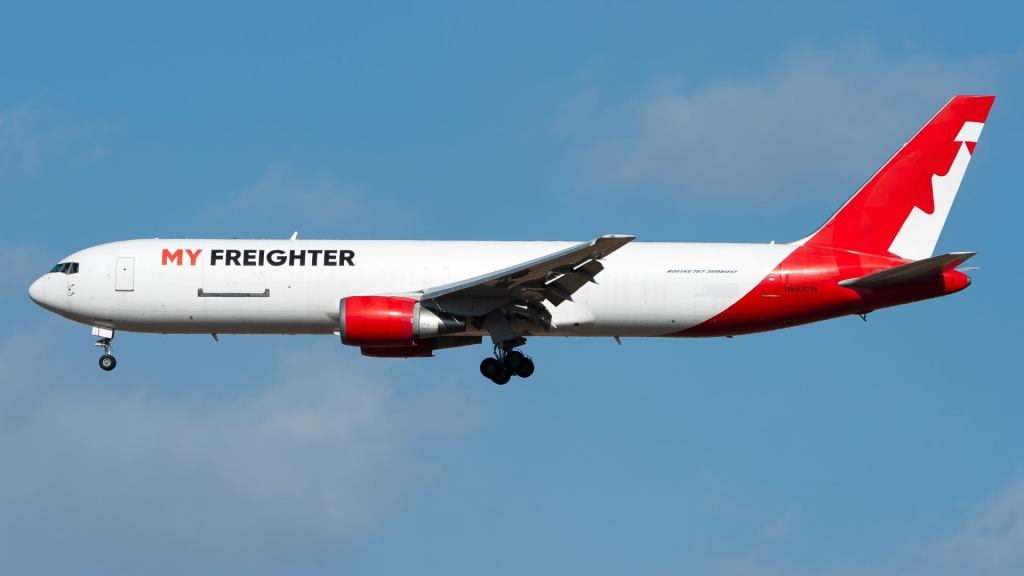
My Freighter, a startup cargo airline based in Tashkent, Uzbekistan, has received its third Boeing 767-300 converted freighter from Air Transport Services Group, the U.S. leasing and aviation services company announced on Monday.
My Freighter took delivery of its first 767-300 in early November. ATSG (NASDAQ: ATSG) sends the former passenger aircraft to airframe repair specialists to tear down and rebuild the interior to handle large containers before leasing them to customers.
The airline currently operates four cargo jets, including one 39-year-old Boeing 747-200, between Asia and Europe. Aircraft tracking site FlightRadar24 shows the 747 has been idle since Jan. 17. The company, which launched in 2019, also operates charter passenger flights with a handful of aircraft under the brand Centrum Air.
ATSG, based in Wilmington, Ohio, last week said it began a new lease agreement with DHL Express for a 767-300, bringing the 767 fleet at DHL to 14 units.
ATSG in recent years has expanded its customer base beyond North America, where it’s main customers are Amazon and DHL. The company also operates two cargo airlines, primarily with its own aircraft that customers lease but don’t have the expertise or capacity to operate on their own.
The 767-200/300s have been ATSG’s bread and butter, but the company began leasing modified Airbus A321 narrowbody aircraft in 2023 and plans to deliver its first Airbus A330 widebody freighter this year once it completes the conversion process.
Reduced demand for freighter aircraft played a major role in reducing ATSG’s adjusted operating profit by 12% last year. Many airlines pushed off investments in cargo jets in response to a 16-month decline in shipping volumes caused by weak global economic conditions, high inventory levels and better supply chain reliability compared to the pandemic years.
ATSG’s full-year revenue ticked up 1% to $2.1 billion, due primarily to a full year of contributions from six new leases of 767-300s made in 2022, as well as partial-year contributions from 13 leased aircraft in 2023, including the company’s first three Airbus A321 narrowbody freighters.
Pretax losses for the leasing segment were $11 million. Revenue for the year increased 6%, but it wasn’t enough to offset increased expenses for interest and depreciation.
Seized fake sports rings would be worth $2.7M if genuine, CBP says
U.S. Customs and Border Protection officers in Cincinnati recently seized 90 fake championship rings for professional and collegiate sports teams in Missouri and Kansas. Had the rings been genuine, they would have been worth $2.71 million, according to the agency.
The shipment seized on March 21 contained rings with trademarks of the NFL, NCAA and MLB. Third-party retailers sell the fake rings made of cheap materials and faux gems for top dollar, swindling sports fans, CBP said in a news release.
Agents intercepted the parcel after an X-ray yielded “inconclusive results,” prompting a physical examination, CBP said. Inside, officers discovered 40 2019 Kansas City Chiefs Super Bowl rings, 20 1969 Kansas City Chiefs Super Bowl rings, 15 1985 Kansas City Royals rings and 15 2022 Kansas Jayhawks championship rings.
“The specialist noticed the rings were poor quality, had inferior packaging, a low declared value, were inaccurately declared, and lacked security features,” the news release said.
Cincinnati CBP officers recently seized a shipment containing 90 fake Kansas championship rings bearing the registered trademarks of the NFL, NCAA. and MLB. Illicit trafficking of counterfeit goods offers criminals a complementary source of income.
LaFonda D. Sutton-Burke, field operations director for the Chicago Field Office, said “the money profited from selling fake merchandise such as championship rings is used to damage the United States economy and fund criminal enterprises.”
The shipment came from Hong Kong and was intended to arrive at a residence in Atchison, Kansas. Officers believe it was “a person-to-person transaction,” which is common among counterfeiters, who then mail out smaller shipments.
A CBP spokesman said the agency shared their findings with Homeland Security Investigations. No arrests have been made.
Port of Virginia expansion boosts ultralarge container vessel capacity
The Port of Virginia recently completed a project to widen its ship channel to allow better access for the world’s largest container ships.
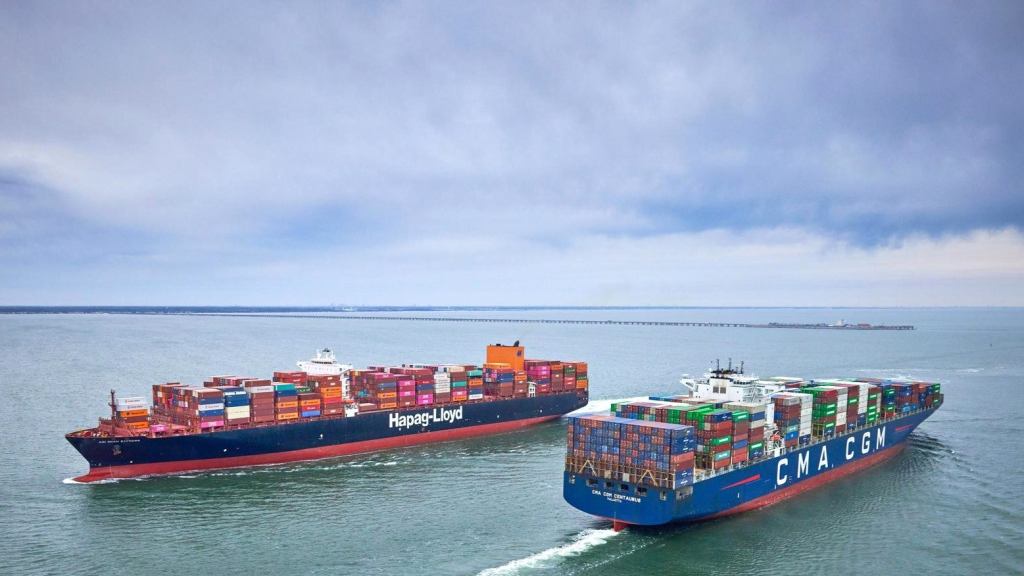
The port’s shipping channel is now up to 1,400 feet wide in some areas, allowing simultaneous two-way traffic of ultralarge container vessels (ULCVs) traveling through Norfolk Harbor, officials said.
“Before the channel was widened, the Coast Guard would have to put restrictions on the channel for vessels to pass. When ULCVs are on their way in or out, it closed the channel to all other traffic,” Joe Harris, spokesman for the Port of Virginia, told FreightWaves. “Now we can pass two ULCVs at once or a container ship and a coal ship, or a coal ship and a Navy ship at the same time. It’s very efficient for all the partners in the harbor.”
Port officials estimate the wider channel will reduce the amount of time ULCVs spend berthing by up to 15%.
The channel widening is part of the port’s $1.4 billion strategic infrastructure investment package that aims to support larger cargo ships and increase the speed of freight moving through the gateway.
Work is also underway to dredge the port’s shipping channels to 55 feet deep and the ocean approach to 59 feet deep. The deepening project is scheduled to be completed in 2025.
The wider and deeper channel will lay the groundwork for future developments at the Port of Virginia, Harris said.
“The wider channel will allow us to turn our berths quicker and more regularly, so we don’t have to have that vessel sitting berthed for four hours while others are passing, and then it can pull out, so you have that greater flow of cargo and more efficient flow of cargo,” Harris said. “When you have that flow, what it does is it truly attracts users that want to be around a logistics center and brings them to Virginia.”
Headquartered in Norfolk, Virginia, the port consists of four deep-water marine terminals, an upriver terminal and an inland intermodal terminal.
The Port of Virginia, operated by the Virginia Port Authority, is one of the busiest seaports in the country. In 2023, the port handled 3.3 million twenty-foot equivalent units, compared to 3.7 million units in 2022, which was a record for the port.
Class I railroads Norfolk Southern and CSX serve the port via on-dock intermodal container transfer facilities at the Virginia International Gateway and Norfolk International Terminals.
The Port of Virginia is also a hub for 30 international shipping lines that offer direct, dedicated service to more than 80 ports around the world. In an average week, more than 40 international container, breakbulk and roll-on/roll-off vessels are serviced at the port’s marine terminals.
In addition to being the headquarters of the Port of Virginia, Norfolk is home to Naval Station Norfolk, home port of the U.S. Navy’s Fleet Forces Command. It is one of the biggest naval stations in the world.
“This is a big military town; the world’s largest Navy base is truly our next door neighbor,” Harris said. “We have a continual flow of men and women coming out of the military with logistics experience. That’s a really good pipeline to continue to feed, not just the jobs inside the port, but outside the port as well. That’s a big sell for companies looking to do business here, because they ask that very question, they often have this checklist, can we build and maintain our workforce there? That answer is always, ‘Yes, you can.’”
Harris said one of the major goals with the expansion of the shipping channel is to draw more regularly scheduled service from global carriers to call at the port using ultralarge container vessels.
“What we hope to do with this wider channel and soon-to-be-deeper channel is to attract more first-in and last-out vessel calls,” Harris said. “When a vessel comes to the East Coast, it may go to three or four ports. The goal is to have it come to Virginia first, because as a cargo owner, you get your cargo that much quicker, or leave Virginia last, because as an exporter, your cargo is moving to market quicker.”
In February, the port expanded its international portfolio with two new services that connect directly with the Latin American market.
One service is a joint effort by ocean carriers CMA CGM and Ocean Network Express linking the Port of Virginia to ports in Colombia, Peru, Chile, Ecuador and Panama. In this service, the Port of Virginia is the last stop for the U.S. East Coast.
The other service is being offered by ocean carrier Mediterranean Shipping Co., which has added South and Central American port calls of its Ecuador NWC service to its Scan Baltic service. The expanded service, named the Ecuador — NWC & Scan Baltic — USA, calls ports in the Bahamas, Panama, Costa Rica, Peru and Ecuador.
Nikola FCEV review, ELD hackers and MATS recap – WTT
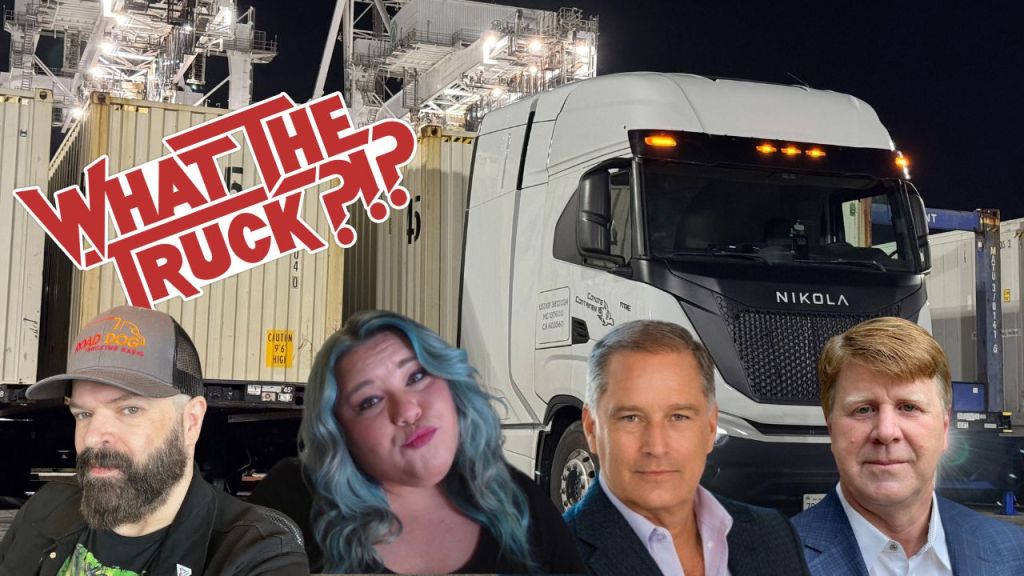
On Episode 697 of WHAT THE TRUCK?!?, Dooner is talking to Coyote Container’s William Hall about the company’s Nikola Fuel Cell EV truck. Now that Coyote Container has had the truck in service, how is it performing under real loads and on really challenging roads like Donner Pass?
FreightWaves’ Grace Sharkey just got back from the Mid-America Trucking Show with a full trailer load of impressions and takeaways from the largest trucking show on Earth. Plus, Sharkey will also look at a new ELD hack and the project44 vs. FourKites defamation case.
Trade Tech Inc.’s Bryn Heimbeck is breaking down port flows. We’ll look at how volumes are looking and how lanes are shifting due to threats in the Red Sea and issues with the Panama Canal.
Truckload carriers’ forecasts cut heading into Q1 prints
Analysts are cutting earnings estimates for truckload companies heading into first-quarter reports. Acknowledging decent demand, analysts cited an overhang of truck capacity, which is constraining pricing and margins, as the reason for the latest round of revisions.
“We exit 1Q much like we entered it for truckload-related transports — feeling okay about volumes but bad about pricing and expecting downward EPS revisions for businesses that live on this annual pricing cycle,” Susquehanna Financial Group’s Bascome Majors told clients on Monday.
He said pricing pressures alongside “steady but not spectacular volumes” will weigh on first-quarter numbers, which he cut by 26% to 32% for the TL carriers he follows. His new TL and intermodal forecasts “remain meaningfully below” consensus estimates, but his outlook for freight brokers is more in line with the averages.
Majors cut his first-quarter earnings-per-share estimate for intermodal provider J.B. Hunt (NASDAQ: JBHT) by 11% to $1.40. Management at the company said at an investor conference last month that annual price negotiations were tougher than expected. Werner Enterprises (NASDAQ: WERN) echoed the sentiment at the same event, noting a “very competitive” start to bid season for its one-way TL business.
Spot rates jumped in January as winter storms sidelined some fleets for days. The rate bump from diminished available capacity was short-lived, however, with spot rates quickly falling back to where they ended 2023. The temporary rate reprieve only impacted a small portion of large carriers’ customer books as most of the freight they haul is under annual agreements. The winter weather did leave a mark on the quarter, negatively impacting equipment utilization and driving operating costs higher.
Also, analysts have indicated that channel checks and conversations with management teams suggest March will likely be softer than expected. Shippers have toggled back to a just-in-time inventory strategy, knowing the market is loose and that should consumer buying trends suddenly indicate the need for more merchandise, trucks are readily available to quickly accommodate.
However, Schneider National (NYSE: SNDR) President and CEO Mark Rourke recently said it was somewhat encouraging to see the spot market react so sharply to inclement weather. He believes the reaction could be indicative of the amount of TL capacity that is exiting, noting similar events a year ago resulted in little to no change in spot rates.
Chart: (SONAR: NTIL.USA). The National Truckload Index (linehaul only – NTIL) is based on an average of booked spot dry van loads from 250,000 lanes. The NTIL is a seven-day moving average of linehaul spot rates excluding fuel. To learn more about FreightWaves SONAR, click here.Chart: (SONAR: OTRI.USA). A proxy for truck capacity, the Outbound Tender Reject Index, shows the number of loads being rejected by carriers. Carriers are currently rejecting less than 4% of all loads tendered under contract compared to cycle highs of more than 25%.
Majors said this is unlikely to be the “last cut” for TL earnings estimates this cycle as “hopium will undoubtedly linger into 2Q earnings in July.” He said the industry has been in a “relatively seasonal holding pattern” since mid-2023, which he expects will remain in place in the near term. However, as earnings estimates reset lower following first-quarter reports, essentially removing further downside risk to numbers, he expects investors to “shift to a more bullish posture.”
Duetsche Bank (NYSE: DB) analyst Amit Mehrotra cut TL estimates by roughly 20% on average a week ago, saying he expects disappointing results from “most transactional/commoditized companies” like TL and “as the retail complex remains skittish on restocking and the truck market is stubbornly oversupplied.”
But he thinks the next move in inventory levels could be positive.
“To be sure, retailers still appear highly hesitant on restocking, but the trajectory of sales in the context of the destock that’s occurred should be positive for inventory balances and in turn freight flows.”
Both analysts said they favor less-than-truckload carriers and the railroads due to “their pricing power and oligopolistic industry structures,” stressed Majors.
Mehrotra raised first-quarter estimates on some of the railroads he follows but trimmed estimates on all LTL carriers except for Saia (NASDAQ: SAIA), which he kept at $3.50 following a favorable intraquarter update.
Majors slightly raised his LTL estimates for the first quarter on Friday, with XPO (NYSE: XPO) getting the largest increase at 4%. XPO issued a positive update on the quarter earlier this month. Majors’ estimate for Saia is also $3.50.
“We continue to see outsized earnings risk from asset-based carriers and brokers exposed to the annual contractual pricing cycle relative to LTL and rails,” Majors said.
J.B. Hunt kicks off transportation’s first-quarter earnings season in earnest on Apr. 16.
Some states urge truck drivers to avoid working during upcoming eclipse
Ahead of the April 8 total solar eclipse, which will stretch from Texas to Maine, some state transportation departments are advising truckers to consider staying off the roads as traffic is expected to be severely impacted by people traveling to see the astronomical event.
Millions of people descended on states with views of the 2017 total solar eclipse, congesting roadways. Transportation officials are sharing plans in an effort to minimize headache-inducing traffic jams. That includes guidance for truckers when up to 3.7 million people are expected to chase the darkness this time around.
The Arkansas Department of Transportation expects 1.5 million people to travel to the state to see the eclipse, along with 500,000 Arkansans who are expected to travel from their homes to witness the path of totality. Officials say traffic could be so severe “that the day may be mostly unproductive for freight vehicles,” and they are asking truckers to take a voluntary holiday to avoid congested roadways that could impact their routes.
The Indiana Department of Transportation is bracing for a wave of “eclipse enthusiasts as they flock to the Hoosier State” by asking truckers to complete their loads on April 7 or April 9, according to a bulletin shared in February. Similarly, the Vermont transportation department is asking truckers to avoid driving on April 8 or 9.
It’s unclear how many truckers will heed that call.
“Freight movement is a 24/7 operation,” said Gary Langston, Indiana Motor Truck Association president and CEO. “Everything that we all have at some point moves on a truck, so to say let’s shut it all down and wait for people to watch the eclipse and move after just isn’t realistic.”
Truckers face the worst driving conditions imaginable every day as part of their profession, and Langston said their expertise will prepare them for eclipse traffic.
Indiana, a hub for manufacturing and trucking due to its interstates, expects hundreds of thousands of visitors to flood the state to witness the path of totality. Langston said he appreciated Indiana’s transportation department working with his office to find a solution feasible for the state’s truck drivers, many of whom might not be able to avoid making a trip on April 8.
“The last thing a truck driver wants to do with a load of freight is be caught in gridlock traffic,” he said. “That’s one of the most expensive costs to the freight industry.”
Langston said that superloads, which weigh over 200,000 pounds and require police escorts, won’t be operating during the eclipse because law enforcement won’t have the resources — a move backed by researchers who studied the 2017 eclipse’s impact on traffic.
Shannon Newton, president of the Arkansas Trucking Association, said she wasn’t sure if taking a trucking holiday was realistic, as “the nature of moving freight is one that doesn’t necessarily stop.” Newton said she’s uncertain whether any truckers are taking a holiday.
She said Arkansas truck drivers have dealt with severe weather in the past but never something like this, calling the solar eclipse “a significant event.” She encouraged truck drivers to anticipate delays and to set accurate expectations for customers.
Transportation departments stressed that drivers — including truckers — should prepare to face eclipse traffic. AAA urged drivers to keep their headlights on and to not pull over on the side of the road to view the eclipse.
Out-of-this-world traffic is likely if this year’s eclipse proves as popular as 2017’s. Transportation engineering consultant Jonathan Upchurch said a trip from Casper, Wyoming, to Denver took 10 hours or more during the previous eclipse. It normally takes just four hours. Many transportation departments are asking visitors to arrive early and stay late in hopes of avoiding congestion seen in 2017.
“In the hours immediately following totality, almost every Interstate route passing through the path of totality showed red on Google Traffic maps,” Upchurchwrote in TR News in 2018.
What states are doing to prepare
School districts in Missouri, Texas, Vermont, New York, Pennsylvania, Maine, Arkansas and Ohio are closing for the eclipse, citing safety concerns and challenges posed by increased traffic.
Some Texas municipalities have declared a state of emergency ahead of the eclipse to give themselves more resources to handle the wave of visitors. New York State Police have developed an emergency operation plan, using the 2017 eclipse as a blueprint. Oklahoma is calling in the National Guard to provide support. Hays County officials in Texas are urging eclipse chasers to bring a “solar eclipse survival bag” consisting of a cooler filled with food, enough medication for up to three days, cash, and paper maps and a compass.
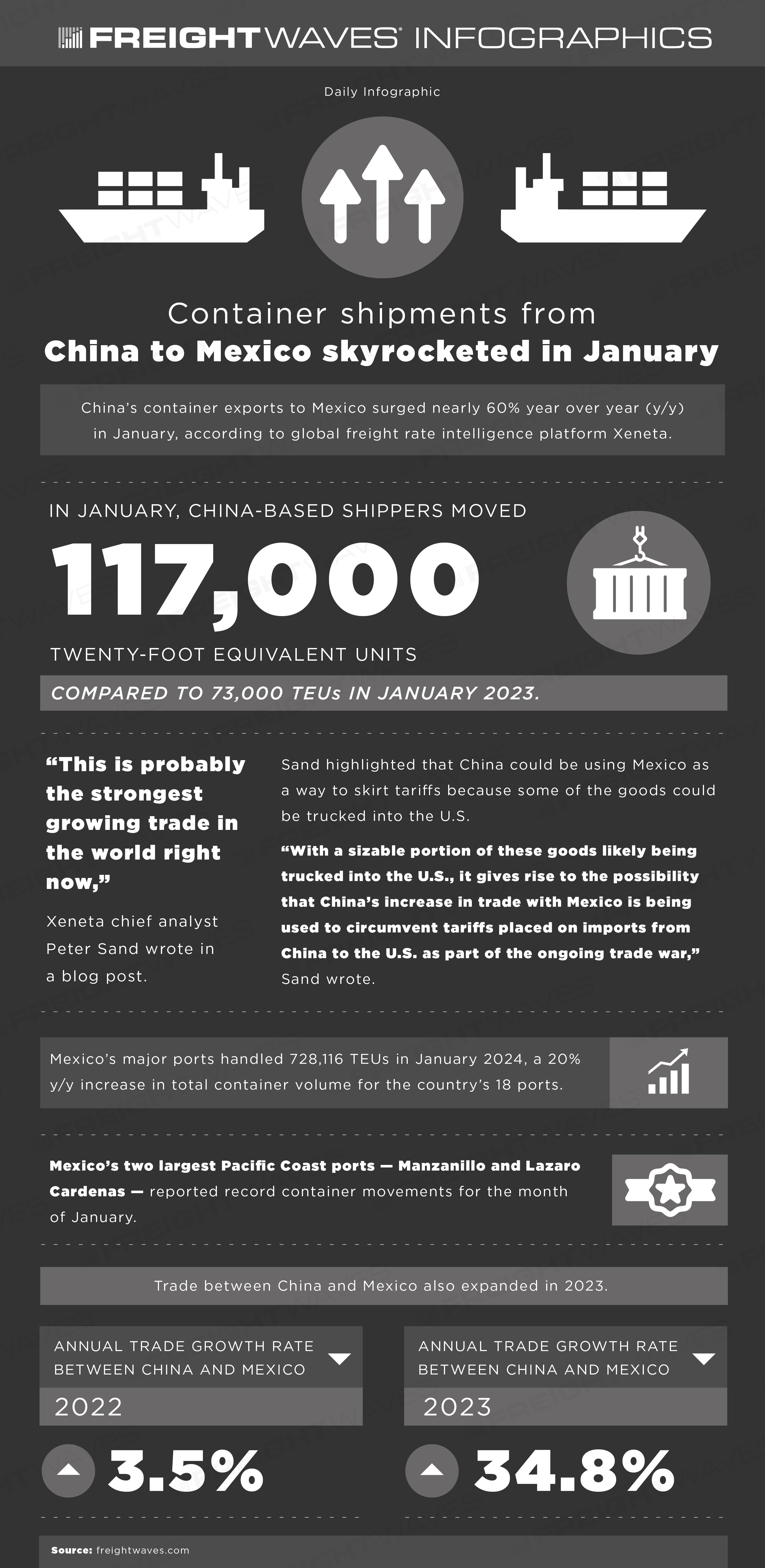
Daily Infographic: Container shipments from China to Mexico skyrocketed in January
To view more FreightWaves infographics, click here
Shuttered California trucking company files for bankruptcy
A California-based drayage company, which shuttered operations in November after its operating authority was involuntarily revoked, recently filed for bankruptcy liquidation.
Central California Cartage Co. Inc., headquartered in Goshen, filed its petition in the U.S. Bankruptcy Court for the Eastern District of California on Tuesday.
At the time of its closing, the company had 25 power units and 32 drivers. No reason was given as to why the company was forced to shut down. Central California Cartage, which was founded in 2019, hauled general freight before closing operations after its common and contract authority were revoked by the Federal Motor Carrier Safety Administration in November.
The company listed its assets as up to $50,000 and its liabilities as between $1 million and $10 million, according to the petition seeking Chapter 7 bankruptcy. It stated that it has up to 49 creditors and that no funds will be available for unsecured creditors once it pays administrative fees.
James Sigler is listed as the shareholder, director and president of the now-defunct trucking firm. Other shareholders listed in the petition include Julia Sigler and Jose Martinez.
As of publication, the company’s bankruptcy attorney, Peter Fear, had not responded to FreightWaves’ request for comment.
The company’s top creditors with nonpriority unsecured claims include Ryder Transportation Services of Chicago, which is owed more than $2.5 million; XTRA Lease of St. Louis, which is owed more than $805,000; and Valley Pacific Petroleum Services of French Camp, California, which is owed around $319,000, according to the petition.
In its petition, Central California Cartage posted gross revenues of nearly $5.8 million in 2023, a drop of around $3.8 million compared to its revenues of $9.6 million in 2022. The company did not operate in 2024.
According to FMCSA’s SAFER website, the agency granted Central California Cartage’s contract and common carrier authority in April 2019, but its operating authority was involuntarily revoked in November.
Prior to its closure, the company’s trucks had been inspected 110 times, and 28 had been placed out of service for a 25.5% out-of-service rate over the preceding 24-month period. That is higher than the industry’s national average of around 22.3%, according to FMCSA data.
The company’s drivers had been inspected 156 times, and three were placed out of service over a two-year period, resulting in a nearly 2% out-of-service rate. The national average for drivers is about 6.7%.
In the petition, Central California Cartage lists its involvement in a collections legal action filed by one of its creditors, Valley Pacific Petroleum in Tulare County Superior Court.
Do you have a news tip to share? Send me an email or message me @cage_writer on X, formerly known as Twitter. Your name will not be used without your permission.
Vote on insurgent effort at Norfolk Southern set for May 9
Norfolk Southern has set May 9 as the date for its annual meeting, when an insurgent campaign to put outside directors on the company’s board and a new CEO in place will come to a head.
The Class 1 railroad formally set the date in its proxy letter to shareholders, sent last week. The meeting will be virtual and can be streamed on the company’s website, though participation is limited to shareholders. It begins at 8:30 a.m. Eastern.
Amy Miles, Norfolk Southern’s (NYSE: NSC) board chair, is the signatory of the letter aimed at the shareholders who will determine whether the various entities that operate under the name Ancora Catalyst Institutional will prevail in its effort to place eight candidates chosen by the investor group on the company’s board.
Those candidates include John Kasich, the former governor of Ohio, cable news pundit and unsuccessful Republican presidential candidate in 2016. It also includes Allison Landry, a director at XPO (NYSE: XPO) who was a longtime equity analyst covering transportation at Credit Suisse. At 44, Landry is the youngest of the insurgent candidates nominated by Ancora.
“In 2023, Norfolk Southern took the necessary steps to restore service, improve safety, and protect our franchise,” Miles wrote in the letter. “We worked together with our customers and economic development partners to facilitate broad-based industrial development and create a robust 2024 projects pipeline to serve a diverse customer portfolio, while driving productivity so we can deliver profitable growth and enhanced shareholder value as the market improves.”
Norfolk Southern isn’t sitting still prior to the vote. Last week, it announced it had paid $25 million to CPKC (NYSE: CP), the combination of the former Canadian Pacific and Kansas City Southern railroads, to release John Orr from his position as chief transformation officer at CPKC to become chief operating officer at Norfolk Southern. There were also nonspecific considerations for the Meridian Speedway, a joint venture track between Louisiana and Mississippi where Norfolk Southern and CPKC are partners.
Orr came out of the Kansas City Southern side of the merger between the two Class 1 railroads. Earlier in his career he had worked at Canadian National (NYSE: CNI).
In a report on the change, Amit Mehrotra, who heads the transportation team at Deutsche Bank, said Orr had been passed over for an earlier promotion to COO at CN. Orr is replacing Paul Duncan, who had only been in the job for a year.
Mehrotra noted that Orr will be COO No. 3 in as many years at Norfolk Southern. “This level of churn in such an important position at a company of NSC’s size and scale is highly unusual,” Mehrotra wrote. But he added, “Based on our conversations with many industry stakeholders, it appears John Orr is a well regarded operating executive, though with limited COO experience.”
In its report last week on Norfolk Southern, Jason Seidl of TD Cowen noted that Ancora has vowed to put Jamie Boychuk into the COO role at NS if it lands its eight board members. “We ultimately think that Ancora’s board demands are not an ‘all or nothing’ proposition, and believe the most likely outcome of the proxy fight will be a deal that meets somewhere in the middle,” Seidl wrote.
Boychuk was announced as Ancora’s proposed COO last month at the same time Ancora said its proposed CEO for Norfolk Southern would be Jim Barber Jr. Barber had been COO of UPS (NYSE: UPS); Boychuk had been executive vice president at CSX (NASDAQ: CSX).
The annual meeting will feature the election of 13 directors overall. Of the candidates for those slots, only current CEO Alan Shaw is an insider.
Two of the proposed directors put forth by the company are new: Richard Anderson and Mary Kathryn Heitkamp, better known as Heidi, a former U.S. senator elected to one term as a Democrat from the deep red state of North Dakota.
Anderson has a long record running transportation-related companies. He has been CEO of Delta Air Lines and Northwest Airlines, had several jobs at Continental Airlines and most recently was president and CEO at Amtrak.
In her letter, Miles addressed the railroad’s continuing work in the wake of the East Palestine, Ohio, derailment in February 2023 that sent massive plumes of toxic smoke into the atmosphere and forced evacuations of thousands of local residents.
“Your Board of Directors is highly engaged and will continue to actively oversee management’s execution of our strategy and response to East Palestine,” Miles wrote. “We will continue to work with federal, state, and local agencies and regulators to respond to the East Palestine derailment.”
Ancora, in its latest proxy filing, summed up its views on the need to replace Shaw and now new COO Orr, though he was not identified in the letter, and to make changes on the board.
“We believe that prompt changes in Norfolk Southern’s leadership and strategy are necessary to allow the Company to meet its full potential and produce enhanced value for its customers, employees, communities and shareholders,” it wrote. “For many years, Norfolk Southern has lagged behind its peers in terms of operational metrics, safety and financial performance. The Company’s recent record, particularly the derailments of Norfolk Southern-operated trains in February 2023 in East Palestine, Ohio and on March 2, 2024 in Lower Saucon Township, Pennsylvania, reinforces the urgent need for a shareholder-driven constitution of the Company’s Board of Directors and the appointment of a new Chief Executive Officer.”
The Lower Saucon derailment spilled fuel into the Lehigh River but was not on the scale of the East Palestine derailment. Trains were running through the site two days after the derailment.
In terms of stock market performance, if Norfolk Southern is compared to CSX, its Class 1 rival in the Eastern half of the country, neither has done particularly well. Norfolk Southern’s stock performance is essentially flat since the start of 2021 but is up more than 26% in the past 52 weeks.
CSX opened up 2021 at just under $32 a share and is now at about $37.20. In the past 52 weeks, it is up about 31.8%.
FedEx deactivates 17 more aircraft as cost controls pay off
FedEx has parked 17 more freighter aircraft since November and relinquished options to buy seven Boeing 767 cargo jets, part of a multiyear cost initiative that helped the parcel titan to better-than-expected operating profit in the third quarter despite lower revenue.
Besides being cautious with aircraft utilization and investments, the Express unit expects to increase savings and yields by turning a portion of the fleet into an extension of the company’s large U.S. and European less-than-truckload business, management explained during Thursday’s earnings briefing. And hanging in the balance is a reworked U.S. Postal Service contract that could also help the bottom line.
FedEx Express (NYSE: FDX) has 37 deactivated cargo aircraft, 17 more than in the third quarter, because of the soft demand environment. It will retire nine aging MD-11 aircraft, as planned, in the quarter that ends May 31, Chief Financial Officer John Dietrich told analysts.
The grounding of three dozen aircraft is a temporary response to the lukewarm air cargo market and lower international package volumes, but FedEx also delivered long-term savings. It removed $110 million of recurring costs from the air network and international operations in line with the DRIVE campaign, aimed at trimming expenses by improving efficiency across the organization.
Structural savings for the FedEx airline came from the permanent takedown of some flights, optimizing routes and improvements in sorting efficiency at airport hubs. Officials said they expect to meet their goal of $1.8 billion in permanent cost reductions for the fiscal year and are on track for planned savings of $4 billion by fiscal year 2026, including $700 million in annual savings from flight operations.
FedEx expects to finish the fiscal year with $5.4 billion in capital spending, down $700 million from last year and $300 million from the prior forecast. Investments prioritize improving efficiency, modernizing facilities and realigning the shipping network.
Transforming air operations to improve load factors and hub efficiency are key parts of the airline’s cost equation, but so too is a reduced reliance on buying more planes outside of current commitments. FedEx is the largest all-cargo operator in the world and doesn’t need to aggressively invest in new aircraft when keeping planes full is already a challenge. New aircraft will mostly be for fleet modernization.
In fact, FedEx has added a dozen cargo jets since the end of May, including nine Boeing 767-300s and four Boeing 777s. They effectively will replace the nine MD-11s. FedEx is scheduled to receive three more 767s this quarter. And, it should be noted, the aircraft were ordered years ago when market conditions were very different, and canceling an order can be costly.
At the same time, the airline is scheduled to increase its fleet of feeder aircraft by 22 units — 14 Cessna 408 SkyCouriers and eight ATR 72-600s — during the year that ends May 31.
Management said capital expenditures for aircraft are expected to decline to about $1 billion in fiscal year 2026, with lower investment totals in future years.
Toward that end, FedEx has decided not to exercise options with Boeing for seven 767-300 freighters, according to a footnote in the company’s quarterly filings. It has 43 767 options remaining, as well as production rights for two 777s.
Another footnote caught attention because FedEx said it has an agreement to purchase two MD-11s when their leases end in 2025. Why purchase aircraft that are already on the chopping block? The reason is that the engines and parts will be harvested to support the remaining MD-11s in the fleet and the purchase price was reasonable, a company spokesperson said in an email.
Positive earnings
The Express segment recorded adjusted operating income of $256 million, a $134 million improvement year over year, despite 2.4% lower revenues, an indication DRIVE cost controls are bearing fruit.
Revenue of $10.1 billion was slightly better than analysts forecast as the company continues to pursue better-paying freight to offset lower volume. The continued decline in U.S. imports, as consumers grapple with inflation and high interest rates, and weak global manufacturing translated to lower package and freight volumes. Other revenue headwinds include lower volume from the Postal Service, lower fuel surcharges, lower-yielding deferred and e-commerce shipments, and the rise in global airfreight capacity.
In 2023, volumes for the air cargo industry fell 2% after dropping more than 8% in 2022, according to the International Air Transport Association. Average unit pricing declined 30% to 40%.
FedEx reported global average daily freight pounds decreased 11% in the third quarter and 16% in nine months. Yield for international export package services decreased 4% during the third quarter.
Short-term savings during the quarter came from a variety of areas, including lower fuel costs due to lower prices and aircraft usage. Fewer aircraft leases as a result of lower volumes drove a 13% decrease in spending on rentals and landing fees.
A good leading indicator is that domestic flight count for the FedEx airline increased 3% month over month in February, when accounting for an extra day for leap year, and 6% year over year, according to analysis by Morgan Stanley. The first part of any year is typically slower for freight transportation companies. Last month also represented the first year-over-year growth in flight activity since August 2022, perhaps signaling that cost-cutting in the air network has ended, the investment bank said.
Overall, FedEx Corp. reported adjusted earnings of $3.86 per diluted share, well above analysts’ estimates of $3.45 per share, with operating income up 19% in the third quarter. FedEx stock reached a three-year high Friday at $284.32 per share, aided by the announcement of a new $5 billion share repurchase program.
Integrating air and LTL freight
FedEx in June plans to complete the consolidation of the Express, Ground and Freight operating companies into one interoperable organization rather than operating three separate networks.
Eliminating duplicate networks, long overdue many analysts say, is expected to further drive permanent operational and infrastructure savings.
On Thursday, management presented a clearer explanation of the Tricolor network redesign, which dovetails with the corporate transformation and positions the airline to chase more freight.
“The idea is to move the right product in the right network while reducing the cost,” said CEO Raj Subramaniam.
That means diversifying an asset-heavy, high-cost air network that largely relies on the hub-and-spoke system, regardless of yield profile or service commitment, with more flexibility to utilize point-to-point flying, commercial partners and surface transportation.
The Purple network involves aircraft dedicated to high-value, expedited, time-definite international parcel volume deployed on direct flights to major sortation hubs. Express parcel has always been the core product, but instead of mixing in larger freight shipments, the network will be much more parcel-centric. Officials said service will improve too because it will be easier to sort packages without nonurgent freight getting in the way.
Fedex planes in the Orange system will operate off cycle, moving deferred freight during the daytime. By segregating parcels and freight, executives said FedEx will be able to maximize shipment density and aircraft load factors, while utilizing cheaper road transport instead of short-haul feeder service by air to and from international air hubs.
Under FedEx’s strategy to integrate disparate express, ground parcel and freight networks aircraft will be used to move deferred less-than-truckload shipments between the U.S. and Europe. (Photo: Jim Allen/FreightWaves)
“We’re fully leveraging the existing capacity in our trucking networks in the U.S. and Europe. Prior to fiscal 2024, we haven’t really moved any international freight shipment in our market-leading LTL network,” said Subramaniam. “By doing so, we reduce the cost to serve and we’re able to target more of the premium airfreight segment.”
The FedEx chief stressed that FedEx’s deferred air network targets the most profitable freight products, not heavy freight shipments that represent 20% of volume he characterized as the domain of freight forwarders.
Last month, Richard Smith, president and CEO of airline and international at FedEx, told FreightWaves that the new air strategy “expands FedEx’s offerings across the globe for freight shipments which have similar characteristics to less-than-truckload vs. the much heavier and lower yield per-pound consignments which are the provenance of traditional all-cargo carriers. In addition to international LTL shipments, the Orange network handles International Economy packages that similarly interface with FedEx’s global ground parcel systems at very low incremental costs.”
That doesn’t mean FedEx won’t be competing more directly with freight forwarders or freighter operators, both of which have increasingly upgraded capabilities to efficiently and safely handle time-sensitive and perishable products, including pharmaceuticals, fresh food and flowers, electronics, and automotive components.
Finally, the White network will serve lower-yielding e-commerce and other lower-priority shipments carried on commercial passenger aircraft. The company was previously vague about this side of the strategy, referencing the use of commercial partnerships on routes with variances in volume between locations. That suggested to some that the company wanted to outsource some lift to other cargo airlines.
“You should view this Orange network as similar to them moving Express parcels that carry a premium price on the ground using the FedEx Ground parcel network when it can still meet the commitment times. This is all resulting from the freedom of new leadership to not put shipments, parcel or freight, on the airplanes to please [founder] Fred Smith who wanted to see more aircraft being used for the express network,” said Satish Jindel, the president of ShipMatrix, a parcel consultancy.
Analysts were generally pleased with FedEx’s progress deriving benefits from DRIVE, but Bruce Chan at Stifel cautioned there is still a lot of work to do in Express to better match assets with demand.
Tricolor will be fully implemented over the course of the next year, said Subramaniam.
Decision time for Postal Service
Meanwhile, Chief Customer Officer Brie Carere said a decision on a new deal with the Postal Service could be finalized within weeks.
The existing contract for airport-to-airport transportation expires on Sept. 29, but the future of the relationship is uncertain.
The Postal Service has grown into FedEx’s largest customer, but the agency’s concerted shift to cheaper ground transportation in recent years has eroded revenue for the express carrier. The Postal Service could decide not to renew the agreement.
For its part, FedEx officials have said the Postal Service contract needs to be revised for them to consider renewal. They privately acknowledge that the contract is barely profitable because a large chunk of the linehaul network is committed to support postal volume that moves during the daytime, reducing flexibility to address inefficiencies. And in its December earnings report, the company identified the Postal Service contract as a $400 million drag on earnings.
In conjunction with DRIVE, FedEx itself is trying to reduce its daytime network and emphasize surface transportation as a first option where possible.
Carere said the parties have made “significant” progress in negotiations on a streamlined version of the existing agreement “that aligns with FedEx’s own network transformation plan, while providing the USPS with the operational reliability and outstanding service we have delivered for them for more than two decades.
“A new multi year agreement would provide a more efficient network service to fewer markets. It would allow us to better adjust our overall network to demand.”
Even if the USPS contract isn’t renewed it will help improve profitability in fiscal year 2025, management said.