




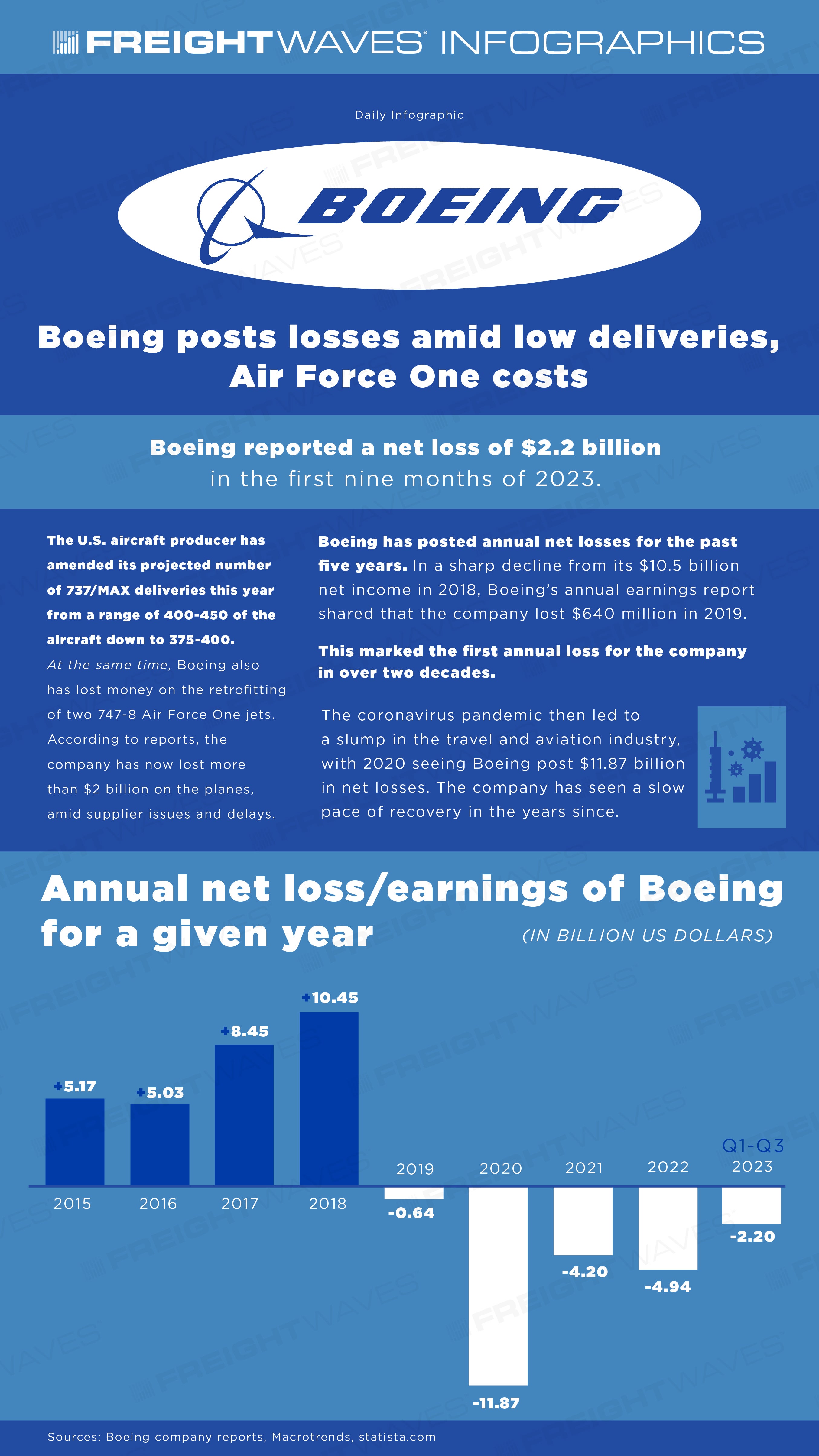
Daily Infographic: Boeing posts losses amid low deliveries, Air Force One costs

Nikola Corp.’s ability to escape near-death experiences is being tested by shouldering the $61.8 million cost of repairing its fire-prone battery electric trucks. But California’s generous incentives for electric trucks may be a path to survival as the startup’s latest peril plays out.
“California is a state on the cutting edge of technology and has big tailwinds for the transition to zero-emissions trucking with both carrots and sticks from government incentives and regulations,” Nikola CEO Steve Girsky told analysts on the company’s third-quarter earnings call Thursday.
The question facing Nikola: Are the carrots sufficient to generate enough revenue to keep the company afloat?
Southern California makes sense because drayage trucks working in the state’s ports must certify as emitting no tailpipe emissions beginning in January. Battery-electric trucks fit that use case best since the typical port-to-Inland Empire round trip is around 200 miles.
“While the pivot to the California market appears promising at first, I am skeptical if this market is big enough to support Nikola’s overhead,” Seeking Alpha investor site commentator Noah Cox wrote on Friday. “Nikola confronts significant structural hurdles in its journey to be recognized as a viable electric vehicle/hydrogen fuel cell truck manufacturer.”
The total addressable drayage truck market for zero-emission replacements in California is about 30,000 trucks. It’s universally understood that battery-electric vehicles (BEVs) will dominate the transition required by 2035.
“We believe there will be a large appetite for our trucks in the California market beginning in 2024 when the advanced Clean Fleets rule goes into effect,” Girsky said.
Time works against Nikola in its financial predicament. Class 8 BEV sales are slow. Nikola, Volvo Truck and Daimler Truck North America safety recalls hinder adoption.
The California Hybrid and Zero Emission Bus and Truck Voucher Program (HVIP) set aside hundreds of millions for dealers to apply to fleet purchases and leases for emission-free vehicles. In the case of a Class 8 hydrogen truck, it could exceed $500,000 each for a fleet of fewer than 20 trucks. The base HVIP fuel cell incentive is $240,000.
HVIP had $32 million remaining for small fleet vouchers this year as of Monday. Only small fleets — 10 or fewer trucks — will qualify for the financial aid beginning in 2025. Nikola accounted for 96% of the fuel cell vouchers and 50% of battery-electric vouchers issued as of Oct. 27, the company said.
The fuel cell incentive applied to a $450,000 truck — not counting hydrogen fuel, tax, destination and handling and other applicable fees or upfits — is stackable with a federal Inflation Reduction Act spiff of $40,000. That could persuade fleets that care about sustainable freight transport or are being pushed by shipper customers for zero-carbon alternatives to diesel.
Nikola initially wanted big fleet customers. Anheuser-Busch ordered up to 800 fuel cell trucks in May 2018, five years ahead of production that started in July. The status of that order is unclear. But third-party shipper Biaggi Brothers expects 15 FCEVs this quarter to operate for the beverage maker. Nikola projects building 30-50 fuel cell trucks by December.
Consistent with California’s shifting HVIP target, Nikola now covets small fleets.
“To make the Nikola business model work initially, we need to be highly geographically focused and build network density,” Girsky said. “We have Nikola sales team members supplementing dealer sales teams to find every opportunity to sell our trucks, to educate customers how it works. Selling new technology to a long-established industry is not easy.
“We haven’t tested how much people value being on the front end. But we know they’re out there.”

Nikola needs customers willing to pay more because early fuel cell customers got preferential pricing.
A few other states, notably New York and New Jersey, and Canada offer big incentives on fuel cell trucks. Northern California follows Southern California as Nikola’s next focus market.
Hydrogen holds promise. Toyota concluded a pilot with 10 retrofit Kenworth trucks in the LA port last year. Toyota has begun making fuel cell stacks in Kentucky that Paccar Inc. brands Kenworth and Peterbilt will sell in 2025.
“I think it’s a good option for customers that want to try something different,” said Jason Skoog, Peterbilt general manager. “It’s going to be very low volume to start, kind of like EVs are right now. The price is going to be significantly more. But we’ve been taking deposits for that truck. I guess I was surprised. There was more interest than I expected.”
Nikola has converted about 20 of 277 nonbinding fuel cell truck orders into purchases, according to CFO Stasy Pasterick. The cash register rings only after the fuel cell trucks prove their mettle in pilot demonstrations, which, depending on fleet size, can take a couple of months. Customer demos to date exceed 6,000 miles with 98% uptime.
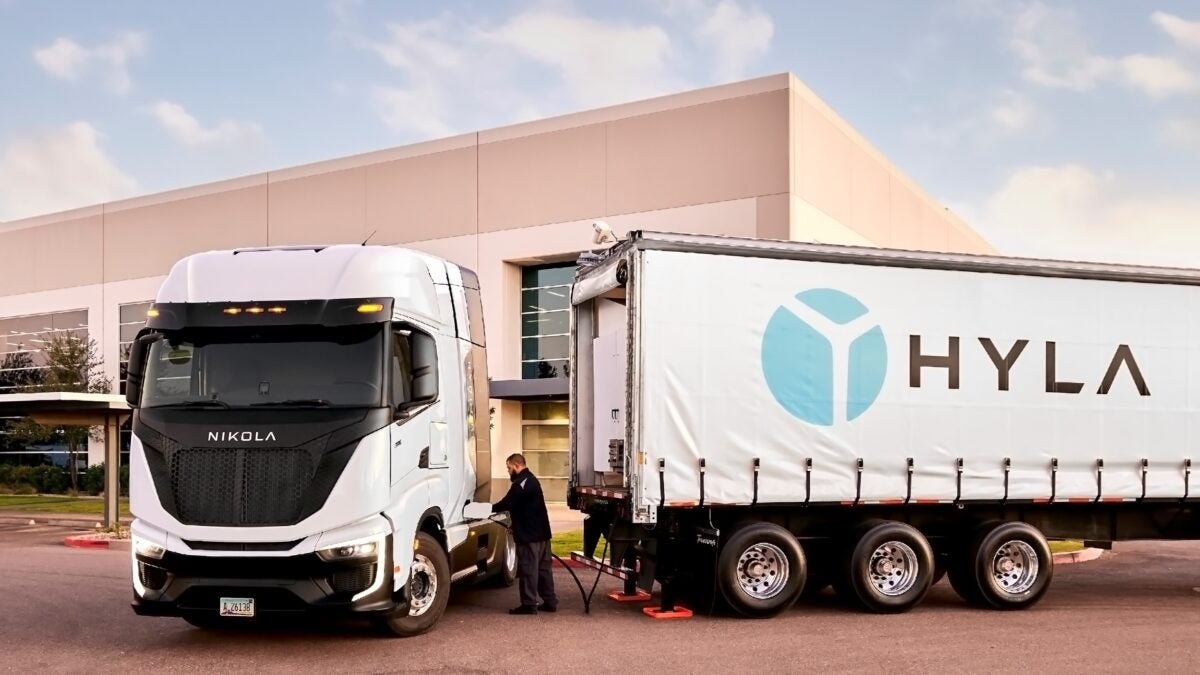
Nikola’s ambitions to provide hydrogen through a network of partnerships is stalled because the company’s cash — $362.9 million as of Sept. 30 — supports only truck assembly and recall costs.
“Working with partners is critical to ensure there is adequate capital to complete these projects,” Girsky said.
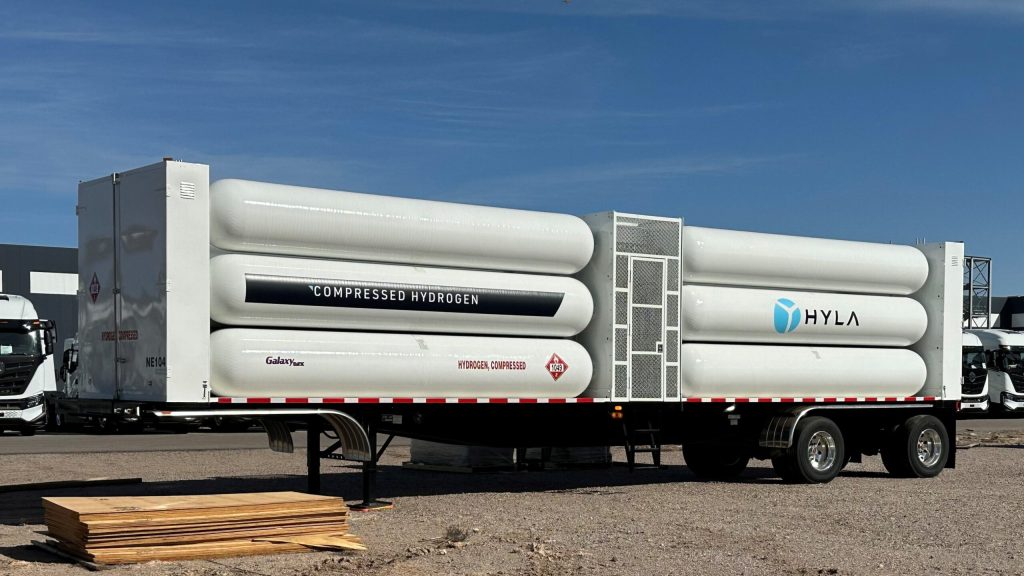
Nikola is starting with mobile distribution of hydrogen but has found less demand than expected, so it has cut from nine to an undisclosed number of hydrogen trailers.
Nikola sold its interest in a hydrogen-making hub in Buckeye, Arizona, to Fortescue Metals Group for $24 million in August. Hydrogen fuel offtake from that project would be sufficient to meet customer needs for some time once construction is completed.
Meantime, the company has access to enough hydrogen from other partners to last into early 2024.
Hydrogen transport and storage player BayoTech has begun producing hydrogen, for which Nikola will be a customer, at its BayoGaaS Hydrogen Hub in Wentzville, Missouri.
Startup infrastructure provider Voltera is working on eight Nikola-branded Hyla fuel stations with a pledge of up to 50 stations.
Editor’s note: Corrects base price of Nikola fuel cell truck and spelling of CFO’s first name.
Electric truck recall price tag for Nikola: $61.8 million
Nikola gets financial partner for 50 hydrogen stations
Nikola brands hydrogen, begins filling Anheuser-Busch fuel cell order
Air Transport Services Group, a diversified provider of cargo aircraft and transportation services, has fired CEO Rich Corrado and replaced him with Joe Hete, the current chairman of the board who previously ran the company for 17 years.
The announcement late Monday afternoon coincided with the company’s publication of third-quarter earnings after the market closed. ATSG’s (NASDQ: ATSG) revenues increased 1% to $523 million, about $15 million below analysts’ expectations, with earnings per share of 32 cents, 17 cents below consensus and almost half as much as in 2022.

Adjusted earnings before accounting measures of $137 million were 16% lower than the prior-year period, with pre-tax operating profit of $24 million falling by 63% year over year.
“Macro and operational pressures throughout the latter part of the quarter materially affected our results. Particularly in September, our passenger airline operations experienced service related issues that drove significant unplanned travel and flight crew costs. In our CAM leasing operations, we realized lower revenues from 767-200 aircraft sales and associated engine power than forecasted during the quarter,” Hete said in a statement.
Global demand for air cargo transportation is about 5% lower this year than in 2022 and is at the bottom of an 18-month down cycle.
The headwinds led ATSG to lower full-year guidance, with adjusted EBITDA going from $615 million to a range of $560 million to $580 million.
Hete, who will continue as chairman, served as CEO of ATSG from 2003 to 2020. He previously held various senior management roles at ABX Air Inc., the predecessor to ATSG that had its roots in the former Airborne Express.
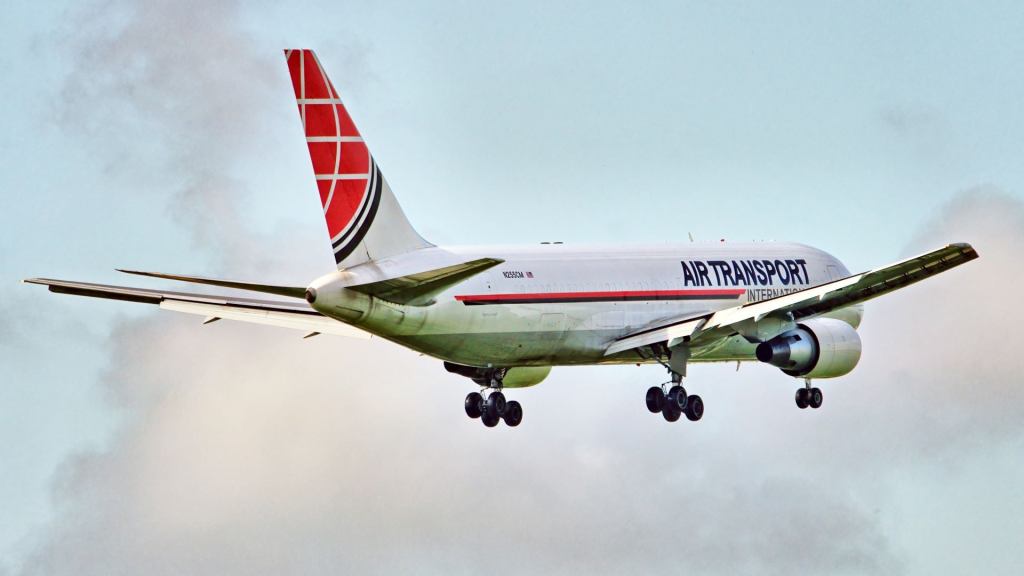
ATSG’s two cargo airlines, ABX Air and Air Transport International, are contract carriers for Amazon air and DHL Express. They also provide charter service on as needed basis for a multitude of customers. Subsidiary Omni Air provides passenger charter service for the U.S. military, airlines and others.
“After careful consideration by the board, we determined that Joe is the right leader to accelerate our strategy and capitalize on the long-term opportunities ahead. … Joe has extensive knowledge of our business and its competitive position within the industry. He is uniquely qualified to step into this role to optimize our current performance and position ATSG for the future,” said Randy Rademacher, lead independent director, in a news release.
“Under Joe’s leadership, we believe the company will be well-positioned to continue building on its strong foundation, solidifying its market-leading position, and working to deliver meaningful value for our shareholders.”
The leadership change comes one month after Tim Strauss left as CEO of Amerijet. He also was terminated without notice, according to sources with close ties to the cargo airline.
Investors have punished ATSG’s stock this year because of worries the company is committing too much capital toward fleet expansion when airfreight demand has plummeted for more than a year. In August, management scaled back projected spending for used passenger aircraft and freighter conversion work by $65 million in 2023, for a total of $785 million, to improve cash flow. On Monday, the company said weaker demand for cargo aircraft prompted it to cut 2024 capital expenditures to $505 million, $100 million less than communicated in September and $280 million less than this year.
Executives insist that express carriers and other operators around the world continue to need converted freighters to replenish aging fleets and for growth, especially as e-commerce continues to place a premium on fast delivery. They argue that lease revenue from those planes will begin to make a material impact on the bottom line in the next couple of years.
ATSG said leasing revenue from its Cargo Aircraft Management unit dipped 1% versus the third quarter of 2022 due to 11 older 767-200s returned after their leases expired and lower power-by-the hour engine maintenance contributions from those aircraft, partially offset by higher average lease rates with 11 other freighters leased since then. Two 767-200s were returned in the third quarter. Leasing income fell from $37 million to $23 million.
Income for the bundled transportation business, which includes providing crews and maintenance for leased aircraft, was more than halved to $12 million due to lower aircraft utilization on long-haul international routes for customers. Cargo flight hours decreased 4%.
The company said it plans to deliver 16 converted freighters to lease customers for the full year – three fewer than projected in August. Guidance now calls for deployment of a dozen Boeing 767-300s passenger-to-freighter aircraft (two less than before) and four Airbus A321s (one less than previously stated). The first two A321 conversions managed by ATSG were leased last summer to Raya Airways, an all-cargo carrier in Malaysia.
ATSG has 20 used passenger aircraft currently in or awaiting to be retrofitted, including seven A321s. It is a partner in a company that is producing A321 conversions. The aviation firm said it plans to purchase three Airbus A330 widebody aircraft in the fourth quarter as feedstock for conversion and delivery in 2024. It expects to deploy 11 more converted freighters next year, including six B767-300s and five A321s.
ATSG’s stock finished the day 1.8% lower at $20.25 per share, down from $22.97 on Aug. 4. and $29.05 a year ago.
Click here for more FreightWaves stories by Eric Kulisch.
RECOMMENDED READING:
Air Transport Services Group to lease 1st freighters in Bangladesh
Wall Street sours on ATSG freighter spend during cargo slowdown
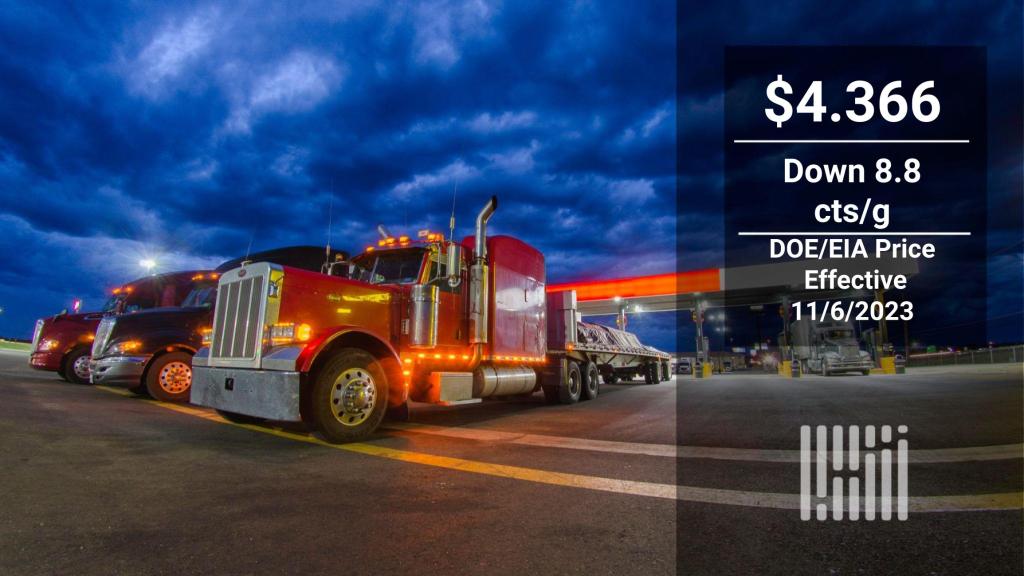
Decreases in retail diesel prices at the pump continued this past week, catching up to earlier declines in wholesale and futures prices even as those markets more recently have shown some stability.
The weekly average retail diesel price published by the Department of Energy/Energy Information Administration came in Monday at $4.366 a gallon, a decline of 8.8 cents. It is the fourth week out of the past five that the benchmark price used for most fuel surcharges fell.
Those downward moves are sandwiched around an increase of more than 10 cents per gallon two weeks ago. The net result of the changes in the past five weeks is that the DOE/EIA price is down 22.7 cents from Oct. 2. The price now is at the lowest level it has been since Aug. 7.
Prices at the pump are falling in response to significant moves in future and wholesale prices in mid-October. From an Oct. 13 peak settlement for ultra low sulfur diesel (ULSD) on the CME commodity exchange of $3.2117 a gallon, ULSD then began a slide that eventually took it to a settlement below $3 a gallon on Oct. 30.
Since then, ULSD has settled above $3 a gallon just one day — Thursday — while the last two trading days have seen settlements less than that.
Stability in the market can also be seen in the fact that Monday’s settlement of $2.9524 a gallon was only about 1.4 cents less than where it came in on Oct. 30, suggesting that the relatively large moves in retail prices seen in this week’s benchmark price are reacting to moves from two weeks ago, which is a traditional lag time.
There has not been significant news driving oil markets the past week beyond the lack of the Israel-Hamas conflict spilling into broader oil-producing areas like Iran. That relative stability is being seen by analysts as the primary reason why the price of Brent crude, the world’s benchmark, dropped to a settlement Friday of $84.89 a barrel, down from a post-Hamas invasion peak of $92.38 a barrel on Oct. 19.
As notable as the decline in the outright price of crude has been the narrowing of the forward curve. That curve — the price of delivery of crude or products out along the calendar — is seen as an indicator of inventory levels.
If inventories are tight, the front-month price is the most expensive on the curve, a market structure known as backwardation. The tighter the inventories, the steeper the backwardation.
The 12-month backwardation in Brent stood at almost $9 a barrel — a historically high level — as recently as Oct. 20. But after Monday’s settlement, it was down to $4.47 a barrel, a clear sign that the market is worrying less about supply disruptions.
That narrowing has occurred in the ULSD market as well, though not as dramatically. The 12-month spread in ULSD was almost 90 cents a gallon as recently as Oct. 17 but has been between 71 and 72 cents a gallon the past two trading days.
This is occurring even as the most visible inventory data — the weekly report of the EIA — continues to show tight stocks.
One of the most basic measures of inventory levels reported by the EIA is days cover. It is calculated by taking the estimate of inventories and dividing that by average daily consumption. While the EIA does not produce a days cover figure for ULSD, it does so for distillates, and about 90% of that pool is ULSD.
Days cover for distillates in the latest report for the week ended Oct. 27 was 28.1 days. That was the second consecutive week at that level, and it was the lowest since May. That number had been above 30 days from mid-June through September before slipping under 30 in the week ended Oct. 6.
Inventory levels would have been expected to tighten during that period as refinery maintenance season kicked into high gear. But maintenance generally is wrapped up by early to mid-November, raising the possibility that the average U.S. refinery utilization rate of 85.4% reported in the week ended Oct. 27 will start to rise as the market heads into winter.
More articles by John Kingston
State of Freight takeaways: From the floor of a very weak trucking market
Tough freight market hits Echo’s debt ratings, down a notch at S&P
Cyberattack response plans need to be in place to avoid chaos
Nearly 200 senior pilots at UPS have accepted the company’s voluntary severance package, and regional passenger airline PSA Airlines is trying to recruit them to close a crew shortage.
The head count reduction at UPS Airlines is much more limited than one envisioned at rival FedEx Express, where management has acknowledged it has more than 700 excess pilots and on Friday urged flight crews to quit for the same type of offer at PSA Airlines, an American Airlines subsidiary that operates in the Eastern half of the United States.
UPS (NYSE: UPS) in late August offered early retirement to veteran pilots as part of an effort to reduce costs in the face of shrinking parcel volumes.
Brian Gaudet, a spokesman for the Independent Pilots Association (IPA), said 193 pilots at UPS took the buyout package. That’s about 25 more than UPS originally intended, according to reporting at the time that the company was looking to eliminate 167 positions.
PSA Airlines is offering UPS pilots a $250,000 signing bonus, years of credit for flying large aircraft in commercial service and a direct pathway to eventually fly for American Airlines. It is unclear how long the offer is good for. The same program for FedEx (NYSE: FDX) pilots is available through Dec. 1, according to a memo from FedEx’s head of flight operations telling pilots to seriously consider the job alternative.
Former UPS pilots who go to PSA Airlines would fly Bombardier CRJ 700 and CRJ 900 jets that carry about 65 to 75 people, depending on the configuration.
The PSA Airlines offer at UPS is only being made to pilots who accepted the severance deal and are exiting the company, not the entire cockpit workforce, said Gaudet.
“They basically reached out to UPS and said, ‘Hey, we know you got pilots coming out. Would you mind just letting them know we are hiring?’ So UPS is just providing that information to the pilots who have chosen to separate. It’s nothing they are pushing to the active pilot group,” he said.
The IPA represents about 3,200 pilots, after the recent departures, in collective bargaining with UPS. FedEx has about 5,800 pilots on its payroll.
UPS pilots are at the top of the industry pay scale. A captain who works 30 years at UPS has a career value of nearly $17 million compared to $14.4 million at FedEx and more than $14 million at American and United airlines, according to Kit Darby, a Peachtree City, Georgia, consultant who estimates the earnings potential of pilots. A 40-year captain at UPS can make $24 million in pay, benefits and retirement. A UPS captain flying a Boeing 747-8, the largest jet in the fleet, receives nearly $34,000 per month in pay, while a FedEx pilot flying a similar large aircraft makes $30,500.
UPS is adjusting its network and flight capacity in line with deteriorating market conditions.
During the third quarter, average daily air volume was down 15.8% year over year, executives said on a conference call with analysts. The integrated parcel logistics provider said direct-to-consumer daily volume declined 13.4% compared to last year, while B2B volume was down 9%, and customers continued to shift volumes out of air to lower-priced ground transport.
UPS said total international volume was down 6.6% versus the prior year, with export volumes declining 4.1% y/y. Asia export daily volume was down 8% and export volume on the China-U.S. trade lane, the company’s most profitable international market, was down 10.3%. International revenue fell 11% to $4.3 billion due to the decline in volume.
FedEx and UPS domestic flight utilization underperformed against seasonal comparisons for September, according to research by Morgan Stanley transportation analyst Ravi Shanker. FedEx’s flight count tumbled 9% month over month versus minus 7% on average and is down 11% year over year. UPS domestic flight activity fell 12%, double the normal September dip from August, and remains down 19% against 2022.
UPS, like FedEx, is in the process of retiring its fleet of aging MD-11 freighters and reducing main-deck capacity flown by its brown tails.
The lower parcel volumes at UPS are influenced by consumers spending more dollars on services and experiences than goods, as well as retailers pushing customers to return to stores rather than simply ordering products online, CEO Carol Tomé said on the third-quarter briefing.
“You see retailers offering buy online, pick up in store, where they hadn’t offered that before,” she said.
Click here for more FreightWaves/American Shipper articles by Eric Kulisch.
Contact Reporter: ekulisch@www.freightwaves.com
FedEx tells pilots to switch to American Airlines feeder operator
Lufthansa Cargo profits wiped out in Q3
Uptick in airfreight rates creates mirage of market recovery
Daimler Truck North America (DTNA) is looking to Norway’s Hexagon Purus to electrify its Freightliner eM2 medium-duty vocational trucks that follow Class 6 straight trucks now in production.
The long-term agreement incorporates Hexagon Purus’ proprietary zero-emission technology, including battery systems, auxiliary modules, power modules and vehicle-level software. It will also include power-take-off (PTO) options to supply power to the vocational body and the equipment.
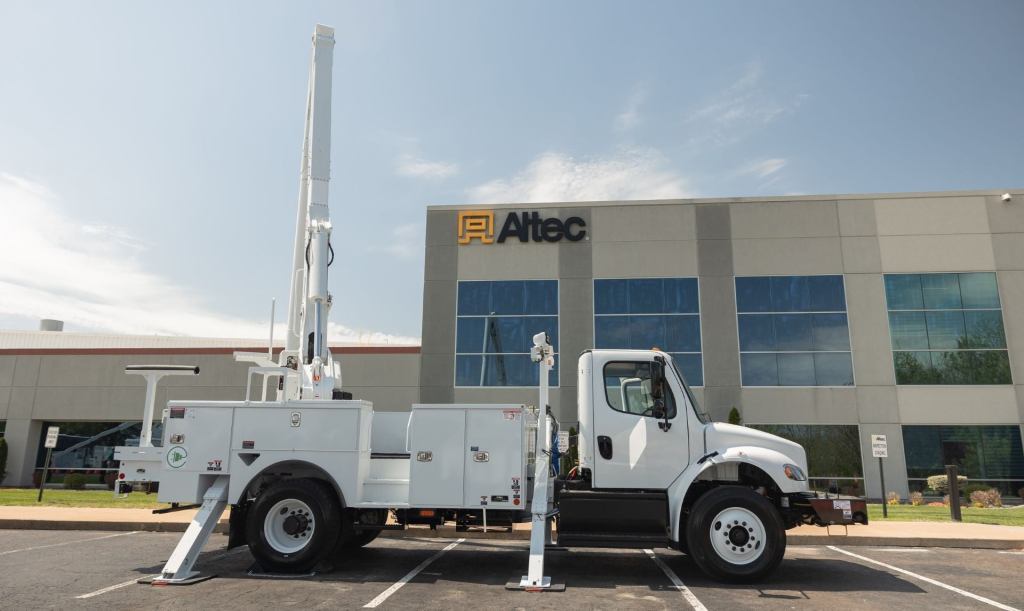
DTNA unveiled the vocational Freightliner eM2 prototype truck with vocational upfit options in May. Working with truck equipment manufacturers Alamo and Altec, the market leader showed a utility bucket truck and announced plans for expanding zero-emission to the utility, sweeper, dump, construction, towing and refuse segments.
DTNA decided to partner with Oslo, Norway-based Hexagon Purus based on a long-standing relationship and shared expertise. DTNA previously worked with Hexagon’s Agility division on natural gas fuel tank integration and the company’s first-generation electric vehicles.
Hexagon Purus’ high-voltage battery technology, known for its efficient kilowatt-hour per meter of frame length, aligns with medium-duty vocational packaging needs.
Utility truck drivers know their work as a lineman but do not think of themselves as truck drivers the way over-the-road drivers do, Brian Daniels, DTNA vice president of vocational national accounts, said at a media event in May in Anaheim, California.
“They know that bucket very well. They know what they’re repairing very well. Their key focus isn’t the operation of the vehicle,” he said.
Hexagon Purus provides electrification for light, medium and heavy-duty vehicles, buses, ground storage, distribution, refueling, maritime, rail and aerospace. It also makes high-pressure tanks for hydrogen.
“DTNA has been an important zero-emission technology development partner for Hexagon Purus in North America for several years through our participation in the Innovation Fleet program,” Morten Holum, CEO of Hexagon Purus, said in a news release.
Freightliner eM2 completes Daimler Truck EV commercial lineup
Daimler Truck adds Rizon medium-duty EV brand
Revamped Freightliner medium-duty trucks adopt Cascadia resemblance

In this final quarter of 2023, the freight market has entered an era of somber recalibration. The optimism that jumped in Q3 is now tempered by more introspection, as signs emerge that the market could remain subdued for a longer period. This new normal is less about the tumult of the past and more about steady adjustment to prolonged market softness.
The second half of 2023 has so far brought with it several major bankruptcies, leaving in their wake a new awareness among carriers and brokers of how fragile market equilibrium really is. As Q4 unfolds, much of freight’s executive class seems to be adopting a more defensive stance, suggesting collective acceptance of a “lower for longer” market scenario.
This conservative outlook is evident in the latest Freight Sentiment Indexes. North American supply chains now face the task of navigating a market that continues to downshift and has little hope of changing until Q2 2024 at the earliest.
The Q4 2023 Freight Sentiment Indexes are represented on a scale between negative 100 and positive 100, where higher numbers suggest positive sentiment or growth and lower numbers suggest pessimism or contraction. Shippers, brokers and carriers all answer the same survey questions. The results offer aggregated insights from hundreds of respondents into the industry’s health and expectations for the future.
In the first reading measured one year ago in Q4 2022, shippers registered an index of 12.68, indicative of modest confidence. That sentiment declined steadily through subsequent quarters, reaching a low of 8.32 in Q3 2023, and now is seeing a slight uptick to 9.79 in Q4 2023.
Brokers and 3PLs began with a lower sentiment of 9.84 in Q4 2022, which dipped further in Q1 2023 to 6.97. Their sentiment saw a fluctuation, climbing to 9.39 in Q2 2023 and peaking at 12.55 in Q3 2023, indicating a resurgence of confidence, before descending again to 8.78 in Q4 2023.
Carriers started with the lowest sentiment at 4.87 in Q4 2022, showing a slight improvement to 5.97 in Q1 2023 before taking a notable dip into negative territory at -0.52 in Q2 2023. There was a significant recovery to 9.17 in Q3 2023, only to decline once more to 4.41 in Q4 2023.
The overall sentiment index captures the cumulative sentiment across all segments, beginning at 9.13 in Q4 2022 and showing a gradual decrease to 6.48 by Q2 2023. A rebound to 10.01 in Q3 2023 suggested a temporary boost in confidence, but it retreated to 7.66 in Q4 2023.
Note: Survey data was fielded in the first two weeks of October.
Current sentiment among North American freight carriers reflects a sector searching for stability in Q4 2023, with the Freight Sentiment Index softening to 4.41 from a comparatively buoyant 9.17 in the previous quarter. This dip encapsulates the ongoing struggles in an industry attempting to right-size against a backdrop of excess capacity and economic uncertainty.
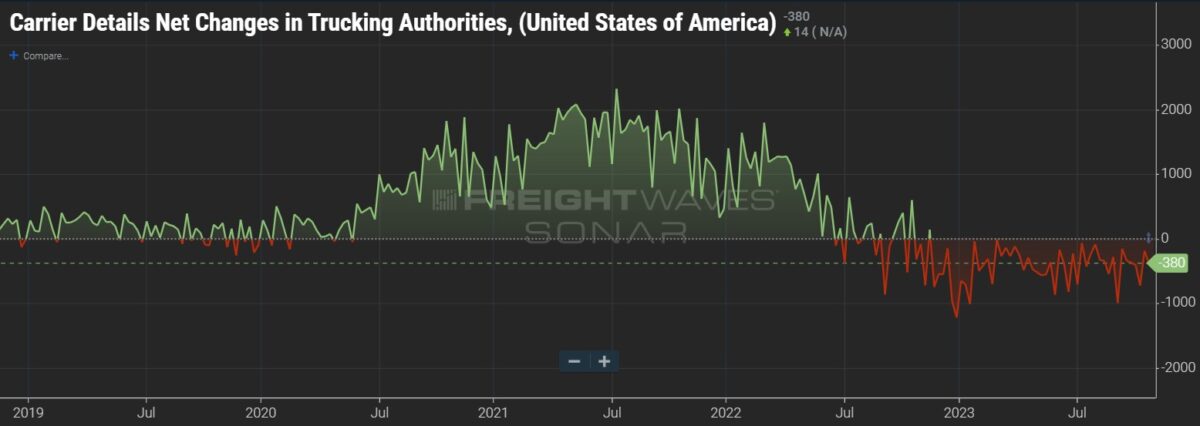
Data from recent months illustrates the truckload market is still digesting the influx of new operating authorities and tractors during the COVID-19 boom time, both of which have grown at a faster rate than tender volumes since 2018. The disparity suggests carriers are wading through a capacity surplus, which has put a damper on the segment’s margins.
The economic turbulence that began in 2022 persists, with a demand curve that has not risen sharply enough to support the breadth of available capacity. This lag is mirrored in the subdued sentiment figures, indicating that while the horizon holds promise, the immediate path remains fraught.
The plight of logistics service providers is underscored by the shuttering in recent months of several large carriers and brokerages, including FreightTech darling Convoy.
Some analysts provide a cautiously optimistic timeline for this correction, suggesting a realignment of supply and demand should materialize within a year and a half if the economy and carrier consolidation trends continue as they have. This prognosis aligns with data showing a rise in the exit rate of trucking authorities since late 2022, a potential harbinger of a more balanced market on the horizon.
While 2024 may bring the balance that carriers seek, near-term profitability remains negative, albeit less so than in Q1 or Q2. This hesitance in near-term outlook is balanced by a stronger confidence in long-term profitability, which, despite a decline from the previous quarter, remains in positive territory.
Employment indexes present a mixed view, with immediate workforce sentiment slightly negative, hinting at cautious staffing strategies. In contrast, the longer-term perspective is more stable.
Investment sentiment has cooled, with the index retreating to 2.17, suggesting a wait-and-see approach as carriers gauge the timing and strength of the market’s upswing.
These indexes collectively narrate the tale of a sector in the throes of recalibration. With an eye on future stability, carriers are wading through the near-term challenges. Their sentiment is tempered by experience and the anticipation of an industry on the cusp of change.
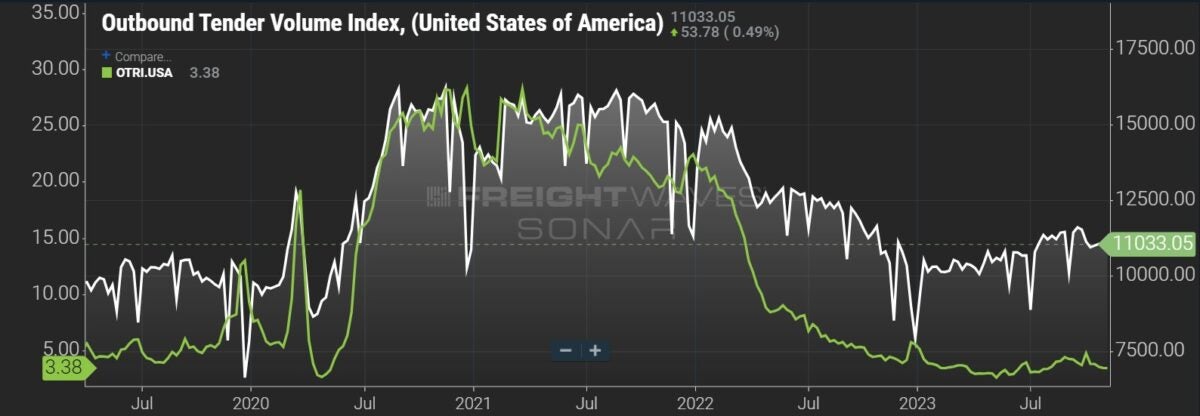
Brokers and 3PLs are confronting a pronounced shift in sentiment as they close out Q4 2023, with overall freight sentiment having receded to 8.78 from a Q3 high of 12.55. This downturn is reflective of broader constriction in the freight market, where low rates and tightened capital environments squeeze margins, testing the resilience of the brokerage sector.
Despite this dip, the year-over-year sentiment comparison reveals a sector potentially more buffered against the storm than asset-based carriers (though Convoy’s shuttering throws that idea into question). The nimble nature of brokers may afford them some agility to pivot in response to the evolving market dynamics, albeit within a more challenging landscape. Similar to carriers, they’re likely to continue to struggle until the market swings in carriers’ favor.
The stunning closure of Convoy, a digital brokerage that was recently among the most promising and best-funded upstarts in logistics, epitomizes current sentiment in the brokerage community. Like carriers, brokers are wrestling with a service overcapacity that fails to align with demand.
This sentiment is reinforced by the broader financial caution seen in the logistics space. A notable slowdown in mergers and acquisitions signals a collective pause among investors, wary of committing in a volatile market, thereby straining liquidity and expansion prospects for brokers and 3PLs.
Within this contraction lies a fork in the path for brokers: on one side, a landscape rife with challenges like diminishing freight volumes and intensified competition, and on the other, opportunities emerging from market consolidation. Here, robust entities could strategically absorb the customer and talent reservoirs of less solvent competitors, positioning themselves advantageously for the eventual market uptick.
Navigating through Q4 2023, brokers and 3PLs must walk the tightrope of managing operational efficiencies while fostering innovation, all in an era in which fiscal prudence is paramount. The subdued sentiment thus captures a snapshot of a sector eyeing the potential for rebound but anchored firmly in the reality of today’s economic headwinds.
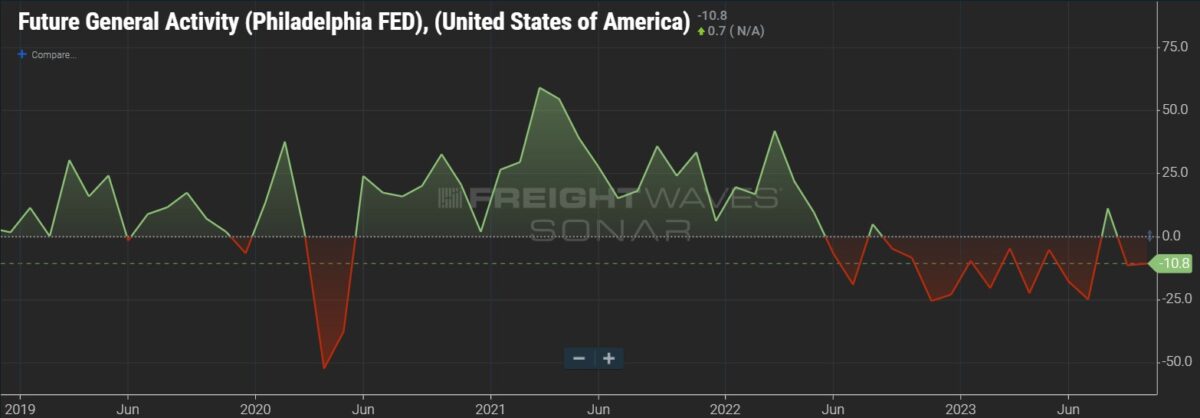
As Q4 2023 unfolds, shippers are feeling a marginal elevation in their overall freight sentiment, climbing to 9.79 from 8.32 q/q. But the numbers reveal a deeper narrative of caution.
Near-term profitability has risen to 9.8, signaling a tempered but positive response to current market conditions. This uptick over Q3 reflects some muted optimism as the industry navigates through excess capacity and elevated inventory levels, which continue to exert pressure on margins. Despite the immediate headwinds, the longer-term profitability outlook remains more positive, resting at 21.2, suggesting that shippers are banking on strategic adjustments and market corrections to bolster future earnings. This confidence could stem from an anticipation of demand stabilization and a more balanced supply chain landscape ahead.
The workforce sentiments tell a more complex story. The near-term workforce sentiment drops to a mere 0.53, suggesting head counts will remain unchanged for now. Conversely, the slight improvement in longer-term workforce sentiment to 5.97 indicates that shippers feel slightly more positive about future labor conditions.
On the business investment front, there’s a notable retreat to 11.47, showing a strategic shift toward fiscal prudence. Investments are being more carefully weighed, with an inclination toward those that can deliver immediate value in streamlining operations or reducing overhead. This conservative approach to capital expenditure reflects a broader industry trend of risk mitigation.
Shippers then are portrayed in a state of guarded anticipation, their sentiment improved but tethered closely to the broader economy (which, depending on whom you ask, is either landing softly or about to tip into chaos). They are — like carriers and brokers — gearing up for what could be another challenging year.
Related articles and white papers

The Federal Railroad Administration is awarding $16.4 billion to 25 passenger rail projects in seven states where the Northeast Corridor runs between Boston and Washington.
Some of these projects will also help facilitate the movement of freight goods via rail since freight rail and passenger rail share tracks in certain areas in the Northeast.
Projects were selected from the Federal-State Partnership for Intercity Passenger Rail, a program funded by the bipartisan infrastructure law of 2021.
Many of the projects call for the replacement of bridges that are more than 100 years old. Other capital improvements include upgrades to tunnels, tracks, power systems, signals and stations, according to a Monday news release.
“The President’s investments in rail are the boldest ever, and they’re going to bring immediate benefits to communities and the economy while laying the foundation for generations of growth,” FRA Administrator Amit Bose said in the release. “On the heels of 70 nationwide rail projects announced last month — projects funded through FRA’s CRISI program that will make freight rail safer and strengthen supply chains — today’s investment will help ensure essential rail corridors like the Northeast Corridor are modern, safe, and convenient, giving Americans access to world-class passenger service.”
Projects that could also impact freight rail movements include:
The project calls for two new two-track bridges between Havre De Grace and Perryville, Maryland, that will replace an 117-year-old existing bridge. One track will enable 125-mph operations, while the other track will allow for 160-mph operations. The existing bridge currently permits 90-mph operations. Amtrak as well as the Maryland Department of Transportation (MDOT) and Maryland Transit Administration (MTA) will fund $520.3 million of the project costs.
This project will replace an existing 116-year-old bridge between Old Saybrook and Old Lyme, Connecticut, with a modern and resilient bridge south of the existing bridge. Amtrak will provide $148 million in matching funds, while Connecticut will provide $58 million in matching funds.
Funding will help construct a new bridge in Norwalk, Connecticut, that will replace an existing 127-year-old bridge. The Connecticut Department of Transportation (CTDOT) will match $87.2 million, while Amtrak will match $29.1 million.
Funding will go toward project development and final design for a new bridge that will replace a 118-year-old bridge between Stratford and Milford, Connecticut. CTDOT will provide matching funds of $45.5 million, while Amtrak will provide $16 million.
This project seeks to improve track, signals and grade crossings in three segments totaling 6.2 miles between New Haven, Connecticut, and Springfield, Massachusetts. Double tracking is also planned to expand rail capacity. CTDOT will provide $41.9 million toward the project.
Funding will go toward the final design of a new two-track bridge that will replace an existing 115-year-old structure in Bronx, New York. Amtrak will match $14.6 million.
Funding will go toward development activities aimed at replacing a 110-year-old, two-rack bridge with a new four-track structure plus track upgrades. Amtrak and MDOT/MTA will match $5.9 million and $1.6 million, respectively.
This project will fund the development needed to replace a 118-year-old existing bridge in Westport, Connecticut, with a new bridge. CDOT will match $4.2 million, while Amtrak will match $1.6 million.
Funding will go toward project development to replace the 110-year-old, two-track, movable Bush River Bridge in Harford County, Maryland, with high-level fixed structures that will have track upgrades. Amtrak and MDOT/MTA will provide $3.7 million and $980,000 respectively.
This project seeks to replace and upgrade fiber optic communications cables and network infrastructure at 60 locations along the New Haven Line in Connecticut, which is used by Amtrak, the Metro-North commuter railroad and freight operators. CTDOT will provide $2.7 million, while Amtrak will fund $1.1 million for the project.
Meanwhile, other projects receiving significant federal funding include $4.7 billion to replace the Baltimore and Potomac Tunnel with the Frederick Douglass Tunnel; $3.8 billion for constructing the Hudson River Tunnel in New Jersey and New York; and $1.26 billion for rehabilitating the East River Tunnel in New York.
A total of $36 billion over the next five years could be made available in the intercity passenger rail improvements program, with $12 billion going toward intercity passenger rail projects and high-speed rail projects nationwide, the U.S. Department of Transportation said in Monday’s release. Further announcements on these grants could be made in the coming months.
The full list of projects is available here.
Subscribe to FreightWaves’ e-newsletters and get the latest insights on freight right in your inbox.
Click here for more FreightWaves articles by Joanna Marsh.
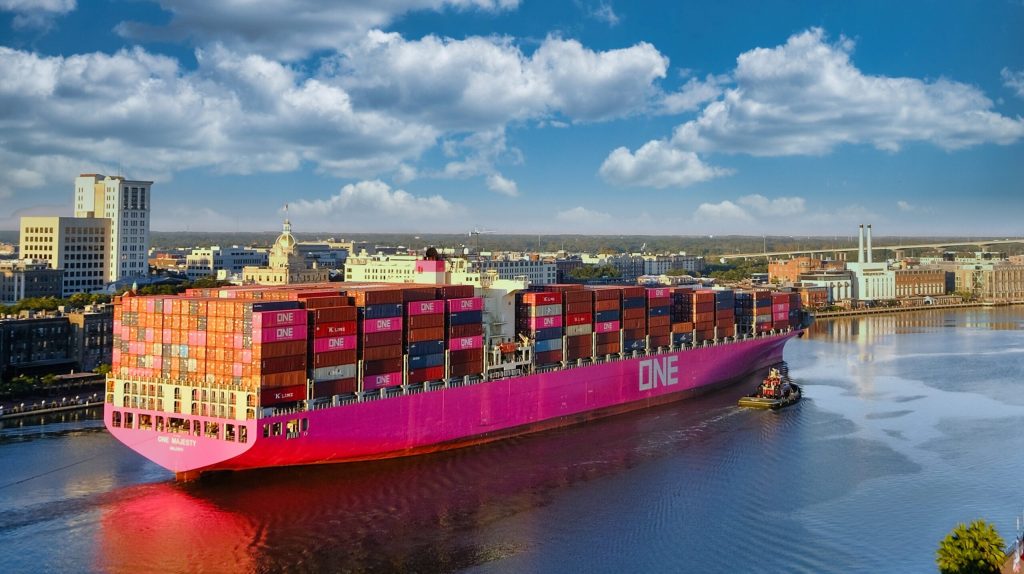
Organized labor is having a moment. Unions representing port workers, parcel deliverers, auto workers, writers, actors, teachers and others are securing or seeking to secure hefty salary increases by striking or threatening to strike.
Container shipping flows to the U.S. have been affected by labor negotiations this year — and could be even more affected by union action in 2024.
In June, the International Longshore and Warehouse Union (ILWU), which represents over 40,000 West Coast dockworkers, secured a new contract with a 32% pay raise over six years and a one-time bonus for work during the pandemic.
The next labor battlefield: ports along the East and Gulf coasts.
“Members should prepare for the possibility of a coastwide strike in October 2024,” the International Longshoremen’s Association (ILA) — the union representing 45,000 East and Gulf Coast dockworkers — warned in a press release on Saturday.
The current six-year agreement expires on Sept. 30, 2024. “The union will hold firm on its pledge not to extend the contract beyond its expiration date,” said the ILA.
The timing, coincidentally, will have significant political implications. President Joe Biden has courted the union vote amid recent labor disputes. If the ILA were to go on strike on Oct. 1, port chaos would coincide with the final month of Biden’s reelection bid.
ILA President Harold Daggett will provide an update to members on contract negotiations at a union meeting on Tuesday, building upon his remarks at an ILA convention in July.
“If it goes to the wire, I will guarantee there will be no extensions and we will be out on the street,” said Daggett at the July convention. “Don’t come back and say we cannot afford that kind of raise. You definitely can afford it — and you know it.”
The United States Marine Alliance (USMX) represents dockworker employers at East and Gulf Coast ports and shipping lines serving those facilities. The ILA is seeking a new contract from USMX that includes “a landmark compensation package,” prohibitions against terminal automation and tightened language ensuring all work at new terminals goes to ILA members.
The issue of labor positions at new terminals has already boiled over, well before the contract deadline.
The Port of Charleston, South Carolina, opened the Leatherman Terminal in April 2021, the first greenfield U.S. terminal to open since 2009. Leatherman uses a hybrid labor model, with state employees as lift-equipment operators and ILA members in other positions.
The ILA sued USMX and two ocean carriers, Hapag-Lloyd and OOCL, for $300 million (since raised to $500 million), alleging this violated the master contract and that new jobs should go to ILA members. The National Labor Relations Board (NLRB) ruled last December that the ILA had the right to sue. The U.S. 4th Circuit Court of Appeals confirmed the NLRB decision in July.
The case is now up for consideration before the U.S. Supreme Court.
Two and a half years after the 700,000-twenty-foot-equivalent-unit Leatherman Terminal opened for business, “it sits largely idle, and the state’s investment in the port and regional economy is wasting,” said the state of South Carolina in its Supreme Court brief.
Meanwhile, five months after the West Coast labor agreement was reached, container shipping flows continue to be affected.
Some importers shifted their supply chains this year in preparation for a possible West Coast strike, switching to services calling at East and Gulf Coast ports. Those changes are “sticky” — while some cargo may have returned to Los Angeles and Long Beach, California, much has not.
The rhetoric alone on a possible strike at East and Gulf Coast ports could affect importers’ supply chain plans next year.
Importers shipping goods from Asia could bring more cargo back to West Coast ports, particularly given growing and concurrent concerns about Panama Canal water levels. Importers could also bring peak-season volume forward to avert the risk of cargoes caught in a strike next October.
If so, that would extend an import timing trend seen this year.
“We’ve seen the calendar evolve and change and inventory pulled forward sooner in the calendar year than was historically the case,” said Matthew Shay, president of the National Retail Federation (NRF), during a Port of Los Angeles press conference on Oct. 23.
“A lot of that is because consumers are shopping differently. We see various retail sales events occurring in the month of July, and we see promotions earlier than ever in the season. So, consumers have changed their behavior and retailers have adapted to that.”
If dockworkers went on strike at East and Gulf Coast ports next October, the theoretical impact on U.S. import flows could be even more severe than if there had been a West Coast strike.
According to statistics from independent analyst John McCown, the top East and Gulf Coast ports handled 51% of U.S. containerized imports in July-September, the top West Coast ports 49%. The volume is similar.
But the West Coast ports primarily handle imports from Asia, while imports to East and Gulf Coast ports are much more diverse. In addition to Asian cargo arriving via the Panama and Suez canals, these ports handle substantial volumes from Europe and South America.
U.S. Census Bureau data shows that around 20% of all U.S. containerized imports are from Europe, with almost all of those cargoes handled by East and Gulf Coast ports.
In the case of an ILA strike, cargo from China that would have gone to Charleston or Savannah, Georgia, could be rerouted to Los Angeles or Long Beach and shipped overland by rail, a well-established logistics option. Rerouting options would be much more extreme for cargo from Europe that was blocked from unloading on the U.S. side of the Atlantic.
Click for more articles by Greg Miller
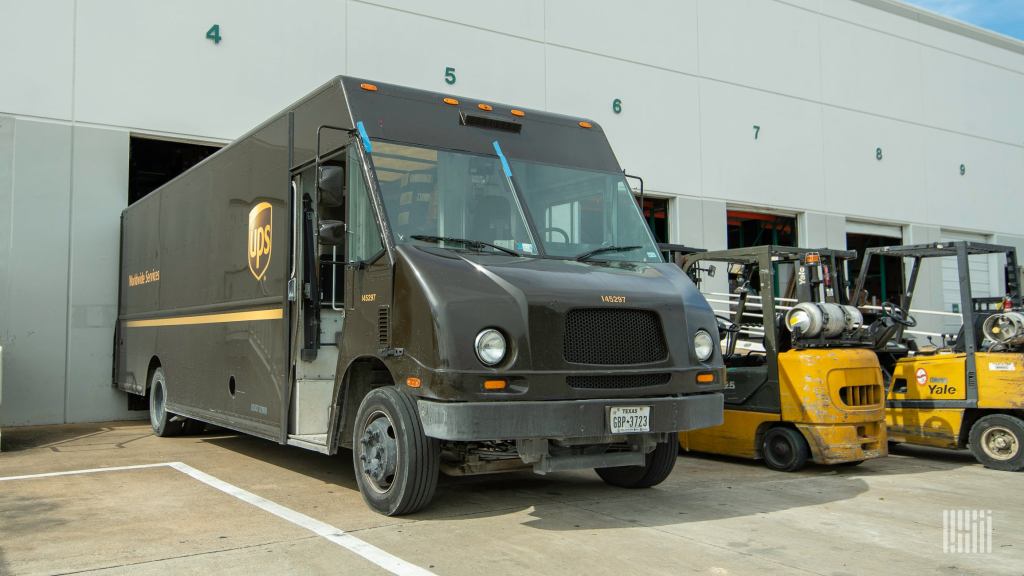
The U.S. Supreme Court on Monday let stand a lower court ruling that denied a UPS Inc. driver’s request to force the company to allow him to operate a smaller delivery vehicle with a softer suspension due to back, hip and buttocks injuries sustained while driving a larger, heavier vehicle.
The justices declined to review an appeal of a 4th U.S. Circuit Court of Appeals decision earlier this year that found that Jay Hannah’s request to keep driving his designated route with a smaller truck or a van wasn’t a reasonable accommodation under the Americans with Disabilities Act (ADA). Hannah, a West Virginia-based driver, said the larger vehicle he was driving had a stiff suspension that’s harsher on his hip, back and buttocks.
UPS instead argued that allowing Hannah to use a smaller vehicle such as a van or a light truck would violate the collective bargaining agreement between UPS (NYSE: UPS) and the Teamsters union by requiring other drivers to operate more than 9.5 hours a day. The company also maintained that putting Hannah in a smaller vehicle would require him to make more trips and would be unsafe and non cost-effective.
According to the petition before the justices, Hannah said he wasn’t sure if he could fit all his packages in a smaller vehicle because he never had the chance to try it out.
The main question before the justices was whether an employer’s decision not to modify the equipment used by a union employee considered enough evidence to find that the employer can’t offer a reasonable accommodation to the employee. The corollary question was whether an employer’s selection of the equipment used to perform a job precludes a court from considering whether the modification of the equipment would still allow a union employment to perform his or her job’s essential functions under the parameters of the ADA.
The high court’s action was first reported on Bloomberg Law. Hannah’s attorney declined to comment.