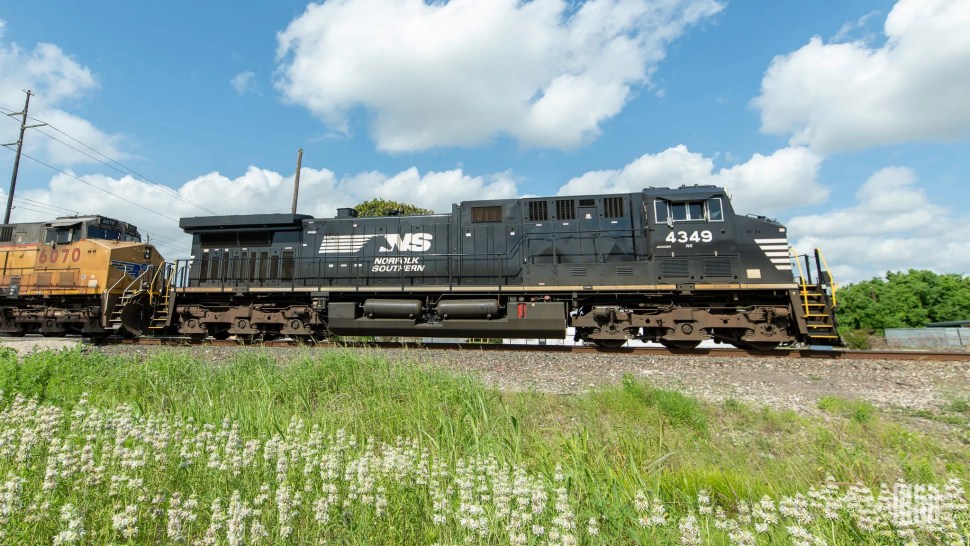
The Surface Transportation Board has launched merger resources pages on its website just a day after Union Pacific and Norfolk Southern confirmed that they are engaged in advanced talks over a combination that would create the first U.S. transcontinental railroad.
UP (NYSE: UNP) and NS (NYSE: NSC) said their talks may not result in a deal.
The STB’s information includes a sample timeline that depicts how a Class I railroad merger application might flow through the regulatory review process. That process — from railroads notifying the board of their intent to merge to a review of the application and final decision — would play out over a 19- to 22-month period.
The timeline would be subject to change based on how long it takes to complete the required environmental review or any additional hearings the board may hold. The Canadian Pacific Kansas City (NYSE: CP) merger review took two full years.

The resources page includes merger regulations and the board’s 2001 decision that discusses its rationale for imposing higher standards on additional mergers involving the big Class I systems.
The old merger rules essentially encouraged mergers. The current regulations increase the burden on railroads by requiring them to show that their merger would be in the public interest and enhance competition rather than merely preserve it.
The 2001 rules, which were drawn up after rapid consolidation in the 1990s led to service problems in the aftermath of the Union Pacific-Southern Pacific merger and the CSX (NASDAQ: CSX) and Norfolk Southern split of Conrail, remain untested. And none of the major Class I systems have filed a merger application under the new rules.
The board’s review of the Canadian Pacific-Kansas City Southern merger was conducted under the old rules. Certain mergers involving KCS were exempt from the board’s 2001 rules.
Subscribe to FreightWaves’ Rail e-newsletter and get the latest insights on rail freight right in your inbox.
Related coverage:
Union Pacific expands domestic intermodal service
Union Pacific posts record financial results
Union Pacific and Norfolk Southern confirm advanced merger talks
Brokerage Compliance Symposium
The day before F3. Every compliance issue you face - fraud exposure, carrier liability, FMCSA rules, cargo theft, insurance gaps - navigated by attorneys and operators defining best practices in a changing industry.
F3 Awards Dinner
The night before F3. FreightTech100 companies honored. FreightTech 25 and Shipper of Choice winners revealed live. Cocktail reception into dinner and live music - 300 industry leaders in one purpose-built room.
F3: Future of Freight Festival
Industry-defining keynotes, rapid-fire technology demos, and industry leaders networking in experiences across Chattanooga - plus the inaugural F3 Awards Dinner featuring the FreightTech and Shipper of Choice reveals.
The day before F3. Every compliance issue you face - fraud exposure, carrier liability, FMCSA rules, cargo theft, insurance gaps - navigated by attorneys and operators defining best practices in a changing industry.
The Signal at Chattanooga Choo Choo • Chattanooga, TN Register NowThe night before F3. FreightTech100 companies honored. FreightTech 25 and Shipper of Choice winners revealed live. Cocktail reception into dinner and live music - 300 industry leaders in one purpose-built room.
The Signal at Chattanooga Choo Choo • Chattanooga, TN Register NowIndustry-defining keynotes, rapid-fire technology demos, and industry leaders networking in experiences across Chattanooga - plus the inaugural F3 Awards Dinner featuring the FreightTech and Shipper of Choice reveals.
The Signal at Chattanooga Choo Choo • Chattanooga, TN Register Now