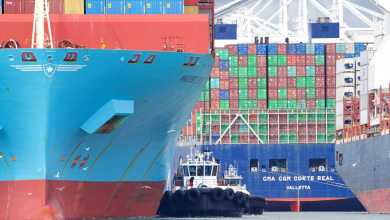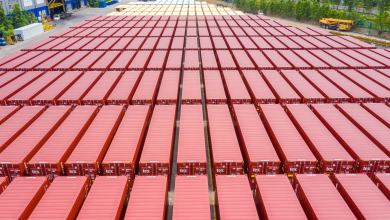
How three Chinese companies cornered global container production
The containers that U.S. shippers need are all built in China, where factories could set a new production record this year.
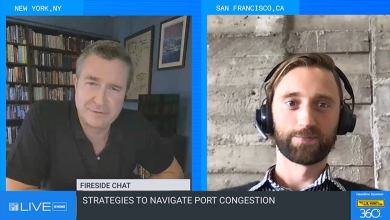
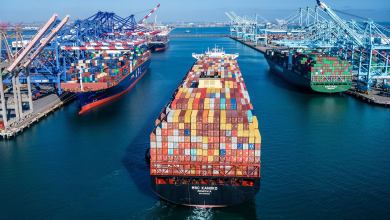
How bad is it? A Vietnam-New York slot was just offered at $19,000 per FEU, reveals Flexport’s Nerijus Poskus.
Shippers call on lawmakers to expand government oversight of contracts between ocean carriers and their customers.
ZIM is the liner most exposed to upside from America’s import binge. It’s taking full advantage of the situation.
Dan Kopp, CEO of freight brokerage ITG Transportation Services, joins Trey Griggs, VP of sales at Lean Solutions Group, to discuss the ocean shipping environment at FreightWaves LIVE @HOME.
Container activity was 275,840 TEUs at the port in April, an increase of 25% year-over-year for the month of April.
With the retail inventory-to-sales ratio still falling, U.S. importers are urged to move fast on their holiday import plans.
The Freightos Baltic Index (FBX) is the world’s leading—and most accurate—index of market rates for 40′ containers.
Container rates are in uncharted territory. If demand continues to outpace supply, there’s little to stop them from ascending further.
The situation for importers is getting even more dire. Already extreme container rates are ascending to even higher peaks.
Danaos will stockpile cash from the current boom and spend it on new ships when environmental regs are clearer.
Formerly containerized cargoes are being loaded onto bulkers. Box-ship orders are keeping future bulker growth in check.
Maersk reveals more details on its shift toward long-term contracts at the expense of spot exposure.
Importers are scrambling as demand sails past ocean transport supply. The numbers paint an ominous picture for cargo shippers.
The Freightos Baltic Index (FBX) is the world’s leading—and most accurate—index of market rates for 40′ containers.
2001: Several shipping lines are close to ordering the first container ships of 8,000- to 9,000-TEU capacity, but others in the industry are warning of the associated risks.
COVID has been great for stocks. In ocean shipping, container and dry bulk shares rode the wave. Tankers stocks sank.
Chinese container production still trails torrid demand. Ever Given accident was ‘icing on the cake’ — making box shortfall worse.
Now that shipping lines hold the pricing cards, importers must reset strategies, says Sea-Intelligence’s Jochen Gutschmidt.
Trans-Pacific container crunch is about to become even more severe, warns Flexport, with May sailings now effectively sold out.