Who’s hauling America’s Fourth of July explosives?
On June 6, a trailer full of fireworks burned and detonated for 25 minutes on I-75 outside Chattanooga. The driver had no hazmat endorsement, no placards, no shipping papers.
Federal safety rules attach to the truck, not the driver. Get under the weight, the seats, or the license class, and some screening lifts. Here’s what the inspection data shows about who ends up behind the wheel of your delivery truck.
Pre-trip inspections are the first line of defense against mechanical failure on the highway. For most of the industry, they are a 30-second checkbox exercise completed in the cab. That gap between regulation and reality is showing up in courtrooms.
Under National Registry 2, the physician is now required to upload the results directly to the FMCSA, which then transmits the data to the state. The driver’s career and the carrier’s compliance both depend on a workflow that the physician may not understand exists.
While a booming heavy-industrial sector has shielded certain segments, the broader housing affordability crisis is actively suppressing volumes across multiple shipping modes.
The Headline Number: Spot Rates Hit an All-Time Record Craig Fuller set the tone in the opening minutes, and the data backed it up at the close. The SONAR National Truckload Index, which tracks daily spot rates inclusive of fuel, hit 383, an all-time record. Fuller, a self-described rate nerd from a trucking asset background, […]
As enforcement tightened on long-haul trucking, marginal operators did not leave the business. They moved into hotshot and auto transport, where the rigs are smaller, the inspections fewer, and the insurance cheaper.
From cartel-linked theft investigations to testimony before Congress, Lemm’s message was clear: cargo theft is no longer just a transportation problem.
Commercial auto has lost $4.9 billion in a single year. Fourteen consecutive years of underwriting losses. Crash rates are actually falling. So why is the industry bleeding? It stopped doing the one thing insurance was designed to do.
Pull up the import data on U.S. charcoal briquette shipments and you are looking at something that some people in trucking would not think to check heading into a holiday weekend. But that data, read against the consumer spending picture for Memorial Day 2026, tells you something specific about the supply chain, the retail freight […]
A Freightliner Cascadia operated by Amritsar Trans Inc., a five-truck carrier out of Manteca, California, rear-ended three vehicles on Highway 99 near Lodi on May 19, 2026, killing two young men. The driver fled on foot. The carrier sits inside a web of 267 carriers clustered across residential addresses in the same ZIP code, and 10 involuntary revocation actions.
FMCSA removed 12 more electronic logging devices from the registry today, bringing the total to 79 revocations since January 2025. The registered list is bleeding devices faster than the market is adding them. At this rate, the agency may be building a de facto third-party certification standard without ever formally adopting one.
Safe isn’t always exposure-free or risk-free. Compliant isn’t always safe. What “safety” means doesn’t matter. A carrier can be all three of those things on paper and still bury everyone who touched the load in exposure. This is a working primer on how risk professionals actually vet, qualify and screen a carrier.
The BUILD America 250 Act changes broker qualification rules, overhauls the DataQs violation dispute process, and puts a federal clock on hair drug testing. Here is what those three provisions mean for brokers, motor carriers, insurance renewals and driver capacity
The BUILD America 250 Act creates the first federal framework for autonomous commercial trucks. It is not a green light. DOT has 2 years to write the safety standard; the liability question stays in front of a jury; and the bill funds retraining for drivers in the cab today.
Authorities in Florida arrested 14 suspects tied to what investigators describe as a highly organized theft network responsible for millions in stolen merchandise. Detectives say the group operated across multiple states while using logistics, resale operations, and coordinated theft methods that resembled a structured criminal enterprise more than isolated retail theft.
The Supreme Court just told 28,000 freight brokers that they owe a duty of ordinary care in carrier selection. The question every broker, shipper, and 3PL should be asking is not whether they need a carrier vetting process. That question was answered on May 14. The question is: what technology are they using to build one that a jury will believe?
The Supreme Court just opened the courthouse doors to negligent-hiring claims against brokers. The only federally required financial backstop is a surety bond designed to make sure carriers get paid. It was never meant to cover a wrongful death.
The Supreme Court ruled unanimously today that state negligent-hiring claims against freight brokers are not preempted by the FAAAA. Twenty-eight thousand brokers just woke up in a different legal universe.
Cargo theft is not slowing down. It is adapting. What used to happen outside the operation is now happening inside it.
The American trucking industry built its workforce narrative on a myth, and the modern driver, who wants to be home by Friday and isn’t interested in sleeping in a cab for two weeks, is the one exposing it.
An investigative analysis of the security gaps in American commercial trucking, from terrorism to trafficking and how CVSA Roadcheck plays an important role.
DOJ targets organized cargo theft and freight fraud, elevating federal focus within the logistics industry.
Freight fraud exposed: $10M scam highlights logistics vulnerabilities and cargo theft risks.
FMCSA revoked two more electronic logging devices today, bringing the total to 67 noncompliant devices removed since January 2025. Carriers using Safe ELD or MYLOGS ELD have until July 7, 2026, to replace them or face out-of-service orders.
An investigation found 195 active motor carriers clustered along a few miles of East Dublin Granville Road in northeast Columbus; the same corridor was just exposed for a billion dollars in Medicaid fraud. Federal inspection data shows those carriers have been involved in 275 crashes, including 4 fatal and 74 injury crashes. The world’s largest retailer appears in 175 inspections across 44 of those carriers with a 20.6% out-of-service rate.
Nearly $4 million in stolen cargo was recovered in a Los Angeles County case tied to multiple companies, with one arrest made following a search warrant in Vernon.
Cargo theft incidents are being linked to motor carrier authorities that appear legitimate but may be controlled by unknown operators.
We have a carrier-quality problem with a specific geographic signature, an enforcement problem documented for decades, and a financial problem for American carriers competing against operators who pay their drivers 35 cents a mile to do work that American drivers expect 78 cents a mile to perform.
We have never seen a twelve-month period in which the White House, the Department of Transportation, and FMCSA moved as aggressively, as comprehensively, and as effectively on the specific safety failures that haunt our highways and our industry. Before we sit down with Derek Barrs on Monday, here is the year that got us here.
FBI warns of rising cyber cargo theft, as cybercriminals increasingly target freight industry operations
While global competitors in Europe and Asia are grappling with surging gas prices and heavy war-risk premiums, the United States is emerging as a structural winner in heavy manufacturing.
More than 300,000 carriers operate in a system that cannot fully verify who is behind each authority. With limited enforcement and disconnected data, fraud continues to enter through the front door. This May, industry leaders are heading to Washington, DC to address the problem at its source.
On April 23, a State Department spokesperson confirmed that commercial truck driver visa processing has resumed under strict new standards. Now the question is whether the states tasked with running the new system have the institutional capacity to maintain what federal audit pressure forced them to fix.
A CDL driver disappeared from a Florida rest stop on April 17 with multiple vehicles missing from his hauler. Cargo theft is at record levels and the pipeline moving stolen American vehicles out of the country has never been more active.
This week the agency announced that new Clearinghouse registrants will have to prove their identity before gaining SAP-level access to a federal database that 38 million queries have trusted since 2020.
A Florida man has been charged in a federal case involving more than $600,000 in stolen onions and potatoes. Prosecutors say the scheme relied on posing as a legitimate business to secure and redirect shipments.
89 agents control process agent relationships for 1.67 million American carriers, several of those agents cannot be verified as legally incorporated entities in any state, In 2019, the FMCSA said enforcement personnel were reporting an inability to complete service of process when the agent on file simply refused to answer.
The driver isn’t always taking the load. They’re creating the moment where it can be taken.
Former Walmart head of global logistics Gary M. Adams has joined the board of Gnosis Freight. Adams spent more than 30 years at the retailer, modernizing supply chain operations
FreightWaves has compiled a comprehensive SONAR Sitrep detailing the ground-level logistics impact of America’s AI data center build-out.
Gord Magill has been behind the wheel since high school. So was his father. So was his grandfather. That lineage gives “End of the Road: Inside the War on Truckers” something most books about trucking fundamentally lack: the credibility that comes only from someone who actually lived it.
Stolen freight worth $1M recovered by deputies, preventing major cargo theft loss.
On Nov. 30, 2022, a delivery driver put Athena Strand in the back of a branded van and strangled her. The company that hired him was seven months old. Its owner had never worked a day in the trucking industry. The box was checked. The FBI has linked more than 850 murders to commercial truck drivers since 2004 and is tracking 450 active suspects right now. This is a hiring problem. It has always been a hiring problem.
One gap was all it took. By the time it was noticed, the load was already too far gone to recover.
The war with Iran moved diesel up nearly 50 percent in five weeks and analysts are modeling $6 and higher if the Strait of Hormuz stays disrupted into summer. Carriers are repricing surcharges, shippers are absorbing new fees and everyone is looking for relief. The biggest lever most fleets have on their fuel budget is not an aerodynamics package or a new engine spec. It is the driver.
Three updates to SONAR’s load prioritization and coverage strategy tool give carrier sales teams deeper lane intelligence, more actionable guidance, and a live connection between internal freight systems and the market. CHATTANOOGA, Tenn. — April 8, 2026— SONAR today announced a significant expansion of Coverage Guide, SONAR’s load prioritization and coverage strategy tool, with three […]
A data-driven investigation into the risk retention groups insuring America’s most dangerous carriers, the factoring companies keeping them cash-flowing, and what happens to crash victims when the whole thing collapses.
One Indianapolis suburb has 1,000 newly registered trucking carriers. One neighborhood inside that suburb has more than 300 active carriers covering roughly 250 homes. The CDL crackdown is real, starting today in Indiana
A Denver-papered, Chisinau-operated freight broker dispatched a truck owned by a carrier with 10 fatalities on its federal record, driven by a man with a temporary CDL. Seventeen people and their families paid for it in Beaumont, Texas.
America’s highways became a testing ground for unqualified drivers long before anyone in Washington was paying attention. Now, with Transportation Secretary Sean Duffy shuttering thousands of sham CDL schools and placing unqualified truckers out of service, he emphasized to the frontline at the Mid-America Trucking Show that drivers’ day has finally come.
One in eight return-to-duty clearances in the FMCSA Clearinghouse may be fraudulent. This is the network that made it possible.
The $750,000 federal minimum set in 1980 has lost 70% of its purchasing power and covers a fraction of what a serious crash costs today.
No federal law requires an insurer to evaluate a carrier’s safety record before issuing a commercial trucking policy and that’s creating a significant safety gap.
The difference between what a driver should catch on the pre-trip and what a PM program should catch before the truck ever leaves the shop tells two completely different stories about where the failure lives
Let’s start with what is not in dispute. In 2023, 5,472 people were killed in traffic crashes involving large trucks, according to the National Highway Traffic Safety Administration’s Fatality Analysis Reporting System — the most reliable national crash database that exists. Seventy percent of those people — 3,837 of them — were not in the […]
How a cocaine-positive truck driver exploited a federal self-certification loophole to clear 1,000 prohibted Clearinghouse violations
Rates, liability, legal chaos and insurance exposure are colliding in real time. Most carriers are not prepared for it.
Maersk’s Sam Coiro explains how the ocean giant uses its existing fulfillment infrastructure and multi-carrier network to deliver packages coast to coast with one label, one invoice and one tracking number.
Part two of a two-part series on how Dragos Sprinceana, while carrying $889,630 in unpaid federal fines, became a self-described envoy to Trump’s inner circle.
Part one of a two-part series that highlights 150 crashes, 10 fatalities, $889,630 in unpaid federal fines, and a dead man running a Mar-a-lago linked trucking company
FMCSA just put the industry on formal notice of the sale of MC authorities and DOT numbers.
For the first time, legislation introduced in the 119th Congress would require every motor carrier, subcontractor, and owner-operator hauling Department of Defense freight to certify they have no ties to Chinese military companies, and back that certification up with their signature.
A driver gets his permit in Hawaii, boards a plane to New Jersey, trains Sunday through Thursday, passes a skills test on Friday, flies home Saturday, and walks out of a DMV with a commercial driver’s license. Federal law allowed all of it. That’s the problem.
A bill moving through the House of Representatives right now would establish the first federal framework for putting fully autonomous heavy-duty trucks on public roads. The SELF DRIVE Act of 2026 — formally H.R. 7390, introduced February 5 by Rep. Bob Latta of Ohio — is being framed by its supporters as a necessary step […]
Diesel prices have spiked to $5.96 per gallon in premium markets as escalating Middle East tensions collide with America’s crumbling refinery base. The surge comes at a critical inflection point for trucking, with tender rejection rates climbing and capacity tightening after a brutal four-year freight recession, raising questions about whether the industry can capitalize on the recovery when fuel costs threaten to erase margin gains.
America sits on more oil than it can refine. While the Strait of Hormuz burns, the real chokepoint is between the wellhead and the truck stop.
A firsthand, frontline reality of how freight moves from broker, carrier, spot, shipper direct, interlined and non-commodity freight to the crash scene.
New bills, new enforcement actions, and a September deadline that turns every stalled bill into a live round.
Shares of Freightos Limited fell roughly 30% shortly after the digital freight platform announced its founder Zvi Schreiber would step down from its board of directors.
A dangerous driver is still in a truck with his own DOT number, operating under someone else’s authority.
The seventh installment in FreightWaves’ investigation into America’s trucking insurance crisis reveals that the apparent diversity of the commercial truck insurance market is an illusion. Behind dozens of subsidiary names filing BMC-91s with FMCSA sit a small number of Fortune 500 holding companies. The concentration of risk is worse than anyone in the industry realizes.
The Entry-Level Driver Training regulations took effect in February 2022 after years of development and industry lobbying. The result was a federal training standard that requires no minimum hours of instruction, relies on self-certification at every checkpoint, and leaves every meaningful decision about actual driver competency to the fifty states, each operating in fifty different ways. The fraud factories did not slow down.
The Supreme Court ruled 6-3 that IEEPA does not authorize the President to impose tariffs. Within hours, the White House invoked Section 122 of the Trade Act of 1974 to impose a new 10% global surcharge, later raised to 15%. Up to $175 billion in collected duties now sits in legal limbo. Section 232 tariffs on steel, aluminum, and heavy trucks remain untouched. For the freight industry, the ruling didn’t end the trade war. It changed the weapons.
When a truck kills someone, we ask who was driving. We never ask who insured them. That question tells you more about what went wrong than anything else in the crash file.
Executive orders, rulemakings, legislation, and court challenges all operate on different timelines with different powers and different guardrails. Yesterday’s historic Duffy-Barrs press conference was the biggest enforcement announcement in a generation, and it still has to survive the process. Here’s why, and what comes next.
Our investigation reveals that 5% of carriers, as identified by their insurers, account for nearly a third of all truck crashes. No federal or state law requires insurers to review a single page of safety data before binding a policy.
The 287(g) program has turned local law enforcement into immigration officers across 40 states. Compliant hiring is not defensible hiring. Here’s the difference, and why it matters now more than ever.
American agriculture rarely makes front-page freight headlines, yet it quietly underpins a significant portion of trucking demand. Grain, livestock, fertilizer, seed, feed, refrigerated meat, packaged goods, ethanol, farm equipment—entire freight ecosystems depend on a stable farm economy. Recent reporting has highlighted a sharp rise in farm bankruptcies and growing concern from agricultural leaders about systemic […]
You can’t own a fishing boat, fly an airplane, broadcast a radio signal, split an atom, or drill for oil in America without proving you’re an American. But you can operate an 80,000-pound commercial motor vehicle on every highway in every state in the nation without being a citizen of this country, or even setting foot in it. Welcome to the American trucking industry, where the door isn’t just open. It’s been taken off the hinges.
For the better part of three plus years, most small carriers and owner-operators have felt like they’ve been grinding uphill in soft dirt. Rates fell, truckload volumes cooled and tender rejections disappeared. All while new authorities flooded in and every time it looked like things might turn, something else pushed it back down to a […]
For decades, insurance was the one thing you couldn’t fake your way past to start a trucking company. That’s no longer true. As instant-issue coverage and $300 authority fees make it easier than ever to place 80,000 pounds on public highways without verification, a scalable, pre-authority risk-control model could restore the gate the industry lost without adding a single federal employee to the payroll.
My investigation found 76 Risk Retention Groups insure nearly 30,000 motor carriers linked to more than 6,300 fatal crashes, all without state guaranty fund protection for crash victims. The findings come as reports indicate that major insurers, including Chubb and AmTrust, are exiting the Chicago trucking market, funneling high-risk carriers into RRGs that have already incurred $199 million in unpaid losses and multiple insolvencies.
It’s a win.
The non-domicile CDL final rule eliminates EADs as a pathway to a commercial license and restricts eligibility to H-2A, H-2B, and E-2 visa holders. With 97 percent of the current 200,000 non-domiciled CDL holders unable to qualify under the new standard, expect 30,000 to 40,000 drivers removed from the commercial pool every year.
GXO Logistics expects North American freight demand to remain stable in 2026, guiding for flat volumes while leaning on new contract wins.
42 investigative article links covering CDL mills. Chameleon carriers. Fraudulent examiners. Bought legislators. Exposed vehicles. Every failure point in America’s deadliest supply chain crisis, exposed by an 25 year industry veteran.
For most owner-operators and small carriers, the conversation about survival usually starts with rates. Fuel prices come next. Then brokers. Then regulations. But during a recent episode of The Long Haul, one reality kept surfacing over and over again: many carriers don’t fail because they can’t run freight — they fail because they never fully […]
Less than 1% of insurer-carrier relationships are tied to 6% of the crashes and fatalities in America. The scorecard shows exactly who. The fix isn’t just regulation. It’s insurers taking ownership of their books and investing in risk-control professionals who actually know trucking.
The question people always ask is, “Where did they get the money to grow to 500 trucks?” It’s all in the model, and it’s often rinse, reuse, repeat.
A fatal Indiana crash has exposed a pipeline stretching from Kyrgyzstan to Chicago to Philadelphia, chameleon carriers sharing trucks and DOT numbers, a CDL school with no public footprint, an ELD allegedly built with a backdoor, and a driver whose immigration status passed a federal database check. Secretary Duffy is investigating. Will the investigation follow the money?
The agency confirmed investigators visited the carrier linked to a deadly Indiana crash and a massive chameleon network. But the enforcement pathway matters more than the headline.
A Mexican licencia federal de conductor can be obtained without a behind-the-wheel road test. Third-party brokers advertise mail-order processing for as little as $200. Under existing reciprocity agreements, that license can be converted to an American CDL in states that accept foreign credentials, and at least six of those states have been flagged by FMCSA for failing to verify the legal presence of non-domiciled applicants.
On Tuesday afternoon, a 30-year-old truck driver from Philadelphia named Bekzhan Beishekeev failed to stop for slowed traffic on State Road 67 in Jay County, Indiana. He swerved into oncoming traffic and killed four Amish men from the Bryant community: Henry Eicher, 58, his sons Menno, 33, and Paul, 31, and Simon Schwartz, 22.
GenLogs provides a visual, objective source of truth. You can put your eyes on what a carrier is actually doing: where they’ve been, when they last hauled freight, whether they ever hauled freight, and for whom. Instead of asking carriers what they claim to do, GenLogs shows you what they actually do.
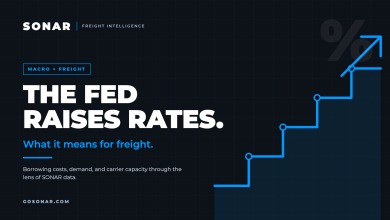
11 rate hikes, 26 months of manufacturing contraction, driver wages falling behind inflation, while the Fed blamed workers for price increases. Kevin Warsh’s nomination signals a fundamental shift in how Washington thinks about monetary policy , and trucking stands to benefit.
FMCSA and its state partners conduct 3.3 million roadside inspections annually, placing nearly a million vehicles and drivers out of service, but states are measured on inspection volume, not enforcement outcomes. The inspectors’ own alliance wants to eliminate the requirement that carriers confirm they fixed the problems. There are 800,000 carriers and 12,000 audits a year. Texas has a state law that conflicts with federal ELP requirements, so drivers get licensed there and are placed out of service elsewhere. We’re counting inspections. Nobody’s counting compliance.
Arizona lawmakers just passed a bill out of committee that would let cops seize a commercial truck on the spot if the driver is here illegally with a fake CDL. Welcome to the new reality of trucking legislation, where highway safety and border enforcement are colliding in ways that will reshape how carriers operate.
Nearly 88,000 trucking companies closed in 2023. Fraud losses topped $455 million in 2024. Carriers filing claims against $75,000 surety bonds are discovering that the pot’s already been split 50 ways. As the Supreme Court prepares to rule on whether brokers can be held liable for hiring bad carriers, it’s time to ask: who really bears the risk in freight, and is the system rigged against the people actually moving the loads?
The National Weather Service is forecasting a “significant East Coast winter storm threat” for this weekend, with a coastal low forming Friday and rapidly intensifying into a bomb cyclone as it tracks up the Eastern Seaboard. If you’re running freight anywhere from the Carolinas to Boston over the next five days, you need to pay attention right now.
The Florida Senate Transportation Committee voted 6-3 on Tuesday to advance legislation requiring law enforcement to detain commercial truck drivers in the country illegally, impound their vehicles, fine owners $50,000, and ban the carrier from operating in the state. This is the tip of the spear now aimed at CDL programs nationwide.