Who’s hauling America’s Fourth of July explosives?
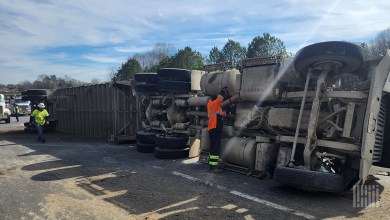
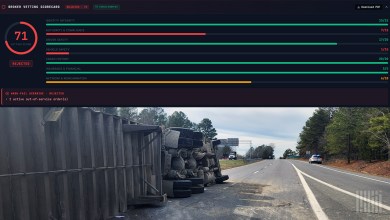
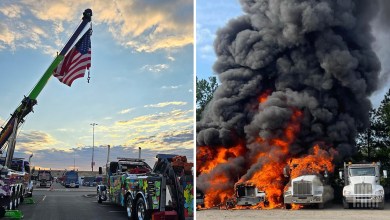
On June 6, a trailer full of fireworks burned and detonated for 25 minutes on I-75 outside Chattanooga. The driver had no hazmat endorsement, no placards, no shipping papers.
Federal safety rules attach to the truck, not the driver. Get under the weight, the seats, or the license class, and some screening lifts. Here’s what the inspection data shows about who ends up behind the wheel of your delivery truck.
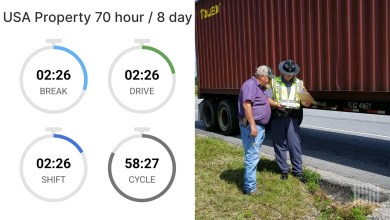
Pre-trip inspections are the first line of defense against mechanical failure on the highway. For most of the industry, they are a 30-second checkbox exercise completed in the cab. That gap between regulation and reality is showing up in courtrooms.
Under National Registry 2, the physician is now required to upload the results directly to the FMCSA, which then transmits the data to the state. The driver’s career and the carrier’s compliance both depend on a workflow that the physician may not understand exists.
While a booming heavy-industrial sector has shielded certain segments, the broader housing affordability crisis is actively suppressing volumes across multiple shipping modes.
The Headline Number: Spot Rates Hit an All-Time Record Craig Fuller set the tone in the opening minutes, and the data backed it up at the close. The SONAR National Truckload Index, which tracks daily spot rates inclusive of fuel, hit 383, an all-time record. Fuller, a self-described rate nerd from a trucking asset background, […]
As enforcement tightened on long-haul trucking, marginal operators did not leave the business. They moved into hotshot and auto transport, where the rigs are smaller, the inspections fewer, and the insurance cheaper.
From cartel-linked theft investigations to testimony before Congress, Lemm’s message was clear: cargo theft is no longer just a transportation problem.
Commercial auto has lost $4.9 billion in a single year. Fourteen consecutive years of underwriting losses. Crash rates are actually falling. So why is the industry bleeding? It stopped doing the one thing insurance was designed to do.
Pull up the import data on U.S. charcoal briquette shipments and you are looking at something that some people in trucking would not think to check heading into a holiday weekend. But that data, read against the consumer spending picture for Memorial Day 2026, tells you something specific about the supply chain, the retail freight […]
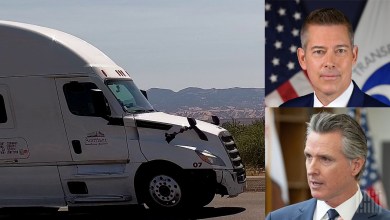
A Freightliner Cascadia operated by Amritsar Trans Inc., a five-truck carrier out of Manteca, California, rear-ended three vehicles on Highway 99 near Lodi on May 19, 2026, killing two young men. The driver fled on foot. The carrier sits inside a web of 267 carriers clustered across residential addresses in the same ZIP code, and 10 involuntary revocation actions.
FMCSA removed 12 more electronic logging devices from the registry today, bringing the total to 79 revocations since January 2025. The registered list is bleeding devices faster than the market is adding them. At this rate, the agency may be building a de facto third-party certification standard without ever formally adopting one.
Safe isn’t always exposure-free or risk-free. Compliant isn’t always safe. What “safety” means doesn’t matter. A carrier can be all three of those things on paper and still bury everyone who touched the load in exposure. This is a working primer on how risk professionals actually vet, qualify and screen a carrier.
The BUILD America 250 Act changes broker qualification rules, overhauls the DataQs violation dispute process, and puts a federal clock on hair drug testing. Here is what those three provisions mean for brokers, motor carriers, insurance renewals and driver capacity
The BUILD America 250 Act creates the first federal framework for autonomous commercial trucks. It is not a green light. DOT has 2 years to write the safety standard; the liability question stays in front of a jury; and the bill funds retraining for drivers in the cab today.
Authorities in Florida arrested 14 suspects tied to what investigators describe as a highly organized theft network responsible for millions in stolen merchandise. Detectives say the group operated across multiple states while using logistics, resale operations, and coordinated theft methods that resembled a structured criminal enterprise more than isolated retail theft.
The Supreme Court just told 28,000 freight brokers that they owe a duty of ordinary care in carrier selection. The question every broker, shipper, and 3PL should be asking is not whether they need a carrier vetting process. That question was answered on May 14. The question is: what technology are they using to build one that a jury will believe?
The Supreme Court just opened the courthouse doors to negligent-hiring claims against brokers. The only federally required financial backstop is a surety bond designed to make sure carriers get paid. It was never meant to cover a wrongful death.
The Supreme Court ruled unanimously today that state negligent-hiring claims against freight brokers are not preempted by the FAAAA. Twenty-eight thousand brokers just woke up in a different legal universe.
Cargo theft is not slowing down. It is adapting. What used to happen outside the operation is now happening inside it.