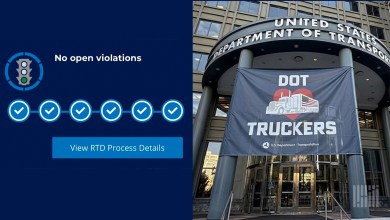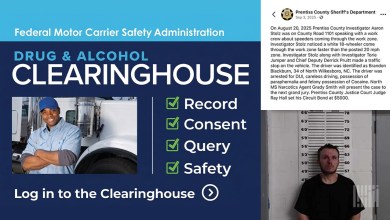
1 in 85: The cocaine-positive truck driver turned pretend SAP cleared 1,000 drug violations
How a cocaine-positive truck driver exploited a federal self-certification loophole to clear 1,000 prohibted Clearinghouse violations
Rates, liability, legal chaos and insurance exposure are colliding in real time. Most carriers are not prepared for it.
Maersk’s Sam Coiro explains how the ocean giant uses its existing fulfillment infrastructure and multi-carrier network to deliver packages coast to coast with one label, one invoice and one tracking number.
Part two of a two-part series on how Dragos Sprinceana, while carrying $889,630 in unpaid federal fines, became a self-described envoy to Trump’s inner circle.
Part one of a two-part series that highlights 150 crashes, 10 fatalities, $889,630 in unpaid federal fines, and a dead man running a Mar-a-lago linked trucking company
FMCSA just put the industry on formal notice of the sale of MC authorities and DOT numbers.
For the first time, legislation introduced in the 119th Congress would require every motor carrier, subcontractor, and owner-operator hauling Department of Defense freight to certify they have no ties to Chinese military companies, and back that certification up with their signature.
A driver gets his permit in Hawaii, boards a plane to New Jersey, trains Sunday through Thursday, passes a skills test on Friday, flies home Saturday, and walks out of a DMV with a commercial driver’s license. Federal law allowed all of it. That’s the problem.
A bill moving through the House of Representatives right now would establish the first federal framework for putting fully autonomous heavy-duty trucks on public roads. The SELF DRIVE Act of 2026 — formally H.R. 7390, introduced February 5 by Rep. Bob Latta of Ohio — is being framed by its supporters as a necessary step […]
Diesel prices have spiked to $5.96 per gallon in premium markets as escalating Middle East tensions collide with America’s crumbling refinery base. The surge comes at a critical inflection point for trucking, with tender rejection rates climbing and capacity tightening after a brutal four-year freight recession, raising questions about whether the industry can capitalize on the recovery when fuel costs threaten to erase margin gains.
America sits on more oil than it can refine. While the Strait of Hormuz burns, the real chokepoint is between the wellhead and the truck stop.
A firsthand, frontline reality of how freight moves from broker, carrier, spot, shipper direct, interlined and non-commodity freight to the crash scene.
New bills, new enforcement actions, and a September deadline that turns every stalled bill into a live round.
Shares of Freightos Limited fell roughly 30% shortly after the digital freight platform announced its founder Zvi Schreiber would step down from its board of directors.
A dangerous driver is still in a truck with his own DOT number, operating under someone else’s authority.
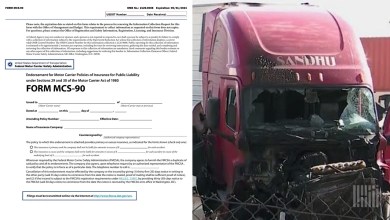
The seventh installment in FreightWaves’ investigation into America’s trucking insurance crisis reveals that the apparent diversity of the commercial truck insurance market is an illusion. Behind dozens of subsidiary names filing BMC-91s with FMCSA sit a small number of Fortune 500 holding companies. The concentration of risk is worse than anyone in the industry realizes.
The Entry-Level Driver Training regulations took effect in February 2022 after years of development and industry lobbying. The result was a federal training standard that requires no minimum hours of instruction, relies on self-certification at every checkpoint, and leaves every meaningful decision about actual driver competency to the fifty states, each operating in fifty different ways. The fraud factories did not slow down.
The Supreme Court ruled 6-3 that IEEPA does not authorize the President to impose tariffs. Within hours, the White House invoked Section 122 of the Trade Act of 1974 to impose a new 10% global surcharge, later raised to 15%. Up to $175 billion in collected duties now sits in legal limbo. Section 232 tariffs on steel, aluminum, and heavy trucks remain untouched. For the freight industry, the ruling didn’t end the trade war. It changed the weapons.
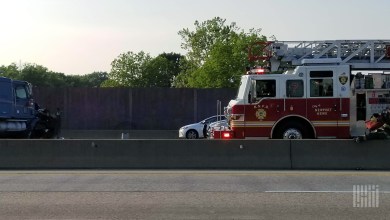
When a truck kills someone, we ask who was driving. We never ask who insured them. That question tells you more about what went wrong than anything else in the crash file.
Executive orders, rulemakings, legislation, and court challenges all operate on different timelines with different powers and different guardrails. Yesterday’s historic Duffy-Barrs press conference was the biggest enforcement announcement in a generation, and it still has to survive the process. Here’s why, and what comes next.