Capacity increases keeping spot market moderated for now
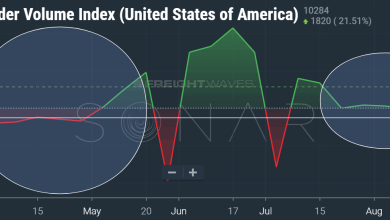
There is plenty of evidence for increased capacity in the freight market. Volumes are higher than they were in March when the spot market was considered more volatile.

The full brunt of Florence has yet to be felt in the freight market, but there was plenty of regional impact as carriers and shippers scrambled over the past week to mitigate damages.
For the trucking market, the third quarter has been stronger than the second, but no one would know it
It looks like the freight market is waking up from the long running summer doldrums, or is it just a byproduct of the pre-holiday shipper procrastination.
Carriers and brokers have been talking about how slow August has been. Good news: According to our technical indicators, the market is about the turn back in their favor
HCI Equity Partners says in amended filing it may enter transaction to help Roadrunner’s balance sheet.
Volume falls this week in the freight markets but rejections are flattening indicating there are still some spots where capacity is an issue.
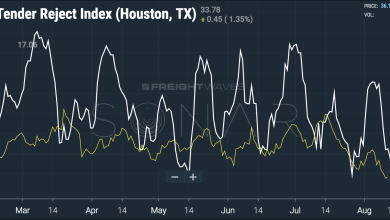
Tender rejection rates for reefer trucks outbound from Houston have oscillated wildly all year. Even compared to other regional markets, shippers and carriers are having a difficult time matching capacity to volume.
This week’s freight market continues the same patter toward stability, but volume remains steady as we move towards a more volatile time of year.
Wall Street is in a panic over fears that the truckload sector has peaked. Wall Street is wrong. We break down the reasons using data from SONAR.
This week in freight showed more of the same with continued stabilization, but history tells us this may not last for much longer.
Sophisticated freight brokerages can widen their margins when rates soften faster than shippers realize, but now’s a risky time to quote spot loads, because historical data suggests the market is about to tighten again.
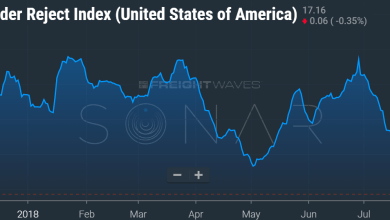
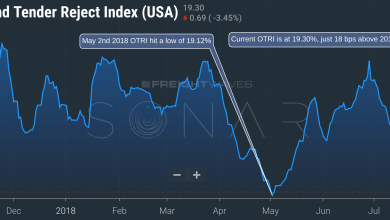
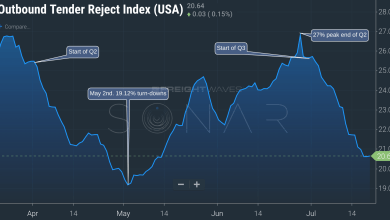
Tender rejections continue to fall towards the May 2nd low, indicating that capacity is loosening in the market. If it reaches the critical level of 19.12%, it could mean that the rest of the summer will be disappointing for carriers that reported a bullish summer outlook.
Freight markets continued to cool last week, but have stalled for the moment. Isolated markets showed increased activity around the international borders. What we should be looking at moving forward as we move into August?
July has started off slower than carriers would like, showing normal freight patterns. Softer demand is also impacting utilization in the market.
The freight markets continue to cool, but looking at the bigger picture provides perspective on what to expect moving forward.
The freight markets took a slight break in the last few days, but this is nothing new and is not a sign of a turning market…yet.
Freight markets still hot to close Q2; COSCO/OOCL merger approved by US, China; Tesla hits Model 3 production goal; CSX revives plan for intermodal hub in North Carolina; EU threatens retaliation over auto tariffs.
Why, when capacity is so tight, is Chicago of all places overheated?
The recent clarification of personal conveyance rules have left some questions in the market about the expected impact. We go back to the data to make our own assessement.