

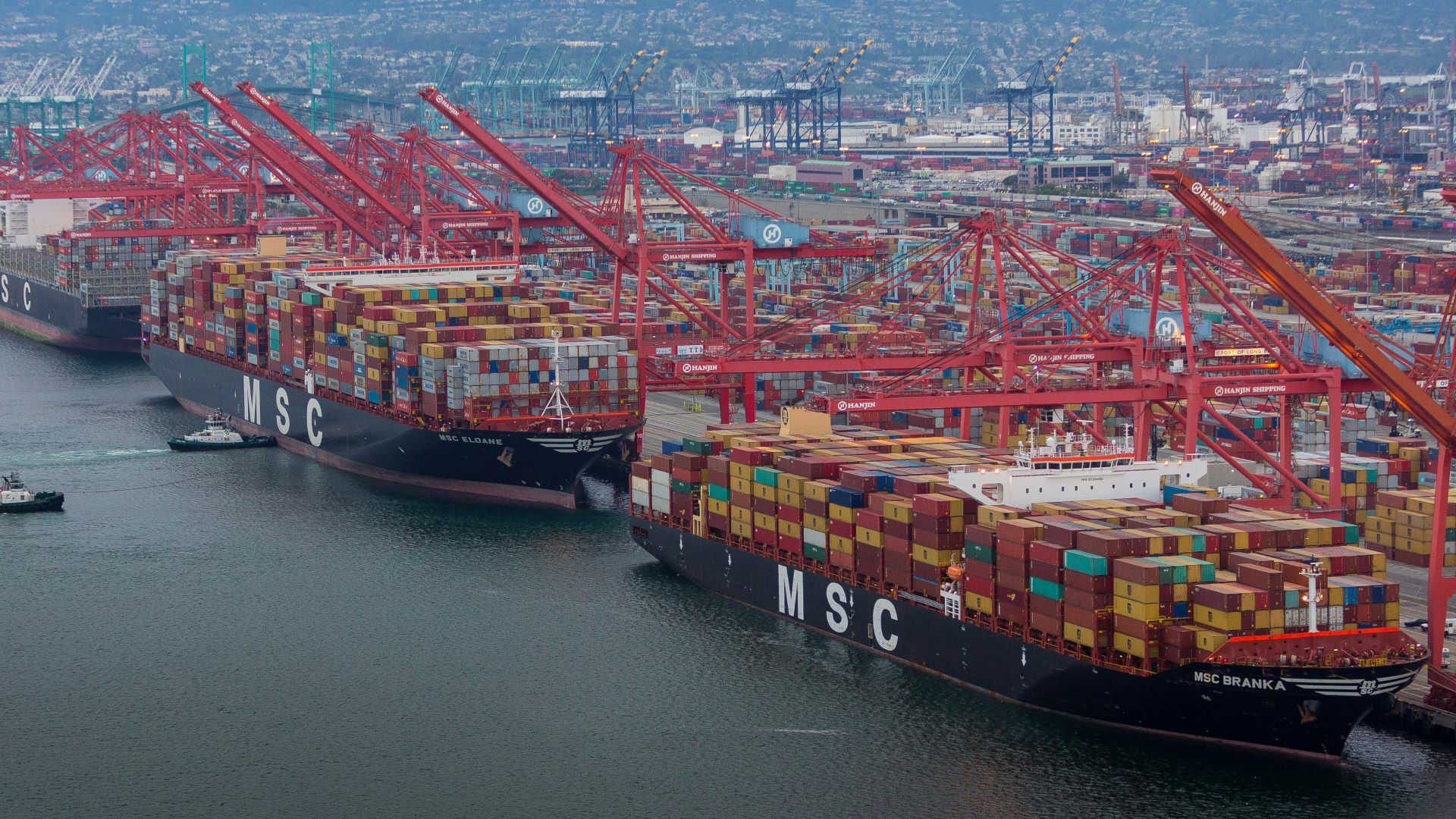
Trade volatility pushes LA port towards new record
Steady October volume has put the Port of Los Angeles within reach of 10 million TEUs for a record third consecutive year.
Now-paused port fees on Chinese ships were a misguided attempt to revitalize U.S. maritime fortunes at the expense of American exporters, a trade group leader says.
The Port of Oakland saw loaded containers improve 2.2% October from September as global shipping rebalanced.
The U.S. Trade Representative officially suspended fees on cargo ships built in China, which whipsawed global shipping struggling to cope with the effects of tariffs and a realigning of trade.
The Office of the U.S. Trade Representative is asking for public comment on the proposal to suspend port fees on Chinese ships.
A slate of China agreements clears some of the uncertainty around ocean shipping, but questions still surround demand in the U.S. and other markets.
The United States and China have suspended their respective port fees on each other’s ships amid progress on a new trade agreement.
The U.S. maritime industry faces challenges and opportunities in global trade and shipbuilding, the former chairman of the Federal Maritime Commission tells F3: The Future of Freight Festival.
Container rates on key trans-Pacific routes accelerated their decline as China and the U.S. escalated their trade war.
China won’t collect port fees on Chinese-built U.S. cargo vessels.
China announced sanctions on the U.S. units of a South Korean company aiding U.S. shipbuilding.
The United States Trade Representative has added new tariffs of 100% on Chinese-made ship-to-shore container cranes and 150% on cranes used to move containers around terminals.
China will levy port fees on U.S.-flagged and -owned ships, the latest escalation in the trade war with the United States.
Container rates on the eastbound trans-Pacific fall by double-digits as ocean shipping braces for new U.S. port fees.
China sets new port fees, could bar U.S. ships in retaliation for charges on Chinese shipping set to take effect in October.
Maersk won’t levy a surcharge when U.S. fees on China-linked ships take effect in October.
Container spot rates on the eastbound trans-Pacific reverse course as liner operators redeploy Chinese-built ships away from U.S. services ahead of punitive port fees.
The U.S. trade representative on Monday will hold a second hearing into proposed port fees on Chinese ships that could add substantial costs to moving cargo through American ports.
The world’s second-largest container shipping line sees no immediate changes from U.S. ship fees.
China’s largest shipping line says it opposes a plan to charge its ships to dock at U.S. ports.
Following opposition from shippers, the United States will phase in port fees scaled to a vessel’s tonnage, in an effort to blunt China’s dominance in global shipping.
The Trump administration is considering a revision to proposed port fees for Chinese ships.
Proposed U.S. port charges aimed at China are the latest undercurrents roiling the global container market.
In another aggressive move against China’s shipping dominance, the Trump administration has proposed fees on Chinese ships calling U.S. ports.
The container shipping surge shows no signs of letup, but the Southern California ports say they are slowly clearing out the backlogs.
A trucking trade group is urging California Gov. Gavin Newsom to enforce a state law to prevent terminal operators and ocean carriers from charging excessive per-diem and demurrage fees and using port truckers as “a convenient ATM to bolster their profits.”