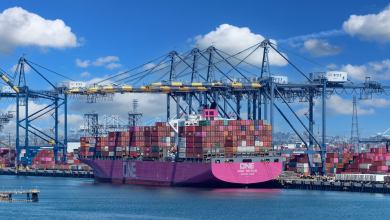
West Coast container ports hit as labor talks take ominous turn
The dockworkers’ union and terminal employers are still sparring over wages and benefits more than a year after contract talks began.

The container shipping party is over — that’s old news. Yet headlines continue to focus on comparisons to the peak.
America’s imports are not signaling a recession, at least not yet. Inbound volumes are rising from the bottom.
Executive Director Mario Cordero says the Port of Long Beach is “ready for a rebound in retail.”
Although import volumes show signs of a nascent recovery, the inventory overhang remains daunting.
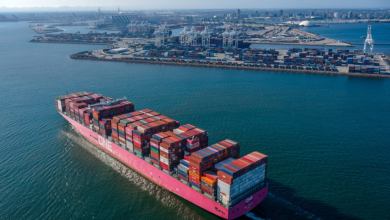
After labor unrest closed Los Angeles and Long Beach on Friday, ports on the East and Gulf coasts look even more attractive.
U.S. importers have forsaken their traditional gateway in Southern California. Many may be gone for good.
“We knew the port terminals, we understood their operations, but mostly we understood their systems and data. We thought we could be the bridge that wasn’t created before that could speak both parties’ languages and get containers in and out,” said BlueCargo co-founder and CEO Alexandra Griffon.
Port of Long Beach container volume plops
The Georgia Ports Authority said a 16% drop in imports year over year “was fueled in part by reduced orders in retail and manufacturing.”
Executive Director Mario Cordero said he is optimistic the Port of Long Beach will recapture market share.
What can be done to alleviate emissions and decarbonize transportation in the ports?
The 9,133,657 twenty-foot equivalent units the Port of Long Beach handled in 2022 were only 2.7% off the record-setting 2021.
Remaining queues of waiting ships are dwindling, another sign that supply chain pressure is winding down.
Container shipping lines are gradually getting their services back on schedule, but they still have a long way to go.
Containerized imports to the ports of Los Angeles and Long Beach have now fallen well below pre-COVID levels.
Shippers and carriers are increasing the pressure on ports and other supply chain participants to roll out “green corridors” using digital technology.
Southern California’s container-ship logjam ends as congestion eases at East and Gulf Coast ports.
The head of Los Angeles’ port is on a worldwide sales blitz, trying to convince shippers and carriers to come back.
Container volumes were up year over year in Savannah and Charleston, while crude oil exports set a record in Corpus Christi.