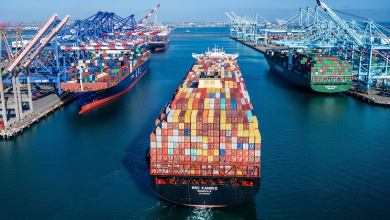
Red Sea cargo diversions could affect 2024 holiday shipping
Retailers and ocean carriers assess the possible effects in the U.S. if supply chain disruptions in the Middle East continue.


The Russia-Ukraine war led to enduring changes in shipping routes. War in the Middle East looks likely to do the same.
Spot rates remain very high, but appear to have plateaued. The question ahead: Will they fall back after Chinese New Year?
The air cargo industry finished 2023 on a high note and is getting an extra boost from the Red Sea shock as shippers divert ocean freight to keep their supply chains fluid.
The initial effect of Houthi attacks was on containerized consumer goods. The attacks are now snarling seaborne fuel flows.
This monthly report analyzes the current state of the freight market based on critical insights from our SONAR platform.
Lawmakers are told that criminals are registering as fake trucking companies with FMCSA.
Container-ship diversions from the Red Sea will likely last for months. Are large-scale tanker diversions imminent?
Houthi attacks have been a plus for shipping rates. The latest to benefit: Owners of container vessels that can be rented to shipping lines.
The upsurge in rates due to ship diversions did not come soon enough to rescue container lines’ fourth-quarter results.
As the Houthis disrupt Red Sea trade, we’re seeing how fragile our supply chains are (again).
Red Sea escalation would juice tanker rates, but rates would fall if the conflict spilled into the Strait of Hormuz.
U.S. imports kept chugging along, despite all the talk of supply chain problems due to Red Sea attacks and Panama’s drought.