Weekly Market Update: Volumes recover from Easter slump, but not all loads are created equal
Freight volumes recover from Easter lull as volumes are flat from a year-over-year perspective. Comparing load volumes is not the whole story, however.


FreightWaves has also observed downward pressure on contract rates and the beginning of a capacity bleed-off.
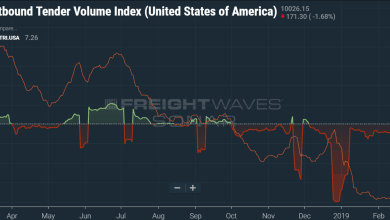
National freight volumes took a nosedive this week as Easter had a decent impact on the freight market, but how much of the drop is related to the holiday?
Despite a crash in truckload spot prices (approximately 50% of ECHO revenue), the freight brokerage beat analyst expectations.
Volumes are flat year-over-year, and after a brief period of disruption the freight market has stabilized. Container volumes that have fueled the port cities freight, may be due to soften in the coming months.
Today on FreightWaves NOW, Craig Fuller gives us an astounding data comparison of new truck orders correlating with spot prices, and Zach Strickland follows up with an overview of Monday–and he doesn’t have the blues because things are anomalous.
Have a strategy that you believe in and don’t forget to price in volatility, Feig said.
Market volumes remain strong from a year-over-year perspective, driven by the continued strength of the West. What does this imbalance mean for the freight market as the busy season approaches?
L.A. volumes are propping up national freight volume but starting to fade. Are there any signs of another region emerging to take over for the West Coast?
Rate increases are slowing and could even turn negative later this year, although fleet profits should remain strong for much of the year.
Large markets lost market share and reefer capacity loosened across the Midwest, but some markets look more favorable for carriers.
National freight volumes are flat year-over-year, but capacity is as loose as ever. What is driving the discrepancy?
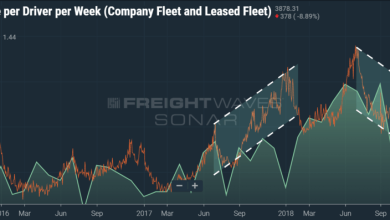
Increasing spot rates lead carrier revenues in 2018, will revenues start to fall now that rates have started to come down again?
The boundary between spot and contract pricing is always shifting, especially when freight markets are volatile.
Robinson sees low to mid single-digit contract gains, soft spot pricing, Biesterfeld says.
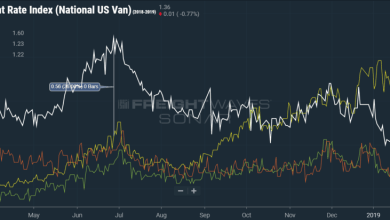
National spot rates have been flying high for the past year, but have only recently fallen under previous year values as illustrated on FreightWaves newest charting feature.
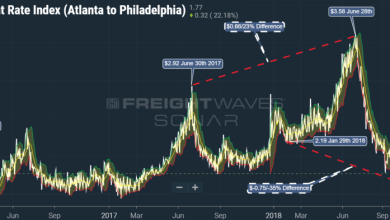
Atlanta to Philadelphia’s spot rate has hit its lowest point in 3 years. The absolute rates may be similar, but the freight markets could not be further apart.
Shippers aren’t shy about moving contract rates down in RFP negotiations, and even brokers are surprised at how cheap capacity has become.
Carriers lower rates heading to the West Coast this year as inbound container volumes flood the ports.
Cowen expects softening trucking prices in 2019 to be a headwind for truckload carrier earnings, but should widen gross margins for freight brokerages.