




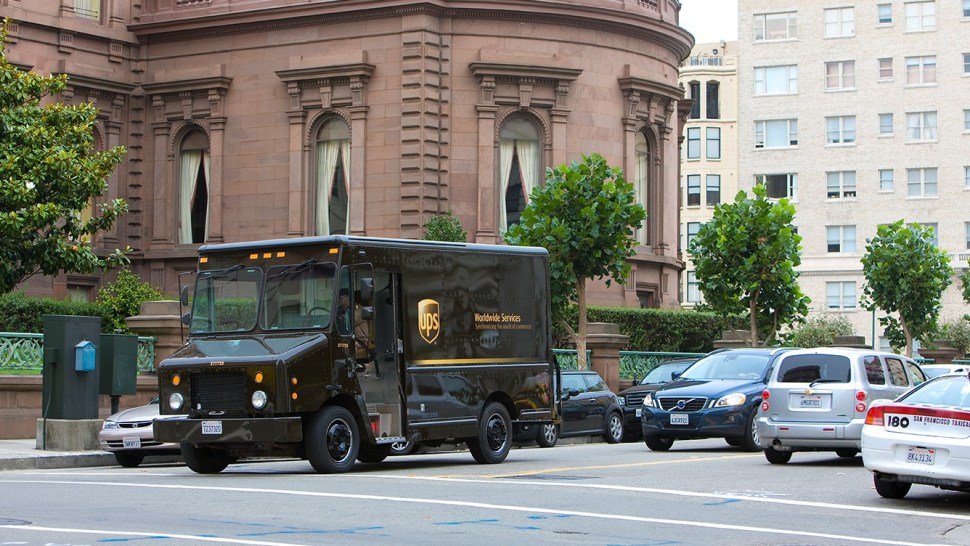
United Parcel Service on Friday asked a federal judge to throw out a Teamsters union complaint seeking to block the company from offering $150,000 voluntary buyouts to package car drivers, saying any concerns can be adequately addressed by arbitration provisions in the existing contract.
The size and structure of the separation package carries the risk of internal union turmoil if rank-and-file members are interested in resigning against the leadership’s objections.
The Teamsters, which represents about 347,000 delivery and warehouse workers, last Monday sued UPS (NYSE: UPS) in the U.S. District Court in Massachusetts, alleging the pending buyouts violate the national contract, ratified in September 2023, by directly dealing with workers over new contracts, and undermine employment security guarantees. It also argues an arbitrator would have no power to create a remedy for any employees that elected to resign under a separation program before a decision on whether the buyout was permissible.
UPS confirmed last week it plans to offer early retirement to drivers for the second time in eight months as part of a major cost-cutting initiative, but said in the motion the company has voluntarily agreed not to move ahead with the buyouts until the court rules on the union’s complaint.
Initial plans called for UPS to send about 105,000 employees information about the new Driver’s Choice Program on Feb. 11, with a one-month window for workers to apply for the separation package in exchange for resigning, according to the court document. Voluntary separations are scheduled to begin at the end of April.
UPS is offering a $150,000 payout, regardless of seniority, on top of previously earned healthcare and retirement benefits, UPS said in its legal filing. The company may cap participation in certain locations by seniority, but no aggregate or location-specific caps on program participation have been established so far.
Under the first round of buyouts payment size was based on tenure.
“UPS is currently targeting a younger audience, which means instead of being those folks that would be in the union for another 20 or 30 years, they’re saying, ‘Here’s your money. Go away, and you can never work for UPS again.’ It’s kind of driving a wedge because unions want to grow the membership. They really don’t want to get rid of people. And if they do get rid of people, they want them to have seniority,” said Arthur Wheaton, director of labor studies at Cornell University’s School of Industrial and Labor Relations, in a phone interview.
An internal union schism is possible, he explained, because “these younger, newer hires will complain, ‘Hey, I had a chance for a $150,000 payday bingo and the union screwed me out of it.’ ”
The Teamsters leadership needs to accept some responsibility for UPS’s situation because the wage and benefit gains won in the 2023 contract made the company less competitive versus FedEx, Amazon and other carriers that pay drivers far less, said parcel industry expert Satish Jindel.
“They are stuck with such a high cost of labor. The total compensation gap makes it very difficult for UPS to retain people at these high wages and to create new jobs,” said Jindel, the president of ShipMatrix.
Rationale for buyouts
UPS is reducing parcel workers and consolidating facilities because of slower market demand and a 50% cut in business with Amazon, its largest customer. UPS last year reduced its frontline workforce by 34,000 positions. Management alluded to a second buyout offer during its quarterly earnings call in late January, adding it plans to eliminate another 30,000 jobs this year and close 24 sort facilities.
UPS disclosed for the first time in the legal document that just over 3,000 drivers took the buyout offer, which was less generous than the pending one, last fall. It also says it plans to whittle down the driver workforce through attrition.
“The Driver Choice Program provides eligible drivers the opportunity to leave the company with a significant monetary benefit. By offering this program, the number of layoffs for remaining drivers could be reduced,” Daniel Bordoni, president of global labor relations, said in a Jan. 30 letter to Teamsters leadership, suggesting involuntary layoffs for drivers could follow this year.
UPS initiated the partial separation because low Amazon rates translate into negligible margins. The glide down in Amazon business began last year and is expected to be complete by the end of June. UPS’s average daily package volume in the U.S. declined year-over-year by 1.6 million pieces or 8.6% in 2025. The carrier reduced Amazon volume by about 1 million pieces per day in 2025 and recently said it anticipates a similar reduction this year.
UPS also requires fewer drivers because it signed a new contract with the U.S. Postal Service in December under which the Postal Service will handle some final-mile delivery of UPS Ground Saver packages. UPS began to shift packages to the USPS in mid-January and plans to increase volumes in the coming months.
The Teamsters argue the Driver Choice Program violates the union contract because it wasn’t negotiated and anything that changes the terms of employment, such as compensation and separation, must be bargained with the union. The union also says UPS is reneging on its commitment under the contract to create 30,000 jobs, a quarter of which are supposed to come from moving part-time workers to full-time status.
“Under the National Labor Relations Act the union becomes the exclusive bargaining agent for all wages, hours, and terms and conditions of employment … so that they do have to negotiate these buyouts with the union” so it’s not individual dealing, Wheaton told FreightWaves.
UPS’s position is that arbitrators have ruled that the national master agreement expressly allows agreements with employees that don’t specifically conflict with its provisions and that the contract doesn’t address incentive programs like Driver Choice.
UPS notified Teamster International General President Sean O’Brien in person on Jan. 8 that it was considering a second voluntary separation program for drivers. Bordoni offered to bargain over the program because the company preferred to develop a plan jointly, but never received a response, the company said in its motion. UPS told the union it disagreed with its position that buyouts violate the national master agreement.
According to UPS’s timeline, the Teamsters on Feb. 6 filed a grievance alleging the Drivers Choice Program violated several national contract provisions and some local supplemental riders. UPS said it is following the grievance process specified in the contract and said that if the dispute is not resolved the union has the right to demand arbitration, during which an arbitrator will determine if there is a violation and create an appropriate remedy.
A federal court in Illinois last year denied a request by a Teamsters local for an injunction against the first UPS voluntary separation program.
Courts shouldn’t intervene in a labor dispute where a meaningful grievance and arbitration process exists, UPS said, adding that any alleged harm can be corrected through monetary damages, reinstatement or voiding the voluntary separation if warranted under the contract.
The union’s entire motion rests on the “erroneous premise” that any voluntary separation agreements would be irrevocable, UPS’s legal team said.
The parcel carrier said moving quickly with buyouts is necessary to adjust staffing levels and reduce costs before the summer vacation season and the holiday peak shipping season, which will minimize any potential business disruptions.
“The idea of a company giving increased benefits without going through the union has traditionally been seen as an unfair labor practice and they have blocked those attempts in the National Labor Relations Board and in many of the courts,” said Wheaton.
But the NLRB is not expected to rule favorably for unions because President Donald Trump has stacked the NLRB with pro-corporate members after removing more labor-friendly officials. The board lacked a quorum of at least three confirmed officials for nearly a year until January, when two Trump nominees were confirmed by the Senate.
“I’m quite certain that the Teamsters picked Massachusetts [as a legal venue] because they probably have a much more Democratic, more union friendly court district there than if they went to Texas or somewhere else,” Wheaton said.
Click here for more FreightWaves/American Shipper stories by Eric Kulisch.
Write to Eric Kulisch at ekulisch@freightwaves.com.
RELATED STORIES:
Teamsters union sues UPS to block delivery driver buyouts
Teamsters calls UPS driver buyout offer ‘paltry’
UPS drivers to receive buyout offer as company shrinks parcel network
Brokerage Compliance Symposium
The day before F3. Every compliance issue you face - fraud exposure, carrier liability, FMCSA rules, cargo theft, insurance gaps - navigated by attorneys and operators defining best practices in a changing industry.
F3 Awards Dinner
The night before F3. FreightTech100 companies honored. FreightTech 25 and Shipper of Choice winners revealed live. Cocktail reception into dinner and live music - 300 industry leaders in one purpose-built room.
F3: Future of Freight Festival
Industry-defining keynotes, rapid-fire technology demos, and industry leaders networking in experiences across Chattanooga - plus the inaugural F3 Awards Dinner featuring the FreightTech and Shipper of Choice reveals.
The day before F3. Every compliance issue you face - fraud exposure, carrier liability, FMCSA rules, cargo theft, insurance gaps - navigated by attorneys and operators defining best practices in a changing industry.
The Signal at Chattanooga Choo Choo • Chattanooga, TN Register NowThe night before F3. FreightTech100 companies honored. FreightTech 25 and Shipper of Choice winners revealed live. Cocktail reception into dinner and live music - 300 industry leaders in one purpose-built room.
The Signal at Chattanooga Choo Choo • Chattanooga, TN Register NowIndustry-defining keynotes, rapid-fire technology demos, and industry leaders networking in experiences across Chattanooga - plus the inaugural F3 Awards Dinner featuring the FreightTech and Shipper of Choice reveals.
The Signal at Chattanooga Choo Choo • Chattanooga, TN Register Now