




(UPDATED 7:30 p.m. ET)
Canadian freight airline Cargojet appears to have used its influence with the owner of 21 Air, a Miami-based contract carrier for DHL Express and Amazon, to release CEO Tim Strauss and install an internal executive, according to industry sources. The situation is complicated by rules governing foreign ownership and control of U.S. airlines.
Strauss, 70, and top lieutenants left 21 Air when his contract was not renewed in February, an outside air cargo executive who works closely with the airline’s senior management, told FreightWaves.
A person with direct knowledge of the situation confirmed Strauss’s departure in a text message. Strauss, a former vice president of cargo at Air Canada joined 21 Air in early 2024 after a rocky three years as CEO of Miami-based Amerijet. The source, who asked not to be named because of the sensitive nature of the move, rejected the notion of a falling out with Cargojet or that Cargojet was behind the change, saying the expiration of Strauss’s two-year contract was a good time to bring in fresh leadership for its next growth stage.
“We’ve more than doubled the business in that two-year period, plus opened up some other unique opportunities that are much longer term in their development cycle. For the corporation, it meant finding younger leadership that’s going to be there for the next five years, and beyond, that can help form and shape the company in the manner it needs to to play that long-term game,” the company insider said.
Another individual with high-level contacts at the company also said Strauss was let go. Both outside sources said Pauline Dhillon, who took over as Cargojet CEO on Jan. 1 after sharing the position for two years, didn’t see eye to eye with Strauss. Former Cargojet associate Luis Fernando Alvarado has temporarily run the airline after being named chief operating officer, raising questions about whether the relationship between the companies comports with U.S. law prohibiting foreign control of a U.S. airline.
Fernando Alvarado’s LinkedIn page shows him as COO of 21 Air. It’s not clear if the company has a CEO now or is searching for a chief executive.
Cargojet owns a 25% share of 21 Air. Fernando Alvarado’s title for several years at 21 Air was owner representative.
Between January 2020 and March 2021 he served as managing director, Americas, for Cargojet. There is no job entry on Fernando Alvarado’s LinkedIn biography for the period between 2021 and 2026.
The 21 Air website does not show Strauss or Fernando Alvarado as part of the leadership team. The top official listed on the website is CFO Olga Guerra. The company’s headquarters is listed in Greensboro, North Carolina, but its operational base and main office are in Miami.
Kleman Ferjan, head of business transformation, announced his departure from 21 Air in a March 18 LinkedIn post. No reason was given for the exit, but he expressed satisfaction with what the management team had accomplished.
“Together, we tackled a broad set of initiatives, from fleet onboarding and operational readiness to building a structured project portfolio and execution framework across the organization. What I’m most proud of is not only the execution, but the governance and foundation we put in place for alignment, scalability, and sustained performance,” he wrote.
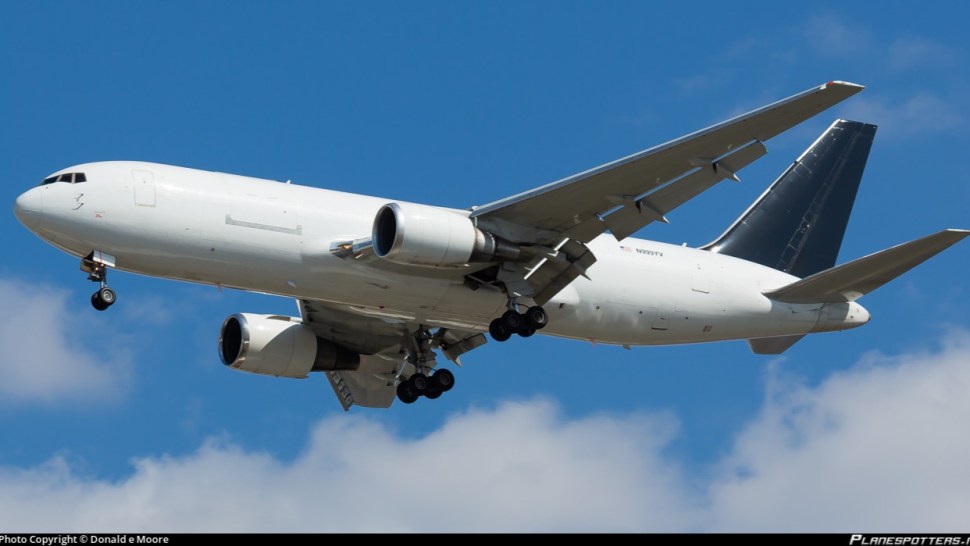
The airline currently has 16 active planes in its fleet, including seven Boeing 767-300 converted freighters that shuttle e-commerce packages in Amazon’s domestic air network, according to aviation databases. Strauss is credited with bringing Amazon (NASDAQ: AMZN) on board as a customer in late 2024. Amazon controls the aircraft and supplies them to 21 Air to operate on its behalf. Four 767-300s, two 767-200s and three 757-200s, recently added, round out the fleet. Those aircraft fly for DHL, Cargojet and other customers.
“Tim delivered strong results during his tenure. The airline looks materially different after his two years at the helm — including roughly doubling the fleet size and revenues, improved cost performance, and strong operational reliability toward the end of 2025,” said a former 21 Air executive.
It’s unclear why Strauss wasn’t retained if his performance was as strong as allies articulated. Officials at 21 Air and its principle investor didn’t respond to repeated phone and email messages. Courtney Ilola, director of marketing at Cargojet, declined to comment on the leadership changes at 21 Air or the investment status between the companies.
But Strauss’s inability to quickly get 757 converted freighters supplied by DHL onto the 21 Air operating certificate and into commercial service — which cost the company a lot of money — could have triggered Dhillon’s discontent, according to an industry executive in the South Florida air cargo market.
DHL Express delivered six 757-200s, previously used in its European network, to 21 Air in June, but they sat for more than six months because the airline didn’t have the infrastructure to efficiently move the application through the FAA certification process, said the source, who asked for anonymity to protect colleagues from potential backlash. 21 Air didn’t begin flying the first 757 until January. In the meantime, it had to pay monthly rent, maintenance and airport parking while the leased aircraft were generating no revenue. Three 757s are now active.
Airlines must go through an extensive process before the Federal Aviation Administration will approve a transfer of aircraft onto their air operators certificate. The new commercial operator must update operating manuals to include the new aircraft, ensure maintenance records comply with its program, and conduct various legal, technical and safety inspections to demonstrate it can safely operate and maintain the new aircraft. Certification covers every aspect of safety, including pilot training and aircraft handling, according to aviation experts. Since the 757 was a new aircraft type for 21 Air, the company also needed to hire and train pilots on the platform.
Strauss was bedeviled by a similar situation at Amerijet. The Miami-based airline took delivery of six 757 freighters from a lessor in the summer of 2021, but the planes sat for over nine months because initial manual revisions were rejected by the FAA. Adding aircraft that have just undergone a passenger-to-cargo conversion requires a series of other steps for technical acceptance and validation. Strauss inherited the 757 regulatory backlog, but significant management turnover in months before and after his hiring meant Amerijet lacked qualified managers who could complete the complex certification process, according to sources at the time. Several internal snafus exacerbated the delay, Strauss has previously acknowledged.
The certification process for the 757s at 21 Air slowed down once the FAA office close to 21 Air’s corporate headquarters realized internal operations executives at 21 Air didn’t have experience with the 757, the source said.
21 Air growth strategy
21 Air is looking to expand. It eventually will add Airbus A330 medium-widebody freighters as the supply of 767 conversion stock dries up, said the internal source. Other 767 freighter operators are similarly considering the A330 because it is the natural successor to the 767 in the medium-widebody aircraft category, but most cargo airlines are likely to wait several years until the price of used A330s, which can be converted to cargo configuration, comes down. More noteworthy, is that the medium-small airline is also eyeing a move into international long-haul flying to expand the DHL and Amazon partnerships, which would necessitate the addition of large, widebody aircraft like the Boeing 777 or the new Airbus 350.
Strauss left Amerijet in October 2023 when ownership declined to renew his three-year contract. He characterized the split as a resignation on his part. In 2021, he resigned after only one year as CEO because of a power struggle with former CEO and then-Executive Chairman Vic Karjan, but was convinced by owner ZS Fund to come back after 10 days.
Ownership structure
Under federal law, U.S. airlines have to be citizens of the United States. That means the president and two-thirds of the board have to be U.S. citizens and that no more than 25% of the voting shares may be held by non-U.S. citizens. The airline also must be under the actual control of American citizens. A situation, for example, in which a foreign entity exercises veto rights over corporate decisions or has a disproportionate number of seats on the board, would violate the control provision and jeopardize an airline’s air carrier certificate, according to aviation lawyers.
Understanding who has day-to-day control and sorting out how much oversight and influence a foreign investor might have is often murky in legal cases. Control can have a broad meaning and usually comes down to the circumstances in the case, they say.
21 Air is owned by Avia Acquisitions LLC, which is owned by Avia Investments LLC — a joint venture between James Crane, the billionaire owner of Houston-based Crane Worldwide Logistics and the Houston Astros baseball team, and Cargojet. Crane has previously served as chairman of the board at publicly traded Cargojet.
Cargojet operates at least two aircraft on an interchange basis with 21 Air. The company maintains it simply dry leases the cargo jets to 21 Air. The union representing 21 Air pilots has long-complained to the U.S. Department of Transportation that the maneuver is exploiting a loophole to get around rules that prohibit foreign-registered aircraft from flying domestic U.S. routes. It says interchange agreements typically are intended for short periods, although it acknowledges nothing in the regulations prohibits extended interchanges.
DHL Express has a long-standing agreement with Cargojet for parcel transport within Canada and international routes, including its hub at Cincinnati-Northern Kentucky International Airport.
Another former 21 Air executive told FreightWaves that Cargojet calls the shots at 21 Air. Alvarado was brought in when Crane acquired 21 Air with Cargojet and its Chairman Ajay Virmani as their inside eyes, he said.
“Alvarado came from Cargojet and he sat in the CEO’s office and basically dictated to Mendez, [the former CEO], what Virmani’s demands were,” said the source, who asked not to be named so as not to hurt future employment opportunities. “Everything we did at 21 Air revolved around what Cargojet told us to do.”
Cargojet did not play an active role managing 21 Air or the leadership change, the 21 Air insider said. Mendez vehemently denied that anyone instructed him to do.
“Cargojet had a collaborative, but minority influence on this development. Jim Crane has a controlling share and operates the company on that basis with advice from Cargojet,” the person said. Crane leaned on Cargojet founder and Chairman Ajay Virmani, a long-time business partner, to run 21 Air because of his airline experience. But Cargojet’s involvement was simply one of offering suggestions, much like a consultant, which the company was free to accept or reject, according to the source.
Crane, who has a net worth of $2.5 billion, according to Forbes, made his fortune in logistics. He founded Eagle Global Logistics in the mid-1980s before selling it to a private equity firm in 2007. Eagle was eventually acquired by Ceva Logistics. With proceeds from the sale, Crane formed an investment management company, Crane Capital Group, and in 2008 he formed Crane Worldwide Logistics.
“In certain cases, suggestions may not be just suggestions,” said an aviation attorney, who asked not to be named so as not to jeopardize client relationships.
Click here for more FreightWaves/American Shipper stories by Eric Kulisch.
Write to Eric Kulisch at ekulisch@freightwaves.com.
RELATED STORIES:
Startup cargo airline 7Air changes CEO after less than 1 year
GlobalX Airlines shelves 2 Airbus cargo aircraft amid thin demand
New UPS revenue helps Cargojet overcome loss of China e-commerce volume
Former Amerijet boss resurfaces as CEO of cargo airline 21 Air
Brokerage Compliance Symposium
The day before F3. Every compliance issue you face - fraud exposure, carrier liability, FMCSA rules, cargo theft, insurance gaps - navigated by attorneys and operators defining best practices in a changing industry.
F3 Awards Dinner
The night before F3. FreightTech100 companies honored. FreightTech 25 and Shipper of Choice winners revealed live. Cocktail reception into dinner and live music - 300 industry leaders in one purpose-built room.
F3: Future of Freight Festival
Industry-defining keynotes, rapid-fire technology demos, and industry leaders networking in experiences across Chattanooga - plus the inaugural F3 Awards Dinner featuring the FreightTech and Shipper of Choice reveals.
The day before F3. Every compliance issue you face - fraud exposure, carrier liability, FMCSA rules, cargo theft, insurance gaps - navigated by attorneys and operators defining best practices in a changing industry.
The Signal at Chattanooga Choo Choo • Chattanooga, TN Register NowThe night before F3. FreightTech100 companies honored. FreightTech 25 and Shipper of Choice winners revealed live. Cocktail reception into dinner and live music - 300 industry leaders in one purpose-built room.
The Signal at Chattanooga Choo Choo • Chattanooga, TN Register NowIndustry-defining keynotes, rapid-fire technology demos, and industry leaders networking in experiences across Chattanooga - plus the inaugural F3 Awards Dinner featuring the FreightTech and Shipper of Choice reveals.
The Signal at Chattanooga Choo Choo • Chattanooga, TN Register Now