All eyes on Los Angeles with tariff impact looming
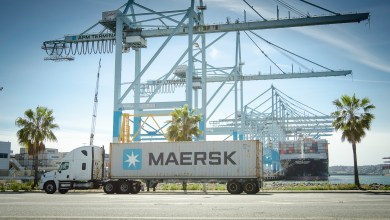
Southern California is at the epicenter of freight coming from China. Domestic demand patterns have not changed much since “Liberation Day,” but no one expects this to last.

Demand for loads moving less than 100 miles has been resistant to the intermodal shift. Its representation of consumer and manufacturing activity could be the key to staying on top of the economy amid extreme uncertainty.
During the COVID years, transportation providers were flooded with freight that needed to move yesterday. The current environment is flooded with freight that needs to move in a few weeks, maybe.
The flatbed sector was caught off guard by the North American tariff threat, but other factors have contributed to the recent disruption for the open-deck market.
Until recently, surface transportation demand in total was relatively flat with shippers utilizing the rails more frequently. Annual intermodal growth has stabilized, with truckload demand eroding beyond the modal shift offset.
The truckload market is tightening, but not evenly.
Truckload demand has stumbled over the winter, which has only helped keep capacity in a strong state of contraction – more than many realize.
Rejection rates that surged over 6% just before Christmas for loads out of Laredo, Texas, have unexpectedly remained elevated.
Rejection rate highs are getting higher, which means there is more potential for a significant softening that may feel like a full regression to some.
The spot-to-contract rate spread is just now in line with 2019 levels. How much longer until we see a stronger response?
There is more than meets the eye looking at the aggregate inventory level data. Retailers are shedding goods at a faster rate than their upstream counterparts, making the total look like a wash. This bodes well for 2025 from an economic perspective.
Hurricanes garner most of the attention, given their threat to life and property, but from an operational point of view, transportation managers and providers should probably increase their focus on winter weather.
There are some significant if subtle takeaways from the truckload markets’ shrinking average length of haul.
Supply chain and transportation managers are trying their best to mitigate their exposure to what will inevitably be a more challenging environment in 2025.
Shippers are giving longer notice for contracted truckload carriers to pick up their freight. What does this mean?
Import demand has increased over the past two years as companies have largely corrected inventories and navigated treacherous waters in the maritime industry.
There is nuance in this freight market flip. Why is this transitioning truckload market unlike any other?
Rising reefer tender rejection rates suggest the refrigerated truckload market is facing a tighter transportation procurement environment.
Could intermodal be capping the truckload market’s potential breakout?
Spot and tender rejection rates point to a strong tightening in the national truckload market. Is this the end of the freight market recession?