Freight demand on shaky footing as import bookings drop
Two of the three primary freight demand indicators have fallen into significant slides with only intermodal holding up, but for how long?
Just in case ordering has diminished the truckload market’s utility, specifically for cross continental freight, but that mechanism may come undone later in the year.
The widening gap between regional rejection rates underpins the growing fragility of the truckload market.
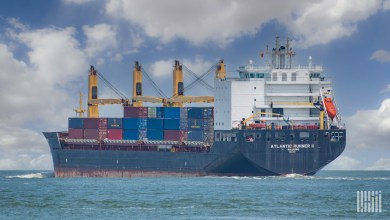
Container imports surged to a multi-year high in early July, driven by importers racing to recover lost time after tariff disruptions. While volumes spiked, this early peak doesn’t necessarily signal stronger demand.. As inventories grow more expensive to hold, maritime carriers are bracing for softer demand and more volatile shipping patterns in the months ahead.
Surface transportation rates took a hard right to start the year, thanks to shifting supply chain strategies and a slowing economy. Is this just a pause or is there further to fall?
Chart of the Week: Carrier Details Net Revocations – USA SONAR: CDNR.USA Carrier Net Revocations—which measure how many truckload operators (businesses) are exiting the industry—have remained unseasonably elevated throughout the first half of the year. The current pace of exits is 16% higher than during the same period in 2024. Although new authority issuances have increased this […]
Container bookings data has rebounded back to previous year levels. Is a wave of freight coming to surface markets?
Uncertainty springing from erratic policy implementation in 2025 has made it challenging for businesses to make long-term commitments. That has kept the trucking sector from having its expected breakout moment this year.
Capacity is tighter in the Eastern half of the U.S. as carriers appear to be stuck on or targeting the West Coast freight.
Truckload capacity tightened noticeably during the annual CVSA International Roadcheck inspection period.
Shipping is ramping in parts of southern Asia as companies scramble to keep a buffer on inventories. How sustainable and effective is this strategy, and will it substantially mitigate the influence of prohibitive tariffs on China?
Southern California is at the epicenter of freight coming from China. Domestic demand patterns have not changed much since “Liberation Day,” but no one expects this to last.
Demand for loads moving less than 100 miles has been resistant to the intermodal shift. Its representation of consumer and manufacturing activity could be the key to staying on top of the economy amid extreme uncertainty.
During the COVID years, transportation providers were flooded with freight that needed to move yesterday. The current environment is flooded with freight that needs to move in a few weeks, maybe.
The flatbed sector was caught off guard by the North American tariff threat, but other factors have contributed to the recent disruption for the open-deck market.
Until recently, surface transportation demand in total was relatively flat with shippers utilizing the rails more frequently. Annual intermodal growth has stabilized, with truckload demand eroding beyond the modal shift offset.
The truckload market is tightening, but not evenly.
Truckload demand has stumbled over the winter, which has only helped keep capacity in a strong state of contraction – more than many realize.
Rejection rates that surged over 6% just before Christmas for loads out of Laredo, Texas, have unexpectedly remained elevated.
Rejection rate highs are getting higher, which means there is more potential for a significant softening that may feel like a full regression to some.