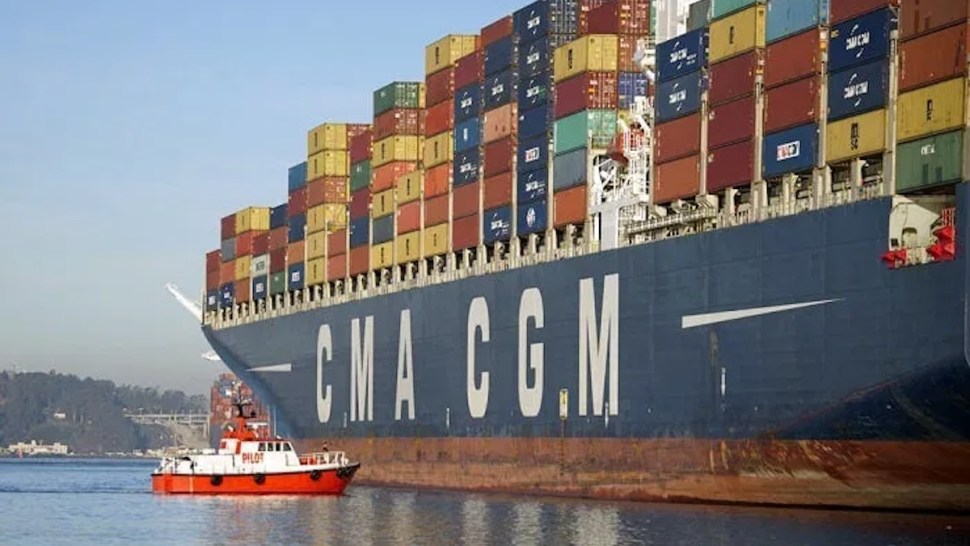
CMA CGM said maritime business totaled $8.2 billion in the second quarter, reflecting a slight decrease of 1.5% compared to the same timeframe in 2024.
The world’s third-largest container carrier said that earnings before interest, taxes, depreciation, and amortization (EBITDA) fell by 19.9% to $1.6 billion, on increasing economic pressures. EBITDA margin saw a reduction to 19.4%, a decrease of 4.5 percentage points compared to the previous year.
Average revenue per TEU decreased by 1.2% to $1,367.
The Marseilles-based company transported 6 million twenty foot equivalent units (TEUs) in the quarter, consistent with the previous year. This near-stability is significant, given the sharp yet temporary decline in trade flows between China and the United States during the quarter. Shipping lines have been whipsawed by the Trump administration’s off-and-on tariff policies, which have undercut import demand from China and set downward pressure on container rates.
Rodolphe Saade, chairman and chief executive, in a release said, “In a context marked by persistent geopolitical tensions and renewed trade uncertainties, our group is delivering a stable performance, driven by the resilience of its maritime activities.
“These results also highlight the relevance of our diversification strategy across terminals, logistics, and air freight, which enables us to offer global solutions and adjust our operations more swiftly to shifts in global trade.”
Find more articles by Stuart Chirls here.
Related coverage:
Ocean container rates becalmed as shippers, carriers try to be calm
FMC publishing container freight data
HK company offers stake in port terminals sale to Chinese company
South Korea offers billions to help make US shipbuilding ‘great again’
Brokerage Compliance Symposium
The day before F3. Every compliance issue you face - fraud exposure, carrier liability, FMCSA rules, cargo theft, insurance gaps - navigated by attorneys and operators defining best practices in a changing industry.
F3 Awards Dinner
The night before F3. FreightTech100 companies honored. FreightTech 25 and Shipper of Choice winners revealed live. Cocktail reception into dinner and live music - 300 industry leaders in one purpose-built room.
F3: Future of Freight Festival
Industry-defining keynotes, rapid-fire technology demos, and industry leaders networking in experiences across Chattanooga - plus the inaugural F3 Awards Dinner featuring the FreightTech and Shipper of Choice reveals.
The day before F3. Every compliance issue you face - fraud exposure, carrier liability, FMCSA rules, cargo theft, insurance gaps - navigated by attorneys and operators defining best practices in a changing industry.
The Signal at Chattanooga Choo Choo • Chattanooga, TN Register NowThe night before F3. FreightTech100 companies honored. FreightTech 25 and Shipper of Choice winners revealed live. Cocktail reception into dinner and live music - 300 industry leaders in one purpose-built room.
The Signal at Chattanooga Choo Choo • Chattanooga, TN Register NowIndustry-defining keynotes, rapid-fire technology demos, and industry leaders networking in experiences across Chattanooga - plus the inaugural F3 Awards Dinner featuring the FreightTech and Shipper of Choice reveals.
The Signal at Chattanooga Choo Choo • Chattanooga, TN Register Now