




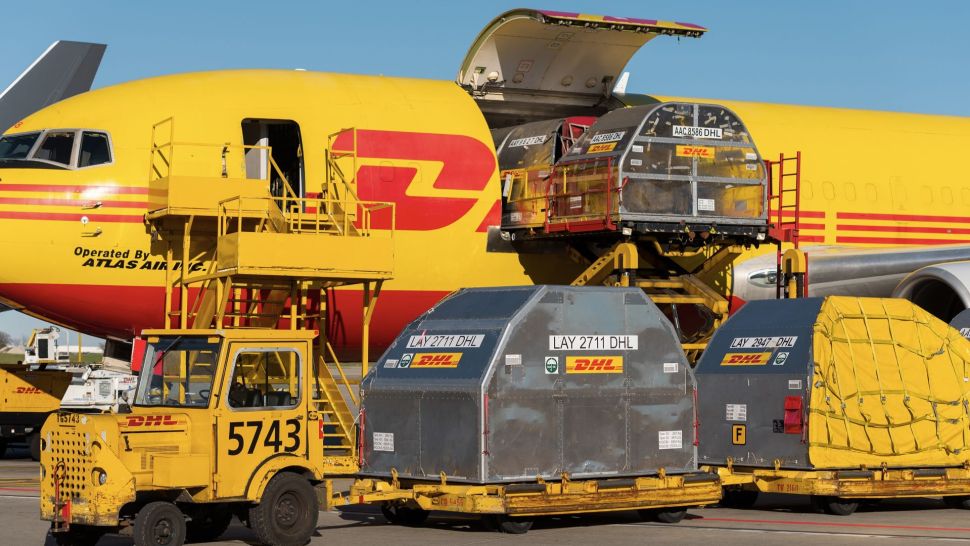
DHL is hiring hundreds of customs experts to help businesses navigate unprecedented trade turbulence that is upending supply chains even as the integrated logistics giant expects a more muted peak shipping season this fall.
A barrage of constantly changing U.S. tariff policies has whipsawed freight markets, with shippers fast-forwarding overseas orders to beat tariff deadlines, then reducing imports because inventories are high, and looking to find suppliers outside China — where average U.S. tariffs are 58%. The May 2 cancellation of the de minimis rule, a duty-free exemption for low-value parcels, also sharply reduced airfreight for e-commerce shipments.
In a video briefing for journalists on Monday, DHL executives said they are working overtime helping customers deal with the rising cost, complexity and uncertainty associated with the changing tariff landscape.
“For a small business owner, it can be overwhelming. So we’ve got to be ready to help them mitigate some of these impacts by having advanced customs services, looking at things like foreign trade zones and specialized brokerage options. We have to help them manage the timing of when they owe duty and taxes, how they’re moving inventory around and positioning it for U.S. delivery as it’s coming in,” said Greg Hewitt, CEO of DHL Express U.S.
DHL Express has added more than 680 customs, finance and customer service specialists this year to help small businesses, especially those used to filing minimal documentation for de minimis shipments and who now must submit a formal entry along with import taxes and fees for the first time, manage new compliance requirements, Hewitt said. The extra staff are needed because workloads for customs clearance have increased and DHL doesn’t want service levels to drop off.
Having a strong customs broker operation is a competitive advantage in this volatile trade environment, Hewitt stressed.
DHL’s Express division, which specializes in time-definite cross-border air transport and delivery, has seen volumes from China and Hong Kong to the United States drop about 30% year over year. The drop has been partially offset by growth from countries like Vietnam, India, Malaysia and Mexico, he said.
With the decline in inbound volume, DHL Express has also right-sized its U.S. operations by reducing the number of daily ground delivery routes to minimize costs and won’t hire as many seasonal workers for the holiday rush, the U.S. chief said.
DHL Express international volumes to the U.S. normally jump 40% to 50% in the peak season from prior quarters, but this year the division only expects a 20% to 25% sequential lift in business, Hewitt said.
Container freight
Meanwhile, DHL Global Forwarding, the unit responsible for booking and managing heavy freight shipments on commercial carriers, is expanding customs clearance capacity by 40%, hiring more than 200 customs agents and entry writers in the United States, on top of 500 existing customs brokers. The logistics provider has also introduced a digital platform that simplifies and streamlines customs filing for customers. Later this year it will launch an AI customs agent that will help importers and entry writers make smarter classification and other tariff decisions, said CEO Tim Robertson.
Ocean shipping volumes from Asia to North America are down 7% year over year and have dropped even more in recent weeks. Exports from China represent the biggest decline. Normally, volumes in the third quarter and October jump higher as retailers gather inventory for the holiday shopping season. Robertson said volumes out of China are “incredibly soft.”
The National Retail Federation is forecasting August and September container volumes will be down 1.7% and 6.8%, respectively from 2024, with full-year volume down 3.4%.
At the same time, DHL’s demand for freight out of Vietnam to the United States, and from Asia to Latin America, the Middle East and Africa, is up double digits.
Robertson said Global Forwarding is now running dedicated charter flights from Vietnam and Taiwan to support high demand from the high-tech and e-commerce sectors. Charter flights, operated by various airlines on DHL’s behalf, began operating from Hanoi to Los Angeles on Sept. 10 and will begin late this month from Taiwan to Los Angeles, Atlanta, Dallas-Fort Worth and Chicago, spokeswoman Constanza Gantes, explained in an email message.
“It’s the most atypical peak season that we have seen, and that even includes back in the years of the pandemic,” said Robertson. There could be some spikes in urgent air freight as Black Friday approaches if retailers aren’t able to receive all their merchandise because ocean carriers canceled voyages in response to lower overall demand, he added.
Effectively managing costs and inventories in the current trade environment requires agility and flexibility, which is why DHL is also offering U.S. warehouse and e-commerce fulfillment services, multimodal solutions such as hybrid sea-air routes out of Asia to the Americas, and regional logistics services as importers diversify sourcing beyond China, the management team said.
There is also heightened interest from contract logistics customers in using foreign trade zones and bonded warehouses to defer tariff payments, said Mark Kunar, the CEO of DHL Supply Chain North America.
“We have to be there to help companies, not just find new partners, but to feel comfortable that their service will not be disrupted if they decide to make a move to an emerging market that’s seen growth,” Hewitt added.
Trade pressures extend across industry
DHL rivals FedEx and UPS face the same headwinds. The integrators previously disclosed volume declines from China, their most profitable trade lane, and how they too are helping customers adapt to changing tariff requirements. FedEx last week said earnings took a $150 million hit during the first quarter and expects another $300 million in extra costs for customs clearance during the rest of the fiscal year. The new tariff environment for packages has been especially challenging for small businesses that lack the expertise and staff to manage the changes, so FedEx is helping them automate some of their customs clearance, Chief Customer Officer Brie Carere said.
UPS said the imposition of tariffs on e-commerce shipments caused volumes to slide 35% in May and June, while exports from China to the rest of the world increased 22%. UPS canceled more than 100 flights as customers shifted sourcing patterns.
In related news, DHL announced the promotion of Greg Nichols to senior vice president, global customs for DHL Global Forwarding and Freight.
Click here for more FreightWaves/American Shipper stories by Eric Kulisch.
Write to Eric Kulisch at ekulisch@freightwaves.com.
RELATED STORIES:
FedEx redeploys air fleet after US ends parcel tariff exemption
UPS boosts intra-Asia air capacity as US volumes wane
Brokerage Compliance Symposium
The day before F3. Every compliance issue you face - fraud exposure, carrier liability, FMCSA rules, cargo theft, insurance gaps - navigated by attorneys and operators defining best practices in a changing industry.
F3 Awards Dinner
The night before F3. FreightTech100 companies honored. FreightTech 25 and Shipper of Choice winners revealed live. Cocktail reception into dinner and live music - 300 industry leaders in one purpose-built room.
F3: Future of Freight Festival
Industry-defining keynotes, rapid-fire technology demos, and industry leaders networking in experiences across Chattanooga - plus the inaugural F3 Awards Dinner featuring the FreightTech and Shipper of Choice reveals.
The day before F3. Every compliance issue you face - fraud exposure, carrier liability, FMCSA rules, cargo theft, insurance gaps - navigated by attorneys and operators defining best practices in a changing industry.
The Signal at Chattanooga Choo Choo • Chattanooga, TN Register NowThe night before F3. FreightTech100 companies honored. FreightTech 25 and Shipper of Choice winners revealed live. Cocktail reception into dinner and live music - 300 industry leaders in one purpose-built room.
The Signal at Chattanooga Choo Choo • Chattanooga, TN Register NowIndustry-defining keynotes, rapid-fire technology demos, and industry leaders networking in experiences across Chattanooga - plus the inaugural F3 Awards Dinner featuring the FreightTech and Shipper of Choice reveals.
The Signal at Chattanooga Choo Choo • Chattanooga, TN Register Now