





Trucking analysts are trimming expectations for the back half of the year ahead of the third-quarter earnings season, which begins next week.
Join the leaders shaping freight’s future at
F3: Future of Freight Festival, Oct 21-22.
Network with the industry’s best and discover what’s next.
Morgan Stanley (NYSE: MS) transportation and logistics analyst Ravi Shanker cut earnings-per-share estimates by low-single- to high-teen percentages for most of the truckload and less-than-truckload carriers he covers.
“The year that promised so much has instead been a series of stop-start months as tariff uncertainty has taken its toll,” Shanker told clients in a Monday report. “Shipper uncertainty on the cycle remains high and visibility remains low, which makes predictions (or even looking backwards) difficult.”
Trade noise caused some shippers to pull forward inventory ahead of new tariff implementation dates. That lead to seasonally strong freight shipments in July, which gave way to subseasonal demand in August and an inline September, Shanker said.
He noted some TL carriers were optimistic about peak season prospects at investor conferences last month while LTL carriers sounded more cautious. Third-quarter reports and commentary from management teams will provide a scorecard on trucking’s peak season.
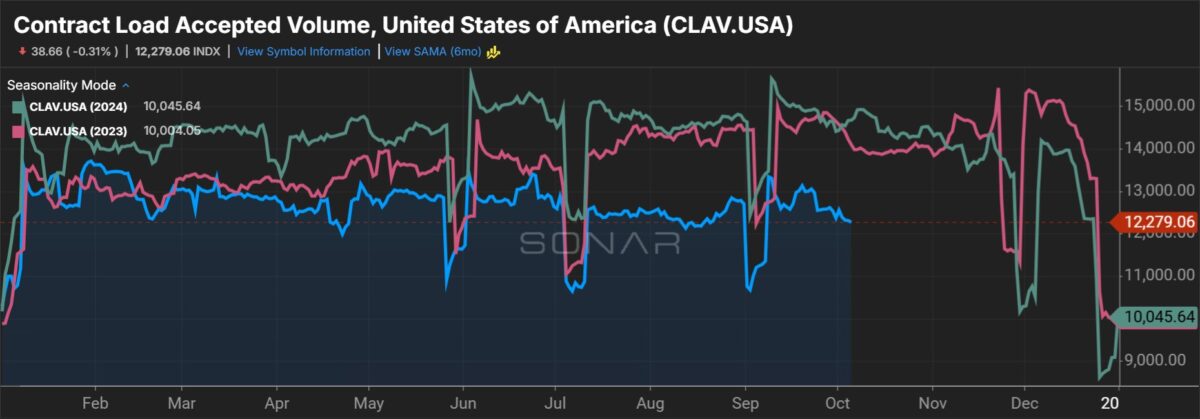
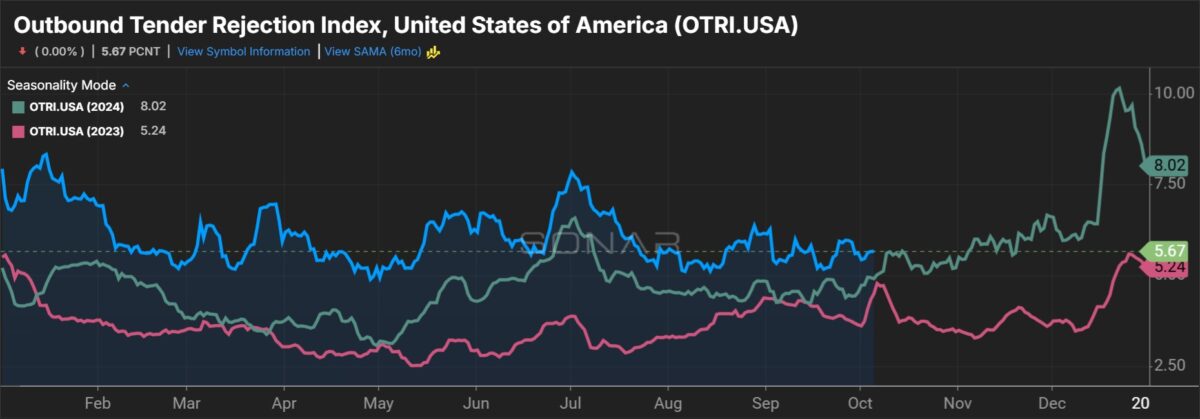
Shanker’s third-quarter earnings forecasts for the TLs were reduced by 10% on average, ranging from no change for Schneider National (NYSE: SNDR) to an 18% EPS cut for Knight-Swift Transportation (NYSE: KNX). Reductions were also made to fourth-quarter numbers.
However, his forecast for Knight-Swift sits 8% above the current consensus estimate. He said the company might see its best peak in the last three to four years “if late project business materializes as promised.”
Demand remains tepid across all modes with trucking more than three years into a freight recession. Manufacturing data again disappointed in September, with the Purchasing Managers’ Index (PMI) registering a 49.1 reading (50 is neutral), keeping it in negative territory for 33 of the past 35 months. The PMI new orders subindex – a signal for future activity – slid back into contraction at 48.9.
Weakness across the industrial complex was seen in intraquarter updates provided by LTL carriers.
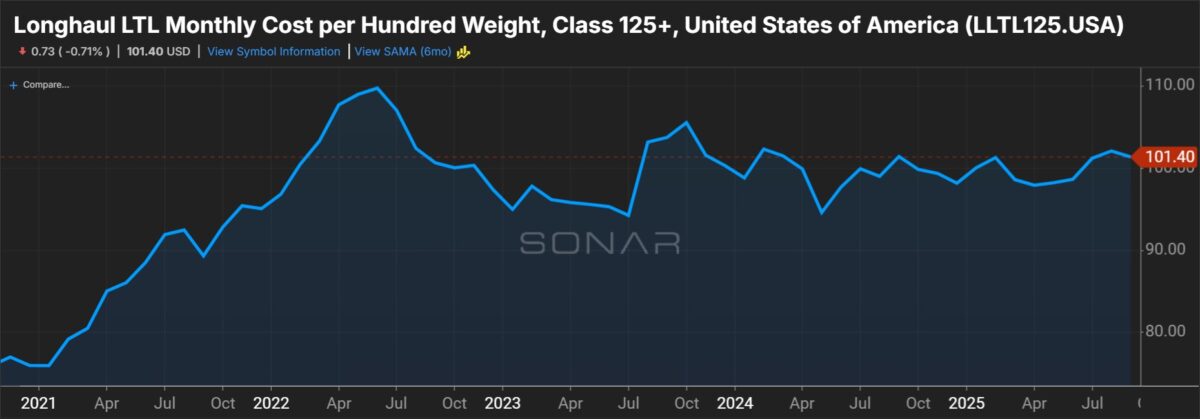
Tonnage across the industry remained negative for most carriers during the first two months of the third quarter. ArcBest (NASDAQ: ARCB) cut its third-quarter margin outlook for its asset-based unit by approximately 100 basis points because of soft demand and cost inflation.
Shanker reduced his third-quarter ArcBest number by 17%, which is 6% below the consensus forecast. Revisions for other LTL carriers were less than 5% and are largely in line with consensus expectations.
“Mid-quarter updates were squishy across the board as LTLs continue to point to cyclical/Industrial malaise, though we suspect this could be a symptom of more idiosyncratic pressures with potential share loss to TLs, brokers and privates,” Shanker said.
He believes investors will be more interested in LTL pricing commentary and fourth-quarter margin outlooks. He flagged XPO (NYSE: XPO) as an outlier among the group given its idiosyncratic network optimization and pricing initiatives.
Bascome Majors, Susquehanna Financial Group’s transportation analyst, trimmed back-half TL numbers last month, citing softness in volumes, spot rates and tender rejections.
The third-quarter earnings season begins on Oct. 15 when J.B. Hunt Transport Services (NASDAQ: JBHT) reports after the market closes.
Brokerage Compliance Symposium
The day before F3. Every compliance issue you face - fraud exposure, carrier liability, FMCSA rules, cargo theft, insurance gaps - navigated by attorneys and operators defining best practices in a changing industry.
F3 Awards Dinner
The night before F3. FreightTech100 companies honored. FreightTech 25 and Shipper of Choice winners revealed live. Cocktail reception into dinner and live music - 300 industry leaders in one purpose-built room.
F3: Future of Freight Festival
Industry-defining keynotes, rapid-fire technology demos, and industry leaders networking in experiences across Chattanooga - plus the inaugural F3 Awards Dinner featuring the FreightTech and Shipper of Choice reveals.
The day before F3. Every compliance issue you face - fraud exposure, carrier liability, FMCSA rules, cargo theft, insurance gaps - navigated by attorneys and operators defining best practices in a changing industry.
The Signal at Chattanooga Choo Choo • Chattanooga, TN Register NowThe night before F3. FreightTech100 companies honored. FreightTech 25 and Shipper of Choice winners revealed live. Cocktail reception into dinner and live music - 300 industry leaders in one purpose-built room.
The Signal at Chattanooga Choo Choo • Chattanooga, TN Register NowIndustry-defining keynotes, rapid-fire technology demos, and industry leaders networking in experiences across Chattanooga - plus the inaugural F3 Awards Dinner featuring the FreightTech and Shipper of Choice reveals.
The Signal at Chattanooga Choo Choo • Chattanooga, TN Register Now