Weekly NTI Update: April 22, 2024



Resurgent air cargo demand and rising rates, powered by the quasi-blockade of Red Sea shipping and continued growth in bookings by Chinese e-commerce platforms, during a normally slow shipping period is creating high expectations among air carriers for peak season and making logistics providers nervous about securing adequate capacity.
Air cargo demand has grown by double digits for four consecutive months, while rates have risen steadily since late February. The strength of the market rebound after a prolonged downturn that bottomed out last August has surprised industry watchers. But the recovery is not lifting all regions equally and can be partly attributed to a weak 2023 that makes the comparison look better.
Primary factors driving growth in air cargo are poor ocean shipping reliability and Chinese e-commerce players like fast fashion dynamo Shein, and online markets Temu and Alibaba sucking up outbound capacity from China. Ever-growing demand for airlift by those B2C companies has Taiwan-based logistics provider Dimerco Express warning in a market update that capacity commitments for airlines operating from China and Hong Kong to U.S. and European destinations are already sold out this year. That could make it more difficult for freight forwarders to secure consistent space for their shipments.
Airfreight volume increased 11% in March year over year, according to rate benchmarking platform Xeneta. Growth has been remarkably consistent, per Xeneta data, at 11% in January and February too. The International Air Transport Association recently said February demand increased 11.9%, backstopping Xeneta’s findings.
The stronger-than-expected start to 2024 is underscored by a 6.2% increase in flight activity for cargo jets during the first quarter, the first positive growth in two years, according to research by BMO Capital Markets. Flight activity for the global air cargo sector increased 6.8% in March from 2023.
With airfreight from new sources exceeding the influx of capacity, the average global airfreight spot rate in March increased 7% from the previous month. A year ago, freight rates sank more than 40% as the pandemic wave lost steam. And the global average spot rate has increased for seven consecutive weeks, up 9% from a month ago and 6% from the same 2023 period. The year-over-year gap in rates has now been nearly erased, with the global shipping price (about $2.55/kg) 40% above pre-COVID levels. A month ago, rates were 15% lower than this time last year.
“The level of demand in the first quarter doesn’t indicate a market which is running out of steam so far,” said Niall van de Wouw, Xeneta’s Chief Airfreight Officer, in his monthly report.
The biggest action is happening on trade lanes out of the Middle East and Southeast Asia to Europe, as well as China to Europe and the United States. The strength of those corridors is pumping up the average performance globally. The upturn nearly carried United Airlines back to growth during the first quarter, with revenue only down 1.8% year over year after contracting 31% in 2023.
Some businesses that depend on predictable supply chains are putting products on aircraft to avoid Red Sea shipping delays. Houthi rebel missile and drone attacks on commercial shipping have forced vessel operators to bypass the Red Sea, extending transit times by 10 days or more. Vessel schedule reliability on the Asia-to-Northern Europe route hit a low of 34% in February, according to Sea-Intelligence. Logistics provider Flexport last week said research showed the ocean journey for China to Northern Europe, measured from factory to departure from the destination port, increased to 70 days. Apparel companies in Bangladesh, India and Sri Lanka, which do not want to take the risk of missing the spring fashion season in the West, are likely behind the mode shift, said Niall van de Wouw, chief airfreight officer at Xeneta, said on a recent episode of The Loadstar podcast.
Demand, however, is lessening. With catch-up production and distribution following China’s Lunar New Year holiday in the rearview mirror there is less urgency for shippers to utilize fast transport. Also, container lines have had time to adjust vessel networks to the new normal of sailing around Africa instead of using the Suez Canal shortcut that is subject to Houthi rebel missile and drone attacks. Ocean schedules are more stable now after carriers moved in spare capacity to sustain longer transit times without gaps, Judah Levine, head of research at data provider and transportation marketplace Freightos, said in his industry outlook last week.

The latest information from Xeneta is that demand has decelerated to an 8% year-over-year growth rate as of mid-April. A major wild card is the potential for a regional war, after Iran launched an aerial attack on Israel and Iranian forces seized an Israeli-owned container vessel in the mouth of the Persian Gulf, that could cut off shipping lanes from Dubai and other ports, and lead to air diversions.
During the first quarter, demand outpaced capacity growth, putting upward pressure on rates and boosting load factors two points to 61%. But those patterns are beginning to change. Supply in April so far is about 11% higher than a year ago. And a surge of aircraft from passenger airlines for the summer travel season is expected to significantly add to total cargo capacity in the coming weeks – with the caveat that if flights are extremely full with passengers and baggage there could be less space for cargo.
Despite the influx of widebody aircraft, capacity remains tight on the trans-Pacific corridor because Asian carriers haven’t fully rebuilt networks since the pandemic and a diplomatic spat between the United States and China. U.S. authorities have been slow to restore permits for Chinese airlines because they have a competitive advantage being able to overfly Russia while U.S. carriers have to bypass Russian airspace. The Department of Transportation in April raised the number of weekly flights from 35 to 50, but that is only a third of the pre-COVID flight activity by Chinese airlines.
Some airlines are introducing more freighters in Asia to take advantage of the strong market. CMA CGM Air Cargo, for example, said last week that it will begin flying a new Boeing 777 cargo jet between Hong Kong, Chicago and Seoul, South Korea, in the second half. A second 777 could enter service late this year to connect China and North America.
Airfreight demand even in hard hit areas like the Indian subcontinent is starting to abate this month as shipping delays and equipment scarcity improve, according to market intelligence firms.
Air tonnage from Dubai to Europe is more than double the level a year ago, but that’s down from early March when volumes had tripled, according to researcher WorldACD. The increase reflects a move toward sea-air options that involve ocean transport from Asia and Southwest Asia to Dubai, where the close proximity of the port and airport facilitate transfers to aircraft. Shippers in Vietnam and other parts of Southeast Asia are also moving goods by road to Bangkok, where they are transloaded to aircraft bound for Europe and North America to avoid ocean delays. Bangkok air cargo demand is down 13 points from early March to 33% higher than last year. And air exports out of Sri Lanka contracted slightly this month after being more than 20% higher seven weeks ago than in 2023.
The average spot rate from the Middle East and South Asia to Europe jumped 46% in March from February and 71% year over year to more than $2.80/kg. Prices have continued to surge this month to more than double their level a year ago.
Meanwhile, direct-to-consumer shipping from China is having a massive effect on air cargo demand and rates. Until recently, most international goods consumers in Europe and North America purchased online were fulfilled from inventories kept in U.S. warehouses after being shipped by ocean.
Dimerco Express Group estimates that e-commerce accounts for about 50% of air cargo coming out of South China and Hong Kong and 30% of every kilo of airfreight exported from Shanghai Pudong airport, said marketing executive Catherine Chien in an email.

“Global airfreight capacity not growing at same rate [as e-commerce demand], so there will be a fight for capacity between e-commerce and all the other supply chains relying on airfreight,” said Thomas Kempf, senior director global airfreight development at logistics provider Flexport, during a company webinar in March. He said e-commerce represents about 35% of airfreight volumes out of the Asia-Pacific region.
Freight forwarder demand for block space agreements – contracts reserving a predetermined amount of cargo space on specific flights – is stronger than usual because e-commerce is occupying such a large share of available capacity outbound from China and other locations in Asia, according to Dimerco and other logistics experts. Forwarders want the space guarantees either to support their own business with e-commerce platforms or to make sure they have capacity to meet shipping needs of other customers, especially during the busy stretch heading into the holiday shopping season.
Chien said airlines this year are setting aside a larger portion of space on outbound China flights for pre-purchased allocations. The result is that there will be less capacity available on the open market during the peak season, which will lead to higher rates unless the number of flights increases.
U.S.-based Atlas Air this month began operating a 777 freighter six times a week between China and the U.S. that carries small parcels for freight forwarder YunExpress. The partnership follows the December launch of a dedicated route from Xiamen, China, to Miami.
Hong Kong to Europe and to North America rates are up about 11% and 8% year over year, while rates on outbound routes from Shanghai, China, to North America are on par with last year, as of mid April, according to the TAC Index. It currently costs about $5.50/kg to ship products from Hong Kong to the United States – a third higher than before the pandemic.
Despite the tighter market, shippers are showing a preference for short-term capacity purchases over long-term contracts in expectation that the Red Sea disruption will ease and more passenger belly capacity pours into the market for the summer, Xeneta said. Fowarders’ appetite for multi-month air contracts increased late last year with the rise in spot rates and interest in guaranteeing container slots for clients because of uncertainty ocean shipping, but the pendulum is swinging back to immediate transactions as freight flows around the Red Sea smooth out, explained Manel Galindo, chief revenue officer of Freightos and head of the WebCargo platform.
Air cargo providers are generally optimistic that volume growth will be solid for the full year even if today’s elevated performance isn’t sustained.
Michael Steen, CEO of all-cargo operator Atlas Air, said in a STAT Media Group video interview last month he expects the market to grow about 3.5% to 4.5% for the full year versus 2023 as it comes out of the trough.
Global economic signals remain mixed, but conditions favorable to air cargo are moving in a positive direction.
Global shipments of smartphones, a major product category for airfreight, increased 7.8% in the first quarter from the same period last year, marking the third consecutive quarter of shipment growth that is likely to continue as the year progresses, reported International Data Corp.
The Purchasing Managers Index for U.S. manufacturing moved up 2.5 points from February into growth territory as demand for goods increases factory production, and with it orders for industrial machinery and equipment. Manufacturing, a leading indicator for air cargo growth, is also recovering in China and the United Kingdom. U.S. ocean imports are projected to be 11% higher this year than last, according to the National Retail Federation’s Port Tracker report. In Europe, inflation fell for the third consecutive month to 2.4%, but manufacturing continues to shrink.
Negotiations between East Coast ocean terminals and longshoremen bear watching. If dockworkers go on strike in October after their contract expires that could scare retailers and manufacturers to divert shipments to airlines to avoid delays. Many businesses are already exercising contingency plans by shipping goods sooner or shifting moves to West Coast ports. But if negotiations are stalemated, diversion to air for critical shipments could take place weeks before an official strike.
U.S. imports in the second half could pick up too if companies anticipate a possible election victory by Donald Trump, who has threatened a universal tariff of 10% and to raise tariffs on Chinese goods by 60%, said supply chain consultant Jon Monroe on the March 20 edition of The Freight Buyers’ Club podcast.
Traffic in other regions besides Asia is still weak, especially out of Europe.
“We are not yet in a full recovery mode for air freight as the strengths in rates and volumes are mostly driven by specific regions (Asia-outbound) and products (e-commerce),” said Mark Zeck, senior research analyst at investment bank Stifel in a commentary for the Baltic Air Index.
Click here for more FreightWaves stories by Eric Kulisch.
Sign up for the weekly American Shipper Air newsletter here.
Air cargo market rides an incoming wave, but can it last?

Note: This article has been updated to note that Flexport declined to provide further comment on the partnership.
Global fashion retailer Shein’s latest announcement on LinkedIn says its U.S. marketplace merchants can now integrate with Flexport’s fulfillment services, a move expected to drive growth for Flexport.
“With Flexport as our preferred logistics partner, we’re revolutionizing the way you manage inventory and fulfill orders. … From inventory management to sales, everything works together seamlessly to boost efficiency,” Shein said.
The partnership will enable merchants to manage inventory on one screen while tracking inventory and accuracy for buyers. Shein orders will be pushed to Flexport for shipping and logistics processes, eliminating manual processes and data entry for merchants that operate on both platforms.
“We are excited to partner with Shein marketplace, U.S., as their preferred logistics partner, helping merchants scale their business faster and unlock reliable, nationwide U.S. fulfillment,” Flexport said in its own LinkedIn post.
Current Shein sellers in the U.S. using Flexport can integrate through the freight forwarder’s seller portal to import their Shein catalog and manage inventory and orders on one screen. Existing Flexport merchants must create a Shein marketplace account to access the integration and sell on the Shein platform.
Analysts have pointed out that this integration could help Flexport get the boost in volume and revenue that the company has lost throughout the freight recession.
“Flexport is desperate for growth so signing an agreement with Shein is a welcome development,” supply chain consultant and expert Brittain Ladd told FreightWaves.
“Shein has the potential to become a major retailer in the U.S. However, Shein won’t be able to achieve their potential without logistics and flawless order fulfillment. [Founder and CEO] Ryan Petersen understands that Flexport must become a strategic partner to Shein and not just a fulfillment company. I’m confident Flexport can do so.”
While Shein does have that potential, there are critics of Shein’s manufacturing models. The company faced lawsuits accusing it of using algorithms to replicate designs of both small independent and established brands. Shein also has faced labor violation allegations of sourcing cotton from Xinjiang, China, just as the company was reportedly planning to go public in U.S. markets.
Ladd believes Shein is working against this and that Flexport could help support its ethical expansion into different markets.
“Shein has expanded their business model to include sourcing cotton from India and manufacturing products in Latin America. Shein doesn’t want to be viewed as a China-focused company. Flexport should do everything they can to accelerate Shein’s fast fashion business model, while also providing support to help Shein expand into different categories like home furnishings, furniture, electronics, shoes, and other products,” he explained.
Shein’s executive chairman, Donald Tang, recently revealed plans to extend its services by providing other retailers with access to its supply chain. This includes access to Shein’s cutting-edge technology, streamlined manufacturing process and designers, all tailored to support the small-batch production method.
“The business models of Shein and [e-commerce marketplace] Temu are transforming retail. However, most U.S. retailers are incapable of adopting such a model. Flexport can become the partner retailers turn to for transforming and accelerating their business models and supply chain,” said Ladd.
“If Flexport exceeds the expectations of Shein, they can aggressively go after customers at competitors like FourKites, project44 and Echo Global Logistics. In addition, Flexport will be able to raise capital to make acquisitions; an acquisition of Quiet Platforms, Jitsu or FourKites are possibilities. Flexport could also go after Amazon sellers to offer them an alternative to fulfillment by Amazon.”
FreightWaves contacted both Flexport and Shein on the partnership. Shein has not responded and Flexport declined to comment.
FreightTech Friday: Gartner critiques real-time-visibility market players
Platform Science secures $125M to grow OEM partnerships
Uber Freight taps industry veterans for commercial, final-mile growth
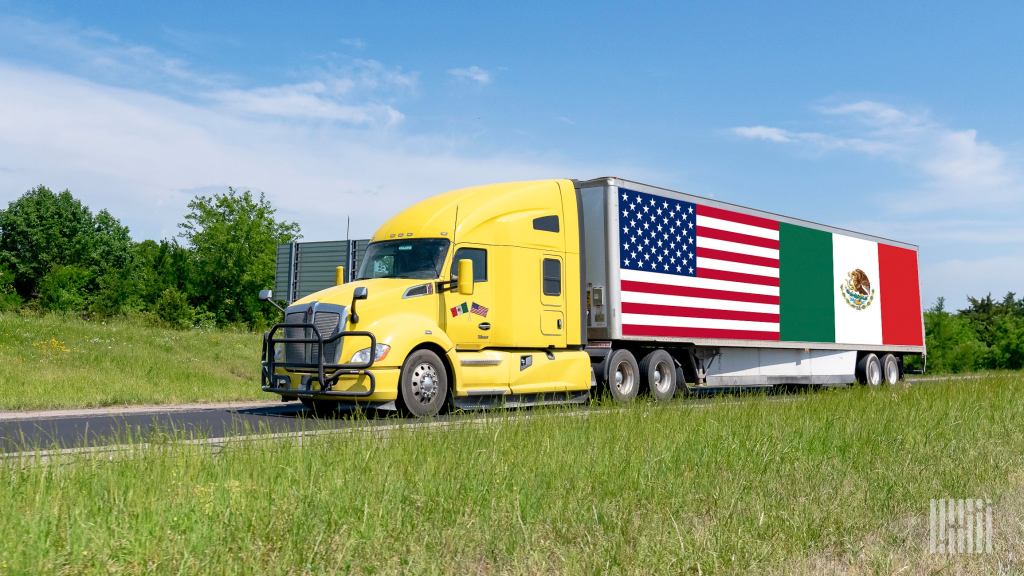
Borderlands is a weekly rundown of developments in the world of United States-Mexico cross-border trucking and trade. This week: Experts push infrastructure to boost cross-border trade; Korean EV supplier begins construction of plant in Mexico; Kirchhoff Automotive expanding operations in Mexico; and WSI named operator of CPKC transload terminal.
MONTERREY, Mexico — With nearshoring accelerating trade growth between the U.S. and Mexico, experts said both countries need to focus on infrastructure, technology, policies and cargo security to keep goods flowing seamlessly.
“The reality is there’s never been a time when U.S.-Mexico trade was more important than it is right now,” Mark Yeager, CEO of Chicago-based Redwood Logistics, said Tuesday during the company’s inaugural Cross-Border Logistics Council.
The two-day event brought together more than 75 shippers, technology companies and trade professionals in Monterrey to discuss cross-border supply chains, nearshoring trends and other topics.
“This is our Olympics, our World Series. It can be challenging, complex and can require patience and perseverance, but we also all know that that kind of complexity comes with opportunity — opportunity for all of us,” Yeager said.
U.S. trade with the world totaled $5.1 trillion in 2023, according to data from the U.S. Census Bureau. Mexico did almost $800 billion in trade with the United States last year, once again becoming the nation’s top trade partner.

Infrastructure that would increase trade across North America was a major talking point at the event.
“I think you’re seeing growth all across the U.S.-Mexico border … and Laredo [Texas] is where the rubber meets the road,” said Jordan Dewart, president of Redwood Mexico. “I think that’s where the infrastructure is headed. That’s where the main investment deals on highways to access the border are going. If you go to Laredo right now, the amount of new warehousing construction, new trucking facilities construction, is just staggering. There are miles and miles of construction. If you drive up I-35, you can see the dust clouds from 50 miles away from all construction. So I think everyone will benefit.”
Israel Delgado, CEO of San Diego-based Express Service Transport Inc., said the trucking industry on both sides of the border is being affected by government regulations such as Mexico’s Carta Porte Complement (CCP).
The CCP is a digital tax document issued to shipments aimed at protecting the transfer of legitimate goods across Mexico. It was introduced in 2021 but has faced criticism from members of the trade community critical of the regulation adding more complexity to cross-border transactions.
“The Carta Porte is one of the biggest issues that we have experienced over the last few years,” Delgado said.
Delgado, who is also vice president of the northeast region of Mexico for Canacar, Mexico’s trucking chamber of commerce, said the country faces a shortage of drivers as well.
“The lack of drivers is something that we need to take a look into,” Delgado said. “We’ve been pushing so hard in trade shows. We have 56,000 driver jobs open in Mexico today.”
He said Canacar promoting truck driving and logistics jobs to men and women in Mexico.
“A lot of moms want to jump into trucks, and I think we need to let go of the old mindset that women cannot do the job,” Delgado said. “We have less than 5,000 women participating in trucking. So we need to support women in Mexico and do whatever it takes.”
Marianna Raphael, general director of Connecting Mexico, said cargo security is something Mexico has to address. Connecting Mexico is a Mexico City-based organization that helps promote investment in the country.
“I think that security is a huge thing. Our current government has focused on the militarization of everything. They are talking about a more specialized military force to take care of security on roads,” Raphael said. “I do think that there needs to be a different approach on security, to show people that are afraid of having to drive or for companies, it’s good to know the government is there.”
South Korea-based electric vehicle parts manufacturer Seco Seojin Mobility has begun construction of its first facility in Mexico, a $300 million factory in the city of Escobedo.
The plant will produce EV motors for automakers such as Kia and Hyundai, according to El Economista. The factory is scheduled to begin operations in 2025.
Escobedo is about 14 miles north of Monterrey and 155 miles south of Laredo.
Seojin Mobility, headquartered in Siheung, South Korea, is the primary supplier for Hyundai and Kia and also works with General Motors, Ferrari, Renault and Volvo.
Tier 1 auto parts supplier Kirchhoff Automotive recently announced plans to expand its manufacturing operation in Puebla, Mexico.
The Germany-based company also said it is building a manufacturing plant near the Mexican city of Queretaro scheduled to begin operations in 2025.
“The expansion of our Puebla plant is a crucial step in doubling our operational footprint in Mexico, turning visions into tangible realities,” the company said in a statement to the media.
The expansion in Puebla includes the construction of a 1 million-square-foot facility to manufacture parts for automotive seat assemblies. The parts will be for one of Kirchhoff’s largest clients, Volkswagen, which also has manufacturing operations in Puebla.
Kirchhoff Automotive is based in Iserlohn, Germany. The company has 27 plants in 11 countries, including seven in the U.S., and employs more than 8,000 people globally.
Third-party logistics provider Warehouse Services Inc. (WSI) has been selected as the operator of CPKC’s Zacha Transload Terminal in Dallas.
The terminal includes 9,800 square feet of track capacity and 50 acres of outdoor storage for commodities such as steel, lumber, plastics, aggregates and agricultural products.
“The Dallas market is critical to showcasing the value of a combined CPKC network,” Coby Bullard, CPKC senior vice president, sales and marketing, said in a news release. “Dallas is one of North America’s fastest growing metropolitan areas and we believe that selecting WSI will drive growth and efficiency for our mutual customers.”
Appleton, Wisconsin-based WSI operates a network of 30 logistics and rail-served warehouses across the U.S.
Borderlands Mexico: US-Mexico trade rises to $67B in February
Samsara opens new office to focus on expanding cross-border trade
Investment surges in Mexico as companies shift supply chains, plan new factories

The Maplewood, Missouri Post Office serves ZIP Code 63143. Photo by Jimmy Emerson, some rights reserved. Photo shared under the Creative Commons License.
Maplewood Post Office
2800 Marshall Ave
St. Louis, MO 63143
Location at Google Maps

A truck driver was arrested in Arkansas after authorities say they discovered nearly 28,000 packs of untaxed cigarettes in his vehicle.
Arkansas Tobacco Control and the Central Arkansas Drug Task Force agents arrested driver Emile Bangoura, 35, of Atlanta, after an April 10 traffic stop on his semi-truck revealed the contraband cigarettes, authorities said in a news release. It was the second-largest seizure in Arkansas Tobacco Control history.
The cigarettes were valued at more than $243,000.
The largest illegal cigarette seizure was in October 2023 when authorities discovered nearly 33,000 packs during a traffic stop near Carlisle. The cigarettes were transported in a cargo van.
Trent Minner, who leads the regulatory division at Tobacco Control, said in the release that cigarette smuggling has “significant financial effects” on businesses that pay taxes to sell cigarettes.
The agency has seized more than $550,000 worth of illegal cigarettes in a few months, DFA Secretary Jim Hudson said in the release.
Bangoura was held at the Lonoke County Detention Facility. He did not appear to be in custody Friday, according to jail records. It is unclear if he has an attorney.
Investigators across the country have busted untaxed cigarette schemes. New York investigators arrested five people last year in connection to an illegal cigarette ring. The Royal Canadian Mounted Police busted a trucker earlier this year who allegedly hauled some 3.5 million illegal cigarettes.
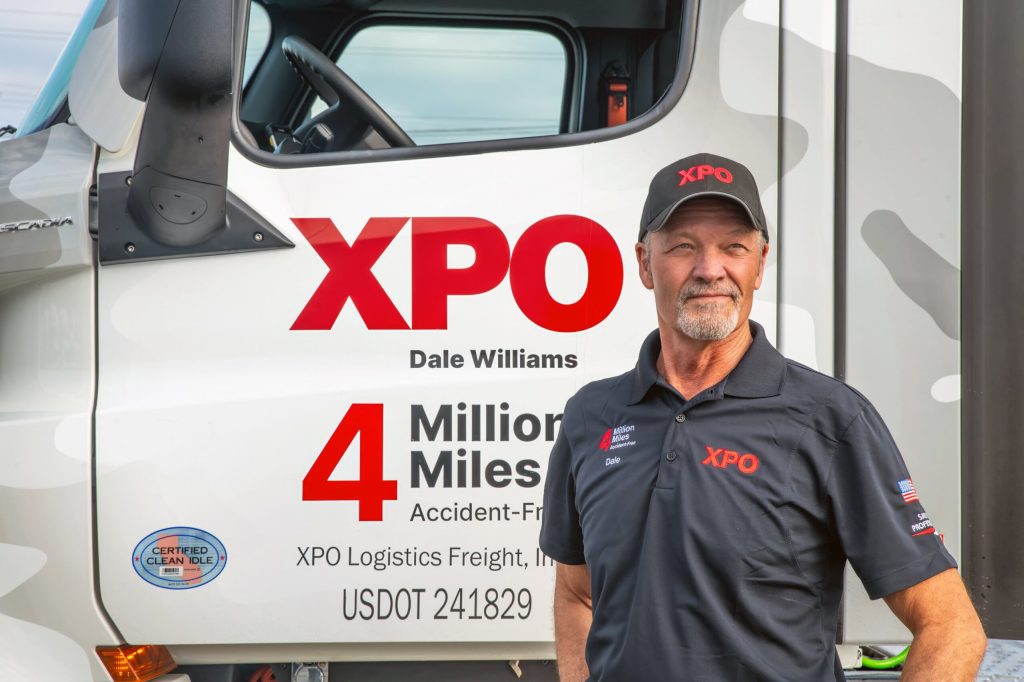
Four million miles. That’s roughly 160 trips around the world, or eight-and-a-half trips to the moon and back.
Dale Williams, 65, may not be a jet pilot or astronaut, but he’s certainly matched distances traveled in both professions over the course of his nearly 37-year career with XPO. Earlier this month, XPO celebrated the Army veteran for driving 4 million miles.
On top of that, he drove every one of them without a single accident.
It’s a feat that drivers in the trucking industry strive for, yet very few achieve. According to an article published in Truckers News, Perdue Farms celebrated its second driver to ever achieve 4 million accident-free miles in the company’s 104-year history earlier this year. With the addition of Williams, XPO now also has two drivers who have reached the milestone in its 35-year history.
XPO recognized Williams’ achievement on April 8 with a celebration at the company’s service center in Knoxville, Tennessee. He was presented a new camo-wrapped tractor in honor of his military service, a $25,000 safe driving bonus, a trophy, varsity jacket and more.
Additionally, Williams was awarded a personalized ruby ring sporting four diamonds – one for each of the million miles he’s driven safely over the course of his career.
“Dale is a true role model,” Tim Staroba, president of XPO’s East Division, told FreightWaves in an email. “He’s well known at XPO and throughout the trucking industry for his commitment to safety, but also for sharing his wealth of knowledge with other drivers. Reaching four million accident-free miles is an incredible achievement that shows his dedication to our colleagues, customers and the motoring public. We’re proud to have him on our team and grateful for his service to our country and company.”
Born in Orangeburg, South Carolina, Williams grew up just south of Columbia, South Carolina, in the town of Casey. There, he would join his high school’s Army Reserve Officer Training Corps program and participate in the drill team, honor guard and rifle team.
“It was good prep for the military,” Williams told FreightWaves. “It gave me a stripe when I went in.”
After graduating from high school, Williams joined the Army as a Private E-2 and would earn the rank of Sergeant E-5 within two years. He spent most of his three years of service as a paratrooper stationed at Fort Bragg, North Carolina. After leaving the Army, he served one additional year in a signal battalion with the Army National Guard.
Following his military service, Williams would start trucking in 1980, hauling scrap metal and pulling mobile homes. He also did some maintenance as a handyman during this time. Eventually, he moved to Texas in 1985 where he worked in over-the-road trucking out of San Antonio for about six months.
“We [covered] everything but the East Coast,” Williams said. “I slept in trucks, and it wasn’t really for me. I came back home to South Carolina, and that’s when I started hauling heavy equipment. … And that’s where I met my wife, Karen. Her uncle was my bossman.”
Williams began work with XPO, then named Con-way Freight, in 1987.
“I was three months shy of opening day for the company,” Williams said. “July will be 37 years I’ve been with the company.”
He said that he enjoys doing less-than-truckload driving for XPO because of the work-life balance the job offers.
“I think most of your over-the-road drivers look for LTL companies to work for later on in their career so they can settle down with family a little bit and get into more of a routine,” Williams said. “Five hundred to 600 miles [a trip] is about as far out as we can go because we’re home every day.”
Over the years, Williams has seen lots of changes in the trucking industry and with the driving public. One big change during his career was the invention of cellphones.
“When I first started trucking, CBs were your main communication on the road. When I left the house, I had a dime in my pocket in case something happened so I could make it to a phone and make a phone call for help. So the camaraderie and trucking was a lot better then. Not a lot of people run CBs as much anymore on the road. I guess everyone depends on cellphones.”
Williams said that due to cellphones, more and more motorists are making driving their “second option” when they’re on the road. He said that being aware of distracted drivers and conscious of lane position is important to stay accident-free.
As for advice to new truckers, Williams said healthy lifestyle habits are important for safe driving.
“The main thing that any driver needs to do starts at home,” Williams said. “You have to get your rest, and family life is huge. You have to have a support system there. When I started driving with this company, I was running nights. With children at home trying to sleep during the day, my wife made sure we had blackout curtains in the windows and kept the kids quiet in another part of the house so I could get my rest.”
Additionally, Williams keeps a rigid military mindset when it comes to punctuality at work.
“I always show up 30 minutes early so that I’m not rushed when I get there,” he said. “I can relax and talk with the drivers around me. … Just setting the pace and taking it slow [is important]. Checking your equipment out properly and making sure you know what you’re taking down the road is safe before you start your trip is extremely important.”
Friends, family, co-workers and XPO executives weren’t the only ones this month who celebrated Williams on this career milestone. He also received a congratulatory letter from Glenn Jacobs, mayor of Knox County, Tennessee, and former WWE wrestler “Kane.”
Williams gave a big grin when he received the letter from his son’s favorite childhood wrestling idol.
“[XPO] really puts an emphasis on these mile markers that you hit in your career, and that’s a good thing for the drivers,” Williams said. “For the junior drivers, it’s an incentive to keep doing things the right way.”
Today, Greenwich, Connecticut-based XPO employs 13,000 drivers across 297 service centers in North America. The LTL business handles more than 13 million shipments per year made up of over 18 billion pounds of freight per year. In September 2022, XPO driver David Frazier was honored as the company’s first driver to achieve 4 million accident-free miles. Frazier drives out of the service center in Kernersville, North Carolina.
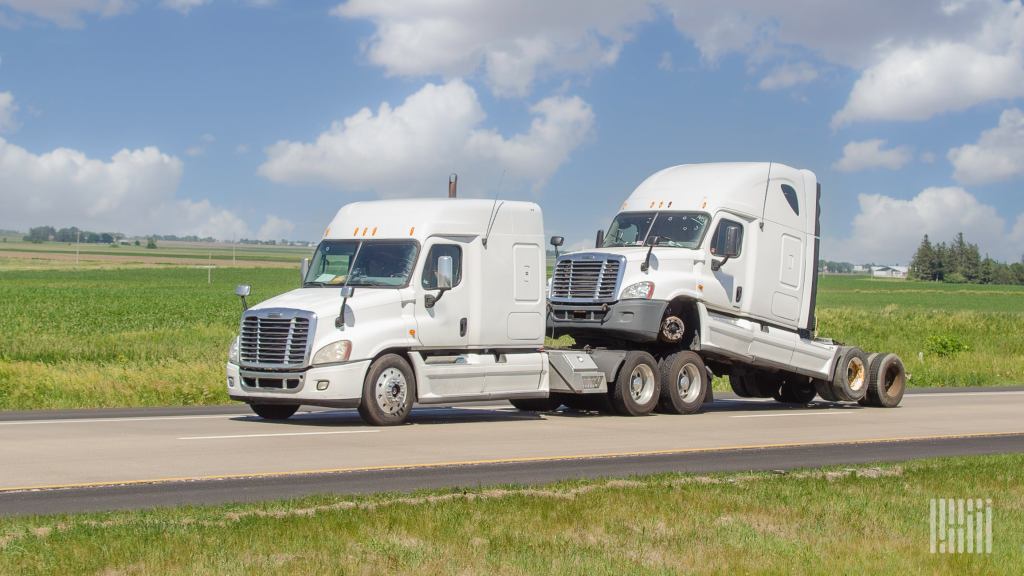
With the 2024 Small Fleet & Owner-Operator Summit revving up next week, here are four things to check out during this year’s virtual trucking program.
FreightWavesTV will livestream the event starting at 9 a.m. EDT on Wednesday, April 24. It will also be streamed to FreightWaves social media accounts on YouTube, Facebook and Twitter.
The summit will open with a keynote discussion between Owner-Operator Independent Drivers Association President Todd Spencer and FreightWaves Enterprise Trucking Expert Thomas Wasson about regulatory impacts facing owner-operators. They will examine current and proposed legislation in Congress as well as regulatory moves by the Federal Motor Carrier Safety Administration.
FreightWaves founder and CEO Craig Fuller will sit down for a chat with Truckstop CEO Kendra Tucker on the latest edition of “Fuller Speed Ahead.” FreightWaves “WHAT THE TRUCK?!?” host Tim Dooner will also interview Truckstop Chief Relationship Officer Brent Hutton during a 45 minute show.
These nine fireside chats will discuss a variety of trucking topics throughout the summit:
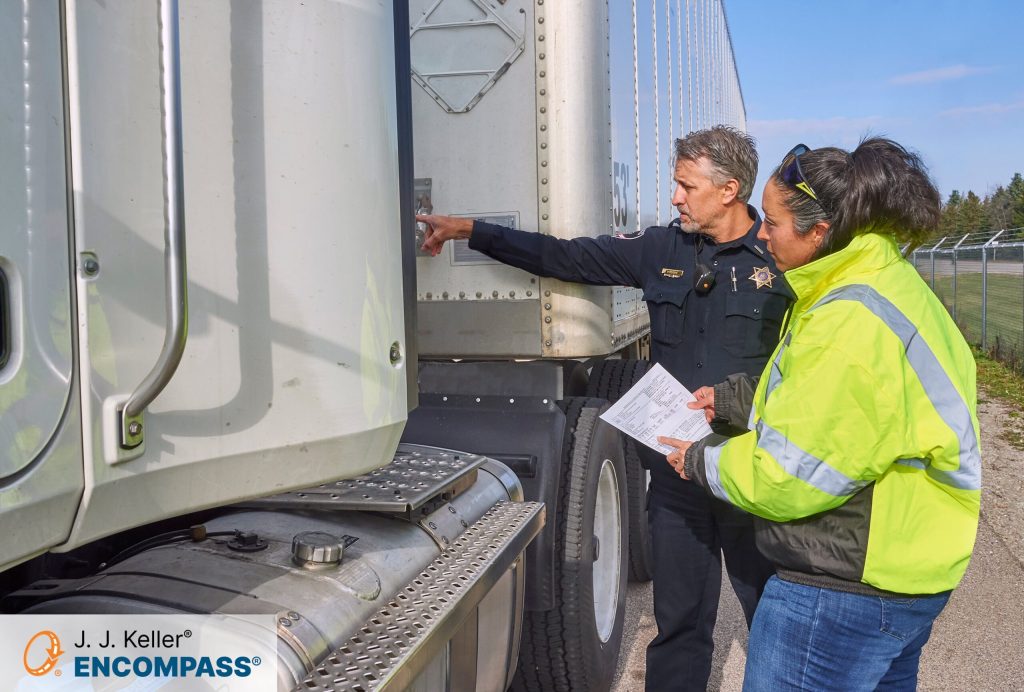

The Commercial Vehicle Safety Alliance’s (CVSA) International Roadcheck is coming up next month. It is a high-visibility, high-volume inspection and compliance enforcement initiative, and carriers should begin preparing now to avoid racking up unexpected violations.
This three-day Roadcheck — which takes place in Canada, Mexico and the United States — is scheduled for May 14-16.
“Don’t let this three-day event sneak up on you. Out-of-service inspections can dramatically impact a carrier’s safety scores across multiple CSA BASICs,” J. J. Keller Industry Business Adviser Josh Lovan said. In contrast, “clean inspections will improve safety scores, so start planning today to ensure success during Roadcheck 2024.”
Each year, the CVSA International Roadcheck focuses on slightly different areas, depending on the issues and trends observed over the past 12 months. For 2024, focus areas will include:
Motor carriers must establish and strictly enforce clear policies to prevent controlled substance and alcohol possession or use in the workplace. The number of prohibited drivers listed in the U.S. Drug & Alcohol Clearinghouse (DACH) has been increasing. U.S. motor carriers should regularly query the DACH to ensure their drivers are not in prohibited status.
Roadcheck aims to increase awareness for drivers, motor carriers, technicians and enforcement personnel of these critically important vehicle components. Emphasis will be placed on the tractor protection valve, trailer supply valve and anti-bleed-back valve.
Requirements for tractor protection systems:
Carriers can take a number of steps to prepare for this Roadcheck, including ensuring all company credentials are current, verifying that all driver paperwork is up to date and making sure all necessary vehicle maintenance has been completed.
Beyond paperwork and other housekeeping steps, carriers should focus on preparing drivers for Roadcheck. This means refreshing and retraining drivers on topics like vehicle inspections, hours-of-service limits, electronic recordkeeping and qualification requirements.
Safety personnel can take a handful of practical steps ahead of time to minimize violations during the event.

Conduct your own safety blitz
This can ensure drivers fully understand what is expected of them during a roadside inspection. A safety blitz will provide drivers — especially new drivers — with the knowledge and confidence needed to obtain clean inspections.
Conduct an audit on pre-trip inspections before drivers exit the yard
Previous experience revealed that more than 15% of drivers were failing to conduct a proper pre-trip. Safety teams should make sure drivers are walking around the trucks to assess lights, tires and placards. Drivers need to understand the importance of completing this step even when someone else hooks the set for them.
Investigate safety and maintenance collaboration
There should be a clear line of communication between a carrier’s safety and maintenance teams. For example, if a brake or tire violation occurs, the safety team should collaborate with maintenance to determine when the unit was last serviced. If the brakes were examined by the maintenance team within a couple of weeks of a brake violation, then there may be an issue with the maintenance team.
It is imperative that all roadside violations are investigated to prevent the same violations from occurring frequently.
When preparing for CVSA International Roadcheck — and discussing safety in general — it is imperative that every member of a carrier’s team understand and respect the scope of the job that safety personnel must perform on a daily basis.
“Until you wear the shoes of a safety manager, there is no way to truly understand the unique challenges in safety,” Lovan said. “Today’s safety professionals are responsible for driver coaching, injuries and accidents. There are no excuses for lack of preparation.”
The pressure safety managers face is high, but with preparation — and good partners — it is possible to keep everyone safe while minimizing violations every day, not just during Roadcheck.
Minimize downtime and out-of-service events with the J. J. Keller Encompass Fleet Management System. It can help you identify risks to your operation related to vehicle inspections and driver recordkeeping, ensuring you are prepared for every roadside inspection.
Download a free copy of the J. J. Keller Roadside Inspection Guide for useful tips on the driver interview with enforcement professionals, review of DVIRs and document verification.
For more Roadcheck resources, including free webcasts and checklists, visit https://jjkeller.com/Roadcheck.