Paving the way for trucking’s next generation — Taking the Hire Road

On a recent episode of Taking the Hire Road, Lindsey Trent, President and Co-Founder of Next Generation in Trucking, joined Jeremy Renner to highlight her work in creating a pathway to attract younger workers to the trucking industry.

One of the inspirations Trent highlights for creating Next Generation in Trucking was persistent shortages in skilled labor. Trent said, “Working in driver staffing and then going to work for Ryder, I had a conversation every single day about the workforce shortages.” 

To get younger drivers interested in becoming professional drivers, Trent determined that raising awareness in school systems is a good first step. The challenge for many schools is they lack trucking-specific vocational classes compared to other trades. “You can study plumbing and be an electrician and welding in high schools. Why can’t we study professional driving? And so that’s exactly what we started to do is really dive deep into the education world and see where we were lacking and then start to put efforts in there to be involved in organizations … . We walk schools through the process of how to start a trucking program,” Trent said. 

Fellow co-founder Dave Dine was a teacher who started a trucking program seven years ago at Patterson High School. Trent adds, “One of the big things that we’re trying to do is replicate his program across the country. And so we’ve got schools all across the country that are starting these trucking programs using driver simulation training, preparing that student to get their commercial learner’s permit and then going on to get their behind-the-wheel training.”

This added interest in trucking is creating other opportunities for students who may go to college but not get their CDL, yet still get jobs related to the supply chain. Trent said, “Dave even gets students that say, ‘You know what, I want to go to college and I’m still going to go to college, but I want to come back as an engineer in the trucking industry or a supply chain manager in the trucking industry.’ So they are really falling in love with trucking and the supply chain and making it their career choice.”

Networking and relationship-building were crucial elements that helped in the early growth of Next Generation in Trucking. Trent said, “So we were 100% volunteers when we started the organization. I’m on the board of the Kentucky Trucking Association. I reside in Louisville, Kentucky. So I got a lot of support from the people in Kentucky and then surrounding states and just partners, learning about what we were doing.” Trent adds that the trucking industry is a tight-knit community, and membership in NextGen started snowballing as more people talked and learned what the organization was doing. 

While the program originally started off focusing on drivers, it quickly became apparent there was also a need to focus on medium- and heavy-duty truck technicians. To address this growing demand, Trent began a focus on more partnerships to help drive changes in curriculum. Trent adds, “The best thing that we can do is work with an employer in their local community and meet with the school and the employer who’s interested in helping this school start the trucking program, and it just snowballs from there.”

Trucking classroom education is also being enhanced with the addition of driving simulators and virtual reality headsets. Trent talked about adding VR headsets, through which students can learn to change the oil in a truck or replace a tire. The incorporation of technology for practical applications is a growing component of generating excitement among students.

Trent noted another benefit of trade skills and trucking is the looming threat of AI disruption on whitecollar workers with college degrees. Trent said, “Skilled trade jobs are not going to be taken over by AI, but there are a lot of those college-bound jobs that are. And so we really need to promote more skilled trades, even more so. We know freight’s increasing. We know we have an aging workforce. We have good jobs. We’ve got to promote trucking within career technical education.”

For an aging driver workforce, more research is needed but the opportunity is there. Trent adds, “We need the numbers to know that an 18-year-old that’s been properly trained and is in an apprenticeship program is just as safe as a 24-year-old that just decides they want to get their CDL. And that’s why we’re trying to create these safety training programs in high schools to really increase the amount of training hours for young people.”

Sponsors: Career Now Brands, The National Transportation Institute, Infinit-I, Workhound, Asurint, Transportation Marketing Group, Seiza, Drive My Way, DriverReach, F|Staff, Trucksafe

FreightTech Friday: Heale incentivizes complete, accurate data sharing

Heale Labs plans incentives to data sharing

The logistics industry has traditionally struggled with effectively managing and utilizing data.

In an interview with FreightWaves, Todd Haselhorst, founder and CEO of blockchain startup Heale Labs, highlighted the problems he experienced in data management in his past supply chain work.
“We spent 35% of our budget just focusing on integrations, and we had all of these different data formats. … It was becoming very expensive for us to deal with different data standards between systems and was taking away valuable resources that could otherwise be used for innovation,” he explained.

Heale is addressing these problems through its platform, which connects systems, standardizes data formats and incentivizes the sharing of complete and accurate data sets.

Haselhorst said the key to Heale’s innovation is tokenized incentives. Users will download a digital wallet that integrates into their existing transportation management and enterprise resource planning system and when a shipment is created and added to the Heale network, the technology will collect and add that shipment data to the master shipment record.

Once the shipment is completed, the platform determines whether the users qualify to receive rewards from the network based on their actions and the data shared from the shipment. Rewards will be distributed via the digital wallet.

“We incentivize best practices during the shipments and sharing accurate data,” he said. “We reward [data providers] for the data cleanliness, paying bills on time, using electronic bills of lading and other practices. Ultimately this increases profit by eliminating errors, theft, fraud and waste from the shipment lifecycle.

The company’s incentive structure could motivate long-needed changes to address issues around data quality and security.

If the industry can solve these foundational data issues, it will open up new possibilities for advanced technologies like AI to optimize operations.

“We currently have partnerships with transportation management systems and brokerages that generate almost $2.3 billion in transactions, and we plan to launch the beta this summer. Once the network launches, that is when all of that shipment data will come into the network,” said Haselhorst.

Princeton TMX partners with Loop

Multimodal transportation management system Princeton TMX recently announced it has partnered with fintech platform Loop to enable shipper customers to audit their supply chains for improved procurement and planning.

“Loop adds a layer of financial management and audit capabilities. It benefits shippers through its AI-driven approach to audit and payment, ensuring accuracy in billing, reducing overpayments, and enhancing financial oversight in transportation,” Princeton TMX CEO Mark McEntire told FreightWaves.

McEntire explained that for now, the two products will not be integrated but will work in complement to each other.

This complementary partnership will automate cost allocation, identify cost savings opportunities, simplify exception management and automate general ledger coding for financial adherence.

“This partnership will set new industry standards for shippers regarding efficiency and financial management within transportation and logistics. It will enhance the competitiveness of Princeton TMX’s services in the market by offering current customers a wider range of tech-enabled solutions that address both operational and financial aspects of transportation management,” said McEntire.

McEntire joined Princeton TMX in September to improve the company’s existing technology and advise its growth strategy. Before joining the company, he spent 35 years in the industry working at J.B. Hunt Transport Inc., Penske Logistics, Transplace and Emerge.

Brief Bytes:

TrueTMS has unveiled TrueLiquid, a cloud-based TMS tailored for tanker fleets. It aims to enhance safety, efficiency and profitability. The platform offers features such as interactive load planning, comprehensive fleet management, ELD integration and customer portals that address the challenges of liquid bulk transportation.

BoxC Logistics appointed Tawnee Steinke as its new vice president of product and partnerships on Thursday. With a track record in cross-border expansion and building strategic partnerships, Steinke’s expertise signals the global e-commerce logistics provider’s commitment to growth in the international market. Steinke will join me on SiriusXM’s Road Dog Trucking Channel for an episode of FreightWaves Drive Time on April 23 at 5:30 p.m. Eastern time.

Goodshuffle, a Washington-based software company, secured a $5 million Series A investment on Wednesday from Fintop Capital. This will propel the expansion of Goodshuffle Pro, its event and trade show logistics software. The platform streamlines event logistics, offering features like inventory tracking, online invoices and customer relationship management tools.

Kalmar, a division of Cargotec, and Forterra (formerly RRAI) are joining forces in a joint development agreement for autonomous terminal tractor solutions. Kalmar will develop the automation-ready terminal tractor and fleet management system, while Forterra integrates its AutoDrive platform for autonomous operations. This collaboration leverages Kalmar’s port automation expertise and Forterra’s autonomous systems for increased safety and productivity in container and trailer handling.


Uber Freight surpasses $18B in freight under management worldwide

OneRail survey details retail shippers’ last-mile delivery needs

Locus Robotics launches business intelligence tool LocusHub

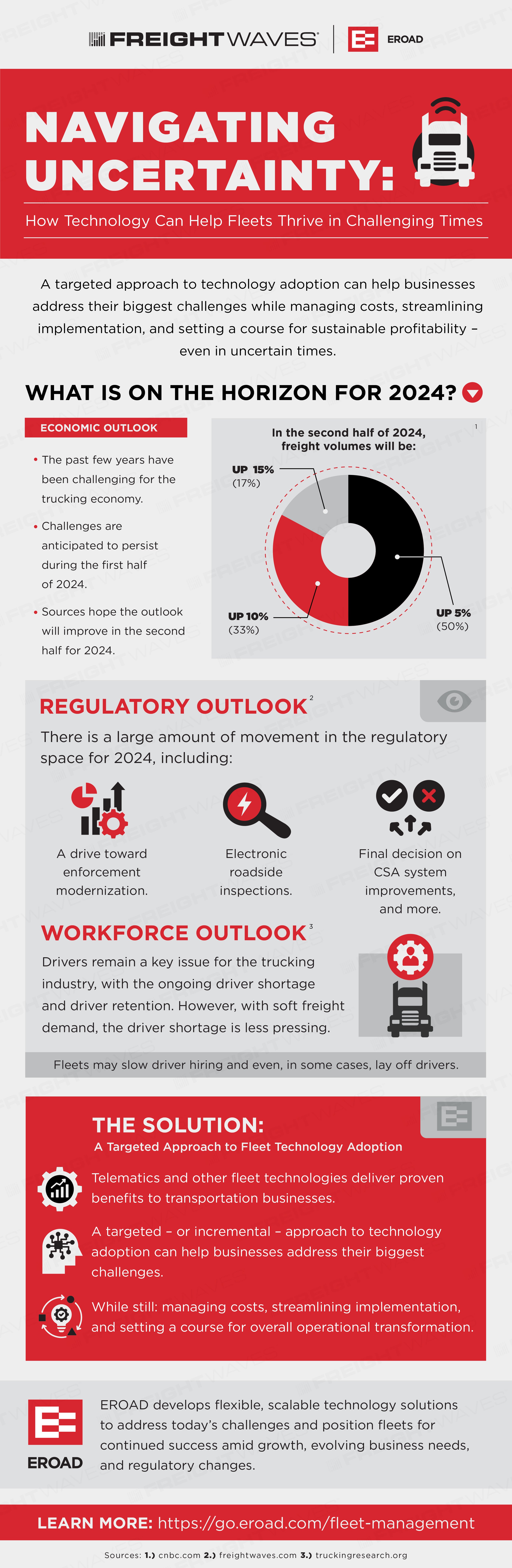
Daily Infographic: Navigating Uncertainty: How Technology Can Help Fleets Thrive in Challenging Times


To learn more about EROAD CLICK HERE
To learn more about how EROAD is navigating change in the trucking industry CLICK HERE

FedEx pilots take harder line as contract dispute drags on

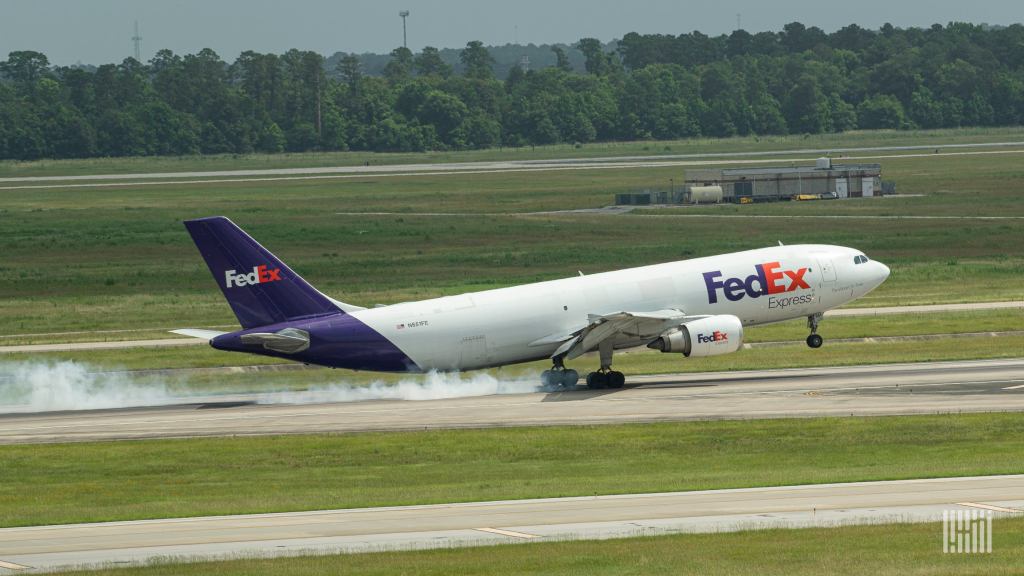
A purple-tail FedEx plane creates a puff of smoke when its tires touch down on the runway.

The board that sets the strategic direction for the pilots’ union at FedEx Express is projecting a united front after last week’s acrimonious debate over ending federal mediation of contract talks. The effort suggests there is more agreement than meets the eye and that aggressive steps are necessary to counter the company’s alleged intransigence. 

Despite strong membership divisions, there appears to be greater unity within the Air Line Pilots Association’s (ALPA) Master Executive Council as a new guard begins to exert control. And internal communiques obtained by FreightWaves also indicate that council members, including long-serving incumbents, share the view that FedEx (NYSE: FDX) is stringing out the labor dispute.

“Whether you are of the opinion that we should have waited longer or that we’ve waited long enough, we MUST embrace the imperative that we all work together. We are ONE TEAM on this side of the table, ready to negotiate a deal that recognizes our value to OUR corporation, and a deal that the corporation can easily afford,” the MEC said in a note to members that was signed by all 14 council representatives. “On the other side of the table is the other team, intent on dividing and conquering us. You need to decide if you’re on OUR team or THEIR team. There are no other choices, no neutral sideline or fence to stand or sit on. We stand together, or we all fail.”

ALPA last week asked the National Mediation Board to end bridgemaking efforts and allow the parties to resolve differences through arbitration – a move designed to open the door to a possible strike since neither side is likely to agree to a binding decision from an arbitrator. The letter was sent after an 8-6 vote by the MEC that some complained was engineered behind closed doors, rushed through without adequate consideration and taken without waiting for FedEx’s response to the union’s latest demands. 

The bad blood got so bad that some council representatives said they were essentially ambushed by plotters seeking to hijack the negotiations, FreightWaves reported. In a separate correspondence to crew members, a top FedEx official said the union’s shifting stances because of the internal divisions has made it difficult to come to an agreement because it doesn’t know what demands to take seriously. 

ALPA on Thursday blamed FedEx for trying to undermine union solidarity by sowing “inflammatory information and unsubstantiated allegations” in the media, notwithstanding the fact that the internal tensions were clearly spelled out in the organization’s own documents.

“Contrary to attempts to divide our governing body and pilot group, we want to reaffirm that FedEx pilot leadership stands united in its pursuit of a contract that reflects the hard work and dedication of our members. The decision to request a release from the National Mediation Board was not taken lightly, but was made in the best interest of ensuring that a resolution to our contract negotiations was completed in a timely and constructive manner,” the union said in response to the article.

It is unclear when the pilots union made its latest proposal to FedEx, but Wednesday’s membership update from the MEC and an official who was subsequently contacted implied that it happened on Feb. 27, the first day of three mediated sessions in a row. The MEC said it was angered that FedEx failed to give an answer on Feb. 29 and instead said it needed two more weeks before it could address retirement issues.

“A hallmark of the company’s behavior in negotiations has been stall, drag feet and delay. With only two days of meetings scheduled in the month of March, and only one week set aside to meet in April, we simply could not play along with the delay game any longer,” the board said. 

The parties have been negotiating for nearly three years on an updated pilot contract and have been in federal mediation since October 2022. 

The leaders said the delay solidified the view that FedEx had no intention of making improvements to the tentative agreement pilots rejected last summer. A majority of FedEx pilots were displeased with the agreement’s level of job protections, back pay, pension options and quality-of-life considerations and the fact that pay increases were below those recently achieved by passenger-airline counterparts. 

FreightWaves previously reported that FedEx did not plan to increase the value of the rejected deal in the new round of mediated talks. The MEC letter characterized management’s insignificant changes so far as “insulting.” 

Scope clause

Of particular concern, according to the correspondence, is the company is not addressing pilot concerns that more flying will be outsourced, which would reduce their earnings. ALPA wants to improve clauses in the existing contract that define what type of flying can be done by pilots that aren’t employed by the airline. 

Last year’s tentative agreement would have allowed FedEx Express to place more work during surge periods with third-party airlines without paying a higher penalty. But many pilots were concerned that language prohibiting outsourcing if FedEx reduces flight hours or furlough pilots wasn’t strong enough. Under the existing scope arrangement, FedEx pays a financial penalty to the union that gets distributed to pilots if the company goes above the agreed cap on shipment volume that can be given to charter airlines. Opponents feared FedEx might simply not replace older pilots as they retire and then claim a need to hire partner carriers to meet demand.

The latest union proposal trades smaller monetary penalties for using contractors in exchange for more job protection. The memo accused management of rejecting most of the offer and deferring discussions about reduced crew operations into the future. 

Much of the tension centers on the extent to which FedEx intends to reduce the pilot workforce as it reengineers the air network to reduce structural expenses in response to shifting e-commerce patterns, which have resulted in weaker overnight express volumes. Company executives have outlined a “Tricolor” strategy that would shift a greater percentage of the fleet towards transporting deferred freight, which would be concentrated during the daytime. They have also publicly acknowledged the need to reduce the ranks by several hundred from the current level of 5,800 pilots. 

“By definition, the Orange network is FedEx planes and FedEx pilots, just retimed to go into day sorts versus tighter night sort windows. We discussed that on our Q2 call, and have been unequivocally clear about this in all company communications around Tricolor,” said FedEx spokesperson Caitlin Adams Maier.

(Photo: Jim Allen/FreightWaves)

The MEC said it wants FedEx to put in writing that FedEx pilots will be used to fly that freight. 

“When you add their scope [suggestion] to their pitifully low pay rate offer and their shuffling of retirement benefits and throw in their insistence on including concessions” on guaranteed flight hours for training or vacation that overlaps with normal downtime “what we’ve been offered from the company is a recipe for another failed tentative agreement,” the MEC told members.

The tenor of the messages reflects recent changes within the MEC. Most of the representatives who endorsed the failed tentative agreement have been recalled and replaced. Initially, only a few representatives were recalled after the failed tentative deal and the new representatives were in the minority. Now they appear to have gained the majority. 

The MEC is looking to fill a vacancy for chairman of the negotiating committee, according to the member update.

Late Thursday, the MEC voted Chairman Billy Wilson out of office, an action he predicted last week would happen because of the power struggle and disagreement over the NMB letter’s timing.

“Our request to be released [from NMB oversight] should demonstrate to the company and investors that we will not settle for a subpar tentative agreement nor allow the process to be delayed any further,” the MEC wrote. “The trajectory plotted by the company would never yield a tentative agreement that we as a MEC could endorse, much less one that the membership could overwhelmingly ratify.”

The union has consistently criticized FedEx for citing lower profits as reason for caution on a new pilot contract, noting that the company in December announced a $1 billion accelerated share buyback program. 

During a special in-person meeting at the MEC’s Memphis, Tennessee headquarters on Wednesday, Southwest Airlines Pilots Association President Casey Murray described how a deal was reached in January that would raise pilot pay about 50% over five years. The FedEx deal shot down last summer included a 30% pay increase over 4.5 years. Murray said the agreements reached at Delta Air Lines and United Airlines set a pattern for a successful outcome with Southwest. 

The MEC plans to conduct an informational picket on Wall Street when FedEx releases quarterly results next Thursday in hopes that investors will convince management to speed up negotiations.  

Click here for more FreightWaves/American Shipper stories by Eric Kulisch.

Sign up for the weekly American Shipper Air newsletter here.

Power struggle within FedEx pilots union upsets contract talks

FedEx pilots face pay cuts, buyouts as contract talks resume

FedEx braces for 50% cut in Postal Service air contract

Michigan trucker guilty of setting Swift Transportation trailers on fire

A Michigan truck driver accused of being a serial arsonist responsible for setting blazes across the country has been found guilty in California for setting Swift Transportation equipment on fire as part of a personal vendetta against the company. 

Jurors on Tuesday found Viorel Pricop, 66, of Allen Park in metropolitan Detroit, guilty of six counts of arson of vehicle or property in interstate commerce after a 16-day trial. Investigators said Pricop, who was charged in U.S. District Court for the Central District of California in December 2022, set fire to at least 24 semi-trailers belonging to Swift Transportation in eight states after he was convicted in 2018 for transporting stolen cargo. That earlier case stemmed from an investigation conducted by Swift. 

The California fires occurred in San Bernardino and Riverside counties from December 2021 to September 2022, prosecutors said. Pricop is accused of setting the other fires in New Mexico, Texas, Arizona, Oklahoma, Louisiana, Arkansas and Alabama, mostly along Interstates 10 and 40 from June 2020 to March 2022, charging documents say. Drivers were sometimes asleep in their trucks when the fires were set, but no injuries were reported. Pricop faces federal charges in other states.

Swift Transportation, based in Arizona, told investigators this number of fires had never occurred in company history, prompting company officials to hire fire investigation consultants to determine the cause. Investigators uncovered a pattern of similar methods used to light the trailers on fire, including where the fires began on the vehicles and the times they were set, prosecutors said.

Cell tower data near some of the fires revealed that a navigation device installed in a commercial tractor-style truck had connected to the towers around the times of the fires. Law enforcement officials determined the device was installed on a vehicle operated by Pricop, prosecutors said.

Analysis of Pricop’s cell phone showed he was in the area of the fires, investigators said. Search warrants executed on Pricop’s tractor-trailer, personal vehicle and residence in September 2022 yielded evidence, such as a gas torch, torch-style lighters and documents showing cargo pickup and delivery dates that aligned with the times and locations of some of the fires.

Pricop “went on a rampage of retaliation” against Swift Transportation, which linked a 2015 theft to Pricop, said U.S. Attorney Martin Estrada.

Swift utilized bait trailers containing tracking devices to catch thieves following a series of thefts. Company investigators traced stolen boxes to a storage facility in Michigan, leading to Pricop’s arrest. He was convicted in 2018 for a tax offense and for transportation of stolen goods, which stemmed from the Swift investigation. His supervised release ended in June 2019, about a year before the Swift equipment fires began, prosecutors said. 

“Rather than take advantage of the second chance offered to him, he chose an incredibly reckless and dangerous path. We will not accept arson and other violent crime on our streets, and I am grateful that this defendant will now be held to account,” Estrada said. 

Pricop is scheduled to appear in court for sentencing on June 7.

Do we really need another retail subscription service?

Target joins the subscription club

Image: FWTV

On Monday’s episode of The Stockout, Grace Sharkey and I discussed last week’s announcement that Target is launching a subscription-based fast delivery service. For an introductory price of $49 a year (rising to $99 a year starting in May), customers receive free two-day shipping and free same-day delivery on orders over $35. The company’s ability to offer such speedy deliveries is made possible by its recent investments in local sortation and fulfillment centers. I get it — retail subscription services drive sales and loyalty. One of the stats that stuck with me from the Federal Trade Commission lawsuit against Amazon is that Amazon Prime subscribers buy four times as much as Amazon customers who are not subscribed to Prime (an average of $2,000 a year versus $500 for nonsubscribers). Still, Target Circle 360 seems like a competitive response to avoid market share loss to Walmart Plus, which offers a wider selection of grocery items, discounted gasoline and Paramount streaming with its fast delivery subscription. I expect Target Circle 360 to primarily serve the purpose of retaining existing Target customers by offering them a competitive level of convenience, but I, for the time being, struggle to see why the subscription would win the retailer conquest business.

Check out Monday’s The Stockout show here, which discussed this topic, or catch up with the full playlist here

No signs of the big three ocean issues (Red Sea/Panama/ILA) going away soon

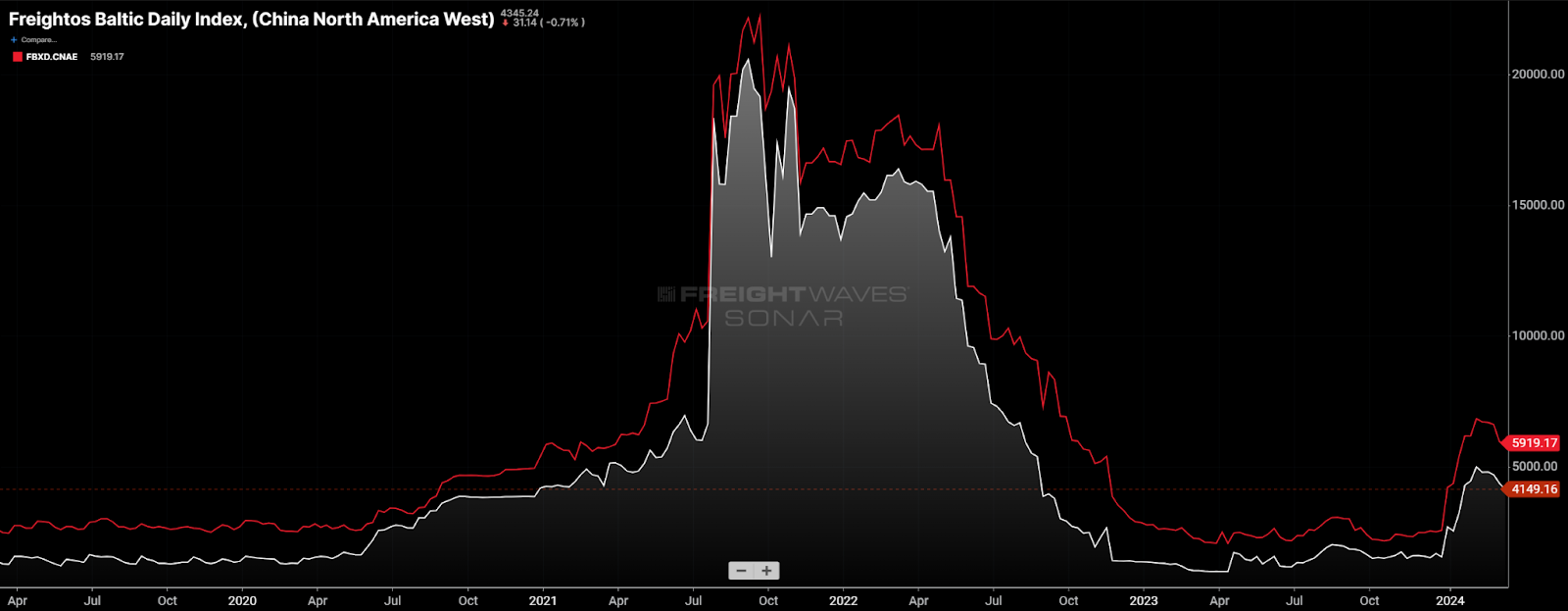
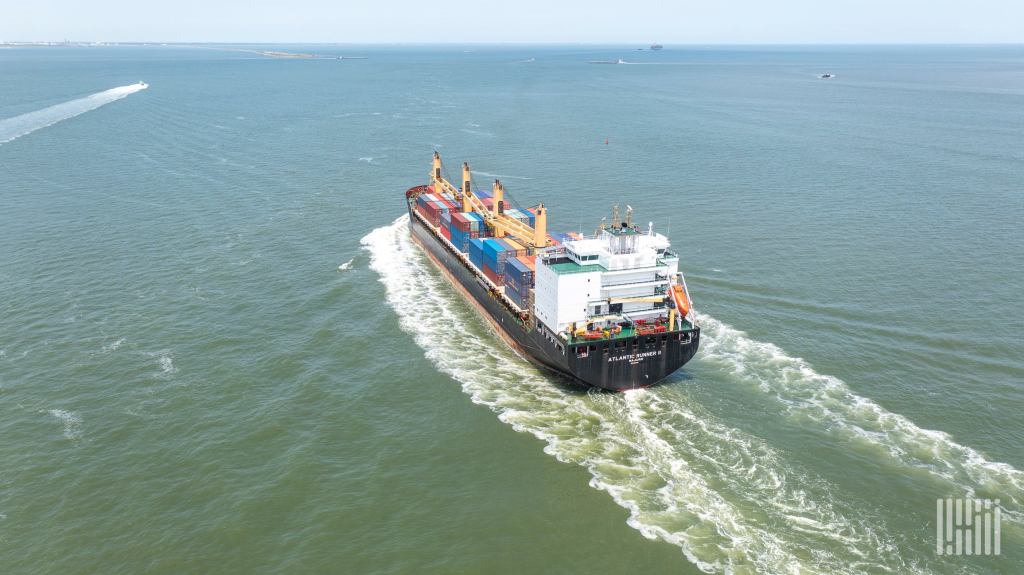
While nothing like mid-2021 to mid-2022, “healthy” ocean rates are encouraging container ship lines to keep capacity deployed. Chart: SONAR.

On Thursday, global logistics company Flexport hosted a webinar featuring a few members of its ocean procurement team. Here are some takeaways:

  • Carriers are publishing updates to their sailing schedules that assume longer routes around the Cape of Good Hope are the new normal. For instance, CMA CGM said no additional vessels bound for North America will transit the Red Sea.
  • Panama Canal transits per day are rising from 24 vessels currently to 27 on March 25. But 36 vessels a day is normal, and, based on the lack of rain in the forecast, water levels are expected to recede from an already-low level.
  • The International Longshoremen’s Association (ILA) contract expires Sept. 30, and local chapters need to have their issues resolved by May 17. If there is a strike/lockout, ships can’t divert to another port because other unions will refuse to unload those vessels and there’s not enough capacity at the U.S. West Coast and Canadian ports anyway.
  • Currently, 88% of trans-Pacific capacity is deployed, which is expected to rise to 98% in April. Healthy rates are encouraging carriers to keep high percentages of capacity deployed.

Van and reefer tender rejection rates fall in March

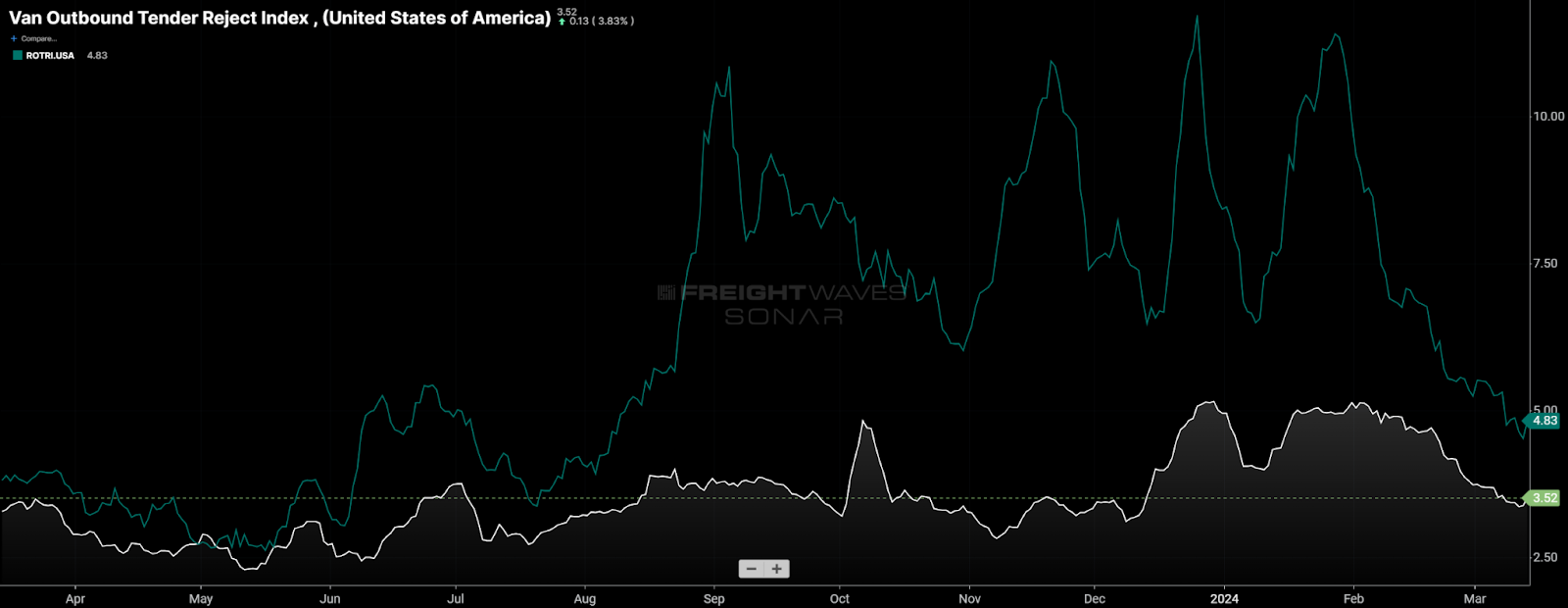
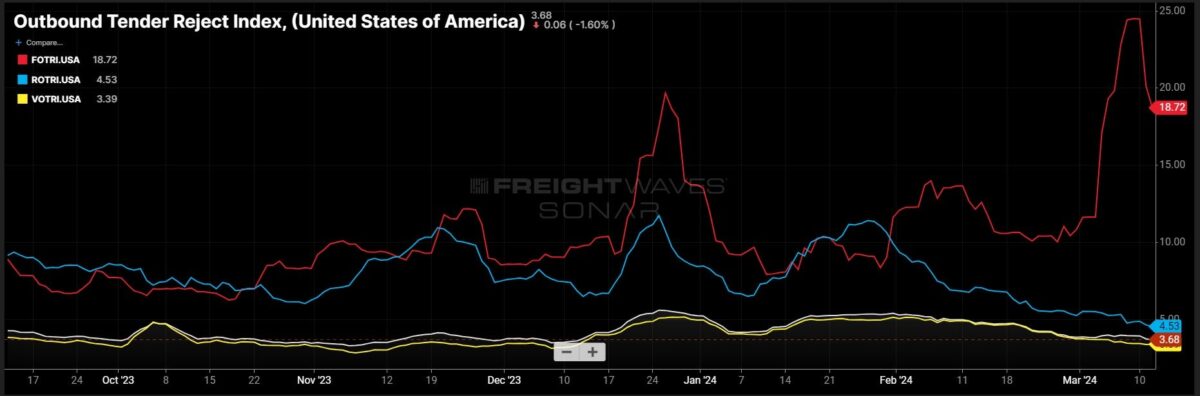
Dry van and reefer tender rejection rates are shown in white and green, respectively. Chart: SONAR. 

The freight market was certainly weak in February, and most of the SONAR clients I talked to on the market largely attributed that to seasonality since that is so typical of February. But now we are roughly halfway through March, the make-or-break month for carriers’ first quarter, and when the freight market typically improves. This month, the tender rejection rate for dry van freight has fallen from an average of 4.6% in February to 3.5% currently, while the reefer tender rejection rate has fallen from a 6.9% February average to 4.8%. Dry van tender volume has only improved moderately since February — dry van volume month to date is up 1.6% from the February averages. Meanwhile, reefer volume is down 3.5% month to date from the February average. That suggests there remains plenty of capacity in the market to absorb the incremental volume. The flatbed sector is the exception to those trends which reflects the kickoff of construction season in the Northern states — flatbed tender rejections have surged to 18.9%, from an 11.7% average in February.

SEC won’t require scope 3 emissions reporting

FreightWaves’ John Kingston wrote up the Securities and Exchange Commission’s ruling last week. In short, the SEC will require most companies to report their scope 1 and scope 2 greenhouse gas emissions, but not scope 3. Scope 3 emissions are those from suppliers that are two steps away from the reporting company in the supply chain — in other words, suppliers that do not deal directly with the reporting company.

According to Lindsay Azim, director at supply chain consultant Gartner Inc., the ruling was not a surprise given the enormous burden of reporting scope 3 emissions. There is also the question of whether scope 3 falls outside the SEC’s jurisdiction because it would mandate public disclosures from privately held companies. While unsurprising to some, the SEC’s decision is a big deal, in particular for the consumer packaged goods industry because many of the publicly traded companies in that sector have announced ambitious targets to reduce greenhouse gas emissions. In addition to Kingston’s article, I recommend reading this Just Food article, which describes many of the largest CPG companies’ emissions targets.

Emerging technology drives improvement in fleet safety on the road

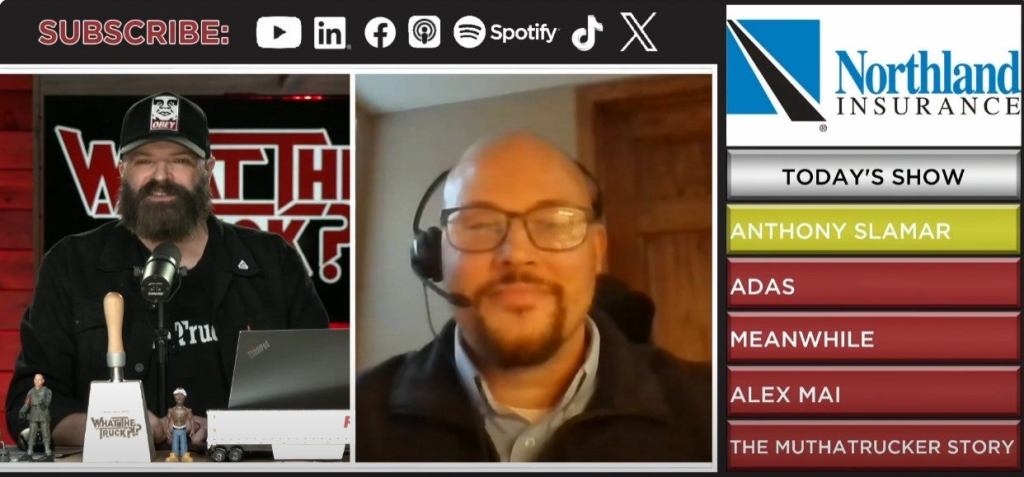
Trucking safety technology is evolving. Risk Control Transportation Specialist Anthony Slamar at Northland Insurance, recently appeared on an episode of WHAT THE TRUCK?!? to highlight the growing role of Advanced Driver Assistance Systems (ADAS) and how they can help to improve fleet safety.

Slamar notes the technology is a package of safety features designed to help drivers monitor their surroundings. ADAS operates on various sensors, including vehicle alerts designed to take corrective action if a driver fails to react.

The main features of a modern ADAS include pre-collision assistance, lane control technology and blind spot monitoring. More advanced features include driver monitoring systems, with some designed to determine if a driver is fatigued or distracted. The list of features is expected to grow as the technology advances: “Keep in mind these systems are still evolving and emerging; there’s going to be renewed development as time goes on,” Slamar said.

The rise in nuclear verdicts resulting from trucking crashes continues to grow, creating additional pressure for fleets to adopt new safety technologies.

“Roughly 30% of accidents are going to be rear-end collisions. Another 30% are going to be lane change or merging accidents; [these] are two things that these systems are really trying to address,” Slamar said.

In addition to helping reduce costs, implementing ADAS can present an opportunity to improve driver safety for fleets. Slamar notes, however, that safety technology cannot replace a fleet’s safety culture or the value of driver experience. “At the end of the day, we still have to understand that the most important safety feature in a vehicle and in these trucks is the driver,” he said. “ADAS does not replace good safe driving techniques.”

Change management for fleets integrating these new technologies must center on the benefits and limitations of the systems. One challenge Slamar notes is that these technologies are not 100% accurate. For example, a distracted driver may not be able to react in time when an ADAS warning is conveyed.  Fleet strategy must not only cover how to use ADAS, but also should include an effective distracted-driving policy and a fleetwide safety program to help address the potential limitations of emerging safety technologies.

Driver onboarding and training in safety systems are also important. Slamar noted that fleets can face challenges with driver adoption and identifying drivers who attempt to disable the systems. Complexity is another hurdle fleets must address to realize the full benefits of ADAS technology. Depending on tractor or sensor make and model, there can be multiple operating manuals and system tutorials, placing additional strain on driver training programs that lack a well-thought-out strategy before deployment.

Practical applications of the technology are also benefiting drivers.Customers particularly note the blind spot monitoring as beneficial, given the size of tractor-trailers and ever-present risks when changing lanes.

For fleets looking to become ADAS adopters, there is the potential for greater savings as trucking insurance companies and OEMs develop policies and systems to keep drivers and fleets safer.

To learn more about Northland Insurance Risk Control and trucking safety, visit www.northlandins.com.

More shippers avoiding long contracts amid abundant truckload capacity

More shippers avoiding long contracts amid abundant truckload capacity

(Photo: Jim Allen/FreightWaves)

A recent article by Furniture Today on domestic trucking is highlighting a growing trend of domestic trucking undergoing pricing and market changes between carriers and shippers. Powell Slaughter wrote, “Domestic trucking has started to share traits with its maritime counterpart, namely a shift to more transactional relationships between many shippers and their carrier partners and increased consolidation.”

Bluewater Logistics CEO Tiffany Bowman told Furniture Today, “From a domestic market standpoint, there’s no longer a true contract season or bidding season that we previously saw. We’re seeing customers who are transactional, that are bidding on a daily basis, even weekly ‘mini-bids.’ Previously, especially in furniture and textiles, you were seeing those contracts locked in for a year, two years, three years, at their pricing per region. Now, it seems shippers reach out daily for rates.

Bowman also saw some shippers call for earlier bids, adding, “Where we normally see those take place in May and June, we’re seeing them now in February.” This strategy can be beneficial for shippers who want to lock in the lowest rate possible before a potential upswing in the freight market, with current consensus being  the second half of 2024. Rachel Shames, director of pricing and procurement at CV International, sees freight rates remaining mostly stable for most of 2024. Shames told Furniture Today, “In general, there’s plenty of capacity, rates are low. Unless there’s a major change in volume forecast, I don’t see trucking changing this year.”

Serial arsonist of Swift trailers found guilty

(Photo: Jim Allen/FreightWaves)

A jury found Viorel Pricop, 66, of Allen Park, Michigan, guilty on Tuesday of six counts of arson of vehicle or property in interstate commerce. He had been in custody since October 2022. The arson involved Swift-owned trailers parked at or near truck stops in California, with the fires mainly occurring on or near the trailer tires. A news release from the U.S. attorney’s office, Central District of California, said, “Pricop set on fire at least 18 additional Swift Transportation semi-trailers in other states from June 2020 to March 2022, according to an affidavit previously filed in this case. These incidents occurred at locations spanning from Barstow, California, to McCalla, Alabama, with most incidents occurring along Interstate 10 and Interstate 40.”

A pattern began to emerge after Swift hired fire investigation consultants to examine the scenes and found multiple reports that showed similar methods used to light the trailers. The location of the fires and time of day each fire occurred led to an investigation of cell towers near the fires. A Department of Justice press release said the cell records “revealed that a specific GPS navigation device installed in a commercial truck was present at the fires. Law enforcement determined that this device was installed on a vehicle owned and operated by Pricop, the affidavit states. Law enforcement then identified the cellphone subscribed to Pricop and, through historical cellular data analysis and ping warrants, learned that the phone was present in the general area of 24 of the 25 fires, the affidavit alleges.”

This was not Pricop’s first conviction. The press release adds, “Further record checks for Pricop revealed that he was convicted in 2018 in the Eastern District of Michigan for transportation of stolen goods.” Pricop was sentenced to time served — about two years’ imprisonment — in the 2018 conviction, and his supervised release ended in June 2019, one year before the nationwide arsons began, per the affidavit.

U.S. District Judge Sunshine S. Sykes set sentencing in the current case for June 7. Pricop faces five to 20 years in federal prison on each count.

Market update: Cass February data shows ongoing freight market bottom

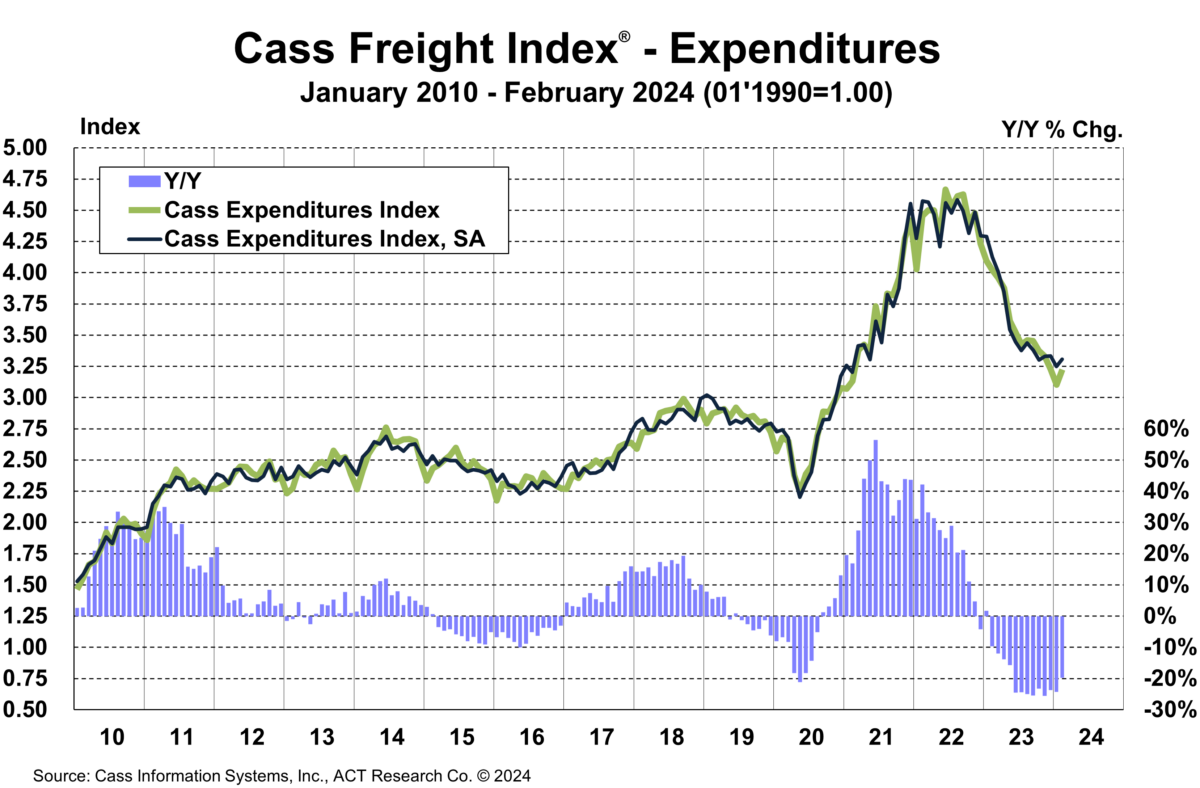
On Monday, freight audit and payment provider Cass Information Systems released its Cass Index for February which saw small improvements in freight rates and shipments but remained lower year over year. FreightWaves’ Todd Maiden writes, “Shipments increased 7.3% from January, up 2% when adjusted for normal seasonal trends, and were just 4.5% lower year over year (y/y). The y/y decline was the smallest in 10 months and 3.1 percentage points lower than January’s decline.” The report notes that ongoing destocking and a rise in goods consumption are encouraging signs of a nascent freight market recovery.

The Freight Expenditures Index, a measure of total freight spend, rose 4% m/m but is down 20% y/y. The report notes that expenditures “fell 19% in 2023, after a record 38% surge in 2021 and another 23% increase in 2022. It is set to decline about another 14% in 1H’24, assuming normal seasonal patterns from here.” 

For fleet equipment demand, upcoming rulemaking and changes to emissions requirements are viewed as a potential demand boon. The report adds, “While the freight cycle is certainly stabilizing with rates below sustainable levels in many cases and little room for further savings, we’re also seeing surprisingly strong new equipment orders for this point in the cycle. In our view, planning for upcoming emissions regulations is likely a key factor. These capacity additions suggest the long bottom in the freight cycle may lengthen even further.”

FreightWaves SONAR spotlight: For rejection rates, flatbed remains king

(Source: FreightWaves SONAR)

Summary: Ongoing declines in outbound tender rejection rates for dry van and reefer carriers continue, but for the flatbed truckload segment, the first two weeks of March bring optimism, with flatbed outbound tender rejection rates at 20.12%. Flatbed tender rejection rates rose 303 basis points week over week from 17.09% on March 4 to 20.12%. For reefer and dry van segments, the past week saw continued declines in tender rejection rates in spite of outbound tender volumes remaining relatively flat. Dry van outbound tender rejection rates declined 33 bps w/w from 3.7% on March 4 to 3.37%. Reefer rejection rates fell 78 bps w/w from 5.42% on March 4 to 4.64%. 

The development to watch for reefer tender compliance will be at the beginning of produce season, which brings higher reefer demand with both 2019 and 2020 seeing reefer tender rejection rates rise in the middle of March. A contrarian take would be that there remains excess reefer truckload capacity as 2022 through 2023 saw declines in rejection rates and current spot market rates for reefer (RTI) are down 14 cents per mile from $2.65 all-in to $2.51 w/w.

Dry van and flatbed spot rates saw some improvement in the past week. The FreightWaves National Truckload Index 7-Day Average rose 3 cents per mile all-in from $2.21 per mile on March 4 to $2.24 per mile. The Flatbed Truckload Index rose 10 cents per mile all-in from $2.55 on March 4 to $2.65. Spot rate volatility paired with outbound tender declines for contracted freight continues to suggest that while the freight market is nearing an end to its current down cycle, there remains a lack of sustained and persistent spot rate and contracted tender rejection rate improvement to warrant celebration for truckload carriers. For shippers, improving tender compliance and lower rates keep them in a favorable position, but there are risks once enough capacity leaves the market and the freight cycle begins its upswing in full.

NHTSA safety committee eyes trailer underride retrofit requirement (Commercial Carrier Journal)

Bill gives states new power to waive truck weight limits (FreightWaves)

TA 2024 growth plans includes adding 1,600 new truck parking spaces (Trucking Dive)

U.S. Department of Labor’s worker classification rule takes effect (Land Line)

Biden administration rolls out power grid plan for electric trucks (FreightWaves)
US reviewing security of connected vehicles, including trucks (Trucking Dive)

Like the content? Subscribe to the newsletter here.

Key analysis sees Red Sea shipping diversions starting to boost oil demand

Diverting shipping away from the Red Sea and Suez Canal and around the Cape of Good Hope south of Africa is beginning to impact global demand for petroleum, and it shows in the monthly report by the International Energy Agency.

The IEA’s report for March, released Thursday, sees increased demand for bunker fuel – the fuel used to power ships – because the diversions prompted by Houthi attacks on cargo vessels are now having a measurable impact on demand. That factor, combined with what the IEA said is solid demand growth from the U.S., led the agency to increase its closely watched supply/demand estimate for 2024 to reflect almost 120,000 barrels per day more demand than it forecast just one month ago.

In February, the IEA projected that global demand for petroleum in 2024 would be 103 million barrels a day. A month later, that forecast is up to 103.18 million.

The IEA’s current estimate for 2023 is that the world consumed 101.84 million barrels a day. That number is subject to revision as more data comes in.

The estimated year-on-year demand increase for the first quarter is a big reason for increasing the estimate of the projected first-quarter and full-year demand increase.

Global demand in the first quarter of 2024 is expected to be about 1.7 million barrels a day greater than it was in the first quarter of 2023, just over 102 million versus just over 100 million. That pace of higher first-quarter consumption is above the 1.34 million barrels a day now projected for a full-year increase in global demand.

Singapore numbers show strength in bunker demand

Shipping demand for the longer voyages avoiding the Red Sea and Suez Canal is a key reason for the increased estimates. “As shipping diversions look set to continue for the foreseeable future, we have raised our 2024 bunkering outlook, principally for Singapore,” the IEA said.

Measuring bunker fuel demand has always been one of the more challenging tasks for supply/demand analysts because of the diffuse nature of so many locations where bunkering can take place.

The IEA, in its higher estimates on global demand led in part by bunkering, appears to be drawing heavily from Singapore data, which is transparent and according to the IEA accounts for about 25% of global bunker demand.

The IEA said 3,751 vessels bunkered in Singapore in January, an all-time high. “The Red Sea crisis [is transforming] global maritime traffic,” the agency said. “Ships avoiding the Suez Canal are taking longer journeys around the Cape of Good Hope, while efforts to make up time by sailing at increased speed act as an additional boost to fuel consumption.”

But while all other ports supply smaller volumes than Singapore — the report said Rotterdam, Netherlands, is second at about a quarter of Singapore’s supply — data suggested they weren’t all following Singapore’s surge.

Bunker sales at Rotterdam were down 26% year on year in the fourth quarter, the most recent data available, but that was before the Red Sea diversions began in earnest. 

But sales at Fujairah, United Arab Emirates, were up 6% year on year in January. Sales in Panama that month were their lowest in three years, the IEA said, owing to the curtailment of Panama Canal traffic brought about by drought-related low water levels.

One of the biggest impacts of the Red Sea diversions is the increase in inventories under a category known as Oil on Water, which is what it sounds like: oil that is on ships in transit or being stored on a tanker. Those totals increased 115 million barrels since the middle of last year, according to the IEA, and much of that came last month.

“Oil on water [in February] surged by 85 million barrels as repeated tanker attacks in the Red Sea diverted more cargoes around the Cape of Good Hope,” the IEA said. “At nearly 1.9 billion barrels as of end-February, oil on water hit its second highest level since the height of the Covid-19 pandemic.”

The overall projected increase in residual fuel consumption this year, 95% of which is bunkering, according to the IEA, is 212,000 barrels a day. The impact of bunkering on that number can be seen by the fact that besides jet fuel, consumption of middle distillates — mostly diesel — is expected to rise just 230,000 barrels a day, even though middle distillate consumption is about four times that of residual fuel. 

Although physical markets for diesel in the U.S. have not notably tightened, as evidenced by the spread between ultra low sulfur diesel on the CME commodity exchange and physical barrels in such markets as the Gulf Coast, the IEA said it saw strong fundamentals for European diesel.

That will likely encourage refineries in Europe to produce as much diesel as they can, the IEA said. “In the short term, tight European product stocks, most notably for middle distillates, increase the chance that the region’s refineries will continue to benefit from healthy middle distillate cracks as Europe remains heavily reliant on imports from sources East of Suez,” the IEA said. “The prolonged disruption to global trade flows, and the current need to sail via the Cape of Good Hope, will likely support European diesel and jet fuel cracks in the coming months.”

U.S. helping to drive demand

In raising its growth forecasts for higher consumption in the first quarter and the full year, the IEA did not rely solely on bunker fuel. The forecasts are also driven by its estimate of U.S. consumption, as it gave a strong review of the American economy.

But the U.S. outlook wasn’t just for transportation fuels. The agency said U.S. demand has been boosted by “extremely strong” deliveries of ethane, which is used as a petrochemical feedstock.

U.S. output of ethane, which is used to make ethylene that in turn is a basic feedstock in petrochemical operations, was 2.612 million barrels a day in December, the most recent month for which data is available. Five years ago, in November 2018, that output was 1.73 million barrels a day.

More articles by John Kingston

Federal court in Texas nixes NLRB rule on joint employee status

Jobs report: Truck transportation employment flat, warehouse jobs drop again

SEC backs off on requiring companies to report scope 3 emissions

OneRail survey details retail shippers’ last-mile delivery needs

A recent study by last-mile solutions provider OneRail found retailers consider diversifying their delivery networks crucial and revealed strategies they use to better understand those networks.

OneRail CEO Bill Catania (Photo: LinkedIn)

The study also highlighted what today’s end consumers expect from retailers.

The study found, first, that technology plays a pivotal role for 63% of retailers surveyed in strategically planning and forecasting their last-mile delivery needs.

In addition, customers prioritize faster shipping and better tracking, with 82% expecting proactive order updates and 80% desiring ultrafast same-day delivery. That underscores the need for enhanced tracking capabilities to meet evolving expectations.

FreightWaves interviewed OneRail CEO Bill Catania about retailers’ last-mile needs.

Questions and answers were edited for clarity and length.

FREIGHTWAVES: Can you elaborate on the significance of diversifying carrier networks in the context of retail shipping, as mentioned in your study?

CATANIA: The significance cannot be overstated. The sheer scale of last mile makes it no longer commercially responsible to put all your eggs in one basket, so to speak.

In the study, the top action that the 350 retailers surveyed said they are taking now to address their biggest last-mile challenges is diversifying their carrier networks.

That’s because in the last few years, we’ve seen COVID-19 shortages, looming labor strikes, extreme weather and huge spikes in demand. Challenge after challenge after challenge. 

The best way to tackle today’s supply chain challenges is with connected capacity — carriers that are available in the markets needed when they’re needed so that any disruptions to the supply chain don’t affect retailers’ ability to meet their service-level agreements.

The study also found that 65% of retail fulfillment leaders are planning on offering same-day or next-day delivery service in the next one to two years. Why? Because they’re realizing they need that competitive edge to keep their customer. Retailers and wholesalers simply can’t offer same-day delivery without diversifying their carrier network.

FREIGHTWAVES: The study highlights various risks associated with limited-source shipping. Could you discuss some strategies that retailers are employing to mitigate these risks?

CATANIA: You hit the nail on the head by mentioning risk mitigation. Taking that a step further, it’s about keeping your delivery promise.

A whopping 69% of retail fulfillment leaders from the study say that using only one shipping partner represents an intolerable risk to their business. Intolerable.

Today’s retailers are overwhelmed by what a headache it is to manage multiple carriers, and so many of them do it using an Excel spreadsheet. They’re calling couriers in every market, negotiating prices and handling invoicing, not to mention managing any problems that arise along each package’s journey.

In addition, retailers were using only one or two shipping modes to handle their product portfolio, but that may not be the most efficient or cost-effective way to deliver the product. But by taking a platform approach, by automating their processes, retailers are gaining back all that time they could be spending on core business, with serious savings on all the costs along the way.

FREIGHTWAVES: How do technological advancements, such as AI and Internet of Things (IoT), aid in improving shipping strategies, according to the findings of your survey?

CATANIA: AI is a game-changer. For us, we wouldn’t be in business without AI.

When we launched our first customer, American Tire Distributors, our support team that handles exceptions managed about 80 deliveries per head per day. We were just starting out, and we didn’t have any AI built into the platform; it was purely just digital dispatch.

Today, we’re managing 2,300 deliveries per head per day with 42 full-time employees managing those deliveries. There is no possible way we could have scaled without AI.

It’s all about the data. We have three years of historical data on every delivery, and we’re leveraging net promoter scores so that when our platform smart matches a driver to a particular delivery, it knows which markets are ideal for that driver and which markets support delivery accessorials that driver can handle, like white glove, assembly, etc.

Our study showed that 63% of retail fulfillment leaders are implementing AI and machine learning technologies for improved demand forecasting and inventory management within the next three years.

They recognize how powerful it is to look at historical data and predict which stores will sell out of specific SKUs. Many retailers don’t have access to delivery data, at least not the type of clean, actionable data that allows them to make better supply chain decisions.

Sixty-four percent of those retail leaders from the study plan to use IoT and real-time tracking technologies to improve transparency in their shipping process within the next three years.

FREIGHTWAVES: The study mentions that 80% of respondents believe that multimodal fulfillment offers the best solutions for their business. Could you explain what multimodal fulfillment entails and its advantages?

CATANIA: Multimodal fulfillment is when last-mile delivery provider solutions tap into diverse modes of transportation that might not be readily available through other channels.

The big advantage here is flexibility, which is particularly useful for catering to specific delivery requirements like big and bulky or hazardous cargo.

Another advantage is being able to ensure the most efficient transportation solutions for every shipment.

The survey found that the types of retailers most likely to prefer multimodal fulfillment include luxury goods, jewelry, and home improvement and furniture — and these verticals are in OneRail’s sweet spot.

Being able to handle products of all sizes with complete automation, instantly matching the right-sized vehicle to the order, as well as batching order deliveries offer a sustainability advantage.

Imagine how powerful it would be to give customers the ability to see eco-friendly shipping options in the pre-order stage when they are simply browsing products online.

Being able to see and understand those shipping options from the beginning is very compelling, and it creates a competitive advantage.


Locus Robotics launches business intelligence tool LocusHub

Uber Freight surpasses $18B in freight under management worldwide

LG to launch warehouse robots in US markets at MODEX