Navistar partners with Plus to bring autonomous trucks to US roads

Navistar Inc. and Plus, an autonomous trucking software company, are partnering to bring self-driving trucks to roadways in Europe and the United States.

The companies announced the partnership Tuesday. Navistar, which is a member of the Traton Group — a subsidiary of the Volkswagen Group and one of the largest commercial vehicle manufacturers — will integrate Plus’ autonomous driving technology into the brand’s vehicles in hub-to-hub operations.

Plus will use its Level 4 autonomous SuperDrive technology in Scania, MAN and Navistar autonomous-ready base vehicles, Plus said in a news release. 

“Plus is thrilled to have our industry leading autonomous driving software be chosen for the TRATON GROUP’s impressive portfolio of storied and trusted global commercial vehicle brands across Scania, MAN, and Navistar,” said Shawn Kerrigan, Plus COO and co-founder. “Together we will accelerate the global commercialization of Level 4 autonomous trucks and bring to market safer and more sustainable transportation solutions.”

The trucks are already being tested on public roads in Europe and in San Antonio and Dallas with a safety driver on board, the companies said. Testing will expand to other routes in the Texas Triangle and Interstate 10 corridor, Plus said. There are plans to roll out the pilot in other parts of Europe this year.

Customer pilots are expected to begin within the year before beginning series production and global commercial deployment.

Autonomous technology can increase operational efficiency in long-haul transportation, said Tobias Glitterstam, Navistar’s chief strategy and transformation officer.

“Global partnership with a company like Plus allows us to leverage the technical strides they have made as we work together to focus on the commercial viability of Level 4 autonomous driving,” he said.

Navistar had previously partnered with TuSimple Holdings to bring autonomous trucks for long-haul freight to roadways but that effort fell apart in 2022.

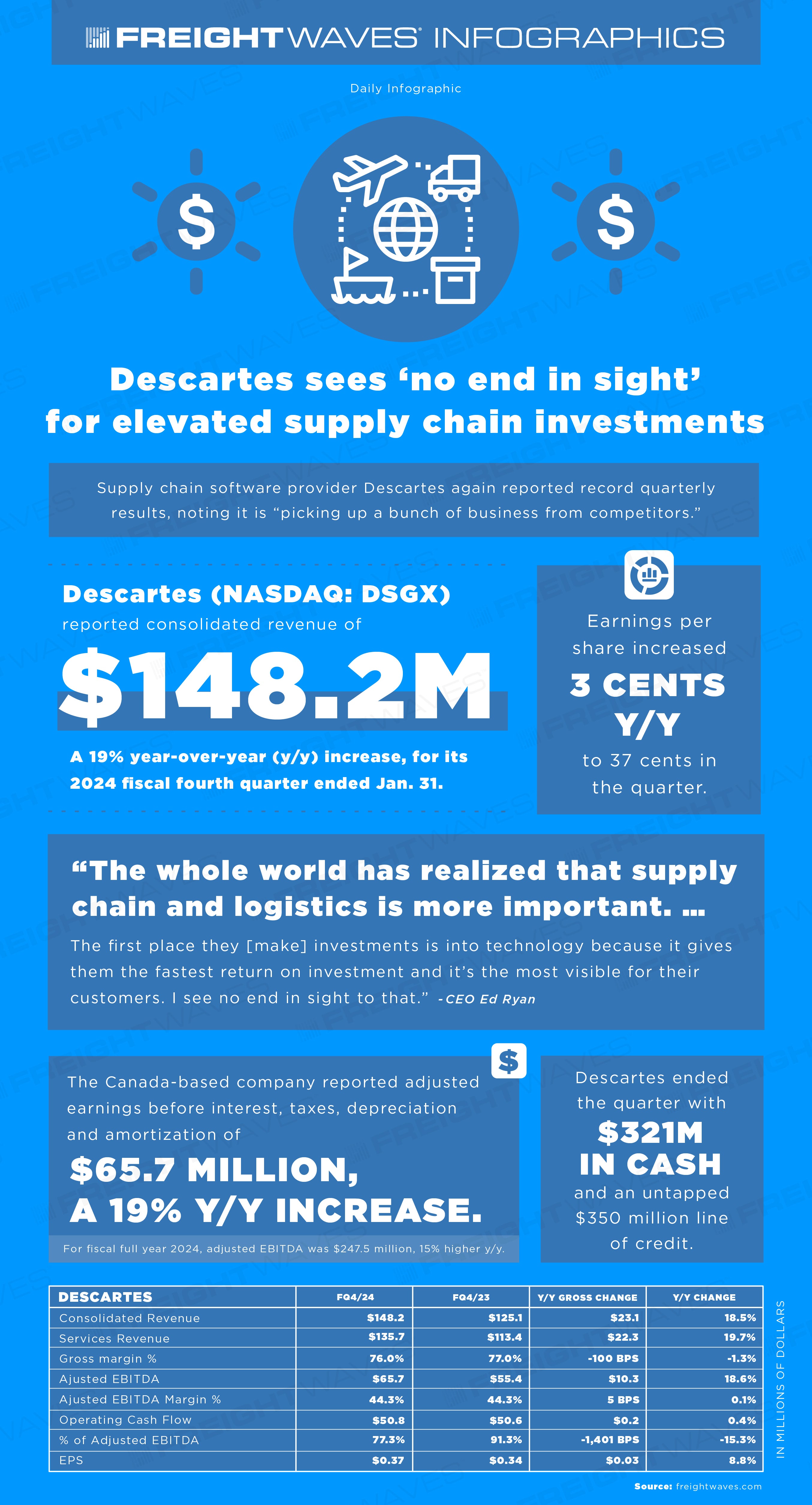
Daily Infographic: Descartes sees ‘no end in sight’ for elevated supply chain investments


To view more FreightWaves infographics, click here

Is China spying on American ports?

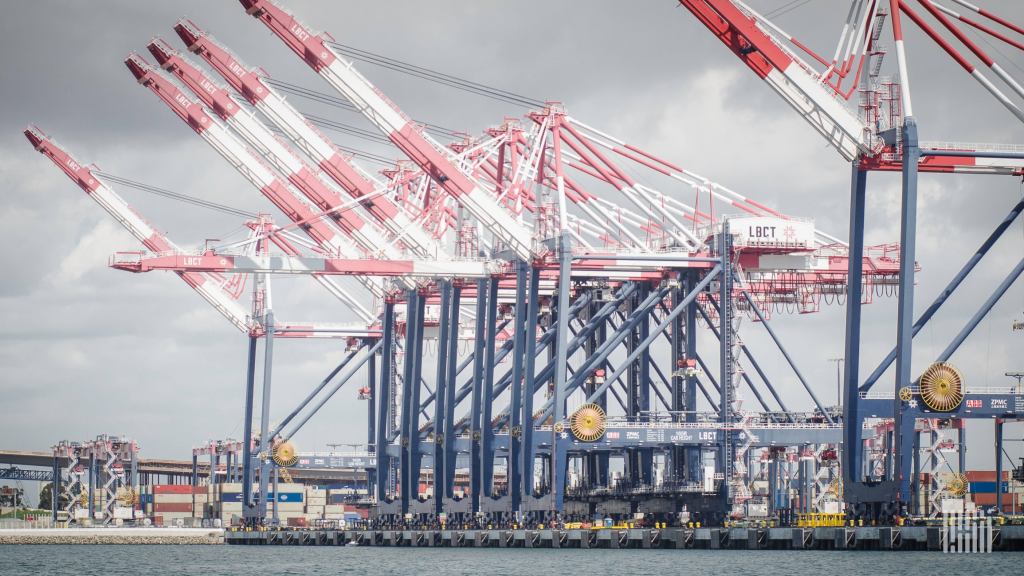
On Feb. 29, the chairman of the House Committee on Homeland Security, Rep. Mark Green, R-Tenn., sent a strongly worded letter to an obscure Chinese equipment manufacturer: Shanghai Zhenhua Heavy Industries Co. (known as “ZPMC”). ZPMC is the world’s top producer of ship-to-shore gantry cranes used at container terminals the world over — nearly 80% of the cranes at U.S. ports are ZPMC cranes, and the company has a higher share in Europe.

The subject of Green’s letter wasn’t a trade dispute of the kind that has erupted between China and the U.S. in the past five years, but something rather more serious: accusations ZPMC secretly installed communications devices in cranes bound for the U.S. that would enable spying and even remote control (or sabotage) of the cranes.

Green wrote that “cellular modems” were found in the cranes which were completely extraneous to the functioning of the cranes and were not covered in the purchase agreements between U.S. port authorities and ZPMC. Green noted that ZPMC’s proximity to elements of the Chinese security and intelligence apparatus — the company’s base is adjacent to the Jiangnan Shipyard at Shanghai where China builds warships — could allow the Chinese military to exert undue influence on the manufacture of the cranes. The letter pointed out that because Liu Chengyun is both ZPMC’s chairman and president and also serves as the chairman of the company’s internal Communist Party committee, there is nothing in ZPMC’s corporate governance that would mitigate the Chinese Communist Party’s influence at the company.

The letter was not just a one-off missive responding to a headline in the 24-hour news cycle. It was the result of a congressional investigation by the Committee on Homeland Security and the Select Committee on the Strategic Competition between the United States and the Chinese Communist Party (CCP) that began in June 2023. But suspicions about the CCP leveraging maritime infrastructure to spy on the United States have been brewing for years, as the letter makes clear. It was back in 2021 when FBI agents discovered “intelligence gathering equipment” aboard a ship delivering gantry cranes to the Port of Baltimore.

On March 10, ZPMC responded to the letter with a public statement that said while it took the committee’s concerns seriously, “The cranes provided by ZPMC do not pose a cybersecurity risk to any ports.”

And for its part, the Association of American Port Authorities (AAPA) said in a statement that “there have been no known security breaches as the result of any cranes at U.S. ports, despite alarmist media reports. Further, modern cranes are very fast and sophisticated but even they can’t track the origin, destination, or nature of the cargo.”

The AAPA did emphasize one fact important to the broader context of the ZPMC cranes and their proliferation. China, the AAPA said, subsidizes the cost of ZPMC’s cranes such that they cost about half of what competing cranes sell for, and port authorities have almost no choice but to buy them. The AAPA recommended that the U.S. revitalize its own capacity to manufacture ship-to-shore cranes, writing that “without reshoring our domestic manufacturing capacity, legislative proposals to hastily remove cranes from U.S. ports without immediate replacements would harm U.S. supply chains, jack up prices for everyone, and exacerbate inflation even further.”

ZPMC is a wholly owned subsidiary of China Communications Construction Co. (CCCC), a majority state-owned enterprise and one of the main contractors of China’s ambitious Belt and Road Initiative. The Belt and Road Initiative is a long-term plan to expand China’s sphere of influence through the construction of infrastructure projects around the world, often financed by initially cheap debt that comes with some serious strings attached. A typical project might involve China building a rail, highway or port project in a developing country as well as providing the financing, then seizing ownership of the property if the country defaults on its loan payments. In Tanzania, China demanded a 99-year lease on a port project it built; in Eurasia, China is pressuring Tajikistan to cede more than 400 square miles of territory in exchange for a $1.2 billion debt owed to China — so-called “debt trap diplomacy.”

In the case of ZPMC’s ship-to-shore cranes, the Chinese government has found other means of inducing partners to install seemingly cheap infrastructure over which China plans to exert an unusual amount of control. The subsidized prices of the cranes can be said to work in the same way as the China-financed infrastructure projects in developing countries — a way to artificially accelerate the penetration of Chinese infrastructure and control.

The CCP has been even more explicit regarding digital surveillance and the worldwide growth of a telecommunications infrastructure controlled and operated by China. The Digital Silk Road, which can be considered a subset of the Belt and Road Initiative, saw China construct 34 terrestrial cables and “dozens of underwater cables” in 12 countries from 2017 to 2022. The development that can be sold to countries as the foundation of a digital infrastructure and the stimulus of a high-tech economy can also be wielded as a weapon in cyberwarfare or simply passively monitored as part of a growing global surveillance network.
Whether ZPMC’s cranes in the United States have been or can be used by the Chinese government to spy on and potentially sabotage the United States, the CCP is certainly spying on American ports via multiple vectors, including turning members of the U.S. military. In January, U.S. Navy Petty Officer Wenheng Zhao was sentenced to 27 months in prison for selling military secrets to agents of the Chinese government. And on March 7, a U.S. Army intelligence analyst and soldier, Korbein Schultz, was arrested and charged with conspiracy to obtain and disclose national defense information, exporting technical data related to defense articles without a license, conspiracy to export defense articles without a license, and bribery of a public official. Specifically, the foreign entities paying off Schultz requested information about the U.S. military’s plans to defend Taiwan in the event of a Chinese attack.

Biden administration rolls out power grid plan for electric trucks

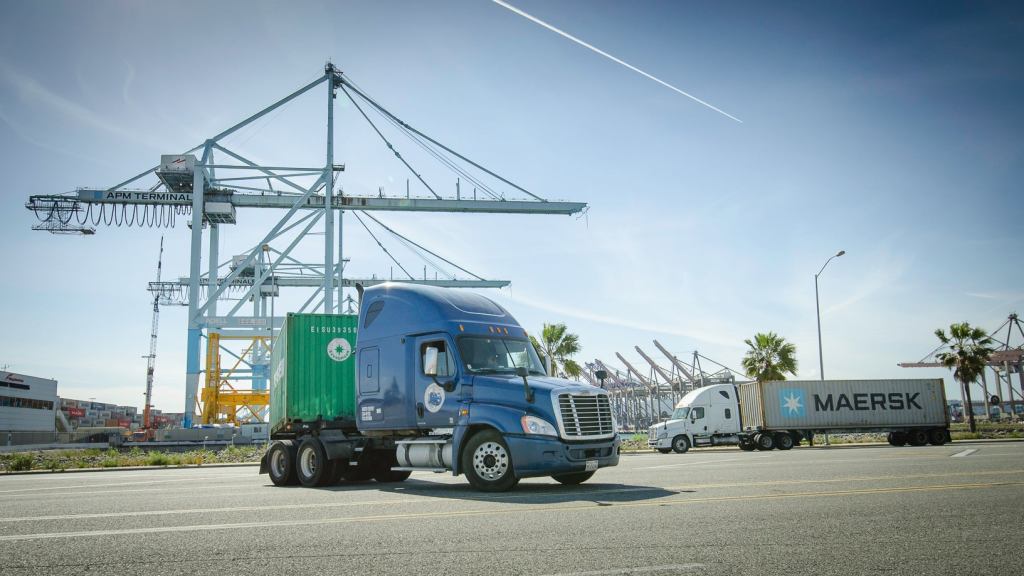
Trucks outside seaport container yard

WASHINGTON — The Biden administration has selected 12,000 miles of freight-heavy interstates and the country’s largest container ports to begin a 16-year plan to deploy battery-charging and hydrogen-refueling stations for electric trucks.

The four-phase National Zero-Emission Freight Corridor Strategy, unveiled Tuesday, initially targets local and regional “return-to-base” trucking operations, first- and last-mile delivery, and port drayage while gradually accommodating long-haul trucking.

A core objective of the strategy, detailed in a 300-page document developed by the U.S. departments of Energy and Transportation and the Environmental Protection Agency, “is to meet freight truck and technology markets where they are today, determine where they are likely to develop next, and set an ambitious pathway that mobilizes actions to achieve decarbonization,” according to the Federal Highway Administration.

In conjunction with the charging strategy, FHWA also announced on Tuesday that it has designated the agency’s National Highway Freight Network (NHFN), along with roadways in several states, as the National EV Freight Corridors network.

The national EV strategy and the corridors network align with the administration’s goal to promote at least 30% zero-emission medium- and heavy-duty truck sales by 2030 and 100% by 2040.

“Medium- and heavy-duty trucks in our current freight network contribute approximately 23% of greenhouse gas emissions in the U.S. transportation sector,” commented FHWA Administrator Shailen Bhatt. “These new designations and strategy will help to grow our national EV charging network, encourage clean commerce within the freight community, and support President Biden’s goals of achieving net-zero emissions for the nation by 2050.”


Electric truck infrastructure phases and progress timeline. Source: U.S. Joint Office of Energy and Transportation

The strategy aims to accelerate adoption of battery-electric and fuel-cell electric trucks by focusing initially on freight hubs with a 100-mile transport radius and moving toward a complete network, in four phases:

  • Establish priority hubs based on freight volumes (2024-2027).
  • Connect hubs along critical freight corridors (2027-2030).
  • Expand corridor connections initiating network development (2030-2035).
  • Achieve full access to national network by linking regional corridors (2035-2040).

Phase 1 targets 12,000 miles of interstate (23% of the NHFN), including Interstates 5, 10, 25, 75, 80, 95, and the Texas Triangle including Interstates 10, 45 and 35.

Zero-emission truck hubs in Phase 1 also include 100-mile “freight ecosystems” centered around major container ports, including the Ports of Los Angeles and Long Beach, the Port Authority of New York and New Jersey, the Ports of Seattle and Tacoma, Washington, the Port of Miami, the Houston Port Authority, and the Port of Savannah, Georgia.

In Phase 2, “non-tractor-trailer truck (e.g., Class 4-6 straight delivery trucks) activity likely remains battery-EV-dominant, with early introduction of hydrogen fuel cell electric truck technology for longer-distance travel,” according to the strategy. “Operations expand with increased regional goods distribution (e.g., port drayage) and initial deployments of long-haul transportation.”

In Phase 4, the strategy expands from intermodal hubs and port facilities to include truck parking facilities “which will increasingly service [zero-emission trucks] across all use cases,” the strategy states.

“A fully integrated transportation energy system will be essential to supporting use cases across all vehicle classes and duty cycles, allowing for local, regional, and long-haul transportation of goods and services.”

Click for more FreightWaves articles by John Gallagher.

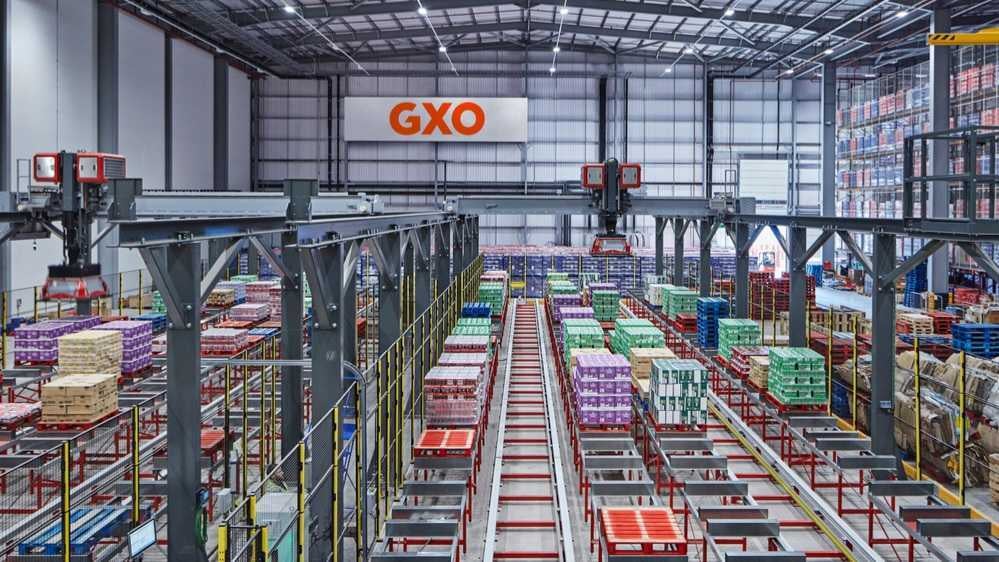
GXO acquisition of Wincanton draws caution and praise from ratings agencies

The two key ratings agencies have weighed in with a cautionary outlook on the offer by GXO to acquire U.K.-based contract logistics company Wincanton.

Neither Moody’s nor S&P Global Ratings reduced its credit rating on GXO (NYSE: GXO). At Moody’s, the Ba1 corporate rating is one notch below investment-grade. The S&P Global (NYSE: SPGI) rating of BBB- is the lowest investment-grade rating.

But both agencies put GXO on the equivalent of a watch list because of the additional debt the company will be taking on to acquire Wincanton. At S&P, that means the outlook for GXO goes to negative from stable; at Moody’s (NYSE: MCO), the proposed $971 million acquisition was declared “credit negative.” 

However, Moody’s still has a “positive” outlook on GXO. Despite the financial issues raised in the report, that outlook remains in place and is not negated by the credit-negative declaration.

The Wincanton board has recommended shareholders approve the GXO offer, rejecting an earlier deal to be acquired by Ceva Logistics.

The concerns expressed by the ratings agencies are not that the acquisition is necessarily a bad move. They are driven completely by the resulting credit metrics.

As S&P Global wrote, “we believe Wincanton will strengthen GXO’s market position in the U.K. As of the close of the transaction, the company will become the largest contract logistics provider in the U.K.”

But GXO is taking on about $1 billion in new debt, and that has altered the credit metrics the two agencies use in reviewing companies with publicly traded debt, though not enough to affect the actual ratings.

Moody’s said it moved the company to credit negative because the acquisition “is expected to be entirely debt funded.”

Its estimates on the deal are that based on the price to be paid for Wincanton, the ratio of debt to earnings before interest, taxes, depreciation and amortizaztion at GXO at the close of last year would have been about 3.2X. The actual ratio was 2.8X.

But the increase is relatively in line with what Moody’s had seen as the range of EBITDA ratios “expected over the near term.”

The positive outlook for GXO at Moody’s means that conditions could allow for an increase in its rating, particularly important at Moody’s since a one-step improvement there would boost GXO’s rating to investment grade, where the S&P rating already resides.

Investment grade from Moody’s will likely need to wait

Moody’s said the increase in debt levels at GXO because of the Wincanton acquisition “will likely delay the time period for a possible upgrade to investment grade.” But it expressed further support for the long-term impact of the deal, saying GXO “will be able to realize synergies from the transaction and use its free cash flow to delever over 12-18 months following the acquisition.”

Optimism for the longer term

“The acquisition of Wincanton will help enhance GXO’s size and scale in the UK market as well as expand its offerings to sectors like defense and infrastructure in which GXO previously did not have a large presence.” Moody’s said.

S&P noted that EBITDA margins at Wincanton were about 200 basis points less than those at GXO. Margins at the combined company may drop in the short term, S&P said. “However, we expect management will realize its identified cost synergies over the next 2-3 years, which will improve GXO’s profitability and margins toward its historical levels,” S&P said.

Other statistics were spelled out by S&P in its decision to change the outlook to negative. As a result of the deal, GXO’s funds from operations (FFO), a key debt metric, will drop to 28% for 2024, below the threshold of 30% that S&P has established to be considered BBB-. But S&P also said it believes that FFO will increase to about 30% by the end of 2025.

On an outright basis, GXO debt based on S&P calculations will increase to about $4.9 billion, including leases, when the deal is complete, up from $3.6 billion at the end of 2023. “We do not expect the acquired earnings from the acquisition will be sufficient to offset its effect on the company’s leverage,” S&P said.

The $1 billion in new debt GXO is taking on will also come with what S&P said was about $256 million of leases Wincanton now holds.

The Wincanton acquisition will have a significant impact on debt levels that GXO management had said were the company’s goals. According to S&P, management had said it had a net leverage target of 1X-1.5X, which the ratings agency said translates to its own benchmark of about 2.2X to 2.4X. With the Wincanton deal, that number will rise to about 3.1X based on the S&P scale.

“We expect GXO’s leverage will remain above its target range for the next 12-24 months,” S&P said. “In addition, management has not completely ruled out opportunistic share repurchases despite its elevated post-acquisition debt profile. As such, we believe there is sufficient uncertainty regarding GXO’s willingness to restore its credit measures to levels we view as appropriate for the rating on a sustained basis.”

A spokesman for GXO declined comment on the ratings agencies’ actions.

More articles by John Kingston

Federal court in Texas deep sixes NLRB rule on joint employee status

Jobs report: truck transportation employment flat, warehouse jobs drop again

SEC backs off on requiring companies to report scope 3 emissions

Check Call: Mexico rises to the top

people gathered around a desk of computers. Check Call news and analysis for 3pls and brokers
(GIF: GIPHY)

New York’s hottest club is nearshoring to Mexico. Well, it’s not a club but it is something everyone is talking about. Just about every industry has projects started across the border in Mexico, so much so that Mexico registered a record $36 billion in foreign direct investment last year, a 2% year-over-year increase compared to 2022, according to the country’s Economy Ministry.

FreightWaves’ Noi Mahoney quotes Mike Burkhart, C.H. Robinson’s vice president of North America surface transportation: “We’re transitioning to a new era now, where we can say the nearshoring boom has officially arrived. The beauty of this is that more is on the way; we still expect this trend to play out more fully over the next five years.”

Just about every transportation company or freight broker has a solution for cross-border freight. No more is it just for the large brokers and mega shippers. Whether it’s setting up an office in Mexico, building a customs brokerage facility or working with rail freight coming from Mexico into the U.S., the ripple of nearshoring will affect everyone. 

Georg Roesch, vice president of direct procurement strategy at Jaggaer, told Mahoney: “I see a spike in companies trying to find new sources. Companies are actively trying to find different suppliers. It’s not that companies don’t look into China anymore. They still do. They are still trying to find suppliers in China, but the number is stagnant. We are seeing an uptick in other regions and other areas as supply chains shift. Resilience doesn’t mean risk avoidance, it means to be able to cope with the risks that are out there.”

As for what the impacts of nearshoring looks like, Mexico came out of the gate swinging in regard to cross-border freight volumes. After being the top trading partner with the U.S. for 11 out of 12 months last year, it’s looking like Mexico may try to go 12 for 12 in 2024 as January brought in more than $64.5 billion. Canada came in with $59.7 billion, which is a 3% decrease compared to the same time last year. 

Port Laredo, Texas, continues to be the top location for cross-border traffic. As businesses get new facilities established in Mexico, South Texas looks to become the newest hot spot for anyone looking for freight.

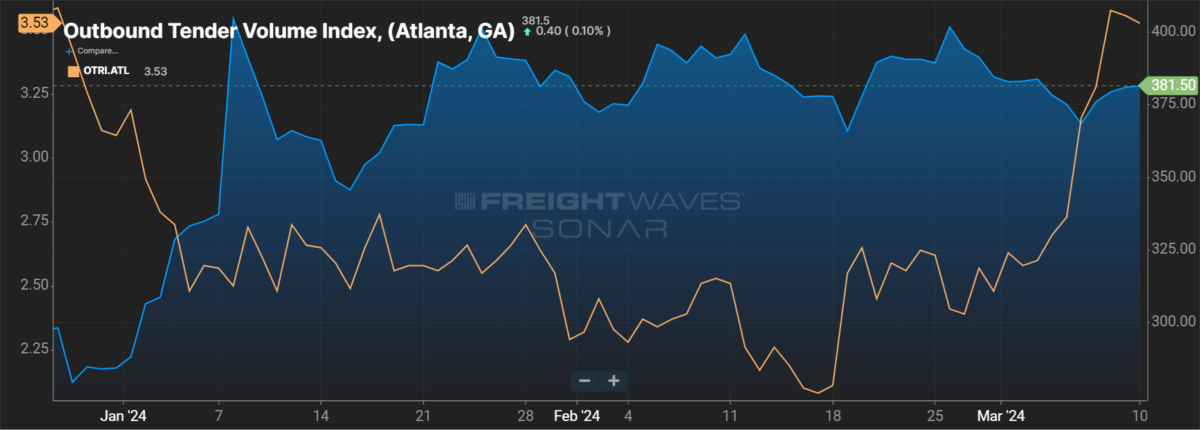
SONAR Tickers: OTVI.ATL, OTRI.ATL

Market Check. This week’s market is one of the top freight markets in the country: Atlanta. Atlanta saw a massive jump in outbound tender rejections, rising from 2.71% to 3.53% in the past week. The sharp uptick with no significant change in outbound tender volume can typically create a strain on capacity. However, the fact that there is an oversupply of capacity in the market had little impact on spot rates during the uptick. Outbound tender lead times have settled in at around three days, wait times are up to just over an hour and a half, and the Outbound Tender Volume Index dropped half a percent. Atlanta is proving to be a stable market for the moment, meaning freight coming out of it doesn’t need to be top priority for coverage. 

(GIF: GIPHY)

Who’s with Whom? There’s a new partnership in town. Transfix, a digital freight marketplace, has partnered with Rocket Shipping, a less-than-truckload carrier. LTL loads are a little different from dry van loads in the fact that there still tends to be a manual process around booking loads, especially for small to midsize brokers and shippers. Not everyone has the volume or the funds to have a full-fledged API or electronic data interchange connection. The manual process is something that the partnership hopes to solve. Along with the removal of most manual processes, this tech can help shippers get stronger pricing on their freight, even with smaller volumes.

In an article by FreightWaves’ Grace Sharkey, Jonathan Salama, co-founder and CEO of Transfix, said: “Our partnership with Rocket Shipping leverages their deep expertise in LTL and final-mile services, integrating this knowledge directly into Transfix’s Shipper App and combining it with our decade of experience in full truckload. This collaboration brings efficiency and effectiveness to the freight operations of small and midsize businesses and midmarket shippers that we believe have been underserved.”

The more you know 

Miss the 3PL Summit? Watch the whole thing here.

SEC backs off on requiring companies to report scope 3 emissions

Maximizing efficiency in US-Mexico cross-border logistics

A call for more shippers and carriers to get on board with ‘decarbonizing’ shipping

Creating a ‘global one-stop medical supply chain service

Photo Gallery: The BelugaST delivers satellite for rocket launch

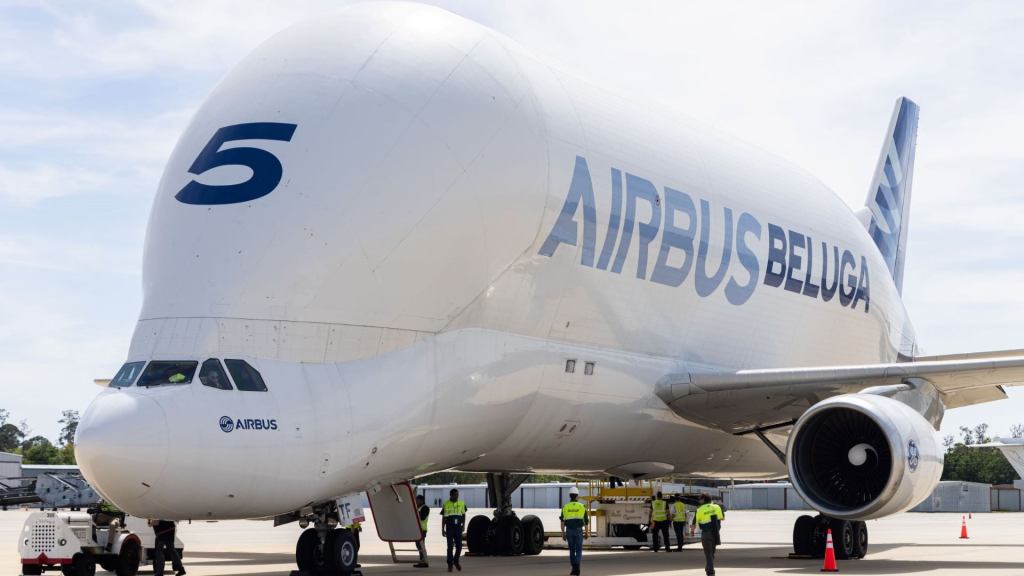
Front view of white Airbus Beluga plane with a jutting fuselage for oversize loads.

The beluga is an odd-looking whale found in the cold waters of the Arctic Circle. An aircraft that mimics the whale’s bulging forehead attracts a lot of attention. It could become a more frequent visitor to North America after recently receiving operating authority from the Federal Aviation Administration.

European aerospace manufacturer Airbus has commercialized the BelugaST super transporter it developed for internal shipping needs, creating a subsidiary dedicated to supporting third parties that need to move ultralarge shipments. 

On Monday afternoon, Airbus Beluga Transport delivered an Airbus-built Eutelsat E36D satellite to Orlando Sanford International Airport in central Florida. The satellite, housed in a large container, will be trucked to Kennedy Space Center for launch into orbit aboard a SpaceX Falcon 9 rocket later this month.

For a detailed look at how this plane could be used to support project logistics requirements for industries such as aerospace and oil and gas, see Monday’s story, “Airbus’ distinctive new airline is ready to haul whale-size loads.”

We are sharing some of the best images from Airbus Beluga Transport’s inaugural flight to the United States:

The BelugaST pulls back from the Airbus loading dock at Toulouse airport in France. (Photo: Airbus)

A special loader with a built-in rail system allows the BelugaST to be loaded from a high point, above the cockpit. The platform can be assembled and taken apart in one day, put in containers, and transported to another point. 

The nose-door of the Beluga freighter seen in a raised position to unload the satellite container, which will be slid onto the special cargo loading platform and then lifted off by crane. (Photo: Airbus)
The container is moved onto the custom-designed loading platform. (Photo: Airbus)
A full view of the BelugaST. (Photo: Airbus)
The container is fully removed from the aircraft on the special loader. (Photo: Airbus)
Airbus’ internal fleet is now using the BelugaXL, based on the larger A330 aircraft. (Photo: Airbus)

Click here for more FreightWaves/American Shipper stories by Eric Kulisch.

Twitter: @ericreports / LinkedIn: Eric Kulisch / ekulisch@www.freightwaves.com

RECOMMENDED READING:

Taiwanese startup Starlux Airlines orders 5 A350 freighters from Airbus

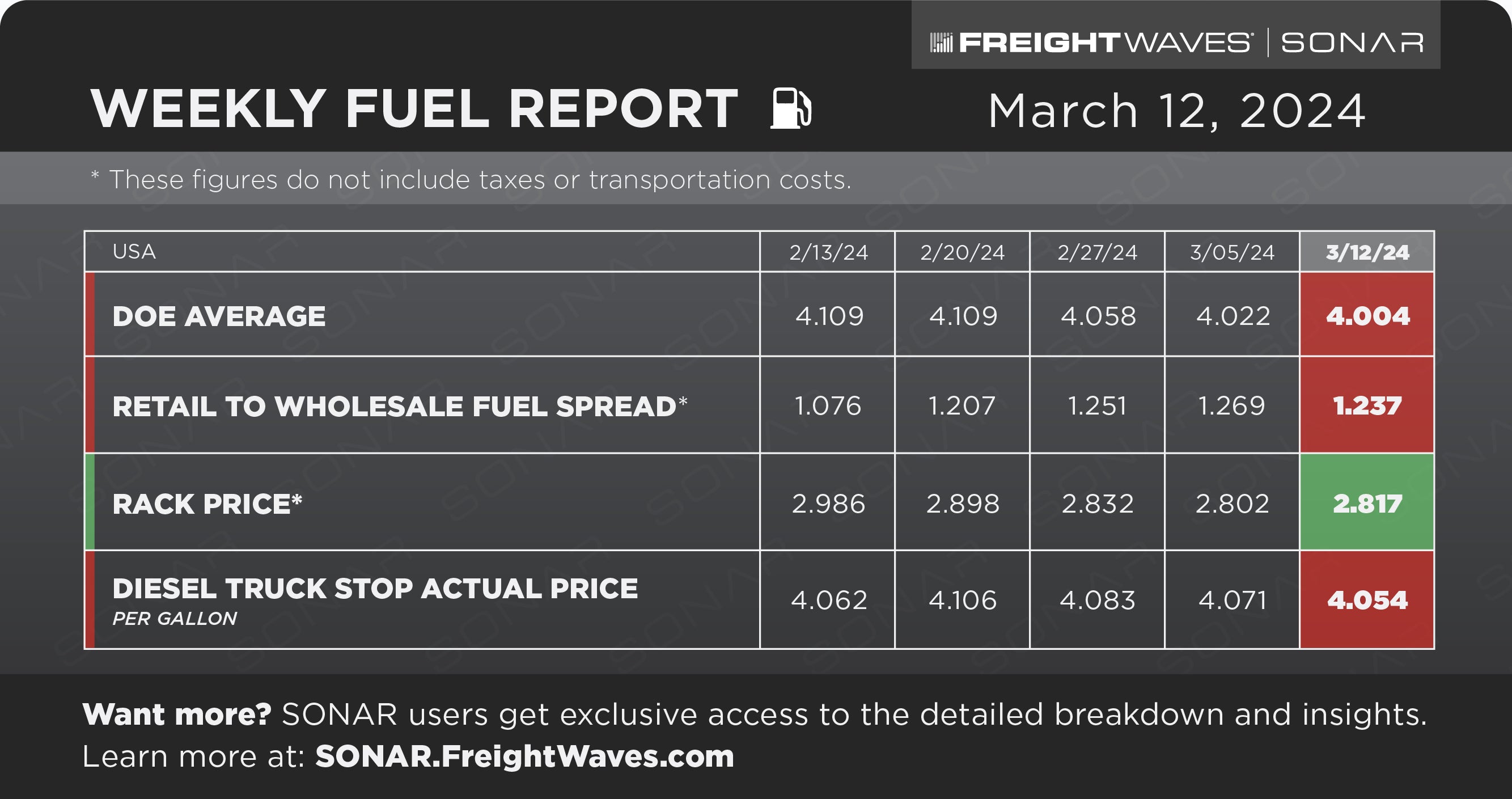
Weekly Fuel Report: March 12, 2024


Learn more at SONAR.FreightWaves.com

Uber Freight surpasses $18B in freight under management worldwide

Managed transportation provider Uber Freight announced Tuesday its European division has surpassed 200 million euros ($218.3 million) in freight under management, topping $18 billion in freight under management worldwide.

“Our European business is accelerating because we’re dedicated to offering precisely that. We bring the optionality and expertise needed to keep pace in a rapidly evolving landscape and, as we continue to invest in the region, we plan on cementing our role as the premier logistics partner in Europe,” said founder and CEO Lior Ron in the news release.

The company launched its operations, with offices in the Netherlands, Germany and Poland, in 2019. In 2020, the digital freight forwarder Sennder acquired the European arm of Uber Freight in an all-stock deal nearly $1.1 billion. 

Once Uber Freight acquired Transplace in 2021, it relaunched its European business endeavors.

Uber Freight has set a goal to acquire 2 billion euros ($2.182 billion) in freight under management in Europe by 2028. 

Even with these growth numbers, the company has been working to align itself with current market conditions, including slashing over 200 jobs in 2023 and an additional 50 jobs in early January.

Uber Freight’s earnings have not been attractive. The company saw continued negative earnings with minus $14 million in earnings before interest, taxes, depreciation and amortization for six consecutive quarters. Its revenue remained stagnant, barely surpassing previous lows at $1.28 billion, down 16.8% from Q4 2022.


Women truckers photo collection heads to MATS, powered by Uber Freight

Uber Freight begins piloting the Scheduling Standards Consortium’s protocols

Uber Freight’s new solutions: Rebuilt TMS, procurement, wide AI use

Seat belt use can now be used as evidence
in accident lawsuits in Indiana

Gov. Eric Holcomb of Indiana on Monday signed into law a bill that allows a plaintiff’s failure to use a seat belt to be introduced as evidence in vehicle accident lawsuits. The bill permits juries to reduce damage awards based on that information.

House Bill 1090 has drawn praise from Chris Spear, president and CEO of the American Trucking Associations. After legislators passed the bill in February, Spear said the existing law forbidding seat belt use as evidence leaves jurors with incomplete information when rendering a verdict.

It was the fourth attempt in as many years to enact such a law, according to news accounts. Earlier versions died in committee.

Critics of the legislation said it draws attention away from the question of who actually caused an accident, the Indiana Capital Chronicle reported.

The change, as well as a measure that Republican lawmakers in Wisconsin passed to limit some damage awards in lawsuits stemming from commercial vehicle accidents, comes amid growing concern about skyrocketing insurance costs related to multimillion-dollar nuclear verdicts against trucking companies. Democratic Gov. Tony Evers of Wisconsin has not yet acted on the legislation in that state, which would cap awards for non-economic damages, such as pain and suffering, at $1 million.

An American Transportation Research Institute study found that verdicts greater than $1 million in truck crash lawsuits rose on average from $2.3 million in 2010 to $22.3 million in 2018.