
Werner moves into the future with innovative vision, commitment to customers

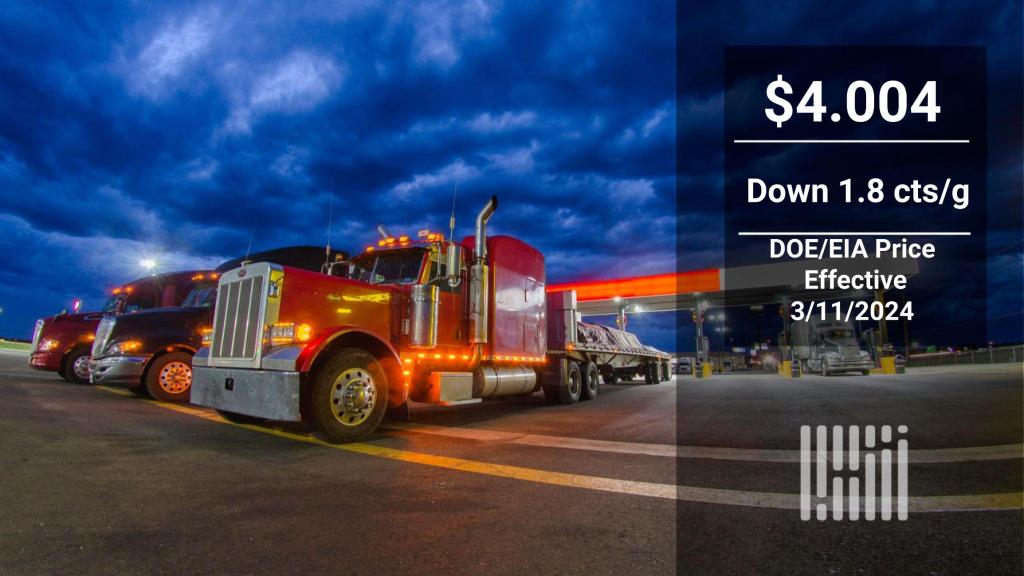
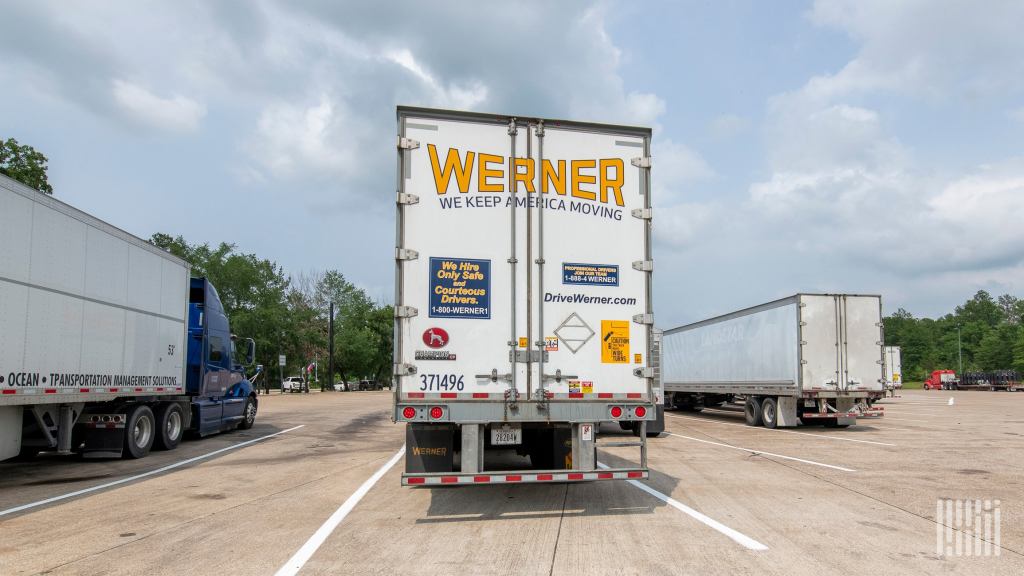
A Werner rig parked at a truckstop

For more than 68 years, Werner has made a name for itself as one of the most innovative transportation companies in the industry. Today, Werner and its leaders are focused on the future by investing in the solutions, innovations and processes needed to drive success. Ultimately, Werner selects customers with similar values and a winning mindset.

What a Winning Client Looks Like for Werner 

The team at Werner boasts an uncompromising desire to solve multifaceted problems and move cargo from point A to point B with exceptional service at the forefront. This often leads to working with mid- to large, well-known shippers creating custom solutions and roadmaps to tackle their transportation needs. However, Werner’s Executive Vice President and Chief Commercial Officer, Craig Callahan, made it clear talent and trajectory are equally vital when selecting customers.

“The most important thing for us is, it is a winning client. It is somebody having success, growing share and has aspirations of continuing to grow market share within their vertical,” Callahan said. “Those are the types of companies we want to grow with because we’re a growing organization as well.”

Werner’s appreciation of complexities makes the company a natural fit for multinational clients and organizations working to diversify their product offerings and geographical footprints.

“We want to solve difficult, complex problems for our customers,” Callahan said. “Our extensive network and cutting-edge technology help us navigate intricate supply chain challenges, which enables us to offer the best return on investment for shippers.”

How Werner Creates Tailored Solutions for Customers

As Werner nears 70 years in business, its leaders work hard to honor the organization’s history while ensuring it remains a cutting-edge transportation provider well into the future. That mission has led the company to invest heavily in keeping one of the newest fleets in the industry, investing in new technologies and expanding its geographical reach. 

Callahan said, “Along our journey, Werner has continued to evolve in response to the ever-changing transportation landscape and become more complex. As we sit here today, we boast a network that can support freight with various temperature-controlled requirements, includes multiple modes and can be delivered to all three countries in North America.” 

Recently, the company has seen an increase in clients looking to expand their nearshoring or friendshoring activities.

A myriad of cost and service improvements are associated with moving manufacturing facilities closer to the end consumer. These movements, however, also offer gains in another growing area of concern: sustainability.

Werner’s Role in Driving a Sustainable Future

Protecting the environment is top of mind for both consumers and government officials, making it a key concern for shippers. That, in turn, makes sustainability an important consideration for transportation providers like Werner.

“The transportation and logistics sector accounts for 29% of U.S. greenhouse gas emissions,” Callahan said. “We need to be able to operate in the most environmentally friendly way possible to drive decarbonization and help our customers make progress toward their carbon reduction goals.”

Werner collaborates with its customers to create a greener transportation industry in several ways. Industry leaders know the adage, “Only what gets measured gets managed.” Werner has invested heavily in technology allowing it to capture, score and share its emissions data to measure its environmental impact.

Additionally, Callahan noted the company makes significant investments each year to ensure its fleet is as updated as possible. With the best equipment, Werner is more fuel-efficient and productive, lowering carbon emissions.

The Werner Difference

Werner delivers beyond expectations, helping shippers navigate the challenges and opportunities of today’s market, making it an ideal transportation provider for those looking to be on the front lines of the future of transportation.
Click here to learn more about Werner.

US container imports robust in February; inbound volume forecast dicier

U.S. container import volumes in February were down 6% compared to January but were stronger than expected year over year.

February’s U.S. container import volumes decreased 6% from January — a better-than-expected performance as the sector enters its slow season. But other signs point to potential softness in domestic freight in March and April.

The 2.14 million twenty-foot equivalent units imported in February represent a 23.3% year-over-year increase, according to the latest monthly report from supply chain and logistics technology firm Descartes. That growth is real, but it isn’t quite as dramatic as it seems.

Last year, the Chinese Lunar New Year began Jan. 22. Holiday festivities include eight days off from work, which causes a temporary shutdown in the country’s manufacturing sector. This means the effect on imports would have filtered into the February 2023 data. This year, meanwhile, the holiday began Feb. 10, which effectively pushed the dip into March.

Adjusting for Lunar New Year by comparing only the first 15 days of February, the annual U.S. import growth rate stands at approximately 13%, per Descartes. This adjustment provides a clearer view into the underlying trade flows, and it’s another positive sign of post-pandemic growth.

Unfortunately for domestic transportation providers, another indicator is showing signs of potential softness in ocean cargo for March and April. Namely, SONAR’s Inbound Ocean TEUs Volume Index (IOTI.USA) has seen its largest Lunar New Year-influenced drop, peak to trough, in more than five years.

Source: FreightWaves SONAR, Inbound Ocean TEUs Volume Index, seasonal.

The annual imports cliff

IOTI.USA free-falls around this time every year. It tracks daily booked ocean container volumes (in TEUs) from specific origins, based on the cargo’s estimated date of departure. It’s averaged over a 14-day period and indexed to a baseline of 10,000, as of Aug. 1, 2020. Each lane’s value contributes to this aggregate baseline.

What’s notable about the drop this year is how steep it was. From the most recent high on Feb. 7 to the most recent low on Feb. 27, the index slipped more than 40%. For comparison, the decline last year was about 30%. In fact, the closest the index has come to this in the past six years is about 35% in 2019, when the U.S.-China trade war was in its early period of escalations.

This is a bitter pill for carriers, as it suggests the domestic freight market could be softening as the first quarter closes and the second begins.

It is worth noting that IOTI.CHNUSA, which tracks confirmed bookings specifically on the China to U.S. lane, logged a roughly equivalent Lunar New Year cliff in 2023. As carriers might remember, that contributed to volume weakness that further eroded their pricing power and paved the way for a dismal Q2. In May 2023, spot rates hit their lowest point of the current freight downturn.

Source: FreightWaves SONAR, National Truckload Index (Linehaul Only) [white], Van Contract Initial and Final Reporting of Avg. Base Rate Per Mile [blue and purple, respectively].

Even without the effect of Lunar New Year, February saw a decline in imports from China, which particularly affected West Coast ports, according to Descartes. The Port of Long Beach, California, exemplified this trend, where reduced Chinese shipments contributed to the broader month-over-month decrease in import volumes. 

Concurrently, East and Gulf Coast ports experienced an increase in import volume share, rising to 44% of total U.S. imports.

Further shaping the U.S. import landscape are improvements in port transit times, especially pronounced at East Coast ports in February. These enhancements can be attributed to a decrease in port congestion, facilitated by lower import volumes and more efficient handling. However, East Coast ports are still prone to longer delays than West Coast ports.

The coming months

As March progresses and April approaches, the U.S. freight market faces its share of unknowns in import dynamics and broader global risks. The above observed shifts, coupled with the Panama drought, Middle East conflict and potential labor disruptions at East and Gulf Coast ports, will likely keep reshaping freight movements.

Given the steeper-than-usual Lunar New Year drop, stakeholders need to brace for this continued volatility, with rebounds contingent upon resolving disruptions and stabilizing trade relations.

Fortunately, in addition to the clear growth that maritime imports are showing compared to pre-pandemic years, the U.S. is finding an increasingly reliable manufacturing alternative in Mexico. In 2023, for just the second time in history, it was the largest trade partner with the U.S., and its Economy Ministry recently reported $36 billion in foreign direct investment for the year. That’s up 2% from 2022.

Ultimately, the freight market’s vigor hinges on broader economic indicators like consumer demand, inflation rates and manufacturing outputs.

While the U.S. economy shows resilience in various sectors, suggesting potential import demand growth, caution is warranted due to those global risks that have lately threatened to throttle supply chains, shipping capacities and cost dynamics.

TFI acquires LTL carrier Hercules Forwarding

A white TForce daycab pulling a white dry van trailer

TFI International announced the acquisition of less-than-truckload carrier Hercules Forwarding Monday after the market closed.

Hercules operates a 31-terminal network throughout the U.S. and Canada, focusing on intra-U.S. and U.S.-to-Canada shipments. The company has more than 210 trucks, nearly 600 trailers and approximately 75 containers, generating revenue of more than $100 million annually.

The nearly 40-year-old company has two headquarters: Vernon, California, and New Westminster, British Columbia. It’s a nonunion carrier serving numerous sectors, such as retail, construction, automotive, and food and beverage, as well as 3PLs.

TFI’s U.S. LTL company, TForce Freight, is represented by the Teamsters union.

Financial terms of the transaction were not provided.

“This bolt-on acquisition fortifies our US LTL portfolio while adding cross-border LTL into Canada, creating a partner for our Canada-to-US shipments while offering synergy opportunities on both sides of the border,” said Alain Bédard, chairman, president and CEO at TFI.

Montreal-based TFI (NYSE: TFII) said late last year it was contemplating a spinoff of its specialized truckload business, following the $1.1 billion acquisition of Daseke (NASDAQ: DSKE), which is an acquisition rollup of flatbed carriers. That deal is expected to close in the second quarter.

That would leave the company’s U.S. LTL operations, which include the 2021 acquisition of UPS Freight, as well as its Canadian LTL network, the package and courier business, and logistics units under the TFI name. The combined entity generated $7.5 billion in revenue during 2023.

The Daseke deal will double the company’s TL revenue to $3.6 billion.

After posting a 91% operating ratio (operating expenses expressed as a percentage of revenue) in its U.S. LTL business during the fourth quarter, the worst among the publicly traded LTLs, TFI said a turnaround effort at the unit would allow it to lower the OR to 88% this year. Lapping recent cost headwinds and onboarding a freight mix favoring heavier industrial shipments is expected to produce the result.

Longer term, management said the business can achieve a low-80% OR, which would be more in line with peers.

“Hercules’ impressively low claims ratio and skill at serving multiple premium freight markets moving high-value cargo across the US and Canada aligns well with our focus and operating philosophy,” Bédard said Monday.

A year ago, it appeared that fellow union LTL carrier ABF Freight, a subsidiary of ArcBest (NASDAQ: ARCB), was an acquisition target of TFI when it was revealed that TFI held a 4% equity stake in the company. That appears less likely now, at least in the near term, given TFI’s recent acquisition activity.

More FreightWaves articles by Todd Maiden

As diesel settles into tight trading range, retail benchmark dips again

If the price volatility of the past few years has exhausted diesel consumers, recent weeks have been a welcome respite.

The stability in the market was driven home by the Monday release of the Department of Energy/Energy Information Administration average weekly retail diesel price, the basis for most fuel surcharges.

The price fell 1.8 cents a gallon to $4.004 a gallon. It’s the third consecutive week of a decline after a week of no change. Those declines have added up to a price that is 10.5 cents less than where the price stood on Feb. 19.

Stability at the pump is reflecting what is going on in futures markets and by extension wholesale markets. The wild swings of the past few years, fueled to the downside by the pandemic and then to the upside by the global inflation created by post-pandemic economic surge, are several weeks in the past. The benchmark price is now just 1.7 centsmore than $3.987 a gallon, where it stood on Dec. 11.

Ultra low sulfur diesel on the CME commodity exchange settled Monday at $2.6518 a gallon, up 1.09 cents. While recent intraday moves have been relatively large — down 5.38 cents a gallon Friday, just two days after an upward move of 5.68 cents — the trend has been that gains are soon offset by declines.

The end result has been that ULSD on CME settled Feb. 28 at $2.6538 a gallon. On Monday, eight trading days later, it was just 65 basis points lower.

It isn’t just ULSD. The market for Brent crude, the world’s crude benchmark, climbed above $80 a barrel Feb. 2 when it settled at $82.19. Brent’s highest settlement since then was $83.68 on the final day of February. In the past 11 trading days, the low settlement was $82.04 a barrel, and the high was $83.68 a barrel, an extremely tight trading range.

There just has not been major news to make markets move significantly up or down. To the contrary, factors that were supposed to move the market higher do exist, but they are stabilizing. 

For example, reports about tanker traffic through the Red Sea are that while there continue to be diversions to avoid potential attacks by Houthi militants, the number of them is not rising. 

Planned reductions in output from the OPEC+ group are not accelerating, according to the latest monthly survey from S&P Global Commodity Insights. Its report on February production showed output flat from January at 41.21 million barrels a day. 

“February was the second month of the group’s latest voluntary production cuts, which were supposed to take approximately 700,000 b/d off the market in the first quarter of 2024,” SPGCI said in releasing its numbers Friday. “The group has yet to deliver on this pledge. The survey showed that OPEC+ countries implementing cuts produced 175,000 b/d above their combined quotas in February — a compliance rate of 97.8%.”

The value of the dollar, which can have a significant impact on oil prices, has been relatively calm. It closed 2023 at about 100 as measured by the DXY index. It closed Monday at about 102.7. While the upward move would have a bearish impact on oil prices, that change over almost 2 ½ months has not been enough to generate large swings in the value of the greenback.

A good test of whether the oil market is responding to news or clear shifts in fundamentals can come from reading the daily commentary of various financial news sources. If those articles resort to a somewhat vague list of factors that could be cited any day of the year, it’s probably because there isn’t a lot of outside news impacting markets.

So Bloomberg’s summation of the market Monday, after noting that crude oil last week had its least volatile market since late 2021, cited bullish factors like OPEC+ production cuts (although the group is falling short of its target, as SPGCI noted) and “Middle East tensions,” while bearish factors are “offset by rising supply from outside the group and persistent concerns around the economic outlook for top importer China.”

More articles by John Kingston

Federal court in Texas deep sixes NLRB rule on joint employer status

Jobs report: Truck transportation employment flat, warehouse jobs drop again

SEC backs off on requiring companies to report scope 3 emissions

Texas court sides with Union Pacific over 1872 jobs pact with town

A Texas appeals court recently declared an 1872 jobs agreement between Palestine, Texas, and Union Pacific to be unenforceable.

The ruling moves Union Pacific (NYSE: UNP) a step closer to its goal of closing a rail car shop in the east Texas town of 18,000.

The 12th Court of Appeals in Tyler, Texas, issued the ruling on Feb. 22, finding that the agreement requiring Union Pacific to maintain a set number of jobs in Palestine — a pact that was signed in 1872 and updated in 1954 — places restraints on Union Pacific regarding interstate commerce, which is not permitted under federal law.

“It is ordered … by this court that the judgment be reversed and judgment rendered granting Union Pacific’s motion for summary judgment and motion to vacate the 1955 Judgment and July 2021 injunction,” according to the decision from the 12th Court of Appeals.

Union Pacific has made several legal attempts to modify or end the agreement over the years. In 1955, a Texas court ruled the railway giant was required to maintain jobs in Palestine. Union Pacific sued Palestine in 2019, again attempting to nullify the contract to keep 65 jobs in the town indefinitely.

Union Pacific is based in Omaha, Nebraska. The company has more than 33,000 employees across the country. In 2023, Union Pacific had revenue of $24.1 billion, a 3% year-over-year decline compared to 2022.

Palestine is roughly equidistant from Dallas, Houston and Shreveport, Louisiana.

Harris Lohmeyer, a retired Union Pacific employee who has led fundraising efforts to continue the court case, told the Palestine-Herald Press that lawyers for Anderson County would request a rehearing and possibly a review by the state Supreme Court.

“Under the Texas Civil Practices and Remedies Code, this opinion and judgment are automatically stayed, pending further appeals. This means that the required employment positions at Palestine will remain in place until all appeals are completed,” Lohmeyer told the newspaper. “This is a David versus Goliath scenario. Twice before, we lost all the way until the last rulings, where we came out on top. All we can hope for is the best outcome for the employees.”

The 152-year-old agreement between Union Pacific and Palestine dates back to the days when the city was at the crossroads of several railroad companies that promised to keep jobs there indefinitely, according to Union Pacific.

“The Palestine Car Shop is one of only two car shops on the Union Pacific Railroad that perform heavy modifications and repairs to freight cars,” the company said on its website. “The Palestine workforce of more than 100 employees has earned a reputation for safely and efficiently delivering quality work to their customers.”

More articles by Noi Mahoney

US-Mexico trade totaled $64.5B in January

Texas-based customs broker expands cross-border footprint

Shifting supply chains boost trade in California-Baja mega-region

Bill would give states new power to waive truck weight limits

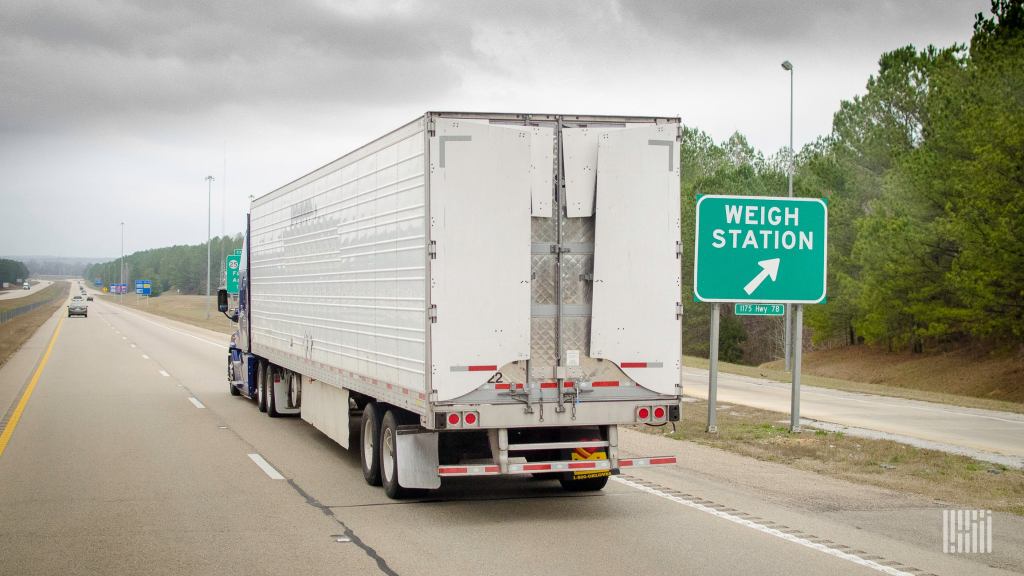
Truck near weigh station

WASHINGTON — Legislation being promoted for giving states more flexibility to waive truck weight limits in an emergency would also give state authorities broad new power to raise weight limits for all kinds of freight, according to a lobby group that opposes overweight trucks.

The legislation, the Modernizing Operations for Vehicles in Emergencies (MOVE) Act, introduced last month by U.S. Reps. Dusty Johnson, R-S.D., and Jim Costa, D-Calif., is a way to “remove unnecessary roadblocks and red tape” to avert supply chain disruptions such as what occurred during and after the pandemic, according to the bill’s sponsors, both of whom represent agribusiness shippers.

“During times of emergency and the pandemic, struggling communities in my district were hit hardest by roadblocks to our supply chain,” said Costa, whose district includes parts of California’s San Joaquin Valley. “This bipartisan legislation will remove barriers that prevent us from delivering vital relief when communities need it most.”

The MOVE Act expands the circumstances under which the federal government could allow a state to waive federal weight limits along interstate highways for loads “that can easily be dismantled or divided” to include not only natural emergencies involving weather, disease, and wildfires, and other causes but also if supply chains are “substantially impaired in the state, either in terms of slow overall movement, freight traffic congestion, or otherwise,” according to language in the bill.

The legislation would allow such waivers to remain in effect for 270 days, compared to the 120-day maximum under current law, with the ability for states to extend the waivers for another 90 days.

In addition to the American Trucking Associations, the MOVE Act is supported by the Shippers Coalition, whose members include agribusinesses, aggregates, beverage companies and other shippers of heavy cargo that benefits most from higher weight limits.

“The MOVE Act is a necessary step forward in ensuring that Shippers Coalition’s members are able to promptly and efficiently respond in times of crisis,” said Shippers Coalition Executive Director Sean Joyce. “By expanding the definition of an emergency, the legislation guarantees that Americans across the country will continue to have access to essential goods in their times of need.”

Safety concerns raised

But the Coalition Against Bigger Trucks (CABT), which opposes efforts to loosen truck weight limit requirements, sees the MOVE Act as a way to further empower states to raise weight restrictions, which can lead to higher crash rates.

The group points to a 2016 U.S. Department of Transportation report that found heavier trucks have higher crash rates compared to 80,000-pound, single-trailer trucks.

“State governors would have unilateral authority beyond emergencies and natural disasters to arbitrarily increase truck weights based on undefined definitions of supply chain disruptions or freight congestion,” CABT President Brad Roseberry told FreightWaves.

“There’s nothing prohibiting a state to reissue another permit when the initial one expires, so this could go on forever,” he said. It’s basically a blank check for states to raise truck weights — that’s huge.”

Owner operators also cite safety concerns in opposing efforts to raise truck weight limits.

“I’ve hauled for relief efforts before, and if it’s strictly about an emergency relief situation, that’s fine,” said Lee Schmitt, an owner-operator and spokesman for CDL Drivers Unlimited, a truck driver advocacy group.

“But now you’re potentially giving carte blanche to anyone with a trailer to haul heavier loads in equipment that may not be able to handle it. It’s also a safety issue — heavier loads require more distance to start and stop, and not having experience with that can make the roads less safe for everyone.”

Several other proposals aimed at easing truck weight restrictions are also pending in Congress, including a voluntary pilot program that would allow states to increase truck weights on federal interstates from 80,000 pounds to up to 91,000 pounds on six axles, and a proposal that would allow weight increases to 88,000 for certain auto haulers.

Click for more FreightWaves articles by John Gallagher.

Amerijet Chief Commercial Officer Eric Wilson abruptly departs

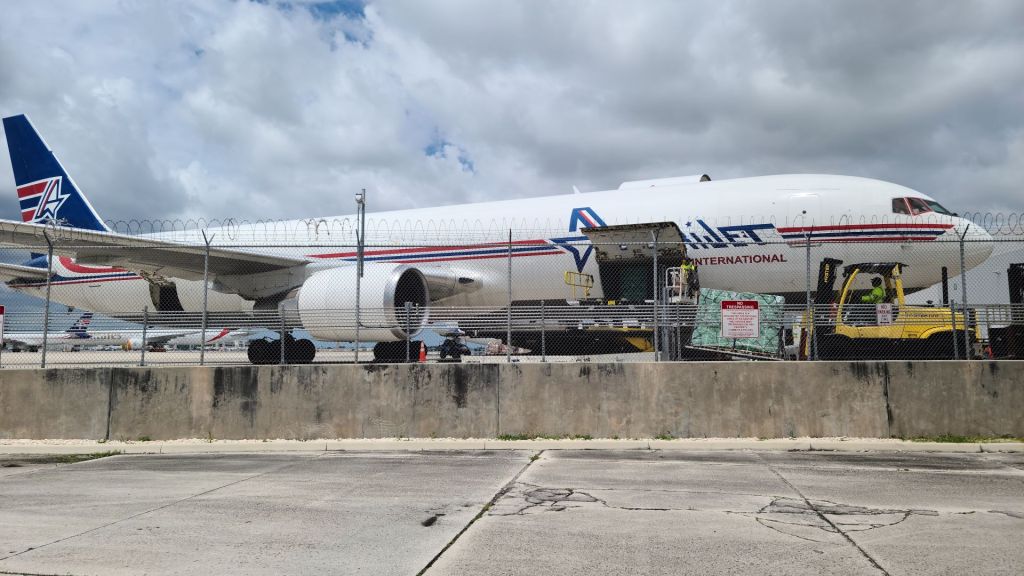
A cargo jet with the side door open is unloaded as a yellow forklift maneuvers to grab the next pallet.

Chief Commercial Officer Eric Wilson has left freighter operator Amerijet International Airlines amid shrinking cargo sales, adding to the turmoil that has engulfed the Miami-based airline for the past year.

Wilson resigned on Friday after three years “to pursue other opportunities,” Christine Richard, senior marketing director, confirmed in an email. But multiple sources familiar with Amerijet’s inner workings say Wilson was dismissed by new CEO Joe Mozzali, who is working hard to stabilize the company, when his contract expired.

Supporting the view that Wilson was pushed out is the fact that the company lost $33 million over 12 months ending with the third quarter of 2023, as reported last week by FreightWaves, and large contracts with the U.S. Postal Service and DHL. Publicly available financial data shows Amerijet revenues fell 10% during the year ending Sept. 30, but the ending of some large service contracts with two of its biggest customers since then has compounded top-line pressure. As chief commercial officer, Wilson was responsible for the sales department.

Wilson spoke with a reporter last week and gave no indication that he had tendered his resignation.

Furthermore, Wilson was hired by Tim Strauss, who abruptly left in October when his three-year contract was not renewed. Multiple sources close to the situation said Strauss did not leave voluntarily, as he and the company implied at the time. The board was unhappy about his management style and decisions to expand the fleet as the air cargo market underwent a rapid cooldown from record demand during the COVID crisis

Among the criticisms privately voiced about Strauss is that he hired several executives who had experience at passenger airlines but not running and marketing dedicated freighter operations. Wilson previously was managing director of cargo sales at Delta Air Lines.

Strauss, it should be noted, stepped into an unusual situation in which his predecessor continued to be involved in some management decisions from his role as executive chairman for safety reasons, leading Strauss to quit after one year on the job in a dispute over power before the then-board persuaded him to stay on.

Some evaporation in business appears to be beyond Amerijet’s control. The Postal Service, for example, is actively working to shift as many parcels from air to ground transport as possible to save money and reduce carbon emissions.

Financial difficulties culminated in January with a rescue from a new investment group and the decision to return to lessors six Boeing 757-200 converted freighters that Strauss had acquired in the prior 18 months.

Since taking the helm, Mozzali has launched an extensive campaign to cut costs, including outsourcing next month the operations of a small road feeder terminal in Atlanta to a third party. The company has also temporarily parked some jets, deferred major maintenance on some aircraft, laid off a handful of workers and instituted a freeze on pilot hiring.

The Amerijet fleet is down to 14 cargo jets from a high of 22 in 2022. Eleven aircraft are under Amerijet’s control and three are owned by Maersk Air Cargo, which contracts with Amerijet for crews and other operational services.

Management’s position to employees and the public is that the restructuring put Amerijet in a solid financial position that will allow it to meet customer expectations.

Richard said Amerijet will conduct an internal and external search for Wilson’s replacement. 

(This story was updated to reflect new information about Tim Strauss’ tenure.)

Click here for more FreightWaves stories by Eric Kulisch.

Sign up for the weekly American Shipper Air newsletter here

Amerijet lost $33M in 12 months, downsizes Atlanta operation

Amerijet feels financial pinch as cargo business deteriorates

Federal court in Texas nixes NLRB rule on joint employee status

A new rule on what defines an employee who has joint employers, due to go into effect Monday, has been put on ice by a federal judge in Texas. The ruling could relieve fears in the trucking business.

J. Campbell Barker, a judge in the U.S. District Court for the Eastern District of Texas, handed down the ruling late Friday. In a lawsuit brought by numerous industry trade groups — but no trucking organizations — the judge granted summary judgment that vacated a National Labor Relations Board rule approved in October. 

“The NLRB had aimed to make it far easier for workers to be considered employees of more than one entity for labor relations purposes — a move that would have resulted in increased union organizing and collective bargaining efforts across the country — but Friday’s decision halted it in its tracks,” the law firm of Fisher Phillips said in an online commentary about the decision. 

That same law firm in October, when the NLRB first approved the rule, said that the mandate had defined joint employment as “not only when one company has the right [italics in original] to exert control over terms and conditions of another company’s employees, but also when evidence exists of reserved, unexercised, or indirect control over any working conditions. This includes not only obvious situations like hiring and firing but also such other conditions as wages, benefits, scheduling, supervising, directing, and disciplining.”

The lead plaintiff in the lawsuit was the U.S. Chamber of Commerce. When it filed suit in October, it provided a summary of the rule and its potential impact.

“The rule makes it easier for the agency to declare joint employment status exists in business relationships where it traditionally doesn’t, like franchising, contracting, and supply chains,” the chamber said. “It upends a longstanding precedent by broadening liability for employers and enabling unions to organize across companies rather than store by store. Many companies could find themselves facing liability for workers they don’t employ and workplaces they don’t actually control.”

Figuring out who is an employer is not a new issue; as the judge’s decision notes, “it has been the subject of litigation since the early days of the [1935 National Labor Relations] Act.” In a review of past litigation, Barker says the body of law has established that an employee can have multiple employers.

Prasad Sharma, a partner at the trucking-focused Scopelitis law firm, said the NLRB rule broke with precedent on the issue of control, leading to the judge’s decision.

Common law rule was “fairly well settled,” Sharma said. “Joint employment required direct and immediate control.” But the more indirect definition of control in the NLRB rule “is what the court found to be nebulous and potentially leading to all kinds of arrangements beyond what the common law would have afforded as joint control.”

Potential impact on trucking

At the time of the NLRB approval of the new standards, the PrePass alliance, in its blog, gave an example of how joint employment could impact trucking. It cited an instance in which a motor carrier and a staffing agency both provided a driver, or in which one carrier contracts with a second carrier to move freight. (Although the blog did not mention double brokering, that could be an instance of legitimate, rather than fraudulent, double brokering.)

Sharma said the NLRB rule had the potential to impact fleets that employ other fleets as contractors.

Similar to the back and forth on independent contractor status between the Trump administration’s Wage and Hour Division and the Biden administration rule that replaced it (and coincidentally went into effect Monday), the NLRB rule that the court in Texas jettisoned replaced a Trump administration rule that had altered a 2015 rule approved under the Obama administration.

Back and forth between Biden and Trump

Like some of the issues in the Trump/Biden differences in the independent contractor law, the question of control is at the heart of the new NLRB rule on joint employer status.

When the NLRB rule was approved, the law firm of Saxton & Stump, in an online analysis, summed up the Trump administration rule that went into effect in 2020 as saying an employer could be considered joint with another if it exercised “substantial direct and immediate control,” quoting from the regulation, over what the firm said were “essential terms and conditions of employment.”

“Under the new rule, an entity may be considered a joint employer of a group of employees if it has an employment relationship with them and shares or codetermines one or more of the employees’ essential terms and conditions of employment,” the law firm said. “Unlike the 2020 rule that considered whether the entity actually possessed and exercised such control, this new standard merely considers whether an entity has the authority to control, either directly or indirectly, essential terms and conditions of employment.”

Barker, in his decision, gave an example of a landscaping company hired to mow the grass at an ice cream company where both businesses could be seen as joint employers. The wording of the Biden administration’s NLRB rule on joint employers could be interpreted to mean that the worker from the lawn-mowing company was controlled not only by the landscaper but by the ice cream company as well. “That reach exceeds the bounds of the common law and is thus contrary to law,” Barker wrote.

The fear among employers, manifested in the lawsuit, is that a wider definition of what constitutes an employer could mean that, for example, a nonunion employer might find itself needing to meet the requirements that a unionized shop has for its employees, if it is found that its workers are considered “joint” with the union shop.

The Fisher Phillips blog posted at the time of the NLRB approval laid out the potential burdens regarding union representation. “The rule will have implications obligating both businesses to potentially bargain with a duly certified union as exclusive bargaining representative — at least with respect to those working conditions over which they share control, while exposing both companies to joint unfair labor practice liability,” Fisher Phillips said. 

The NLRB can appeal. In a prepared statement issued by the agency after the ruling, Chairman Lauren McFerran said the agency is reviewing its next steps.

“The District Court’s decision to vacate the Board’s rule is a disappointing setback, but is not the last word on our efforts to return our joint-employer standard to the common law principles that have been endorsed by other courts,” she said.

More articles by John Kingston

ACF spurs small gain in zero-emission drayage trucks at Port of Long Beach

If truckers haul bread and cakes, is their business baking or trucking?

Live on stage: The complex relationship between a trucking job and life

Sisters of the Road’s mission to MATS; REE Automotive’s by-wire truck – WTT

On Episode 692 of WHAT THE TRUCK?!?, Dooner is joined by Sisters of the Road’s Debbie Dingo. From March 1 to March 21, the Sisters of the Road are on a journey from California to the Mid-America Trucking Show (MATS), championing the cause of women drivers. Their mission? To spotlight the remarkable women who’ve been navigating the highways for decades, defying stereotypes and driving change.

Trucker Tools CEO Kary Jablonski is picking apart produce season. Will this year’s be the hail mary the market needs? Also, who’s getting voted off freight island? Jablonski tells us what a lifelong addiction to “Survivor” has taught her about business. 

Ree Automotive has delivered the first totally by-wire commercial truck chassis. We’ll find out what that means and where this EV truck company is headed with Jake Obert.

Plus, WTT starts on SiriusXM; why you’re 6% more likely to die in a car wreck today; when prospecting goes wrong; final-mile dance-offs; and more.

Watch on YouTube

Subscribe to the WTT newsletter

Apple Podcasts

Spotify

More FreightWaves Podcasts

PS Logistics adds Yordy Transport to its flatbed fleet

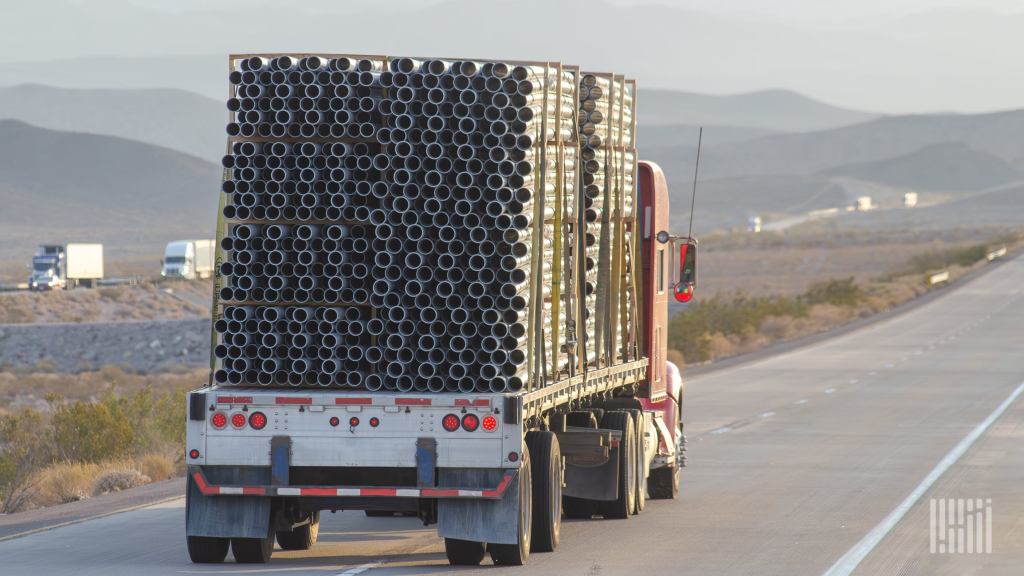
A flatbed trailer hauling piping on a highway

PS Logistics said Monday its subsidiary Diamond State Trucking has acquired flatbed operator Yordy Transport.

Headquartered in Morton, Illinois, Yordy Transport was founded six years ago and has a fleet of 30 power units, according to Federal Motor Carrier Safety Administration data. It primarily moves railroad and building materials throughout the central and southeast U.S.

“This acquisition aligns nicely with our desire to partner with founder- or family-owned trucking companies that put their drivers first while also providing quality service to their customers, and PS Logistics is looking forward to the growth opportunities that will result from this acquisition,” said Scott Smith, CEO and co-founder at PS Logistics.

The deal is expected to complement Diamond States’ current footprint and provide operational synergies.

Yordy Transport’s drivers and staff will remain on board, operating under the Diamond State banner.

Financial terms of the transaction were not disclosed.

“Throughout the process of working with them, it became evident that they are committed to the drivers’ success, and I’m excited that Yordy Transport will now be a part of a larger organization that will provide greater freight choices to Yordy’s drivers and operational expertise to the business,” said Avery Yordy, founder of Yordy Transport.

Birmingham, Alabama-based PS Logistics provides asset-based transportation and nonasset offerings like brokerage, third-party logistics, managed transportation and warehousing. The company primarily acquires family-owned flatbed trucking and logistics businesses. It has executed 31 acquisitions since 2016.

More FreightWaves articles by Todd Maiden