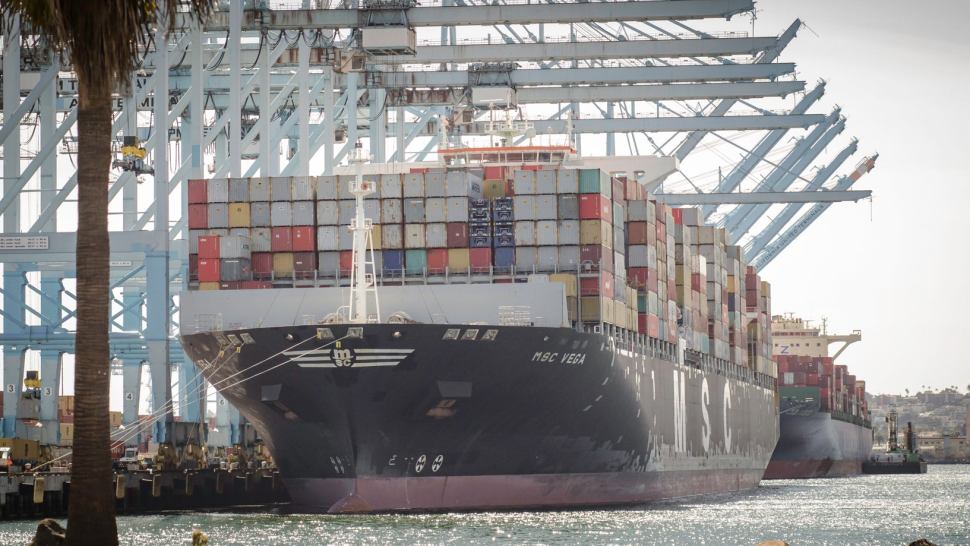
The Port of Los Angeles maintained its robust momentum into February, building on a record-breaking start to the year.
The port handled 801,398 twenty-foot equivalent units, marking a 2.5% increase compared to the same period in 2024 and the second-busiest February in the port’s history.
This impressive performance is part of a larger trend of year-over-year cargo growth in 17 of the past 19 months.
Breaking down the February figures, loaded imports reached 413,236 TEUs, a slight 1% increase from the previous year. However, loaded exports saw a significant drop of 18%, coming in at 109,156 TEUs. The processing of empty containers rose by 16% to 279,006 TEUs.
The cumulative figures for the first two months of 2025 showed volume of 1,725,643 TEUs, representing a 5.4% increase compared to the same period in 2024.
Port of Los Angeles Executive Director Gene Seroka, in a release accompanying a media presentation, said that despite the current positive trends, potential challenges lie ahead in the latter half of the year. He noted that many retailers and manufacturers have been importing goods earlier than usual as a precautionary measure against potential tariffs. This strategy, combined with the substantial inventory already present and the uncertainty surrounding tariffs, could lead to as much as a 10% volume decline in the second half of 2025.
“Here in Los Angeles, we will continue to look for new opportunities to bring more business through our gateway,” Seroka said.
Find more articles by Stuart Chirls here.
Related coverage:
Chassis manufacturers look to navigate supply chain, trade changes ahead
Canada ports facing container delays due to weather, rail issues
Wan Hai Lines sees record revenue, profit
Longer voyages, higher container rates power Evergreen Marine earnings
Brokerage Compliance Symposium
The day before F3. Every compliance issue you face - fraud exposure, carrier liability, FMCSA rules, cargo theft, insurance gaps - navigated by attorneys and operators defining best practices in a changing industry.
F3 Awards Dinner
The night before F3. FreightTech100 companies honored. FreightTech 25 and Shipper of Choice winners revealed live. Cocktail reception into dinner and live music - 300 industry leaders in one purpose-built room.
F3: Future of Freight Festival
Industry-defining keynotes, rapid-fire technology demos, and industry leaders networking in experiences across Chattanooga - plus the inaugural F3 Awards Dinner featuring the FreightTech and Shipper of Choice reveals.
The day before F3. Every compliance issue you face - fraud exposure, carrier liability, FMCSA rules, cargo theft, insurance gaps - navigated by attorneys and operators defining best practices in a changing industry.
The Signal at Chattanooga Choo Choo • Chattanooga, TN Register NowThe night before F3. FreightTech100 companies honored. FreightTech 25 and Shipper of Choice winners revealed live. Cocktail reception into dinner and live music - 300 industry leaders in one purpose-built room.
The Signal at Chattanooga Choo Choo • Chattanooga, TN Register NowIndustry-defining keynotes, rapid-fire technology demos, and industry leaders networking in experiences across Chattanooga - plus the inaugural F3 Awards Dinner featuring the FreightTech and Shipper of Choice reveals.
The Signal at Chattanooga Choo Choo • Chattanooga, TN Register Now