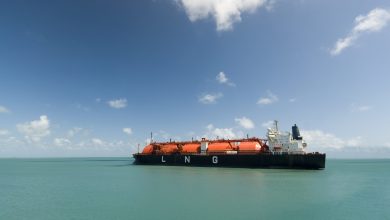
‘Mexican standoff’ persists in LNG spot shipping market
Executives at GasLog Ltd. believe the LNG shipping spot market is set to rebound. Others are not so sure.
According to Seaspan Corporation, the largest U.S.-listed container-ship lessor, liner companies are pulling vessels from service to install scrubbers, which is increasing demand for new charters.
Momentum is building to limit the speed of ocean-going vessels to curtail harmful emissions. The debate will focus on how this could impact charter rates, and whether it could have the unintended consequence of creating even more emissions-generating ship capacity.
NYSE-listed Scorpio Tankers has returned to profitability and its scrubber-installation program should position it to take advantage of the looming IMO 2020 rule.
So far this year, there has been heightened refinery downtime for maintenance and upgrades, but the tide is expected to turn in the second half, to the benefit of product-tanker rates.
Tanker companies like Euronav expect to see financial benefits from impending environmental regulations, which will change the type of fuel burned at sea and could eventually limit how fast ships can go.
The expanded Neopanamax locks of the Panama Canal, which debuted in June 2016, have been a boon for many shipping sectors, but they were specifically designed with container shipping in mind. Lock capacity is measured in twenty-foot-equivalent units (TEU).
A top executive of the Panama Canal Authority outlines the prospects for LNG, LPG and crude/product tanker transits through the larger locks of the waterway.
Nick Brown, head of marine at classification society Lloyd’s Register, is at the front lines of ocean shipping’s technological evolution. He explains how he sees this transformation playing out.
An overview of blank sailing and how it can affect your shipments.
Inxeption introduces Zippy Freight, a new service that helps B2B merchants get shipping costs and complexity under control and obtain flexible logistics options.
Big data is opening up opportunities for shippers of all sizes, and used properly, it can help reduce shipping rates and improve customer service.
Mexico’s current economic boom is providing business for the country’s cross-border shipping industry, but also emphasizing the industry’s growing pains.
Global logistics player, Toll, has officially launched two new roll-on, roll-off (ro-ro) ships for the carriage of trucks and containers across the Bass Strait between mainland Australia and the island of Tasmania. The first commercial sailing begins in a few days on March 1. FreightWaves reviews the vessels in detail, describes the local wharf upgrades and analyses the Bass Strait trade.
It is said that moving freight is all about relationships. If that is true, what value does a routing guide provide? A great deal, it turns out.
Widespread jitters in the Australian political and business communities that China may have banned imports of Australian coal now appear to be unfounded. Customs clearance delays at Dalian are happening owing to entirely “normal” reasons and coal cargo can be re-routed around a given port anyway, coal mining and coal transport executives have explained to FreightWaves.
The Schulte Group has acquired a majority stake in TecHullClean Ltd. (THC). Schulte said in a press release that the acquisition will expand the range of its underwater ship inspection, repair and maintenance (IRM) solutions.
Shippabo has created its own version of a fixed-rate contract, which helps small and mid-sized shippers gain access to direct-to-carrier contracts, allowing them to cut their shipping costs and secure reliable capacity.
Transflo used its slot during the MarketWaves 18 Demo Day to showcase how its app’s new user interface, along with the broader Transflo ecosystem can be used effectively to reduce time during the lifecycle of a load.
A look at just how many shipping containers are lost at sea each year.
The first week of 2019 saw three of America’s largest companies announce revenue expectation reductions, signaling a potential cooling of the U.S. shipping market.
With the market data available on SONAR, we have ability to see all the ebbs and flows of freight movement happen in real-time.
Full digital automation of shipping processes may be on the way, but what are the intermediary steps leading us there?
Net-zero carbon emissions from the transportation sector is possible by 2050 if industry starts to make changes now, says a new report.
CargoX Smart B/L platform would be the first open and neutral blockchain platform in the shipping industry for real-world commercial use.
Higher rates ahead for FedEx shippers.
Supply chain software company E2open is in the process of acquiring the world’s largest neutral maritime network INTTRA, in its bid to expand its services to the ocean container industry.
Continuing efforts to fight what he says are unfair trade practices, the administration of President Donald Trump announced the U.S. will pull out of the Universal Postal Union (UPU) treaty, which sets how much can be charged for international shipping.
UNCTAD expects volumes across all maritime segments to grow in 2018. However, it warns that trade wars can disrupt the global trading system and there is a need to assess the implications of vertical integration within the industry, addressing any potential negative effects.
We take a look at the U.S. maritime industry in our latest infographic.
In September 2017, IKEA Group was one of the first to join EV100—a global initiative created by The Climate Group—and now, a year later, IKEA Group has announced their commitment to moving toward zero emissions deliveries in 5 major cities by 2020.
This is all part of the startup’s mission to help independent ecommerce businesses battle giants like Amazon.
Transportation network Lanehub recently announced Backhaul Assist, a feature that will allow shippers utilizing private fleets or dedicated contract carriers to market available capacity to other shippers.
Exactly three months after truck drivers in Brazil shut down highways for across the country in protest, its impact continues to be felt.
The digital platform is designed to match warehouse space and fulfillment services with small and medium-sized companies working to get online orders out fast.
As schools are back in session this month, students across the country are stocking up on easy, cheap, dorm-friendly foods. Most notably, instant ramen noodles. They’re certainly a hot commodity this time of year—so hot, in fact, that thousands of dollars worth of ramen has gone missing outside of Atlanta.
Sponsored by LaunchIt Public Relations…Alan Amling, director of UPS’s Global On-Demand Manufacturing Initiative pursues the benefits of on-demand additive manufacturing.
Unilever, the massive Rotterdam-headquartered company that brings beauty, personal care, and food products to over 2.5 billion people daily, has partnered with JD.com, an e-commerce giant based in Beijing, to expand its reach in China.
The Freight Movement is in partnership with Arrive Logistics …The continued speculation over global trade and tariffs has increased the uncertainty that manufacturers and the businesses that support them face, but it hasn’t dampened optimism.
According to CB Insights, “the maritime shipping industry accounts for 90% of global trade and is only now beginning to leverage technology. This shift could have far-reaching impact on retailers, consumer goods companies, manufacturers, and more.” With this important industry in mind, CB Insights hosted a July 24 webinar to “explore how shipping companies and global ports are utilizing automation and blockchain technology to revolutionize the shipping industry,” taking a look at various aspects of the supply chain along the way.
UPS opens $100M Paris distribution center, Boston prepares for traffic increases, and more on Today’s Pickup.
Dale Huang, the CTO of COSCO Network e-Logistics spoke about the importance of blockchain in the logistics and shipping world and how he expects the technology to gain centerstage in the near future.
Hyperloop is just one of the technologies that is looking to change the way goods and people move over the next 30 years.
Shippo has launched a new workflow feature that help customers optimize their operations and thereby reduce time spent on deciding their shipping options.
Oil prices could go over $90 a barrel by 2020 due to IMO regulations that put a cap on the sulfur emissions in the shipping industry.
High capacity, steady rise in oil prices, a weaker U.S. dollar and a dull spot market had sunken margins of shipping majors in Q1 2018.
Trucking interests, led by LTL carriers, have been pushing legislation that would allow 33-foot double trailers on American roadways. Opponents are ramping up efforts to stop it.
The Freight Movement is in partnership with Arrive Logistics …Moving freight to its final destination starts with the ability of a shipper or broker to find available capacity. That load tendering process is rapidly changing.
Shipa Freight, a spinoff from Agility, has created a platform that makes it easier for SMEs to book air and ocean freight online.
It will literally take an act of Congress to right the sinking USPS ship. Even heavy attrition and solid growth in packages and shipping can’t stop the losses.
Get the package there and get it there on time. A simply ask, but one that has become increasingly difficult in recent years as e-commerce has exploded and retailers and e-tailers fight for those dollars.
Brokers continue to see more business and higher revenue, according to the latest data compiled by DAT.
China-U.S. ocean freight rates have been falling continuously for the record 32nd week, in the wake of the Chinese New Year and a continous surge in capacity.
Flatbed freight remains red-hot with 111 loads for every truck, but what is causing the surge in demand?
Wages continue to rise for America’s truckers as the trucking industry contends with driver shortages coupled with an increased demand for shipping services.
Flexport is modernizing global trade through a combination of software and human expertise, bringing in greater visibility and transparency to the freight forwarding industry.
Loss expects at leading fleets say more thought needs to go into package design to ensure cargo is well protected during transit.
Arrive Logistics will host a webinar on March 29 with use case examples and tips on how shippers can reduce their shipping costs.
Supply chain participants spent years taking time out of the process to offer faster, more streamlined services, but with ELDs and e-commerce, that lack of flexibility is now constraining operations.
Atlanta-based supply chain consultancy firm Chainalytics and UK-based ocean shipping consulting firm Drewry Supply Chain Advisors have officially formed a partnership through a joint venture, The Ocean Buying Group.
The Tesla Semi has finally hit the road. Tesla founder Elon Musk posted a picture of two Tesla Semi’s leaving the company’s Gigafactory in the Nevada mountains for a trip to California.
European logistics company Stena Line has confirmed its initiative to test environment-friendly shipping vessels, the Handy Shipping Guide reports.
Seeking to provide a more comprehensive solution for fleets, Omnitracs has unveiled its Unified Fleet Management platform Omnitracs One.
Limited visibility, outdated information, errors compounding on errors amounts to one thing: unhappy customers.
Shippabo is a supply chain solution that helps businesses streamline their international shipping like air and bulk cargo.
Dubai Ports World will build new inland ports in two Indian states to handle increased container traffic coming into that nation’s ports.
Wales First Minister Carwyn Jones was in Dublin, Ireland, last week due to “serious concerns” brought about by the possibility of a hard Brexit exit and its impact on trade.
The Port of Dover has been honored with one of the UK’s highest awards for its congestion mitigation efforts.
OpenPort, the digital logistics platform that uses blockchain technology to transform domestic distribution in emerging markets, today announced that it has joined the Blockchain in Transport Alliance (BiTA).
UPS is asking for inclusion of part-time drivers to make Sunday deliveries and also to allow use of personal vehicles in its latest demands in contract negotiations with the Teamsters, according to reports.
Xeneta is a freight rate benchmarking platform focusing on ocean freight. It aggregates rate data from various companies into a platform and provides market average rates, lows and highs to its customers.
With more regional and local deliveries due to e-commerce, there is more opportunity for truck drivers to find less-than-truckload freight, but knowing how it is billed is critical to winning contracts.
China’s ambitious Belt and Road Initiative (BRI) is slated to head north to the Arctic, Reuters reported. Global warming has opened up new shipping lanes that China plans to exploit.
The race to self-driving and electric vehicles has focused medium and heavy-duty vehicles lately, even though many believe local and urban is the best place for electric trucks. udelv, though, is focusing on that last-mile.
Two-year-old startup NEXT Trucking has secured $21 million in a Series B round of financing, led by Sequoia Capital, as it seeks to stand out in a crowded field of competitors looking to match available truck capacity with freight.
Geneva, Switzerland-based Mediterranean Shipping Company (MSC) has officially announced its roll on-roll off (RORO) service for West African routes, the Handy Shipping Guide reports.
Samsung SDS has successfully completed a pilot run of its blockchain platform Nexledger in the shipping industry of South Korea, along with different players in the market including shipping logistics companies, the Korean Customs, and major ocean liners.
Global ag giant Louis Dreyfus Company has successfully concluded its first international shipment utilizing blockchain technology.
Losing your job is a painful experience, and buyers of transportation who can’t get things picked up and delivered on time lose their jobs.
The USDA releases a statement claiming 2017 was the third best year ever for US agricultural exports which helped to spur domestic freight markets as well.
The Baltic Exchange is scheduled to end its freight futures exchange platform, Baltex, today.
Access to quicker delivery options has boomed sales of perishable commodities like frozen pizza and ice cream, and that has led to a boom in refrigerated freight options.
While the holiday rush starts in North America a few weeks before Thanksgiving, there is a holiday rush going on already in China as well, and it impacts shipping.
Go99, a digital freight-matching marketplace based out of Vancouver, Canada, has achieved a major revenue milestone and now it is setting its sights on expansion with the rest of Canada and busy lanes in the U.S. on its target.
Dry van spot rates hit a 3-year monthly high in November, according to data compiled by DAT Solutions. The November rate was $2.07 per mile, the highest monthly average since December 2014, the firm said, and 5 cents above October levels.
Losses and debts can be a deadly combo for any shipping company to handle. In a report from the Wall Street Journal looking at so-called “zombie companies” in Europe, one logistics company stood out.
The process of sending bills-of-lading with cargo has changed little in generations, but the problems have remained: BOLs arrive at different times than the cargo, causing delays and added cost. But blockchain could eliminate these expenses and streamline the process.
Turning bits into atoms in real-time? It’s as profound as the idea of instantly sharing thoughts across the world would have been to a person just a few decades ago. So how close are we to the dreams of the 21st century, and what does 3D printing have to do with it?
Natilus, a startup based out of California, is looking to provide a drone solution that allows it to transport freight multiple times faster than when it is shipped across the ocean, at half the price of regular air freight.
As the talks concluded last week on Round 5 of the North American Free Trade Agreement (NAFTA), the 3 NAFTA ministers included among the 30 negotiating parties agreed to “step back” to give negotiators additional time to “analyze proposals and conduct internal consultations,” according to LandLine Magazine.
The story of railroads is as old as the independence of the United States. The growth of railroads ran in parallel with the economic surge and transportation expansion of the 19th century. Fast forward two centuries and the grasp of railroads on the freight transport market has all but waned.
Blockchain is digital ledger that can improve global trade security, stop illegal smuggling, and more importantly, reduce transit times currently bogged down by bureaucracy.
Consumer confidence remains high, yet retail stores continue to close their doors. Welcome to shopping in a modern America.
Taking the last-mile delivery battle seriously, Amazon may have found a hit with its Hub. According to The Motley Fool, Amazon is putting Hubs in “multi-tenant dwellings like apartment buildings, condos, and complexes.”
Unlike in the United States or Europe, shipping across Brazil is a hassle since there aren’t a lot of comprehensive cross-country providers with transparent processes for pricing, standards and tracking mechanisms. Intelipost is set to change that by providing SaaS solutions for managing logistics providers under one roof.
Heightened tensions in the South China Sea over territorial disputes threaten $5T in shipping and $1.2T in US-only imports and exports.
Thanks to the emergence of e-commerce retail platforms through increased online purchases, retail websites may be selling similar products, but the online retailer that can get items delivered to their customers the quickest with the lowest shipping cost possible usually wins, The Loadstar reports.
One of the early pioneers of aerial drone use in agriculture is now looking to grow his business in more ways than one. Steve Edgar, founder of Empire Unmanned, is investigating the Pocatello Regional Airport in Pocatello, Idaho, for future use as the first-ever unmanned air-freight hub.
Cargo and passenger vessels on the high seas face a multitude of threats and risks that affect decision-making, from delays at canals to illegal migrant traffic, major weather events, and even disease outbreaks. A new emergency notification system is hoping to reduce those dangers.
McKinsey & Company has issued a landmark report predicting sweeping changes amid steady growth in the container shipping industry over the next 50 years.