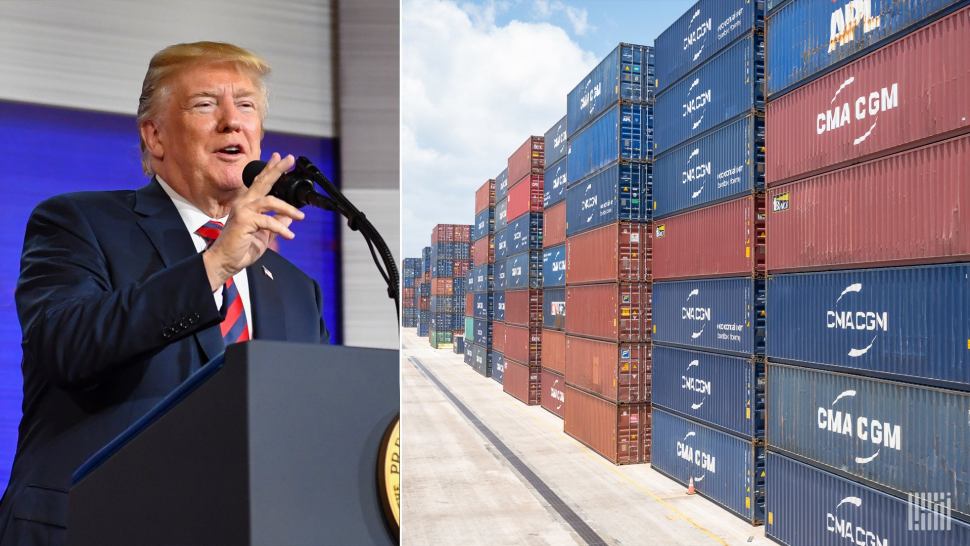
Tariffs on retail goods don’t usually directly control the final price that consumers pay.
When products are brought into the U.S., the tariff is calculated based on the declared value of the goods at the point of import, not on the retail price at which they’re sold.
This declared value omits additional costs such as labor, marketing, logistics, rent and the profit margin that retailers add. Consequently, the price on the shelf can be significantly higher than the tariffed import value.
For instance, the markup on big-ticket items like cars might be relatively modest, around 5%, whereas luxury goods can see markups up to 500%. However, most consumer products are typically marked up by over 100% over their import value.
Sourcing is never fixed:
Consumers worry that retailers will just pass on the cost of tariffs in terms of wholesale costs. The more likely answer is that companies will look for cheaper suppliers, countries for sourcing or domestic manufacturers. Sourcing is not static or fixed.
So, what will importers do to respond to tariffs?
Importers’ strategies:
- Absorbing tariffs: Importers might pay the tariff out of their profit margin to stabilize consumer prices.
- Sourcing from alternatives: They could shift production to countries with more favorable trade agreements with the U.S.
- Increasing prices: As a last resort, if neither absorbing the cost nor changing suppliers is feasible, the price to consumers might increase.
If importers discover cheaper alternatives, they’ll shift their sourcing to maintain profitability. Otherwise, they have to decide whether to absorb the cost or pass it on to consumers, depending on how much the market will tolerate the price hike.
Impact on suppliers:
Manufacturers, especially those exporting to the U.S., face similar decisions.
The U.S. is the world’s largest consumer market. A significant drop in demand due to high tariffs can push suppliers to reduce prices to remain competitive, offsetting some or all of the costs of tariffs.
Foreign government subsidies to their manufacturers:
Some foreign governments will likely subsidize their manufacturers to ensure they don’t lose U.S. market share to foreign or domestic competitors. For decades, U.S. manufacturers and policymakers have complained about China subsidizing manufacturing to steal market share from U.S. domestic manufacturers. This means consumer prices could stay the same while the tariff cost is offset by reducing the foreign manufacturer’s price and margin.
Market dynamics:
Ultimately, the level of demand sets a ceiling on how much prices can rise. If prices get too high, sales diminish.
Strategic tariff use:
Implementing tariffs, particularly on nations like China, strategically nudges businesses to diversify their supply chains by seeking suppliers in countries with better trade relations or boosting domestic production.
As a result of these tariffs, should demand for Chinese goods decrease, Chinese manufacturers are compelled to either lower their prices or risk losing market share, possibly leading to business closure.
Supply chain flexibility:
The adaptability of modern supply chains is crucial. Over time, sources of supply can be redirected to areas with lower costs and higher reliability. This flexibility isn’t a weakness; it’s an inherent strength of economics, allowing for a more resilient and efficient distribution of goods worldwide.
F3: Future of Freight Festival
Industry-defining keynotes, rapid-fire technology demos, and industry leaders networking in experiences across Chattanooga - plus the inaugural F3 Awards Dinner featuring the FreightTech and Shipper of Choice reveals.
Industry-defining keynotes, rapid-fire technology demos, and industry leaders networking in experiences across Chattanooga - plus the inaugural F3 Awards Dinner featuring the FreightTech and Shipper of Choice reveals.
The Signal at Chattanooga Choo Choo • Chattanooga, TN Register Now