The Gold Coast death wake that led to Mar-a-lago
Part one of a two-part series that highlights 150 crashes, 10 fatalities, $889,630 in unpaid federal fines, and a dead man running a Mar-a-lago linked trucking company
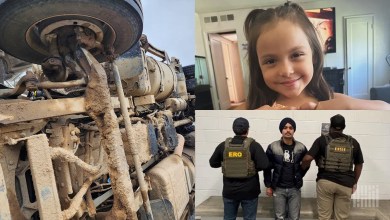
Dalilah Coleman is a seven-year-old girl from California’s San Bernardino County who, on June 20, 2024, was five years old and riding in her family’s car when a commercial 18-wheeler driven by Partap Singh — a citizen of India who entered the country illegally through the southern border in 2022 and was later issued a […]
For most of the past year, two federal agencies have been doing more to reshape the trucking driver pool than anything else in the industry: the Department of Transportation with its non-domiciled CDL crackdown, and the Department of Homeland Security with its immigration enforcement raids. DOT and DHS have operated in close coordination — DOT […]
A driver gets his permit in Hawaii, boards a plane to New Jersey, trains Sunday through Thursday, passes a skills test on Friday, flies home Saturday, and walks out of a DMV with a commercial driver’s license. Federal law allowed all of it. That’s the problem.
Before you can have an honest conversation about what’s happening to DACA recipients in the trucking industry right now, you have to first be honest about what DACA actually is – because a lot of people are weighing in on this policy debate without a firm grip on the facts, and that confusion is doing […]
Most small carriers do not lose in hiring. They lose in what happens after the handshake — the documentation that didn’t get collected, the employer verification that never got followed up on, the drug test that cleared but nobody logged into the right system, the medical card that expired and sat in a drawer for […]
A firsthand, frontline reality of how freight moves from broker, carrier, spot, shipper direct, interlined and non-commodity freight to the crash scene.
Our investigation reveals that 5% of carriers, as identified by their insurers, account for nearly a third of all truck crashes. No federal or state law requires insurers to review a single page of safety data before binding a policy.
The 287(g) program has turned local law enforcement into immigration officers across 40 states. Compliant hiring is not defensible hiring. Here’s the difference, and why it matters now more than ever.
You can’t own a fishing boat, fly an airplane, broadcast a radio signal, split an atom, or drill for oil in America without proving you’re an American. But you can operate an 80,000-pound commercial motor vehicle on every highway in every state in the nation without being a citizen of this country, or even setting foot in it. Welcome to the American trucking industry, where the door isn’t just open. It’s been taken off the hinges.
For decades, insurance was the one thing you couldn’t fake your way past to start a trucking company. That’s no longer true. As instant-issue coverage and $300 authority fees make it easier than ever to place 80,000 pounds on public highways without verification, a scalable, pre-authority risk-control model could restore the gate the industry lost without adding a single federal employee to the payroll.
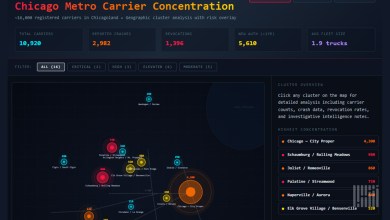
My investigation found 76 Risk Retention Groups insure nearly 30,000 motor carriers linked to more than 6,300 fatal crashes, all without state guaranty fund protection for crash victims. The findings come as reports indicate that major insurers, including Chubb and AmTrust, are exiting the Chicago trucking market, funneling high-risk carriers into RRGs that have already incurred $199 million in unpaid losses and multiple insolvencies.
It’s a win.
The non-domicile CDL final rule eliminates EADs as a pathway to a commercial license and restricts eligibility to H-2A, H-2B, and E-2 visa holders. With 97 percent of the current 200,000 non-domiciled CDL holders unable to qualify under the new standard, expect 30,000 to 40,000 drivers removed from the commercial pool every year.
Thirty people are dead. At least 17 fatal crashes in 2025 alone involved non-domiciled commercial drivers who should never have been behind the wheel of an 80,000 pound truck. That’s ends today. People should be asking why it took this long to put American Trucking and American Motorists First.
42 investigative article links covering CDL mills. Chameleon carriers. Fraudulent examiners. Bought legislators. Exposed vehicles. Every failure point in America’s deadliest supply chain crisis, exposed by an 25 year industry veteran.
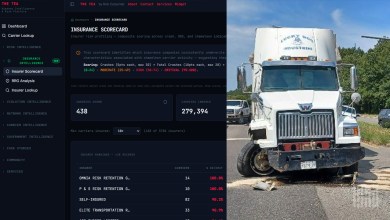
Less than 1% of insurer-carrier relationships are tied to 6% of the crashes and fatalities in America. The scorecard shows exactly who. The fix isn’t just regulation. It’s insurers taking ownership of their books and investing in risk-control professionals who actually know trucking.
The Stop Underrides Act 2.0 is back. Should trucking companies be forced to spend billions armoring their trailers against crashes that are overwhelmingly caused by the other driver? The bill’s sponsors say at least 300 people die annually in underride crashes. Meanwhile, distracted driving kills more than 3,200 people a year and is a contributing factor in the very side-impact crashes this bill claims to address.
The question people always ask is, “Where did they get the money to grow to 500 trucks?” It’s all in the model, and it’s often rinse, reuse, repeat.
A fatal Indiana crash has exposed a pipeline stretching from Kyrgyzstan to Chicago to Philadelphia, chameleon carriers sharing trucks and DOT numbers, a CDL school with no public footprint, an ELD allegedly built with a backdoor, and a driver whose immigration status passed a federal database check. Secretary Duffy is investigating. Will the investigation follow the money?
The agency confirmed investigators visited the carrier linked to a deadly Indiana crash and a massive chameleon network. But the enforcement pathway matters more than the headline.