




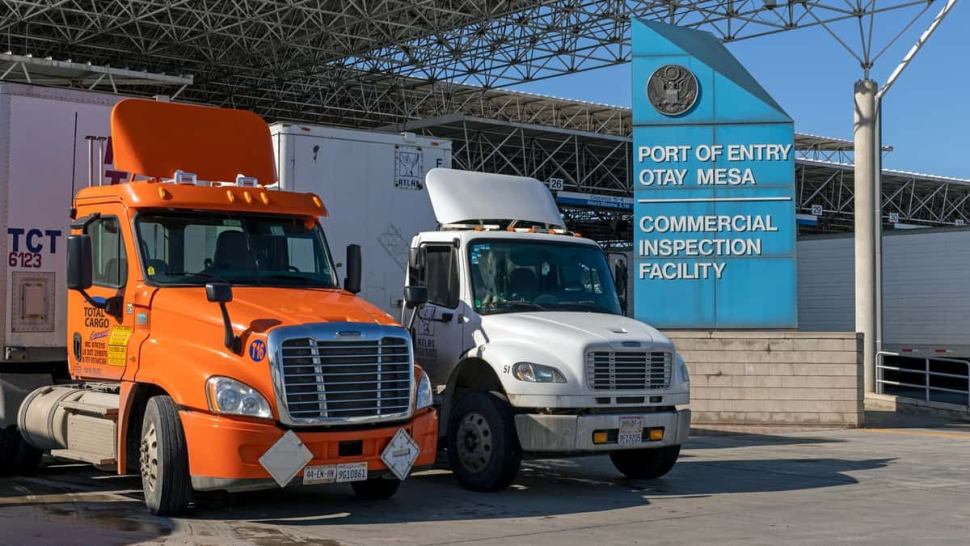
Provisions in the United States-Mexico-Canada Agreement (USMCA) meant to weed out unqualified trucking companies south of the border were highlighted today by small-business trucking companies as the trade pact goes into force.
“The USMCA creates a thorough review process to identify and remove Mexico-based carriers and operators that pose material economic harm to American truckers,” commented Todd Spencer, president of the Owner-Operator Independent Trucking Association (OOIDA). “This means greater scrutiny of entities in cross-border trucking and enforcement of labor provisions.”
President Donald Trump signed the trade pact into law on January 29, replacing the 26-year-old North American Free Trade Agreement (NAFTA). The USMCA overhauls rules for trade in agriculture, manufacturing and services with Mexico and Canada.
Key parts of the new trade deal include requiring 75% of a vehicle’s components be made in North America. The deal also creates higher wages by requiring 40%-45% of auto content be made by workers earning at least $16 per hour.
OOIDA emphasized three provisions in the agreement it views as particularly important for owner-operators:
- U.S. Department of Transportation Inspector General (USDOT IG) required to review the procedures and actions taken by the Secretary of Transportation to determine whether each Mexico-domiciled motor carrier with operating authority is in compliance with applicable Federal motor carrier safety laws and regulations.
- USDOT IG required to undertake a survey of all existing grants of operating authority to, and pending applications for operating authority from, all Mexico-domiciled motor property carriers for operating beyond the Border Commercial Zones.
- Federal review process established to restrict unsafe foreign carriers that pose material harm to American trucking entities from operating beyond the Border Commercial Zones.
“This will hopefully prevent or reduce Mexico-domiciled carriers that are exploiting our laws from operating on U.S. highways, which has significantly lowered wages for American drivers across numerous segments of trucking,” Spencer said.
According to recent government reports, approximately six million trucks move across the U.S. southern border annually, employing nearly 27,000 individuals and generating $3.8 billion in U.S. trucking revenue.
Related articles:
USMCA enters into force amid pandemic-related uncertainties
SMEs unsure how to benefit from new USMCA trade pact with Mexico and Canada
Cross-border summit to talk international trade, cargo visibility and USMCA (with video)
Brokerage Compliance Symposium
The day before F3. Every compliance issue you face - fraud exposure, carrier liability, FMCSA rules, cargo theft, insurance gaps - navigated by attorneys and operators defining best practices in a changing industry.
F3 Awards Dinner
The night before F3. FreightTech100 companies honored. FreightTech 25 and Shipper of Choice winners revealed live. Cocktail reception into dinner and live music - 300 industry leaders in one purpose-built room.
F3: Future of Freight Festival
Industry-defining keynotes, rapid-fire technology demos, and industry leaders networking in experiences across Chattanooga - plus the inaugural F3 Awards Dinner featuring the FreightTech and Shipper of Choice reveals.
The day before F3. Every compliance issue you face - fraud exposure, carrier liability, FMCSA rules, cargo theft, insurance gaps - navigated by attorneys and operators defining best practices in a changing industry.
The Signal at Chattanooga Choo Choo • Chattanooga, TN Register NowThe night before F3. FreightTech100 companies honored. FreightTech 25 and Shipper of Choice winners revealed live. Cocktail reception into dinner and live music - 300 industry leaders in one purpose-built room.
The Signal at Chattanooga Choo Choo • Chattanooga, TN Register NowIndustry-defining keynotes, rapid-fire technology demos, and industry leaders networking in experiences across Chattanooga - plus the inaugural F3 Awards Dinner featuring the FreightTech and Shipper of Choice reveals.
The Signal at Chattanooga Choo Choo • Chattanooga, TN Register Now