EPA’s war on diesel is a national security issue
The pardons ended nine ordeals. The mandate that created them is still on the books, still in the field, and still pointed at the trucks that move America’s military freight.
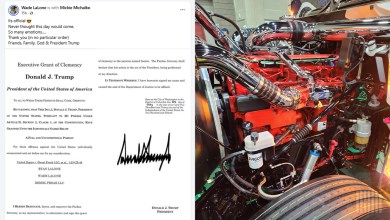
On July 3, 2026, President Trump pardoned early a dozen people who were convicted under the Clean Air Act for tampering with diesel emissions, months after the Justice Department stopped prosecuting diesel cases entirely. The technology is still bolted to every truck on the road, and nobody in Washington wants to discuss the “what now” of who pays for it.
We have never seen a twelve-month period in which the White House, the Department of Transportation, and FMCSA moved as aggressively, as comprehensively, and as effectively on the specific safety failures that haunt our highways and our industry. Before we sit down with Derek Barrs on Monday, here is the year that got us here.
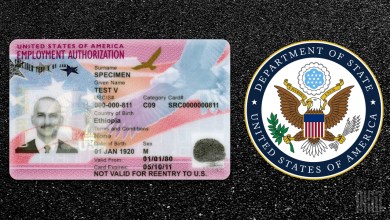
On April 23, a State Department spokesperson confirmed that commercial truck driver visa processing has resumed under strict new standards. Now the question is whether the states tasked with running the new system have the institutional capacity to maintain what federal audit pressure forced them to fix.
Part two of a two-part series on how Dragos Sprinceana, while carrying $889,630 in unpaid federal fines, became a self-described envoy to Trump’s inner circle.
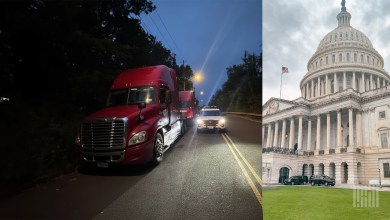
For the first time, legislation introduced in the 119th Congress would require every motor carrier, subcontractor, and owner-operator hauling Department of Defense freight to certify they have no ties to Chinese military companies, and back that certification up with their signature.
New bills, new enforcement actions, and a September deadline that turns every stalled bill into a live round.
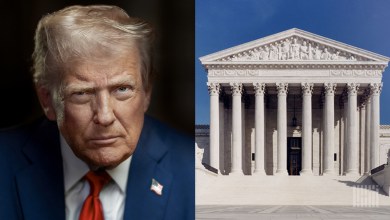
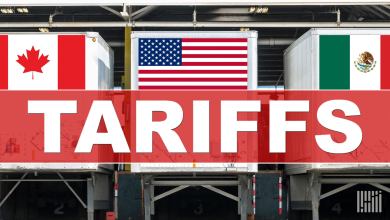
The Supreme Court ruled 6-3 that IEEPA does not authorize the President to impose tariffs. Within hours, the White House invoked Section 122 of the Trade Act of 1974 to impose a new 10% global surcharge, later raised to 15%. Up to $175 billion in collected duties now sits in legal limbo. Section 232 tariffs on steel, aluminum, and heavy trucks remain untouched. For the freight industry, the ruling didn’t end the trade war. It changed the weapons.
It’s a win.
The non-domicile CDL final rule eliminates EADs as a pathway to a commercial license and restricts eligibility to H-2A, H-2B, and E-2 visa holders. With 97 percent of the current 200,000 non-domiciled CDL holders unable to qualify under the new standard, expect 30,000 to 40,000 drivers removed from the commercial pool every year.
Thirty people are dead. At least 17 fatal crashes in 2025 alone involved non-domiciled commercial drivers who should never have been behind the wheel of an 80,000 pound truck. That’s ends today. People should be asking why it took this long to put American Trucking and American Motorists First.
42 investigative article links covering CDL mills. Chameleon carriers. Fraudulent examiners. Bought legislators. Exposed vehicles. Every failure point in America’s deadliest supply chain crisis, exposed by an 25 year industry veteran.
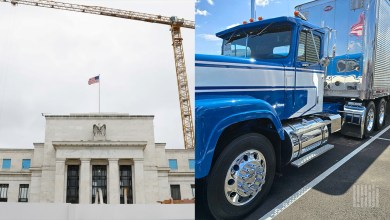
11 rate hikes, 26 months of manufacturing contraction, driver wages falling behind inflation, while the Fed blamed workers for price increases. Kevin Warsh’s nomination signals a fundamental shift in how Washington thinks about monetary policy , and trucking stands to benefit.
Arizona lawmakers just passed a bill out of committee that would let cops seize a commercial truck on the spot if the driver is here illegally with a fake CDL. Welcome to the new reality of trucking legislation, where highway safety and border enforcement are colliding in ways that will reshape how carriers operate.
The Trump administration’s decision to drop its appeal that tied billions in transportation funding to immigration enforcement represents a significant legal setback, but don’t mistake this tactical retreat for surrender. For motor carriers employing non-domiciled CDL holders, the regulatory battlefield has only shifted, not cleared.
The DHL Global Connectedness Tracker shows that global trade and investment remain resilient despite rising tariffs and geopolitical tensions.
President Trump is expected to sign legislation that extends business-friendly provisions included in the 2017 tax cuts.
Two new executive orders refocus attention on English language requirements for truck drivers, reviving enforcement protocols that have existed since 1937. Industry voices say training, licensing and real-world risk management are essential priorities beyond language rules.
Freight markets are on notice to expect the start of Trump’s new tariff regime on Feb. 1.
Lawmakers on Capitol Hill discussed whether Chinese influence was violating Panama Canal neutrality at the expense of U.S. international trade.
Losers among transportation startups are rapidly being defined, It will take longer to determine the winners.