Los Angeles box volume hits lowest level in two years

Nothing lasts forever.

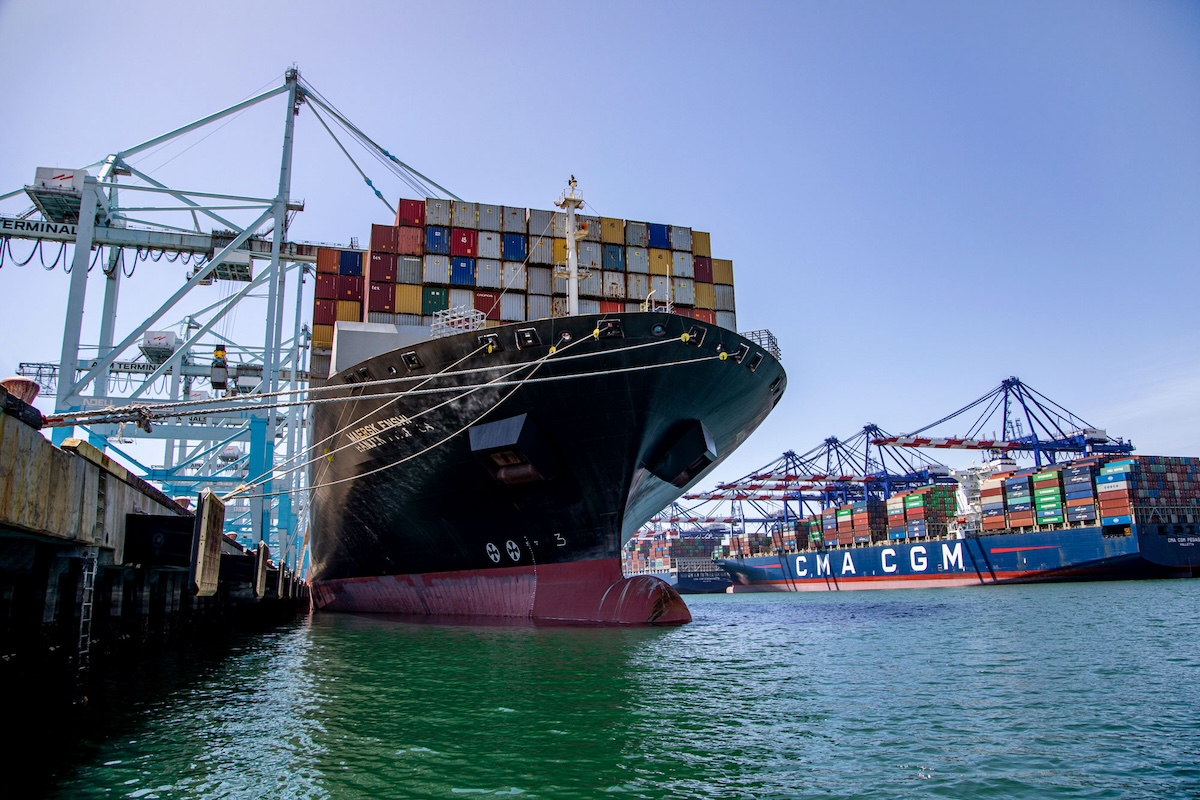
The Port of Los Angeles saw its streak of 10 consecutive months of container volume growth end in May as the effects of Trump administration tariffs hit imports and exports.

The southern California gateway processed 716,619 twenty foot equivalent units (TEUs) in May, off 5% from the same month in 2024. After 10 straight months of year-over-year growth, overall cargo volume slowed due to the impact of tariffs on both imports and exports.

“May marked our lowest monthly cargo output in over two years,” Port of Los Angeles Executive Director Gene Seroka said in a media briefing. “While May volume is typically stronger than April as we approach our traditional peak season, our imports dropped 19% compared to last month.

“Unless long-term, comprehensive trade agreements are reached soon, we’ll likely see higher prices and less selection during the year-end holiday season,” Seroka said. “The uncertainty created by fast-changing tariff policies has caused hardships for consumers, businesses and labor.”

The Yale Budget Lab said tariffs would raise average prices by 1.5%, a loss in purchasing power of nearly $2,500 per household per year, according to the Lab’s Director of Economic Ernie Tedeschi, on the briefing. “But that impact isn’t the same across all families or products: lower-income and working-class families see a bigger hit than higher-income families, and products more likely to be imported like shoes, apparel, and consumer electronics will see double-digit percent price increases.”

May loaded imports totaled 355,950 TEUs, a slide of 9% y/y. Loaded exports were 120,196 TEUs, down 5%. The port handled 240,472 empty container units, up 2% from a year ago.

Year to date, Los Angeles has handled 4,063,472 TEUs, a modest 4% more than the same period in 2024.

Find more articles by Stuart Chirls here.

Related coverage:

Israel ports unfazed by new missile strikes

UPDATE: Return of Red Sea cargo “less likely” after attacks on Iran

Geopolitical upheaval tops new shipping concerns survey
House investigator Yi to lead Marad

California’s suit on Congressional ZEV-related denial says federal action overreached

While the headlines proclaim that both President Trump and Congress together have effectively ended California’s zero emission vehicle (ZEV) efforts, the lawsuit filed by the Golden State in response says the action is “unlawful, unconstitutional and void.”

The lawsuit filed by California Attorney General Rob Bonta was recorded by the U.S. District Court for the Northern District of California on Thursday, the same day President Trump signed the legislation passed by both houses of Congress overruling waivers granted to California by the Environmental Protection Agency. Those waivers allowed the state to implement the Advanced Clean Trucks (ACT) rule, the Omnibus NoX (nitrogen oxide) rule, and the so-called Clean Cars 2 regulation.

As has been the practice since the 70’s, the EPA when it granted its waivers did not submit them to Congress for consideration or approval, with such a submission generally viewed as unnecessary. 

However, soon after taking office after the Trump presidency began, EPA Administrator Lee Zeldin did submit them under the provisions of the Congressional Review Act, kicking off the process that culminated in the Presidential signing.

By taking the action it did, according to the lawsuit, “the Federal Government ‘singled out’ these waivers—and the underlying California regulations—for an unprecedented attack, employing a statute—the Congressional Review Act (CRA)—deemed inapplicable by every nonpartisan arbiter and expert who analyzed the question.”

Core argument: rules aren’t waivers

Several times in its suit, California raises its point that the CRA granted Congressional review of federal rules that had gone through the federal rulemaking process. It does not apply to state actions, the lawsuit said.

“No State consented to the CRA as a means for Congress to negate state rules,” the lawsuit said. “Nor would any State have done so.” Quoting an earlier precedent,  California said states “do not so easily surrender ‘the dignity … of sovereignty’ they retain in our system of government.”

“The Federal Government ran roughshod over federalism and separation of powers

principles in applying the CRA to these three preemption waiver decisions,” the lawsuit said. “It did so despite EPA’s decades-old, consistent position—reiterated in each of the three actions at issue—that preemption waiver decisions are not ‘rules’ and, accordingly, ‘the Congressional Review Act does not apply.’” 

“In fact, the CRA has never before been used in any context that resembles this one,” the lawsuit adds. “It has certainly never been used, as it was here, to negate particular state laws.”

Numerous other states join as plaintiffs

California is not the only plaintiff in the case. It is joined by the states of Colorado, Delaware, Massachusetts, New Jersey, New Mexico, New York, Oregon, Rhode Island, Vermont and Washington. 

Those states (and several others) have agreed to follow the lead of California in spurring ZEV adoption, one of the reasons why the waivers designed to speed the transition to a ZEV fleet have drawn such national interest. The combined heft of California plus its following states is seen as likely to result in OEMs ultimately choosing to follow those rules, given the size of the market, with the regulations promulgated by the California Air Resources Board effectively becoming the de facto national standard.

The lawsuit does note that waivers are subject to review in a federal Court of Appeals.

California’s unique position to be granted a waiver by the EPA under the Clean Air Act rules and implement tougher standards has a tight definition, the lawsuit said. “The waiver provision only empowers EPA to ‘waive application’ of the preemption provision to California, not to make rules,” the suit says. “Until its post-hoc actions challenged here, EPA had likewise consistently maintained that its waiver decisions are not rules and therefore are not subject to a host of requirements that apply only to rules.”

Outside opinions back California

In the runup to the Congressional action, two separate entities weighed in on whether the waivers could be considered rules and therefore subject to the CRA: the General Accounting Office and the Senate Parliamentarian. Both said the waivers could not be considered under the CRA. But those opinions did not have muscle behind them, and Congress went ahead and cast its votes to revoke the waivers under the authority of the CRA.

The California lawsuit does not attempt to argue that the EPA and Parliamentarian opinions  barred the action that Congress took. It reads more like intellectual support.

It does argue that Congress did not act on the waivers when they were first published, with the Advanced Clean Trucks’ OK coming down in April 2023. “Any member of Congress could have asked the GAO to determine whether these unsubmitted actions were rules subject to the CRA,” the lawsuit says. “No member of Congress did so.”

When the EPA submitted the waivers to Congress to be considered as rules, it provided “no explanation for EPA’s about-face from its longstanding prior position that waiver decisions are not rules, much less rules of general applicability subject to the CRA,” the lawsuit says.

After the House of Representatives passed the legislation that would allow the CRA to kill the waivers, according to the lawsuit, “No member or committee of the House provided any legal rationale for concluding that waiver decisions are federal agency rules of general applicability that could be subject to the CRA. Nor did any members of the House who had previously expressed the opposite view explain their change of position.”

There are five counts in the lawsuit, including violation of the CRA. More broadly, California charges Congress with “violation of separation of powers” by using the CRA to dismiss a state action.

Among other requests by California are that the court enjoin Zeldin and the EPA “from taking any action to implement or give legal effect to the resolutions” and to declare the reclassification of the waivers as result as “unconstitutional and unlawful”

More articles by John Kingston

Onstage in Chicago, CHRW talks tech and staffing; RXO sees language order hitting capacity

Logistics GDP share rose in ’24, not likely to drop: CSCMP report

Parts supplier FleetPride’s debt rating cut by Moody’s, outlook still negative

Atlas Air consolidates Miami operations in larger cargo facility 

A blue-tailed Atlas Air jumbo cargo jet with gold lettering comes in for a landing.

Atlas Air, the largest operator of Boeing 747 cargo jets in the world, said Monday it will relocate to a larger operations base at Miami International Airport, enabling it to consolidate operations in one location with greater capacity for future international growth. 

Atlas Air is the largest cargo operator at the Miami airport, handling more than 500,000 tons of freight per year. 

The cargo airline will transition into the new facility on June 23, spokesperson Debbie Coffey said in an email. The building was previously occupied by another airport tenant. 

Atlas Air for years has operated from several cargo warehouses around the airport, but has outgrown them, she said.   

The move will enable Atlas to assume direct control over all warehouse functions and dedicated aircraft parking spaces adjacent to the facility, streamlining cargo handling and improving efficiency across the operation. It also allows Atlas to consolidate import and export functions in one purpose-built site, which will speed up transfers between customers and aircraft. 

The expanded facility includes a 124,000-square foot refrigerated room –  the largest on-airport cold storage space in North America – with direct ramp access to aircraft, Atlas said in a news release. The cooler will be used for pharmaceutical and perishable products.

The facility’s location on the airport perimeter is adjacent to several maintenance, repair and overhaul providers, which Atlas said will help reduce downtime for inspections and mechanical work.

“Having dedicated aircraft parking, warehousing, and a world-class airside-cooler will further enable us to deliver superior services to our customers,” CEO Michael Steen said. 

Miami is the seventh largest cargo gateway in the world and largest in the U.S., excluding the FedEx and UPS hubs and the refueling stop in Anchorage, Alaska, and the primary U.S. connection to the Latin America market. 

Atlas has a large presence in South Florida with a flight training center and commercial marketing office in Miami. 

FreightWaves reported in August that Atlas Air also plans to invest in a large, dedicated operations base in Anchorage that would significantly expand its capacity to turn around aircraft moving between Asia and the United States. 

Click here for more FreightWaves/American Shipper stories by Eric Kulisch.

RELATED READING:

Atlas Air to invest in Anchorage base expansion as e-commerce surges

Crowley recognized for industry-leading fraud prevention with CrowleySAFE

Crowley has been named a winner of the prestigious 2025 FreightWaves Fraud Fighter Awards, recognizing the company’s innovative approach to combating increasingly sophisticated freight fraud schemes. At the center of Crowley’s fraud-fighting strategy is CrowleySAFE (Crowley Strategic Anti-Fraud Ecosystem), a comprehensive, multi-layered solution designed to protect the freight ecosystem against evolving threats including double-brokering, identity theft, phishing attacks, and fictitious pickups.

According to Crowley, the most dangerous threat in today’s freight industry is “the rise of identity theft and synthetic carrier profiles. Fraudsters are no longer just exploiting weak vetting processes; they’re mimicking legitimate operations down to email signatures, websites and forged documents.” This sophisticated approach to fraud has fundamentally changed the industry landscape as these impersonations erode trust across the industry and make traditional verification methods inadequate and nearly obsolete.

Crowley’s approach to fraud prevention has undergone significant transformation over time. “Early on, we focused on blocking known offenders. Now, we take a proactive approach by looking for patterns, anomalies and cross-system inconsistencies before fraud occurs,” the company explained. This shift represents a fundamental change in philosophy, moving “from reactive gatekeeping to network-wide visibility and education, embedding fraud awareness into every department, from onboarding to claims.”

A cornerstone of this evolution has been industry collaboration. “A major driver of our evolution has been networking with other carriers, brokerage professionals and overall industry stakeholders,” Crowley wrote. “Being part of a community that openly shares insights, red flags and suspicious patterns has made a tremendous difference.”

CrowleySAFE leverages cutting-edge technology as a core component of its fraud prevention strategy. “The integration of tools like Carrier Assure, Highway, custom-built applications and digital sandboxing has transformed how we approach fraud prevention,” Crowley wrote. These technologies create “an anti-fraud ecosystem that allows us to quickly validate identities, flag suspicious activity and trace patterns across platforms.”

What makes Crowley’s approach particularly effective is the combination of technological tools with human intuition. As the company emphasizes, “Even more powerful is our ability to layer these external tools with internal data, creating a dynamic threat intelligence system tailored to our operations.” However, they caution that “technology alone isn’t enough. Sometimes the most effective tool is your instinct. If you pick up the phone and something feels off, don’t move forward. Trust your gut. It’s saved us more times than I can count.”

Inside CrowleySAFE: A Multi-Layered Defense System

CrowleySAFE encompasses several key components, each addressing specific vulnerabilities in the freight ecosystem:

The system integrates with Highway and Carrier Assure to score carrier risk levels using FMCSA data, performance trends, and industry behavior. For high-risk moves, Crowley implements reverse phone verification to prevent identity spoofing and phishing email impersonation. The company maintains a robust DNU (Do Not Use) list enforcement across all subsystems, with over 400 carriers added in Q4 2024 due to confirmed fraud activity.

Crowley conducts daily updates and compliance checks through RMIS to eliminate outdated COIs or fraudulent certificates. The company’s deep understanding of “industry nuances like COI delay after binding” helps detect policy red flags and backdoor fraud attempts before they materialize.

For critical loads—particularly government or high-value commodities—Crowley employs ELD visibility tools and Plaid driver verification. The company is also “piloting real-time facial recognition and license matching to validate driver identity before pickup,” further strengthening their defense against fraudulent pickups.

Crowley’s fraud prevention strategy has yielded impressive results, including a 97% reduction in unvetted carrier usage since SOP enforcement in Q3–Q4 2024. The company conducts monthly audits that ensure over 1,000+ active carriers remain compliant and continuously monitored.

Their success extends beyond internal metrics to real-world fraud prevention. The company shares a particularly noteworthy example: “We recently stopped a fake carrier from onboarding after identifying multiple red flags such as altered credentials, mismatched carrier history, suspicious email and phone changes, and inconsistencies in the certificate of insurance. By catching it early, we added them to our Do Not Use (DNU) list within minutes, preventing them from ever touching a load.”

What’s particularly notable is how Crowley leverages these incidents to strengthen the entire industry’s defenses: “I shared the intel with our carrier compliance network, enabling others to block the same so-called carrier in real time.” This collaborative approach has proven effective, as CrowleySAFE has “played a key role in preventing two six-figure theft events by flagging mismatched SCAC and driver identity prior to pickup.”

Crowley emphasizes that effective fraud prevention requires comprehensive education and training. Their approach focuses on making the training relevant and impactful: “Make it real. Show them case studies and walk them through ‘what went wrong’ scenarios. We rebuilt our fraud training with real examples such as loads that were hijacked, brokers impersonated, and driver complacency.”

This emphasis on education has created “a culture where vigilance is everyone’s job.” Regular communication reinforces this vigilance, as the company “send[s] regular email alerts and updates about real cargo theft incidents, including red flags and prevention tips.” As of Q1 2025, 100% of Crowley’s brokerage and business development teams have completed internal fraud training.

Looking forward, Crowley believes the industry needs “to stop treating fraud as an isolated issue. It’s a critical vulnerability across the entire supply chain.” The company advocates for “stronger collaboration and more real-time data sharing between brokers, carriers and shippers, as well as standardized onboarding practices that emphasize ID verification.”

In an era where fraud schemes are increasingly coordinated and digitally sophisticated, Crowley’s comprehensive approach demonstrates that effective fraud prevention requires more than just technological solutions. As the company states, CrowleySAFE “doesn’t rely on a single piece of software—it’s an ecosystem of tools, policy, and people working in harmony to defend against freight fraud in real time.”

Through its leadership in the Carrier Compliance Network and commitment to shared intelligence, Crowley is helping to build a more secure freight ecosystem that benefits the entire industry. As Crowley succinctly put it: “Education, consistency, and shared accountability are key to building a more secure freight ecosystem.”

Warp raises $10M to fund fully automated robotic cross-dock facility

A cross-dock terminal in Houston is viewed from above.

Los Angeles-based tech logistics company Warp announced Friday it has secured a $10 million Series A round to scale its AI-powered freight network via robotics and automation.

A news release from the company stated that the fundraising effort, led by Up.Partners and Blue Bear Capital, brings Warp’s total funding to $22 million since its founding in 2021.

The new capital will fund Warp’s AI systems and the launch of its first fully robotic cross-dock, an automation facility that Warp stated will automate the entire freight lifecycle from inbound receiving to outbound dispatch.

“Warp is already deploying AI across routing, pricing, scheduling, visibility, and customer service, and early results show significant gains in efficiency, on-time performance, and cost reduction,” the release stated.

The company currently has a national network of 50 cross-docks and over 10,000 carrier vehicles ranging from cargo vans to 53-footers. Its new robotics site will allow for goods to move faster and more efficiently for both B2B and D2C shipments.

“Warp’s approach doesn’t just optimize freight,” said Ally Warson, partner at Up.Partners, in the release. “It redefines it. They’re targeting the root causes of middle-mile inefficiency: labor dependency, lack of visibility, and brittle networks. Their agent- and automation-first approach is the future of supply chain infrastructure.”

But Warp won’t be allocating its fundraising to hiring. According to its release, the company only plans to hire 10 more full-time, salaried employees – ever. Remaining resources will go towards its technological and automation efforts.

“This round isn’t about growing a team,” said Daniel Sokolovsky, co-founder and CEO of Warp, in the release. “It is about multiplying output. We are scaling with intelligent agents that make our amazing people a thousand times more productive.”

Ship OGRE continues expansion, growth and innovation to transform logistics

DALLAS, May 20th, 2025 – Ship OGRE (OGRE), a pioneering force in brokerage and logistics technology, is proud to announce the successful acquisition, transformation, and tech-acceleration of Amino Transport, Inc. (Amino), a large Texas-based third-party logistics provider. By integrating Amino into OGRE’s revolutionary “Ship Like a Beast” platform, OGRE reaffirms its commitment to redefining the logistics industry through unprecedented efficiency and customer satisfaction.

This transaction represents the fourth successful acquisition in OGRE’s vision to become the recognized leader in logistics re-engineering. The rapid integration of Amino provides instant fuel to OGRE’s continued national growth plans, as well as assisting with the goal of revolutionizing logistics performance. OGRE’s proprietary technology makes each expansion easier due to the adaptability, flexibility, and scalability of the solution. Once again, costs have been reduced, complications easily avoided, and operational adoption completed—from the OGRE team, their carriers, and customers.

Wes Queen, the visionary founder and CEO of OGRE, stated, “Amino’s 26-year reputation for quality and dependable logistics expertise made them the perfect fit for our fourth acquisition. Their strong leadership and killer workforce adapted to our tech on day 1 of the acquisition, proving all the more that the OGRE way works! We parlayed off that day 1 momentum and fully synergized this transaction by day 60. My team and I are hungry and ready for the next deal.”

Queen adds, “The Amino acquisition proves yet again why every second counts and accurate speed matters. Quickly eliminating errors, creating highly efficient processes, and cultivating customer loyalty is no longer a goal. It is what we do.”

Following the positive trajectory set by previous acquisitions across the United States including major hub locations in Chicago and Charlotte, OGRE continues to seek additional partnerships with like-minded third-party logistics companies eager to join this dynamic and industry-leading team.

“OGRE outperforms industry operational and cost efficiency standards by a factor of 3.5 to 5 times,” Queen reiterates. “Our ability to repeat our value proposition with proven success in Texas speaks volumes.”

About Ship OGRE

Ship OGRE is an innovative technology and tech-accelerated logistics provider that stands at the forefront transforming the supply chain industry, driven by a relentless pursuit of efficiency and client success. Our ‘Ship Like a Beast’ platform is forged in the furnace of what it takes to optimize the value of every click, prevent errors, reduce costs, and avoid the impact of any efficiency loss. Freight brokers, transportation companies, and the end customer—including our customers’ customers—enjoy the benefits. OGRE has been a catalyst for change, ushering in a new era of high-performance shipping solutions. Whether you are a manufacturer in need of reliable LTL or FTL shipping, a freight broker looking to double your market value, or any player in the logistics domain requiring a tailor-made solution, OGRE delivers excellence to exceed expectations.

Our ethos is built on the foundation to make shipping fast, effortless, and painless. Whether we provide full-service logistics services or customers want to simply use our software – or anywhere in between – OGRE stands apart. We exist to eliminate roadblocks, streamline processes, avoid mistakes, and enhance decision-making—our platform remains cutting-edge because we use it to navigate the same logistical landscapes as our clients. We remain the most rigorous users continuously stomping out wasted clicks, user speed bumps, pain points and mistake traps.

OGRE’s undeniably unique approach has fueled our breakthrough into a new echelon of logistics operations, where every interaction is an opportunity for improvement, every update a step closer to perfection. Even our applied A.I. is finely tuned to contribute to the cause, not just another feature. Our ambition soars to redefine the industry standard, continuously evolving our software to deliver frictionless, cost-effective, and exceptionally reliable logistics solutions.

Ship OGRE is where software meets empathy, where technology meets tenacity, and where every shipment is a promise kept. Join us as we chart a new course for logistics, propelled by technology that isn’t just built but lived and breathed by the very people who share your goals—delivering with speed, accuracy, and satisfaction without equal.

Israel ports unfazed by new missile strikes

While the world holds its collective breath as Israel and Iran trade missile strikes for a fourth day, there have been no reported disruptions to maritime traffic at ports in the danger zones.

Israel on Monday said it will escalate attacks on Iran’s nuclear and ballistic weapons facilities, charging it was on the verge of building a nuclear weapon.

Iranian missiles targeted Haifa, Israel’s busiest container port, and a nearby oil refinery, over the weekend. There were no reports of injuries or serious damage.

Haifa handles 30% of Israel’s imports through terminals owned by Indian operator Adani. 

“Despite the escalated security situation, operation in the Israeli ports of Ashdod and Haifa is continuing as usual,” said Zim (NYSE: ZIM), the vessel operator headquartered in Haifa, in a customer advisory. Zim ships are calling at Israeli ports as scheduled, and bookings continue to be accepted to and from Israel.

An operational update from forwarder Kuehne & Nagel rated Haifa and Ashdod operations as “business as usual,” with vessel waiting time at just over a day for the past week.

The Joint Maritime Information Center on Monday rated the regional threat level as “significant,” as the strikes between Iran and Israel continue to escalate regional tensions. The JMIC, a multinational information clearinghouse established in 2024 to track Houthi attacks on merchant shipping, said the maritime threat level is “elevated,” “due to electronic interference and overall instability. Vessels report issues with AIS (automatic identification spoofing) and GPS jamming, and navigation issues, especially near Port of Bandar Abbas and the Strait of Hormuz.”

Iran’s parliament had earlier discussed closing the Strait of Hormuz, the narrow waterway that Persian Gulf ports depend on for access to global maritime trade routes. A closure, which hasn’t happened since 1984, would potentially choke off 20% of the world’s oil and gas supply.   

A total of 30 million TEUs’ container traffic moves in the strait vicinity, according to Jean-Paul Rodrigue of Texas A&M University. “A large share concerning transshipment, with Jebel Ali in Dubai as the major hub. Disruptions would, therefore, involve a multiplicity of shipping networks, many unrelated to the oil trade.”   

Kuehne & Nagel rated Jebel Ali, the busiest in the Gulf, as “business as usual” and Oman’s Port of Salalah as “heavily disrupted” due not to military threats but the effects of monsoons.

Maersk subsidiary APM Terminals is the primary operator in Salalah. And though ocean carriers have yet to issue any war-related advisories, it was just over a decade ago that Iran seized the container ship Maersk Tigris in the strait amid a contract dispute over missing containers. The ship and its crew were released a month later. 

Find more articles by Stuart Chirls here.

Related coverage:

UPDATE: Return of Red Sea cargo “less likely” after attacks on Iran

Geopolitical upheaval tops new shipping concerns survey
House investigator Yi to lead Marad

Early peak coming as trans-Pacific container rates double

Retailers see cargo surge coming

project44 unveils Movement: a revolutionary Decision Intelligence Platform for supply chain management

In a major advancement for global supply chain technology, project44 has launched Movement, a comprehensive Decision Intelligence Platform that transforms how businesses manage their supply chains. 

Project44 has spent years painstakingly stitching together a web of APIs connecting thousands of supply chain participants. The major challenge faced by customers of real-time visibility data had always been how to operationalize what could quickly become overwhelming quantities of fast-changing information. Movement solves for this by empowering AI agents to clean data, then communicate and act at the operational level, including booking shipments and performing complex reroutes, all while keeping stakeholders informed.

Movement represents a fundamental shift in supply chain management philosophy, moving “beyond mere ‘features’ or ‘visibility’ to focus on execution, outcomes, and transformation,” said project44 CEO Jett McCandless in an email to FreightWaves.

The platform is built on a four-layered framework: Connect, See, Act, Automate. This architecture deliberately pushes beyond visibility to enable action and automation, ultimately working toward what project44 describes as “self-optimized logistics” through “adaptive, automated actions at scale.”

During the company’s Velocity event held in Chicago last week, McCandless emphasized this strategic direction: “In the past ten years, project44 has built the foundation necessary for today’s AI advancements. In simplest terms, our team has built the ability to connect, see, act, and automate.”

The development of Movement involved expanding API connectivity to over 5,000 companies, a technically complex undertaking that required solving major challenges in global logistics data management. The platform addresses these challenges through an API-first architecture that includes both “hard” APIs (direct carrier integrations) and “soft” APIs (voice and messaging agents).

This extensive connectivity has resulted in impressive metrics: 1.2 billion shipments processed annually, a 246,000+ global carrier network, and 256+ integrations with TMS and ERP systems. A key differentiator is Movement’s approach to data quality. The platform goes “beyond aggregating data” to use artificially intelligent agents to clean, structure, and harmonize data so that it can be acted on efficiently.

As McCandless noted during the launch, “The three keys to powering responsible AI are aggregation, accuracy, and actionability. Our API-first architecture combined with AI voice and messaging agents to carriers enables the best outcomes for 2,000 shippers globally, allowing seamless connection of contextually rich data sets.”

AI voice and messaging agents play a crucial role in Movement’s functionality, particularly in enhancing connectivity and enabling automated action. These agents serve as a means to “connect seamlessly with existing systems” as part of project44’s API-first architecture, gathering data from sources that might otherwise be disconnected.

More importantly, these AI agents are designed to handle tasks that traditionally took hours, moving beyond just providing insights to performing the tasks themselves. This includes resolving issues autonomously, calling carriers, rerouting freight, and executing bookings. They form part of the “Automate” layer, which aims to “deploy AI agents that execute bookings, reroutes, and adapts to unique operations.”

(AI agents in project44’s Movement negotiating rates for a shipment. Image: project44)

The platform’s voice agents serve as crucial components in bridging the physical and digital supply chain, expanding the data network by integrating traditionally manual communication methods, and enabling a shift from reactive problem identification to proactive, automated resolution of exceptions.

Movement addresses the increasing demand for consumer-grade experiences in B2B supply chains through its eCommerce Logistics suite and broader focus on enhanced customer value and transparency.

Key features include Consumer Visibility and Last Mile Connect, built to “enhance the post-purchase customer experience” for retailers and drive Net Promoter Score by providing “advanced delivery communication.” Last Mile Insights helps customer service teams surface network-wide issues in real-time and provide “Intelligent predictive exceptions based on over 19B shipping events.”

The platform’s Delivery Appointment Scheduling “embeds scheduling functionality directly through the branded visibility experience and via email notifications,” transforming a typically “complicated process into a seamless customer experience.”

As reported by Home Depot, implementing project44’s solutions reduced their “where’s my order” inquiries by 70%, demonstrating the platform’s impact on customer experience.

Movement addresses ineffective collaboration processes and reliance on outdated methods like phone calls, emails, and spreadsheets that plague supply chain operations. The platform provides streamlined communication within operations and across logistics ecosystems and allows users to securely share order and shipment details “with anyone—whether they’re a Movement user or not.” Document Management aims to enable more collaboration with carriers and suppliers when shipment-related documents like BOLs and PODs are digitized and centralized. The Shared Visibility offering allows customers to invite participants to access customizable dashboards, order details, and exception notifications.

The platform has already received validation from Fortune 500 shippers. Doug Cantriel, Head of North American Transportation and Modernization at Ford Motor Company, stated: “project44 delivers the connected data foundation for our transportation needs. What sets them apart is how they layer in workflows and AI, enabling us to gather insights efficiently and make critical decisions quickly.”

Dana McConahy, VP in ES-A Supply Chain at Eaton, noted: “Real-time visibility in project44 expands our capabilities and enables more effective daily execution. As the platform evolves, it becomes more strategically impactful, helping us anticipate next steps.”

With Movement, project44 has raised the bar for FreightTech once again, turning complexity into clarity, and data into action.

U.S. supply chains are powering Israel’s military

a photo of military operations; ships are under attack in the Red Sea

Introduction to the U.S.-Israel Military Partnership

The U.S.-Israel military relationship is a cornerstone of Middle Eastern geopolitics, underpinning one of the region’s most advanced militaries. From F-35 jets dominating the skies to Iron Dome interceptors neutralizing threats, the steady flow of U.S.-made weapons, munitions, and technology ensures Israel’s qualitative military edge. Formalized in the 1960s, this partnership has made the United States Israel’s primary arms supplier, driven by shared strategic interests. The 2016 Memorandum of Understanding (MOU) solidified this commitment, pledging $38 billion in military aid from 2018 to 2028—$33 billion for weapons procurement and $5 billion for missile defense. This robust supply chain delivers everything from precision-guided munitions to cutting-edge aircraft, reinforcing Israel’s defense capabilities with predominantly American-made equipment.

Core Components of the Supply Chain

The U.S.-Israel military supply chain operates through three key mechanisms, each ensuring a seamless flow of critical assets:

Foreign Military Sales (FMS)

The Pentagon’s Defense Security Cooperation Agency (DSCA) oversees the FMS program, the primary channel for transferring U.S.-made military equipment to Israel. Since October 2023, over 100 FMS transactions have delivered thousands of smart bombs, bunker-busting munitions, and small arms. Many transfers bypass standard Congressional oversight for expedited delivery, enabling near-immediate deployment of critical supplies—an efficient pipeline for urgent operational needs.

Foreign Military Financing (FMF)

Through the FMF program, Israel receives $3.3 billion annually, a dedicated credit line for purchasing U.S.-made defense equipment. This funding supports major acquisitions, such as the F-35 program, with 36 of 75 planned jets delivered by 2024. FMF creates a virtuous cycle: Israel bolsters its military capabilities, while U.S. defense contractors maintain steady production, supporting American jobs and industry.

War Reserves Stock Allies-Israel (WRSA-I)

Established in the 1990s, the WRSA-I is a U.S.-owned stockpile in Israel, holding an estimated $1.8 billion in munitions, missiles, and vehicles. This strategic reserve, accessible with Congressional approval, serves as an emergency arsenal for rapid mobilization during conflicts, such as the Israel-Hamas war. By pre-positioning assets, WRSA-I minimizes response times, acting as a just-in-time inventory solution.

Key Players in the Supply Chain

The supply chain is a coordinated effort between U.S. government agencies and private industry. The Department of Defense and DSCA manage operations, while the State Department ensures compliance with legal and diplomatic standards. Major defense contractors are integral to production:

  • Lockheed Martin manufactures the F-35 Lightning II, a cornerstone of Israel’s air superiority.
  • Raytheon produces Iron Dome interceptor missiles, critical for missile defense.
  • Boeing supplies precision-guided munitions, including smart bombs.

These companies anchor a global logistics network spanning manufacturing plants, transportation hubs, and deployment sites. U.S. military assets, including C-17 Globemaster aircraft, naval vessels, and carrier strike groups, ensure open supply lines. After the October 7, 2023, Hamas attack, the Pentagon rapidly deployed resources to the region, maintaining uninterrupted support during heightened conflict.

Scale and Impact of the Supply Chain

The supply chain’s scope is staggering. From 2019 to 2023, the U.S. accounted for 69% of Israel’s arms imports, dwarfing contributions from Germany (30%) and Italy (0.9%). Since October 2023, tens of thousands of tons of equipment, munitions, spare parts, and support materials have crossed the Atlantic to sustain Israeli operations.

Israel’s F-35 fleet, fully funded by U.S. aid, marks the first international deployment of this advanced jet, ensuring unmatched air dominance. The Iron Dome, backed by $3.4 billion in U.S. funding since 2011, relies on American-made interceptors and upgrades, with each interception showcasing the supply chain’s precision. Beyond hardware, the U.S. provides intelligence, satellite imagery, and real-time logistical support, bolstered by regional military assets positioned to counter threats from adversaries like Iran or Hezbollah.

Technological and Strategic Advancements

Israel’s arsenal reflects the sophistication of U.S. defense technology. Alongside F-35s, the supply chain delivers Apache helicopters, Hellfire missiles, and JDAM kits, transforming conventional bombs into precision-guided weapons. The Iron Dome, co-developed with Raytheon, depends on a steady flow of U.S.-made interceptors. Conventional arms, including small arms and ammunition, ensure ground forces remain combat-ready.

The WRSA-I stockpile enhances strategic flexibility, offering pre-positioned munitions and vehicles that reduce logistical delays during crises. Combined with U.S. airlift capabilities—demonstrated by the 2023 munitions surge—this supply chain delivers unmatched responsiveness and resilience.

Economic and Geopolitical Implications

This supply chain is more than a logistical feat; it’s a strategic and economic partnership. For Israel, U.S. support is a lifeline, enabling deterrence in a volatile region. As Israeli General Yitzhak Brick stated, “All of our missiles, ammunition, precision-guided bombs, airplanes—it’s all from the U.S.” Without this pipeline, Israel’s military capacity would falter.

For the U.S., the arrangement sustains defense industry production, driving innovation and employment. It also secures a reliable ally to counterbalance Iran and its proxies. The logistics network—airbases, ports, and stockpiles—serves as a model for supporting other global partners, enhancing U.S. power projection.

The U.S.-Israel military supply chain is a masterclass in defense logistics, blending government coordination, private sector expertise, and advanced technology. From FMF to WRSA-I, each component ensures Israel remains equipped and combat-ready. This high-stakes operation not only delivers rapid-response capabilities but also shapes Middle Eastern geopolitics. As a pinnacle of global defense logistics, the U.S.-Israel partnership underscores the enduring power of strategic alliances in fostering regional stability and international security.

Borderlands Mexico: US trade with Mexico over $69 billion in April

Borderlands Mexico is a weekly rundown of developments in the world of United States-Mexico cross-border trucking and trade. This week: US trade with Mexico over $69 billion in April; Cold storage provider inks $15M deal with Texas grocery chain; and Hengli Hydraulics opens $325 million plant near Monterrey, Mexico.

US-Mexico trade decreases moderately to $69B in April

Mexico was the top trading partner of the U.S. in April, with two-way commerce totaling $69.7 billion, a 4% year-over-year decline compared to April 2024.

It was the 16th consecutive month and 26th of the past 27 months that Mexico has been No. 1 in trade with the U.S.

Canada ranked No. 2 in trade at $56.6 billion in April. China ranked third at $33.6 billion, followed by Germany at $20.5 billion and Japan at $20.4 billion.

John F. Kennedy International Airport was the No. 1 international U.S. trade gateway in April, totaling $35.1 billion, according to Census Bureau data analyzed by WorldCity.  

Chicago O’Hare International Airport was the second-ranked U.S. gateway for international trade at $30.2 billion during April.

Port Laredo, Texas, was the No. 3-ranked U.S. trade gateway in April, compared to the same month in 2024, when Laredo was the No. 1 gateway for trade. Trade in the month totaled $28.3 billion, a 3% year-over-year increase.

Officials for INRIX, a global provider of transportation data and analytics, said they are seeing positive trends for supply chain and vehicle movements between Mexico and the U.S.

INRIX recently launched Cross-Border Insights, a product designed to track activity between the U.S.-Canada and U.S.-Mexico borders. The cross-border intelligence provided by INRIX aims to help investors analyze supply chains, assess policy impact, and forecast trade-driven risk.

Michael Cottle, vice-president of enterprise business at INRIX, said they are seeing an uptick in northbound vehicles to the U.S.-Mexico border.

“We noticed an uptick of northbound crossings compared to the past for passenger cars on the weekends,” Cottle told FreightWaves in an interview. “What we’re seeing is possibly with the softening of the dollar that products are now cheaper in the U.S., and so it’s led to retailers in those border towns staffing up to have more people there to accommodate the increased demand for shopping in the U.S.”

Kirkland, Washington-based INRIX was founded in 2004. The company processes location-based data — telemetry data from passenger and freight vehicles — into mission-critical transportation applications and intelligence. 

“[The data] goes to logistics companies like Amazon and Trimble that do route calculation and manifest building,” Cottle said. “In the hedge fund world, we can tell you how many people visited T.J. Maxx yesterday across the country, or how many trucks went to a Caterpillar plant. That gives them a kind of early signal of what might be happening financially with those companies instead of having maybe a month’s delay in credit card data.”

In recent months, INRIX has seen a steep decline in vehicle movements to warehouses and other facilities in and around the Port of Los Angeles.

“The Port of Los Angeles is an interesting trend — the month over month comparison of 2024 versus 2025 for these [recent] months, you have a pretty sharp decline of trucks picking stuff up at the port,” Cottle said. “That’s where a lot of products from China and Asia come in.”

Hengli Hydraulics opens $325 million plant near Monterrey, Mexico

Beijing-based Hengli Hydraulics recently opened its first manufacturing facility in Santa Catarina, Mexico.

The plant represents an investment of $325 million, creating over 200 direct jobs. Santa Catarina is located near Monterrey. 

Company officials said they have plans to eventually expand the facility and could eventually employ as many as 800 workers.

Hengli Hydraulics operates in over 20 countries, with 11 manufacturing plants and more than 8,000 employees worldwide. The company produces hydraulic cylinders, pumps, motors and various valves, serving a wide range of industrial industries.

Cold storage provider inks $15M deal with Texas grocery chain

Houston-based Westore Frozen said on Thursday it has finalized a $15 million, three-year agreement with San Antonio-based grocery chain H-E-B.

 The deal covers over 7,000 pallet positions dedicated to frozen produce storage and distribution.

“Since our roots run deep in Texas, we are excited to expand our relationship with the No. 1 Texas grocery retailer, H-E-B,” Omri Shafran, CEO of We Store Frozen, said in a news release. “This partnership represents our continued commitment to innovation, service excellence, and supporting the growing needs of leading retailers.” 

In addition to storage services, We Store Frozen is expanding its frozen transportation capabilities as part of the agreement. The company will provide end-to-end transportation between the processing facilities and its cold storage centers for H-E-B.

We Store Frozen is a provider of frozen and refrigerated storage solutions, servicing a range of food manufacturers, importers and national retailers.

H-E-B operates more than 435 grocery retail stores throughout Texas and northern Mexico.