Werner wins big: Court reverses $100 million nuclear verdict

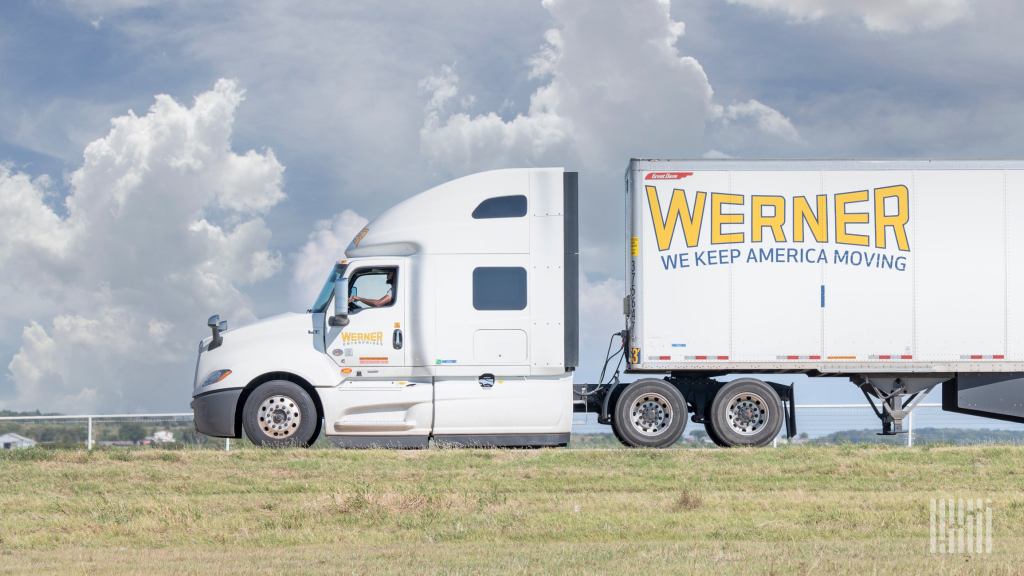
sideview of a parked Werner tractor-trailer with a driver

Werner Enterprises v. Blake: Texas Supreme Court Reverses $100 Million Verdict

Introduction to the Case

In a significant legal decision, the Texas Supreme Court ruled in favor of Werner Enterprises, Inc. and its driver, Shiraz A. Ali, reversing a $100 million verdict previously upheld by an appellate court. The case stemmed from a 2014 fatal crash near Odessa on Interstate 20 during hazardous winter weather conditions. The accident involved a pickup truck driven by Trey Salinas, with Jennifer Blake and her three children as passengers. After losing control on icy roads, Salinas’s F-350 crossed a 42-foot median and collided with Werner’s 18-wheeler traveling in the opposite direction. The collision killed seven-year-old Zackery Blake, left twelve-year-old Brianna Blake permanently quadriplegic, and caused traumatic brain injuries to fourteen-year-old Nathan Blake and Jennifer Blake.

Trial and Verdict

In 2018, a Houston jury delivered one of the highest monetary judgments against a motor carrier in Texas history. The jury found Werner and Ali liable for the accident, apportioning 70% of the responsibility to Werner employees other than Ali, 14% to Ali, and 16% to Salinas, the pickup driver. The jury awarded substantial damages: $16,500,000 to Jennifer Blake, $5,000,000 to Nathan Blake, and $68,187,994 to Brianna Blake. The district court entered judgment against Werner and Ali for these amounts, plus court costs and interest, though the defendants received credit for a settlement the plaintiffs reached with Salinas before trial.

Court of Appeals Proceedings

Werner appealed the jury verdict in October 2018 to the Texas Fourteenth Court of Appeals in Houston. The company challenged the legal and factual sufficiency of the jury’s negligence findings against both Ali and Werner, as well as jury charge issues, apportionment, admission of evidence, and the award of future medical expenses. The case was initially assigned to a three-justice panel, but before that panel issued a decision, the court voted to consider the case en banc.

In a divided 5-4 decision, the en banc court of appeals affirmed the district court’s judgment. The four dissenting justices, writing across two opinions, agreed with the majority that sufficient evidence supported the jury’s negligence finding against Ali but disagreed on other aspects of the case. The first dissent argued that the district court erred in submitting the “direct” theory of Werner’s liability to the jury, while the second dissent would have rendered a take-nothing judgment regarding derivative theories of liability against Werner based on the “Admission Rule.”

Supreme Court of Texas Decision

On June 27, 2025, the Texas Supreme Court reversed the appellate court’s decision and rendered judgment for the defendants. Chief Justice Blacklock delivered the opinion of the Court, focusing primarily on the issue of proximate cause. The Court held that Ali’s negligence, if any, was not a proximate cause of the plaintiffs’ injuries.

The Court’s analysis hinged on the principle that “a negligent actor incurs liability only for damages proximately caused by his negligence.” While the plaintiffs proved at trial that the accident might not have occurred, or the injuries might have been less severe, if not for the 18-wheeler’s speed (which was below the speed limit but considered unsafe for the icy conditions), the Court determined this was insufficient to establish that the defendant’s negligence was a “substantial factor” in bringing about the injuries.

The opinion stated: “This awful accident happened because an out-of-control vehicle suddenly skidded across a wide median and struck the defendant’s truck, before he had time to react, as he drove below the speed limit in his proper lane of traffic. That singular and robustly explanatory fact fully explains why the accident happened and who is responsible for the resulting injuries.”

Legal Analysis of Proximate Cause

The Court’s decision rested on a careful examination of proximate cause, which requires both “but-for” causation and “substantial-factor” causation. While the defendant’s presence and speed might satisfy the “but-for” test (without the truck being there, the collision would not have occurred), the Court emphasized that “it is not enough that the harm would not have occurred had the actor not been negligent.”

Drawing on established precedent, the Court noted that within the concept of proximate cause, there “always lurks the idea of responsibility.” The substantial-factor requirement compels an inquiry into whether the defendant is “actually responsible for the ultimate harm” given the nature of their causal connection to the accident.

The Court determined that Ali’s presence on the highway, combined with his speed, merely “furnished the condition that made the injuries possible” but did not proximately cause them. Instead, “the sole proximate cause of this accident and these injuries—the sole substantial factor to which the law permits assignment of liability—was the sudden, unexpected hurtling of the victims’ vehicle into oncoming highway traffic, for which the defendants bore no responsibility.”

The Court emphasized that, compared to the “central and defining fact” of the pickup careening across a wide median into oncoming traffic, anything the defendant did or did not do was “too attenuated to qualify as the substantial factor necessary for proximate causation.”

Implications

The Texas Supreme Court’s decision in Werner Enterprises v. Blake establishes an important precedent regarding proximate cause in highway collision cases. By distinguishing between creating a condition for harm and being a substantial factor in causing harm, the Court has clarified when motor carriers can be held liable for accidents involving vehicles crossing medians.


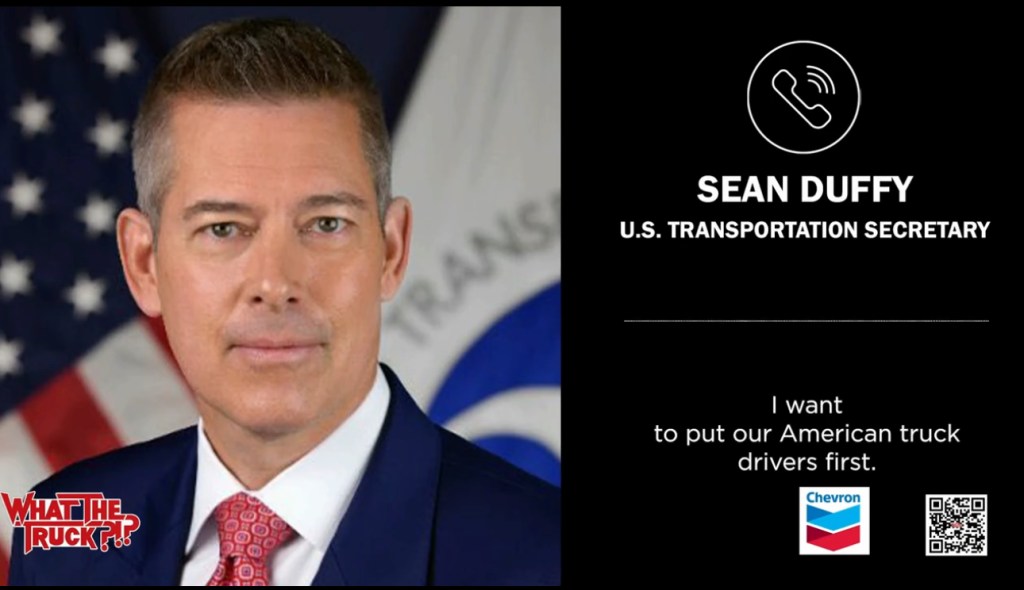
DOT Secretary Duffy: Nationwide non-domiciled CDL audit; ELP enforcement | WHAT THE TRUCK?!?

On episode 855 of WHAT THE TRUCK?!? Dooner is joined by U.S. Transportation Secretary Sean Duffy. Duffy is here to announce a new pro-trucker package and nationwide audit of non-domiciled CDLs. The pro trucker package addresses parking, bad brokers, removes speed limiters and more. We’ll learn how Secretary Duffy plans to Make Trucking Great Again. 

Cleo’s Frank Kenny stops by to talk about the trade deal deadline. With China saying they have framework for a new deal and a July 9th deadline rapidly approaching, what will it all mean for retail and shippers? 

According to studies, 51% of truck drivers smoke. It’s still a nasty habit that has a hold on our industry. Nic Nac Naturals Nicco Magnatto says he has developed an alternative. 

Catch new shows live at noon EDT Mondays, Wednesdays and Fridays on FreightWaves LinkedIn, Facebook, X or YouTube, or on demand by looking up WHAT THE TRUCK?!? on your favorite podcast player and at 6 p.m. Eastern on SiriusXM’s Road Dog Trucking Channel 146.

Watch on YouTube

Check out the WTT merch store

Visit our sponsor

Subscribe to the WTT newsletter

Apple Podcasts

Spotify

More FreightWaves Podcasts

Geodis returns solutions aim for streamlined reverse logistics

Geodis has unveiled two innovative returns solutions designed to streamline the increasingly complex world of reverse logistics.

As e-commerce continues its rapid expansion, the volume of product returns has surged, presenting significant challenges for retailers. Geodis’s new offerings, a returns workflow automation module and a returns management module, aim to address these demands by enhancing efficiency and optimizing the entire returns cycle. While best leveraged in tandem, these modules can also function independently, offering flexibility to Geodis’s diverse clientele, the company said in a release.

The returns workflow automation module is a consumer-centric, self-service portal that simplifies the initiation of returns or exchanges. This user-friendly interface allows end consumers to generate return shipping labels, removing the need for direct shipper involvement. This automatic label generation serves as an advanced shipping notice for Geodis, eliminating the manual creation of entries within the warehouse management system. The technology is engineered to improve speed, reduce cycle times, and optimize costs, benefiting both Geodis customers and their end consumers.

Built as a cloud-native solution, this module integrates seamlessly with popular e-commerce platforms such as Shopify, BigCommerce, WooCommerce, and Magento, providing comprehensive visibility from the moment a return is created through product disposition and refund. Geodis clients can personalize the portal with their own branding, including logos, colors, fonts, and messaging. The highly customizable solution also empowers clients to tailor returns policies to their specific requirements, ensuring consistency in the customer experience. Furthermore, it offers advanced and configurable reporting capabilities, and multilingual support for English, Spanish, and Portuguese, for a localized returns experience for consumers in the United States, Canada, and Latin America.

On the release, Pal Narayanan, executive vice president and chief information officer at Geodis in the Americas, noted the business-critical nature of returns optimization. He emphasized that the new modules were designed for adaptability and scalability, catering to an array of client needs to bolster their reverse logistics strategies in a quickly evolving environment.

The returns management module focuses on optimizing the reverse logistics process within the warehouse. Upon receiving a return, the module swiftly assesses the product and its value, categorizing it for reintroduction into inventory, refurbishment, or disposal due to damage. Retailers can customize how items are classified and processed, aligning with their individual returns strategies.

This module also delivers real-time visibility into inventory levels, alongside robust reporting features. These include SKU-level insights that identify frequently returned products, pinpointing potential issues. The reporting capabilities can enhance overall retail operations, including sustainability efforts, by uncovering consumer return patterns and trends. For instance, data-driven insights can help retailers stock more efficiently, determine which returns are suitable for re-entry into inventory to reduce unnecessary disposal, and identify product issues to lower the likelihood of future returns, reducing associated emissions and packaging materials.

Both the returns workflow automation module and the returns management module are now accessible to Geodis contract logistics and transportation customers across the Americas region.

Find more articles by Stuart Chirls here.


Related coverage:
Warehouse automation surging ahead despite predicted slowdown

FedEx to close 30% of package facilities as network integration ramps up

Teamsters complain UPS slow to deploy air-conditioned vehicles

DHL Express Canada, striking workers tentatively agree on labor deal

DOT Secretary plans to use AI to solve carrier identity

Sean Duffy on What the Truck?!? discussing plans to address the rampant freight fraud issues in trucking

The Freight Fraud Crisis

The trucking industry is grappling with a surge in freight fraud, leaving carriers, brokers, and shippers vulnerable to sophisticated scams like identity theft and unauthorized double brokering. These schemes disrupt supply chains, undermine trust, and cause significant financial and logistical challenges. The root cause is the Federal Motor Carrier Safety Administration’s (FMCSA) inadequate management of carrier identities, which allows criminals to exploit outdated systems and weak oversight.

How Criminals Exploit Basic Vulnerabilities

The FMCSA’s outdated data systems and lax verification processes make fraud easy. Criminals register fraudulent carrier identities using stolen credentials or fake documents to obtain Motor Carrier (MC) numbers with little scrutiny. Without real-time monitoring, they manipulate records or reactivate dormant registrations undetected, enabling double brokering—where fraudsters pose as legitimate carriers, secure loads, and subcontract them without authorization, leaving others unpaid. Identity theft is widespread, with criminals hijacking carriers’ profiles to divert payments or secure contracts, damaging reputations. The lack of biometric or multi-factor authentication allows repeat offenders to re-enter under new aliases.

Many of these issues stem from basic oversights. The FMCSA doesn’t require robust identity checks, like verifying driver’s or business licenses, and lacks cybersecurity measures like two-factor authentication. Automated alerts for suspicious activities, such as multiple registrations from one IP address, are missing, and routine database audits to flag duplicate or dormant MC numbers are inconsistent. These are standard practices in banking and e-commerce, yet the FMCSA’s reliance on manual processes and outdated software leaves loopholes for criminals. Organized crime syndicates exploit these gaps, costing the industry millions annually.

Private companies like Highway, RMIS, and Carrier Assure have stepped in with innovative solutions. Highway offers real-time carrier monitoring and fraud detection tools, while RMIS provides onboarding and risk assessment to verify carrier legitimacy. Carrier Assure uses advanced analytics to score carrier reliability and flag suspicious activity. These platforms help brokers avoid bad actors, but their impact is limited without systemic change. To make a real difference, the DOT must lead, working with law enforcement to prosecute fraudsters and enforce stricter regulations, ensuring a coordinated effort to protect the industry.

A Robust Response from the DOT

Under Secretary Sean Duffy, the DOT is tackling freight fraud with a forward-thinking strategy. Artificial intelligence (AI) is central, detecting fraud patterns that traditional methods miss. Speaking on FreightWaves’ What The Truck?!? podcast on June 27, 2025, Duffy said, “We have great AI tools that will bring us light years ahead in rooting out fraud patterns.” These tools aim to strengthen FMCSA system security and data integrity, preventing fraud before it harms legitimate businesses. The DOT is also partnering with law enforcement to identify and prosecute bad actors, fostering accountability across the supply chain and creating a secure, competitive environment for truckers.

Learning from Past Shortcomings

Historically, insufficient oversight and inactive load boards have worsened fraud vulnerabilities. Private-sector platforms have tried to fill these gaps, but their fragmented efforts lack cohesion. Private tech solutions have had to compensate for the DOT’s poor management of carrier identity. Duffy’s initiatives mark a shift toward unified oversight, combining technology and accountability to address longstanding issues. Private solutions aren’t going away, but they will build upon DOT’s efforts.

Building a Future-Ready Framework

The DOT’s strategy anticipates future threats by integrating AI, strengthening data security, and collaborating with law enforcement to set new fraud prevention standards. Duffy emphasized, “Rules must eliminate fraud and double brokering while treating truckers fairly.” This approach creates a resilient framework adaptable to evolving fraud tactics, ensuring long-term protection.

A Path to a Secure Trucking Industry

The DOT’s plan—leveraging AI, law enforcement partnerships, and regulatory reform—offers a promising path to secure the trucking industry. By addressing FMCSA vulnerabilities and prioritizing carrier identity management, the DOT aims to build a fair, transparent, and secure marketplace, safeguarding freight operations and supporting legitimate carriers, brokers, and shippers.

Memphis airport to be renamed after FedEx founder

This article first appeared in AirlineGeeks.

The Memphis-Shelby County Airport Authority passed a resolution on Thursday to begin renaming the Memphis International Airport after recently deceased FedEx founder Fred Smith.

“We applaud the board for recognizing the enduring legacy and impact that Mr. Smith had on the airport and the Memphis community,” the airport authority stated in its news release on Thursday. “We are honored to be tasked with this well-deserved recognition for him. There are many regulatory, logistical and operational steps involved in renaming an airport, but our staff will immediately begin the process.”

The release stated that more details regarding the airport renaming will be announced as they become available. 

After unanimous approval from state lawmakers, the decision is pending a nod from the Federal Aviation Administration, according to reporting by Memphis news station WREG News Channel 3.

“I can’t really fathom someone who has had more of an impact on a particular airport, in a particular city, than Fred Smith,” Michael Keeney, Memphis-Shelby County Airport Authority chairman, told WREG News Channel 3.

A Marks, Mississippi, native, Smith was raised and lived in Memphis until his death at the age of 80 on Saturday. He founded the shipping giant FedEx – then called Federal Express – in 1973 with a fleet of 14 Dassault Falcon jets.

His company’s headquarters and prized world hub were established in Memphis, sparking an urban legend that “all FedEx packages go through Memphis.” Though this isn’t the case, Memphis has served FedEx as the most vital of eight U.S. hubs in its “hub and spokes network” for package deliveries.

U.S. Senator Marsha Blackburn joined Memphis in recognizing Smith on the national stage Thursday when she delivered remarks on the Senate floor remembering his legacy.

“I am deeply saddened by the passing of Fred Smith,” she said in a post on X Saturday. “As the founder of FedEx, his leadership and innovation transformed global commerce, and he will be remembered for his relentless drive, patriotism, and commitment to service. His legacy will endure not only through the company he built but through the countless lives he touched. Praying for his wife, children, and family.”

DOT will crack down on non-domiciled CDL holders

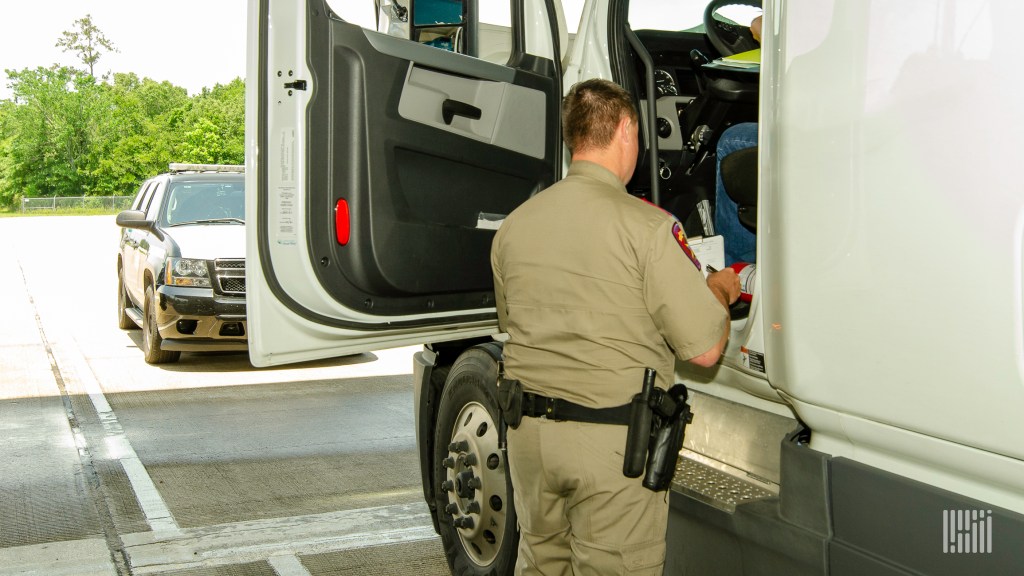
Police officer checking a truck driver

WASHINGTON — The Trump administration is launching a nationwide audit of non-domiciled CDL holders in an effort to crack down on unqualified drivers who pose a potential safety hazard to the nation’s roads.

Transportation Secretary Sean Duffy made the announcement with Tim Dooner on Friday on FreightWaves WHAT THE TRUCK?!? show.

“If you listen to President Trump, it’s America first,” Duffy told Dooner. “I want to put our American truck drivers first, and that means we look at what’s happening with the non-domiciled CDLs.”

The effort is part of a sweeping package of new pro-trucker initiatives and regulatory rollbacks that includes a $275 million grant for truck parking and the cancelation of a rulemaking that would have limited top speeds for heavy-duty trucks.

“While the country sleeps, truckers grind through the night to help keep shelves stocked, families fed, and businesses humming,” Duffy said in a followup statement issued by DOT. “It’s a job that requires grit and dedication. But for too long Washington, DC has made work harder for truckers. That ends today. Thanks to President Trump, we’re getting Washington out of your trucks and your business.”

Stopping non-domiciled CDL abuse

Non-domiciled CDLs are those issued by a state to a person who is not a resident of that state and typically applies to individuals from foreign countries – excluding Mexico and Canada – or to those whose state of domicile is prohibited from issuing a CDL (FreightWaves broke down the issue of these types of CDLs in a multi-part series here). 

DOT’s audit, to be conducted through the U.S. Department of Transportation’s Federal Motor Carrier Safety Administration, responds to a directive issued by President Trump in April.

The nationwide compliance review by FMCSA of states issuing non-domiciled CDLs “will examine state procedures for issuing non-domiciled CDLs to identify and stop any patterns of abuse and ensure federal standards are being met across the country,” according to DOT.

Millions for truck parking

DOT’s grant aimed at alleviating a long-standing shortage of truck parking includes $180 million to add 917 new truck parking spaces in Florida along the I-4 corridor in Volusia, Seminole, and Osceola Counties.

“Florida is one of the first states to create a robust pipeline of truck parking projects to address both immediate and future needs, and this grant … will help deliver nearly 1,000 additional truck parking spaces to serve Central Florida communities,” said Florida Department of Transportation Secretary Jared Perdue in a press release.

Speed limiter rule withdrawn

Under the Biden administration, FMCSA and the National Highway Traffic Safety Administration announced plans to resurrect a speed limiter rulemaking issued in 2016 during the Obama administration through an updated supplemental Notice of Proposed Rulemaking (NPRM).

But FMCSA’s notice in April 2022 merely announcing its intention to issue the supplemental NPRM generated over 16,000 comments – mostly negative and mostly from owner operators.

The schedule for publishing the NPRM was delayed several times, with May 2025 the most recent date listed on the U.S. Department of Transportation’s regulatory agenda.

With Friday’s announcement, that rulemaking is now off the table.

“FMCSA and [NHTSA] are withdrawing a joint rulemaking that proposed to require speed-limiting devices on heavy vehicles,” DOT stated. “This decision respects the professionalism of drivers and acknowledges the proposed rulemaking lacked a sufficiently clear and compelling safety justification.”

DOT’s package of initiatives affecting the trucking industry also includes the following:

Regulatory Relief and Flexibility

  • Electronic Logging Device (ELD) Exemption Maintained: DOT is committed to not extending the Electronic Logging Device (ELD) mandate to pre-2000 model year trucks.
  • Commitment to address unlawful brokering: FMCSA is renewing its focus on combating unlawful double brokering.

Hours of Service

FMCSA is launching two new pilot programs to study increased flexibility in hours-of-service regulations, with the goal of gathering data on whether giving drivers more control over their schedules can improve rest and enhance safety.

  • Flexible sleeper berth: This pilot will allow participating drivers to split their 10-hour off-duty period into more flexible combinations, including 6/4 and 5/5 splits.
  • Split-duty periods: This pilot will allow participating drivers to pause their 14-hour on-duty period for a period of no less than 30 minutes and no more than 3 hours.

Digital upgrades

  • Refreshed driver resources webpage: FMCSA’s website now features a more user-friendly and mobile-friendly driver resources page. The page has clear sections for truck and bus drivers to quickly find relevant information.
  • DataQs system update: The agency is proposing revisions to the DataQs requirements for Motor Carrier Safety Assistance Program grant funding to ensure proper due process for drivers. The goal is to improve the impartiality, timeliness, and fairness of the data review process.
  • National Consumer Complaint Database (NCCDB) update: The NCCDB, which receives 25,000-30,000 complaints annually, is being migrated to a modern customer service platform to be more user- and mobile-friendly. The first release is scheduled before September 30th, and the update will streamline the response process, improve response timeliness, and expand complaint categories to include property brokers.

Representatives of both owner-operators and major trucking firms praised DOT for the changes.

“For years, truckers have urged Washington to address the severe shortage of truck parking, eliminate the dangers posed by a national speed limiter mandate, and give drivers greater control over their hours-of-service,” said Owner-Operator Independent Drivers Association President Todd Spencer in a press release.

“These steps not only improve the daily lives of truckers across America, but also enhance safety for everyone on the road.”

American Trucking Associations President Chris Spear commented in a press release that trucking is critical to America’s economic growth and security, “and data-driven measures like these that reduce regulatory burdens are important steps toward that end,” Spear said. 

“We look forward to continued partnership with the administration to advance policies that strengthen America’s supply chain and bolster our essential workforce.”

Click for more FreightWaves articles by John Gallagher.

Utilizing dash cams for corrective action training

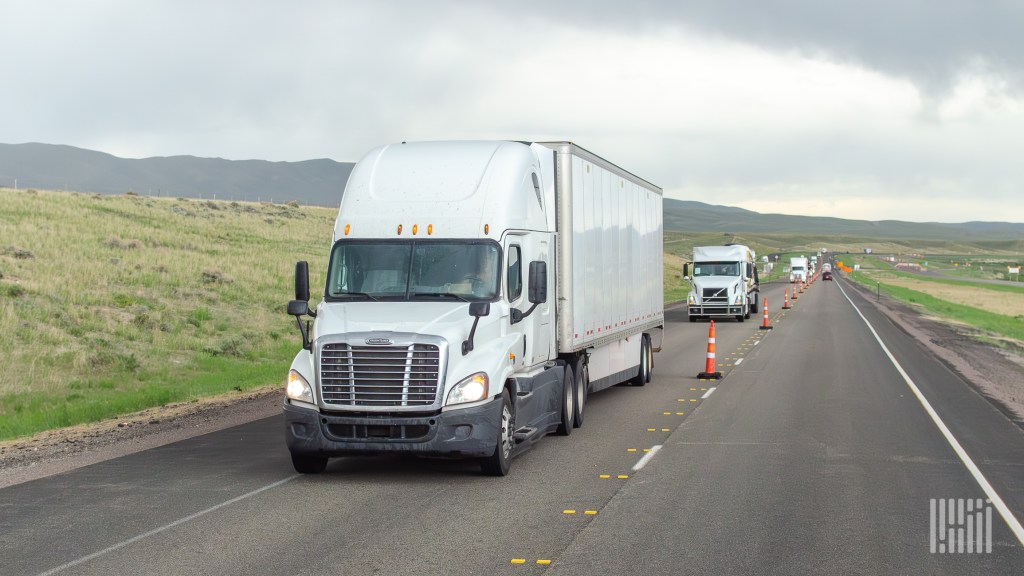
Tractor-trailers moving on a single-lane highway

Safety remains the biggest obstacle for carriers today, with a recent J. J. Keller Center for Market Insights survey revealing that 51% of carriers identify it as their primary challenge. Even minor accidents and incidents can significantly impact productivity, driver wellness and ultimately affect the bottom line of any transportation company.

While proper training can certainly improve driving behavior, random or unfocused training often fails to address specific problems drivers face on the road. 

“Random training on repetitive information causes drivers to feel they are just checking boxes and safety is not a real priority,” Tim Adam, Industry Business Advisor for J. J. Keller & Associates, Inc. said.

Effective training requires a targeted approach that addresses specific problem areas unique to each driver. The challenge for fleet managers has always been accurately identifying these problematic driving behaviors. Relying solely on accidents and citations provides an incomplete picture, often revealing issues only after costly incidents have already occurred.

Benefits of dash cams

Evidence collection

Dash cameras serve as impartial witnesses on the road, providing clear and objective evidence of driving incidents when they occur. This evidence becomes crucial during accident investigations, often helping to reduce or even completely absolve a carrier’s liability.

“Many drivers have been cleared of liability at the scene of an accident because of the immediate availability of video footage,” Adam said. 

This immediate access to visual evidence can make the difference between a lengthy legal battle and a quick resolution.

Insurance cost reduction

The financial benefits of dash cameras extend beyond avoiding legal complications. Many insurance companies now offer reduced rates for fleets that implement dash cam systems. The reasoning is simple: Video footage significantly reduces the risk of fraudulent claims against carriers and provides law enforcement with concrete evidence to accurately assign fault in accidents.

Behavior monitoring

Perhaps the most valuable aspect of dash cams for training purposes is their ability to continuously monitor driver behavior. These systems can track critical driving habits such as speeding, harsh braking and seat belt usage. They’re also effective at identifying various forms of distracted driving, whether caused by fatigue, phone usage or other factors that compromise safety.

Utilizing performance metrics

The data collected through dash cameras provides valuable metrics for measuring driver performance. Data points can indicate potentially risky behavior. These events can be assigned point values to help distinguish between isolated incidents and problematic habits that require correction.

By evaluating these points at both the company and individual driver level, managers can accurately identify drivers who exhibit more risky behaviors compared to their peers. This comparative analysis helps pinpoint underperforming drivers who would benefit most from targeted training.

Drivers are often competitive. No one wants to be last. Posting driver scorecards encourages drivers to set goals to perform better,” according to Adam.

This natural competitiveness can be leveraged to motivate improvement across the fleet.

Achieving driver buy-in for dash cams

One of the biggest hurdles in implementing dash camera systems is gaining driver acceptance. Many drivers initially view dash cams as invasive surveillance, comparing them to “big brother” watching their every move. Overcoming this perception requires clear communication about the purpose and benefits of the cameras.

Fleet managers should transparently explain how the system works, including what triggers recording events and how long footage is retained. Answering questions thoroughly and completely helps build trust in the process.

It’s equally important to clearly outline the scoring system used to evaluate performance. Drivers should understand how points are assigned, the measurement period, and whether there’s a process for disputing results they believe are inaccurate.

Starting small can help ease the transition. Begin by measuring common issues like cell phone usage and seat belt compliance. Monitor improvements in these areas and share positive results with the entire fleet, making sure to recognize and reward progress.

Importance of corrective action training

Investing in corrective action training makes financial sense. Retaining and developing existing drivers is significantly more cost-effective than recruiting and training new ones. Beyond the financial benefits, a commitment to developing drivers’ skills demonstrates the company’s dedication to safety.

Drivers who receive proper education on good driving habits typically experience fewer accidents, injuries, and citations. This education creates a positive feedback loop.

“Drivers who believe in the carrier’s commitment to safety will share the commitment,” according to Adam. “The best advocate to motivate a driver to be more safe is another driver.”

Focus on positive reinforcement in training

While disciplinary measures may occasionally be necessary, the primary focus of corrective action training should be positive reinforcement. Making the process enjoyable increases engagement and effectiveness.

Consider rewarding improvement through incentives like cash bonuses and gift cards. One approach that has proven effective is offering smaller, more frequent bonuses rather than larger rewards over extended periods. 

“As a former driver, I found drivers respond to smaller bonuses, more often, than larger bonuses over a long period of time. Consider quarterly or even monthly bonuses that restart during a new cycle,” Adam suggested.

The improved safety scores, reduced fines and fewer insurance claims that result from effective training programs typically far outweigh the cost of these incentive programs. By creating a positive environment focused on improvement rather than punishment, carriers can develop safer drivers and a stronger safety culture throughout their organization.

Guess less, save more: Smarter reefer management that pays off 

Cold chain providers are accustomed to walking the line between maintaining product integrity while managing operational costs. Ongoing market tension, however, has made it more difficult to strike that balance. 

For companies in food and beverage, pharmaceuticals and other temperature-sensitive industries, maintaining profitability in a difficult economic environment requires an enthusiastic commitment to innovation. While the cold chain industry continues to see new technological advancements, many fleets still operate under outdated assumptions about reefer management best practices.

Common challenges like confusion over operating modes and inefficiencies like unnecessary precooling durations can have significant cost and sustainability implications for transportation companies.

Understanding reefer mode settings

Reefer operators must choose between running their units in continuous mode or start-stop mode. While this is one of the most basic choices providers make, it is also one of the most consequential – and one of the most misunderstood.

Many operators choose to run their units in continuous mode in the name of product integrity. When fans are running all the time, carriers can ensure their cargo is kept cool without much additional effort. While this method may keep cargo safe, it can also be terribly inefficient. 

“[Continuous mode] is often chosen out of either fear because you just don’t know which mode  to put it on, or you’re trying to stay out of a liability or a lawsuit issue,” said Travis Ross, senior sales engineer at EROAD.

The industry’s tendency to choose continuous operation without scientific backing represents a significant opportunity for data-driven optimization. By examining actual temperature requirements versus operational habits, fleets can identify substantial efficiency improvements.

Financial and operational impacts of operating modes

The financial implications of reefer operating modes are staggering when examined at scale.

According to Ross’ analysis, switching from continuous to start-stop mode can yield an approximate 40% reduction in both run time and fuel consumption.

Using conservative estimates of $3.55 per gallon fuel prices, 10 hours per day operation and maintenance costs of 60¢ per reefer operating hour, the numbers tell a compelling story.

“Your fuel savings per trailer, when you switch that operating mode from continuous to start-stop, is just over $5,000 a year, just from that one trailer,” Ross said. “So, if you take the fleet fuel savings for 500 trailers… It’s $2,565,000 for a fleet of 500. That’s just fuel.”

When factoring in reduced maintenance costs from decreased run time—approximately $876 per trailer annually—the total savings become even more impressive: over $6,000 per trailer. For a 500-trailer fleet, that represents more than $4.2 million in potential annual savings through a simple operating mode change.

Even for smaller operations, the impact remains significant. A fleet of 100 trailers could realize over $600,000 in annual savings. That is enough to fund additional equipment, personnel or other strategic investments.

Addressing shipper requirements and practical considerations

While the financial case for start-stop operation is compelling, carriers must still navigate shipper requirements that sometimes mandate continuous operation. Ross suggests these requirements deserve closer examination.

“There’s valid reasons for running something on continuous. We typically see it in pharmaceuticals,” Ross said. “You definitely must run them on continuous in pharma because they can’t handle that variation.”

Other temperature-sensitive products like line-haul leafy greens and single-product trailers may also benefit from continuous operation due to their narrow temperature tolerance. The typical temperature variation in start-stop mode—approximately five degrees from the OEM set point—can be problematic for the most sensitive loads.

Many other common loads, however, are perfectly suited for start-stop operation. The key lies in making evidence-based decisions rather than defaulting to continuous operation out of habit or unexamined caution. 

“What I’ve seen over the last ten years is that there’s often not a lot of scientific studies to show that choosing continuous is the right way to go,” Ross said.

Technological advancements and data utilization

The proliferation of telematics, IoT sensors and integrated fleet management platforms has transformed how carriers can monitor and manage cold chain operations. These technologies enable real-time visibility and data-driven decision-making that was impossible just a few years ago.

EROAD leverages these technologies through its CoreHub platform, which collects data directly from the engine management system and other connected devices and sensors to transform vehicles into IoT hubs. This connectivity enables carriers to easily add an ELD, dashcam and a series of connected wireless sensors to track and monitor door alerts, concrete mixer drum rotations, water moisture levels and more. 

With these advanced cold chain monitoring capabilities, carriers can now make precise, data-driven decisions about reefer operations rather than relying on assumptions or outdated practices. This shift toward evidence-based management represents a significant advancement in cold chain efficiency.

Sustainability and environmental considerations

Beyond the financial impact, reefer operating modes have significant environmental implications. As the focus on  sustainability initiatives continues to grow across the transportation industry, this fact will become more pertinent. 

“A lot of folks are leaning into sustainability,” Ross said. “So, it’s very difficult to say, ‘I’m gonna mandate that everything is run on continuous.’ If there’s a reason for it, there’s a reason for it. But if there’s not really a reason for it and you’re advertising sustainability, it’s a bit of a conflict.”

The emissions impact of unnecessary continuous operation directly affects both scope one and scope three emissions reporting, which are key metrics for companies with sustainability commitments. By optimizing reefer operations, carriers can make meaningful progress toward emissions reduction goals while simultaneously improving their bottom line.

The implications of precooling practices 

Another area ripe for optimization involves precooling practices, or how long trailers run before loading. Industry data reveals that many fleets run reefers substantially longer than necessary before loading begins.

“It is very common across the industry that folks will go and switch on many trailers all at once during a specific block in the day,” Ross said. 

The financial implications of excessive precooling are significant. Ross calculates that eliminating just one gallon of fuel per day from precooling operations would save a 500-trailer fleet nearly $650,000 annually. Even for a 100-trailer fleet, the savings exceed $129,000 per year.

One EROAD client discovered through data analysis that their precooling durations averaged 86 minutes—nearly twice the industry benchmark of 45 minutes. After just two weeks of measurement and targeted adjustments, they reduced average precooling time to just 12 minutes, generating substantial savings without requiring formal SOP changes.

The data paints a clear picture: through evidence-based management of reefer operations, cold chain carriers can realize substantial efficiency gains, cost savings and sustainability improvements. By challenging long-standing assumptions about operating modes and precooling practices, fleets can unlock millions in potential savings while maintaining product integrity.

The path forward doesn’t require radical operational changes but rather thoughtful application of data to refine existing processes. By leveraging advanced telematics and IoT solutions from companies like EROAD, carriers can gain the visibility needed to make these informed decisions, transforming their cold chain operations from sources of unnecessary cost to opportunities for competitive advantage.

Click here to learn more about EROAD. 

Werner triumphs at Texas Supreme Court in nine-figure nuclear verdict case


Werner Enterprises, ending a saga that began with a terrible crash and a financial penalty that at the time in 2018 was considered the largest nuclear verdict against a trucking company in history, has prevailed on appeal in the Texas Supreme Court which reversed the earlier decision.

The case involved tragedy; the death of a child and his sister rendered a quadriplegic. But its details inflamed plenty of social media posts from drivers outraged at the facts of the collision, where a pickup truck carrying the Blake family went out of control, crossed an interstate median near Odessa, Texas and smashed into a Werner truck going the other way in icy conditions. 

The court result was a verdict against Werner of almost $90 million, as a lower court jury found Werner negligent because its driver, Shariz Ali, was found to be going faster than a jury thought he should have been going. With interest, the judgment Werner faced had grown to well over $100 million.

The lower court split on liability was 70% to “Werner employees other than Ali,” 14% to Werner driver Shariz Ali, and 16% to Trey Salinas, who was behind the wheel of the pickup truck.

An en banc panel upheld the judgment in May 2023. 

In overturning the lower court verdict and finding for Werner (NASDAQ: WERN), the state’s Supreme Court Friday recounted three salient facts about the crash: the pickup that was transporting the Blakes and driven eastbound by Trey Salinas on interstate 20 was traveling about 50 to 60 miles per hour; conditions were icy; Ali was driving the other way and was in training for Werner with his team driver–who was also his trainer–sitting in the sleeper berth when the crash occurred. 

Salinas lost control of the pickup, careened across the median strip and slammed into the Werner truck. Testimony showed that Ali slammed on the brakes when he saw the pickup headed his way. 

But the core of the jury verdict is that if Ali had been going even slower because of the poor weather, he would not have been where he was when the pickup crossed into westbound traffic, and the tragic outcome would not have occurred. Beyond the one death and the girl left a quadriplegic, two other members of the Blake family were injured. Salinas had minor injuries.

The state’s high court said that the Werner truck was in its “proper” lane of traffic and was traveling below the speed limit. Testimony showed he was traveling between 43 and 45 miles per hour at the time of the crash. 

Ali’s speed “and even his presence on the ice road at all” was negligent, according to the Supreme Court. However, that negligence was a “but for” cause of the crash, according to the court. 

The “principal theory” of the Blake’s legal case, according to the Supreme Court, is that “if Ali had not been driving too fast in the icy conditions, things would have turned out much differently for the Blakes.”

‘But-for’ versus substantial factor causation

The court said this was a “powerful line of argument.” But it only accounts for the Texas standard of “but-for causation.”

“It does not account for the requirement of substantial-factor causation, which we conclude is lacking here as a matter of law,” the Court wrote. And that is because the “sole substantial factor in bringing about this accident…was Salinas losing control.”

“Under the undisputed facts of this case, the Blakes’ injuries happened because Trey Salinas, in the course of two or three seconds, lost control of his F-350, hurtled across the median into oncoming traffic on I-20, and collided with a vehicle driving below the speed limit in its proper lane on the other side—a vehicle which, tragically for the Blakes, happened to be an 18-wheeler,” the court wrote.

If there were negligent acts on Ali’s part, according to the decision, it did not contribute to the actual crash.  Citing a legal precedent, the court says where the Werner truck was located at the time of the crash was merely “the condition that made the harm possible.”

If Ali had been going even faster, the court noted, the crash would not have taken place, in the same way that if the truck had been going slower the incident would not have occurred.

‘Happenstance of place and time’

Where Ali’s truck was, the court said citing language from an earlier precedent, was “precisely the kind of ‘happenstance of place and time’ that can have enormous consequences for the victims of an accident but cannot reasonably be considered the proximate cause of the accident or the resulting injuries,” the court said.

70% liability for Werner doesn’t hold up

As for Werner and its 70% liability assignment, the court said ”the judgment against Werner cannot stand given that its driver, Ali, did not proximately cause the plaintiffs’ injuries.” The finding against Werner was rooted in the jury’s acceptance of the Blakes’ argument that it was negligent in how it trained Ali. 

The jury, and then the appellate court, “pointed to evidence that Ali lacked the training and experience to safely drive an 18-wheeler in hazardous conditions and that Werner knew or should have known that he was unfit for the assignment,” the court said. 

But with Ali’s negligence seen as having only a secondary causation of the crash, the court said,  “Werner’s negligent training and supervision, even if proved, could not have been a proximate cause of the Blakes’ injuries because Ali’s negligent driving was not a proximate cause.”

In its latest 10-Q filing, Werner said its insurance coverage exposed the truckload carrier to a maximum liability of $10 million. It already had recorded liabilities of just over $90 million for the jury verdict but also had recorded on its books a $79.2 million receivable from its insurance provider. 

Werner was not immediately available for comment.

More articles by John Kingston

State of Freight Takeaways: English language rule for truckers takes effect, early impacts emerging

SCOTUS decision on California Clean Cars waiver could have benefit to trucking later

Onstage in Chicago, CHRW talks tech and staffing; RXO sees language order hitting capacity

Cold chain market in Middle East and North Africa expected to hit $41.1 billion by 2030

BCC Research has recently released the “Cold Chain Regional Analysis Market: Middle East and North Africa(MENA)” market analysis. Based on their findings, the cold chain market is expected to reach $41.1 billion by the end of 2030 with a Compound annual growth rate of 8.8% for 2025-2030. The current base value of the MENA market is $24.9 billion as of 2024. 

The report attributes this rapid expansion to a confluence of factors, including increased demand for perishable food and pharmaceutical products, government investments in food security and public health, and widespread adoption of cold chain technologies like IoT and AI across logistics networks.

BCC Research identifies five core drivers behind the market’s acceleration:

  • Rising Demand for Perishables: Urbanization, population growth, and rising disposable incomes are fueling demand for fresh fruits, vegetables, dairy, seafood, and temperature-sensitive pharmaceutical products.
  • E-Commerce and Online Grocery Growth: As consumers shift to online grocery shopping, the need for efficient last-mile cold chain logistics has increased across urban centers.
  • Stricter Food Safety and Pharma Regulations: Governments across MENA are enforcing tighter controls on food safety and pharmaceutical storage, encouraging the adoption of advanced cold chain solutions to maintain compliance.
  • Investment in Cold Storage and Smart Tech: Smart warehouses, real-time monitoring systems, and automation are being deployed to improve efficiency and reduce spoilage.
  • Strategic Location for Global Trade: With access to Europe, Asia, and Africa, the MENA region continues to serve as a crucial transit point for temperature-sensitive goods.

Cold storage continues to dominate the market, making up 56% of total cold chain activity in the region as of 2024. Meanwhile, blast freezing leads as the dominant technology segment, expected to remain the top choice through 2030 for its efficiency in preserving food and pharmaceuticals.

Saudi Arabia is leading the regional cold chain market, accounting for 36% of the market in 2024. It is expected to maintain its lead through 2030, with a CAGR of 10.6% and a projected market value of $16.5 billion. The country has made notable strides in strengthening its cold chain infrastructure as part of its national food security strategy.

Technology adoption in the country is playing a key role, with IoT devices and automation systems increasingly used for real-time temperature tracking and warehouse management. These innovations are helping Saudi Arabia meet the growing demand for temperature-controlled logistics in both the food and pharmaceutical sectors.

Other countries covered in the report include the United Arab Emirates (UAE), Egypt, Qatar, and the rest of MENA, excluding Turkey and Israel due to their already-advanced infrastructure.

Bcc’s report highlights emerging players that are helping to modernize the cold chain landscape across the MENA region:

  • FreshOnTable (UAE): A farm-to-table logistics company that connects local farmers with businesses to deliver fresh produce through a digitally optimized cold chain.
  • YallaMarket (UAE): A fast grocery delivery service that utilizes micro-fulfillment centers and advanced cooling tech to deliver perishable products within minutes.
  • Reefer-x: A cold chain tech provider offering real-time tracking and monitoring solutions for temperature-sensitive cargo.
  • TruKKer: A digital freight platform that includes cold chain trucking for the transport of pharmaceuticals and food items across MENA.
  • Themar (Saudi Arabia): An agri-tech startup that links farmers with buyers while ensuring produce is transported under optimal cold storage conditions.

These startups are not only meeting growing consumer demand but also supporting governments’ broader goals around food security and supply chain modernization.

The MENA region’s cold chain market presents significant long-term opportunities for companies involved in logistics, technology, infrastructure development, and food and pharmaceutical distribution.