It’s another month, which brings another book review. Special thanks to Kodie Yost for the recommendation. This month’s review is on The Go-Giver, by Bob Burg and John David Mann. Overall, the book gets 3.75/5 stars.
Compared to other management and leadership books, many of the principles are the same, but how the Go-Giver presents the takeaways is unique and polarizing. The Go-Giver is written as a fictional story.
The story follows Joe, a go-getter salesman who’s hustling for a big quarter-end close. But when his usual tactics fall short, Joe meets a series of mentors who introduce him to “The Five Laws of Stratospheric Success.”
The Five Laws of Stratospheric Success, as defined in the book, are:
First Law: Law of Value – Your worth is determined by how much more you give in value than you take in payment.
Second Law: Law of Compensation – Your income is determined by how many people you serve and how well you serve them.
Third Law: Law of Influence – Your influence is determined by how abundantly you place other people’s interest first.
Fourth Law: Law of Authenticity – The most valuable gift you have to offer is yourself.
Fifth Law: Law of Receptivity – The key to effective giving is to stay open to receiving.
Afte Joe meets the mentor for each of the laws, he has to put them into practice that day. For example, after he learns about the first law of value via meeting a man who used to have a hot dog cart and now has a successful restaurant real estate business, he goes back to the office and refers someone else for a job he isn’t able to do instead of simply saying no. He added value to the situation.
The polarizing aspect of the book is how it’s delivered. Personally, I love the story that comes along with it. With non-fiction books, specifically in the business genre, not being my first choice of book, it was refreshing to get a story you could follow instead of the traditional approach most books take.
Some say the book should have found real-life examples of these laws being applied instead of creating a simplistic story. The entire novel is less than 200 pages, a quick read, and something that makes it easier to understand and apply in daily life. The broad approach and sometimes cheesy situations do bring the book down from a top-tier read.
The Go-Giver reiterates that relationships, not rates, build long-term wins. The lessons are simple, but powerful: give more value than you take, serve first, and watch success follow.
This is one of the few books in this experiment that I would actually recommend someone to read. It encapsulates a fair amount of what other books talk about at a broad level, presents it in a convenient and easy-to-read way. Some of the situations are a little less believable, but overall, it was a good read. I’d recommend it before I ever recommended someone read “Never Split the Difference.” This book is a much better use of time.
Get the full edition of Check Call delivered to your inbox weekly by subscribing below.
Intermodal weaker amid flat rail carloads
Total U.S. weekly rail traffic was flat for the latest week amid summer doldrums and weaker intermodal likely hit by falling demand on the trans-Pacific trade.
Volume was 487,328 carloads and intermodal units, up 0.4% compared with the same week a year ago, according to data from the Association of American Railroads.
Total freight for the week ending June 21 was 229,655 carloads, up 4.5% compared with the same week in 2024, while intermodal volume was 257,673 containers and trailers, down 2.9%.
(Chart: AAR)
Falling container rates on the eastbound trans-Pacific reflect softening China-U.S. demand, analysts said, which likely could be undercutting intermodal rail volumes.
Seven of the 10 carload commodity groups posted an increase y/y. They included grain, up 22.9%; petroleum, 7.9%; and motor vehicles and parts, 7.4%.
The non-metallic minerals category was weaker by 1.7%.
For the first 25 weeks of this year, U.S. railroads reported cumulative volume of 5,480,340 carloads, up 2.5% y/y, and 6,717,132 intermodal units, up 5.4%.
Total combined U.S. traffic was 12,197,472 carloads and intermodal units, an increase of 4.1%.
North American rail volume for the week on nine reporting U.S., Canadian and Mexican railroads totaled 336,048 carloads, up 3.5%, and 343,777 intermodal units, down 0.8%. Total combined weekly rail traffic was 679,825 carloads and intermodal units, up 1.3%. North American rail volume for the first 25 weeks of 2025 was 16,860,018 carloads and intermodal units, up 2.8% compared with 2024.
Weaker import demand may have taken a toll as Mexican railroads reported intermodal units fell 10.7% for the week.
Craig Fuller: ELP enforcement, trade wars, real wars, and freight feuds | WHAT THE TRUCK?!?
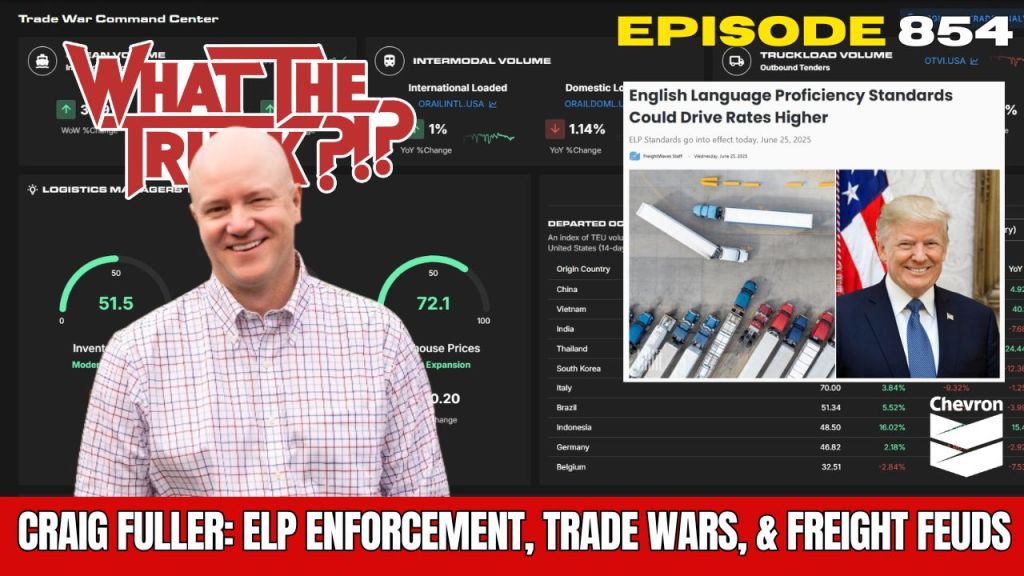
On episode 854 of WHAT THE TRUCK?!? Dooner is joined by FreightWaves’ CEO and Founder, Craig Fuller. English language proficiency enforcement begins today. How will it impact carriers, shippers, brokers, and the truckload market? Fuller breaks it down.
We’ll also explore:
-The freight market in the first half of 2025
-Global turmoil and its effects on supply chains
-Key market trends and insights from SONAR’s Trade War Command Center
-Freight industry feuds
-Updates on the Motion Museum, this year’s F3, and more
FreightWaves’ John Paul Hampstead talks about his call that truckload markets could be in for a red hot 4th of July.
Catch new shows live at noon EDT Mondays, Wednesdays and Fridays on FreightWaves LinkedIn, Facebook, X or YouTube, or on demand by looking up WHAT THE TRUCK?!? on your favorite podcast player and at 6 p.m. Eastern on SiriusXM’s Road Dog Trucking Channel 146.
FedEx fills out Freight executive team ahead of spin off
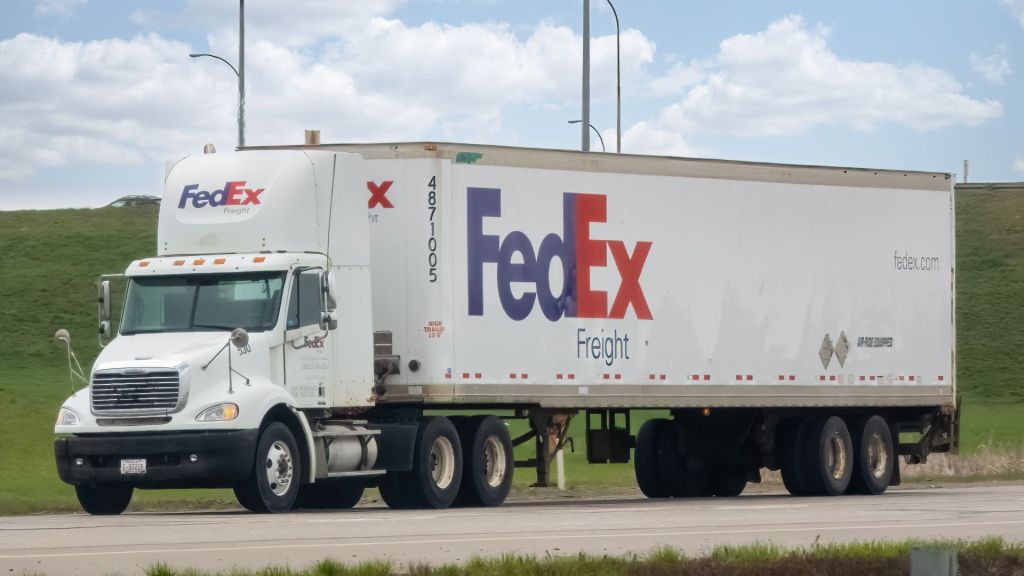
FedEx management on Tuesday announced several more appointments to run FedEx Freight, the less-than-truckload giant that is scheduled to be spun off as an independent, publicly traded company next spring.
In May, the company named John Smith, the chief operating officer of Federal Express (U.S. and Canada) as president and CEO of FedEx Freight and Brad Martin as the trucking company’s chairman. Smith will remain in his current role until the separation occurs.
During an earnings call with analysts, CEO Raj Subramaniam said Clint McCoy, who’s worked at FedEx Freight for nearly 30 years, will be chief operating officer. Michael Rogers was named the trucking company’s chief technology officer, having previously worked in a similar role at trucking fuel supplier and travel center operator Pilot Company. Prior to Pilot, Rogers held retail leadership positions at Saks Fifth Avenue and JC Penney.
Eddie Klank, the current vice president for corporate governance, securities and tax law, will serve as chief human resources and legal officer of FedEx Freight. And Mike Lyons, who has worked at FedEx Trade Networks, the supply chain management arm, since 2007, will serve as chief specialized services and commercial officer.
FedEx (NYSE: FDX) continues to build out a dedicated sales force for Freight.
Revenue at the largest less-than-truckload carrier in the nation fell 4% to $2.9 billion in the fiscal year fourth quarter due to lower fuel surcharges, reduced weight per shipment, higher healthcare costs and increased wage rates, FedEx reported. The primary challenge, however, is continued weakness in the industrial sector. Operating income was down 6%. The division made a $33 million gain on the sale of a terminal, which accounted for nearly a third of the earnings beat
Year-over-year volume declines moderated sequentially, with average daily shipments down 1% in the fourth quarter compared to down 5% in the third quarter and down 8% in the second quarter. Average daily shipments actually increased 8.3% sequentially, representing the largest Q4 over Q3 since fiscal year 2021.
(Correction: An earlier version of this story misspelled the names of Eddie Klank and Mike Lyons.)
New partners connect rail camera network with telematics visibility
A new technology partnership is providing rail shippers with a broader look at the status of freight cars as they make their way from origin to destination.
Telegraph provides a full suite of tools that allow shippers to price, book, trace, and track the status of their cars in real time. RailState operates a trackside camera network that monitors main lines across North America and can provide high-resolution images of cars en route.
This gives shippers an independent view for spotting network anomalies such as delays, congestion, or unexpected routing behaviors, the companies said in a Tuesday announcement. When this layer of visual awareness from RailState’s network is integrated with Telegraph’s telematics and machine learning, it creates a multi-dimensional operational picture.
The result is a system that doesn’t just react to issues as they occur, but anticipates them, the companies said.
RailState’s camera network is shown in blue; sites coming online in the next 90 days are green. (Map: RailState)
“When we speak with some of the largest rail shippers in North America, we continue to hear of friction with the four D’s — delays, dwell, demurrage, and disputes,” Telegraph Chief Executive Harris Ligon said in a statement. “With RailState, we’ve found a team that also believes in returning real value back to the rail ecosystem. We believe this integration will further our goal of offering more tools and insights to shippers, by tackling the opaqueness often associated with shipping by rail, and eliminating some of the back-and-forth between rail carriers and shippers.”
Telegraph can alert shippers to delays, such as this shipment from Texas to Mexico. (Illustration: Telegraph)
“The rail industry has been limited by data that only shows where individual shipments are, not the network conditions that determine where they’re going, and when they’ll actually arrive,” RailState CEO Jamie Heller said. “Working with Telegraph changes that fundamentally. We’re providing customers with network-enriched intelligence that reveals the hidden factors affecting their shipments — the congestion building three states away, the velocity changes indicating emerging bottlenecks, or the volume patterns that predict capacity constraints before they impact operations.”
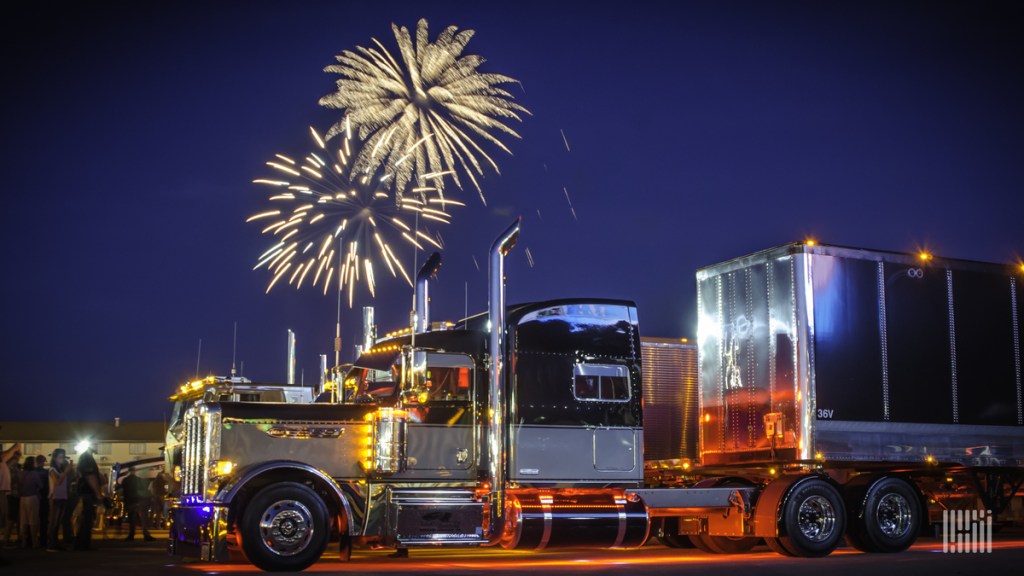
WASHINGTON — Truck drivers hauling fireworks for the upcoming July 4th holiday shows will not have to worry about certain federal work-hour requirements with relief provided by FMCSA.
The safety agency will exempt approximately 44 private carriers and their approximately 3,000 drivers from an hours-of-service and electronic logging device (ELD) requirement for the period from June 28 through July 8 through 2029, according to a notice posted by FMCSA on Wednesday.
Specifically, the exemptions allow the drivers of these companies to exclude off-duty and sleeper berth time of any length from the calculation of the 14-hour driving window limit and to use paper to record their work hours instead of ELDs.
Current regulations prohibit drivers from driving after the 14th hour after coming on duty following 10 consecutive hours off duty, and are required to log their time using ELDs.
The updated relief, which is subject to terms and conditions, renews similar waivers and exemptions that expired last year.
“FMCSA has analyzed the application for exemptions and the public comments and has determined that the exemptions … will likely achieve a level of safety that is equivalent to or greater than the level that would be achieved in the absence of the exemptions,” the agency stated.
“Without these exemptions, America’s traditional celebrations of Independence Day would be at risk, as there are no practical alternatives available for compliance,” wrote American Pyrotechnics Association (APA) Executive Director Julie Heckman, in requesting the FMCSA exemption on behalf of APA’s members.
“The HOS requirements on small businesses should be modified for this limited time each year to permit this small number of fireworks carriers to conduct Independence Day fireworks displays while maintaining an equivalent level of safety on our highways and in our communities. Indeed, the experience of APA members operating under the HOS exemption for the past 20 years without any incidents, injuries or fatalities demonstrates that the exemptions will not adversely affect safety.”
APA’s request prompted two public comments, with one recommending FMCSA reject the request because it would allow hazardous materials to be hauled “with a very high likelihood of an accident becoming a major incident requiring multi-agency response,” according to the anonymous comment.
In response, FMCSA stated it evaluated the safety records of the 44 APA member companies to which the exemptions apply to ensure that each carrier possessed an active USDOT registration, minimum required levels of insurance, and was not subject to out-of-service orders.
“FMCSA reviewed its Motor Carrier Management Information System safety records, including inspection and crash reports submitted to FMCSA by state agencies. The motor carriers have ‘satisfactory’ safety ratings … and valid Hazardous Materials Safety Permits. In addition, the Pipeline and Hazardous Materials Safety Administration reviewed its investigative records and found no adverse data.”
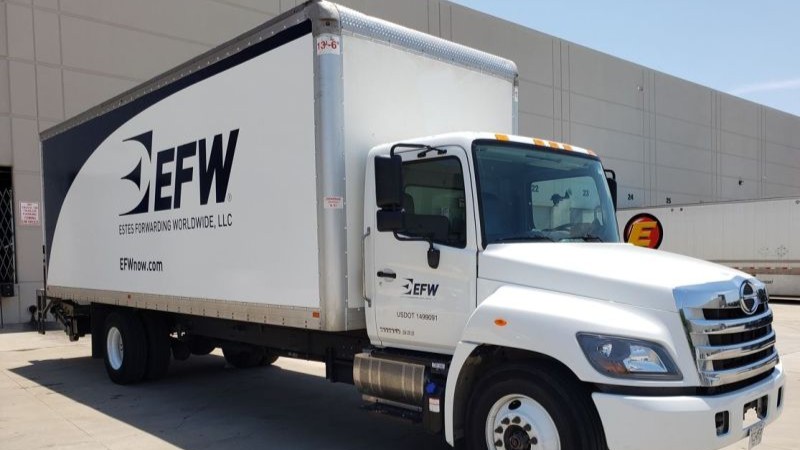
A cyberattack occurred against Estes Forwarding Worldwide (EFW) on May 28, the company told FreightWaves on Wednesday.
Richmond, Virginia-based EFW is a subsidiary of Estes Express Lines, one of the largest less-than-truckload carriers and the largest private carrier in North America. EFW specializes in a full suite of logistics and freight forwarding services.
EFW said it has notified employees and customers of the cyber event.
“We wish to inform our valued customers, partners, and employees that our company experienced a cyber event on or about May 28,” CEO Scott Fisher said in an email obtained by FreightWaves. “We want to assure you there was no significant disruption to our business. Thanks to our robust cybersecurity protocols, system redundancies, and the swift response of our IT team and third-party security experts, we were fully operational within hours. We are grateful for the support of our parent company Estes Express Lines throughout this incident. Neither Estes LTL nor Estes Logistics were impacted by this event. Protecting your information and maintaining your trust remain our highest priorities.”
EFW said it is investigating the cyberattack and will enhance its security measures.
In October 2023, Estes Express Lines was the target of a cyberattack that caused an outage in its IT infrastructure.
Several logistics and distribution firms have recently reported cybersecurity-related issues, including Whole Foods supplier United Natural Foods Inc., and supply chain management software provider Blue Yonder.
This is a developing story that will be updated when more information is available.
Samsara Beyond 2025: AI-powered safety, wearable device redefine work
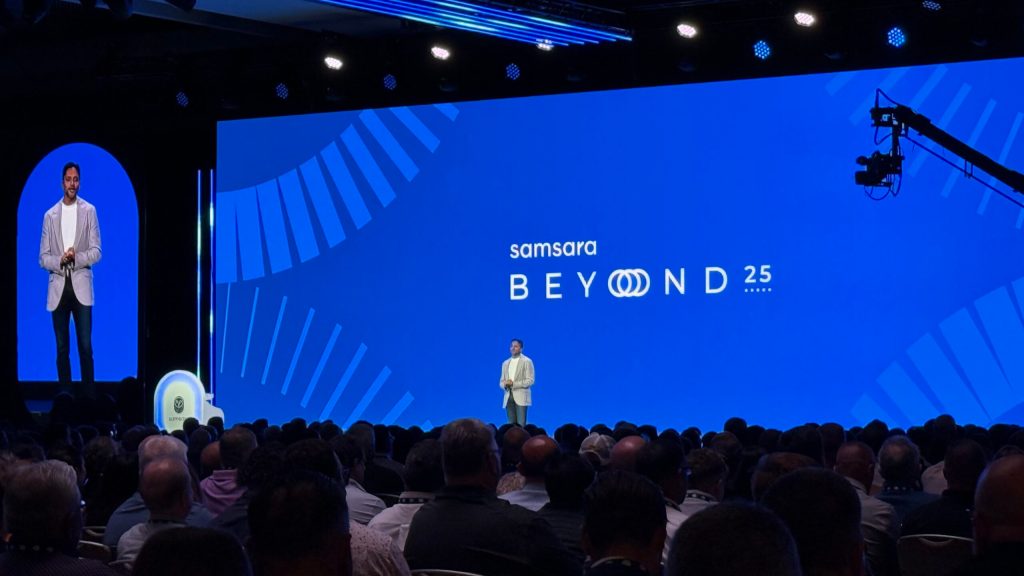
SAN DIEGO – Samsara unveiled over a dozen AI-powered solutions designed to transform safety and efficiency in physical operations at its annual Beyond event held in San Diego. The announcements are part of a yearslong effort in research and development, with the company noting an investment of over $1 billion to date.
Samsara executives and customers took to the stage to highlight their efforts to address escalating safety challenges faced by organizations with frontline workers. Samsara notes driving is one of the most dangerous jobs in the U.S. with a 49% increase in fatal crashes over the past decade leading to a 40% increase in associated insurance premiums.
“We’ve entered the age of intelligence, and AI is helping our customers operate smarter,” said Sanjit Biswas, CEO and co-founder of Samsara in the release. “We’re partnering with our customers to build products that help them run safer, more efficient operations and protect frontline workers while saving millions of dollars.”
To tackle the greater safety risks and higher costs, Samsara is leaning heavily into AI with safety dashboards paired with telematics to track, detect and coach unsafe behaviors from drivers. What started as telematics and technology is now evolving into an AI first approach by the company.
AI Safety Intelligence, new tools designed to keep drivers safe
At this year’s event, Samsara announced the release of several new AI features including an AI Multicam, Weather Intelligence, Safety Coaching for Lean Teams, and a revamped Driver App.
With the AI Multicam, drivers can now add up to four additional HD cameras, providing a 360-degree view to reduce blindspots, all accessible through an in-cab monitor. In addition, the AI Multicam actively notifies drivers in real-time of hazards, such as pedestrians and cyclists. Whether using a Samsara camera or a third-party device, administrators can retrieve historic video footage and corresponding audio to help quickly resolve incidents.
Weather Intelligence gives administrators an overlay of real-time weather data pulled from the National Weather Service onto the existing dashboards to view and alert workers of imminent threats such as fire risks, heavy rain and more.
Kiren Sekar, chief product officer at Samsara said during the keynote, “AI can analyze millions of cameras to predict weather conditions where your operations will be, not just where they are now. With your permission, your fleet’s Al-enabled cameras can join a Samsara community network, sharing anonymized imagery to enhance situational awareness.”
Sekar added, “If a weather event requires action, AI generates concise alerts, sent as text or audio messages to drivers’ in-cab devices, ensuring they stay safe without stopping to check their phones.”
For smaller fleets that lack the back office staff for safety and compliance, the Safety Coaching for Lean Teams provides the support. With AI and automation, Samsara’s AI analyzes hundreds of risky driving events taking factors like severity, frequency, road conditions, and total drive time into consideration. The AI then automatically sends low-risk behaviors to drivers for self-coaching, and higher-risk events are escalated to managers.
The AI provides insight into big picture behavioral trends across drivers and trips, so managers can coach based on driving patterns, not just isolated incidents.
Samsara also made changes to its Driver App, with the company noting it ranks No. 1 in both major app stores. Included in the changes are TikTok-style training videos to boost engagement and end-of-day reviews to help with driver coaching.
The revamped app is designed to act as a companion for drivers throughout the day and now offers new gamification features and recognition tools to reinforce positive, safe behavior. For example, administrators can send gift cards that can be redeemed at popular dining, entertainment and shopping locations directly through the app.
Jason Louis, VP of Safety, Coach USA noted that through its partnership with Samsara, the company’s focused safety initiatives achieved a 92% reduction in preventable accidents. “The introduction of Samsara’s AI Multicam and Pedestrian Collision Warning will help us to continue promoting safer roads, move toward zero incidents, and remain a trusted partner for communities nationwide.”
A new wearable device and partnership with HappyRobot
Extending safety beyond vehicles, Samsara introduced the Samsara Wearable, a connected device aimed at protecting frontline workers outside vehicles at local and remote jobsites. Powered by Samsara’s network of millions of devices, the wearable offers over a year of battery life, surpassing the industry’s 24-hour standard, and eliminates the need for cellular connectivity.
The device provides one-click access to emergency services, enabling precise location tracking and real-time audio recording. It features fall detection for incidents like slips or falls from heights and proactive threat alerts for severe weather or wildfires.
“Samsara’s AI Dash Cams have helped us continue to build a strong safety culture, and with the Samsara Wearable, we’re extending that protection to workers in high-risk and remote environments. It’s innovations like these that support our commitment to reliability that delivers—safely and consistently,” said Rob McRae, VP of Transportation at Univar Solutions.
Samsara also announced during its keynote a partnership with HappyRobot for AI powered communications via calls, voice and text. Samsara is also an investor in HappyRobot via Samsara Ventures, created in 2023 to help grow companies committed to building the future of connected operations.
“Our Al agents sound human and handle over a million interactions annually for clients like DHL and Werner. Use cases include driver onboarding calls, customer service, and payment escalations, saving time and improving outcomes. For example, Werner saw higher driver attendance after automating orientation reminders. Our partnership with Samsara creates new opportunities, delivering consistent, scalable, and data-driven communication,” said Pablo Palafox, CEO and co-founder of HappyRobot during the keynote.
The release notes that HappyRobot has allowed users to cut call times by half and operational costs by one-third from automation. Samsara customers can now access the HappyRobot integration via Samsara’s App Marketplace.
Samsara Beyond runs through Thursday, June 26.
Pennsylvania logistics company acquires trucking, warehouse competitors
Milton, Pennsylvania-based logistics company Patton Logistics Group has announced it will purchase Milton Transportation and Warehousing and its sister company, BTR Inc.
A Patton Logistics Group news release emailed to FreightWaves on Wednesday stated the transaction for both acquisitions will be completed on Friday.
Patton Logistics Group provides freight transportation, warehousing and logistics services across North America. It operates a fleet of 525 trucks, 1,800 trailers and over 5.2 million square feet of warehouse space through its affiliates: Watsontown Trucking Company, Patton Warehousing and Patton Logistics.
The company employs over 1,000 workers in Pennsylvania, Virginia, North Carolina, New Jersey and Ohio.
Through the deal, Watsontown Trucking Company will acquire 40 additional trucks, 300 trailers, two truck maintenance facilities and a body and alignment shop from Milton Transportation and BTR.
Patton Warehousing will absorb Milton’s warehousing operations to add 200,000 square feet of warehouse space in Milton, Pennsylvania. More acreage purchased in the agreement allows for Patton Warehousing to develop up to 350,000 more square feet in the future.
The company stated in its news release that this growth parallels its goals to expand its footprint in central Pennsylvania and upgrade its suite of logistics services.
“This acquisition marks another important step in Patton’s growth strategy,” said Steve Patton, president of Patton Logistics Group, in the release. “It allows us to deepen our presence in key markets, increase capacity, and better serve our customers with end-to-end logistics solutions.”
Should You Lease On or Stay Independent as You Grow
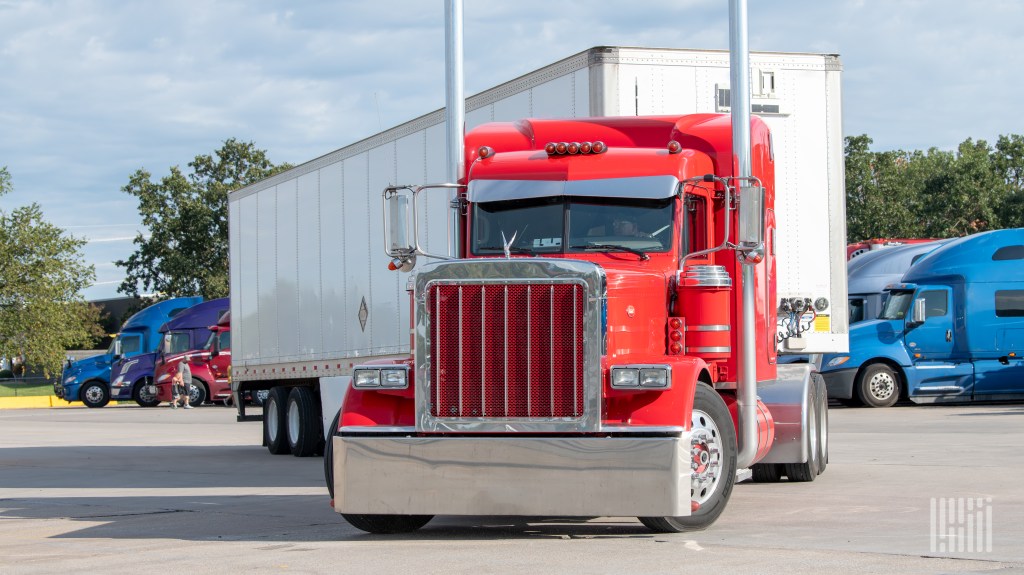
As your trucking business starts to scale beyond that first truck, this question shows up fast—should you stay running under your own authority, or lease onto someone else’s? It’s tempting to chase what looks easier. It’s tempting to let someone else handle the backend while you just drive or manage. But the truth is, how you answer this question will either move you closer to real business ownership—or pull you into someone else’s system where your growth gets capped. Too many small fleet owners get stuck here because they don’t have the right information, or they’re making panic moves during a rough season. So let’s break it down from a real-world perspective—no fluff, just tactical insight.
What Leasing On Actually Means in Practice
Leasing puts your truck under another carrier’s DOT authority. They handle insurance, compliance, and sometimes dispatch. You pay them a cut—usually 15 to 30 percent of your gross revenue. You keep your equipment and your driver, but they control the loads, the customer relationships, and the paperwork.
It sounds good if you’re tired of doing it all yourself. But you’ve got to ask the right questions. Who owns the customer relationships? Who sets the rates? What happens if their freight dries up or their safety rating tanks?
Leasing one might solve short-term pain. But if you’re serious about building a company, you need to weigh the long-term cost of giving up control.
When Leasing On Can Be a Strategic Step
There are moments where leasing makes sense. Not forever, but for a season:
You’re brand new. If you just got your authority or you’re trying to learn the ropes, leasing on can buy you time to build cash flow and experience. But use that time to learn the business—not get comfortable.
You can’t get affordable insurance. Some new authorities get quoted sky-high premiums. Leasing on can be a stopgap while you build time in the industry and stack some reserves.
You’re completely burned out. If the back-office work is crushing you and you don’t have help, leasing on can buy you breathing room. But again—use that time to restructure, not to stall.
Just don’t confuse leasing with building a business. You’re leasing someone else’s infrastructure. Their customers. Their brand. You’re giving up leverage—and when you want to take it back, it’ll cost you.
What Staying Independent Actually Requires
Running under your own authority means owning every part of the business. You control the freight. You handle insurance, safety, compliance, billing, and customer relationships. It’s more responsibility—but it’s also more leverage.
Independence gives you:
Direct relationships with shippers and brokers
Control over rate negotiations
Brand equity that you can build and eventually sell
But none of that matters if your house is out of order. Independence only works if you treat your trucking operation like a real company—not a hustle.
That means:
Knowing your cost per mile
Building a basic back-office system
Tracking performance across drivers and lanes
Following up with customers like clockwork
Hiring part-time help before you drown
Independence pays off—but only if you run tight.
Real-World Financial Comparison
Let’s keep it simple. You gross $250,000 a year.
Leased On: The carrier takes 25%. That’s $62,500. You don’t pay for insurance directly, but you’re limited to their freight. You’re capped.
Independent: You keep the full $250K. You spend maybe $20K on insurance, $5K on tools and compliance help. Maybe $40K in total overhead. You’re still ahead—and you control every piece of the puzzle.
Over five years, independence gives you hundreds of thousands more in equity and profit—if you’re running it smart.
The Growth Trap That Sinks Small Fleets
Here’s what happens too often. A carrier grows from one truck to two. Maybe a driver leaves. Maybe a broker shorts a load. Cash flow gets tight. They panic and lease onto someone bigger, thinking it’ll take pressure off.
It doesn’t.
You still have to solve the same problems—driver management, maintenance, communication. Only now, you’ve got less control and smaller margins.
When growth starts hurting, don’t retreat. Fix your processes. Clean up dispatch. Automate invoicing. Bring in part-time admin help. Handle the friction, don’t avoid it.
That’s how you scale smart.
Know Where You’re Trying to Go
What’s your vision?
Are you trying to sell your business one day?
Pass it on to your kids?
Build a strong regional fleet?
If you’re leasing on, that path is closed. You can’t sell a business that’s running under someone else’s name. You can’t transfer accounts you don’t own. At best, you’re left with trucks and drivers—and that’s not enough to command a real valuation.
But if you’re independent, with systems, accounts, and clean books—you’ve got an asset. You’ve got leverage. You’ve got options.
Check out the episode of The Long Haul Powered by Sirius XM, where we sat down with the CEO of CloudTrucks to talk about this in depth.
If you’re debating whether to lease on or stay independent, don’t let fear or fatigue make the call. Let strategy guide you. Leasing on can be a temporary tool—but it is not a business model for long-term growth. If you want to build something real, you’ve got to own your authority, your process, and your relationships.
It’s not always easier. But it’s worth it.
The carriers who win in this game are the ones who put structure before scale. Build the foundation now. Get your backend right. Know your numbers. Treat your trucking company like the business it is.
If you need clarity on how to do that, get help before you get buried. Because once you lease out your control, it’s hard to get it back.
Stay independent. Stay focused. And stay in the fight.
Let me know if you’d like this in a Playbook-ready upload or want to build a follow-up article on how to set up your back-office support while staying independent.