How do you create a best-in-class safety program?

safety programs can keep drivers safe in dangerous weather

The increasing prevalence of nuclear verdicts – and the resulting insurance hikes – have prompted carriers to reevaluate their safety strategies. Carriers with best-in-class safety programs enjoy the most competitive insurance rates while simultaneously protecting driver wellbeing and making positive changes in the industry as a whole. 

Best-in-class safety program benefits include, but are not limited to: 

  • Improved company safety metrics, leading to lower risk costs and increased profitability
  • Reduced chance of excessive verdicts from post-crash litigation
  • Improved driver retention
  • Increased business from customers who value safe carriers

It is clear why many carriers aspire to have a best-in-class safety program, but how exactly do they achieve that goal?

Carriers with standout safety programs get there through a series of both large and small positive actions over time. There is no “silver bullet” for safety. There are, however, coaching and training programs that accelerate positive safety culture changes within any carrier’s improvement plan.

Steps toward creating a best-in-class safety program

Leadership must hold safety as an organizational value. 

To create a culture of safety throughout an organization, leadership must be completely on board. This includes holding safety as an organizational value all the time, not just when it is convenient. While priorities change over time, values should be steadfast.

In fact, the J. J. Keller Center for Market Insights June 2024 update of the “Insights on Priorities for Today’s Fleet Managers” survey found that the most important aspect of overall safety is leadership that consistently shows that safety is important (51%).

In the same survey, fleet managers said employees knowing that they are valued and that leaders want them to stay safe was a close second most important aspect of overall safety (46%). 

By valuing safety, leaders communicate that they value each driver’s health and well-being, leading to stronger buy-in throughout the organization. This can also lead to happier drivers who are less likely to leave the fleet.

Follow safety policies that exceed regulations.

To avoid violations and crashes, carriers should update – and enforce – their safety policies. The best safety programs follow policies that exceed regulatory requirements.

“To be defensible, it is imperative to exceed regulations and adhere to company policies,” according to Mark Schedler, J. J. Keller’s senior transport editor.

The first step in exceeding safety requirements is understanding the requirements in the first place. In J. J. Keller surveys, fleet managers have consistently reported that understanding how Federal Motor Carrier Safety Regulations apply to them – and having compliant records – is a top concern.

Carriers should invest in ongoing education regarding changing regulations and support the development of stringent internal safety policies.

Start a corrective action training program.

One of the most effective things carriers can do to accelerate positive changes in safety culture is create a dash cam-enabled coaching, recognition and corrective action training (CAT) program.

“FMCSA and juries expect carriers to have corrective action processes to eliminate unsafe or non-compliant behavior to avoid crashes and citations,” according to Schedler.
Carriers should install road- and cab-facing cameras with auxiliary cameras to give a 360-degree view at all times. They should also consider using a video review service (VRS) driven by AI to gain insight into risky driving incidents and to augment staffing.

Using dash cams in a safety program is advantageous because dash cams capture information that closes data gaps left by telematics systems. For example, dash cams easily provide information about following too close, failing to yield and exceeding speed limits.

In a 2023 J. J. Keller research survey, the company found that using dash cams improved driver awareness of unsafe driving habits in 81% of cases, while decreasing the number of insurance claims and lowering legal fees for 60% and 43% of users, respectively.

It is clear why this powerful tool provides an ideal foundation for an effective CAT program.

“Inconsistent or nonexistent corrective action or claims of being unaware of the unsafe behavior could be deemed negligent supervision and would likely add zeros to a verdict,” Schedler said.

Promoting driver acceptance of the safety program

Driver acceptance of safety program changes is critical, especially when drivers are being more closely monitored with dash cams.

Driver acceptance can be increased in several ways: 

  • Consistent messaging about using dash cams to protect drivers and the company, as well as improve and retain drivers
  • Developing scorecards and enhancing bonus and recognition programs.
  • Supporting the dash cam program with remedial training in-truck, online CAT modules specific to the behavior or one-on-one coaching/classroom training within three to five days of detection
  • Training coaches to continuously improve their approach to and efficacy in changing driver behavior
  • Putting privacy assurances in your dashcam policy and procedures

Drivers are more likely to accept dash cams if they see them as tools to help improve their driving skills, resulting in positive recognition and bonuses. This reward-focus mindset helps eliminate any negative or punitive ideas drivers may have about the devices.

“Dash cam video allows a driver to see their error (if any), take accountability and improve. Coaches have more productive conversations versus talking around the plausible deniability of events like hard-braking that come through only as telematic data,” Schedler added. “Video clips also help foster empathy by showing drivers’ challenges. Recognizing, coaching and training can help build self-confidence and safer, more productive drivers.”

Another common concern drivers express about dash cams is reduced privacy. J. J. Keller has outlined multiple ways carriers can address any privacy concerns. These steps include highlighting the potential for cameras to exonerate drivers after crashes and taking tangible steps within their own organizations to add in protections.

Creating a best-in-class safety program is a multistep process that requires commitment and buy-in from executives, fleet managers and drivers alike. J. J. Keller offers a suite of safety and compliance tools that can help accelerate the process.

Click here to learn more about J. J. Keller dash cams.

Check Call: Gains find their way into the 3PL space

people gathered around a desk of computers. Check Call news and analysis for 3pls and brokers

The Future of Freight Festival in Chattanooga, Tennessee, is the event of the fall. Subscribers to Check Call have a special discount code for F3 registration. This is going to be one of the best deals on F3 tickets. Use the code CheckCallF324 or go to this link, and the discount will be applied. There is no better party than a Chattanooga party. This is not one to miss.

(GIF: GIPHY)

Everyone’s favorite group, the Transportation Intermediaries Association (TIA), has put out the “3PL Market Report, Second Quarter 2024.” This report saw the return of something everyone was missing: gains across segments.

The report found: “From the first quarter to the second quarter, as well as annually, there were some gains in shipments, invoice amount per shipment, and total revenue, including: total shipments, at 1,901,058, up 5.0% sequentially, and 3.5% annually, growing for the first time in eight quarters; total revenue, at $3,689,215, up 5.6% sequentially, and down 3.6% annually; invoice amount per shipment, at $1,941, up 0.6% sequentially, and down 6.9% annually; and gross margin percentage, at 14.9%, was down 10 basis points sequentially and down 160 basis points annually.”

Those gains weren’t limited to one area. Intermodal shipments saw the largest uptick, with a 9.5% increase quarter over quarter. LTL came in second with a 7.7% gain, and truckload brought up the rear with a 3.8% increase q/q.

Anne Reinke, TIA president and CEO, said in a statement: “It is so good to finally see the industry moving in a positive direction after two years of losses. All segments of the industry saw steady growth from Q1 2024 through Q2 2024. We believe this isn’t just a blip in the market but a sign that the rollercoaster COVID freight market cycle is finally ending.”

There is still a strong oversupply of capacity in the market both from brokers and carriers needing to exit. However, the end is near for course corrections, and the normalcy, stability and predictability of the market is on the horizon.

All eyes have turned to the consumer for the rest of what 2024 will look like freight volume-wise. Consumers are expected to start holiday shopping earlier this year, and retailers have already begun pulling forward orders and goods to ensure there is something to buy.

The Fed is expected to lower interest rates in the next few weeks, which will help jump-start some of the industries that have been suffering for the past few months, like home improvement and new home starts.

SONAR Tickers: OTVI.LIT, OTRI.LIT

Market Check. Opposites attract holds true in Little Rock, Arkansas. The market is home to polar opposites for outbound tender rejections and outbound tender volumes. The OTVI dropped 19.03% week over week. Taking the opposite approach was the OTRI, which increased 446 basis points w/w for a rate of 12.45% rejections. If it were any time except a holiday weekend, this would be a sign that the market was facing serious capacity constraints. As the Labor Day cleanup gets cleared and the OTRI remains elevated, watch and see how the market behaves for any sign of a turn or flip.

(GIF: GIPHY)

Who’s with whom? The LTL world could face another change-up as Jack Cooper LTL is in talks to acquire Standard Forwarding. Standard Forwarding is a regional LTL carrier servicing the Upper Midwest and was most recently acquired by DHL Freight in 2011. If Jack Cooper sounds familiar, it’s because it previously bid on Yellow Corp. during bankruptcy proceedings. 

Standard Forwarding has become the easy purchase, as this is now the third purchase of the company since 2010. In March 2010, four members of its leadership team bought the assets. Then in June 2011, the regional carrier was purchased by DHL. 

Of the possible sale, Teamsters General President Sean O’Brien said, “DHL Freight has committed to seeking to find a new employer for Standard Forwarding that will respect and maintain Teamsters protections at the company.”

The more you know 

Borderlands Mexico: Carrier says transition to zero emissions critical to better air quality Walmart Enables Marketplace Sellers to Fulfill from Third-Party Sites

Global freight forwarder confirms malware attack for ‘technical disruptions’ 

FMCSA told to strengthen ELD requirements 

Norfolk Southern and BNSF reach tentative agreements with additional labor unions

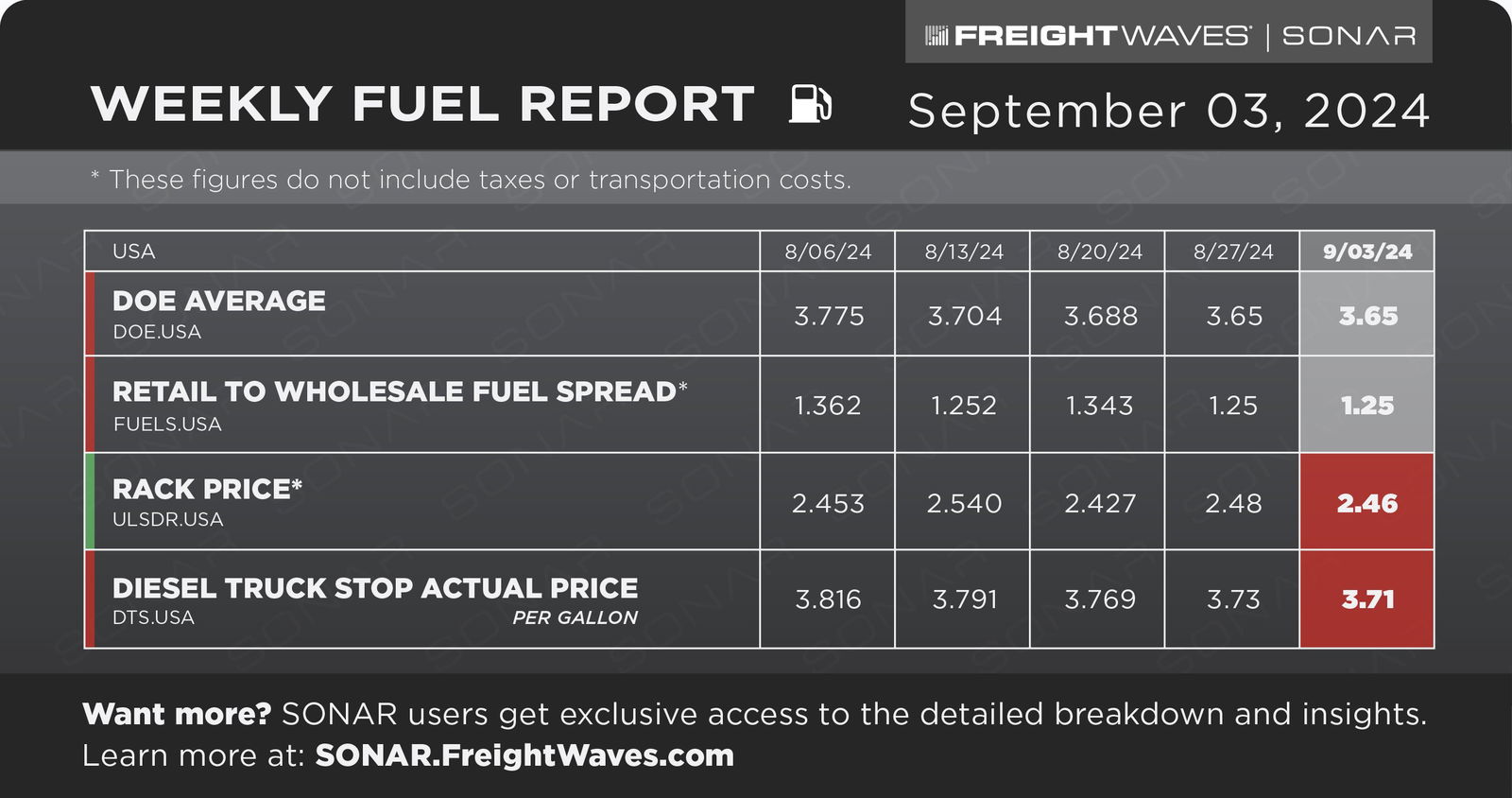
Weekly Fuel Report: September 03, 2024


Learn more at SONAR.FreightWaves.com

Transportation capacity steps higher in August, survey shows

A white tractor pulling a rust-colored ocean container

Growth in transportation capacity accelerated in August while price increases slowed, a sentiment survey revealed on Tuesday.

The Logistics Managers’ Index, a monthly poll of supply chain executives, returned a 56.7 reading for transportation capacity in August, 5.8 percentage points higher than in July and the highest reading since May. (The LMI is a diffusion index in which a reading above 50 indicates expansion while one below 50 signals contraction.)

The report said the heightened view on capacity could be tied to smaller carriers coming back to the market as rates improve and given the expectation for a seasonal lift in freight demand.

“The signs of new life in the freight market, along with anticipation of the traditional jump in demand that follows the Labor Day holiday, are likely causing some of the capacity that had been sidelined over the past two years to re-enter the market, accounting for the mild increase in available capacity,” the report stated.

Growth in transportation prices (61.6) declined 2.2 points from July. This was the first month since April the subindex didn’t increase sequentially. The dataset has been in expansion territory in all but one month so far in 2024. Respondents expect the pricing subindex to be well into expansion one year from now, returning a 76.6 reading.

“The prices are still nowhere near the highs of 2020-2021, but it is a marked shift from the 18 consecutive months of contraction from July 2022-December 2023,” the report said.

Transportation utilization (59.5) continued to expand in the month but has remained in a narrow range (4.5-point spread) this year.

The overall LMI (56.4) was basically unchanged in the month as “the logistics industry has continued its slow, steady expansion.” The 8-year-old index has been in expansion territory since December but remains off an all-time average of 61.8. The index stood at 51.2 a year ago.

Inventory levels (55.7) increased 6.1 points and moved back into expansion after three months of contraction.

“This suggests that after running inventories down, firms are building them back up again in anticipation of Q4,” the report said. “This suggests a return to traditional patterns of seasonality that we have not seen since pre-COVID.”

Upstream firms like manufacturers and wholesalers returned a reading of 59.4 for inventories during the month compared to downstream companies like retailers (46.3).

“The dichotomy in Inventory Levels is likely indicative of retailers keeping inventories lean to control costs, while their upstream suppliers build up goods in anticipation of orders to come,” the report said. It also said freight sitting at ports could explain some of the disparity between the two groups, which would be a favorable sign for future freight demand as the goods will need to be moved inland.

Inventory Costs (69) increased 3.3 points and have remained above 60 all year.

Warehouse capacity (59.5) increased 5 points from July to the highest reading since March. Lower inventory levels at downstream firms were cited as a reason for the perceived increase in available warehouse space. Warehouse utilization (57.6) remained steady in the month while warehouse prices (63.8) increased 2.8 points.

Warehouse prices remain well into expansion territory even after declining 11.2 points from two years ago. Respondents expect the prices to be growing at a faster pace (68.8) one year from now.

The LMI is a collaboration among Arizona State University, Colorado State University, Florida Atlantic University, Rutgers University and the University of Nevada, Reno, conducted in conjunction with the Council of Supply Chain Management Professionals.

More FreightWaves articles by Todd Maiden

Ford plans to invest $273M at Mexico plant to produce EV drive units

Ford Motor Co. says it will invest $273 million to convert its plant in Irapuato, Mexico, to the production of primary drive units for the company’s Mustang Mach-E electric vehicles.

The plant in Irapuato previously produced transmissions for gasoline-powered vehicles. The switch to producing the primary drive units for the Mustang Mach-E includes manufacturing the electric motor and the transaxle of the vehicle’s propulsion system.

“This new stage allows us to create synergy between plants and drive development in the country,” Ricardo Anaya, director of manufacturing at Ford of Mexico and Latin America, said in a news release.

The Mach-E is an electric mass-produced vehicle made in Mexico that is exported to about 40 countries in Europe and the Americas, as well as Australia, Ford said.

Ford (NYSE:F) sold 40,771 units of the Mustang Mach-E in the U.S. in 2023, a 3.3% year-over-year increase.

From January through July 2024, sales of the Mach-E have totaled 26,826 units in the U.S., compared to 17,977 during the same period last year.

Electric cars accounted for around 18% of all cars sold in 2023, up from 14% in 2022, according to the International Energy Agency (IEA).

“Electric car sales in 2023 were 3.5 million higher than in 2022, a 35% year-on-year increase,” the IEA said in a recent study on global EV trends.

In February, Ford renamed its plant in Irapuato to the Irapuato Electric Powertrain Center. The plant opened in 2017 and employs 700 workers. Irapuato is in central Mexico in the state of Guanajuato, which has one of the largest automotive production clusters in the country.

The Mustang Mach-E is manufactured at the Ford plant in Cuautitlan, Mexico, just outside Mexico City.

Ford joins a growing number of global automakers and parts suppliers making EV production moves in the southwestern U.S. and Mexico.

In January, American Battery Factory announced plans to build a $1.2 billion lithium iron phosphate battery factory in Tucson, Arizona.

BMW began construction in May of an $860 million electric battery-assembly facility at its factory in San Luis Potosi, Mexico. The batteries will be used for BMW’s next generation of electric cars.

White Paper: State of the Industry – September 2024

The September 2024 “State of the Industry Report” — presented in affiliation with Ryder — shares an in-depth overview across the trucking, maritime and intermodal markets, as well as what to expect in the coming weeks. The data contained within the report provides breakdowns of capacity, volumes and rates as we enter into the first quarter.

In this report, you will find:

  • The truckload market has been fairly stable as rejection rates have trended sideways and tender volumes shook off the slow start to August.
  • The intermodal market has seen volumes grow on the heels of stronger import levels, but pricing remains challenged.
  • Ocean peak season is here as demand on the ocean continues to set new YTD highs, but potential labor disputes could create chaos in the back half of September.
  • Lower interest rates are on the way in September, but the question is: how large is the cut and will there be another this year? The answers to these questions will determine how fast dry powder gets deployed to the market.
  • The macroeconomic conditions remain fairly strong, though there are signs of weakness starting to appear in the labor market.

Download the complimentary report today to access the full insights.

Portland Terminal 6 aid ‘urgently’ needed, report says

Image shows wet pavement, containers, and container cranes.

A maritime shipping coalition led by the Port of Portland is asking the state for money to keep Oregon’s only international container terminal running while it searches for a private operator for the money-losing facility.

Calling container shipping through Terminal 6 “essential” to state businesses, the port and stakeholders on Aug. 23 presented a plan to Gov. Tina Kotek calling for public investment in the terminal, and outlining how to maintain the facility’s services while the port continues to seek a private operator, known as the landlord model.

“Making sure container service remains available for Oregonians and businesses across the region – whether they’re in the seafood, grain or animal feed industry, or sell building supplies, tires, shoes and toys – will require public and private support,” Port of Portland Executive Director Curtis Robinhold said in a release. “This is a critical piece of Oregon’s economy, and it urgently needs financial assistance from the state to continue to serve shippers across all of Oregon.”

Kotek requested the business plan after pledging in May to continue services at T6, subsidized by the port despite years of “significant” financial losses. Her proposed 2025-27 biennial budget will include $35 million for capital investments and channel maintenance in the lower Columbia River, and $5 million in operational stop-gap funding from the Oregon Emergency Board this fall.

The report is supported by importers and exporters including supermarket operator Kroger, apparel importer Columbia Sportswear, and labor representatives.

“Container service provides hundreds of local jobs, along with many more in connected industries and communities,” said Leal Sundet, secretary of International Longshore and Warehouse Union Local 8, which represents most of the terminal’s workers, in the release. “The people who work these jobs spend their money locally, and they’re supporting shippers and industries from all over the state. Container service is the lifeblood of the region – it drives the economy.”

Sundet was at the center of a vicious longshore labor dispute that ultimately drove container shipping lines to withdraw their Portland services, and led T6 operator ICTSI Oregon to pay the port $11 million to exit its 25-year lease. The ILWU local in 2017 filed for Chapter 11 bankruptcy protection as it faced a ruinous damage award in the tens of millions of dollars after ICTSI, a unit of Manila-based ICTSI Inc. sued the union over unfair work practices. In a settlement announced in February, the union agreed to pay the operator $20.5 million.

The port plan emphasized that it cannot sustain continued losses without “significant investment” from the state as well as unspecified “efficiencies” from the shipping industry.

According to the report, the marine container service underpins 1,500 jobs and generates $20 million in state and local tax revenue annually.

The port said it has negotiated new rates with the container shipping companies serving T6 along with labor efficiencies with the ILWU and reduced fees with Harbor Industrial, the terminal’s container stevedore. 

The port is also working with the coalition’s advisory council on additional solutions ranging from new shipper marketing strategies to business initiatives aimed at doubling container volumes over the next five to seven years. Both short- and long-term investments from the state would reduce the unspecified financial loss facing the Port in the next year, enabling it to continue working toward operational stability.

The proposed funding must be approved by legislators in September and during the 2025 Legislative Session.

Market rises into Labor Day but falls well short of Fourth of July

This week’s FreightWaves Supply Chain Pricing Power Index: 35 (Shippers)

Last week’s FreightWaves Supply Chain Pricing Power Index: 35 (Shippers)

Three-month FreightWaves Supply Chain Pricing Power Index Outlook: 35 (Shippers)

The FreightWaves Supply Chain Pricing Power Index uses the analytics and data in FreightWaves SONAR to analyze the market and estimate the negotiating power for rates between shippers and carriers.

This week’s Pricing Power Index is based on the following indicators:

Tender volumes close August higher than where they began

After the sluggish start to August, tender volumes have been trending higher throughout the month. August will follow a trend similar to last year when tender volumes will close the month higher than they began the month. With import levels still being extremely elevated, eventually the freight will move to the truckload market, it is more a matter of timing of when that happens.

SONAR: Outbound Tender Volume Index — Seasonality View: 2024 (white) and 2023 (blue)
To learn more about FreightWaves SONAR, click here.

The Outbound Tender Volume Index, a measure of national freight demand that tracks shippers’ requests for trucking capacity, is 1.87% higher week over week, the largest increase since the impacts of Fourth of July. The gap with year-ago levels rebounded over the past week as volumes continued to inch higher. Volumes are currently 3.13% higher year over year.

SONAR: Contract Load Accepted Volume – Seasonality View: 2024 (white) and 2023 (blue)
To learn more about FreightWaves SONAR, click here.

Contract Load Accepted Volume (CLAV) is an index that measures accepted load volumes moving under contracted agreements. In short, it is similar to OTVI but without the rejected tenders. Looking at accepted tender volumes, we see an increase of 1.39% w/w, a slightly smaller increase than OTVI as tender rejection rates moved higher over the past week. Accepted tender volumes are up 1.41% y/y.

Earnings reports in the retail space have continued to show that comp sales remain challenged, but retailers have been able to control costs extremely well. A prime example of this was at Best Buy, a company that needs strong discretionary spending for electronic purchases. In the company’s second quarter earnings release, comparable sales declined by 2.3%, but the company’s non-GAAP diluted EPS was 9.8% higher y/y.

With the increase in imports, it appears that retailers, especially big box retailers, are expecting a strong fourth quarter from a consumer spending perspective.

SONAR: Outbound Tender Volume Index – Weekly Change
To learn more about FreightWaves SONAR, click here.

Volume increases took hold across the majority of the country as 74 of the 135 freight markets tracked within FreightWaves SONAR showed week-over-week increases in volumes. 

Even with the uptick in volumes over the past week, the largest freight markets in the country experienced tender volumes decline. Tender volumes in Ontario, California fell by 0.69% w/w. Moving east into Dallas, tender volumes were 1.37% lower w/w. In the southeast, the decline was even more severe as tender volumes in Atlanta fell by 4.04% w/w.

SONAR: Van Outbound Tender Volume Index (white, right axis) and Reefer Outbound Tender Volume Index (green, left axis)
To learn more about FreightWaves SONAR, click here.

By mode: Dry volumes are now almost up to Fourth of July volumes, which is a positive as August comes to a close. The Van Outbound Tender Volume Index increased by 2.76% w/w. Dry van volumes are 3.93% higher y/y, as the gap with 2023 levels continues to widen after coming in line with 2023 levels in early August.

The reefer market continues to show that it is trending higher, but with more hiccups along the way. Over the past week, the Reefer Outbound Tender Volume Index increased by 2.31%. Despite the weekly increase, reefer volumes are still down 3.82% y/y.

Rejection rates inch higher for Labor Day weekend

Tender rejection rates have reacted to the Labor Day holiday weekend, but the reaction has been fairly muted in comparison to the Fourth of July holiday week. Tender rejection rates moved higher over the past week, approaching 5%, but that’s over 200 basis points lower than the Fourth of July peak.

SONAR: Outbound Tender Reject Index – Seasonality View: 2024 (white), 2023 (blue) and 2019 (orange)
To learn more about FreightWaves SONARclick here.

Within the past week, the Outbound Tender Reject Index (OTRI), which measures relative capacity in the market, increased by 45 basis points to 4.86%. The increase was the largest weekly increase since the Fourth of July holiday and very similar to the increase leading into Labor Day last year. Tender rejection rates continue to run slightly higher than they were this time last year, currently 47 basis points higher y/y. Compared to 2019, the year in which the current direction aligns with the most, tender rejection rates are currently 18 bps higher.

SONAR: Outbound Tender Reject Index – Weekly change
To learn more about FreightWaves SONAR, click here.

The map above shows the Outbound Tender Reject Index — Weekly Change for the 135 markets across the country. Markets shaded in blue are those where tender rejection rates have increased over the past week, while those in red have seen rejection rates decline. The bolder the color, the more significant the change.

Of the 135 markets, 96 reported higher rejection rates over the past week, an increase from 76 in last week’s report.

The Detroit, Michigan market experienced the largest increase in tender rejection rates of the largest freight markets. Tender rejection rates in Detroit increased by 169 bps w/w.

The Pacific Northwest is seeing rejection rates increase over the past week, including Seattle where rejection rates were 204 bps higher w/w. 

SONAR: Van Outbound Tender Reject Index (white), Reefer Outbound Tender Reject Index (green) and Flatbed Outbound Tender Reject Index (orange)
To learn more about FreightWaves SONAR, click here.

By mode: Dry van rejection rates did move higher over the past week, but haven’t eclipsed the levels experienced earlier in August. Over the past week, the Van Outbound Tender Reject Index rose by 18 bps to 4.47%. Dry van rejection rates are 62 bps higher than they were this time last year.

The reefer market is being far more volatile than the dry van market as reefer rejection rates are on the rise. The Reefer Outbound Tender Reject Index has increased by 230 basis points to 10.73%. Reefer rejection rates are 57 basis points higher than they were this time last year.

Flatbed rejection rates continue to be under pressure, largely due to the higher interest rate environment. With interest rate cuts on the horizon, it is likely that the last four months of the year will see some muted activity until industrial and manufacturing companies deploy capital that has been on the sidelines. Over the past week, the Flatbed Outbound Tender Reject Index fell by 87 basis points to 6%. Flatbed tender rejection rates are 68 basis points lower y/y, as the higher interest rate environment had a lagging impact to the market.

Spot rates have limited movement into Labor Day

Spot rates have leveled out at Memorial Day holiday levels, which is a positive sign for the market moving into the final stanza of the year. At the same time, contract rates have been moving higher since late June, which signals that significant cost savings have already been realized.

SONAR: FreightWaves National Truckload Index – Linehaul Only (white, right axis) and Initially Reported Van Contract Rate (green, left axis)
To learn more about FreightWaves SONAR, click here.

This week, the National Truckload Index (NTI) — which includes fuel surcharge and various accessorials — was unchanged over the past week at $2.27 per mile. Compared to this time last year, the NTI is up 1 cent per mile. The linehaul variant of the NTI (NTIL) — which excludes fuel surcharges and other accessorials — was up 1 cent per mile this week at $1.70. The NTIL is 12 cents per mile higher than it was at this time last year. The discrepancy in the NTIL and NTI is solely the changes in fuel, which was far more expensive in 2023 than currently. The average diesel truck spot price per gallon is 73 cents per gallon, or 16.4%, lower than it was last year.

Initially reported dry van contract rates remain in a fairly tight range, increased by 5 cents per mile over the past week at $2.33. Throughout 2024, contract rates have been in a tight range, an indication that the extreme cost savings are in the rearview mirror and service is now coming to the forefront. Initially reported contract rates are down 5 cents per mile from this time last year, about a 2% decline.

SONAR: RATES.USA
To learn more about FreightWaves SONAR, click here.

The chart above shows the spread between the NTIL and dry van contract rates is trending back to pre-pandemic levels. The spread widened over the past week as van contract rates increased while spot rates were fairly stable. If spot rates move higher over the next week as any disruption from the Labor Day holiday works itself out, it will narrow the spread.

SONAR: FreightWaves TRAC rate from Los Angeles to Dallas.
To learn more about FreightWaves TRAC, click here.

The FreightWaves Trusted Rate Assessment Consortium spot rate from Los Angeles to Dallas fell by 2 cents per mile over the past week to $2.22 per mile.

SONAR: FreightWaves TRAC rate from Atlanta to Chicago.
To learn more about FreightWaves TRAC, click here.

From Chicago to Atlanta, the TRAC rate was stable over the past week, remaining at $2.44 per mile. Contract rates along this lane increased at the start of the week, widening the spread to nearly 50 cents.

Borderlands Mexico: Carrier says transition to zero emissions critical to better air quality

Borderlands is a weekly rundown of developments in the world of United States-Mexico cross-border trucking and trade. This week: Carrier says transition to zero emissions critical to better air quality; Texas waterway receives $357M loan to improve shipping channel; Sinoboom plans to build $150M factory in Guanajuato, Mexico; and Grupo Mexico Transportes set to acquire Mobile-based CG Railway.

Carrier says transition to zero emissions critical to better air quality

Transitioning freight transport vehicles to green technology is currently expensive, but worth the effort.

That was the message from Juan Baez, director of San Diego-based trucking company Bali Express Services at the North American Development Bank’s 2024 summit in San Antonio.

Bali Express is a carrier with 357 diesel trucks, 32 natural gas trucks and three electric trucks.

“Each electric truck costs almost half a million, so the investment is huge,” Baez said. “Right now, the most challenging part of the electric trucks is the mile range, the amount of range is minimum. It could go from 120 miles up to 220 miles for a truck that costs half a million, which is very, very expensive, even though providing better air quality to the border communities is the most important thing right. We have to act. We have to start thinking, thinking about our future. We need to start thinking about the younger generations.”

NADBank’s annual summit included federal, state and municipal authorities, along with business organizations, academia, financial institutions, investors, project developers and experts, from both the U.S. and Mexico.

The theme of the 2024 summit held Thursday and Friday was “Innovation for Sustainability in the U.S-Mexico Border Region.”

The “Creative Proposals for Sustainable Mobility” panel discussion Thursday included Baez; as well as Jefferson Smith, president and CEO of EVerged; and Gilberto Ramirez, director of strategic planning and business development for Volvo Group Mexico. 

Moderating the panel was Diana Avalos Morales, the general director of the Mexican Association of Electric Vehicles. 

Avalos said decarbonizing the freight industry is something that the trucking sector must consider going forward.

“In the case of Mexico, for example, 25% of carbon emissions comes from cargo transport,” Avalos said. “That’s a lot and it keeps increasing.”

Juan Baez, director of Bali Express Services, from left, Jefferson Smith, president and CEO of EVerged, Gilberto Ramirez, head of strategic planning and business development for Volvo Group Mexico, and Diana Avalos Morales, general director of the Mexican Association of Electric Vehicles, take part in the “Creative Proposals in Sustainable Mobility” panel Thursday at the North American Development Bank’s 2024 summit in San Antonio. (Photo: NADBank)

In April, Bali Express Services made history using a Class 8 electric truck to haul freight between the U.S. and Mexico. It was the first-ever border crossing for a heavy-duty EV.

The Bali Express truck carried a load of goods into Mexico through the Otay Mesa Port of Entry, which connects Southern California to the Mexican city of Tijuana.

Baez said that even though the electric trucks cost more than a diesel truck, shippers don’t want to pay higher freight rates to cover the cost of operating them.

“Customers, they don’t want to pay more,” Baez said. “Probably next year, where we’re going to try to convince the people that this is the right direction.”

Baez said another challenge is that their business involves cross-border shipments, using multiple trucks.

“We pick up raw material cargo from the Port of Long Beach, then take it into Tijuana maquiladoras in order to assemble TVs, build trailers,” Baez said.

In order to make their deliveries across the border, Bali Express Services uses three different trucks. 

“One electric vehicle in order to pull the container from the Long Beach terminal to our Long Beach yard, one compressed natural gas truck to bring the container down from Long Beach to San Diego, and another EV to do the border crossing,” Baez said. “You are using three different trucks, three different drivers, making the operation more expensive. We are spending more money for the same rates. That’s the struggle right now that we are dealing with.”

Carriers in Mexico also have to contend with California’s Advanced Clean Fleets rule, which could begin affecting trucks crossing the border into the U.S. in 2025. The mandate requires fleet owners to remove internal combustion engine vehicles at the end of their useful life as specified in the regulation. 

The California mandate affects trucks crossing the border from Mexico into the U.S.

Ramirez said Volvo Group has a target of 2040 for 100% of commercial vehicles produced in its factories to be fossil free trucks and buses.

Sweden-based Volvo has 12 brands in 190 markets. The company has production facilities in 18 countries, producing cars, trucks, buses, construction equipment and marine and industrial engines. 

Volvo Group Mexico currently has a factory in Mexico City that produces buses, as well as a factory in Shippensburg, Pennsylvania, that manufactures construction equipment. 

On Aug. 23, Volvo Group Mexico announced it had selected the Mexican city of Monterrey as the site of a new heavy-duty truck factory. The company plans to invest $700 million there, according to a news release.

“Today, Volvo produces more than 300,000 vehicles, and the U.S. and Mexico are part of it,” Ramirez said. “By vehicles, I mean bus, trucks, but also construction machines … that can carry more than 100 tons, that will be electric, not fossil fuel. It is difficult, but this is the target, this is the challenge. To make it real, Volvo has established a clear roadmap and has invested in different technologies. The first technology is the battery electric vehicles.”

EVerged is a renewable energy solution integrator. The company is launching an electric vehicle charging platform in Austin, Texas, at the end of the year, Smith said.

“We’re bringing to market the world’s most stable, vertically integrated, cyber, secure charger platform,” Smith said. “We’re also a converged renewable energy provider.”

Smith said they aim to make electric vehicle chargers that attract a wide market.

“We look at the charger itself as not a charger, it’s a technology endpoint,” Smith said. “Think about a charger that can broadcast public safety and weather information, that can have a Smartphone link up to it and find site amenities around. We’re going to create a cult like following with our chargers. We want the charger experience to be that different.”

Texas waterway receives $357M loan to improve shipping channel

The Sabine-Neches Navigation District in Beaumont, Texas, was recently approved for a $357 million loan to deepen its waterway, according to a news release.

The Texas Transportation Commission approved the loan from the state’s Ship Channel Improvement Revolving Fund on Aug. 22.

The funds will allow the navigation district to deepen the Sabine-Neches Waterway from 40 feet to 48 feet. The deeper channel will allow larger cargo ships to move through the area.

Products that move through the navigation district and the Port of Beaumont include petrochemicals, liquid bulk materials and military goods.

In addition to Sabine-Neches Navigation District and the Port of Beaumont, the channel deepening project will benefit Port Arthur, the Sabine Pass Port Authority and the Orange County Navigation and Port District. 

Sabine-Neches Navigation District officials expect to see the first stage of the project completed by the end of 2026.

Sinoboom plans to build $150M factory in Guanajuato, Mexico

China-based manufacturer Sinoboom has begun construction of a factory in the central Mexican city of Silao, according to a news release.

The $150 million factory will total over 2-million-square feet and create 700 direct jobs. The facility is scheduled to begin operation in 2025, with its annual output reaching 20,000 units by 2028.

The facility will produce equipment such as slab and rough-terrain scissor lifts, articulating and telescopic boom lifts, telehandlers, vertical mast lifts and other products. 

Sinoboom aims to strengthen the company’s presence in North America with the facility, officials said.

“This factory represents a crucial step in our mission to be a globally respected leader in the intelligent equipment manufacturing industry,” the company said in a statement.

Sinoboom was founded in 2008 and is headquartered in Changsha, China. The factory in Silao is the company’s first in North America.

Grupo Mexico Transportes set to acquire Mobile-based CG Railway

Grupo Mexico Transportes (GMXT) plans to acquire 60% of CG Railway after recently obtaining approval from the U.S. Surface Transportation Board.

The acquisition of Mobile, Alabama-based CG Railway gives GMXT control over a rail car-ferry operation linking ports in the U.S. and Mexico.

CG Railway operates a U.S. Class III freight railroad and two ferry ships, transporting up to 10,000 carloads of commodities annually across the Gulf of Mexico.

The rail ferry service offers weekly trips between the ports of Mobile and Coatzacoalcos. The service gives shippers access to 13 ports in the U.S. and Mexico through rail interchanges in both countries.

GMXT is a subsidiary of Grupo Mexico, the largest freight train company in Mexico. The conglomerate, which also includes rail company Ferromex, operates more than 6,835 miles of track that connects Mexican ports to major markets in the U.S. and Canada.

What the surge in empty container moves says about the freight market

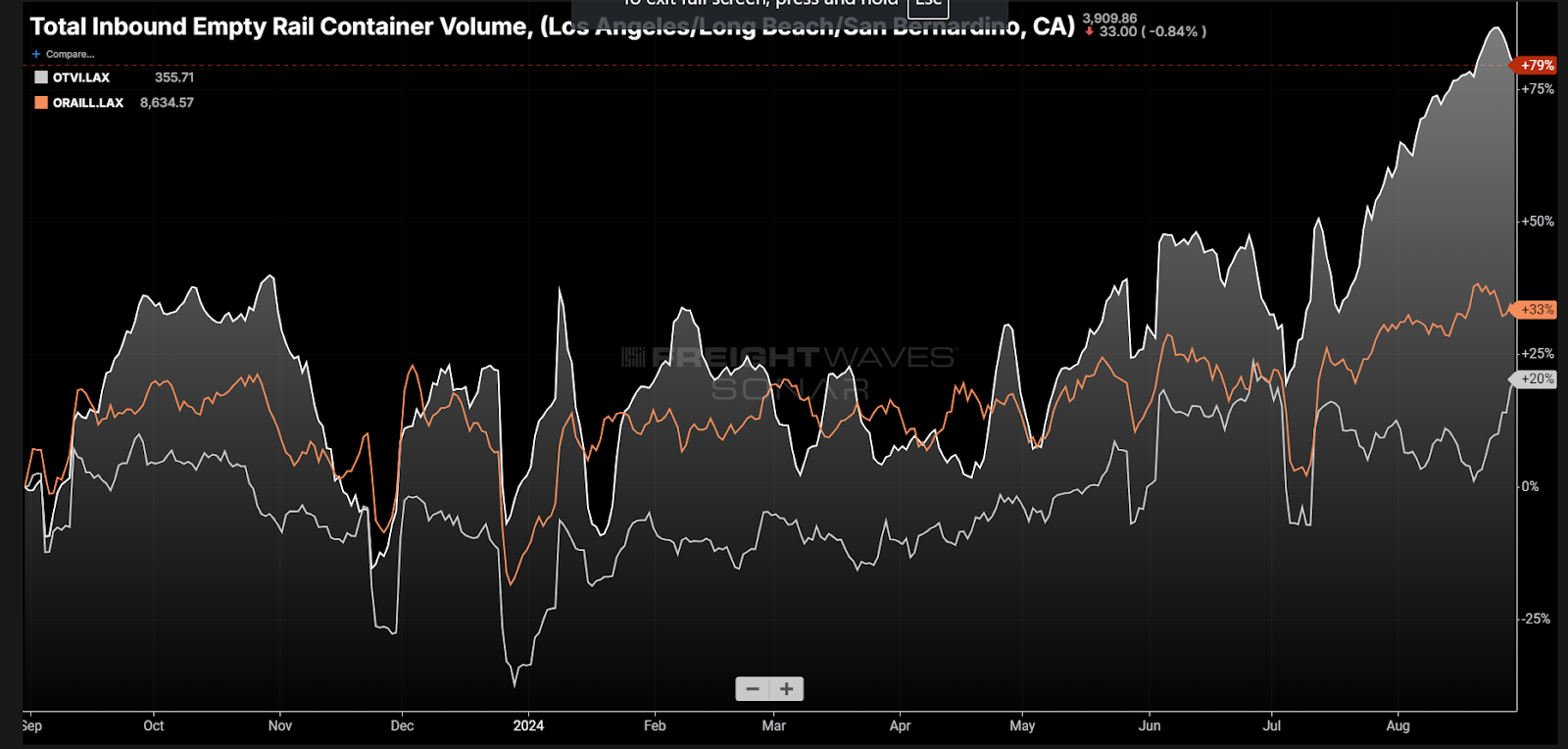
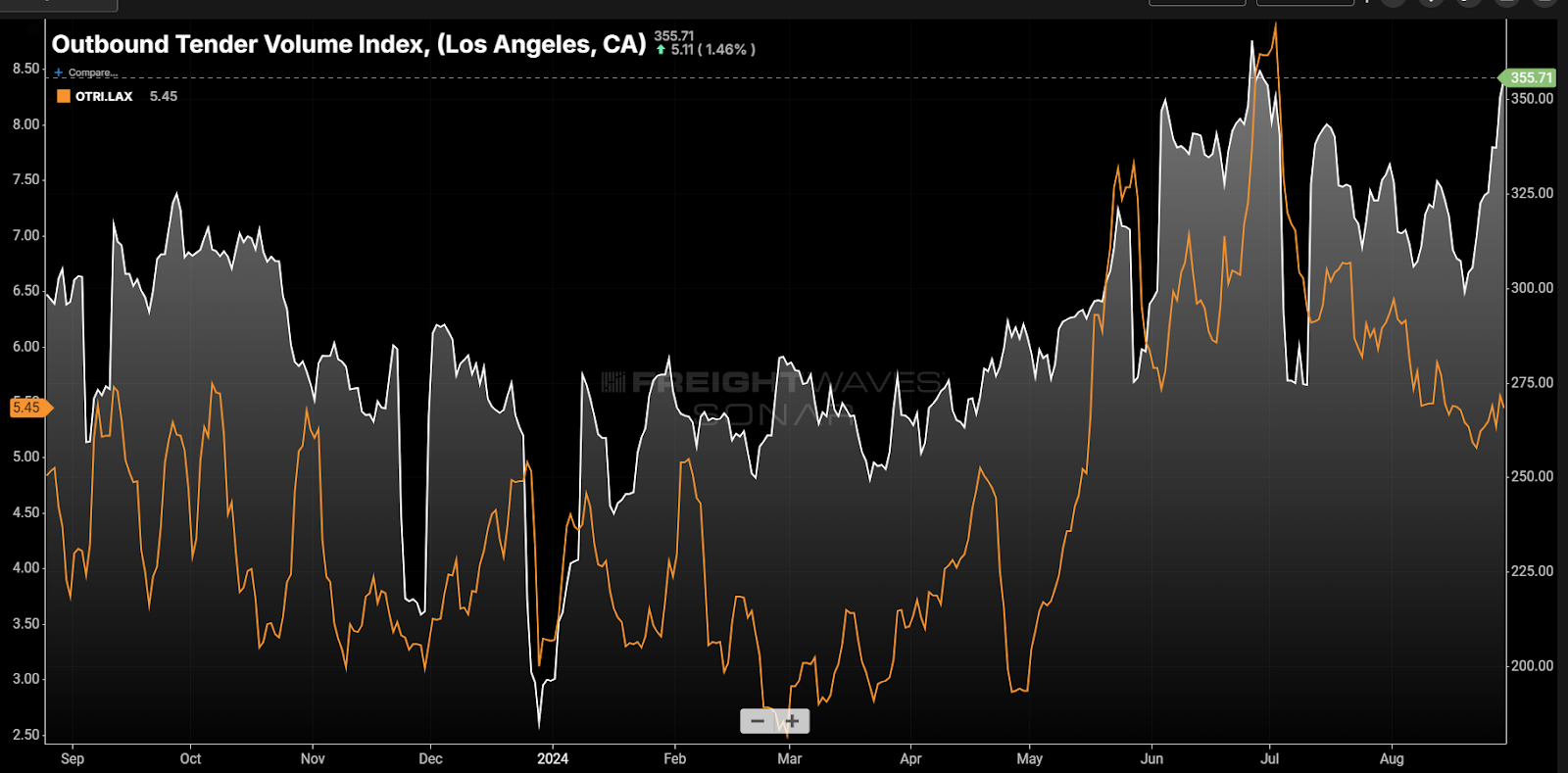
Chart of the Week: Inbound Empty Rail Container Volume, Outbound Tender Volume Index, Outbound Loaded Rail Volume – Los Angeles SONAR: IRAILE.LAX, OTVI.LAX, ORAILL.LAX

The rails movement of empty international and domestic sized containers into the Los Angeles market have spiked over the past month. The implication is that demand is outpacing the supply of available containers both on the west coast and overseas. The transportation market appears to be able to handle it.  

The dominant flow of consumer goods into the U.S. is from Asia to southern California. These are items like electronics, furniture and apparel. The primary consumption markets are in the eastern half of the country, which means most of the goods that come in through the ports of Los Angeles and Long Beach get moved either by rail or truck to the east. 

This trade route should not be confused with raw materials or routes associated with manufacturing and processing. Those are much more dispersed and less focused. 

The route represents the American consumer with shipments of primarily finished goods. It has been formed over the past 30 years as companies recognized the cost effectiveness of producing their goods in Asia. 

This mechanism is responsible for creating the largest imbalance in the flow of transportation capacity. The natural flow of goods continually puts pressure on Asian and Los Angeles market capacity. 

The result is that container ships move back to Asia with empty — non revenue generating — containers. The same is true for truckload carriers and the railroads. Since there is no natural mechanism pushing capacity back to where it is needed most, capacity tightens rapidly at times. 

Loaded domestic intermodal container volumes out of Los Angeles have grown significantly over the past year, with daily volumes averaging over 10% higher y/y throughout August. This was its fastest growth rate of the year. 

Truckload tender volumes out of Los Angeles averaged over 20% higher in June, pushing tender rejection rates to multi-year highs over 8% before the Fourth of July. Tender volumes and rejections fell throughout July up until last week. 

The data suggests intermodal had taken share from the truckload market and provided a way to relieve pressure on capacity.  

Unlike June, last week’s spike in tender volumes out of Los Angeles did not have a strong impact on capacity as tender rejection rates did not increase meaningfully, moving from 5.1% to 5.45% in the past week. Spot rates from Los Angeles to Chicago were only up 0.4% week over week last Thursday. 

The transportation market was able to absorb the blow leading into the Labor Day holiday weekend, but the surge of empties suggests that there may be more to come. 

It does seem that efficiencies have been gained since the pandemic when port and rail infrastructure was overwhelmed. Truckload capacity remains in abundance, but that is the one aspect of the transportation equation that is changing. 

Earlier this week, John Kingston wrote about the increasing instability in trucking sector credit, indicating that a wave of carrier exits is becoming increasingly likely. 

September will probably not be the month that the domestic transportation market flips to a tighter state, but it is not without vulnerability. There are growing risks for the fourth quarter with strong demand side dynamics as capacity continues to bleed out.

About the Chart of the Week

The FreightWaves Chart of the Week is a chart selection from SONAR that provides an interesting data point to describe the state of the freight markets. A chart is chosen from thousands of potential charts on SONAR to help participants visualize the freight market in real time. Each week a Market Expert will post a chart, along with commentary, live on the front page. After that, the Chart of the Week will be archived on FreightWaves.com for future reference.

SONAR aggregates data from hundreds of sources, presenting the data in charts and maps and providing commentary on what freight market experts want to know about the industry in real time.

The FreightWaves data science and product teams are releasing new datasets each week and enhancing the client experience.

To request a SONAR demo, click here.