Record rail intermodal, consumer spending signal positive outlook, says AAR

November rail traffic is signaling a positive outlook for the broader economy heading into 2025.

Resilient consumer spending helped intermodal continue to lead all categories in November and year to date, according to the Association of American Railroads’ Freight Rail Index (FRI) released Monday.

Continued strong consumer demand and port activity fueled record intermodal results in November, for three of the top five weeks since AAR started collecting data in 1988. The trade group credited a robust job market for bolstering growing consumer activity.

The November FRI was up 2.8% over October, reaching its highest point since May 2021. “This suggests that, while the economy has its challenges, it remains generally on solid ground,” the AAR said in the report.

At the same time, carload activity reflected ongoing weakness in the manufacturing sector and a steady decline in coal consumption.

The FRI counts intermodal plus carloads excluding coal and grain, and is considered an indicator of overall economic conditions. It is also seasonally adjusted by the AAR, in line with other indicators.

The AAR said consumer spending on goods and services, which accounts for 70% of GDP, is setting the pace for the broader economy with an inflation-adjusted 3% gain in October, the most recent available data, from a year ago following a 3.1% improvement in September.

More germane to rail, inflation-adjusted consumer spending on goods increased 3.1% in October y/y, which the AAR credited for the yearlong boost to intermodal results.

The report noted that while job growth has slowed from “unsustainable levels” in the past several years, a November recovery showed the jobs market remains resilient and, for obvious reasons, goes hand in hand with consumer spending.

More job openings in October from September; the fewest unemployment claims in November since April; a five-month high in the October quit rate (workers who quit their jobs presumably for better ones); and stable inflation portend continued consumer spending gains.

Those factors, and the results of the presidential election, pushed consumer confidence in November to its highest level in 16 months, according to the Conference Board, further bolstering the positive economic outlook.

In the U.S., railroads originated an average of 282,000 intermodal containers and trailers per week in November 2024, up 10.7% over November 2023 and the highest weekly average for any November dating to 1989. Year-to-date intermodal volume in 2024 through November was 12.75 million units, up 9.1% y/y, the third most behind 2018 and 2021.

Container originations averaged 272,243 per week in November, the third-highest weekly average on record.

The all-time top nine container weeks for U.S. railroads have come since late August of this year, AAR said, with three of the top five, including the top two, in November. Year-to-date container volume through November was the most ever, up 10.6% y/y. Trailer originations were off 19.7% from 2023.

The record container volumes follow higher port activity, with aggregate year-to-date volume at 10 major U.S. ports tracked by AAR ahead 13% through September from the previous year. West Coast gateways improved by 18%; East Coast ports increased 9%. The report noted some growth at West Coast ports came on the diversion of shipments from the East Coast ahead of a strike by members of the International Longshoremen’s Association. Some imports were also being brought forward in anticipation of potential tariff increases under the incoming Trump administration, and another possible East Coast port strike in January.

There was less good news in the manufacturing sector, which continued sluggish results seen over the past several years.

Carloads closely correlate broader manufacturing output, and shipments of chemicals, paper, steel and other metal products, motor vehicles, crushed stone and sand, metallic ores, and stone and mineral products were down 1% in the first 11 months of 2024 from a year ago.

Total carloads in November fell 3.8% y/y and were off in 10 of the 11 months of 2024. Volumes through November decreased 10.5 million, or 3.1%, to 335,954 carloads from the previous year. Only the pandemic year of 2020 had lower year-to-date total carloads since 1988.

Coal continued its historical decline, down 15.2% in November and 14% year to date to 2.71 million carloads — lowest on AAR record — as higher exports failed to offset lower domestic demand. But that figure was still 25.9% of all carloads, ahead of chemicals, 14.8%, and grain, 9.4%.

Excluding coal, carloads rose 1% in November, the 10th straight month of y/y improvement, and gained 1.4% year to date, the most since 2019.

Grain averaged 22,332 weekly carloads in November, up 0.7% from November 2023 and the 10th straight year-over-year increase. Volume came on easy comparisons to 2023, when grain exports were unusually low.

Grain carloads through November were up 8.8% year to date, or 78,881 carloads, leading all other commodity categories, but turned in the lowest volume in absolute terms since 2015 because grain exports are still lower than other, recent years.

Carloads of chemicals averaged 32,288 per week in November 2024, the highest weekly average ever for that month, ahead 3.9% over November 2023 amid year-over-year gains for 15 straight months. Year-to-date carloads through November totaled 1.55 million, an increase of 4%, or 60,155 carloads, and a record for the first 11 months of a year. Chemical production has been fueled by low prices for natural gas, and the outlook foresees steady expansion in 2025, the report said, quoting the American Chemistry Council.

The report concluded by noting that the economic outlook depends on the resilience of consumer spending, strength of the labor market, and where inflation and interest rates are headed. The combination of strong intermodal growth and stable consumer demand “offers reasons for optimism,” but railroads and the economy have to be vigilant in navigating evolving policies and potential disruptions.

Find more articles by Stuart Chirls here.

Related coverage:

Tariff threats roil North American container marketplace

Shippers urge longshore union, employers to resume contract talks

Slaying of UnitedHealthcare CEO puts focus on executive protection

Benchmark diesel price hits a low it hasn’t seen in more than 3 years

Not since October 2021 has the benchmark diesel price used for most fuel surcharges been this low.

With a decline of 8.2 cents a gallon from the prior week’s average retail diesel price, the price fell to $3.458 a gallon. That drop, posted  by the Department of Energy/Energy Information Administration, was the largest in almost a year, going back to a 9.3-cent decline Dec. 21, 2023, and the outright price was the lowest since a posting of $3.477 on Oct. 4, 2021, several months before the Russian invasion of Ukraine that sent prices on a wild ride that at one point lifted the average number well above $5 a gallon. (On June 20, 2022, the DOE/EIA price hit $5.81.)

The latest decline in the benchmark comes as ultra low sulfur diesel prices on the CME commodity exchange have been sliding consistently overall, though with bursts of an  occasional increase in the middle of that fall.

ULSD settled at $2.3042 a gallon Nov. 5, which was Election Day. A quick post-election decline took the ULSD settlement to $2.1709 on Nov. 15. There were spurts higher since then; the price settled at $2.2749 a gallon on Nov. 22. 

But the trend since that has been decidedly lower. The $2.1326 settlement Friday was the lowest since Oct. 28. A rally Monday added just over 5 cents per gallon to the price of ULSD, with a settlement of $2.1835. But that was seen as a reaction to a general concern about geopolitical tensions following the fall of the Assad regime in Syria and news about China’s plans to further stimulate the economy, rather than any change in oil market fundamentals.

While there is no immediate short-term bearish news, there also are essentially no conditions that any bulls can point to that would support an argument of higher prices on the horizon. 

That’s the key driver behind the decision last week by the OPEC+ group to delay and stretch out its plans to begin rolling back its production cuts that in the case of some countries can be traced back to 2023.

The rollback of the production cuts on a graduated basis was to begin in December. But the OPEC+ group, which consists of OPEC and a group of non-OPEC oil exporters nominally led by Russia, decided instead to delay increasing production until April. It also set a new calendar for the rollback by stretching it out to the end of 2026. They were originally planned to be implemented by the end of 2025.

Tariffs, China and demand: uncertainties

Helima Croft, managing director and global head of commodity strategy at RBC Capital Markets, said in an interview with CNBC on Monday that there are significant areas of uncertainty in global markets now. She cited tariffs, Iranian sanctions under a Trump regime and the demand forecast in general as some of those questions hovering over the market.

“Weak Chinese demand has really been a problem for the oil market,” Croft said. “This year, I think people will be watching very closely to see what the tariff impact will be on the supply side.”

But Croft’s own forecasts are notably bearish. The RBC forecast, circulated among oil followers Monday on X, showed an average price of global crude benchmark Brent of $68.50 a barrel, sliding to $63 by the fourth quarter and an average $65.50 for 2025. The 2026 average is $62.25.

Brent settled Monday at $72.14 a barrel.

Moves by Saudi Arabia

One market player that is clearly bearish is Saudi Arabia. According to Bloomberg, Saudi Arabia has notified its customers in Asia that it is cutting its price formula for sales into that region by 80 cents a barrel.

Arab Light, the primary Saudi grade, will be sold at a 90-cents-a-barrel premium to the benchmark set by the spot market prices of Oman and Dubai crudes beginning in January. The premium for December was $1.70 a barrel.

While forecasts in the market did assume there would be a decline in the premium, according to a report from Bloomberg, the expectation was that the premium would be $1 a barrel. The additional 10-cent reduction is considered a sign of the Saudi view of the market. 

Saudi prices are set as a benchmark to the price of crude grades Oman and Dubai. If the outright price of the benchmark rises, customers will pay more. But the spread is closely watched as a signal of how Saudi Arabia sees the market.

The spread was expected to drop to $1 a barrel, according to Bloomberg. Going an additional 20 cents per barrel below that is therefore viewed as a bearish signal. 

More articles by John Kingston

Court decision opens the door for reimplementing Rhode Island truck toll

Werner case at Texas Supreme Court: Did driver fail to perform a legal ‘duty’?

Credit position of BMO’s transportation clients worsens in the fourth quarter

Mexico’s automotive industry exports 289,309 vehicles in November

Mexican authorities said they are on track to produce and export a record number of passenger vehicles and pickup trucks in 2024.

From January through November, auto factories in Mexico produced 3.7 million units, a 5.6% year-over-year increase, according to data released Friday from the National Institute of Statistics and Geography (INEGI).

Pickup trucks accounted for 76% of total vehicles produced at Mexican auto factories during the first 11 months of the year, INEGI said.

Vehicles exported from Mexican factories from January through November totaled 3.2 million units, a 6.5% year-over-year increase from the same period in 2023.

“These results confirm the beginning of a new stage of expansion for the automotive industry. As a reference, 2017 was a record year in production, with 3.9 million vehicles; at the close of November 2024 we are only 168,000 units away from reaching it,” the Mexican Association of the Automotive Industry (AMIA) said in a statement.

Mexico City-based AMIA is a chamber association formed in 1951 to represent the interests of foreign vehicle manufacturers established in Mexico, including Audi, BMW, FCA, Ford, GM, Honda, JAC, KIA, Mazda, Nissan, Toyota and Volkswagen.

About 87% of cars produced in Mexico are exported, with 80% of them destined for the U.S.

During November, production of vehicles from Mexican auto factories increased 6.7% year over year to 351,535 units. Exports increased 2.9% year over year in November to 289,309 vehicles.

GM factories in Mexico exported 75,319 units in November, an 8% year-over-year increase.

In Mexico, Detroit-based GM has three production complexes, including plants in the cities of Ramos Arizpe (Chevy Blazer and Equinox), Silao (Chevy Silverado 1500 and GMC Sierra 1500) and San Luis Potosi (GMC Terrain and Chevy Equinox), according to GM Authority

Nissan exported 37,390 passenger vehicles during the month, a 40% year-over-year

Increase. Japan-based Nissan has two factories in Mexico where it produces models such as the Sentra and Kicks.

Toyota exported 26,905 units during November, a 46% year-over-year gain over the same period in 2023. The Japanese automaker produces the Tacoma pickup truck and the Corolla sedan in Mexico.

FreightTech supershow with RXO, Happyrobot, GenLogs | WHAT THE TRUCK?!?

On episode 782 of WHAT THE TRUCK?!? Dooner is joined by three CEOs from a trio of the fastest growing and most innovative companies in this space.

RXO CEO Drew Wilkerson talks about acquiring Coyote; consolidation; and M&A in trucking.

GenLogs’ Ryan Joyce previously spent his career in the CIA conducting counterterrorism operations throughout the Middle East. He used to track terrorists, but now he tracks trucks. We’ll find out how the company is scaling up the fight against freight fraud and investing its $6 million series A raise.

Last week, HappyRobot announced it had closed a $15.6 million Series A funding round led by Andreessen Horowitz (a16z), with participation from Y Combinator, RyderVentures and other strategic investors. HappyRobot CEO Pablo Palafox stops by to talk about the company’s AI-powered agents and how they work. We’ll even take them for a test drive. 

Plus, spot market hits new highs; driver training at Chuck E. Cheese; service dog retirement; trucker tases himself for likes; and more. 

Catch new shows live at noon EDT Mondays, Wednesdays and Fridays on FreightWaves LinkedIn, Facebook, X or YouTube, or on demand by looking up WHAT THE TRUCK?!? on your favorite podcast player and at 5 p.m. Eastern on SiriusXM’s Road Dog Trucking Channel 146.

Watch on YouTube

Check out the WTT merch store

Visit our sponsor

Subscribe to the WTT newsletter

Apple Podcasts

Spotify

More FreightWaves Podcasts

Tariff threats roil North American container marketplace

Trade and tariff concerns are roiling an already volatile market and pushing up prices for shipping containers in North America, a new report says.

The region saw a 20% spike in average container prices over the past 90 days to lead a global surge on market volatility, U.S. election uncertainty and tariff fears, growing Mexico-U.S. trade, and logistical disruptions in Canada, according to the December forecast from box marketplace Container xChange.

Higher container prices — and freight rates — are projected to remain higher.

“Tariffs make trade less efficient by adding costs, time, and complexity,” said Christian Roeloffs, co-founder and CEO of Container xChange, in the report. “For instance, instead of straightforward routes, businesses may rely on transshipments, rerouting through Mexico, or diversifying production and assembly sites. This inefficiency requires additional capacity, much like what we saw during Red Sea diversions

“Consequently, we anticipate container prices and freight rates to stay elevated, supporting demand for containers and vessel capacity. However, retaliatory tariffs and inflationary pressures will likely harm US exports more than imports, creating broader imbalances in trade dynamics.”

Since 2023, Houthi militia based in Yemen have attacked Red Sea shipping it claims are connected to Israel. Major ocean lines linking Asia, the Mediterranean and the East Coast of the United States have detoured away from the Red Sea and Suez Canal around the Horn of Africa, adding 10-14 days and higher operational costs to a typical voyage. It is unclear how the fall of Bashar al-Assad’s regime in Syria may affect the situation, but Gaza-based Hamas over the weekend called on Palestinians in the West Bank to expand its war against Israel and its allies.

Potential higher tariffs promised by President-elect Donald Trump, the report said, will further accelerate the ongoing process of trade risk diversification, which began during the COVID-19 pandemic. While this could create opportunities for new trade routes, it may also lead to a temporary mismatch in container supply and demand.

Container xChange found the North America region saw the largest increase in average container prices, with 40-foot high-cube cargo-worthy container prices rising by 20% over the past 90 days. North America was the most volatile market in that time, followed by East Africa and Southeast Asia.

The biggest spike came at Long Beach, California, where average container prices rose from $2,594 in October to $3,400 in November, a 31% increase representing a tightened market for container trading in the U.S.

The report described as “noteworthy” that the average container price across Canada rose by 23.3% from $2,086 in May to $2,570 in November. “This indicates a rebound in container prices in the latter half of 2024, driven by increased demand and supply chain pressures. Prices saw the largest percentage increase of 26.8% between May, $1,929, and November, $2,446,” the report stated.

Canada in that time suffered supply chain disruptions due to labor conflicts with unionized rail and port workers.

Conversely, China registered no change in average container prices from October to December. The port centers of Shanghai and Ningbo registered 5% and 2% spikes, respectively, but prices fell at Dalian, Shenzhen and Xiamen.

“While structural challenges like stagflation and persistent geopolitical tensions weigh heavily on the outlook for 2025, there is potential for persistent holding up of container shipping price flare-ups,” Roeloffs said. “Success will hinge on businesses staying agile, leveraging data, and preparing for both likely and unforeseen scenarios.”

In the outlook for 2025, the report said positive factors likely include a lowering of interest rates that will lead to lower container prices in the U.S. and Europe. Less likely was increased trade demand from a resolution to the war between Russia and Ukraine.

A likely negative factor is shipping overcapacity driving down freight rates and container prices. Unlikely: stagflation combining slower growth with higher inflation. 

The report outlined developments that are expected to affect container logistics in 2025.

Geopolitical tensions, trade disruptions and Trump tariffs will exacerbate market volatility, giving rise to intra-Asia trade and similar newer, smaller, more localized routes. Transshipment hubs will emerge in Southeast Asia and the Middle East, offering a decentralized model that is more flexible and resilient in key shipping lanes. 

Increasing trade tensions will reshape trade routes, such as China-Mexico-U.S. that are already growing for trans-Pacific commerce. Traders will have more options and reduced reliance on a single trade path as tariffs and sanctions impact costs and flow dynamics.

Increased operational costs from fuel prices, regulatory compliance and trade tariffs magnified by geopolitical issues, environmental regulations and disruptions will directly affect container traders, influencing shipping rates and operational planning.

Fleet expansion by liner operators is expected to continue, as carriers align with fluctuating demand and adapt to stricter environmental regulations. Investments now focus on more efficient, environmentally friendly vessels to meet new emissions standards while managing growing trade volumes.

Volatility will also lead container traders to prioritize flexibility with improved visibility across the supply chain. Real-time tracking and predictive analytics will help mitigate risks and speed more informed decisions.

The report said trade patterns will continue to evolve, with accompanying shifts in the volume of goods moving through certain regions due to tariffs, labor disputes, climate-related disruptions and other factors. Traders will have to adapt rapidly to changing conditions amid freight rate volatility.

Find more articles by Stuart Chirls here.

Related coverage:

Shippers urge longshore union, employers to resume contract talks

Slaying of UnitedHealthcare CEO puts focus on executive protection

Predictions platform says longshore strike not a sure bet

Air Canada leases surplus Boeing 767 freighter aircraft to Ethiopian Airlines

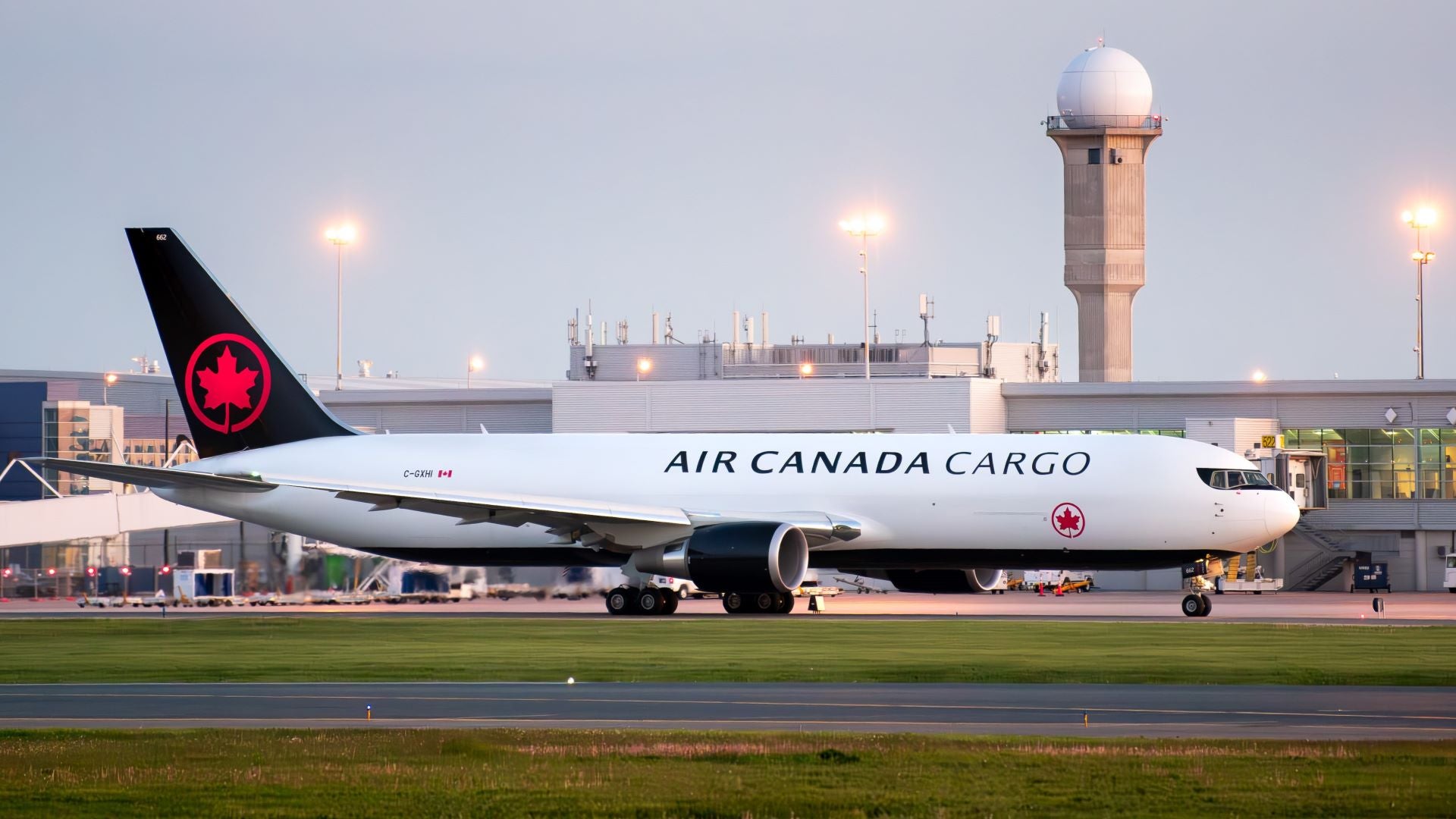
Side view of black-tailed Air Canada Cargo jet with red maple leaf at airport.

Air Canada has leased out two lightly used Boeing 767-300 freighter aircraft to Ethiopian Airlines, the largest passenger carrier in Africa and a rising player in the air cargo market with 17 dedicated freighters, FreightWaves has learned.

Air Canada (TSX: AC) pulled the factory-built Boeing 767 cargo jets, which are 2 years old, from its fleet in the second quarter because it didn’t have enough business to operate them economically. They have been at an airframe services and maintenance facility in Kansas City, Missouri, for several months for unspecified upgrades.

The cargo division of Ethiopian Airlines recently agreed to lease the newbuild, medium freighters, Matthieu Casey, managing director, commercial, at Air Canada Cargo, said in an email message on Sunday. Management had previously not discussed its intentions for the aircraft. Casey declined to provide the length of the lease.

Data on aircraft tracking site Flightradar24 shows one of the 767-300s departed Kansas City on Thursday and arrived in Addis Ababa on Friday.

Air Canada Cargo currently operates six older 767-300 aircraft that were converted from passenger to cargo configuration, mostly in the Americas and to Europe. Freighters allow the airline to provide consistent capacity for shippers on key trade lanes versus passenger aircraft, which also carry freight but are subject to schedule and route changes based on travel demand.

Canada’s flag carrier launched a freighter division in early 2022 to capitalize on record demand for airfreight during the COVID crisis but scaled back fleet plans when the market experienced a 16-month downturn that lasted through much of last year. Early this year, Air Canada took a one-time charge of $14.5 million for backing out of a deal for the conversion of two additional 767s. In September 2023, it canceled an order with Boeing for two 777-200 production freighters. 

The decision to shut down the two newbuild freighters within a year of delivery was made in the midst of a remarkable recovery for the air cargo market that began last fall. Demand has grown year over year for 15 consecutive months and has remained about 12% higher for the entire year so far compared to the same period in 2023. Canada’s limited population and all-cargo carrier Cargojet’s dominant position in the Canadian market has made it more difficult for Air Canada to grow its cargo business, analysts say.

“Our current operating fleet size of six freighters is a well-tailored and strategic fit to our overall network and fits very well within our geographical strengths of connecting the Americas and our growing global network. The fine tuning of our fleet size and network that has taken place over the past year has proven successful and we’re pleased with the stability this network provides,” Casey said in the message.

Ethiopian Cargo focuses on Africa market

Ethiopian Airlines is ranked No. 21 in the world by volume carried and is the largest cargo-network carrier in Africa. The company has set a goal for cargo to be a stand-alone profit center by next decade. It currently operates 10 Boeing 777 long-haul freighters, four standard-size 737-800 converted freighters and three leased 767-300 converted freighters, one of which has been grounded for more than three months. Four additional 777 production freighters are scheduled for delivery next year, but the schedule could be pushed back because of a recent strike at Boeing and other factory problems. The airline also has a tentative agreement with Boeing for the purchase of five 777-8 freighters, a next-generation aircraft that is still in the testing phase.

Ethiopian Cargo last year completed a large warehouse at its Addis Ababa hub that is dedicated to e-commerce shipments.

Ethiopian Airlines didn’t respond to a message seeking details about the Air Canada transaction. 

Click here for more FreightWaves/American Shipper stories by Eric Kulisch.

Air Canada drops 2 late-model Boeing 767 freighters from fleet

Air Canada abandons plans for 2 Boeing 767 converted freighters

‘No big bang’ for peak season air cargo business

Insurance based on reported miles per month offers flexibility to carriers

Insurance premiums are one of the top five costs for motor carriers, and carriers’ premiums traditionally are the same every month regardless of how many miles they drive. But that doesn’t have to be the case.

Reporting-style insurance is just that: insurance based on what is reported. Premiums are calculated based on actual usage metrics (e.g., mileage or revenue) rather than estimated or static numbers. This ensures that carriers only pay for the coverage they need, which can be cost-effective for businesses with fluctuating activity levels. Carriers are required to submit operational data monthly, quarterly or as specified in the policy. Timely and accurate reporting is critical to maintaining the policy.

There are two major types of reporting-style insurance: mileage reporting and unit reporting. Mileage reporting is based on the miles the motor carrier ran for the month, and unit reporting is based on the tractor units in use each month.

Kevin Dupree, executive vice president of sales at Reliance Partners, sums it up: “At the end of the month, the insurance company sends a report saying this is your mileage and what you owe us. Essentially it’s a dollar amount per mile. That rate is comprised of losses from previous terms and safety scores and other factors. The premium each month will vary depending on any changes to the physical damage values in the month, new driver additions, other changes such as commodities being hauled.”

This insurance model isn’t for everyone, but the key advantage it gives to carriers is flexibility. It’s not a scheduled policy, and if something changes, it gets reported at the end of the month. Insurers know fleets’ equipment fluctuates monthly, whether it’s vehicles out of service, trailers held for storage, seasonal work or holiday periods when drivers are running fewer miles. 

“Carriers only pay for the miles they run” under the reporting-style model, Dupree explains. “Although some have a minimum mileage you have to meet, some newer carriers have eliminated this as a selling point.”

The biggest thing insurance companies look for is exposure to risk. When looking at a mileage-based plan, insurers want to know common routes and the related risk level. Motor carriers sometimes are hesitant to provide lane data as they don’t want to be tracked by insurers.

Dupree states: “The biggest thing is when they look at International Fuel Tax Agreements and they see the miles you’re running.”

The reporting style of insurance stands to gain popularity as more insurtechs are getting into the industry, specializing in ease of billing, incentives, discounts, etc. It becomes easier to track miles since most insurers are already connected to a carrier’s telematics. It leaves little room for misreporting and negotiation, which speeds up the billing process. 

One downside to this type of policy is that the administrative lift is heavier. Carriers have to calculate and report on what happened for the month versus a more traditional method in which it’s the same amount every month that is paid like any other bill. 

Choosing between reporting-style insurance and traditional insurance plans comes down to a carrier’s operational needs, financial strategy and risk tolerance. Reporting-style insurance offers dynamic premiums that align closely with real-time activity, providing flexibility and potential cost savings for businesses with fluctuating operations. On the other hand, traditional insurance provides stability and predictability, making it a better fit for carriers with consistent activity or those that prefer simplified administrative processes.

Click here to learn more about Reliance Partners.

The home stretch: Volumes ease, spot rates retreat as year-end impacts yet to arrive

This week’s FreightWaves Supply Chain Pricing Power Index: 35 (Shippers)

Last week’s FreightWaves Supply Chain Pricing Power Index: 35 (Shippers)

Three-month FreightWaves Supply Chain Pricing Power Index Outlook: 40 (Shippers)

The FreightWaves Supply Chain Pricing Power Index uses the analytics and data in FreightWaves SONAR to analyze the market and estimate the negotiating power for rates between shippers and carriers.

This week’s Pricing Power Index is based on the following indicators:

Volumes rebound but still down year over year

True to form, tender volumes bounced back from the Thanksgiving holiday, but volumes remain depressed compared to last year. December is traditionally the softest month of the year due to the holidays in the back half of the month, and slowing business conditions create a challenging environment. There are just two weeks until the holidays, so at this time a significant uptick in volumes before the end of the year seems unlikely.

SONAR: Outbound Tender Volume Index — Seasonality View: 2024 (white) and 2023 (pink)
To learn more about SONAR, click here.

The Outbound Tender Volume Index (OTVI), a measure of national freight demand that tracks shippers’ requests for trucking capacity, rebounded from last week, rising 16.28%, but that growth is tied solely to the holiday. When holidays impact the freight market, it is more beneficial to compare the two-week change in freight volumes. On a two-week stack, the OTVI is down 7.3%. Compared to this time last year, tender volumes are down 11%, but some of that is the full impact of the Thanksgiving holiday weekend not being erased from this year.

Across the mileage band, midhaul volumes, loads moving between 250 and 400 miles, held up better than other volumes over the past two weeks, falling just 3.04%.

SONAR: Contract Load Accepted Volume – Seasonality View: 2024 (white) and 2023 (pink)
To learn more about SONAR, click here.

Contract Load Accepted Volume (CLAV) is an index that measures accepted load volumes moving under contracted agreements. In short, it is similar to OTVI but without the rejected tenders. Looking at accepted tender volumes, the rebound was greater w/w due to lower tender rejection rates, rising 16.7%. Compared to two weeks ago, CLAV is down 7.17%, and it’s down 13.2% y/y. 

It appears as if retailers were ready to handle the influx of demand from consumers during the retail holiday that is the five days from Thanksgiving through Cyber Monday. Adobe Analytics showed that on Cyber Monday alone, consumers spent $13.3 billion, a 7.3% increase y/y.

SONAR: Outbound Tender Volume Index – Weekly Change
To learn more about SONAR, click here.

As would be expected coming out of the holiday, tender volumes across the country are largely higher week over week. Of the 135 freight markets tracked within SONAR, 111 have seen tender volumes increase over the past week. On a two-week stack, just 30 of the freight markets tracked within SONAR experienced higher volumes. 

Tender volumes out of the Chicago market have experienced momentum the past two weeks, rising by 9.76%, by far the largest increase of the largest freight markets in the country.

Tender volumes out of Southern California are significantly challenged but are starting to recover from the holiday. Tender volumes out of Ontario, California, are down over 20% from two weeks ago, but that is still a result of the Thanksgiving holiday.

SONAR: Van Outbound Tender Volume Index (white, right axis) and Reefer Outbound Tender Volume Index (green, left axis)
To learn more about SONAR, click here.

By mode: The dry van market has been in continuous decline since the beginning of September and kept declining the past two weeks. The Van Outbound Tender Volume Index is up 13% w/w, due to the holiday but is down 5.92% on a two-week stack. Compared to this time last year, dry van volumes are down 12.5%, but again these comparisons are impacted by holidays.

The reefer market hasn’t experienced a decline similar to that of the dry van market,  but it has faced volatility on a week-to-week basis over the past several months. The Reefer Outbound Tender Volume Index is down just 0.4% over the past two weeks. Reefer volumes are down just 1.6% compared to this time last year and will likely turn positive as the Thanksgiving holiday impacts continue to roll off the index.

Rejection rates retreat from holiday highs

After setting a year-to-date high last week, tender rejection rates have dipped below 6% once again. After following the 2019 trend line fairly closely, the market hasn’t experienced a breakout like it did in 2019, but there are still positive signals heading into the final weeks of the year. The largest positive signal is that tender rejection rates have been steadily trending higher since mid-September without significant spikes on the climb, signaling a more sustainable increase as opposed to just holiday impacts.

SONAR: Outbound Tender Reject Index – Seasonality View: 2024 (white), 2023 (pink) and 2019 (orange)
To learn more about SONAR, click here.

Over the past week, the Outbound Tender Reject Index (OTRI), a measure of relative capacity, fell by 33 basis points to 5.98%. The OTRI is 230 bps higher than it was this time last year, showing that capacity has been exiting the market and carriers have slightly more optionality in the market than they did this time last year. With just two weeks until the holidays are in full swing, and with the OTRI not retreating significantly, rejection rates hitting double digits before the end of the year remains a strong possibility but maybe not to the extent of 2019.

SONAR: Outbound Tender Reject Index – Weekly change
To learn more about SONAR, click here.

The map above shows the Outbound Tender Reject Index — Weekly Change for the 135 markets across the country. Markets shaded in blue and white are those where tender rejection rates have increased over the past week, whereas those in red have seen rejection rates decline. The bolder the color, the more significant the change.

Of the 135 markets, 50 reported higher rejection rates over the past week, down from the 75 that saw tender rejection rates rise in the report before Thanksgiving.

With tender volumes rising in Chicago, tender rejection rates also moved higher over the past week. Tender rejection rates in Chicago increased by 48 basis points to 6.68%.

In Ontario, tender rejection rates fell by 150 basis points over the past week to 4.45%, the lowest level since the beginning of the year.

SONAR: Van Outbound Tender Reject Index (white), Reefer Outbound Tender Reject Index (green) and Flatbed Outbound Tender Reject Index (orange)
To learn more about SONAR, click here.

By mode:  The dry van market has seen tender rejection rates trend higher, but they didn’t approach the year-to-date high set around the Fourth of July holiday. The Van Outbound Tender Reject Index fell by 9 basis points over the past week to 5.24%. Despite the slight decrease, van tender rejection rates are 193 bps higher than they were this time last year.

The reefer market experienced a fairly decent drop in rejection rates over the past week, but rates remain significantly higher than they were this time last year. The Reefer Outbound Tender Reject Index fell by 33 basis points to 14.07%. Compared to this time last year, reefer rejection rates are up 644 bps.

The flatbed market remains quite volatile, especially after suffering a lull during late July through the beginning of October. The Flatbed Outbound Tender Reject Index fell by 135 basis points over the past week to 13.65%, but that is still at levels not experienced since the middle of June. Flatbed tender rejection rates are 442 basis points higher than they were this time last year.

Spot rates fall but remain elevated compared to much of the year

Tender rejection rates have retreated as capacity came back online, and as a result spot rates have given up some of their recent gains. Even so, spot rates remain elevated compared to where they were this time last year and higher than they have been throughout much of the year, allowing for a higher baseline for carriers heading into the final weeks of the year.

SONAR: SONAR National Truckload Index – Linehaul Only (white, right axis) and Initially Reported Van Contract Rate (green, left axis)
To learn more about SONAR, click here.

This week, the National Truckload Index – which includes fuel surcharge and various accessorials – retreated from the recent highs, falling by 5 cents per mile over the past week to $2.38. The NTI is now 4 cents per mile higher than it was this time last year. The linehaul variant of the NTI (NTIL) – which excludes fuel surcharges and other accessorials – decreased by 4 cents per mile over the past week, a sign that the decline wasn’t impacted only by falling linehaul rates but also to some degree by falling diesel prices. The NTIL currently sits at $1.83 per mile, the highest level of the past year outside of last week’s Thanksgiving-related increase and exceeding the Fourth of July peak. The NTIL is 14 cents per mile higher than it was this time last year, a sign of how impactful the decline in diesel fuel prices has been as a deflator for all-in spot rates. The average diesel price at truck stops is down 15.1% compared to this time last year.

Initially reported dry van contract rates, which exclude fuel, have remained fairly stable the past couple of months, as shippers have become more understanding over the past year that pricing could shift significantly. Over the past week, the initially reported dry van contract rate was unchanged at $2.33. Initially reported dry van contract rates are 2 cents per mile lower than they were this time last year.

SONAR: RATES.USA
To learn more about SONAR, click here.

The chart above shows the spread between the NTIL and dry van contract rates is trending back to pre-pandemic levels. The spread remains wide, but with the recent positive momentum in spot rates and flattening of contract rates, the spread is narrowing over the long term. Over the past week, the spread between contract and spot rates narrowed by 1 cent per mile, and it is 23 cents narrower than it was this time last year.

SONAR: SONAR TRAC rate from Los Angeles to Dallas.
To learn more about SONAR, click here.

The SONAR Trusted Rate Assessment Consortium spot rate from Los Angeles to Dallas continues to trend higher but not without some volatility along the way. The TRAC rate from Los Angeles to Dallas decreased by 22 cents per mile to $2.71, which is actually 3 cents per mile higher than it was two weeks ago. Spot rates along this lane are 23 cents per mile above the contract at present.

SONAR: SONAR TRAC rate from Atlanta to Chicago.
To learn more about SONAR, click here.

From Chicago to Atlanta, spot rates have been volatile but really haven’t moved significantly since the beginning of November. The TRAC rate for this lane increased over the past week, rising by 11 cents per mile to $2.70. Spot rates are 10 cents per mile below the contract rate, but that spread is at a level where spot rates offer optionality for carriers.

Trump’s tariffs could spark price hikes, supply chain disruptions, experts say

President-elect Donald Trump’s plan to hit imports from China, Canada and Mexico with tariffs could deal a blow to companies across North America and trigger negative consequences for the global supply chain, according to experts.

Trump said that on his first day back in office on Jan. 20, he will impose 25% tariffs on goods from Mexico and Canada. The tariffs are aimed at pressuring those countries to stop drugs and illegal migrants from crossing into the U.S., Trump posted on Truth Social on Nov. 25. He has also said he’ll impose an additional 10% tariff on Chinese imports to fight drugs coming from that country.

Sri Laxmana, vice president of Americas at freight broker and 3PL giant C.H. Robinson, said the company began hearing from concerned customers as soon as Trump made the announcement.

“We’ve been pulled into countless customer meetings to run risk scenarios for if Canada and Mexico tariffs were implemented,” Laxmana told FreightWaves in an email. “Many of our customers — especially in the automotive space — treat North America as one integrated supply chain with some of their freight actually crossing both the Mexico and Canada borders.” 

Laxmana said the No. 1 question from shippers has been around timing. 

“It typically takes months for full implementation of tariffs using administrative action,” Laxmana said. “Bottom line, we don’t know for certain what January will bring, and as border policy is obviously a central theme for the Trump presidency, it’s crucial to plan for different scenarios.”

Many of Trump’s foreign policy measures are part of his broader “America first” approach, which began during his first term in office. (Photo: Jim Allen/FreightWaves)

Many of Trump’s foreign policy measures are part of his broader “America first” approach, which began during his first term in office.

In 2018, the Trump administration imposed tariffs on $250 billion in Chinese goods coming into the U.S., covering items such as microwaves and other home appliances, electronic components, and pumping and valve systems.

China retaliated with higher tariffs on $60 billion in U.S. goods coming into that country, with U.S. soybeans taking one of the biggest hits.

During his 2024 presidential campaign, Trump said fentanyl from China is being smuggled into the U.S. and the additional 10% tariffs are aimed at spurring Chinese officials to stop the flow of drugs. 

The 10% duty on Chinese goods is less than the 60% tariffs on China-made imports that Trump promised during his presidential campaign.

Andy Sherman, the general manager for Fictiv’s U.S. operations, said the company has been hearing from customers concerned about the tariffs and its effect on the global supply chain.

Fictiv is a manufacturing technology company based in San Francisco. It has operations in the U.S., Mexico, China and India. Fictiv has manufactured more than 30 million commercial and prototype parts for both early stage companies and large enterprises.

“I think in 2023, 11% of the U.S. gross domestic product was imported. That’s about $3.1 trillion worth of imports in 2023,” Sherman told FreightWaves in an interview. “If we’re talking about tariffs around 10% to 20% on all countries, and somewhere in the order of magnitude of 60% tariffs on what’s going to be coming inbound from China … that’s a significant chunk of the U.S. GDP that all of a sudden is going to be subject to tariffs. I think for many of our customers, they are able to see the importance of having a highly agile supply chain and starting to be able to evaluate what makes sense to move to a China-plus-one strategy, or to be able to onshore. But tariffs across the board like this do not necessarily equate to, ‘Let’s move everything into the U.S.’ That’s not the way this works.”

Sherman said products that could be most affected by tariffs include clothing, toys and other consumer goods.

“When you’re talking about things like apparel, when you’re talking about things like toys, when you’re talking about many lower-cost or cost-sensitive goods that are very frequently manufactured out of China and where suppliers or some subset of manufacturers have not yet diversified that supply chain out of China, we know that those are the products that are going to be most heavily impacted,” Sherman said. “At the end of the day, if there’s a 60% tariff, that’s going to be passed along to the consumer, more than likely, in its entirety.” 

Pierre-Nicolas Disser, CEO of consumer product at QIMA, said Trump’s tariffs and immigration policies will raise prices for consumer goods.

Trump promised during his campaign that his immigration policy includes carrying out the largest mass deportation program in U.S. history. 

“A mass deportation of undocumented immigrants could severely impact sectors like agriculture, construction, and manufacturing that rely heavily on immigrant labor,” Disser told FreightWaves in an email. “Reduced labor availability would lead to higher wages, raising production costs and, ultimately, the price of goods. This would exacerbate inflationary pressures already heightened by tariffs.”

Hong Kong-based QIMA is a quality and compliance solutions provider, working with 30,000 brands, retailers, manufacturers and food growers globally. The company employs over 5,000 people worldwide, operating in more than 100 countries.

Disser said Trump’s tariffs could pressure companies to shift their supply chains, which could add more costs to their bottom line.  

“Increased tariffs will compel businesses to reassess their supply chains, a process that is both complex and costly,” Disser said. “In the short term, this is likely to result in delays, increased logistics costs, and higher prices for consumers. While diversification efforts have been ramping up, no single country can absorb the scale of manufacturing currently managed by China.”

North American brands and retailers have been shifting their supply chains to China’s neighbors in Asia, Disser said. 

“The greater Asia region’s share has grown from 35% in 2018 to 47%, with India and Vietnam emerging as clear winners, collectively increasing their share of U.S. sourcing from 14% to 22% during this period,” Disser said.

Sylvia Ng, CEO of reverse logistics firm ReturnBear, said Trump’s proposed tariffs could affect the e-commerce logistics industry by decreasing profitability for retailers. (Photo: Jim Allen/FreightWaves)

Another part of the supply chain that could be affected by Trump’s proposed tariffs is the e-commerce logistics industry, said Sylvia Ng, CEO of ReturnBear.

Toronto-based ReturnBear is a cross-border reverse logistics platform with a mission to make e-commerce returns simpler for shippers and customers, while reducing fraud and landfill waste.

“Recent events have made it harder for merchants to be managing profitability, which makes the returns process to actually even play a bigger role in their operations than before,” Ng told FreightWaves in an interview. “The potential Trump tariffs is one of the things that merchants have to think about. But even before that, you have the dock workers strikes that have been kind of rolling through the U.S. and Canada. In Canada, we have a postal workers strike that’s been going on for a whole week now and it’s affecting a lot of merchants that are based in the U.S.”

Workers for the Canada Post, the country’s national mail carrier, have been on strike since Nov. 15, citing failed contract negotiations between the postal service and the Canadian Union of Postal Workers.

Key negotiation points between the postal service and the union include wages, safety and automation in the workplace.

“Obviously, if you are selling from the U.S., you might not know that these things are happening in a different market,” Ng said. “Then you add on the potential tariffs and I just feel like there’s a lot going on in the macro economic space right now that the merchants are having to deal with alongside the holidays.”

The global reverse logistics market was valued at $769 billion worth of goods in 2023, according to Fortune Business Insights.

ReturnBear was founded in 2021. The platform gives shippers access to more than 1,000 package-free, label-free return drop-off locations across Canada. The company also has hubs in the U.S. in Portland and Buffalo, and recently launched operations in the United Kingdom.  

Ng said Trump’s proposed tariffs could hit small and medium-sized (SMBs) e-commerce retailers the hardest, companies that have already been impacted by lower sales due to inflation.

“Unfortunately, the tariffs’ impact is going to be higher on SMBs,” Ng said. “SMBs don’t have the bandwidth or the extra resourcing to be handling all this change. The National Retail Federation has also predicted that American consumers are going to lose $78 billion annually in spending power due to these new tariffs, things like apparel, toys, furniture, footwear, travel. My concern is actually making sure that we help the SMB and mid market merchants to roll with these punches as much as we can and help them alleviate the need for them to pass on more cost to the consumers.”

Court decision opens the door for reimplementing Rhode Island truck toll

(Editor’s note: A statement from the Rhode Island Trucking Association has been added to the original article as well as a statement from ATA).

Rhode Island’s truck tolling system, which has been on the shelf following a lower court ruling in 2022, has new life following a Court of Appeals decision handed down Friday.

The decision by the 1st U.S. Circuit Court of Appeals is a blow to the American Trucking Associations, which has led the legal fight against the tolling plan known as RhodeWorks, but does not give a full green light to all the provisions of the Rhode Island law. In that sense, the decision is a partial victory for the ATA.

In the latest finding, the court found that applying the tolls on bridges only to tractor trailers was not a violation of the dormant Commerce Clause of the Constitution. An earlier plan to have the tolls apply to Class 6, 7 and 8 vehicles ultimately was revised to include only Class 8 vehicles. 

However, the court did find that the capping of tolls by which a truck can be assessed only a certain number of tolls in a day for various activities did violate the dormant Commerce Clause. But the court also found that the capping provision could be “severed” from the law, so that the ruling against the caps does not lead to the entire law being invalidated.

The state’s truck toll was applied only to intrastate bridges, so no bridges crossing into another state were affected. The number of bridges that fell under the law: 13. 

ATA and several companies filed the original lawsuit in 2018. One of the initial plaintiffs was less-than-truckload carrier New England Motor Freight; it went out of business in 2019. Among the other plaintiffs is Cumberland Farms, a major New England convenience store chain, and M&M Transport, a dedicated carrier that last year was acquired by Schneider National (NYSE: SNDR).

The 1st Circuit’s decision handed down in early December comes more than 14 months after oral arguments in the case.

Rhode Island’s request to have the case dismissed was backed in a lower federal court in 2019, but a 2022 decision saw the ATA prevail in its fight against the law, which was blocked by Judge William Smith in the U.S. District Court for the District of Rhode Island.

At issue is the relationship between the law and the dormant Commerce Clause.

In the 2022 decision, the District Court said a toll system can be set up to comply with the clause. But it also said at the time that RhodeWorks, the name of the tolling system that was designed to raise funds for bridge repair and maintenance, “fails to fairly apportion its tolls among bridge users based on a fair approximation of their use of the bridges, was enacted with a discriminatory purpose and is discriminatory in effect. The statute’s tolling regime is unconstitutional under the dormant Commerce Clause of the United States Constitution.”

It was that finding that was reversed Friday.

Citing legal precedent, the Court of Appeals said a tolling system can be justified under the dormant Commerce Clause “if it is based on some fair approximation of the tolled facility, is not excessive in relation to the government benefits conferred, and does not discriminate against interstate commerce.”

There are numerous definitions of the dormant Commerce Clause. The Constitutional Law Reporter website said that the clause, which is not explicit in the Constitution, “automatically invalidates a protectionist state law, whether or not the federal government has legislated on the issue.”

“Our analysis of RhodeWorks revolves around two questions,” the court wrote. “First, does the statue discriminate against interstate commerce? And second, is the burden imposed by the tolls based on some fair approximation of use of Rhode Island bridges?”

The charge of discrimination was rooted in the fact that RhodeWorks only applies to Class 8 vehicles. After discussion of some theoretical comparisons in other fields, the court comes back to the question of how similar Class 8 vehicles are to the other universe of trucks that wouldn’t come under RhodeWorks.

The conclusion was succinct. Citing language in the prior decisions, the Court of Appeals said, “there is simply ‘no concrete evidence demonstrating an increase in Rhode Island-based companies’ use of un-tolled trucks, changes in vehicles fleets, diversion or any other data demonstrating that smaller trucks compete in the same market as tractor trailers.” 

ATA, the court said, “offers no actual evidence that tractor-trailers compete with single-unit trucks in Rhode Island, let alone that out-of-state tractor-trailers compete with in-state single-unit trucks in Rhode Island.”

Challenging a “neutral” status under the dormant Commerce Clause, the Court of Appeals said, “must have a substantial competitive interest on nonstate interests.” 

“The record provides insufficient support for ATA’s contention that exempting all single-unit trucks from RhodeWorks tolling structure transgresses the dormant Commerce Clause,” the court said. 

The caps in RhodeWorks are three-pronged. A truck only gets billed for one way on a bridge; a ride between Connecticut and Massachusetts with the Ocean State in-between will not cost more than $20 (though a lower court said at current rates, racking up that much was mathematically impossible); and total payments per day max out at $40.

The way the caps are structured, the Court of Appeals found, would mean that local companies would “disproportionately benefit” from the caps compared to out-of-state trucks. It cited ATA submissions that in a certain observed period, 39.9% of the reduction in tolls brought on by the caps was accrued by Rhode Island trucks, even though they only accounted for 18.6% of the toll transactions. 

“Given this disparate impact on similarly situated tractor-trailers, the caps are discriminatory,” the court wrote, citing precedents in other cases. “No basis exists for treating this discrimination as permissible.”

Another issue tackled by the Court of Appeals was that of “fair approximation.” It deals with the question of whether the tolls are correlated with the Class 8 vehicles’ use and impact on the 13 bridges.

Citing a precedent involving airport user fees, the Court of Appeals said Rhode Island “may collect a fee from the most intensive users without having to also collect a fee from lesser users. Rhode Island can reasonably point to a benefit from deciding to apply its toll to only tractor-trailers rather than to all the varied and much more numerous vehicles that cross its bridges.”

On Page 28 of the 52-page decision, the court then tackles the issue of whether rendering the caps in violation of the dormant Commerce Clause invalidates the entire law. The finding: It doesn’t. 

“Invalidating RhodeWorks based on nothing more than the unconstitutionality of the caps would cut against the legislature’s resolve to raise funds for its bridges,” the court wrote. It does not eliminate the state’s “stated preference” to be able to “excise … defective provisions.”

The decision remands the case back to the lower court. 

Richard Pianka, ATA Chief Legal Officer and General Counsel, issued a statement that was mostly positive. “We’re pleased that the Court of Appeals agreed with us and the trial court that the RhodeWorks tolls unconstitutionally discriminated against interstate commerce, and are reviewing the decision and considering next steps,” he said.

In a prepared statement, Chris Maxwell, CEO of the Rhode Island Trucking Association, was mostly positive about the decision also.

“The First Circuit confirmed that the RhodeWorks caps spared the Rhode Island trucking industry, and the Rhode Island residents they serve, from the full burden of the tolls,” Maxwell said. “Suppose Gov. McKee and the General Assembly are considering reactivating the tolls without those protective caps. In that case, they first need to consider whether they are willing to break the promise that was made to the local business community as a condition of passage of the legislation, and be candid with Rhode Island residents that these increased costs will be reflected in the price of goods, nearly all of which reach them by truck.”

An email sent to the ATA had not been responded to by publication time. The organization’s website had not posted a reaction to the decision as of early Sunday.

In a prepared statement, Rhode Island Attorney General Peter Neronha said his office “[had] been confident that this will be the eventual outcome, and we are grateful for the First Circuit’s well-reasoned decision in this case.”

More articles by John Kingston

TriumphPay’s LoadPay a new tool in fierce battle to get drivers paid faster

Werner case at Texas Supreme Court: Did driver fail to perform a legal ‘duty’?

Credit position of BMO’s transportation clients worsens in the fourth quarter