IEA: Can diesel keep dodging big impacts from attacks on Russian refineries?

Diesel prices relative to crude have held fairly steady in recent weeks, but a report by the International Energy Agency has a wary — though not apocalyptic — recap for diesel consumers on how Ukraine’s attacks on Russian refineries might end that stability.

Crude and products markets are up overall in the past month. Brent, the world’s crude benchmark, settled on March 12 at $81.92 a barrel. It has crossed the $90 mark in recent days, primarily fueled by concerns that growing tensions between Israel and other countries, Iran in particular, could result in an escalation of military action that could disrupt production in Iran or elsewhere. While the war in Gaza and Iran-backed missile attacks in the Red Sea have helped lift prices, they have not actually resulted in any reduction in output.

But Ukraine has ramped up recent attacks on refining facilities in Russia, and that has the IEA concerned about price increases in diesel given Russia’s role as a key diesel supplier to world markets.

In its April report released Friday, the international agency made up primarily of nations that are net consumers of oil reviewed the numbers linked to the attacks. Its headline on a section in the report: “Russian refinery outages risk disruption to middle distillate markets.”

The IEA concedes upfront that the attacks have “yet to materially disrupt global middle distillate markets.” Diesel is a distillate, as are jet fuel and heating oil, among other products. But diesel is the largest cut of distillate consumption.

“The potential remains for tighter clean product supplies in the coming months,” the IEA wrote. “International light and middle distillate markets rely on Russian exports of diesel, naphtha and jet fuel.” Naphtha is not a distillate.

The IEA’s estimate is that since the end of January, Ukraine has attacked more than 2 million barrels per day of Russian crude distillation capacity, the basic building block of the refining process. Not all of that is offline, but the IEA said it believes that about 800,000 barrels per day of refining capacity has been “wholly or partially” shut down as a result of the attacks.

Trying to count the refining losses

The full impact of the attacks is hard to quantify, the IEA said. Russian government reporting on the impact of the attacks has been scarce, forcing a reliance on third-party estimates of how much capacity has been taken out. Refineries that are down are shrouded in mystery about what units have been affected and how long they will be offline, according to the IEA.

And maybe the losses can be compensated for, the agency said: “It seems reasonable that the Russian refining system is large enough that some outages could be offset by the deferral of planned maintenance or increased runs elsewhere in the system.”

The IEA’s bottom line is that the first quarter is likely to have seen a loss of 500,000 to 600,000 barrels per day of crude processing on a gross basis, before any offsetting steps are taken into account. “The shutdown of these refineries or units for between 4-8 weeks for repairs could mean a significant loss of diesel and naphtha supplies to international markets,” the agency said.

But the report pivots to throw doubt on those numbers as well. It cites numbers from the data analytics firm Kpler that “so far do not show that Russian diesel exports are falling. Weekly data through mid-March indicate that loadings have been maintained.”

It also cites Russian government data that shows only a 100,000-barrel-per-day drop in diesel output. “This level of output is consistent with crude runs at 5-5.2 mb/d, rather than the 4.6 mb/d that a bottom-up assessment of the refinery outages would indicate,” the report said.

Diesel markets not showing concern

The largest source of skepticism on the impact of any Russian capacity loss comes from the market. As the IEA says, diesel relative to crude has fallen in some key markets — the opposite of what might be expected if the Ukrainian attacks were creating large-scale declines in diesel supplies.

The IEA notes that the spread, or “crack” in industry parlance, between Brent and diesel in northwest Europe was less than $25 a barrel in early April after being at almost $40 a barrel at the start of February.

In Asia, the market for gasoil, similar in characteristics to diesel, is now in contango, the IEA noted. Contango is a market structure in which the price of the commodity is higher for each month along the calendar. June is higher than May, and July is higher than June. Contango is associated with well-supplied markets.

In the U.S., on the CME commodity exchange, the spread of ultra low sulfur diesel over Brent crude was more than 70 cents a gallon several times in March. On Thursday, it was less than 53 cents a gallon, a level it had not hit since late May.

And while U.S. inventories of ultra low sulfur diesel are well below where they were at the start of the year — 124.3 million barrels, according to the Energy Information Administration — the level for the week ended April 5 of 108.7 million barrels was the highest in five weeks. 

More articles by John Kingston

Baltimore gets FMCSA waiver; timeline for first reopening is suggested

Truck lease purchase deals come under heavy fire at MATS and in court

Wisconsin court affirms Amazon Flex drivers were not independent contractors

FreightTech Friday: Motive’s new tech, goFlux’s $6M raise

Motive, a leading provider of industrial technologies, orchestrated its inaugural user conference, Vision 24, in Nashville, Tennessee, this week. This event served as a platform, uniting key stakeholders across sectors such as transportation, farming, mining, construction and manufacturing.

The conference allowed thought leaders to engage in dynamic discussions, sharing insights and best practices pertinent to Motive’s expanding product portfolio, as it introduced its AI Omnicam, Motive Beacon and Driver Safety Solution.

AI Omnivision is a computer vision platform that can be used across the physical economy sectors to deploy custom AI models. For waste services, it can help detect overflowing bins or hazardous materials. For construction, it monitors job sites in real time to prevent accidents, and for transportation, it can help identify unauthorized cargo movements and plan for other security and compliance issues.

Bluetooth-based Motive Beacon, consisting of its Gateway and Mesh Network offerings, helps manage and track assets of all sizes. 

While indoors, the Gateway forms a wireless network, helpful for warehousing and construction sites, enabling workers to locate tools and equipment quickly through the Motive Fleet app. Outdoors, the Mesh Network utilizes over 2 million active Gateways and app users to track assets in transit outside facility boundaries.

Motive’s Driver Safety Solution helps detect and report on collisions. Its AI models detect unsafe driving behavior like drowsiness, lane swerving and forward collisions. Upon collision, its First Responder feature automatically dispatches vehicle data to emergency services while notifying safety managers, especially helpful for assets in remote areas.

FreightWaves’ enterprise fleet expert Thomas Wasson attended the 500-customer event and particularly enjoyed the focus on safety across the physical economy.

“It was all about safety, but not just in trucking,” said Wasson. “Construction was a big topic, especially using computer vision to identify everyday problems like workers not using hard hats.”

He also liked the new approach of using updated technology to be proactive and not reactive to compliance problems with trucking, something that could bring savings to fleets.

“Ten years ago, fleet managers just reacted to driver complaints from shippers, motorists and other witnesses. Now managers can get real-time information and help coach and develop drivers out of those bad habits. … With this reporting on hand, fleets should be able to renegotiate lower insurance rates because they can prove driver behavior at any given time,” he explained.

GoFlux raises $6M for Latin American freight management platform

Sao Paulo-based FreightTech provider goFlux announced Wednesday it has closed a $6 million Series A round led by Capria Ventures with participation from past investor SP Ventures and new investors The Yield Lab Latam, Blue Impact Global, Reflect Ventures and Arrebol Capital. The company has raised about $7.2 million since its first round of funding in 2021.

GoFlux’s board of directors Pedro Azevedo, Luis Fernando Martinez, Rodrigo Gonçalves and Renato Castilho. (Photo: GoFlux)

The new capital will be used to continue building its goFlux View platform, which leverages generative AI to view future freight market behavior and help customers make better decisions faster. GoFlux also has its naConta fintech platform, its Club solution and its CarbonFree product to help carriers manage their cash flow, back-office operations and carbon footprints.

According to the company, last year its freight management platform supported over 1.5 billion tons of cargo moved throughout Brazil, eliminating bottlenecks.

“The Brazilian freight market faces several bottlenecks that hinder its efficiency and generate extra costs,” Rodrigo Gonçalves, founder and CEO of goFlux, told FreightWaves.

As with the U.S. freight market, the industry is plagued by market fragmentation, leading to a lack of transparency in price and service. It also lacks digitalization, which leads to plenty of management inefficiencies all along the supply chain.

“The lack of integration between systems and processes makes it difficult to track cargo and manage the truck fleet. Without knowing where the cargo is and how the fleet is operating, it is impossible to optimize routes and reduce costs,” Gonçalves said of the carrier experience.

However, in Latin America, the freight market conditions are much different at present.

“Latam freight demand is resilient, supported by strong demand in agribusiness in countries like Brazil, Argentina and Paraguay. We also expect better GDP growth in the next few years to boost the demand for the freight industry,” he said. “Latam depends on truck freight; more than 65% of the total volume is moved with trucks, so we are bullish about Latam freight growth.”

With this round of funding, the company looks to operate in Argentina, Paraguay, Uruguay, Mexico and the United States.

“The U.S. freight market is transforming,” said Gonçalves. “We see a rising demand for truck freight for grains and agribusiness due to the increasing competition for rail capacity and the bottlenecks at the Mississippi River. So where there’s a crisis, we see opportunity, and we never bet against America.”

Brief Bytes

Navix announced Tuesday it has entered a partnership with Chicago-based Avenue Logistics to streamline the company’s freight auditing and invoicing processes.  Patrick O’Connor, CFO at Avenue Logistics, expresses confidence in the partnership’s ability to catalyze growth and enhance relationships with customers and carriers.

Predictive maintenance solution Intangles introduced a new product, InRoute Connect, on Thursday. Alan McMillan, president of Intangles Americas, emphasized the urgency of avoiding breakdowns and delays and said the company’s AI-powered platform, installed in over 175,000 vehicles globally, offers predictive insights, reducing repair costs and downtime. InRoute Connect features a comprehensive database of service centers and provides fleets control over maintenance processes.

Freight execution platform Banyan Technology announced partners with visibility provider GoComet to enhance ocean and air tracking and freight spend management. This collaboration offers real-time visibility, live updates and advanced automation, elevating shipping operations’ efficiency. Banyan has expanded its mission beyond less-than-truckload shipping solutions, focusing on comprehensive shipping innovations.


Other FreightTech news from this week:

Stord acquires ProPack Logistics, expands North American footprint

Platform Science secures $125M to grow OEM partnerships

FreightTech Friday: 4 tech companies FreightWaves met at MATS

FreightWaves Infographics: NHTSA reports fatality, injury uptick in latest truck crash stats


To view more FreightWaves infographics, click here

Fired driver stung by Drive-A-Check report loses appeal in defamation case

A truck driver dismissed from his job who then sued over a report filed on him to a background check agency has lost his defamation lawsuit against his former employer for a second time.

A three-judge panel of the 6th U.S. Circuit Court of Appeals, in a unanimous decision, said Dillon Transportation acted properly when it submitted information on driver Frank McKenna to HireRight, an action that McKenna said in his initial lawsuit defamed him.

In ruling for Dillon last week, the judges upheld a decision by the U.S. District Court for the Middle District of Tennessee that also rejected McKenna’s defamation claims. Dillon is based in Tennessee.

The federal case grew out of a state action initially filed by McKenna that was dismissed as “non suited without prejudice” by a state court in March 2021. That status allows the case to be refiled in a different court.

The on-the-road facts of the case were not in dispute. McKenna was a driver for Dillon who overturned his tractor trailer in California in January 2017. He had been working for Dillon since early 2014, and the initial lawsuit said he had been driving for more than 20 years.

McKenna was fired the following month. In the original lawsuit filed with the federal court, McKenna said the cargo had been improperly loaded, contributing to the crash.

Dillon then submitted a “Drive-A-Check” report on McKenna to HireRight, a document referred to in the court documents as a DAC report.

“Employers like Dillon subscribe to HireRight’s services so they can use DAC reports to perform background checks on driver applicants,” the appellate court said in recapping the history of the case.

The report not only noted the rollover but also said McKenna had “an unsatisfactory safety record,” the decision says, noting that anyone who had the DAC report on McKenna would see that information.

Not able to find a job

McKenna sued, saying the report was “defamatory and resulted in his inability to secure later employment.” In the initial lawsuit, McKenna’s inability to find new employment is detailed, noting that “the plaintiff had never experienced any problem in the past in being hired.” It also said he had “a reputation that warranted the unqualified confidence of prospective employers in hiring him as a CDL driver.”

Dillon’s primary defense was that the federal Fair Credit Reporting Act (FCRA) preempted McKenna’s defamation claims, which were a state-level action.

The FCRA, according to a precedent cited by the appeals court, regulates the submission of information to a consumer reporting agency like HireRight.

And because it’s federal law, it would preempt a state action. The FCRA, “on its face, preempts state causes of action based on providing information to HireRight.”

Federal law trumps state action

In the lower court ruling, Judge Waverly Crenshaw, in issuing his summary judgment, reviewed the roles of McKenna, HireRight and Dillon under the FCRA. And given the protections under FCRA to the “furnisher” of information — Dillon — and the provider of the consumer reporting — HireRight — “McKenna’s state law libel and tortious interference with business claims against Dillon are preempted as a matter of law.”

A second key argument from McKenna’s legal team was that a Department of Transportation mandate regulating carriers to gather data on prospective employee drivers — referred to in the court document as section 508 — opened the door to a lawsuit against Dillon despite the apparent FCRA preemption. The section 508 rule blocks liability findings against companies that supply information on a driver’s safety records but leaves open legal actions to companies that supply “false” information.

In the transcript of the lower court hearing, the attorney for McKenna said his client believes the DAC report “contains false information about him that interfered with his prospective business relationships and damaged his reputation.” The loss of liability protection for the filing of “false” information under the DOT rule could open the door to a defamation lawsuit like McKenna’s. 

The appellate court did not rule on the accuracy of McKenna’s claim about the report being false. But the McKenna legal argument would be that the law mandating carrier requirements to fully vet prospective drivers and its lack of protection for those who file “false” information is adequate for McKenna to proceed with a defamation claim despite FCRA preemption.

But a crucial part of the lower court decision and the later appeals court ruling is that nobody requested the McKenna DAC. The court said the DOT regulations are aimed at protecting the submitters of information on individuals who are “under consideration for employment.” But given that nobody ever requested McKenna’s DAC after he was dismissed by Dillon, “for purposes of the statue he may never have been under consideration.”

The court then writes that even if section 508 applies to McKenna, the fact that nobody asked for the DAC means the law is effectively moot in McKenna’s case.

“But even if § 508 covers McKenna, that still leaves the FCRA preemption provision,” the court wrote. “McKenna responds that we should harmonize the two preemption statutes by giving priority to the more specific statute,” which would be the law on vetting prospective drivers. 

McKenna’s argument is that the section in FCRA that relates to state laws — 15 U.S. Code Section 1681t — might preempt the McKenna defamation action on its own, but the section 508 law allows it, so it should be able to proceed.

The court rejected that argument. “One regulates the consumer reporting industry,” it wrote. “Another regulates the hiring of commercial drivers. The statues have different textual purposes, and neither swallows the other.”

An analysis at the Justia law site said of that decision, “the court found the two preemption statutes, the FCRA, and the Department of Transportation regulation, complemented each other and could coexist.”

The third argument made by McKenna on appeal was a lengthy dispute over filing deadlines. It was a battle that the former driver ultimately lost.

In a transcript of the hearing in May 2023 before the lower federal court, Jeffrey Cox, attorney for Dillon, said the defamation suit was not the only way for McKenna to protest what was in his DAC.

“The plaintiff was not left without remedy,” Cox said. “Pursuant to the Federal Motor Carrier Safety Administration Regulations, he could have filed a dispute with Dillon as to Dillon’s characterization of safety records being unsatisfactory. He could have filed a dispute with Dillon, and Dillon would have to include it with the report and/or investigate it, maybe withdraw it. We can’t know exactly what would happen, but there’s a remedy.”

More articles by John Kingston

Baltimore gets FMCSA waiver; timeline for first reopening is suggested

Truck lease purchase deals come under heavy fire at MATS and in court

Wisconsin court affirms Amazon Flex drivers were not independent contractors

WARN Act claims against Yellow may not be settled this year

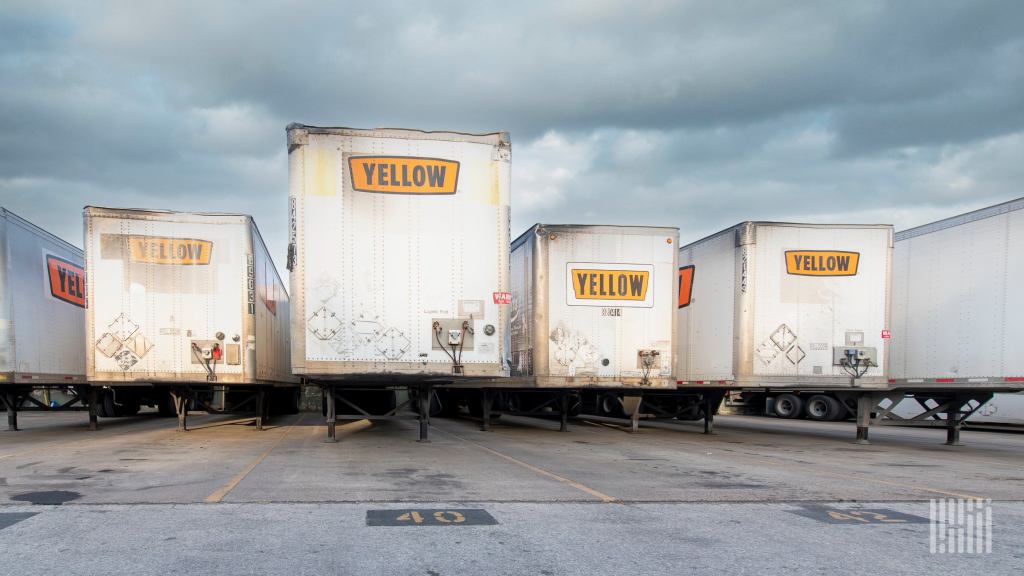
Several Yellow trailers at a terminal

Claims that defunct less-than-truckload carrier Yellow Corp. failed to provide appropriate notification to employees ahead of mass layoffs last summer may not be resolved until later this year, a Thursday hearing in a Delaware bankruptcy court revealed.

Judge Craig Goldblatt proposed a timeline that allows for fact discovery through mid-August, with summary judgment motions likely being filed in October. If needed, a trial could occur in December at the earliest. Counsel from all parties involved are expected to agree on a final schedule in the coming days.

Prior court filings showed WARN Act claims against Yellow (OTC: YELLQ) could total as much as $244 million, although some have been flagged as duplicates. The filings say the company failed to provide 60-day layoff notices to employees as required by law.

Yellow has maintained its July 30, 2023, closure was abrupt and that the regulation doesn’t apply. In past filings, Yellow claimed various exemptions due to “unforeseeable business circumstances” as it was “a faltering company.” It has also invoked “a liquidating fiduciary” label, meaning it wasn’t an employer at the time of the layoffs and therefore was not required to provide advance notice.

It said it wasn’t until July 26 that it became clear it may be “wiped from the face of the earth,” and that approximately 60 days prior — in late May and early June — it was still negotiating with the Teamsters union to implement a change of operations that it asserts would have saved the company. Yellow said it was also seeking financing from lenders and a private equity fund during that time frame and not contemplating a shutdown.

The company blames union leadership for its demise and said conditions rapidly deteriorated following an “ill-fated strike threat.” It said the union’s refusal of operational changes and its issuance of a strike notice over missed benefits payments resulted in the company’s abrupt shutdown. It said it “delivered WARN notices promptly thereafter,” fulfilling any requirement it had.

The Teamsters union said last summer that it had bailed out Yellow multiple times, costing members billions in lost wages and benefits, and that it wasn’t going to do it again.

The court said Thursday it would certify claims from 3,200 nonunion employees as a class, allowing them to pursue legal action alongside claims by roughly 21,000 Teamsters. Most of the Teamsters are being represented by the union’s counsel. Approximately 2,700 of the nonunion employees signed releases when they were terminated from the company last summer.

Counsel from Central States Health and Welfare Fund said Thursday the WARN Act claims are of interest as Yellow was required to make benefit contributions to the fund for the periods the employees received pay. If plan members are entitled to WARN Act pay, the fund expects to recoup contributions from Yellow for those weeks.

Yellow’s discovery request on withdrawal liability litigation approved

Goldblatt also said Thursday that he would rule in favor of Yellow’s discovery motion requesting access to internal communications between Central States Pension Funds and pension insurer Pension Benefit Guaranty Corp. (PBGC). Yellow wants to see the math behind the pension fund’s $4.8 billion withdrawal liability claims against the estate as well as any other discussions surrounding Central States’ application for special financial assistance, which was earmarked under the American Rescue Plan Act.

Yellow also wants to see any communications PBGC may have had with other governmental entities or Central States when establishing the regulation stipulating that financial assistance received by the pension funds would not be recognized as a lump sum. Phasing in recognition of the bailout funds keeps employers on the hook for withdrawal liabilities.

“We have reason to believe that there was substantial influence from, among others, these folks, in the change of the regulations,” said Michael Slade, counsel to Yellow and partner at Kirkland & Ellis, during the hearing on Thursday.

Goldblatt outlined a plan for a focused discovery, or a “quick look.” He said a protective order would be approved to protect sensitive information and that privileged items wouldn’t have to be produced. He asked the parties to work out discovery parameters and seek his help as needed.

Yellow participated in roughly 20 multiemployer plans, which have presented claims to the court totaling $7.8 billion, of which it says it owes little if anything as the plans are now fully funded.

Central States received $35.8 billion under the roughly $80 billion rescue plan.

A hearing for the pension withdrawal claims is scheduled for August.

More FreightWaves articles by Todd Maiden

Over 1,300 layoffs hit logistics companies across US

Layoffs continue across the freight and logistics industry, with companies in Florida, Georgia, Illinois, Michigan and Texas announcing job reductions and facility closures over the past two weeks.

Universal Logistics

Warren, Michigan-based Universal Logistics is laying off a total of 677 employees at two of its subsidiaries in Detroit, according to notices recently filed with the state.

The layoffs are at Logistics Insights Corp. and Universal Dedicated of Detroit, an auto parts warehousing and logistics facility.

Universal Dedicated of Detroit’s job cuts will affect 230 truck drivers who worked from the facility.  Logistics Insights Corp.’s layoffs includes 164 warehouse workers, 212 forklift operators, 26 dockworkers and 45 clerical employees.

Universal Logistics (NASDAQ: ULH) is a truckload transportation, intermodal and logistics provider across the U.S, Mexico, Canada and Colombia. The company has more than 10,000 employees.

It did not provide a reason for the layoffs in state filings.

Officials for Universal Logistics said one facility in which both subsidiaries operate out of are being impacted by layoffs. However, both subsidiaries are still active operating entities of Universal Logistics Holdings Inc.

Swissport Cargo Services

Global cargo handler Swissport Cargo Services recently announced it is laying off 235 workers at a cargo handling operation in Atlanta.

The layoffs, which are related to losing a contract with e-commerce giant Amazon, are expected to be finalized by May 22.

“We’re always evaluating our operations to better serve our customers and have made the decision to change vendors at Atlanta Hartsfield International Airport,” Sam Stephenson, Amazon spokesperson, told FreightWaves. “This will not impact customer deliveries in the Atlanta area.”

Amazon is working with incoming vendors to identify opportunities for impacted workers.

On Feb. 19, Swissport announced it was laying off 378 workers at a cargo handling operation at Newark Liberty International Airport. The job reduction was also related to losing a customer contract, officials said.

“Our customer has decided to change its service provider and to terminate the contract,” Swissport officials told FreightWaves. “To our great regret and as a result of this decision, all 378 Swissport employees at Newark airport will no longer be employed by Swissport.”

The Kroger Co.

The Kroger Co. (NYSE: KR) recently announced it is cutting over 230 jobs and permanently closing delivery hubs in San Antonio and Austin, Texas, as well as Miami.

The facilities operated as part of the Kroger Fulfillment Network, an e-commerce grocery delivery service for residential customers. The layoffs include 198 delivery drivers.

“Despite our best efforts, including the support from new customers, learnings from other locations, and the incredible work of our associates, these facilities did not meet the benchmarks we set for success,” Kroger officials said in a statement to the media.

The facilities will permanently close by the end of May.

RXO Logistics 

Transportation solutions provider RXO (NYSE: RXO) recently announced it is laying off 114 employees at a facility in Warren, Michigan.

The layoffs are from RXO Managed Transport, a subsidiary operating at 29755 Chevrolet Road. Company officials did not give a reason for the layoffs in a notice filed with the state. 

Officials for Charlotte, North Carolina-based RXO told Crain’s Detroit Business that the layoffs were related to the loss of a customer contract.

The layoffs are expected to be finalized by May 31.

Nosco Inc. 

Packaging solutions provider Nosco Inc. is closing a facility in Carrollton, Texas, and laying off 51 workers.

Company officials said the facility’s closure is related to the relocation of some operations to company headquarters in Pleasant Prairie, Wisconsin.

The Carrollton facility will close permanently by Oct. 2. 

Ryder Integrated Logistics

Ryder Integrated Logistics is laying off 29 workers from a trucking facility in Romeoville, Illinois.

The job cuts, which are scheduled to be finalized by April 30, are due to the loss of a customer, according to state filings.

Ryder Integrated Logistics is a subsidiary of Ryder System Inc. (NYSE: R), a Miami-based leasing, fleet management, transportation and supply chain solutions provider.

More articles by Noi Mahoney

Canada’s Pride Group files for bankruptcy protection, faces $100M lawsuit

Investment surges in Mexico as companies shift supply chains, plan new factories

State of Freight: Reasons to be bullish on second half of 2024

Volvo Group to construct heavy-duty truck plant in Mexico

Sweden’s Volvo Group announced Thursday that it will construct a heavy-duty truck manufacturing plant in Mexico. 

The plant will supplement the company’s U.S. production. The facility will support the company’s growth plans for Volvo Trucks and Mack Trucks in the U.S. and Canadian markets and support Mack truck sales in Mexico and Latin America.

It is expected to begin operations in 2026.

The Mack Lehigh Valley Operations (LVO) plant in Pennsylvania and the Volvo New River Valley (NRV) plant in Virginia will continue to be the company’s main North American heavy-truck production sites, the company said. Volvo has invested more than $73 million over the past five years in LVO expansion and is planning to spend $80 million for future production. The NRV plant is completing a $400 million expansion ahead of the new Volvo VNL model.

The plant in Mexico will be about 1.7 million square feet and will be a complete conventional vehicle assembly facility, including cab body-in-white production and paint, the company said.

Volvo reported a 10% increase in fourth-quarter sales last year. Quarter-one results for 2024 will be shared later this month, the company said.

A Volvo spokesman would not share the city where the plant will be located.

DOT launches mapping project to guide government spending on freight

U.S. Department of Transportation headquarters in Washington, D.C.

WASHINGTON — The U.S. Department of Transportation is launching the first step in a long-awaited National Multimodal Freight Network (NMFN), a project that will be used to prioritize federal money for freight infrastructure around the country.

A request for information scheduled to be published in the Federal Register on Friday will give the public 60 days to submit comments and data on the best way to identify freight facilities and corridors that will be used to create an NMFN map.

DOT’s Allison Camden. (Source: DOT)

In addition to prioritizing and directing federal funding, the network map will be used to better assess how federal investments can achieve national and regional freight policy goals.

DOT is particularly interested in suggestions from shippers, seaports, motor carriers, railroads, airports, freight forwarders, brokers, supply chain logisticians and state agencies.

“We’re hoping for robust input, hoping that the owners, operators and users — as well as those who are impacted by living and working nearby these facilities — will tell us how to think about it so that we can get a draft map out this summer, and a final map by the end of the year,” said Allison Camden, DOT’s deputy assistant secretary for multimodal freight infrastructure and policy, at an industry conference in March.

It has taken most of a decade to get the NMFN off the ground. An Interim NMFN was authorized by Congress and signed by President Barack Obama in 2015, followed by two comment periods between 2016 and 2018 that generated a total of 126 comments.

Commenters on the interim plan “overwhelmingly supported increasing the highway component of the NMFN and many suggested including the entire [National Highway System],” DOT stated in a separate National Freight Strategic Plan published in 2020.

However, “the freight transportation system has undergone significant changes in the time since the Department last solicited comments and additional designations for the Interim NMFN,” DOT points out in its current information request. “With more data and information available … DOT has decided to reopen the NMFN designation process.”

Congress directed DOT to consider 12 factors in designating the route miles and facilities on the NMFN:

  • Origins and destinations of freight movement within, to and from the United States.
  • Volume, value, tonnage and the strategic importance of freight.
  • Access to border crossings, airports, seaports and pipelines.
  • Economic factors, including balance of trade.
  • Access to major areas for manufacturing, agriculture or natural resources.
  • Access to energy exploration, development, installation and production areas.
  • Intermodal links and intersections that promote connectivity.
  • Freight choke points and other impediments contributing to significant congestion, delay in freight movement or inefficient modal connections.
  • Impacts on all freight transportation modes and modes that share significant freight infrastructure.
  • Facilities and transportation corridors identified by state agencies as having critical freight importance to the region.
  • Major distribution centers, inland intermodal facilities, and first- and last-mile facilities.
  • The significance of goods movement, including consideration of global and domestic supply chains.

In the information request, DOT is looking for comments on three primary areas for designating the NMFN: feedback on NMFN’s goals, prioritizing the 12 designation factors, and potential thresholds, criteria and data sources that correspond to one or more of those factors.

“There’s a lot of different ways to decide what’s a strategic port, what’s an important highway mile or rail mile,” Camden said at the conference. “Please dig into this and share your expertise with us.”

The deadline for comments is June 11. 

Click for more FreightWaves articles by John Gallagher.

Cargo airline sends new Boeing 767 freighters directly to storage

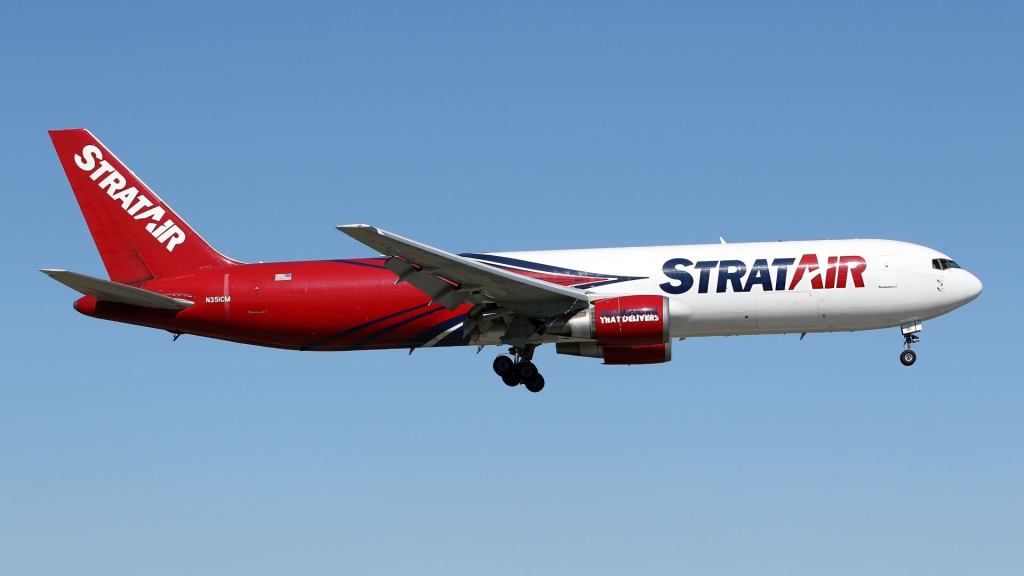
Half-red, half-white cargo jet with logo Stratair approaches airport with wheels down, as seen from below.

The company behind Northern Air Cargo has taken delivery of two widebody freighter aircraft this year and immediately placed them in storage because there isn’t enough business to operate them profitably despite the improved outlook for the global airfreight market, FreightWaves has learned.

The decision represents the latest case of an all-cargo airline throttling back on fleet expansion plans made during the COVID crisis when a shortfall in shipping capacity sent rates through the roof and made freighters valuable assets.

Northern Air Cargo, which serves communities in Alaska from its base in Anchorage, lost $12 million in the 12 months ended Sept. 30, according to data on airline performance metrics compiled by the U.S. Bureau of Transportation Statistics.

The idled cargo jets wear the brands of sister companies Aloha Air Cargo and Miami-based StratAir. Northern Air Cargo operates planes on behalf of both businesses.

The three companies are part of privately held Saltchuk Resources, a diversified freight transportation, logistics and energy distribution conglomerate based in Seattle. In 2021 and 2022, Saltchuk’s leasing subsidiary bought seven used Boeing 767-300 passenger jets and has been sending them to a Boeing partner site in Singapore to modify into main-deck freighters for the cargo airlines.

NAS Aircraft Leasing Co. LLC (NALC) received two 767-300 converted freighters from Boeing in January and April and moved them to a storage facility until market conditions improve, Saltchuk Aviation spokeswoman April Spurlock said in an email message.

Aircraft tracking site Flightradar24 shows the planes are being stored in the desert at Roswell Air Center in New Mexico.

“Throughout 2023 and 2024, the global air cargo market has experienced elevated costs and shifting market dynamics which has led to depressed pricing and cargo yields. Due to this softening of the cargo market, Northern Air Cargo has taken steps to reduce its overhead costs and increase its revenues,” Spurlock explained.

The two new cargo jets will eventually replace aircraft the company will return in the near future when their lease ends. NALC currently leases three 767s from Air Transport Services Group (NASDAQ: ATSG), according to aviation analytics firm Cirium. A decision on when to place the new 767s into service will depend on several factors, including market conditions in the Caribbean and in Central and South America, where StratAir operates, she added.

StratAir is an airfreight logistics provider that charters airlift from NAC. It currently utilizes four 767 freighters operated by NAC.

Northern Air Cargo and Aloha Air Cargo operate a total of 16 aircraft: nine Boeing 737-300/400 Classics, a newer 737-800 and six 767-300 medium widebodies. All 767s are on NAC’s operating certificate and flown by NAC pilots. Saltchuk Aviation swaps aircraft among carriers as needed. One of the 767s flown by NAC for StratAir out of Miami to places such as San Juan, Puerto Rico, and Lima, Peru, for example, has an Aloha Air Cargo livery.

Aloha Air Cargo, which had a profit of $30 million in the fiscal year that ended Sept. 30, operates inter-island routes in Hawaii and to Seattle and Los Angeles. On a combined basis, Aloha and NAC posted $18 million in net income for fiscal 2023.

NALC has taken delivery of six converted freighters so far. It has not started work on the seventh Boeing conversion yet, and there is no firm date to do so, said Spurlock.

There are costs to keep an airline dormant, such as storage, regular maintenance to ensure electrical and hydraulic systems don’t deteriorate, and special maintenance service when a plane is reactivated. But industry professionals say it is cheaper to ground an aircraft than operate it if load factors are low.

NAC also laid off three administrative personnel as part of its effort to reduce costs, said Spurlock.

The airfreight market has been steadily recovering since a 16-month downturn hit bottom late last summer. During the first quarter, cargo volumes increased about 12% year over year, based on the average metric from various data providers. Industry analysts expect annual growth of about 3.5% over 2023 levels. But cargo growth varies by region, with major trade lanes out of Asia boosting the global average. North America, for example, had the weakest growth in February of any region, according to the International Air Transport Association. Also, Northern Air Cargo, Aloha Air Cargo and StratAir play in specialized markets that are subject to their own unique dynamics.

Saltchuk Aviation and Northern Air Cargo aren’t alone in feeling the consequences of the freight recession in 2022-2023.

Miami-based Amerijet, which competes with StratAir, recently went through a restructuring with new ownership and returned six Boeing 757 converted freighters to lessors less than two years after acquiring them. FedEx Express is parking a portion of its fleet because of soft parcel demand. Canada’s Cargojet abandoned plans to acquire eight Boeing 777s and convert them for cargo. Air Canada backed out of a deal with Boeing for two 777 factory freighters. GlobalX, a startup charter operation in Miami, is concentrating fleet expansion on the passenger side of the business, rather than cargo. And Air Transport Services Group has sharply cut back on capital expenditures and postponed sending some aircraft to conversion sites.

Amerijet lost $33M in 12 months, downsizes Atlanta operation

Cargojet reverses course on 777 freighter ambitions

Air cargo market rides an incoming wave, but can it last?

Motive debuts advanced safety and visibility features

Motive expands AI-powered visibility tools at Vision 24

(Photo: Thomas Wasson/FreightWaves)

NASHVILLE, Tenn. — Motive, a telematics, technology and fleet management platform, announced new AI-powered products and telematics hardware at the inaugural Vision 24 Motive Innovation Summit on Wednesday. The recurring theme for these announcements was safety and visibility, with special attention given to breakthroughs in Motive’s AI Omnivision, a general-purpose computer vision platform that uses AI to identify unsafe driving behaviors and conditions within and outside the cab. Using training models and footage collected from in-cab and side/rear cameras, the technology can now identify safety issues including unsafe lane changes, distracted or drowsy driving, forward collision warnings, and lane control violations such as running a red light or stop sign.

The added telematics capabilities were extended into a first responder feature, where the AI-enabled dashcam would recognize a collision and dispatch emergency services. The challenge for truck drivers involves delayed response times when it can take first responders 10-19 minutes to arrive on scene. Another challenge is finding the exact location to dispatch emergency services, especially in hard-to-reach geographic areas. Data provided by Motive showed that 54% of fatal crashes involving large trucks occurred in rural areas, putting an emphasis on speed. Motive partnered with various emergency services TMS platforms to send driver information and truck data to expedite dispatching and notify back-office staff.

From customer testimonials and interviews, the biggest improvement from installing and implementing the cameras was greater overall safety and fewer accidents. A Motive internal customer survey found 91% of those surveyed reported a reduction in at-fault accidents. One large carrier was able to negotiate for lower insurance rates by demonstrating how many vehicles are actually in operation and using the dashcams to protect against false claims. One challenge fleets noted is change management and getting drivers used to front-facing and driver-facing cameras and building a proactive safety culture.

FMCSA report highlights dismal numbers for under-21 driver apprentice program

(Photo: Jim Allen/FreightWaves)

The under-21 driver pilot program appears to be stalling and losing altitude. FreightWaves’ John Gallagher writes, “The Federal Motor Carrier Safety Administration says only 113 motor carriers have applied for its under-21 truck driver apprenticeship program since the agency began accepting applications in July 2022, a dismal sign for an initiative that had been expected to recruit up to 1,000 carriers and 3,000 drivers.” The pilot program is slated to end in July 2025 and sought to address shortages of truck drivers and encourage drivers 18-21 years old to participate.

For carriers that submitted applications, the approval rate was also underwhelming. A fiscal year report for 2022 submitted to Congress by the FMCSA noted, according to Gallagher, that “as of February 2024, FMCSA has rejected 34% — or 38 of the 113 applications received. The agency has fully approved only 30%, or 34 of the applications.” This was an improvement from last year’s numbers. Sen. Cindy Hyde-Smith R-Miss. told a Senate Subcommittee meeting in March 2023 that only four apprentices were participating.

“At the time of the presentation from FMCSA, only 21 carriers had been approved for participation and four apprentices were in the program. One, two, three, four, and we could take up to 3,000.” said Hyde-Smith. For the Owner Operator Independent Drivers Association, this lack of participation is a sign to prioritize driver retention. Jay Grimes, OOIDA’s director of federal affairs, said, “This turnover makes it challenging to retain drivers and develop a well-trained workforce. The lack of participation in the Safe Driver Apprenticeship Program to this point is another signal that the industry must prioritize driver retention. This includes addressing inadequate pay, poor working conditions, minimal training requirements and truck parking, among other concerns.”

Market update: LMI March inventory data a tale of two halves

(Source: Logistics Managers’ Index)

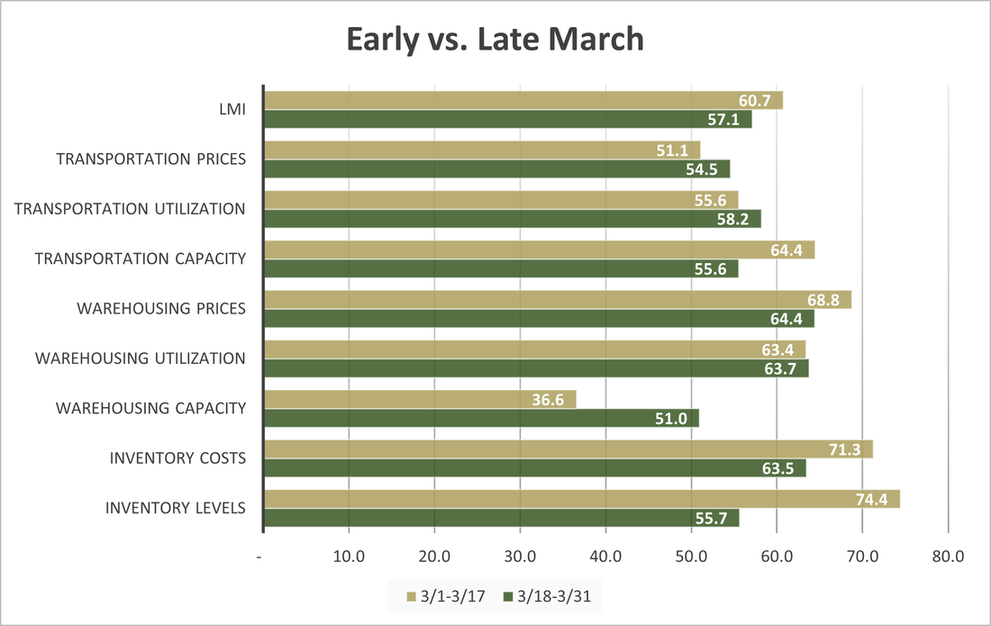
Recent data for March released by the Logistics Managers’ Index showed overall improvement from February’s reading of 56.5 to 58.3 in March. This is the fastest rate of expansion since September 2022 when the overall index was at 61.2. The LMI is a diffusion index with a reading above 50 indicating an expansion, while anything below 50 signals a contraction. 

For inventory levels, it was a tale of two halves. FreightWaves senior analyst Tony Mulvey writes, “The biggest driver of the difference in the first and second halves was inventory levels. Levels in the first half of the month were rapidly expanding (74.4) compared to the back half of the month (55.7). Much of the early growth in inventory levels can be attributed to the Lunar New Year-linked timing of goods hitting warehouses, roughly six weeks following the start of the holiday. Additionally, the slower growth in the back half of March can be attributed to inventory moving around the Easter holiday weekend. Bank of America’s latest card spending data shows the impacts of the Easter holiday weekend. Total card spending for the week ending March 30 was up 4.7% year over year.”

The changes in inventory levels had a ripple effect in other categories. The report notes, “This growth has had cascading effects on tightening Warehousing Capacity (-8.2) which is back into contraction territory for the first time since January 2023. These changes suggest that firms are building up inventories in anticipation of continued consumer spending and suggests that the economy will continue to grow in the near-term.”

FreightWaves SONAR spotlight: Flatbed spot and outbound tender rejection rates fall

(Source: FreightWaves SONAR)

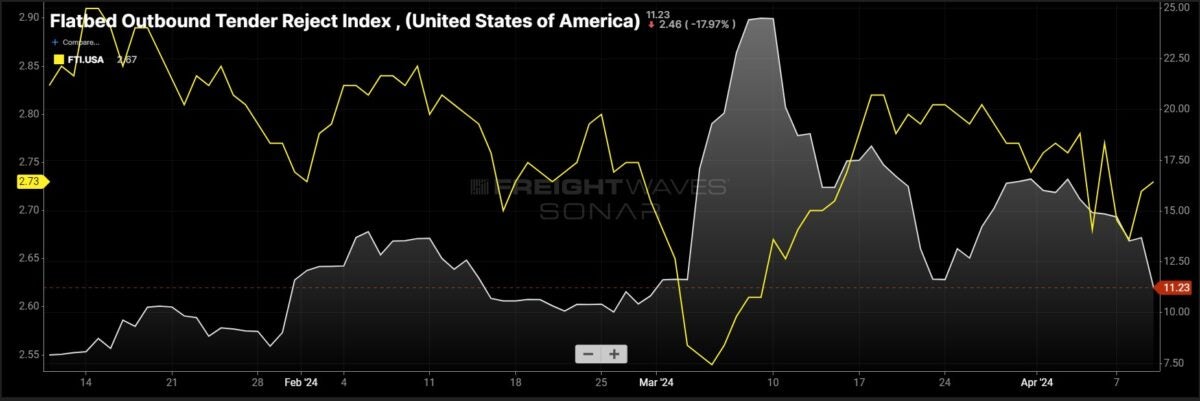
Summary: Q1 flatbed outbound tender rejection rates and spot market rates continue to fall. The Flatbed Outbound Tender Reject Index (FOTRI) fell 534 basis points week over week from 16.57% on April 3 to 11.23%. The loosening of flatbed capacity on the contract market also saw declines in flatbed spot market rates. The Flatbed Truckload Index (FTI) all-in spot market rate fell 3 cents per mile from $2.76 on April 3 to $2.73.

Flatbed wasn’t the only specialized equipment category to see declines. Reefer outbound tender rejection rates and spot market rates posted week-over-week declines as well. Reefer spot market rates fell 16 cents per mile all-in from $2.56 on April 3 to $2.40 per mile. Reefer contracted outbound tender rejection rates also declined, albeit at a lower rate, falling 94 bps w/w from 5.24% on April 3 to 4.3%.
The first week of Q2 continues to show softness in the truckload space as excess capacity remains abundant in both the dry van and reefer segments. Further loosening in the flatbed market is worth watching as construction activity and manufacturing indexes show increased activity in March. The most recent data from the Institute for Supply Management Manufacturing Purchasing Managers’ Index notes, “US ISM Manufacturing PMI is at a current level of 50.30, up from 47.80 last month and up from 46.30 one year ago. This is a change of 5.23% from last month and 8.64% from one year ago.”

Platform Science secures $125M to grow OEM partnerships (FreightWaves)

Trucking industry stakeholders square off over CDL test flexibility (FreightWaves)

Kodiak establishes advisory council with Walmart, Werner, UPS (Trucking Dive)

Court upholds EPA’s ability to grant environmental waivers to California (FreightWaves)

Fuel costs show why transportation market is so challenging for providers (FreightWaves)
NACFE: Natural gas has promise, but not perfect alternative solution (Commercial Carrier Journal)

Like the content? Subscribe to the newsletter here.