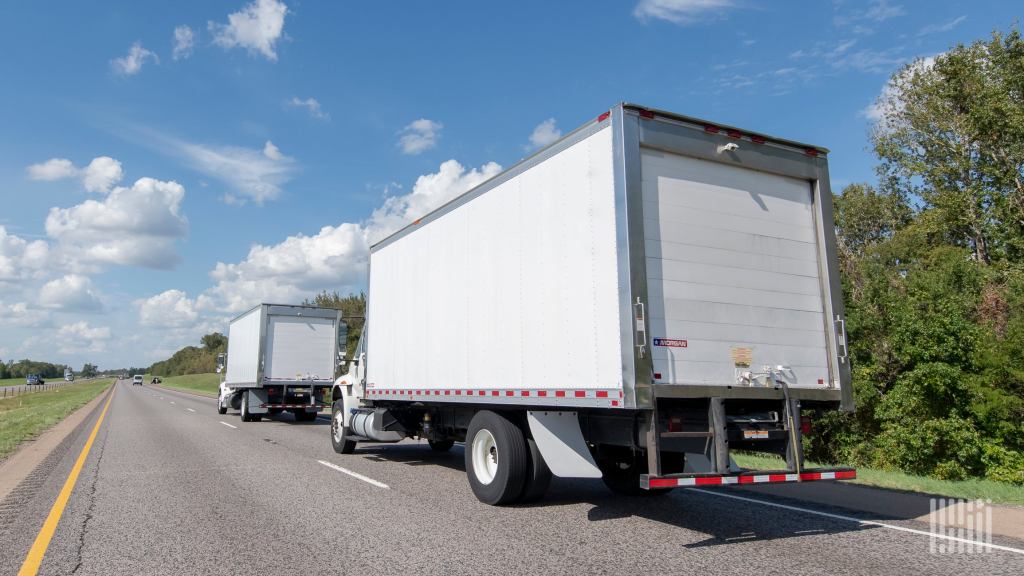
What trucking can to do to create safer highways

By Lane Kidd

The views expressed here are solely those of the author and do not necessarily represent the views of FreightWaves or its affiliates.

When boarding a commercial flight, what do you expect? Cramped seats. Maybe an incessant talker. Or everyone’s favorite — an on-time departure, only to sit on the tarmac for an hour.

But what about safety? Do you expect airlines to keep you safe? Absolutely. U.S. airlines have achieved a remarkable safety record. Since 2010, only two people have died in a commercial U.S. airline crash.

In fact, the odds of dying in a commercial airline crash are about one in 11 million. The odds of dying from a lightning strike are one in 138,849. Flying is safe. Period.

The U.S. Department of Transportation regulates all commercial transportation modes to ensure public safety: airlines, Amtrak, freight railroads and the trucking industry. After all, millions of large trucks share the roads with motorists, usually within 4 or 5 feet of our cars.

But trucking’s safety record is nowhere close to that of airlines.

  • Since 2010, 46,682 people have died in large truck crashes. (Source National Highway Traffic Safety Administration)
  • An additional 1.3 million were injured. (Source: NTSA) 
  • Ninety-four percent of trucking companies don’t even have a DOT safety rating. (Source: Federal Motor Carrier Safety Administration) 

Like airlines, the trucking industry has an absolute duty to protect the public. This extends to all truck drivers, other motorists, passengers, pedestrians, construction workers, cyclists and all road users.

First duty: Eliminate large truck crash fatalities

Trucking company owners must continuously prioritize safe driving practices. As Steve Williams, chairman and CEO of Maverick USA and co-founder of the Trucking Alliance, frequently says, “We must make sure our drivers are properly trained, well-rested and drug and alcohol free.”

Truck drivers deliver almost all the products we purchase. But there’s no way to rationalize that almost 5,000 truck crash deaths occur every year in the process. Trucking’s public duty should be to eliminate crash fatalities. Higher safety standards and emerging technologies can make it possible to achieve that goal.

Public opinion creates public policy. How aggressively the industry commits to achieving zero traffic deaths could ultimately determine how well trucking fares in the future. 

Second duty: Compensate crash victims

Nothing automatically entitles a person to own a trucking company. In fact, Congress, back in 1985, set the bar high for that privilege. Trucking company owners were required to have a $750,000 minimum financial worth, or to post insurance in that amount, in order to operate in interstate commerce. Congress set this amount for one reason: so the company would meet its public duty and, if at fault, have enough dollars to compensate crash victims.

Congress hasn’t increased that amount in 40 years. Adjusted for inflation, the minimum financial worth required to operate in interstate commerce should be $2.1 million. But to save money, almost all trucking company owners only purchase the minimum insurance amount set in 1985.

When trucking companies cause a catastrophic crash, that figure frequently does not cover victims’ damages. The industry is underinsured and failing to meet its duty to the public.


If the minimum financial responsibility of motor carriers were adjusted for inflation, numerous benefits would accrue to crash victims and motor carriers:
1. Improved compensation for accident victims: A higher insurance requirement would cover almost all victims’ claims for medical expenses and damages. There would be no incentive for plaintiff lawsuits.

2. Safer carrier operations: Increasing the potential financial consequences of accidents would be an incentive for motor carriers to prioritize safety and risk management practices. Business owners will be able to rationalize investing in safety training and education technology, proven safety technologies, and equipment maintenance. These improved standards would reduce accidents and lead to fewer deaths on the roads.

3. Reduced burden on public resources: When trucking companies don’t adequately pay victims for the crashes they cause, the victims frequently turn to public resources. Society pays the difference, effectively subsidizing the industry. More insurance will ensure that accident victims rely on the motor carrier’s insurance coverage.

5. Fair competition: A higher insurance requirement would level the playing field. Whether a one-truck operation or a 1,000-truck fleet, carriers would have similar insurance coverage. Premiums would level off and be more equitable for everyone.


6. Predictable premiums: Insurance markets would stabilize, and volatility in insurance expenses would diminish. Underwriters would better predict losses. More insurance companies would enter the marketplace, creating competition and lowering premiums.

Ethical standards have a place in the trucking industry. These standards include a public duty to eliminate fatal crashes. Second, if at fault, companies must be properly insured to compensate crash victims.  If the commercial airlines can do it, so can trucking. The public deserves nothing less.

Further appeals to block AB5 from California trucking seen as a long shot

California’s trucking industry is facing the reality that its battle to keep the state’s AB5 independent contractor law out of the trucking sector is likely at a dead end.

Appeals are possible of the decision Friday in the U.S. District Court for the Southern District of California that emphatically rejected all the arguments by the California Trucking Association (CTA) and the Owner-Operator Independent Drivers Association. But several observers of the legal battle that has gone on for more than four years said that may prove too big a challenge to proceed.

“I’m sure that some will advocate for the appeal and exhausting all efforts, but I’m certainly not bullish on the likelihood of success in the 9th Circuit,” an attorney who is not representing any of the parties and requested anonymity said of possible future CTA/OOIDA action. “It is time to ‘move on’ absent the political will to change.”

“It’s hard to imagine the industry committing fees to this now,” another attorney, who also requested anonymity, said.

AB5, passed in 2019, codifies the so-called ABC test in setting guidelines for determining whether a worker is an employee or an independent contractor. It is seen as leaning heavily toward defining a worker as an employee.

The B prong of the ABC test is a particular problem for the trucking sector. It defines an independent contractor as a worker who “performs work that is outside the usual course of the hiring entity’s business.” A truck driver hired as an independent contractor either as a one-time use or through a lease purchase plan could be seen as violating the B prong. And given that moving freight through independent contractors is a fundamental pillar of trucking today, the threat from AB5 is viewed as existential by some.

Still no word on an appeal

An OOIDA spokeswoman said Saturday the group was considering whether to appeal. She said Monday there was no further addition to that statement. 

Eric Sauer, the president of CTA, said in a prepared statement that his group was “extremely disappointed in this ruling.”

“AB 5 continues to disrupt the lives and businesses of hard working independent truckers who, after four years, are still provided little to no guidance on how to protect their livelihoods,” he said in the statement. “These men and women, at a minimum, deserve to have some clarity about how to comply with the law. Unfortunately, that clarity has not been brought about by this litigation.”

A CTA spokeswoman said the group is still considering whether to appeal. In an email to members obtained by FreightWaves, CTA officials said, “we will be discussing remaining options moving forward with counsel and supporters of the litigation.”

The CTA (before OOIDA was a co-plaintiff) already lost once in the full 9th U.S. Circuit Court of Appeals. That decision in April 2021 overturned the initial New Year’s Eve 2019 preliminary injunction handed down by Judge Roger Benitez — the same judge who rejected all the CTA/OOIDA arguments last week — that AB5 could not be enforced in the California trucking sector because it conflicted with the Federal Aviation Administration Authorization Act (FAAAA).

Benitez cited that loss at the circuit level as why he did not repeat his earlier finding about FAAAA preemption of a state law like AB5. But one trucking official in California said the industry had hoped Benitez might return to his earlier argument anyway. “I think a lot of us hoped he may have been willing based on his original well-written decision on F4A preemption,” the official said, requesting anonymity.

In an email sent to a wide audience, the transportation practice of the Benesch law firm cautioned that a potential end to the AB5 fight was not necessarily the apocalypse for the trucking industry that it might seem to be at first glance.

“Considering that AB5 has been in effect for over four years, and has been enforceable against the trucking industry since mid-2022, most responsible motor carriers operating in California have already pivoted to alternative business models that comply with AB5,” Benesch said in its email. “Those who have not yet done so are cautioned to do so promptly.”

As the chart from FreightWaves SONAR illustrates, there is no obvious uptick in freight rates for dry van movements out of Chicago. The data in the graph is an all-in number for the cost of the truck.

However, it would not reflect prices in the Southern California drayage community, which is seen as a key target of the backers of AB5.

Several attorneys have noted that the legal landscape lacks any known state enforcement actions against trucking over alleged AB5 violations. Those actions could have begun anytime after the New Year’s Eve 2019 injunction disappeared, which happened after the U.S. Supreme Court chose not to review the appellate court’s decision overturning that injunction.

What might happen if the state starts enforcing AB5 in trucking

But that doesn’t mean there won’t be enforcement. As one California trucking official told FreightWaves, requesting anonymity, companies still employing drivers under a lease purchase agreement may find themselves on the wrong side of any revived state enforcement effort. Avoiding that situation was seen as one of the reasons why drayage provider Universal Logistics (NASDAQ: ULH) switched its independent contractors to employees in 2022.

But the source added that while a California trucking company with lease purchase agreements is possibly “screwed” under AB5 enforcement, “there are few doing that in California.”

The “other” AB5 case moves on

A second court case involving the validity of AB5 is also making its way through the courts: the so-called Uber/Postmates case, filed by the companies in 2019, like the original CTA case. It is also known as the Olson case, after the lead named plaintiff.

Oral arguments in front of an en banc hearing in the Ninth Circuit are scheduled for Wednesday.

That case, like the CTA AB5 case, has had a back-and-forth history. The U.S. District Court for the Western District of California ruled against Uber and Postmates, which in its original suit argued that AB5 should be overturned on several grounds. One of the core arguments was that the myriad of exemptions given to various businesses — but not trucking or gig workers, like those at Uber and Postmates — constituted an illegal violation of equal protection of the laws.

A three-judge panel of the 9th Circuit reversed that decision, leading to the appeal to be heard on Wednesday.

More articles by John Kingston

Federal court in Texas nixes NLRB rule on joint employee status

Jobs report: Truck transportation employment flat, warehouse jobs drop again

SEC backs off on requiring companies to report scope 3 emissions

State of ocean freight with FMC Commissioner Carl Bentzel – WTT

On Episode 695 of WHAT THE TRUCK?!?, Dooner is talking to Commissioner Carl Bentzel of the Federal Maritime Commission. They’re diving deep on the Red Sea conflict, safe passage in trade, Panama Canal water levels and the state of U.S. ports.

Sope Creek Capital founder Kevin Nolan is doing his best Elvis impression as he talks about the brokerage casino. Can brokers really beat the house? Nolan has taken a ton of gambles in this industry, and today he tells us what worked, what didn’t and what he’d never do again.

Travelers’ Scott Pipicelli is looking at trucking insurance losses and the tech that can prevent them.

Plus, March Madness logistics, Flock Freight layoffs, a unique way to strap, dating on spring break, cargo ships hitting cranes in Turkey, and more.

Watch on YouTube

Subscribe to the WTT newsletter

Apple Podcasts

Spotify

More FreightWaves Podcasts

Silk Way West orders extra 777 freighter from Boeing

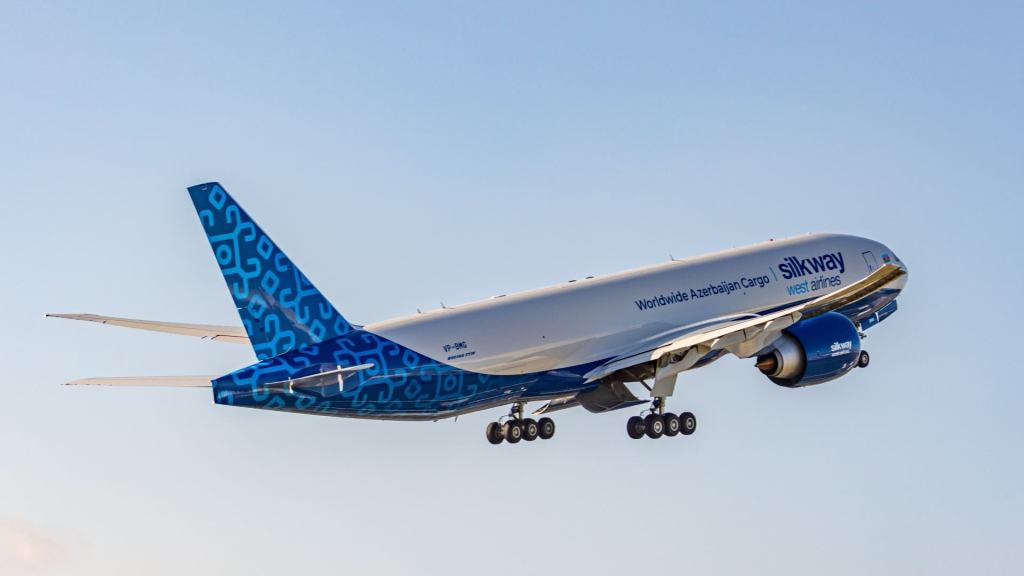
Blue/white Silk Way West Airlines cargo jet rises into the sky. View from the rear.

Azerbaijan-based Silk Way West Airlines said Monday it has added a sixth 777 freighter to its order from Boeing.

The all-cargo carrier has received two of five Boeing 777 freighters it committed to purchase in 2021. The new order is scheduled for delivery in 2025, and the rest are expected to arrive by 2027.

Silk Way West also has ordered two next-generation 777-8 freighters, which aren’t scheduled for delivery until the end of the decade, as well as two large A350 freighters from Airbus. The 777-8 must still be tested and certified. The Airbus planes won’t be ready until 2027 and 2028.

The 777 freighter has a range of 5,700 miles and a maximum designed payload of 236,000 pounds, which allows the plane to make fewer stops and save on landing fees on long-haul routes.

In addition to the two 777s, Silk Way West operates 12 Boeing 747-400 and 747-8 cargo jets to more than 40 destinations around the world from its centrally located base in Baku.

Silk Way West is expanding its fleet even as the air cargo sector recovers from a 16-month downturn. Medium-to-long-term forecasts call for 3.5% to 4% compound annual growth in airfreight volumes.

Click here for more FreightWaves/American Shipper articles by Eric Kulisch.

Contact Reporter: ekulisch@www.freightwaves.com 

Qatar Airways says goodbye to Boeing 747 freighter

Landstar adds 2 new sales roles to the C-suite

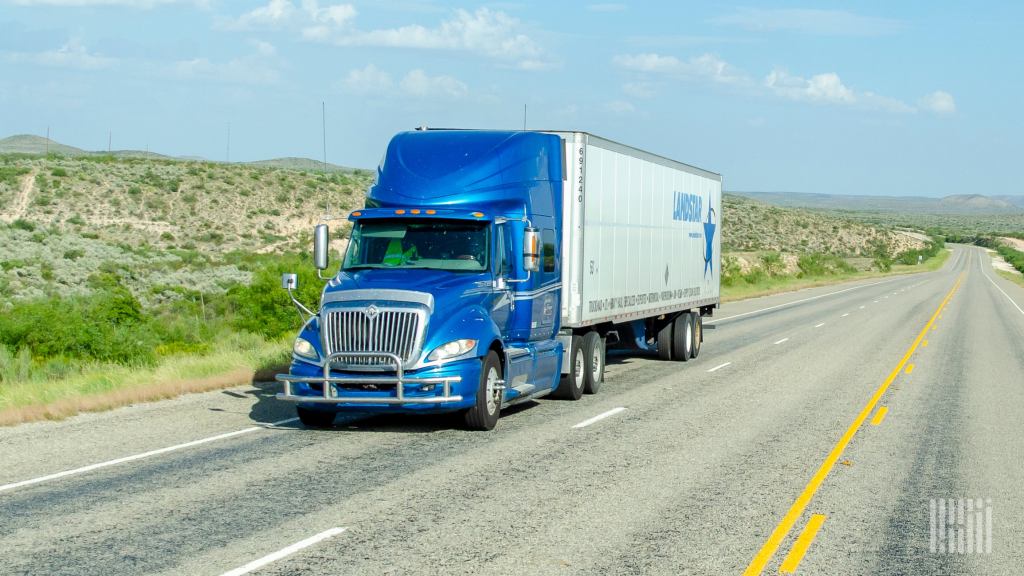
A blue tractor pulling a Landstar trailer on a highway

Freight broker Landstar System said Monday it has added two new members to its executive team. The roles were filled from within.

Matt Dannegger is now the company’s chief field sales officer, which will oversee the recruitment and management of independent sales agents. Landstar works with more than 1,000 agents currently. Dannegger was most recently senior executive vice president of agent field sales. He has been with the company for 16 years.

Jim Applegate is now Landstar’s (NASDAQ: LSTR) chief corporate sales, strategy and specialized freight officer. The role also includes the oversight of business development. Applegate joined the company in 2009, most recently heading business intelligence and strategy.

“The freight transportation industry has become increasingly complex, as have the needs of Landstar’s independent agents and customers,” said Frank Lonegro, Landstar president and CEO.

Lonegro took the helm at Landstar on Feb. 2, succeeding Jim Gattoni, who retired after 30 years with the company, including a decade as CEO.

Lonegro was previously the chief financial officer at roofing and building supply company Beacon (NASDAQ: BECN). He spent 20 years in the transportation industry prior to that at CSX (NASDAQ: CSX), where he served as CFO for a portion of his tenure.

“Together, Matt and Jim will lead the sales team as we align the organization for future growth and success,” said Lonegro. “They are a great blend of complementary capabilities and I’m excited to have them leading our sales efforts going forward.”

Landstar processes more than 2 million loads hauled by truck annually. It recorded $5.3 billion in revenue last year, which was preceded by a company record of $7.4 billion in 2022.

More FreightWaves articles by Todd Maiden

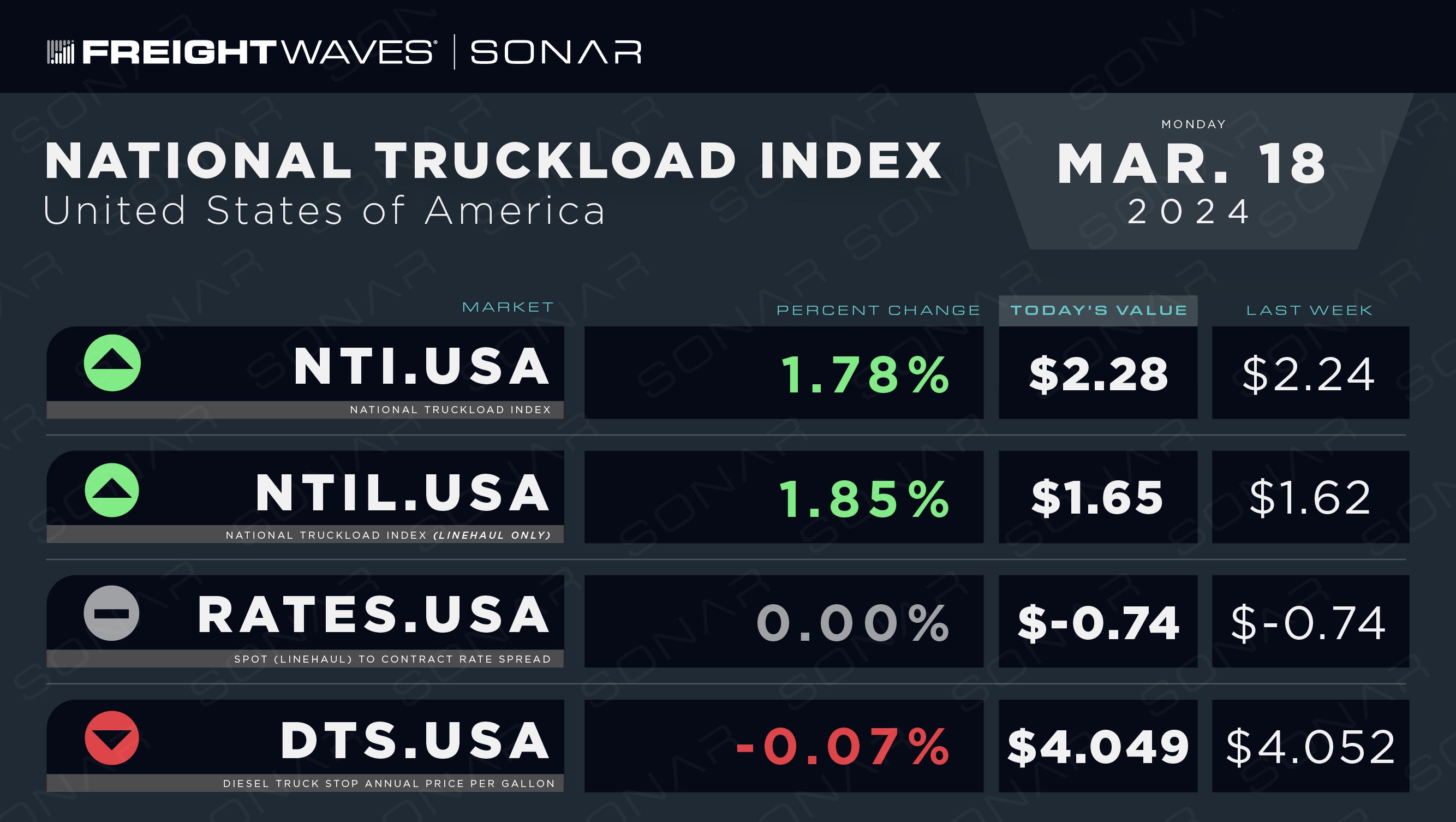
Weekly NTI Update: March 18, 2024


Learn more at SONAR.FreightWaves.com

CtrlChain is optimizing supply chains from Amsterdam to Chicago

In today’s global supply chain landscape, a lack of collaboration and digital integration among logistics players, especially smaller companies, has emerged as a significant roadblock to optimizing capacity utilization and operational resilience. 

This issue, compounded by the complexity of coordinating workflows across borders and cultures, has hindered the industry’s ability to address persistent capacity constraints and mitigate costly disruptions effectively.

In a recent interview on WHAT THE TRUCK?!?, Giovanni Gubbels, founder and CEO of CtrlChain, shed light on these challenges and how his company is pioneering innovative solutions to bridge communication gaps and facilitate cooperation among supply chain stakeholders.

The collaboration conundrum

Gubbels, a logistics professional  with experience spanning airfreight, ocean freight, trucking, warehousing and sales, understands the intricacies of the supply chain from multiple vantage points. This diverse background has given him a unique perspective on the systemic inefficiencies plaguing the industry, particularly the lack of collaboration between companies, which often results in trucks driving empty miles and suboptimal capacity utilization.

“Imagine with all the trucking companies we have,” Gubbels said. “How can you make them work together? And what is the issue that they don’t work together?”

Gubbels’ observations highlight a critical pain point: despite operating in an interconnected global network, many logistics players, especially smaller and non-digitized entities, struggle to coordinate effectively, leading to fragmented operations and inefficiencies.

CtrlChain’s holistic approach

Born in Amsterdam and now based in Chicago, Gubbels brings a cross-cultural lens to addressing these challenges. CtrlChain’s core mission is to “make the invisible visible” by digitizing smaller players in the supply chain that currently operate without digital tools and data integration. This comprehensive digital transformation, according to Gubbels, is the key to optimizing overall capacity utilization and addressing the issues of limited capacity and costly supply chain disruptions.

“What we try to do is [get] to the source, where we give the proper picture to every partner in the supply chain,” Gubbels explained.

CtrlChain’s solutions enable customers to track real-time information about trucks’ locations, capacities, and routes, facilitating a deeper understanding of load statuses and overall network utilization. By fostering transparency and collaboration among previously siloed entities, CtrlChain aims to create a more resilient, efficient, and optimized supply chain ecosystem for all stakeholders.

Embracing digital transformation and cultural shifts

CtrlChain’s approach has facilitated substantial growth for carriers and shippers alike, enabling them to expand operations without proportionally increasing their workforce. However, Gubbels emphasized the importance of thinking critically and addressing the root causes of capacity and growth limitations, rather than merely treating surface-level symptoms.

“I would like to challenge people to think, are you really addressing the real issues which are causing the limited growth, or are you staying on the surface?” he said.

Moreover, Gubbels highlighted the contrast in business and supply chain communication between Amsterdam and the U.S., advocating for a more direct and open approach to solving problems and building partnerships. He suggested that transparency and candor can significantly enhance operational efficiency and collaboration, especially in the context of cross-border and cross-cultural logistics operations.

As the logistics industry grapples with persistent capacity constraints and supply chain disruptions, CtrlChain’s narrative underscores the imperative of embracing digital transformation and fostering a culture of collaboration. By bridging communication gaps and integrating previously siloed players, companies like CtrlChain are paving the way for a more resilient, efficient and sustainable supply chain ecosystem.

To learn more about CtrlChain, visit its website.

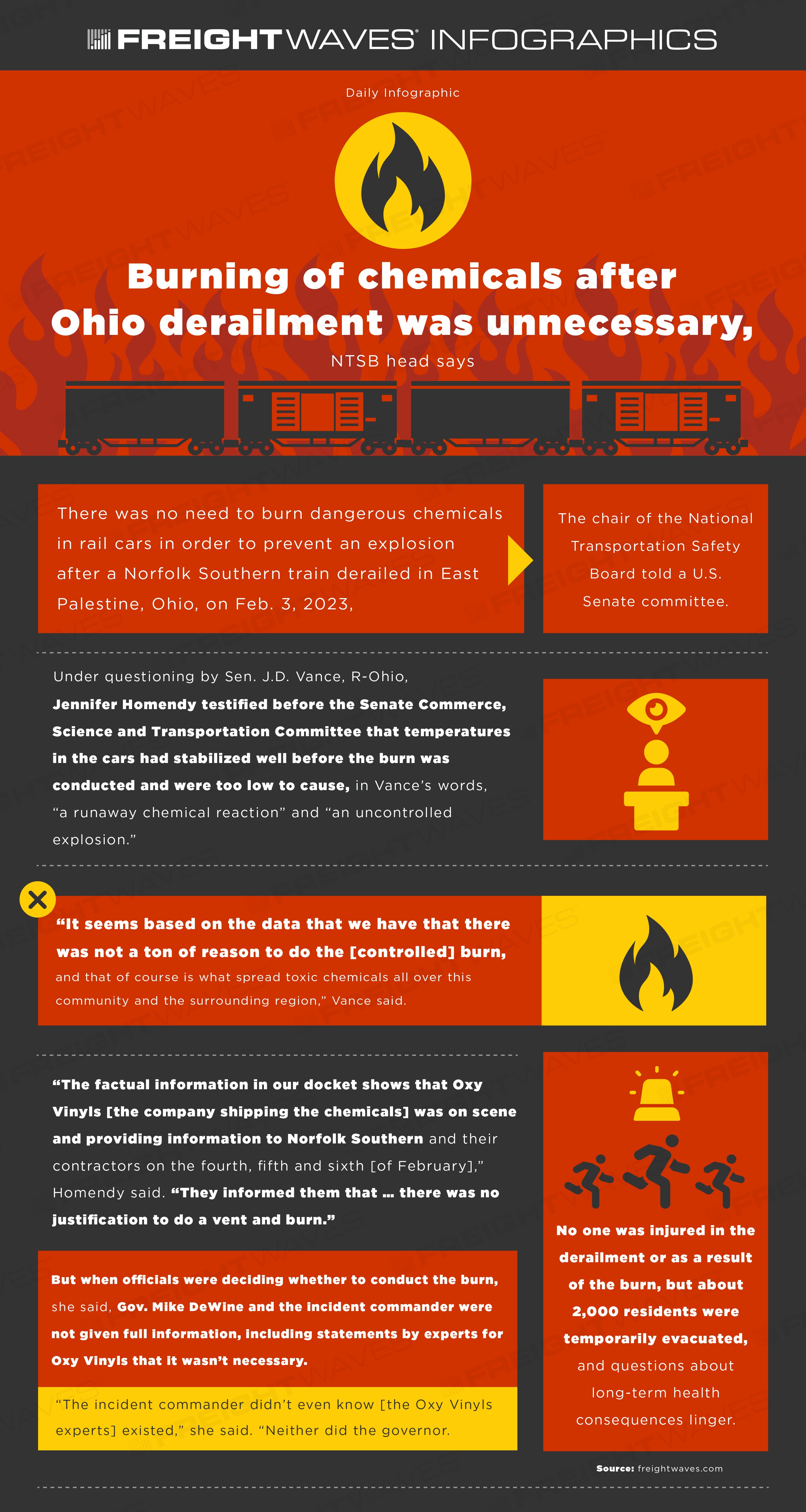
Daily Infographic: Burning of chemicals after Ohio derailment was unnecessary, NTSB head says


To view more FreightWaves infographics, click here

Location, cost drive international firms south of the border

Wise PanAmerican Solutions (WPS) has stayed busy since the start of 2024 helping international companies interested in doing business with Mexico.

The Austin, Texas-based company offers services aimed at assisting firms looking to expand or establish cross-border operations in the country.

“This year started with an increase in demand for our services as compared to the previous year. It may be related to the fact that nearshoring projections are expected to reach their peak in 2024-2025,” Tatiana Skumatenko, who oversees WPS’ business development between the U.S. and Mexico, told FreightWaves.

Mexican carriers importing goods to the U.S. are also seeing significant growth as nearshoring continues to ramp up, according to a recent report from Motive, an AI-powered integrated operations platform.

San Francisco-based Motive serves more than 120,000 businesses in industries such as trucking, logistics, construction and agriculture.

“Mexican carriers importing U.S. goods have been some of the biggest beneficiaries of [nearshoring], as the number of Mexico-based vehicles registered for cross-border shipping grew by 14.3% and the average fleet size grew by 11.3% in 2023. Mexico’s trucking market grew 2.3% last year, compared to a U.S. trucking market that saw a 6.6% contraction in 2023,” Motive said in its economic report for March.

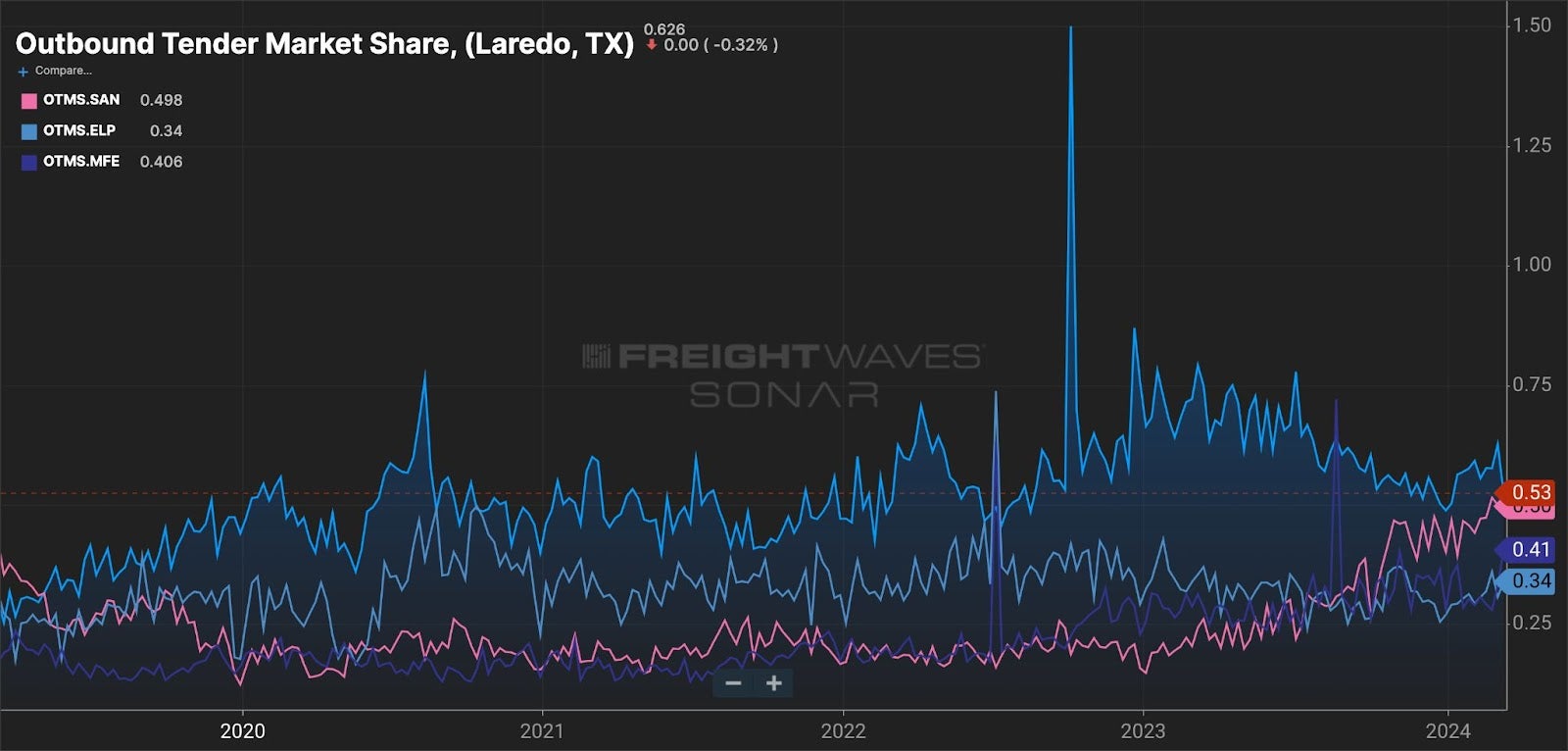
The movement of freight out of Mexico can be seen in FreightWaves SONAR data when comparing truckload demand out of markets in the Southwest. Cross-border markets in San Diego, as well as El Paso, Laredo and McAllen, Texas, have seen demand for capacity steadily increasing since 2019.

Freight volumes out of San Diego, (OTMS.SAN) as well as El Paso (OTMS.ELP), Laredo (OTMS.LRD) and McAllen (OTMS.MFE), Texas, have increased steadily since 2019. To learn more about FreightWaves SONAR, click here.

As more companies look at doing business in Mexico, Skumatenko said customers are particularly eager for information about the cost of operating in the country.

“The most common questions we are getting are about the costs of starting a business in Mexico, the time frame for each step of the process and the process itself: How we do what we do?” Skumatenko said. “In some cases, we’ve heard safety concerns, which we can manage with private and corporate security services.”

Skumatenko said WPS is hearing from companies of all sizes and from various industries about operating in Mexico. The types of operations reaching out in recent months include sectors such as semiconductors and industrial machinery manufacturers, electronic waste recyclers, food producers, and service companies.

“Larger companies, usually original equipment manufacturers with contract manufacturers in Mexico, need help to verify the performance and compliance of those maquiladoras, while others wish to relocate their production altogether,” Skumatenko said. “Not every company wants to relocate its factory from the get-go. Some start small, by opening a local office or hiring a salesperson or a representative, usually through an employer-of-record entity.”

Some companies are looking to outsource back-office or front-office services in Mexico, while others firms are seeking new distributors or sources of products and raw materials, according to Skumantenko.

“Some companies want to be present in Mexico but are not yet ready to make a bigger commitment, so they seek local distributors while importing and delivering their products through a vendor managed inventory program,” Skumantenko said.  “To source ingredients or finished products, and verify the quality of those products, foreign companies don’t need to be physically present on the market — only to have a trusted ally to do that for them.”

More articles by Noi Mahoney

Texas court sides with Union Pacific over 1872 jobs pact with town

US-Mexico trade totaled $64.5B in January

Texas-based customs broker expands cross-border footprint

Borderlands Mexico: Container shipments from China to Mexico skyrocketed in January

Borderlands is a weekly rundown of developments in the world of United States-Mexico cross-border trucking and trade. This week: Container shipments from China to Mexico skyrocketed in January; construction set for border logistics park in West Texas; Nippon Steel set to build $71M plant in Mexico; and China-based auto supplier announces $178M investment in Mexico.

Container shipments from China to Mexico skyrocketed in January

China’s container exports to Mexico surged nearly 60% year over year (y/y) in January, according to global freight rate intelligence platform Xeneta

China-based shippers moved 117,000 twenty-foot equivalent units during the month compared to 73,000 TEUs in January 2023.

“This is probably the strongest growing trade in the world right now,” Xeneta chief analyst Peter Sand wrote in a blog post published Thursday.

Sand highlighted that China could be using Mexico as a way to skirt tariffs because some of the goods could be trucked into the U.S.

“With a sizable portion of these goods likely being trucked into the U.S., it gives rise to the possibility that China’s increase in trade with Mexico is being used to circumvent tariffs placed on imports from China to the U.S. as part of the ongoing trade war,” Sand wrote.

Xeneta’s cargo volume data is backed up by recent reports from Mexico’s naval ministry, which showed that the freight flows into the country’s West Coast ports surged in January.

Mexico’s major ports handled 728,116 TEUs in January 2023, a 20% y/y increase in total container volume for the country’s 18 ports. The country’s nine Pacific Coast ports — which receive containers from China — handled the bulk of container movements in January, totaling 532,534 TEUs for the month.

Mexico’s two largest Pacific Coast ports — Manzanillo and Lazaro Cardenas — reported record container movements for the month of January.

Trade between China and Mexico also expanded in 2023. The annual trade growth rate between the two countries in 2023 was 34.8%, compared to 3.5% in 2022, according to Sand.

“This growth saw Mexico leapfrog China in Q1 2023 to become the No. 1 trading partner for imports into the U.S. measured by value,” Sand wrote.

Last year, Mexico ranked as the top trade partner of the U.S., with Canada ranked No. 2, followed by China at No. 3. 

In 2023, Mexico’s trade with the U.S. rose 2.5% y/y to $798 billion, boosted by exports of gasoline and other fuels and imports of passenger vehicles.

Sand noted that while China to the U.S. West Coast trade lane was nine times bigger than China to Mexico in January 2024, it was 11 times bigger compared to the same month in 2023.

“The difference in the scale of imports on these trades must not be ignored, but the growth rates suggest a shift is occurring,” Sand wrote.

Construction set for border logistics park in West Texas

Development has begun on the 3.7 million-square-foot Rancho Del Rey Logistics Park in El Paso, Texas.

The property is about 3 miles from the Ysleta-Zaragoza International Bridge, a port of entry along the U.S.-Mexico border. The port of entry handles more than 80% of El Paso’s northbound cargo truck crossings.

Rancho Del Rey will be built in three phases, with several warehouse and distribution buildings. The first building will have 1.38 million square feet of space and is expected to be completed by the end of this year.The total project is scheduled to be completed by the end of 2026.

German technology giant Bosch has already leased 414,000 square feet of space inside what will be the first building in Rancho Del Rey, according to the El Paso Times.

The project is being built by the Sansone Group, Raith Capital Partners, Catamount Construction and Colliers International Group Inc.

Nippon Steel to build $71M plant in Mexico

Nippon Steel, the largest steel manufacturer in Japan, recently announced it is investing $71.3 million to build a plant in Apaseo El Grande, Mexico. 

The plant will produce 120,000 tons of steel sheets per year to be used in the production of electric vehicles.

The facility will be the company’s second plant in the state of Guanajuato. In 2014, Nippon Steel opened a $30 million plant in the city of Silao, where it produces 24,000 tons of steel pipes annually for the automotive sector.

Nippon Steel is based in Tokyo. The company has manufacturing facilities in 15 countries and employs more than 100,000 people globally.

China-based auto supplier announces $178M investment in Mexico

IKD Co. announced it will invest $178 million to expand a facility in the Mexican city of Irapuato.

The company said the expansion will generate up to 1,000 jobs.

IKD is based in Ningbo, China, and produces aluminum auto parts for steering, air conditioning and windshield wiper systems. Customers include Bosch, Valeo, Mitsubishi, Mubea and Seg Automotive.

IKD Co. did not provide a timeline for the facility’s expansion.

More articles by Noi Mahoney

Texas court sides with Union Pacific over 1872 jobs pact with town

US-Mexico trade totaled $64.5B in January

Texas-based customs broker expands cross-border footprint