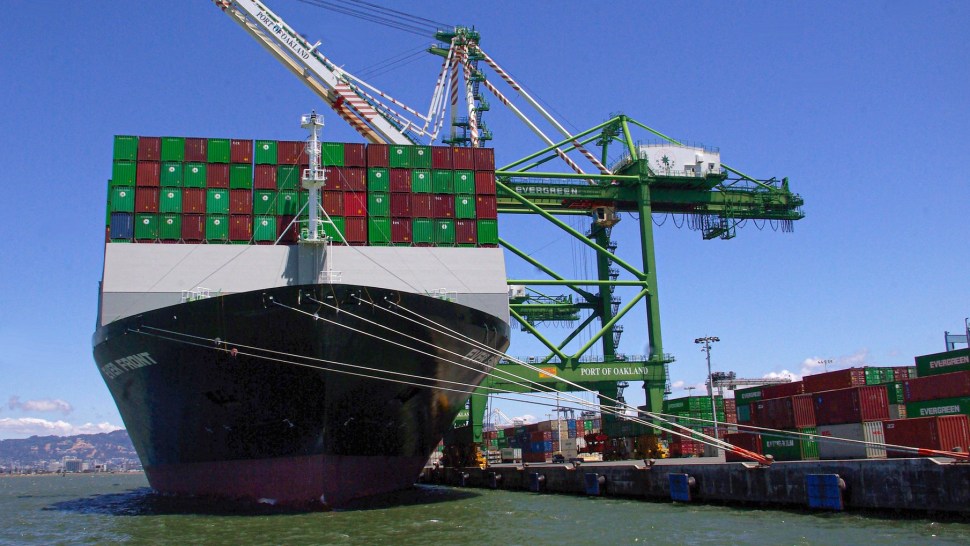
The Port of Oakland handled 178,942 twenty foot equivalent units (TEUs) in September, off 6.6% year-over-year and 7% from August as market adjustments amid tariff uncertainty and shifting global trade flows overran typical seasonal trends.
Loaded imports totaled 75,716 TEUs, a decline of 7.9% from September 2024, while loaded exports reached 60,123 TEUs, down 2.2%.
Overall trade flows remained balanced on steady vessel calls and efficient terminal operations, port officials said in a release.
Year-to-date through September, Oakland marine terminals handled 1.72 million TEUs, ahead just 0.7% y/y. Loaded imports gained 1.6%, and full exports increased 0.5% despite tariff-related volatility in global markets.
The port saw 82 vessel calls in September compared with 90 a year ago. Average vessel utilization climbed to 2,193 TEUs per call, up 1.8%, a sign of continued deployment of larger ships and operational efficiency across terminals.
Oakland managed to avoid the steeper drops in cargo flows that other West Coast ports saw as carriers shifted services away from U.S. hubs to avoid port fees on Chinese-built ships that took effect earlier this month.
“While trade patterns are shifting in response to global tariff uncertainty, Oakland continues to demonstrate stability and resilience,” said Bryan Brandes, Port of Oakland maritime director, in the release. “We’re seeing larger ships and steady year-to-date growth, which reflects the confidence carriers and cargo owners have in Oakland’s long-term position as a key gateway for U.S. trade.”
September traffic was affected by frontloading earlier in the year as shippers raced to beat tariff deadlines. Shipments of agricultural and refrigerated products out of California felt the effects of weaker overseas demand and cost pressures tied to tariffs.
Find more articles by Stuart Chirls here.
Related coverage:
Deadlines in doubt for LA-Long Beach zero-emissions port drayage
Longshore unions to meet for global anti-automation summit
Brokerage Compliance Symposium
The day before F3. Every compliance issue you face - fraud exposure, carrier liability, FMCSA rules, cargo theft, insurance gaps - navigated by attorneys and operators defining best practices in a changing industry.
F3 Awards Dinner
The night before F3. FreightTech100 companies honored. FreightTech 25 and Shipper of Choice winners revealed live. Cocktail reception into dinner and live music - 300 industry leaders in one purpose-built room.
F3: Future of Freight Festival
Industry-defining keynotes, rapid-fire technology demos, and industry leaders networking in experiences across Chattanooga - plus the inaugural F3 Awards Dinner featuring the FreightTech and Shipper of Choice reveals.
The day before F3. Every compliance issue you face - fraud exposure, carrier liability, FMCSA rules, cargo theft, insurance gaps - navigated by attorneys and operators defining best practices in a changing industry.
The Signal at Chattanooga Choo Choo • Chattanooga, TN Register NowThe night before F3. FreightTech100 companies honored. FreightTech 25 and Shipper of Choice winners revealed live. Cocktail reception into dinner and live music - 300 industry leaders in one purpose-built room.
The Signal at Chattanooga Choo Choo • Chattanooga, TN Register NowIndustry-defining keynotes, rapid-fire technology demos, and industry leaders networking in experiences across Chattanooga - plus the inaugural F3 Awards Dinner featuring the FreightTech and Shipper of Choice reveals.
The Signal at Chattanooga Choo Choo • Chattanooga, TN Register Now