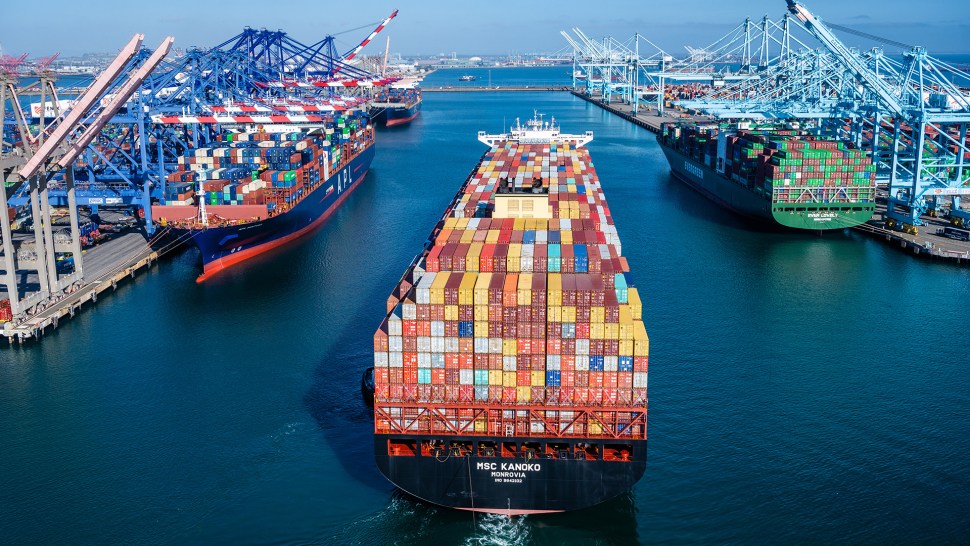
The United States and China have suspended costly fees on each other’s ships docking at their respective ports as negotiations continue on a new bilateral trade agreement.
Washington first announced the fees in April, a move the Trump administration said was aimed at reviving domestic shipbuilding. A U.S. investigation found that Beijing had leveraged unfair trade practices to achieve a dominant position in the global maritime sector.
The one-year break in port fees, which had gone into effect Oct. 14, came as President Donald Trump and Chinese leader Xi Jinping met for trade talks this week in South Korea. No other details were released.
U.S. Trade Representative Jamieson Greer announced the suspension of port fees to media aboard Air Force One, and that the U.S. would continue its strategy to restart shipbuilding.
Trump at the same time said that South Korea’s Hanwha conglomerate would build a nuclear submarine at its Philadelphia shipyard.
The U.S. port fees, which targeted ships built and operated by China, had led to significant changes in global shipping. Carriers modified schedules and reassigned vessels to avoid the fees, while others re-flagged some vessels and at least one placed orders for new tonnage for the first time with shipbuilders in India.
Find more articles by Stuart Chirls here.
Related coverage:
Port Houston completes ship channel dredging amid environmental scrutiny
Ocean rates higher by double-digits as U.S. makes Asia trade progress
U.S. container ports putting pandemic in the rearview
U.S. maritime revival a balancing act, says former FMC chairman
Brokerage Compliance Symposium
The day before F3. Every compliance issue you face - fraud exposure, carrier liability, FMCSA rules, cargo theft, insurance gaps - navigated by attorneys and operators defining best practices in a changing industry.
F3 Awards Dinner
The night before F3. FreightTech100 companies honored. FreightTech 25 and Shipper of Choice winners revealed live. Cocktail reception into dinner and live music - 300 industry leaders in one purpose-built room.
F3: Future of Freight Festival
Industry-defining keynotes, rapid-fire technology demos, and industry leaders networking in experiences across Chattanooga - plus the inaugural F3 Awards Dinner featuring the FreightTech and Shipper of Choice reveals.
The day before F3. Every compliance issue you face - fraud exposure, carrier liability, FMCSA rules, cargo theft, insurance gaps - navigated by attorneys and operators defining best practices in a changing industry.
The Signal at Chattanooga Choo Choo • Chattanooga, TN Register NowThe night before F3. FreightTech100 companies honored. FreightTech 25 and Shipper of Choice winners revealed live. Cocktail reception into dinner and live music - 300 industry leaders in one purpose-built room.
The Signal at Chattanooga Choo Choo • Chattanooga, TN Register NowIndustry-defining keynotes, rapid-fire technology demos, and industry leaders networking in experiences across Chattanooga - plus the inaugural F3 Awards Dinner featuring the FreightTech and Shipper of Choice reveals.
The Signal at Chattanooga Choo Choo • Chattanooga, TN Register Now