Drunk trucker, company owe $1.6M after chemical spill
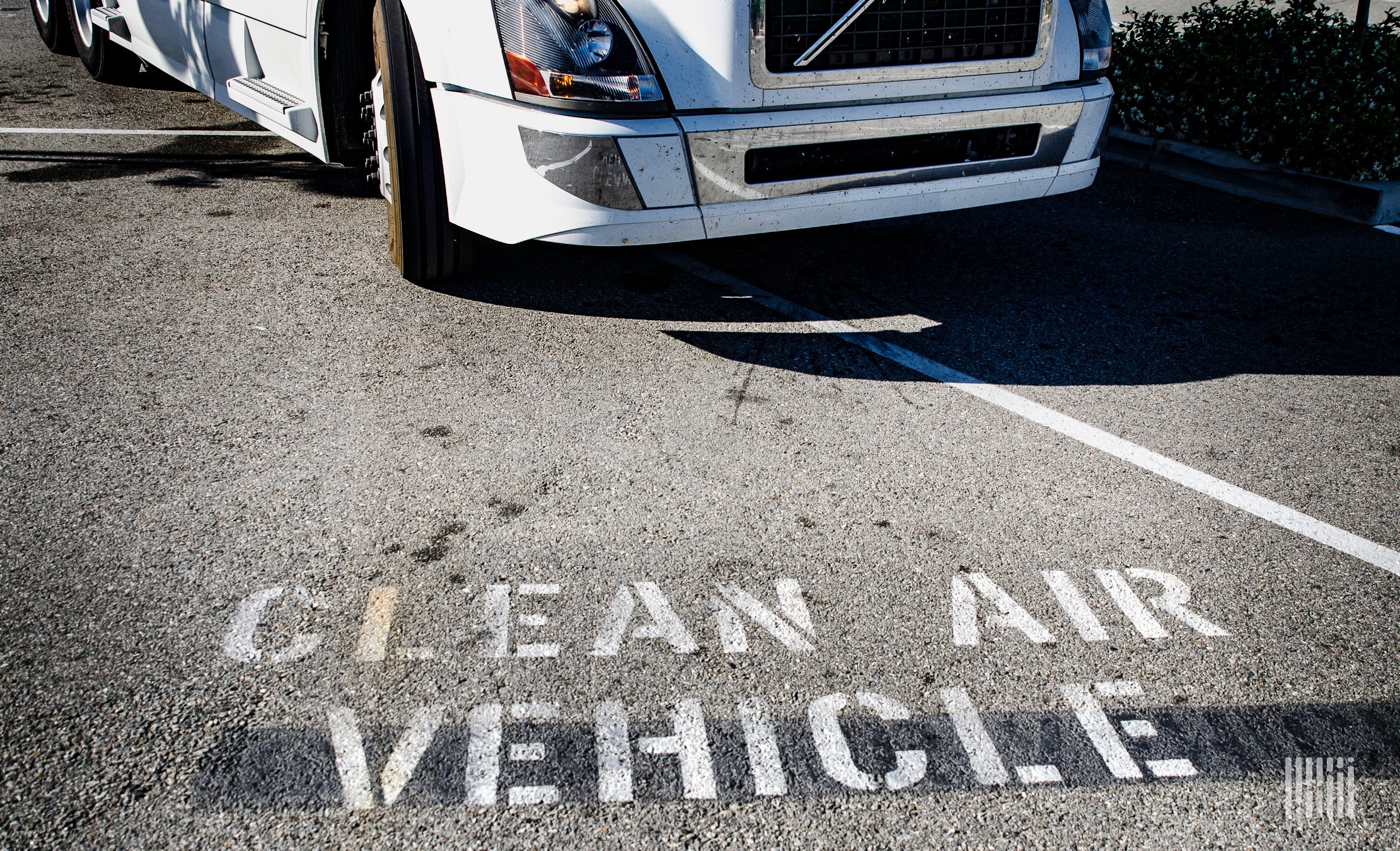
A South Carolina truck driver and his company are facing over $1.6 million in restitution and penalties after a drunk-driving crash resulted in a hazardous materials spill.
Dennis Eugene West, 57, of Moncks Corner, South Carolina, pleaded guilty on October 9 on behalf of himself and Gadsden, Gaillard and West LLC, the trucking business he was working for at the time of the crash, each for negligent discharge of pollutants into U.S. waters.
According to court documents, on August 24, 2022, West was driving a tractor trailer on Interstate 77 in West Virginia when he crashed while crossing Skitter Creek Bridge in Fayette County.
“During the crash, the tractor-trailer flipped over the median barrier wall, blocking all northbound and southbound lanes, and causing damage to the median barrier,” a local TV station reported at the time. The truck caught fire during the crash, according to the report.
West was carrying a load of 275-gallon bins of alkyl dimethylamine, a chemical used in detergents. Many of the bins ruptured as a result of the crash, with thousands of gallons of the chemical spilling onto the bridge and ultimately into Paint Creek, a tributary of the Kanawha River.
The discharge continued into the next day, which “temporarily caused adverse impacts to the aquatic life of the creek, including the killing of several species of fish,” according to the court filing.
“As part of his guilty plea, West admitted that he operated the tractor trailer under the influence of alcohol at the time of the crash,” the U.S. Attorney’s office stated in a press release. “Law enforcement determined that West’s blood alcohol content (BAC) was more than 0.08 percent.
“West Virginia law prohibits any person from operating a commercial motor vehicle with a BAC of 0.04 percent or more. Neither West nor his company had a permit issued pursuant to the federal Clean Water Act to discharge pollutants, including alkyl dimethylamine, into Paint Creek or any other water in West Virginia.”
Court documents show that both West and Gadsden, Gaillard and West LLC owe restitution of up to $1.65 million as a result of the chemical spill and aftereffects..
West also faces a maximum penalty of one year in prison, up to one year of supervised release, and a $100,000 fine. Gadsden, Gaillard and West faces a maximum penalty of up to five years of federal probation and a $200,000 fine.
West and the company are scheduled to be sentenced on January 29, 2026.
FMCSA Threatens to Decertify Pennsylvania’s CDL Program After Uzbek Terror-Suspect Obtains State License
When news broke that an Uzbek terror-suspect was arrested in Kansas while holding a Pennsylvania-issued commercial driver’s license, the trucking world felt the shockwave immediately. The man’s name was Akhror Bozorov, and federal officials now say his case exposed a breakdown inside Pennsylvania’s CDL verification system that has been building for years. That one license triggered a federal safety review, a political firestorm, and now a direct warning from FMCSA: fix the state’s CDL program, or lose the authority to issue CDLs altogether.
This is not a routine compliance audit. This is the federal government stepping in and telling one of the nation’s largest freight states that its CDL system is no longer trustworthy. And the consequences — for training schools, carriers, insurance companies, and every driver coming up through the pipeline — could be severe.
To understand how we got here, you need the full picture. And it starts with the driver at the center of the incident.
The non-domiciled Pennsylvania CDL issued to Akhror Bozorov in 2025, a document federal officials say should never have been approved under current eligibility rules. (Photo: Department of Homeland Security)
How One Driver Set Off the Federal Alarm
According to federal officials and multiple public records, Akhror Bozorov — a citizen of Uzbekistan — was arrested in Kansas as a terror-suspect. When his identity was processed, authorities discovered he held a valid Pennsylvania-issued CDL. That immediately raised two major questions:
How did he get licensed? And why did Pennsylvania’s verification process approve him?
Pennsylvania state Sen. Jarrett Coleman had already raised concerns about potential failures inside the state’s CDL system after earlier warnings, and he sent a letter to Gov. Josh Shapiro’s administration urging immediate action. Coleman’s warning was blunt: the state was showing signs of a growing CDL verification crisis.
Shapiro’s office pushed back, blaming federal data systems from the Trump administration, claiming Bozorov’s name remained in a federal immigration database used for work-permit holders. But DHS clarified that being listed in that system does not prove legal immigration status, nor does it satisfy the requirements for CDL eligibility.
In short, the documents Pennsylvania relied on should not have been enough. Bozorov never should have received a CDL under FMCSA rules. And that is the exact failure that put the state in the crosshairs.
Joe Biden’s open border allowed tens of millions of illegals to pour into our country, including a SUSPECTED TERRORIST who was then issued a trucking license in Pennsylvania.
This is unacceptable!@USDOT will take all enforcement measures necessary to ensure we get dangerous,… https://t.co/IgjFj6G30J
Federal reviews uncovered a series of deeper problems within Pennsylvania’s CDL program. These weren’t isolated clerical errors — investigators described systemic failures in crucial verification steps, including:
Identity authentication
Lawful presence verification
Immigration document validation
Third-party examiner oversight
Recordkeeping accuracy
Compliance with federal testing standards
FMCSA concluded that Pennsylvania approved CDL applicants when critical eligibility information wasn’t validated. In some cases, state systems accepted documentation that did not meet federal criteria. In others, examiners were allowed to conduct testing without the oversight normally required.
Commercial driver’s licenses aren’t state certificates. They are federal credentials issued through a partnership with the states. When a state cannot verify a driver’s lawful presence, identity, or eligibility, FMCSA has the responsibility to intervene — and this time, they used it.
The threat is clear: if Pennsylvania doesn’t fix the program fast, FMCSA will decertify it.
California Was the First Domino — Pennsylvania Is the Warning Shot
This isn’t happening in a vacuum. FMCSA had already pulled tens of millions in federal funding from California earlier this year after discovering widespread CDL compliance failures. California’s violations looked similar — issuing of non-domiciled CDLs to ineligible immigrants, weak monitoring of examiners, poor testing controls, delayed corrections — but the federal reaction was the same: zero tolerance.
The pattern is unmistakable. FMCSA is tightening the entire national CDL issuance system.
California lost funding. Pennsylvania now faces decertification. And federal officials have warned publicly that more states will be reviewed.
Trucking has seen regulatory waves before — ELDs, the Drug & Alcohol Clearinghouse, emissions standards — but this one hits the driver pipeline directly. That’s why the stakes are so high.
The Political Explosion: Loud Voices, Fast Reactions
Bozorov’s case didn’t stay inside industry circles. It exploded across national media.
Fox News ran multiple segments suggesting Pennsylvania’s system allowed improper licensing of non-citizens. Local and national CBS outlets reported federal frustration with PennDOT’s processes. Political leaders seized the moment. Secretary Sean Duffy threatened to pull $75 million in federal funding. Pennsylvania Democrats and Republicans went back and forth publicly about who was responsible. DHS and the Shapiro administration clashed over what federal databases actually mean.
The case went from a failed license verification to a national political storyline about border control, vetting failures, and federal oversight. Once an issue reaches that level, FMCSA has to respond quickly — and decisively.
That’s exactly what is happening.
What Decertification Would Mean for Trucking
If FMCSA follows through and decertifies Pennsylvania’s CDL program, the fallout will be immediate and severe. The state would lose the authority to issue, renew, or upgrade commercial driver’s licenses. Every new driver in the pipeline would be forced into a waiting status. CDL schools would stall. Written and skills testing would freeze. Licensing timelines would explode. Carriers would lose weeks — sometimes months — of recruiting momentum.
This isn’t hypothetical. This is the exact reason FMCSA should take decertification seriously — as it disrupts an entire region’s supply of new commercial drivers.
Why FMCSA Says This Isn’t About Lawful Immigration — It’s About Verification
FMCSA has been very clear with its language. The agency is framing this as an illegal immigration issue.
The federal standard is simple:
If a state cannot prove a driver’s identity, lawful presence, and eligibility using federally approved methods, that state is out of compliance.
Bozorov’s case exposed a verification gap that had gone unnoticed too long. It didn’t matter whether he was a terror-suspect, a tourist, a student, or a long-term resident. If the federal verification system cannot confirm lawful presence, the CDL cannot legally be issued. FMCSA believes Pennsylvania failed that requirement.
That’s the heart of the case.
Final Thought
Pennsylvania didn’t end up in this situation because of one driver. Bozorov’s case simply forced the issue into the open. Behind it were years of system weaknesses, verification gaps, oversight failures, and state processes. Once federal investigators connected those dots, FMCSA had no choice but to intervene.
Decertification is rare. Threatening a state’s entire CDL authority is even rarer. But the message from Washington is clear: the era of loose CDL controls is over. States will either meet federal verification standards or lose the ability to issue America’s most important credential.
And for the trucking industry — especially the small carriers — this is a moment to pay attention. CDL oversight is entering a new phase. The rules are tightening. The spotlight is widening. And the federal government is making it clear that they’re prepared to step in anytime a state’s system allows dangerous gaps to slip through.
The fallout from this isn’t over. But one thing is certain: trucking is about to enter a new chapter in how America decides who gets behind the wheel of an 80,000-pound vehicle.
What Lowe’s and Walmart Just Told Us About Q1 Freight — Part 2 of the Retail Freight Outlook
When Home Depot reported earnings early this week, it gave us the first real signal about how freight could shape up heading into Q1. They told us the consumer wasn’t collapsing, but they also weren’t opening their wallets like they used to. Big home projects were getting delayed. DIY was soft. And inventory levels were steady enough that a big January restock wasn’t coming.
Now Lowe’s and Walmart have stepped up to the mic — and they’ve basically confirmed everything Home Depot hinted at. And for small carriers who live and die by freight cycles instead of corporate projections, this second round of earnings offers something even more important: clarity.
Let’s walk through what these two retail giants really told us.
Lowe’s — The Project Economy Is Moving, But Slowly
Lowe’s numbers differed from Home Depot in a way that’s almost impossible to ignore. Sales were steady, but not strong. Customers are still buying the basics, but they’re holding off on big remodels, upgrades, or unnecessary home improvement plans.
What stood out most was Lowe’s comment about their Pro customer base — the contractors and builders who typically drive the bulk of construction-related freight. They’re still coming in, still spending, still working. But they’re not scaling. They’re not taking on bigger jobs. They’re not pulling the trigger on the kind of materials orders that push big volumes through flatbed, LTL, and regional van networks.
That’s a meaningful signal.
The construction world is usually a leading indicator for freight three to four months down the road. When contractors are confident, they buy early and stock up. When they’re unsure, they buy only what the job requires — nothing more. And right now, Lowe’s is telling us they’re in the second camp.
For truckers, that likely means a slower January and February for materials, appliances, fixtures, and other home-related freight. There will still be freight — it just won’t be the heavy-volume kind that kicks off an early spring surge. Flatbeds rely heavily on the building material segment that both Lowe’s and Home Depot rely on. Pro penetration (the total percentage of retail sales from the pro customer) is the bread and butter of these two retail giants.
Balanced inventory levels across retailers suggest limited early-year restocking, which typically keeps truckload demand flat heading into Q1. (Source: SONAR. TRIS.USA)
Walmart — The Consumer Is Stable, But Far More Disciplined
If Home Depot shows one slice of American spending and Lowe’s shows another, Walmart reveals the whole heartbeat. And Walmart’s Q3 earnings tell a complicated but honest story: the consumer is still spending, but spending with caution.
Grocery was strong. Everyday essentials were strong. E-commerce showed healthy growth. But the discretionary categories — the TVs, electronics, decor, general merchandise — are soft. Not dead. Just soft enough that Walmart isn’t ordering aggressively.
And when Walmart isn’t ordering aggressively, DCs across the country shift into “defensive mode.” They keep stock tight. They replenish only when they need to, especially in the final stretch. They avoid big forward-positioning pushes.
That discipline potentially affects the entire trucking ecosystem:
fewer replenishment runs leaving import DCs
fewer high-margin consumer loads
fewer regional surges tied to general merchandise
less long-haul van freight being pushed ahead of Q1
What Walmart actually revealed is that the consumer hasn’t stopped — they’ve just changed how they spend. More groceries. More necessities. More value-based shopping. Less impulse buying. Less big-ticket activity.
And that creates a freight environment that moves, but doesn’t accelerate.
What This Really Means for Q1
Put all three together — Home Depot, Lowe’s, and Walmart — and a clear picture emerges of what small carriers can expect heading into the first quarter of 2026.
January is almost setup to be slow. This isn’t a year where large retailers overshot their inventory and now need to refill everything at once. If anything, they’ve kept inventory lean on purpose. That means less panic-buying, less urgent replenishment, and fewer “pushes” of freight into distribution centers early in the year. We have seen this in the slowing of inbound container volume as well.
The consumer is stable — not booming, not collapsing — which creates a freight market that’s steady but tight. Rates don’t crash in an environment like this, but they also don’t climb. The freight isn’t drying up; it’s just not expanding in a way that moves spot rates. When you throw in added capacity, you experience rate stagnation.
Winter will be carried mostly by essentials: food, supplies, household goods, consumables, the kind of freight that never truly goes away. This will keep trucks rolling, but not at aggressive rates.
Construction-related freight looks slow until at least March. The Pros aren’t scaling, and Lowe’s made that clear. Without those early-material orders, the spring build-up could hit later than normal.
E-commerce will help keep freight flowing, especially into the Southeast and major metro areas, but it won’t save the quarter. So much of that freight is already locked under contract with mega carriers — they’ll eat first, as always.
And DCs being cautious creates a predictable effect: no spikes, fewer swings, and tighter spot availability.
The Real Story Small Carriers Should Pay Attention To
The real story isn’t the earnings numbers. It’s the behavior underlying those numbers. Retailers are acting intentionally conservative right now:
They’re ordering strategically.
They’re protecting margins.
They’re avoiding overstocking, which they learned from the pandemic.
They’re leaning harder on forecasting models.
They’re only replenishing when the customer forces their hand.
In trucking, volatility creates opportunity. When inventories run too low, freight surges. When inventories run too high, freight surges again as retailers scramble to reposition. But in a balanced environment — the kind these retailers are carefully maintaining — volatility disappears.
And without volatility, the spot market stays quiet.
What Carriers Should Watch Between Now and February
The next eight to twelve weeks matter. They’ll decide how spring looks. Carriers should watch:
Whether Walmart increases grocery purchase orders after holiday demand
Whether Lowe’s and Home Depot place early spring orders for materials
Whether import volumes begin climbing into West Coast ports
Whether consumer sentiment in January ticks up or down
Whether DCs start hiring seasonal warehouse crews early
These things matter more than capacity exits, more than short-term rate bumps, and more than the social media predictions that pop up every week.
Retail tells the truth first. Trucking feels the truth later.
Right now, retail is telling us to expect a slow climb into spring.
Final Thought — This Is a Quarter to Be Smart, Not Overly Optimistic
This winter will reward small carriers who manage their cost per mile, keep their lanes tight, and secure relationships with brokers they trust. It’s not a time to gamble on the spot market. It’s a time to run smart miles and protect the business until stronger demand cycles return.
Q1 won’t deliver a miracle. But it also won’t deliver a collapse. What we’re entering is a season of steady freight with firm floors and low ceilings — and the carriers who adapt to that reality will be the ones standing strong when demand finally broadens later in the year.
ACT: Used Truck Prices Steadying, But Small Carriers Should Pay Close Attention to What’s Coming Next
The used truck market has been on a roller coaster for the last five years. First came the COVID boom, when prices exploded and used tractors were selling for more than brand-new models did prior it felt like. Then came the freight recession, which sent prices tumbling and flooded the market with equipment nobody wanted to finance. Now, according to ACT Research, the used Classes 3–8 market is finally showing signs of flattening out. Prices aren’t falling off a cliff anymore. Sales volumes are steady. Retail prices are holding. To the outside world, it looks like stability.
But to the small carrier—the owner-operator who buys used, not new—this isn’t a “calm” market. It’s a potential turning point. Because any time used truck pricing stops falling, something bigger is happening underneath. And with the 2027 emissions rule locked in, small carriers need to pay attention now, not two years from now when the downstream effects show up in their budget.
This article breaks down what ACT Research reported, what the trends actually mean, and how all of this ties into the next emissions cycle that will hit the used market where small carriers live.
ACT Research: Used Market Stabilizing After Two Years of Decline
ACT’s latest numbers show that the used market—Classes 3 through 8—isn’t dropping the way it did from mid-2022 through mid-2024. Prices aren’t skyrocketing like they did during the COVID bull run, but they’re no longer in freefall either.
The way ACT frames it:
Demand has returned to “normal-ish” levels, inventories are “workable”, fleets are buying right-sized again and retail pricing has stopped eroding.
For example:
Late-model Class 8 retail prices are now flat month-over-month.
Sales volumes are stable—not booming, not collapsing.
Mileage and age have also flattened, meaning fleets aren’t just dumping old equipment.
The market seems to have found its “floor” for now.
On paper, that looks promising. In reality, it’s a sign that the bottom has already passed.
Once the bottom of used equipment pricing is confirmed, the next phase usually follows: slow, steady appreciation as replacement cycles ramp back up. The one thing to consider is as ELP enforcement continues, one should expect inventory levels to increase which would in theory, impact pricing based on supply.
But this time, the pressure won’t be coming from strong freight demand. It will be coming from something else entirely.
The Force That Will Move the Used Market Next Isn’t Freight — It’s the 2027 Emissions Rule
This is the part some small carriers may not see coming.
Large fleets know the playbook. They’ve seen this cycle before:
New emissions rule → fleets pre-buy → used truck supply tightens → prices rise → small carriers pay more.
In 2007–2010, when DPF and SCR systems rolled out, fleets bought thousands of pre-emissions trucks ahead of the deadline. The used market tightened overnight. Prices for 2006 models shot up. Older trucks became the “safe” choice. Small carriers paid the premium, often with financing terms that didn’t make sense, because they wanted to avoid first-generation emissions technology.
That cycle is probably about to repeat.
Why does that matter today? Because the stabilization ACT is reporting is the calm before the market starts climbing again. Not because freight is booming. But because fleet behavior always gets aggressive before an emissions deadline.
You’re watching the beginning of a pre-buy cycle.
After peaking in early 2022 and plunging through 2023–2024, used truck values appear to be finding a floor based on ACT Research’s latest index. (Source: SONAR. UT5.USA)
What the Used Market Stabilization REALLY Means for Small Carriers
To a small carrier, “prices stabilizing” means something very different than it does to lenders, OEMs, and analysts.
Here’s what it actually means:
If you were planning to buy a truck in 2025 or 2026, the window of opportunity is starting to close.
Right now, you’re standing in the last stretch of a buyer’s market. Prices are reasonable. Inventory is broad. Age and mileage are predictable. Dealers are negotiating. Financing is tight but not brutal. Selection is decent.
But the moment OEMs move into 2027 pre-production, large fleets will start placing orders earlier. They’ll start holding onto certain year models. They’ll start pulling good-condition units out of the used market. And they’ll begin preparing to cycle out older trucks once they know what the new emissions systems will look like.
That creates three pressures small carriers always feel first:
Used prices rise.
Lower-mileage units vanish.
Mid-life trucks (4–7 years old) become premium inventory.
So while ACT is reporting stability today, the next phase is going to be scarcity.
The Small Carrier Advantage — and The Small Carrier Trap
Small carriers have one advantage in the used market: they’re flexible. They can shop multiple years, engines, spec packages, and conditions. They don’t need hundreds of units. They just need one good truck.
But they also fall into a trap: they wait too long.
Small carriers make decisions based on cash flow, not forecasts. They wait until the current truck is dying sometimes before thinking about the next one. They delay upgrades because the market is “bad.” They rely heavily on run-to-failure thinking because repairs feel cheaper than financing.
That works fine in a normal equipment cycle.
But it turns deadly right before an emissions rollout.
If you wait too long, you’ll be shopping in a used market that:
has higher prices
has fewer good units
has more overpriced auction trucks
has more high-mileage castoffs
has dealers who stop negotiating
has fleets holding their best-used inventory longer
has increased financing requirements
has insurers penalizing older equipment
That’s why this stabilization ACT is reporting must be a wake-up call. The used market is telling you:
This is as cheap as it’s going to be for a while, unless there is a flood of inventory that outpaces demand.
The Lingering Shadow of DPF Problems — Why Small Carriers Are Right to Be Cautious
The trucking industry still bears the scars from DPF rollout. Small carriers remember buying trucks that regen’d every day. Trucks that derated on the highway. Trucks that needed $3,000 sensors and $10,000 one box replacements. Trucks that lived in dealerships while owners lived on credit cards.
That trauma is why small carriers get nervous anytime a new emissions package approaches. And for good reason.
First-generation emissions systems are rarely stable. Shop techs still don’t fully understand them. OEMs issue campaign after campaign. Owners troubleshoot at their own expense. Downtime skyrockets. Warranty battles get messy.
Small carriers remember that era vividly. They don’t want to repeat it. And they shouldn’t.
But that pressure is exactly why the used market tightens before the new rule hits. Everyone wants the “known quantity”—the engines that are proven, the aftertreatment that mechanics understand, the platforms that have settled into reliable patterns.
Pre-2027 trucks are going to become the safety choice.
And small carriers will be fighting fleets for the same inventory.
What Small Carriers Should Do Right Now
You don’t have to panic, you just have to be aware and prepared.
If your truck is aging and your business depends on keeping moving, start preparing sooner than later.
Here’s what matters most:
If you’re within 12–18 months of needing a truck, begin shopping now. If you’re running a 2015–2017 model, plan your budget for replacement before 2026. If your truck is paid off and reliable, invest in maintenance now so you can hold it longer.
If you want a second truck, account for higher prices and tighter selection potentially.
If you rely heavily on older emissions systems, prepare for rising parts and repair costs.
Nobody needs to run out and buy a truck tomorrow.
But the used market is shifting, and small carriers need to think ahead for once—not react when the damage is done.
Final Thought — The Numbers Look Calm, But This Is the Moment to Prepare
On paper, ACT Research is right: the used truck market has stabilized. Prices have leveled. Inventory is steady. The panic selling has stopped. But the market always flattens right before it starts climbing again—and this time, the 2027 emissions rule will be the force pushing prices up, not freight demand.
Small carriers won’t feel the impact in 2027.
They’ll feel it in the used lots two years before the rule ever takes effect. That time is now. The smart carriers are already watching the market, the reactive ones will say “nobody warned me.”
This is the warning.
Australia Post adds weekend parcel delivery for holiday rush
Australia Post is reintroducing temporary weekend deliveries beginning on Saturday to ensure parcels arrive in time for Christmas ahead of an expected surge in online shopping.
Weekend delivery service will be available in all metro capitals and select regional cities and towns, the post announced on Thursday. Weekend delivery is one of several ways Australia Post is providing extra flexibility for customers during the holidays. The postal service has also hired thousands of temporary workers, expanded delivery options such as self-service parcel lockers, and extended hours at more than 300 post office locations.
“We’re already seeing an increase in parcel volumes across our network as retailers launch Black Friday and Cyber Monday deals early. Last year we delivered almost 103 million parcels in the lead up to Christmas and we’re anticipating similar volumes again,” said Gary Starr, executive general manager parcel, post and e-commerce services, in a news release.
Australia Post has recently opened several new-age parcel-focused post offices in major cities, with features such as 24/7 self-serve options and free parcel lockers designed to make it easier to send, collect and return parcels. Earlier this week, the mail operator inaugurated a next-generation post office in Queensland. It also continues to expand locations with parcel lockers to increase convenience for customers.
Australians set a new online shopping record, spending AUS$20.7 billion, equivalent to $13.4 billion, for the July-September quarter, fueled by more frequent purchases and major sales events, according to Australia’s quarterly e-commerce report last month.
Online retail spending grew 15% year over year, and 6.2% sequentially, leading to projections for intensified shopping activity across the Black Friday and Christmas periods.
Online marketplaces remained the top-performing category, followed by food and liquor. At-home entertainment and lifestyle products, such as books, saw the biggest growth of any online category.
Australian shoppers were part of a multi-country survey that showed 53% consumers expect packages to arrive within two to four days, but only one-third are very confident about the delivery date. As a result, 78% of respondents purchasing gifts for people outside of their household are planning to shop at least three to four weeks in advance. The survey, sponsored by supply chain technology platform Blue Yonder, also found that many consumers are willing to explore alternative shipping methods to reduce costs, delivery time and environmental impact.
Many respondents in the U.K. (43%) and the U.S. (40%) aren’t willing to pay any additional cost for expedited shipping. The trend is also seen across generations, with almost half of Baby Boomers (49%) expressing unwillingness to pay any additional cost, followed by Gen X (34%).
More than half (53%) of respondents are willing to use in-store pickup to receive their online purchases faster, followed by locker pickup (42%). These are also the top two alternative methods for consumers seeking free shipping.
More than 6,000 respondents participated in the survey.
EPA Holds Firm on 2027 NOx Rule – What Small Carriers Need to Know Before the Market Shifts
For months, the trucking industry has been waiting to see whether EPA would bend, pause, or extend the 2027 NOx emissions deadline. Industry groups filed petitions. Manufacturers warned about rushed timelines. Trucking associations argued the rollout was too fast and too expensive. But none of it moved the agency. EPA said no. The deadline remains. Manufacturers must hit the 2027 compliance date, and the next generation of ultra-low-NOx engines will roll out sooner rather than later.
To many people watching the headlines, the story sounds simple: new trucks are about to get more expensive, more complicated, and more emissions-heavy. But for small carriers—the one-truck operators, the small fleets, the independent families holding this industry together—the real impact won’t be in the new truck lots. It’ll be in the used truck rows where they buy their equipment, the repair shops where they fix it, and the balance sheets they fight to protect.
This rule isn’t about whether someone supports clean air. It’s about what happens next to the part of the industry least equipped to absorb new costs and the long history that got us here.
This is a breakdown written for the trucker who has lived through every emissions experiment the government has rolled out over the last 20 years and the trucker who will feel the ripple effects long after the 2027 models hit the streets.
The History That Small Carriers Haven’t Forgotten
Before talking about 2027, we need to talk about 2007–2010.
That’s when DPF and SCR systems were forced into the market. On paper, the technology made sense. In reality, the rollout was a disaster. Engines derated on the shoulder. Trucks regen’d themselves into breakdowns. Aftertreatment failures wiped out savings accounts. Repair shops learned the systems at the same time as owners—meaning a lot of small carriers paid for training-by-mistake.
DPF failures were so common that some fleets parked their brand-new trucks and ran their older tractors to stay in business.
Thousands of small carriers exited the industry from those repair bills alone. That era changed how small carriers feel about emissions rules permanently.
So when EPA says “2027 is happening on schedule,” small carriers don’t hear policy—they hear risk. They hear cost. They hear downtime. They hear memories of sitting on the side of the road watching their week fall apart. They hear broken promises.
And that history matters, because it shapes how the used truck market responds next.
The Real Impact Isn’t “New Truck Prices Rising.”
It’s What Happens to Used Trucks.
Small carriers rarely buy new trucks. They don’t have the luxury of $180,000–$225,000 price tags. They buy the trucks coming off fleets at 350,000–600,000 miles. They buy 3–7 years old. They shop the used-lot rows and auction listings—not manufacturer order forms.
So when new emissions systems hit the market, the impact flows downstream into the environment where small carriers actually live.
Here’s how.
First, pre-2027 trucks become more desirable. Fleets will buy extra trucks before the rule hits to avoid the first generation of any new emissions package. Small carriers will want the older engines because they’re simpler, easier to diagnose, and fully understood by mechanics. When demand for the same pool of used trucks rises, prices go up. Same thing happened with pre-emission trucks.
Second, used truck value cycles get distorted. When DPF trucks came out, the value of pre-DPF trucks skyrocketed. Some carriers paid more for a 2006 model than a 2009 because of reliability. Expect that cycle to repeat. Trucks built in the 2018–2024 window may become the “sweet spot” for small carriers who want modern comfort without brand-new emissions hardware.
Third, parts demand shifts. As manufacturers shift toward 2027 technology, parts support for older equipment eventually shrinks. It doesn’t vanish overnight, but it gets pricier and slower. Anyone running older trucks knows how availability changes once a technology reaches midlife.
Fourth, the resale game gets unpredictable. At first, pre-2027 trucks will hold value. But the further the market moves past the rollout, the more the resale value falls off sharply as major fleets rotate into the new tech and older trucks become harder to insure or run in certain states.
This is the long-term cycle small carriers need to think about now—not after the price jumps hit.
The Main Question Small Carriers Want Answered:
“Will this force me into buying a newer truck sooner than I want?”
Not immediately. But long-term? Yes, it could potentially if refs get stricter.
As new emissions systems roll out, the older equipment still works—but the ecosystem around them changes. Parts availability thins. Shops shift training toward newer systems. Insurance begins nudging older equipment out of certain policies. States tighten idling and emissions inspections. Older trucks remain legal, but the market slowly chokes them out.
You don’t feel it in 2027.
You feel it in 2029, 2030, and beyond.
That’s why small carriers need to understand what this rule really means: you might end up running older equipment longer in a world that’s increasingly optimized for the new stuff.
That creates a financial squeeze small fleets feel first.
Will the Rule Reduce Emissions?
Probably. Will it reduce operating pain? History says no.
EPA’s goal is cleaner air. That’s not the debate here. The concern is the rollout. Every emissions rule so far has created a learning curve where truckers pay the tuition.
Small carriers know how this plays out:
New tech → Early failures → Downtime → Backordered parts → Costly repairs → Resale uncertainty → Used market distortion → Smaller carriers financially exposed
Exactly what happened with DPF. Exactly what happened with SCR. Exactly what happened with sensors, regen cycles, and DEF system faults.
The industry always adjusts—but small carriers pay the initial cost.
What This Means for Demand in the Used Truck Market
Expect three shifts:
First, demand for pre-2027 trucks will increase across all regions. Fleets will pre-buy. Owner-operators will buy before complexity increases. Dealers will stock older inventory because it moves faster.
Second, used equipment pricing will tighten. Trucks that should be worth $55K may hold at $70K simply because buyers want technology they understand.
Third, certain engine models will become “golden years.” Just like pre-2007 trucks carried a premium, expect specific years and engine families to become the safe zone for small carriers looking to avoid new systems.
Nothing about this is speculation—it’s happened every time emissions tightened.
So What Should Small Carriers Actually Do?
There isn’t one answer. Every operation is different. But here are the practical takeaways:
If you’re planning to upgrade in the next 18–24 months, start watching prices now.
If your truck is aging, consider moving sooner rather than later.
If your truck is reliable and paid for, maintaining it may be worth more than upgrading.
If you’re thinking about a second truck, prepare for higher used prices.
If you run older equipment, start planning for rising repair and parts costs.
This is not the moment to panic. But it is the moment to plan. The fleets aren’t hoping, they’re preparing. Small carriers need to do the same.
Final Thought – The Rule Isn’t the Threat. The Ripple Effect Is.
EPA didn’t bend. The 2027 NOx rule stands. New engines are coming. New technology is coming. And just like every emissions cycle before it, the pain won’t hit the companies ordering brand-new trucks. It will land in the used truck market, where the small carrier lives, budgets, repairs, and survives.
The rule won’t put most small carriers out of business.
But not preparing for what it will do to used truck pricing, parts availability, and maintenance costs just might.
Small carriers have always carried this industry on their backs.
This rule doesn’t change that.
It just makes preparation—real preparation—more important than ever.
Rail merger no guarantee of growth: Analysts
NEW YORK — While the prospect of the first transcontinental railroad has created rare buzz in a staid business, analysts questioned whether Union Pacific and Norfolk Southern can produce the kind of growth in freight traffic they say an historic merger would bring.
“Over the past 10 years intermodal freight has underperformed versus benchmarks,” said consultant Larry Gross, during a panel discussion at the RailTrends conference. “This includes gross domestic product, long-haul trucking and containerized imports. Unless something changes, we’re not going to see growth or recovery.”
Gross said a re-opening of the Red Sea shipping route would be a headwind for intermodal because more freight will be end up being routed to the East Coast, and intermodal share off the East Coast is much lower than off the West Coast. The federal crackdown on commercial driver licenses could shrink motor carrier capacity and raise rates that may push more freight to intermodal. “But international freight will continue to be under pressure and I see no increase in domestic truckloads, so for 2026 I am forecasting intermodal to be flat to down overall,” said Gross.
Analyst Rick Paterson told the conference that all six Class 1 railroads “are running well at the same time. This never happens,” but he was skeptical of assertions by UP (NYSE: UNP) and NS (NYSE: NSC) that the merger will drive substantial freight gains in an industry that has struggled with carload declines in recent years.
“They’re asking us to believe that these two companies, which have recorded zero volume growth over the last 10 years, will now grow by 10% within three [years, following merger approval],” Paterson said.
The prospective merger has attracted praise from President Donald Trump and backing from hundreds of shippers amid a sustained campaign by UP Chief Executive Jim Vena, who was in the audience, to garner support for the historic tie-up. But it has also spurred expressions of concern from other railroads, chemical shippers and scores of Republican state legislators who worry that the consolidation will choke economic growth amid higher rates and service difficulties.
One longtime industry observer said too much is unknown to pass judgment.
“We don’t know what the merger is,” said analyst Tony Hatch, noting that details of the merger agreement won’t be known until UP-NS file their formal application with the Surface Transportation Board in the coming weeks.
“Stakeholders can oppose, support or extort this deal. UP is sailing in the dark on their own, so it’s not a slam dunk. The benefits are clear but undefined, and the question has to be asked, ‘What do you pay for those benefits?’”
Notably, Hatch said that UP has budgeted $750 million to cover potential concessions in the merger. One thing that is certain, he said, is the integrity of the regulatory review.
“I have full faith in the Surface Transportation Board to evaluate this proposal. And I can tell you, they don’t rubber stamp for anybody.”
STB Chairman Patrick Fuchs in a separate panel while noting he cannot comment on a pending matter, in his first public comments since the merger was announced recalled that his agency had a variety of specialists on hand to review of the consolidation of Kansas City Southern and Canadian Pacific in 2023.
“We had an environmental impact specialist, a historic preservation specialist and they touch a substantial portion of the agency. We have other people for economic and data analysis,” Fuchs said.
Vice Chair Michelle Schultz said that agency held a listening session with practitioners, “who made a hundred suggestions” for the review process. Member Karen Hedlund pointed out that no agency staff was eliminated during the Doge cuts early on in the Trump administration.
“Patrick convinced them we didn’t have any excess staff.,” Hedlund said. “We have sufficient staff for the work we have.”
The conference is hosted by Progressive Railroading.
This article was updated Nov. 23 to correct a quote by Rick Paterson on post-merger growth claims by UP and NS., and to correct quotes from Larry Gross that a re-opening of the Red Sea would be a headwind for intermodal, not a tailwind.
Why Winter Makes Fuel Water Separators and Air Tank Drains Non-Negotiable for Small Carriers
The first real cold snap of the season is when a lot of truckers remember something they already knew: winter doesn’t care how busy you are, how many miles you need this week, or how tight freight already feels. Winter finds every shortcut you’ve taken. It finds every part you ignored. It finds every ounce of water, every drop of bad fuel, every weak air valve, and it exposes it all at the worst time. One morning you’re rolling fine. The next morning your truck won’t build air, your fuel has gelled in the filter, and your week is upside down before sunrise.
For small carriers—especially the one-truck operators—two pieces of winter maintenance carry more weight than people think: checking the fuel water separator and draining the air tanks. They sound simple. They sound quick. They sound like something you’ll “do later.” But in winter, these two items are the difference between running your loads and sitting on the shoulder waiting for a mobile mechanic who charges you $175 just for showing up.
This is the kind of winter prep that doesn’t cost money. It costs discipline. And it saves you thousands.
Why the Fuel Water Separator Matters More in Winter
A fuel water separator has one job: keep water out of your fuel system. Diesel naturally absorbs moisture, and winter temperatures pull even more condensation into the lines and tanks. Water in diesel isn’t just a contamination issue—it’s a freezing issue.
When temperatures drop, that water turns to ice. And ice in your separator, fuel lines, or filter creates three major problems truckers feel immediately.
First, the engine starves for fuel. Ice blocks the flow of diesel and the truck begins losing power. You’ll feel it on inclines, in throttle response, and then you’ll feel it completely when the truck dies on you.
Second, the high-pressure system takes the hit. Modern engines—especially common rail systems—hate water. Ice crystals damage injectors, pumps, and control valves. These aren’t $200 repairs. These are $3,000 to $10,000 failures depending on the engine.
Third, frozen water creates false signs of gelling. You might think your fuel gelled, dump anti-gel in the tank, and call for a road service tech… only to learn the separator was full of water the entire time.
A five-second check could have prevented all of it.
This is why winter requires a different mindset. Checking the separator once a month isn’t enough. Checking it only during PMs isn’t enough. You need to make it part of your weekly routine—daily if temps are extreme, especially if you fuel at unfamiliar stations.
Because here’s the truth no one likes to admit: the quality of fuel on the road is inconsistent. Out-of-the-way truck stops, small suppliers, and discount stations may push diesel with more water content. When temperatures hit freezing, that water becomes your problem, not theirs.
A simple check could save a breakdown that costs more than your truck payment.
Why Draining Air Tanks Is Even More Critical in Cold Weather
If water in diesel is a pain, water in your air system is a business-stopping nightmare. Every time your compressor runs, it creates moisture inside the tanks. In summer, this moisture sits quietly. In winter, it freezes into a system designed to handle air—not ice.
If the air tanks aren’t drained, here’s what winter brings next.
The first issue is frozen brake parts. Ice blocks supply lines, valves stick, and your brakes don’t release. Drivers describe it as “truck won’t roll” or “feels like brakes are locked.” That’s because they are.
The second problem is frozen air lines. When moisture freezes inside the line, air pressure can’t travel. The system can’t reach its cut-in and cut-out points. You’ll sit there watching needles that won’t build pressure and listening to a compressor working overtime for no reason. Especially if it the temps really go south.
The third issue is air dryer overload. The dryer is supposed to remove moisture—but it was never designed to compensate for weeks of neglect. When tanks aren’t drained, the dryer fills with moisture, saturates the desiccant, and freezes internally. That’s when purge valves crack, cartridges fail, and winter hits your wallet again.
This is why drivers should drain their tanks every night. Modern trucks and air dryers make us less focused on the basics, but the physics haven’t changed—moisture still builds in the system, and freezing temperatures still turn it into a block of ice.
A five-minute drain valve pull prevents a road call, a lost load, or worse, a day of downtime.
How Often You Should Check These Items in Winter
The answer depends on your operation, but here’s a practical winter baseline that won’t steer you wrong.
Check the fuel water separator at least twice a week, minimum.
Check it daily if temperatures are below freezing or you’re fueling in unfamiliar regions.
Drain the air tanks at least twice a week.
Drain them daily if you operate in the Midwest, Northeast, upper Rockies, or anywhere temperatures swing dramatically.
Winter maintenance is about eliminating excuses. These tasks take less time than gloves and a coat. They’re easy until you skip them. They’re cheap until you ignore them. They’re optional until the first cold snap teaches you otherwise.
How to Actually Do It (Driver-Friendly Breakdown)
Checking the separator means looking for water at the bottom of the bowl. If your unit has a drain valve, crack it and let the fuel-water mix drain out until you see pure diesel. If no drain exists, look for cloudiness, bubbles, or a dark layer at the bottom.
Water is heavier than diesel. It settles first. It always shows itself.
Draining the air tanks is even simpler. Pull the lanyard on your tank first. You’ll hear air and, if water is present, you’ll hear sputtering. Let it run until the sputter ends. Then move to the secondary tank, then the primary. Never assume the dryer “takes care of it.” The dryer is a filter, not a miracle.
These steps are basic—but they’re exactly what keep trucks alive in winter.
What Happens When You Ignore These Two Items
Ignoring the separator can lead to injector damage, fuel pump failure, no-start conditions, and breakdowns in the cold, etc. Ignoring air tanks leads to frozen brakes, stuck valves, air leaks that don’t exist in warm weather, and emergency road service calls that wipe out your profit for the week.
Small carriers don’t survive bad winters because of bad markets.
They survive winters because their truck stays running.
And these two tasks are the cheapest insurance you can buy.
Final Thought – Winter Doesn’t Forgive Neglect
Big fleets survive winter because they have budgets, spare trucks, and mechanics on standby. Small carriers survive winter because they do the simple things early. Checking a fuel water separator and draining air tanks don’t make headlines, but they save lives, loads, engines, and bank accounts.
If freight is soft, every mile matters.
If revenue is tight, every decision matters.
If winter is here, every shortcut becomes a breakdown waiting for the right temperature.
Control what you can.
These two steps are where that starts.
AGs from railroads’ headquarter states back merger
The stakes are rising in the proposed reshaping of the U.S. railroad industry.
After Attorneys General from nine states warned about potential negative effects, their counterparts from the railroads’ home states are urging federal regulators to approve the historic merger of Union Pacific and Norfolk Southern.
The letter sent Friday to the Surface Transportation Board was signed by Mike Hilgers of Nebraska, home to UP’s (NYSE: UNP) Omaha head office; Chris Carr of Georgia, where NS (NYSE: NSC) is based in Atlanta and J.B. McCuskey of West Virginia, a major coal producer.
The extraordinary letter from the states’ top law enforcement officers is the latest public relations broadside in the controversial process to create the first freight-only coast-to-coast railroad.
“America’s freight rail system is the envy of the world,” the letter stated. “Our more than 140,000 miles of freight rail track power the nation’s vibrant economy, safely moving raw materials, helping farmers access distant markets and giving consumers easy and cost-effective access to goods from coast to coast. Freight rail is both economically efficient and environmentally sustainable.”
America’s freight rail ships more than six times as many ton-miles of freight each year as the 27 member-states of the European Union combined, the letter stated, quoting research data.
“America’s railways move more than 5,000 ton-miles of freight per person per year, which is 10 times the amount moved in Europe and 25 times the amount moved in Japan. This massive volume drives more than $230 billion of economic output and supports more than 750,000 good-paying jobs.”
The AGs added that while freight rail accounts for roughly 40% of the long-distance shipping in the United States, it accounts for less than 2% of transportation-related emissions.
The AGs also pointed out that President Trump has backed the merger.
“There simply is no better combination of economic vitality and environmental sustainability than freight rail. The merger of Union Pacific and Norfolk Southern will only further strengthen the efficiency, reliability, and effectiveness of our freight rail system,” the letter concluded.
The railroads expect to file their formal merger application with the STB by December.
TITAN Containers is making a bold play to redefine what sustainable cold storage looks like with the launch of ArcticStore Horizon, a portable cold room engineered to slash energy use and global warming potential at a scale the industry hasn’t seen before. Horizon delivers an average 55% reduction in energy consumption and uses a near-zero-GWP refrigerant, CEO Søren Skov Mogensen says are arriving at exactly the right moment for a sector under pressure.
Cold storage demand is surging globally, growing between 10% and 20% every year as grocery delivery expands, food consumption patterns shift, and the pharmaceutical supply chain moves deeper into temperature-sensitive biologics and cell and gene therapies. But the infrastructure supporting that growth is strained.
Many facilities rely on aging, energy-intensive reefer technology at a time when electricity accounts for around 70% of operational costs. At the same time, regulations are tightening around refrigerant use, emissions reporting, and end-to-end temperature visibility.
“We’ve been doing refrigerated storage for more than three decades, and we understand the pain points,” Mogensen said. “Demand is rising across food, producers, pharma—everywhere. Customers need more capacity, but they also need to meet sustainability targets and control runaway energy costs. Horizon was built to solve both problems.”
Horizon’s efficiency gains come from a combination of vacuum insulation panels and an integrated solar-ready roof. Hyper-efficient vacuum insulation panels(VIP) have long been used in high-end pharmaceutical shipping boxes, but TITAN is the first to incorporate them into a containerized cold room without sacrificing transportability or structural integrity.
The engineering lift was substantial: the roof had to be lowered by 10 centimeters; however, corner castings and frame have been kept as is to ensure compatibility with global shipping and stacking requirements.
The solar component posed another challenge. Instead of fixed panels, Horizon uses roof-mounted panels that tilt toward the sun to maximize output. Ensuring they could withstand movement, shipboard handling, and harsh weather while still meeting ISO container standards required extensive redesign. “It had never been done before,” Mogensen said. “But now that we’ve solved it, we’re delivering the most environmentally friendly portable cold room in the world.”
The result is a system where about 30% of energy savings stem from improved insulation and roughly 25% from solar contribution. That solar benefit varies by geography, but remains meaningful everywhere TITAN has tested it. “None of the locations made the solar irrelevant,” Mogensen noted.
Customers are already showing strong interest across segments. Pharmaceutical companies with emissions-reduction mandates see Horizon as an immediate win, while food producers and distributors welcome relief from escalating electricity bills. “Without exception, our customers care about operating costs,” Mogensen said. “And they care about sustainability. Horizon finally gives them leverage on both.”
Beyond energy performance, Horizon offers practical advantages over traditional cold rooms. Conventional builds can cost four times as much and take up to two years to complete. Horizon arrives ready to run; customers plug it in and go live. Units can be scaled, linked into TITAN’s modular “SuperStores,” expanded, or returned as needs shift.
Every unit comes with SmartArctic, TITAN’s cloud-based monitoring platform that enables real-time visibility and two-way remote control, a growing requirement as compliance rules like FSMA 204 reshape temperature-controlled logistics.
For TITAN, Horizon marks the start of a new chapter. The company is preparing additional innovations rooted in the same out-of-the-box thinking, but Mogensen said the priority now is execution: “Our focus is on getting Horizon into the hands of customers and helping them reduce GWP and energy consumption. We’ve built something the industry truly needs right now.”