Samsara Beyond event highlights AI’s impact on fleet safety, efficiency

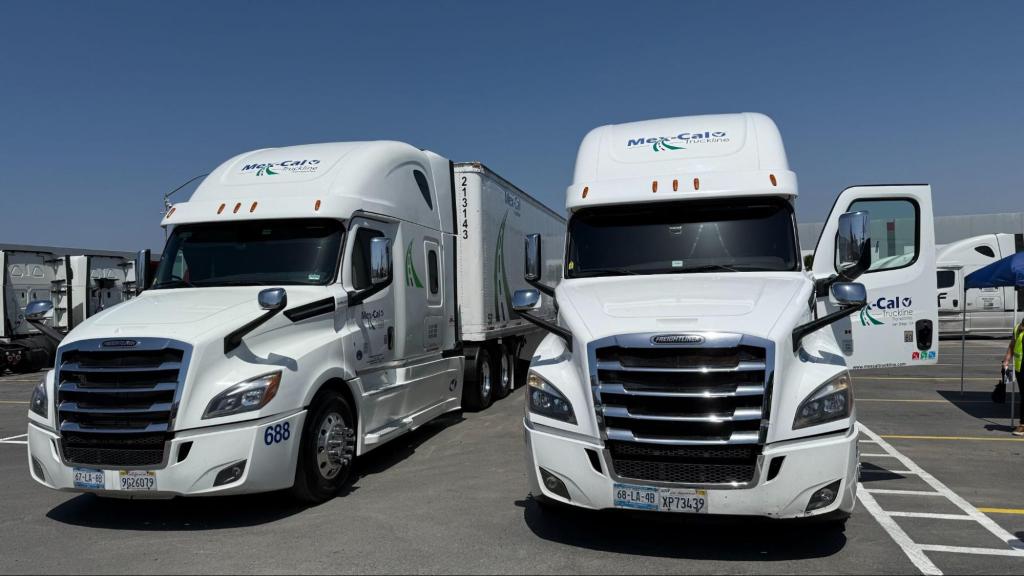
Mex-Cal Trucks in San Diego

SAN DIEGO – Key takeaways from the Samsara Beyond event after customer interviews, press conferences and facility tours is the growing use of artificial intelligence in physical operations to improve safety and efficiency. 

Safety and security was a chief concern for Samsara customers, who in a recent panel ranged from agriculture, chemical distribution and food service. Each had various types of fleets paired with a complex multi layered internal supply chain, requiring telematics and machine learning to improve efficiency. 

At a press conference following Samsara’s keynote, industry leaders from Nutrien Ag Solutions, Univar Solutions and Sysco discussed how Samsara’s AI-powered platform has transformed their transportation operations. A common theme was customers using real-time data, geofencing and driver coaching to reduce accidents and improve efficiency.

Customer panel testimonials praise safety and efficiency gains

(Photo: Samsara)

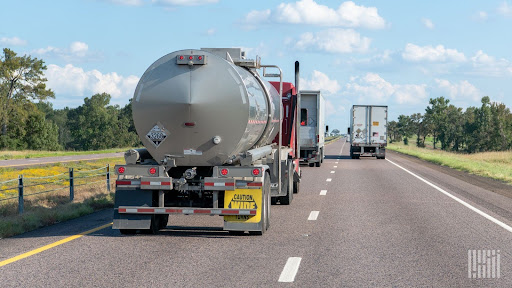
Univar Solutions talked about how safety is a cornerstone of their operations. The company operates in environments where noise and hazardous materials pose constant risks, including handling hazardous materials or high-value cargo.

Rob McRae, vice president of transportation at Univar Solutions, highlighted the stakes, telling journalists, “Our operations can involve a dangerous environment — 150 feet away, you can’t hear over the noise, yet it’s critical to stay safe. We’re dealing with hazardous materials, and accidents can happen. Safety is our top priority, adding layers of protection to ensure our employees get home safely.”

Nutrien Ag Solutions, using Samsara’s technology, saw a major reduction in incidents since adopting the platform three years ago. Springs said, “We’re seeing consistent increases in safety metrics.” The improvement also extends to community safety and transparency. “Samsara’s platform helps us meet that obligation through technology and proactive safety measures,” Springs added.

Beyond safety, customers spoke of how Samsara’s platform streamlines operations through real-time data and automation.

For Nutrien Ag Solutions, the adoption of Level Monitoring, which provides visibility into gas, solid, and liquid levels across a range of tank types, brought about added benefits. Springs described the labor-intensive process of manually checking tank levels: “Historically, checking tank levels required manual effort — climbing ladders, using side gauges, or other methods to determine product levels. This was time-consuming, especially for tanks spread across a 100-mile radius.” 

Samsara’s solution eliminates these inefficiencies. “We can get notifications when tanks reach a certain level, allowing us to dispatch efficiently without unnecessary trips,” Springs said, noting that this saves hours and provides better transparency into levels, which can help them better serve their customers while giving them a competitive advantage. 

(Photo: Samsara)

Univar Solutions, which manages a private fleet of 1,000 vehicles, also talked about the benefits of dispatch and maintenance tools. McRae described some features: “Samsara’s dispatch tool integrates driver hours, vehicle maintenance, and operational data into a single platform, providing high-level dashboards for executives and tactical tools for dispatchers.” 

Faster dispatching allows Univar Solutions to handle last-minute loads more efficiently. McRae praised the maintenance tool, saying, “It provides intuitive data to validate repair costs — say, a $700 air brake replacement — against market rates, ensuring cost efficiency.”

Sysco was another example of using technology to boost safety and efficiency. Sysco used the Samsara platform to put tech driven safety as part of its cultural framework. Kevin Thomas, vice president of global EHSS and asset protection, told the audience, “From a culture standpoint, safety is central to our identity. Two years ago, we engaged our more than 70,000 employees to create our safety tagline, ‘Safety is Our Main Ingredient,’ and introduced our safety mascot, ‘Shellbert,’ an egg symbolizing care…Samsara’s platform helps us show employees that leadership prioritizes their safety, fostering a culture where everyone goes home safe,” Thomas said.

This focus has an added benefit to driver retention. Thomas noted, “Key indicators for us are reducing safety incidents and the financial impact of claims. While we always aim to improve these metrics, it’s not just about numbers — it’s about caring for our people.” Thomas also noted a significant reduction in incident rates after partnering with Samsara.

Univar Solutions’ McRae echoed the cultural impact, he talked about how Samsara AI Dash Cams capture positive driver behaviors for recognition on their internal platform, “The Hub.” “These videos are the most-clicked content on The Hub, driving engagement and creating a flywheel effect for safety,” McRae said. Branch locations that used to have inconsistent safety records now show extended periods without incidents following the driver coaching deployment. 

AI tackles cross-border challenges from safety to security
(Photo: Thomas Wasson/FreightWaves)

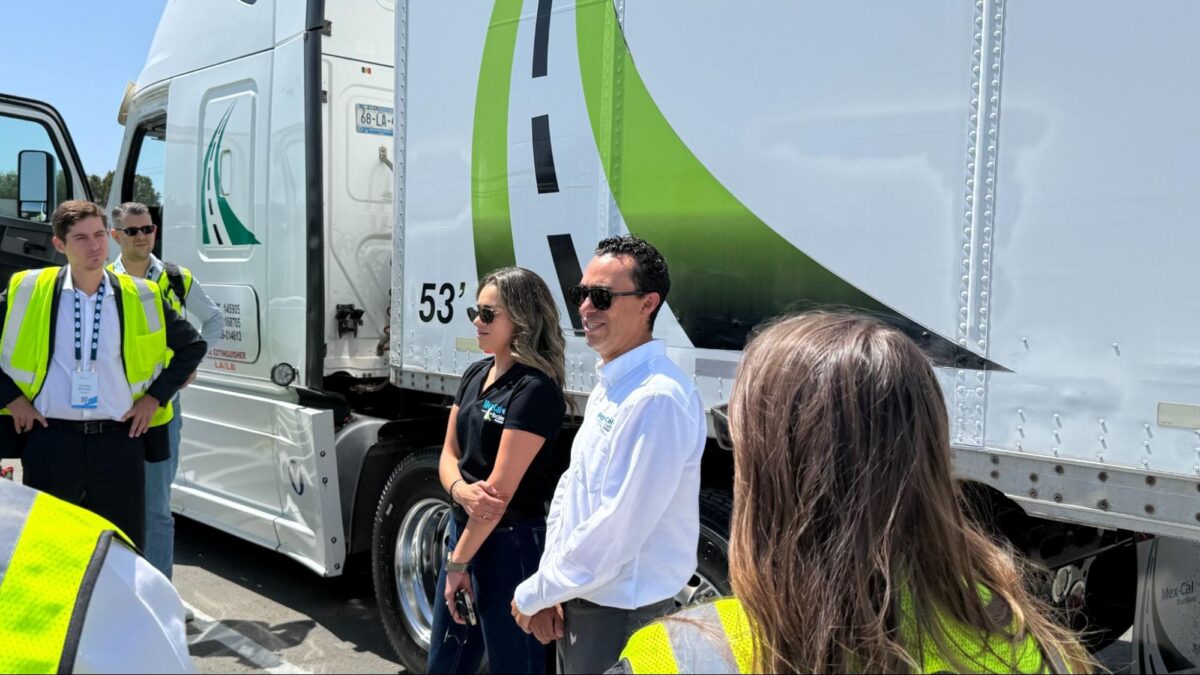
To showcase the tech in action, Samsara held a closed event open to the press at a Mex-Cal Truckline terminal. For San Diego-based Mex-Cal Truckline, geofencing and asset tracking are critical for managing their fleet. 

Javier Rogel, chief innovation officer at Mex-Cal Truckline explained, “Our geofences are essential for managing 700 trailers with just two people. Alerts notify us if a trailer overstays at a customer’s yard — after three days, we charge $25 per day.” This system ensures prompt equipment recovery and supports Mex-Cal’s leasing operations. “We’ve tried other GPS solutions, but they’re costly and less reliable. Samsara is high quality and recognized in the market, giving us an edge when leasing trailers,” Rogel added.

Mex-Cal Truckline’s operations also highlight the complexities of cross-border logistics with cargo security. Yvette Guillen, chief customer officer, spoke of one example telematics is helping, the company’s Customs Trade Partnership Against Terrorism (CTPAT) certification: “This certification and Samsara’s technology are critical investments for our cross-border operations.” 

The company faces additional challenges, including keeping cargo safe from theft as it moves between various facilities between the border. Samsara’s geofencing mitigates risks like cargo theft, prevalent in high-risk areas like Tijuana. 

“Cargo theft is a major concern at the border. If a truck stops for more than 30 seconds, Samsara sends an alert,” Rogel explained. “We review camera footage for suspicious activity and may request U.S. Customs to x-ray the truck.” This added layer of security, supported by dual-facing AI dash cams and asset gateways, ensures compliance with clients like large North American automakers, who mandate CTPAT standards for carriers wishing to haul their shipments.

Mex-Cal Truckline has also leveraged Samsara AI Dash Cams to address driver safety. Guillen reported a significant reduction in accidents following adoption. Often, the biggest low hanging fruit is driver distraction from cell phone use. 

Guillen talked about how in 2023 the company saw a spike in accidents, but by 2024 they reduced their DOT accident rating from features like real-time alerts that warn drivers to put down their phones. 

After identifying the behavior, the next step was helping drivers break the habit. Guillen added, “The alerts prompt drivers to correct behaviors on their own, reducing the need for office coaching. Drivers want to stay on the road, so they adapt quickly to avoid violations.”

Looking ahead, AI is just getting started

(Photo: Thomas Wasson/FreightWaves)

Based on conversations with customers and tech providers while at the event, expect to see continued improvement in fleet safety and efficiency as AI adoption rates increase. 

Samsara leaders noted that for AI itself, the sky is the limit. They noted AI solves practical problems, whether customer notifications of delayed deliveries, automatic tracking links or coaching drivers based on event analysis. AI is also expanding into maintenance, processing invoices and optimizing labor, freeing up customer capacity. 

Samsara remains focused on giving customers leverage without rushing automation. The company notes that AI is about enabling better outcomes, not replacing people. Customers have seen a measurable impact on their safety and operations.

“The details matter—our customers’ real-world results show the impact of our technology. We encourage everyone to try our products and see the difference. We’re excited about the future, from AI to partnerships, and we’re committed to solving problems for our customers in a practical, impactful way,” said Sanjit Biswas, co-founder and CEO of Samsara.

To learn more, visit www.samsara.com
Benchmark diesel falls back with no further Mideast conflict

With futures markets having first fallen and then stabilized after the worst-case scenarios coming out of the Iran-Israel conflict did not occur, retail prices are starting to reflect that retreat.

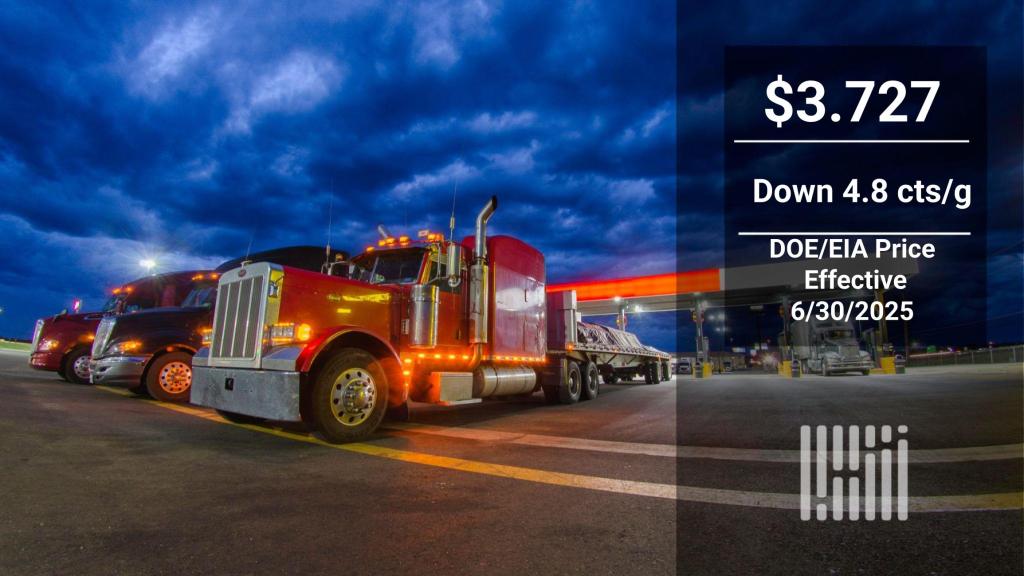
The weekly Department of Energy/Energy Information Administration average weekly retail diesel price fell 4.8 cents/gallon effective Monday, announced Tuesday, to $3.727/g.

The decline follows three weeks of gains which added 32.4 cts/g to the benchmark used for most fuel surcharges, rising to last week’s price of $3.727/g, up from $3.451/g prior to the three-week surge.

Futures prices for ultra low sulfur diesel (ULSD) on the CME commodity exchange fell 17.87 cts/g on June 23, the first day after it appeared the Israel-Iran conflict was not going to lead to the worst case supply scenario of a closure of the Strait of Hormuz, the gateway to the Persian Gulf and its exports of about 20% of the world’s crude supply. The settlement that day was $2.2851/g.

But prices have since bounced back, helped in part by the weak U.S. dollar. Oil prices, denominated in dollars, tend to move in the opposite direction of strength in the dollar. That helped a rebound that resulted in ULSD settling Tuesday at $2.3269/g.

Beyond the movement in outright oil prices, ULSD continues to strengthen relative to crude.   

On a straight comparison of first-month Brent on CME versus first-month ULSD, that spread at the close of May was about 50 cts/g. But by the last trading day of June on Monday, the spread had widened to either side of 70 cts/g for several days. 

That sort of gain shows up at the pump in price increases that outpace those of crude, and decreases that lag those in the crude market.

Diesel has been increasingly burdened with tight inventories worldwide. Inventories show up in the spread between first month and second month diesel or crude, and tight stocks widen the spread between higher-priced first month ULSD and lower-priced second month.

In a perfectly balanced market, the front month price is lower than the second month price, with the higher price in the later month reflecting the time value of money and the cost of inventory. That market structure is called contango.

But when inventories are tight, the barrel to be delivered the fastest becomes the most valuable. The market then flips into a structure called backwardation, with the front month the most expensive, the second month less expensive and the third month lower still.

The backwardation has blown out in recent days. It closed May at 1.18 cts/g–meaning the front month was that much higher-priced than the second month–but by the final day of June on Monday had widened to 5.95 cts/g. Much of that increase in the spread came in the last days of the month, rising from just under 4 cts/g Wednesday to more than 7 cts/g Thursday before dropping back slightly. 

More articles by John Kingston

State of Freight Takeaways: English language rule for truckers takes effect, early impacts emerging

SCOTUS decision on California Clean Cars waiver could have benefit to trucking later

First legal steps taken, this time by WSTA, to untangle the legal knot of the Clean Truck Partnership

Check Call: What a shipper wants, what a shipper needs 

(GIF: GIPHY)

The days of winning freight business on price alone are fading fast. According to Denim’s 2025 Shipper Pulse Report, reliability has firmly taken center stage. In a survey of nearly 100 shippers across manufacturing, food and beverage, retail, and construction, 67% named service level and dependability as their top priority when selecting a freight partner. Only 10% cited price.

While sharp rates may still earn attention, they’re no longer the long-term differentiator. What shippers value most is a partner they can trust to deliver consistently and communicate clearly along the way.

As partnerships develop, priorities do begin to shift. Shippers still expect reliable service, but once that foundation is in place, competitive pricing becomes more important. Even then, poor communication and operational mistakes are what truly erode trust. Nearly half of the respondents reported walking away from a provider due to inconsistent service or missed pickups and deliveries. In other words, it’s not the cost of the shipment that breaks the relationship—it’s the experience surrounding it.

One of the most telling insights from the report is how deeply back-office performance impacts shipper satisfaction. While many providers focus on trucks, lanes, and rates, shippers are just as impacted by what happens behind the scenes. Thirty-eight percent said chasing paperwork was among their top frustrations when working with freight providers, and a majority admitted they aren’t fully confident in their own internal processes. That lack of internal certainty makes clean, accurate documentation and proactive communication even more important from their partners.

Even issues like invoicing and collections shape perception. Shippers overwhelmingly prefer to be contacted via email for payment reminders, and they’re quick to grow frustrated with unprofessional tone, unclear outreach, or follow-ups from unknown third parties. The message is clear: freight providers that communicate in a consistent, respectful, and brand-aligned way are more likely to maintain trust and get paid on time.

And when it comes to factoring, there’s good news for brokers and carriers. Despite the occasional concern that factoring may create an impression of financial instability, most shippers either don’t understand how it works or don’t think about it at all. What they do notice is whether you hit delivery windows, keep your paperwork in order, and make their job easier.

Ultimately, the report confirms what many providers already suspected: performance and professionalism matter more than price. For brokers and carriers willing to invest in operational clarity and better communication, there’s a real opportunity to differentiate in 2025—not just by quoting competitively, but by delivering a consistently smooth experience from end to end.

Read the full report here

Get the full edition sent to your inbox every Tuesday by subscribing below.

Truck driver wages downshifting in 2025

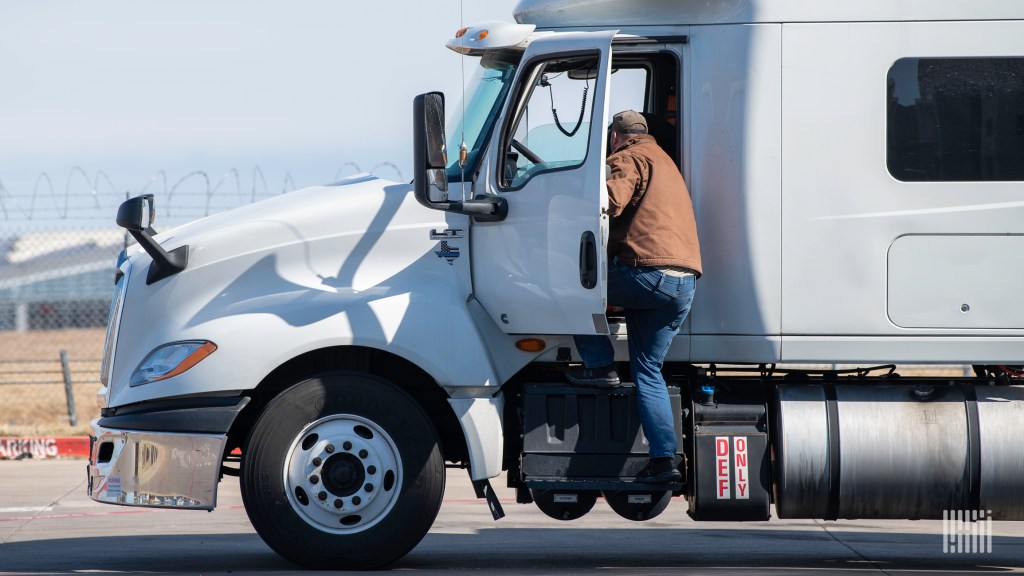
truck driver getting into a truck

WASHINGTON — The rate of driver wage growth continued a downward trend in 2024 that pushed into the first quarter of this year as reduced demand for drivers could further depress pay, according to a new industry report.

According to the latest data compiled by the American Transportation Research Institute (ATRI), after increasing by 10.8% in 2021 and 15.5% in 2022, driver wages increased by 7.6% percent in 2023 and 2.4% in 2024.

“The rate of driver wage growth is on track to decelerate further during 2025,” ATRI noted in its trucking industry cost analysis update released on Tuesday, which revealed that wages increased only 0.9% during the first two months of 2025.

The report notes that the slowing rate of overall national wage growth and an uptick in unemployment “means that there will be less upward pressure on driver wages from other industries competing for labor talent.”

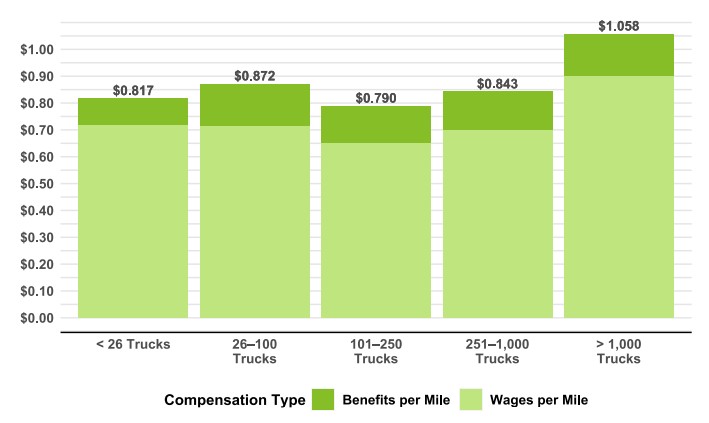
Truckload carrier driver wages and benefits (cents/mile) Source: ATRI

Reduced demand for drivers could also be a factor in slowing wage growth this year, the report predicts. It note that the number of production and nonsupervisory employees in long-distance trucking, which can be considered a surrogate for truck drivers, declined from 685,100 in December 2023 to 672,500 in December 2024, although that number has since remained stable into the first quarter of this year.

For trucking companies, driver wages, fuel and repair and maintenance expenses, and truck and trailer payments – which rose by 8.3% to a record high $0.39 per mile – all weighed heavily on carrier profits.

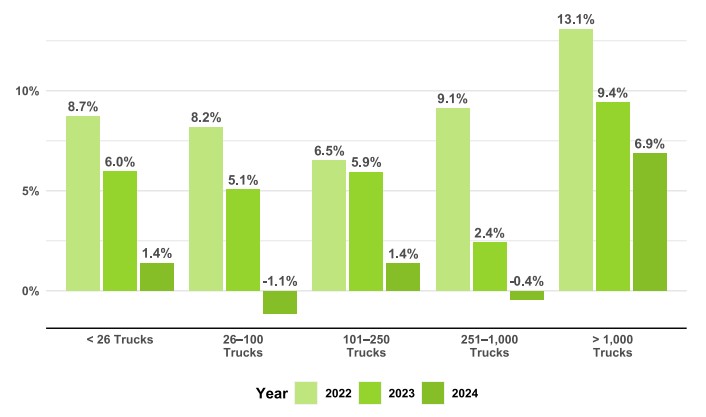
“Carrier profitability suffered across all industry sectors under these pressures, as the findings show in stark detail,” according to ATRI. The report found that average operating margins were below 2% in every sector except LTL, with the truckload sector averaging -2.3% in 2024.

Average Operating Margin by Fleet Size. Source: ATRI

Last year the average operational cost of trucking decreased slightly by 0.4%, from $2.270 per mile in 2023 to $2.260 per mile, ATRI data shows. Excluding fuel, however, operational costs increased by 3.6% to $1.779 per mile, a 6.2 cents-per-mile increase over 2023, and “the highest costs ever recorded by ATRI for non-fuel operating costs,” the research group pointed out.

ATRI also noted that while driver wage costs are unlikely to increase significantly in 2025 under current market conditions, they are also unlikely to recede.

“A key uncertainty in this outlook, however, is the impact of tariffs. If truck driver demand remains steady at its present level, driver compensation costs could be exposed to any uptick in inflationary pressure resulting from tariffs.

“Given these current labor market conditions in the trucking industry, driver benefits costs are poised to increase at a greater rate than driver wages in 2025.”

Click for more FreightWaves articles by John Gallagher.

Teaching New Drivers What Makes a Load Worth Taking – And What Doesn’t

For a lot of new owner operators stepping into the industry, nobody hands them a guidebook. There’s no checklist stapled to the rate confirmation that says, “Hey, here’s what to look for before you take this load.” And too many carriers assume drivers just know what makes a run worth it—or worse, they shame folks for asking.

But let’s tell the truth: nobody was born knowing the difference between a good load and a bad one.

Some drivers come from family fleets, some straight from CDL school, and others off a dream they saw on YouTube. If you don’t slow down and teach what to look for, you’ll end up with trucks running nonsense freight, losing money, and blaming everything but the math.

So let’s fix that. Because whether you’re dispatching for your own fleet or trying to train up your first driver, this article will help you break down—plain and simple—what makes a load worth it… and what doesn’t.

Start With the Core Three: Rate, Miles, and Time

The first step in load evaluation is teaching drivers to stop looking at just the rate.

That $1,100 run might look solid—until you realize it’s 430 miles, with 2 stops, 5 hours of dock time, and half of it is deadhead. That’s not a win. That’s a trap.

Here’s the core equation:

  • Rate Per Mile (RPM) = Total Rate ÷ Loaded Miles
  • All-In RPM = Total Rate ÷ (Loaded Miles + Deadhead)
  • Revenue Per Hour = Total Rate ÷ Total Time Spent (driving + detention + wait time)

A good load isn’t just about rate—it’s about what’s left after your fuel, time, and stress are accounted for.

If a new driver only chases dollar signs, they’ll burn out fast. Teach them to ask:

  • How long will I actually be tied up on this load?
  • Is the RPM still strong after deadhead?
  • Am I delivering into a dead zone?

Red Flags That Should Make You Rethink

Every experienced dispatcher has that sixth sense—when a load just doesn’t feel right. New drivers need help developing that.

Train them to look out for:

  • Too many stops for too little money
  • Live loads/unloads in congested cities during rush hour
  • Tight pickup windows with unrealistic transit times
  • Rates below market data on lanes known for being high-demand
  • Unclear commodity info – “general freight” isn’t good enough
  • Broker pressure – “We need to move this NOW” usually means no one else wants it

One of our readers once took a load from Chicago to NYC with 4 stops for $1,900—because nobody walked him through how to break it down. He didn’t factor in tolls, traffic, parking, or the time lost between each stop. When it was done, he’d made less than $12/hour and spent almost 3 days doing it.

That kind of mistake is preventable. But only if someone teaches them.

Help Them Understand Time Kills Profit

Every hour a driver spends not moving—or stuck at a dock—is time they can’t get back. Loads that “pay decent” but take 12 hours to complete are actually wrecking your bottom line.

Introduce your drivers to this simple benchmark:

Good loads pay well per mile, take minimal time, and reload easily.

  • A 200-mile run that takes 2 hours to load and 2 hours to unload? That’s not a quick run—it’s an all-day job.
  • A 600-mile load that delivers into an area with no reloads? That deadhead could destroy your profit.

Give drivers access to your lane history, reload maps, and RPM targets by region. Help them think two loads ahead.

Give Them the Questions to Ask Before Saying Yes

We’ve built a simple mental checklist drivers should run through before accepting any load:

  1. What is the rate per mile, including deadhead?
  2. How many hours will this load realistically take?
  3. Is the commodity something I’m comfortable hauling?
  4. Are there any extra requirements? (liftgate, pallet jack, driver assist)
  5. What’s the unload time and how is detention handled?
  6. Where does this load deliver—and what reloads are available nearby?

You can laminate this checklist and hang it right in the cab if you need to. It’s not just a tool—it’s empowerment. And when your drivers start thinking critically about freight, they’ll start protecting your margin without being told.

Show Them Real Examples

Don’t just talk theory. Use real examples from your past loads and let them walk through the analysis.

Example 1:

  • $950 rate
  • 320 loaded miles + 85 deadhead
  • 2 stops, estimated 7.5 hours total time

RPM: $2.20 loaded, $2.01 all-in
Revenue/hour: $126/hour
Could be considered borderline depending on breakeven point

Example 2:

  • $1,600 rate
  • 480 loaded miles + 210 deadhead
  • 3 stops, congested area, estimated 13 hours

RPM: $3.33 loaded, $2.42 all-in
Revenue/hour: $123/hour
Borderline depending on accessorials and reload

Help them see that the “bigger” check isn’t always the better check.

Teach Without Judgment

One of the biggest reasons drivers don’t ask questions is shame. They feel like they should already know. So they stay quiet and learn the hard way.

That’s where your leadership matters. Create a culture where asking “Is this a good load?” is normal, not something to be embarrassed about.

Let them shadow dispatch calls. Let them sit in on rate negotiations. Let them learn.

You’re not just training drivers—you’re building future business partners. Give them the tools now, and they’ll return it in better decisions, fewer breakdowns, and smarter hauling.

Final Word

Not every load is created equal—and not every driver knows what to look for. That’s okay. But it’s your job as a leader to fill in those gaps before they turn into losses.

If you want your drivers to act like professionals, you have to train them like professionals. That means going beyond miles and fuel and showing them how freight really works.

Because the best drivers don’t just drive—they think. They plan. They choose.

And that mindset? That’s what keeps your trucks moving, your business growing, and your profit steady.

Training Guide – How to Spot Carrier Packet Red Flags Before You Sign

Many carriers skim through setup packets just to get the load—especially when they’re scrambling to fill backhaul miles or respond to a hot reload alert on a load board. That urgency makes it easy to treat all brokers like they’re the same, assuming the terms must be standard. But buried in that rush is where the danger lives. Because what looks like boilerplate language can actually wreck your cash flow, tie your hands for months, or leave you stuck paying for someone else’s mistake.

We’ve seen it too many times: a carrier signs a setup packet in five minutes just to get moving, not realizing they agreed to unlimited liability, 90-day payment terms, or a non-compete clause that locks them out of working with a customer for two years. The difference between a clean agreement and a bad one isn’t always obvious at first glance—but it shows up when a load gets damaged, payment doesn’t come on time, or a broker deducts thousands from your settlement with no warning. This article is here to slow you down—not in your hustle, but in your process. Because the fine print isn’t just paperwork. It’s protection—or exposure. And if you’re serious about building a business that lasts, you’ve got to learn how to read every carrier packet like your business depends on it—because it does.

Red Flag 1 – You’re Responsible for Everything, No Matter What

One of the most common lines you’ll see in these contracts is a wide-reaching indemnification clause that puts the entire burden on you.

“Carrier shall defend, indemnify, and hold harmless the Broker and its customers from any and all claims, losses, damages, or liabilities.”

Why it matters: Even if the issue wasn’t your fault, you’re now liable for claims, legal fees, and financial losses. This kind of language offers zero protection for the carrier.

What to look for instead: Mutually agreed indemnification that limits your responsibility to your actual actions—not someone else’s mistakes or vague allegations. For example, if it was act of nature or shipper error, you should not be liable for damages. 

Red Flag 2 – No Rebrokering, or You Lose Everything

You’ll often find a clause that says:

“Carrier shall not re-broker, subcontract, or assign any shipment without prior written consent. If violated, Broker has no obligation to pay.”

Why it matters: If you run a leased-on driver or owner operator, that might technically qualify as rebrokering under this language—and they can use it as a reason not to pay you.

Solution: Always clarify what they mean by “subcontracting” and get written approval if you intend to run the load using a different driver or team member.

Red Flag 3 – You Get Paid After They Do (Maybe)

This is a BIG one that hides in the payment terms:

“Broker’s obligation to pay Carrier is subject to receipt of payment from Broker’s customer.”

Translation: If their customer doesn’t pay them, they don’t pay you.

This is often known as “pay-when-paid” or “pay-if-paid” language—and it’s a risk you should not take lightly.

What to look for: Contracts that say something like, “Carrier will be paid within 30 days of invoice, regardless of customer payment.” That’s a real net 30.

Red Flag 4 – Unlimited Liability for Cargo Damage or Delays

Look for language that says:

“Carrier shall be liable for the full invoice value of the freight, plus any freight charges, in the event of damage, delay, or loss.”

Why it matters: If your cargo policy only covers $100,000 and the freight was worth $250,000, you could be personally responsible for the gap.

Check this: Make sure liability limits in the agreement match your insurance coverage. Ask for language that clearly limits your exposure to your policy’s max.

Red Flag 5 – Non-Compete or Back-Solicitation Clauses With Heavy Fees

Many agreements contain strict clauses like this:

“Carrier shall not solicit or conduct business directly with any shipper, consignee, or customer of Broker for a period of 12 months. If violated, Carrier agrees to pay 30% of all revenue generated.”

Why it matters: Even if a shipper reaches out to you six months later, you could be on the hook for tens of thousands of dollars. These clauses are enforceable and often aggressively monitored.

What’s fair: If this clause exists, a 6–12 month time window is standard, but the penalty should be no more than 10–15% of the freight value—not 30% of all future business.

Red Flag 6 – They Can Deduct Claims from Future Loads

Watch for offset clauses like this:

Broker may deduct any pending claims, charges, or damages from Carrier’s future invoices or settlements.”

Why it matters: Even if a claim is still being reviewed, they can withhold money from unrelated loads. That kills your cash flow.

What you want: A clause that says deductions can only happen after a formal claim resolution, not just an allegation.

Red Flag 7 – Quick Pay That’s Not Really a Good Deal

Many brokers offer “Quick Pay,” but here’s the catch:

  • 2-day pay = 3% fee
  • 14-day = 1%
  • 21-day = free

Example: For a $2,500 load, a 3% fee is $75. If you’re doing five of those a week, that’s $1,500/month in fees just to get your money a little faster.

Do the math: Compare the APR-equivalent cost to getting a line of credit or factoring at a lower rate.

Red Flag 8 – They Pick the Courtroom

Jurisdiction language matters. Look for:

“All disputes will be governed by the laws of [Broker’s State], and the venue will be in [Broker’s County].”

Translation: If a payment dispute arises, you’ll have to go to court on their home turf—not yours.

This makes it harder and more expensive to fight for your money, especially for small carriers outside that state.

What You Should Be Looking For in a Carrier Agreement

A solid carrier agreement isn’t just about avoiding traps—it’s about making sure the terms actually support your business. Fair contracts include mutual indemnification, clear net-30 payment terms, and liability that aligns with your cargo insurance—not vague language that leaves you holding the bag. They set reasonable expectations on non-compete clauses, only allow deductions after formal claims are resolved, and lay out quick pay terms that don’t eat into your margins. Most importantly, they don’t force you into fighting disputes across the country in some unfamiliar court. These aren’t just “nice-to-haves”—they’re foundational to protecting your cash flow and staying in business.

When you see clear language, shared responsibility, and flexibility built into the contract, that’s a green flag. It means the broker or shipper values partnership—not just protection for themselves. So don’t skim through setup packets. Read them with a critical eye. If anything sounds one-sided, speak up. Because once you sign, you’ve agreed—and in this game, what you agree to on paper matters just as much as how well you run the load.

Final Word

Carrier packets are legal contracts, not casual agreements. You need to read every page like your business depends on it—because it does.

Don’t just sign to “get the load.” Train yourself to spot the traps:

  • Overreaching liability
  • Delayed payments
  • Aggressive non-competes
  • Broad deduction language

And if something doesn’t sit right—ask. Negotiate. Or walk away.

Because protecting your margin starts before you even book the freight.

Two positive votes on logistics at Moody’s: GXO and C.H. Robinson

Moody’s has weighed in on two logistics providers in recent days, and the word from the influential provider of debt ratings was positive both times.

In an announcement last week, Moody’s (NYSE: MCO) said it was increasing its senior unsecured rating on GXO (NYSE: GXO) by one notch to Baa3 from Ba1. But the significance is not just that GXO is one notch higher. It is that Baa3 is the first notch above the Moody’s cutoff between investment grade and non-investment grade debt which means that in the eyes of Moody’s, GXO is no longer a junk credit. 

The second step occurred Monday. It isn’t a change. But the agency affirmed the debt rating of C.H. Robinson (NASDAQ: CHRW) at Baa2, two notches above the cutoff line between investment and non-investment grade debt. Moody’s cited the giant 3PL’s “disciplined approach to managing its balance sheet and financial leverage.” 

The agency also said it believes Robinson’s “strong market position in the U.S. freight brokerage market will continue to drive solid and consistent results despite a difficult operating environment, including flat volumes and weak pricing dynamics.”

The increase in GXO’s rating put the contract logistics provider at a level considered equivalent to the BBB- rating that S&P Global Ratings (NYSE: SPGI) has had on GXO for several years. 

However, S&P Global Ratings reduced its outlook on GXO to negative in March 2024 when the company acquired Wincanton last year, a U.K.-based contract logistics provider in that country. The negative outlook remains, which is often a first step toward a downgrade.

By contrast, the new Moody’s rating for GXO comes with a stable outlook. The outlook had been positive, which is often a precursor to an increase in a company’s debt rating.

GXO is a publicly traded company so its finances are no secret. Ratings actions by the agencies for companies that are privately-owned but with publicly-traded debt can offer a window into finances that might not otherwise be available. 

GXO’s stock for the past year has been weak, falling about 3.9%. But it has been on a positive run of late with a 3-month increase of about 23.4% and 1-month increase of just under 18%. It was one of the strongest logistics stocks in the second quarter. 

S&P’s move to take a negative outlook on GXO came when it announced not only the acquisition of Wincanton but also its almost $1 billion financing plan. But Moody’s view, more than a year later, is more positive.

“The upgrade of the senior unsecured rating reflects our expectation that GXO’s financial leverage will remain modest following the successful acquisitions of Wincanton plc in 2024 and Clipper Logistics in 2022,” the agency said. “We also expect the company’s strong and defensible market position within the logistics sector to result in continued strength and resilience in GXO’s operating results.”

 GXO’s EBIT margin in the first quarter was just 1.8%, according to Moody’s. (The calculation of EBIT can differ between the company being rated and the agency itself). EBIT is a key figure for ratings agencies, because it provides a benchmark for profitability that can be used to finance debt payments, is expected to rise to 5% within the next 18 to 24 months, Moody’s said, “leading to improved credit metrics despite the prevailing macroeconomic uncertainty.”

Moody’s also said it expects GXO will pursue a “conservative financial policy, including an emphasis on deleveraging and measured shareholder distributions.” GXO does not pay a dividend, but does buy back its own stock. In the first quarter, those buybacks totaled 2.8 million shares, against revenue of about $3 billion. The company’s stock price traded on either side of $40 for most of the quarter.

Acquisitions would be ‘modest’

“We expect GXO’s free cash flow to be used to pay down debt and for modest acquisitions before any shareholder distributions are considered,” Moody’s said.

But most of the Moody’s report supporting its increased rating was focused on the GXO business. The higher rating “reflects its considerable scale and competitive position in the global logistics services market. The company benefits from the ongoing growth of e-commerce and favorable trends in logistics outsourcing by corporations that will continue to support organic growth.”

In a statement released to FreightWaves, GXO’s Chief Financial Officer Baris Oran said the upgrade “is a recognition of the work our team has done to position GXO as a strong leader in the logistics sector, poised for future success. Our diversification – across geographies and verticals – allows our model to be extremely resilient as we provide our customers with unmatched expertise to optimize their supply chains.”

Upgrade comes after a loss

The irony is that the upgrade comes a few months after GXO reported a net loss of $96 million, compared to a net loss of $37 million a year earlier. But its adjusted EBITDA was $163 million, up from $154 million, and for the full year its adjusted EBITDA of $815 million was just under the $824 million recorded in 2023. 

Although the Wincaton deal was announced as closed last year, it took until earlier this month for the sale to receive final approval from the U.K. Competition and Markets Authority for the sale to go ahead, with the requirement that Wincaton make some divestments in the grocery sector. 

GXO also named Patrick Kelleher as its new CEO as part of that announcement. 

A long run at C.H. Robinson

Moody’s affirmation of Baa2 at C.H. Robinson holds its rating on the 3PL that has been in place since at least 2018. S&P Global Ratings has a BBB rating on C.H. Robinson, but it got to that level through a downgrade from May 2024.

C.H. Robinson management has been touting the company’s adoption of AI and other technology as one of the keys to a turnaround that first showed up in the company’s first quarter 2024 earnings, sending the price of its stock soaring

Moody’s made reference to the changes as a reason for the affirmation of its debt rating. “C.H. Robinson has embraced automation and AI, completing over 3 million shipping tasks through generative AI agents, significantly improving speed and efficiency,” the agency said. “We expect the company to maintain margins, driven by sustained productivity gains from its advanced use of automation and generative AI.  Management has emphasized a focus on cost discipline, customer-centric innovation and scalable solutions.”

The Moody’s outlook on C.H. Robinson held at stable. However, that optimism does not derive from any belief that freight market conditions will strengthen. Besides its praise of C.H. Robinson’s embrace of technology, and a strong balance sheet, Moody’s also cited “robust liquidity” at C.H. Robinson that “will be maintained despite difficult market conditions that are likely to continue through 2025.”

An email to C.H. Robinson had not been responded to by publication time. 

More articles by John Kingston

State of Freight Takeaways: English language rule for truckers takes effect, early impacts emerging

SCOTUS decision on California Clean Cars waiver could have benefit to trucking later

First legal steps taken, this time by WSTA, to untangle the legal knot of the Clean Truck Partnership

How Small Fleets Can Pick a Niche and Still Keep the Wheels Turning

The idea of “niching down” sounds good in theory—until you’ve got bills due, a driver asking where the next load is, and your load board options are thin. For small fleet owners, it can feel risky to specialize. What if the niche dries up? What if you’re limiting your options? But here’s the truth most carriers miss: the fleets that pick a niche the right way actually create more consistency, not less. They build stronger customer relationships. They eliminate rate volatility. And they keep their wheels turning smarter, not harder. You don’t need to say yes to everything to stay moving. You just need a focused game plan that works on your scale.

Let’s get into how to pick a niche that fits your operation—and how to keep the freight moving while you lock it in.

Why Niching Down Matters More Than Ever

In this market, general freight isn’t stable. One week you’re running good miles at $2.80, and the next week you’re sitting for three days trying to cover costs. Niching down eliminates that rollercoaster. It positions you as a solution provider, not just another truck chasing a rate.

When you focus on a niche, you:

  • Get out of the rate race with bottom-feeding brokers
  • Learn your customers’ needs better than your competitors
  • Streamline equipment, driver training, and pricing
  • Build trust that leads to long-term, direct freight

Most importantly—you become harder to replace. And that’s the goal.

Step One — Niche Your Equipment, Not Just Your Freight

Start by looking at what your equipment can naturally specialize in. Got 53′ dry vans? You’re not stuck hauling toilet paper and water loads. You could specialize in high-frequency beverage runs, regional retail replenishment, or auto parts distribution.

Got flatbeds? Think beyond construction. Look into machinery, HVAC units, or building materials tied to seasonal demand.

Reefer? Target produce, meat, or medical supply contracts with tight transit windows.

You don’t need custom trailers to niche. You just need to understand where your current setup fits best—and go all-in on that.

Step Two — Own a Region Before You Own a Customer

Too many small fleets try to go nationwide before they even understand their own backyard. Don’t do it.

If you’re based in Charlotte, there’s no reason to be chasing loads out of Indiana unless you’ve mastered the Carolinas-to-Georgia-to-Tennessee triangle. Learn your region’s freight rhythms. Know who ships what, when, and where it needs to go. Build density. Build repetition.

The smaller your operation, the more important lane discipline becomes. You want predictable round trips, familiar shipper locations, and load types your drivers can run with their eyes closed.

Pick a niche inside your home region. That’s how you stay moving without stretching thin.

Step Three — Build Customer Lists Before You Burn Fuel

Here’s the tactical part most folks skip: customer mapping. Before you pick a niche, make sure the freight volume exists.

Pull up Google Maps and search by keywords: “metal fabricators,” “produce distributors,” “HVAC suppliers,” “medical supply warehouses.” Build a spreadsheet. Name, phone, address, dock hours, and commodity type.

You don’t need a sales team. You need a list and a phone. Pick up and call. Ask who handles outbound freight. Ask if they use outside carriers. Get the contact name and log the answer. Even if they say no—log it. You’re building a route, not just a load.

This is the boring part. And it’s the part that builds your business.

Step Four — Use Load Boards to Fill Gaps, Not Fuel Chaos

While you’re developing your niche lanes, you’ll still need to move trucks. That’s fine. But load boards should support your plan—not replace it.

Use filters to stay in your region. Set alerts for freight types tied to your niche. Build broker relationships that align with your long-term strategy.

You can’t eliminate load boards overnight—but you can shift how you use them:

  • Stop running 1,200 miles to grab a $3/mile one-way
  • Start running 400-mile round-trips that keep you in your niche
  • Stop saying yes to random freight
  • Start saying yes to repeatability

Load boards are a tool. Use them on your terms.

Step Five — Don’t Wait for Perfection, Execute on Progress

You’re not going to wake up one day and have a perfect niche dialed in with five direct shippers, clean backhauls, and zero deadhead. That’s not how this works. But that’s not the goal.

Your goal is directional clarity. Every load you book, every call you make, every lane you run should move you closer to your niche—not pull you away from it.

Too many small fleets stay in “general freight survival mode” for years because they never committed. Don’t let that be you.

Real-World Example — Three Trucks, One Lane, Full Control

One of the fleets I work with runs three trucks—all dry vans. Two years ago they were running all over the place. Gross revenue was $825K, but they were bleeding fuel, driver turnover, and deadhead.

They picked one niche—beverage distribution. Picked one region—Carolinas to central Georgia. Started calling every mid-size distributor in a 150-mile radius. Landed a contract within four months. Fast forward twelve months—they’re at $1.1M gross, 31% margin, zero load board dependency, and their drivers are home every weekend.

That’s what a smart niche does.

Final Word

Picking a niche doesn’t mean limiting yourself. It means focusing your energy where it gets the biggest return. When you choose a niche the right way, you gain consistency, customer trust, and margin control—all while keeping your trucks moving.

You don’t need to be everywhere. You just need to be excellent somewhere.

Map your region. Learn your freight. Talk to real customers. Stay off random loads. And build the kind of operation that’s known for solving one problem really well.

That’s how you scale with less chaos and more control.
That’s how you build a reputation that gets you off the board.
And that’s how small fleets win in any market.

How to Understand Truck Specs – Gear Ratios and What They Mean

When most people shop for a truck, they focus on the big stuff: engine size, make and model, maybe even the sleeper setup. But one of the most overlooked specs on a truck—and one of the most important when it comes to long-term profitability—is your rear differential gear ratio.

This single number can decide how much torque hits the ground, how often you hit the fuel pump, and whether your truck is built for climbing mountains or cruising flatlands. And too many owner-operators have no idea what theirs even is.

So let’s fix that.

This article is going to break down what gear ratios actually mean, why they matter, how to match them to your application, and the trade-offs between pulling power and fuel economy. No fluff. Just straight-up answers so you can stop guessing and start spec’ing with confidence.

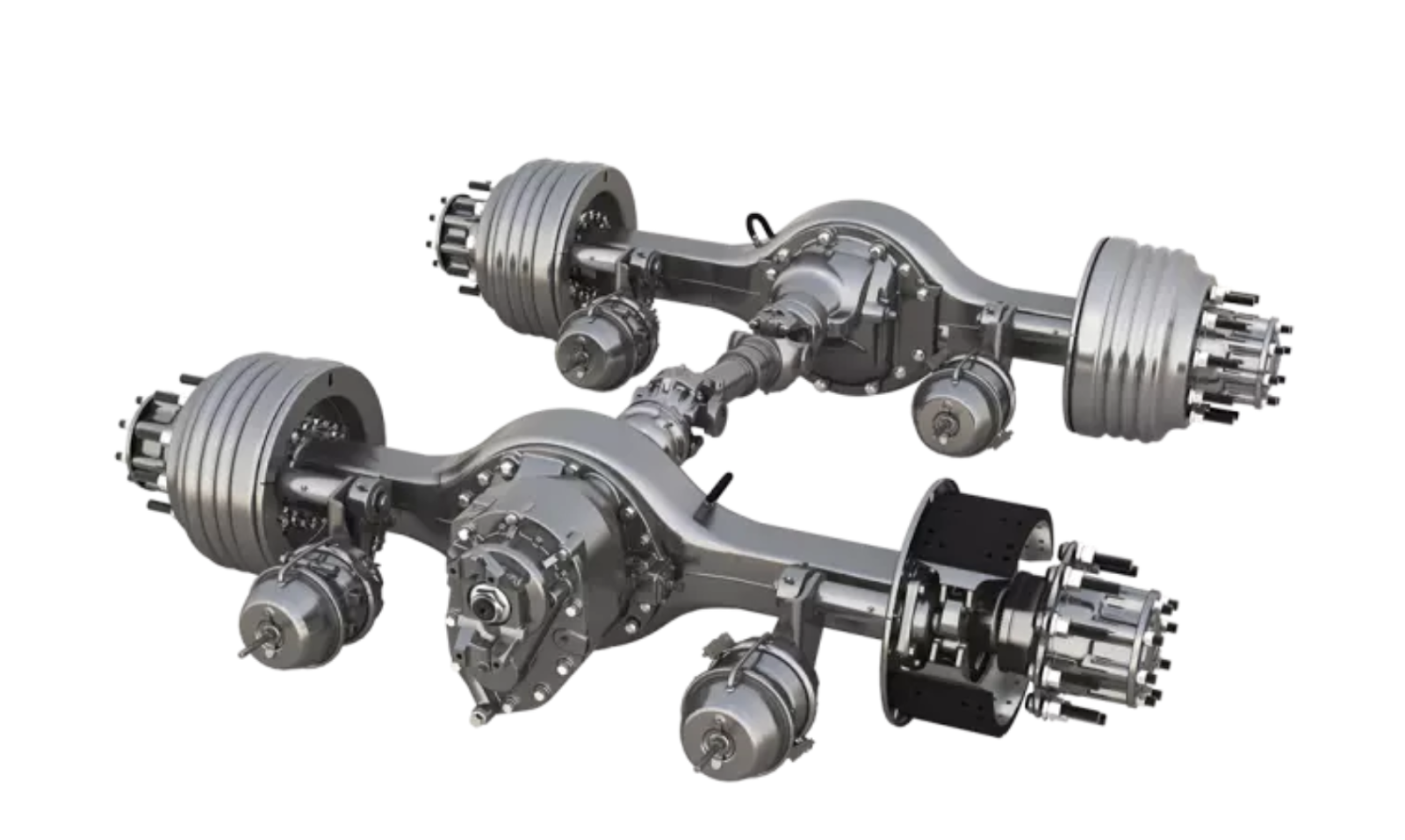
(Photo: Cummins. This is the MT-14X tandem rear drive axle, commonly used in heavy-duty applications with gross axle weight ratings between 34,000 and 44,000 lbs. Understanding your axle setup—like the MT-14X—helps you match gear ratios to your workload, terrain, and fuel economy goals. This kind of axle can be configured for either better pulling power or more efficient cruising, depending on your specs.)

What Is a Gear Ratio

In simple terms, your rear-end gear ratio tells you how many times your driveshaft turns for every one turn of your rear wheels. A 3.55 ratio means the driveshaft turns 3.55 times to spin the tires once.

Higher numbers (like 4.10) mean more torque to the wheels—better for pulling power. Lower numbers (like 3.08) mean fewer revolutions—better for fuel efficiency.

But here’s the catch: there is no “one size fits all.” What works great for a heavy hauler in Pennsylvania might be a nightmare for a linehaul driver in Kansas.

So it’s not just about the number—it’s about matching the number to the work.

High Ratio vs Low Ratio: What It Means

High Numerical Ratio (e.g., 3.73, 4.10, 4.33)

  • More torque
  • Better for hills, heavy loads, and stop-and-go work
  • Lower top-end speed
  • Higher RPMs at cruising speed (worse fuel economy)

Low Numerical Ratio (e.g., 3.08, 3.25, 3.36)

  • Less torque at the wheels
  • Better fuel economy
  • Suited for flat terrain and high-speed cruising
  • Less suited for heavy loads or steep climbs

Common Gear Ratios and Use Cases

3.08: Ideal for fuel-focused long-haul carriers running light loads on flat highways (think Midwest to Southeast dry van lanes). Not great for heavy freight or mountain terrain.

3.36: A solid balance for moderate loads and moderate terrain. Often used by fleets prioritizing fuel savings but needing a bit more pull than 3.08 offers.

3.55: One of the most common and versatile specs. Good for mixed terrain, variable loads, and general use. Solid middle ground between power and economy.

3.73: More pulling power, commonly found in trucks doing regional or mountain-heavy runs, reefer loads, or heavier general freight. Fuel efficiency drops, but it gets the job done.

4.10+: This is for heavy haul, local P&D, construction, or anything where you’re hauling serious weight or doing frequent starts and stops. Fuel economy takes a hit, but torque is high.

How Gear Ratios Interact with Transmission and Tires

You can’t look at gear ratio in isolation.

Your transmission type (manual vs. automated), number of gears, and especially your tire size all impact how that final drive ratio actually plays out.

A 3.36 with tall 24.5” tires may feel more like a 3.25 in real-world performance. Shorter tires spin faster, changing your effective gearing. That’s why you need to look at the whole driveline setup, not just one number.

Use a drivetrain calculator to plug in:

  • Gear ratio
  • Tire size
  • Transmission top gear ratio
  • Desired cruising speed

You’ll get your RPMs at cruise—a key number when optimizing for fuel economy or power.

Fuel Economy vs. Power: You Can’t Have Both

Here’s the real trade-off:

  • Lower RPM = Better MPG, less torque
  • Higher RPM = More torque, worse MPG

So if you’re hauling 45,000 lbs through the Appalachians, you don’t want a 3.08. You’ll burn up your clutch and spend more time downshifting than driving. But if you’re running light loads from Dallas to Atlanta on I-20, a 3.08 could save you thousands in fuel annually.

Example:

Carrier A runs a 3.55 ratio and averages 5.8 MPG Carrier B runs a 3.25 ratio on flat lanes and averages 6.9 MPG

At 100,000 miles/year and $4/gallon:

  • Carrier A: $68,965/year in fuel
  • Carrier B: $57,971/year in fuel Savings: $10,994 annually

But if Carrier B switches lanes and starts pulling up I-70 through West Virginia, that ratio could kill performance and overwork the engine.

Buying a Used Truck? Check the Ratio First

Too many folks buy trucks off Facebook or auctions and never look into what ratio it has.

You have two easy ways to check:

  1. Look at the spec sheet (if available)
  2. Find the tag on the differential (often stamped or labeled)

You can also check the VIN with the OEM dealer if it hasn’t been changed. But don’t assume. That 2020 Cascadia you got for a good price might have a 3.08 built for fleet fuel economy—and if you’re doing heavy reefer loads in the mountains, it’s the wrong tool for the job.

Should You Re-Gear a Truck?

Re-gearing is possible—but expensive.

Expect $3,000–$5,000 per axle to swap gears. That means most single-axle re-gears cost $6,000–$10,000. It can be worth it if the truck is otherwise perfect and your work demands it.

But for most small carriers, it’s smarter to spec right from the start or trade into the correct setup rather than rework the drivetrain.

Application Matching: What You Haul Should Drive the Spec

Let’s look at a few sample applications:

Dry Van, Midwest to Southeast, Light Loads

  • Ideal: 3.08–3.36
  • Focus: Max MPG, flat terrain

Reefer, National Lanes, Mixed Weight

  • Ideal: 3.36–3.55
  • Focus: Balanced power and fuel economy

Flatbed or Step Deck, Mixed Terrain

  • Ideal: 3.55–3.73
  • Focus: Better torque for hills and oversize

Heavy Haul, Local P&D, or Regional Bulk

  • Ideal: 3.73–4.10+
  • Focus: Torque over MPG, tight turns, stop-and-go

Final Mile, Metro/City Work

  • Ideal: 4.10+
  • Focus: Acceleration, durability, low-speed control

What About Direct Drive vs Overdrive

Another part of the puzzle is whether your top transmission gear is direct (1:1) or overdrive (e.g., 0.78:1). This affects how hard your engine works at cruise.

  • Direct drive gives better durability and consistent RPM at highway speeds but requires a lower gear ratio (e.g., 3.70–4.10)
  • Overdrive lets you cruise at lower RPMs with a higher rear ratio (e.g., 3.25–3.55)

Many modern trucks with automated transmissions pair overdrive with 3.08 or 3.25 for maximum MPG. But again—this only works if your terrain and loads support it.

Final Word: Pick Gears with Purpose

Spec’ing the wrong gear ratio won’t just hurt your fuel economy—it can wreck your whole operation. From excessive downshifting to poor hill performance to high engine wear, that one number can affect everything.

So before you buy or lease that next truck, ask yourself:

  • What lanes am I running?
  • What am I hauling?
  • What’s my average weight?
  • What speed do I cruise at?

Then use those answers to match your ratio to your reality.

Because in today’s market, every dollar counts. And a smart gear ratio could be the edge that keeps your business running stronger, longer—and more profitably.

“Brace!” Endless disruptions mark new path to supply chain resiliency

It’s a disrupted supply chain world, and we’re just living in it. Or are we? 

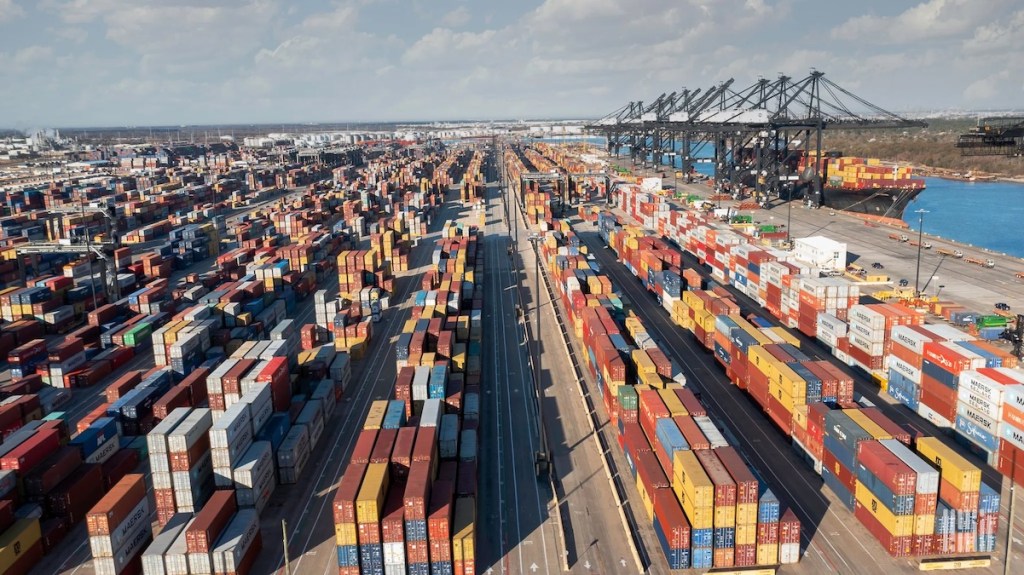
In a world increasingly marked by uncertainty and volatility, supply chain resilience is a critical focus for businesses worldwide. “The New Normal: Building Resilient Supply Chains in a World of Constant Disruptions,” a podcast hosted by Maersk (OTC: AMKBY), took a deep dive into the myriad factors impacting global trade and how shippers can thrive amid these challenges. 

Geopolitics has emerged as a central theme influencing supply chains. During the discussion, James Hookham, director of the Global Shippers Forum, underscored how geopolitical tensions and policy shifts significantly contribute to trade disruptions. He advises shippers, exporters, and importers to brace for continued instability.

“The world just seems to be in a different paradigm at the moment,” Hookham said, highlighting that disruptions are not solely political but also driven by climate change, extreme weather events, and labor disputes.

Zera Zheng, global head of business resilience at Maersk, echoed this sentiment, indicating that disruptions are becoming a persistent element of global trade operations. She refers to these challenges as “compound disruptions,” where multiple issues intersect to create complex challenges for businesses. 

“We’re moving into a new mindset of compound disruption where there’s just one thing after another,” Zheng said, suggesting that companies need to adapt to an environment where disruptions are continuous and multifaceted.

At the midpoint of 2025, companies face several key challenges. Tariff uncertainties, particularly U.S. tariffs, loom large. Zheng points out the legal ambiguities surrounding tariffs, especially following the U.S. Court of International Trade’s ruling on the IEEPA Emergency Act. “There’s a new twist emerging … creating uncertainties for shippers,” she warned, indicating that these legal fluctuations could have widespread implications for logistics and trade strategies.

Climate risks also constitute a formidable challenge. With forecasts suggesting a hotter and drier year for Europe, Zheng emphasized the need for vigilance concerning natural phenomena like wildfires and hurricanes.

“The overall weather patterns appear quite milder than the past two years, but certain regions still need closer attention.” These environmental disruptions demand that supply chain leaders incorporate climate resilience into their strategic planning.

Against this backdrop of perpetual disruption, the question arises: should businesses adopt a proactive stance or a “wait and see” approach? 

Hookham offers a decisive perspective, advocating for proactive measures. 

“You’re gonna need more people to help you out here. This is not business as usual,” he said, emphasizing the necessity of readying human resources and strategic plans to address complex, fast-evolving challenges.

Zheng built on this proactive narrative, arguing against complacency. 

“Actually, we will not ask or advise our customers just to wait and see,” she said. Instead, she stressed the importance of having timely risk visibility and scenario planning. By analyzing potential scenarios and preparing actionable responses, businesses can not only anticipate risks but also enhance their capacity to respond swiftly and effectively when disruptions manifest themselves.

Data plays a pivotal role in this context. The vast amounts of information available in modern supply chains offer a powerful tool for resilience. Zheng highlighted how historical data on disruptions, such as port recovery times after cyclones, can guide strategic decisions. 

“It’s about how you use the data to ask “What does that mean for my cargo, for my timelines, and also for my options,”” she said, underscoring data’s role as a strategic asset in forecasting and mitigating risks.

Digitalization further emerges as a cornerstone of future resilience. Hookham called for a digital overhaul of supply chain processes, moving beyond traditional and disconnected systems. 

“The recommendation is that [shippers] evaluate the business case not on a business-as-usual basis, but as a business under crisis,” he said, and urged companies to leverage technology for enhanced real-time insights, interoperability, and security. In a context where disruptions are not abating, digital readiness can empower organizations to remain agile and competitive.

Collaboration between carriers and shippers is an essential strategy emphasized by both experts. Said Hookham, “Carriers are leaning into this business,” indicating a growing willingness within the industry to work together. Such collaboration can facilitate the flow of critical information across the supply chain, enabling all parties to make informed decisions and fostering a collective approach to overcoming disruptions.

Find more articles by Stuart Chirls here.


Related coverage:

Geodis returns solutions aim for streamlined reverse logistics
Warehouse automation surging ahead despite predicted slowdown

FedEx to close 30% of package facilities as network integration ramps up

Teamsters complain UPS slow to deploy air-conditioned vehicles