Cold chain market in Middle East and North Africa expected to hit $41.1 billion by 2030

BCC Research has recently released the “Cold Chain Regional Analysis Market: Middle East and North Africa(MENA)” market analysis. Based on their findings, the cold chain market is expected to reach $41.1 billion by the end of 2030 with a Compound annual growth rate of 8.8% for 2025-2030. The current base value of the MENA market is $24.9 billion as of 2024. 

The report attributes this rapid expansion to a confluence of factors, including increased demand for perishable food and pharmaceutical products, government investments in food security and public health, and widespread adoption of cold chain technologies like IoT and AI across logistics networks.

BCC Research identifies five core drivers behind the market’s acceleration:

  • Rising Demand for Perishables: Urbanization, population growth, and rising disposable incomes are fueling demand for fresh fruits, vegetables, dairy, seafood, and temperature-sensitive pharmaceutical products.
  • E-Commerce and Online Grocery Growth: As consumers shift to online grocery shopping, the need for efficient last-mile cold chain logistics has increased across urban centers.
  • Stricter Food Safety and Pharma Regulations: Governments across MENA are enforcing tighter controls on food safety and pharmaceutical storage, encouraging the adoption of advanced cold chain solutions to maintain compliance.
  • Investment in Cold Storage and Smart Tech: Smart warehouses, real-time monitoring systems, and automation are being deployed to improve efficiency and reduce spoilage.
  • Strategic Location for Global Trade: With access to Europe, Asia, and Africa, the MENA region continues to serve as a crucial transit point for temperature-sensitive goods.

Cold storage continues to dominate the market, making up 56% of total cold chain activity in the region as of 2024. Meanwhile, blast freezing leads as the dominant technology segment, expected to remain the top choice through 2030 for its efficiency in preserving food and pharmaceuticals.

Saudi Arabia is leading the regional cold chain market, accounting for 36% of the market in 2024. It is expected to maintain its lead through 2030, with a CAGR of 10.6% and a projected market value of $16.5 billion. The country has made notable strides in strengthening its cold chain infrastructure as part of its national food security strategy.

Technology adoption in the country is playing a key role, with IoT devices and automation systems increasingly used for real-time temperature tracking and warehouse management. These innovations are helping Saudi Arabia meet the growing demand for temperature-controlled logistics in both the food and pharmaceutical sectors.

Other countries covered in the report include the United Arab Emirates (UAE), Egypt, Qatar, and the rest of MENA, excluding Turkey and Israel due to their already-advanced infrastructure.

Bcc’s report highlights emerging players that are helping to modernize the cold chain landscape across the MENA region:

  • FreshOnTable (UAE): A farm-to-table logistics company that connects local farmers with businesses to deliver fresh produce through a digitally optimized cold chain.
  • YallaMarket (UAE): A fast grocery delivery service that utilizes micro-fulfillment centers and advanced cooling tech to deliver perishable products within minutes.
  • Reefer-x: A cold chain tech provider offering real-time tracking and monitoring solutions for temperature-sensitive cargo.
  • TruKKer: A digital freight platform that includes cold chain trucking for the transport of pharmaceuticals and food items across MENA.
  • Themar (Saudi Arabia): An agri-tech startup that links farmers with buyers while ensuring produce is transported under optimal cold storage conditions.

These startups are not only meeting growing consumer demand but also supporting governments’ broader goals around food security and supply chain modernization.

The MENA region’s cold chain market presents significant long-term opportunities for companies involved in logistics, technology, infrastructure development, and food and pharmaceutical distribution. 
Your Personal Credit Matters – How to Build It Before You Need It

Let’s get one thing straight—your business credit is not separate from your personal credit, especially when you’re just starting out. If you’re running a small fleet or even one truck, every lender, leasing company, and equipment finance company is going to look at your personal FICO score first. They’re not just betting on your business. They’re betting on you. And if you’re waiting until you need money to care about your personal credit, you’re already too late. This article is about taking control—because in trucking, access to capital can make or break your next move. Whether it’s adding a truck, covering a repair, or surviving a slow month, your personal credit profile is either a weapon or a weakness.

Here’s how small fleet owners can get their credit right before it ever becomes an emergency.

Why Your Personal Credit Still Matters—Even With an LLC

Don’t get fooled by the legal structure. Having an LLC doesn’t mean lenders won’t look at your personal score. In fact, until you’ve got 3–5 years of business financials and strong business credit reporting, your personal credit is the co-signer on everything.

Whether it’s a:

  • Truck lease
  • Line of credit
  • Business credit card
  • Equipment loan
  • Fuel advance program

…they’re pulling your personal credit first. Your LLC might help protect liability, but it doesn’t shield you from credit checks.

And if your score’s under 620, most lenders won’t even finish the application.

What Lenders Look for in a Credit Profile

Let’s break it down. These are the key areas every underwriter is reviewing:

  1. Credit score (FICO 8 or FICO Auto) – Most want 680+ to unlock the best terms
  2. Credit utilization – Keep it under 30%, ideally under 10%
  3. Payment history – Any late payments in the last 12 months hurt your profile
  4. Credit mix – Installment loans (auto, student) + revolving accounts (credit cards)
  5. Length of credit history – The longer, the better
  6. Derogatory marks – Collections, charge-offs, bankruptcies, tax liens

Tactical Tip:

Pull your real credit report—not just the Credit Karma version. Use AnnualCreditReport.com and check all three bureaus (Equifax, Experian, TransUnion). That’s what lenders are looking at.

How to Start Rebuilding If Your Score Is Low

If your score is under 640, start here before you ever apply for business credit:

Step 1 – Dispute Any Inaccuracies

  • Go through each line item on your report
  • If anything looks wrong (wrong balance, duplicate account, incorrect late payment), dispute it directly with the bureau

Step 2 – Pay Down Credit Cards Aggressively

  • Focus on the card with the highest utilization first
  • Bring each card under 30%, then under 10%
  • Don’t close cards—just lower the balance

Step 3 – Set Up Auto-Pay on All Loans and Utilities

  • One missed payment drops your score 50–100 points
  • Auto-pay removes the human error

Step 4 – Avoid New Hard Inquiries Unless Strategic

  • Don’t apply for store cards, auto loans, or anything else unless it aligns with your trucking business

Rebuilding takes 60–180 days to show results. But the earlier you start, the more leverage you’ll have when it’s time to grow.

How to Build Credit Before You Need It

The best time to build credit is when you don’t need it. Here’s how to create a credit profile that’s ready to work:

1. Open a Secured Business Credit Card (With a Personal Guarantee)

Even if your business is new, most banks will offer a secured card with a personal guarantee. Use it to cover:

  • Fuel
  • Hotel stays
  • Business subscriptions

Pay it in full every month. This builds a positive history fast.

2. Add Trade Lines That Report to Business Credit Bureaus

Use vendors like Uline, Quill, and Grainger that report to Dun & Bradstreet and Experian Business.

Pro tip: Don’t just open the account. Use it. Pay it. Build the habit.

3. Use a Gas Card That Reports to Both Personal and Business Credit

Cards like WEX and Fuelman often report to both. Treat it like a credit card—stay under 30% usage and never miss a payment.

How Good Credit Changes Your Trucking Strategy

Here’s what a 720+ personal credit score unlocks for you:

  • Low-interest truck financing without massive down payments
  • Business lines of credit to manage cash flow gaps
  • Credit cards with 0% APR offers you can use to fund emergency repairs
  • Approval for factoring lines with better terms
  • Vendor accounts that reduce out-of-pocket costs

It’s not about borrowing to survive—it’s about creating options so you can grow when the time is right.

What Not to Do While Building Credit

Too many fleet owners sabotage their credit out of habit. Avoid these traps:

  • Co-signing for others – Their risk becomes yours
  • Using personal cards for business expenses without tracking – This tanks utilization
  • Paying late “just this once” – One late hits harder than you think
  • Maxing out cards to buy a truck – This lowers your score at the exact moment you need it high

Discipline beats hustle when it comes to credit. Build slow. Use smart. Protect your score like it’s part of your equipment—because it is.

Final Word

In trucking, cash isn’t always king—credit is. Your ability to access working capital when rates drop, a truck breaks down, or opportunity knocks will make or break your long-term success. Don’t wait until you’re desperate to clean up your credit. Build it now. Use it strategically. And protect it like it’s your CDL.

Because the next time you walk into a bank, finance company, or dealership—they’re not just looking at your MC number. They’re looking at you.

And if you’ve done the work, that’s not a risk. It’s a weapon.

Descartes releases next-gen visibility tech to further protect from fraud and theft

A white delivery van on a highway

Freight fraud continues to plague the transportation industry, and threats are becoming increasingly sophisticated as technology evolves. Shippers and brokers often find themselves overwhelmed by manual verification processes that are both resource-intensive and prone to error. In today’s fast-paced logistics environment, teams are subject to the challenging balancing act of covering shipments quickly while simultaneously ensuring carrier legitimacy, even when working with long-standing carrier partners due to the possibility of identity theft.

Enter Descartes MacroPoint™ FraudGuard 2.0, a significant enhancement to companies’ existing fraud-prevention arsenal. This next-generation visibility technology serves as an additional reinforcement to carrier vetting and identification programs, empowering users to prevent fraud and theft through automated monitoring and real-time risk alerting for both pre-tender, pre-pick up, and in-transit shipments.

Reinforcing carrier vetting with enhanced visibility

FraudGuard 2.0 stands apart with a multi-layered approach to fraud and theft prevention, starting with its access to the industry’s deepest database of tracking history, providing essential insights for fast, reliable pre-tender vetting. This historical data allows brokers to confidently evaluate carrier and driver legitimacy before entrusting them with valuable cargo.

The solution offers detailed insights based on DOT numbers and driver mobile numbers, streamlining legitimacy checks without slowing down operations. These comprehensive historical insights enable dispatch teams to make better-informed decisions about potential carriers, reducing risk without sacrificing speed. When combined with industry-leading carrier on-boarding and identity solution Descartes MyCarrierPortal™, fraud protection is exponentially enhanced.

“FraudGuard 2.0 empowers your team to proactively identify and prevent costly fraud and theft through automated, comprehensive monitoring across 16 critical risk indicators,” explains Robert Derin, Product Director at Descartes. “Leveraging the industry’s deepest historical carrier and driver data, it instantly flags suspicious activities, reduces manual oversight and strengthens operational reliability.”

Proactive, real-time risk identification

What truly sets FraudGuard 2.0 apart is its additional layer of protection enabled by the ability to proactively monitor shipments in transit and automatically flagging potential risks as they emerge. The solution doesn’t just help with pre-tender vetting—it continues working throughout the shipment lifecycle, providing continuous protection.

Part of the latest tactics bad actors are using to circumvent security measures being added across the industry is to fake or “spoof” real-time location tracking pings by using Voice-over Internet Protocol (VOIP) phones to mask locations, installing mobile apps to send false tracking pings, or even trying to on-board with phony electronic logging devices (ELDs).

FraudGuard was already using VOIP detection, but to counter these new tactics FraudGuard 2.0 monitors an impressive 16 in-transit data points, including:

  • Detection of emulated or inaccurate locations
  • Driver behaviors that may indicate spoofing
  • Route deviations from planned paths
  • Identification of overbooked carriers or drivers
  • Recognition of suspicious patterns in location reporting
  • Historical spoofing detected on carriers or drivers

This comprehensive monitoring happens automatically in the background, requiring no additional work from already busy transportation teams. When suspicious activity is detected, the system sends immediate alerts, allowing for swift intervention, even prior to pick up, before issues escalate.

Practical broker benefits in action

In real-world applications, FraudGuard 2.0 has already demonstrated its value. One freight broker reported preventing multiple fraud incidents after the system flagged suspicious location data on a high-value electronics shipment. The automated alerts identified irregular patterns in location reporting that would have been nearly impossible to catch manually.

In another example a very large broker had some loads stolen where VOIP phones were being used to enable the thieves to impersonate trusted carrier partners. On the first day of turning on FraudGuard the broker received a VOIP alert from FraudGuard for a high-value load of copper prior to the pickup and was able to thwart the theft and secure the load.

Another company utilized historical carrier data to quickly validate a new carrier they hadn’t worked with previously. The system revealed that while the carrier was new to them, they had a strong track record in the Descartes MacroPoint network, giving confidence to proceed with the tender.

“The new FraudGuard release has fundamentally elevated our operational confidence. Its automated alerts and comprehensive insights have not only reduced the manual workload but also enabled us to proactively identify and prevent a range of fraud attempts. By making smarter, earlier decisions at the carrier level, we’ve strengthened network reliability and improved tracking compliance— ultimately safeguarding our customers’ cargo with greater precision.” said Tore Giannone, Director of Operations at Circle Logistics.

These preventative measures translate to fewer operational disruptions, improved reliability and enhanced customer satisfaction. By identifying issues before they become problems, brokers can maintain smoother operations and focus on growth rather than damage control.

Distinct advantages of next-gen technology

FraudGuard 2.0’s approach differs significantly from traditional solutions in several keyways. Traditional carrier vetting relies heavily on manual processes and limited data sets, whereas FraudGuard 2.0 leverages comprehensive historical tracking data that competitors simply don’t possess.

This depth of data dramatically improves predictive accuracy and reliability of fraud detection. When combined with automated monitoring across all 16 risk factors, the system delivers a level of protection that far exceeds conventional approaches.

Perhaps most importantly, FraudGuard 2.0 drastically reduces the need for manual oversight. The automated system works continuously in the background, allowing broker teams to focus on their core responsibilities while maintaining confidence in their shipment security.

As freight fraud continues to evolve in sophistication, shippers and brokers need tools that can keep pace with emerging threats while enhancing team productivity. Descartes MacroPoint FraudGuard 2.0 delivers on this need by harnessing the most extensive historical and real-time data in the industry to protect shipments effectively and automatically. This helps protect not only active shipments but also company reputations.For shippers and brokers looking to strengthen their fraud prevention capabilities without adding operational complexity, working with a partner like Descartes offers a wealth of benefits. Click here to learn more.

Drewry: No “lasting impact” from tariff break as ocean rates fall again

Container rates are giving back recent gains, as U.S.-bound container traffic slumps after a surge fueled by the tariff pause.

Shipping consultancy and SONAR data partner Drewry saw its World Container Index fall 9% this week, the second consecutive weekly drop following five weeks of gains. 

“This decline is a direct result of low demand for U.S.-bound cargo, and is a sign that the recent surge in imports to the United States, which occurred after the temporary halt of higher U.S. tariffs, will fail to have the lasting impact we had initially expected,” Drewry said in a note.

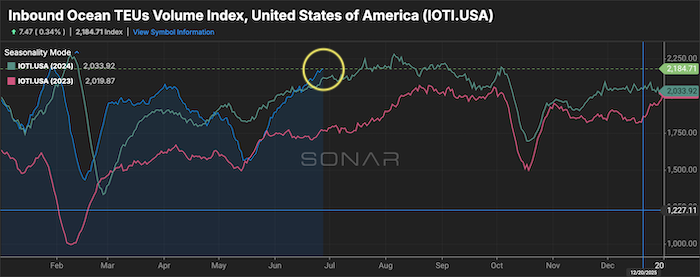
SONAR data shows inbound loaded containers to U.S. ports approaching record 2024 levels.

Yellow circle shows current U.S. inbound container traffic nearing record 2024 levels. (Chart: SONAR)

Rates from Shanghai to New York fell 13% to $5,703 per forty foot equivalent unit (FEU) container in the past week, but spot rates are still up a significant 56% compared to May 8. Spot rates to Los Angeles dropped 20% this past week, but are ahead 38% over the past seven weeks.

Freight rates from Shanghai to Rotterdam and Shanghai to Genoa increased 1% to $3,204 and $4,100 per FEU, respectively.

“We expect the supply-demand balance to weaken again in 2H25, which will cause spot rates to decline,” the analyst said. “The volatility and timing of rate changes will depend on the outcome of legal challenges to Trump’s tariffs and on capacity changes related to the introduction of the U.S. penalties on Chinese ships, which are uncertain.”

Container volume surged in the wake of the China-U.S. tariff ceasefire, which was announced April 12. On Friday, the U.S. announced it had come to an agreement with China on tariffs. 

Drewry’s North American Container Port Throughput Index increased 2.2% month-over-month in April to 118.4 points, representing a strong 10.3% increase compared to the same period last year. 

The rolling 12-month average growth rate for North America saw a slight recovery, reaching 10.2%. Most major ports on the U.S. West Coast experienced rising volumes in April, both on a month-over-month and year-over-year basis. 

Long Beach continued its impressive start to 2025, with April throughput climbing 6.1% month-over-month and a significant 15.6% year-over-year. Neighboring Los Angeles also performed well, with handling up 8.3% month-over-month and 9.4% year-over-year, indicating robust activity across these critical gateways for trans-Pacific trade.

The global index saw a modest month-over-month increase of 0.5% and a more substantial year-over-year rise of 5.6%. This upward trend is further reinforced by a stable rolling 12-month growth rate, holding at 6.5%. 

Looking at the year-to-date figures (January-April), North America and the Middle East-South Asia are leading the charge, both exhibiting robust growth of 9.7% and 9.6% respectively. Greater China is not far behind, at a 7.5% increase. Oceania was the sole region to report a decline, down 3.1%.

Greater China’s container ports demonstrated solid performance in April, as the regional throughput index climbed 2.3% month-over-month to 125.4 points, marking a 7.1% increase y/y. The rolling 12-month average growth rate for the region also improved, matching the global average at 6.5%. 

The top five Chinese ports collectively saw an average year-over-year increase of 10% in April. Shenzhen emerged as a particular standout, with its volumes surging by 15% year-over-year. Guangzhou also reported strong performance, with a 10.3% year-over-year increase, followed closely by Ningbo, which saw a 9.1% rise in throughput.

In contrast, the Latin America Container Port Throughput Index experienced a dip in April, falling 3.2% month-over-month. The region’s throughput remained up 2.8% on an annual basis. However, the rolling 12-month average growth rate for Latin America decreased to 9%. While still comfortably above the global average of 6.5%, this decline suggests a loss of momentum in this regional market. 

Following a surge in March, throughput at five Panama terminals decreased by 5% month-over-month in April, though it was still 1.5% above the April 2024 level. 

Brazil’s Santos port saw flat volumes month-over-month but a 2% year-over-year increase in April. Even with an 11% month-over-month decline reported at Callao, Peru, its volumes remain 11% ahead on a year-over-year basis, highlighting the uneven performance across Latin American ports.

Find more articles by Stuart Chirls here.

Related coverage:

With Mideast shipping on high alert, Maersk re-opens Israel port
Maersk unveils new AI platform to simplify customs tasks

New Mideast tensions fail to boost trans-Pacific container rates

US maritime chief Sola steps down

In rare jump, New York-New Jersey leads US port volumes

Image shows shipping containers, cranes, trucks and pavement.

The Port of New York and New Jersey, a perennial third place finisher among American container gateways, jumped to number one in May.

The East Coast port handled 774,698 twenty foot equivalent units in May, according to the Port Authority of New York and New Jersey. That was off  2% from the same month a year ago, but 20% better than pre-pandemic May 2019.

The port cited difficult year-ago comparisons swollen by diverted traffic following the collapse of the Key Bridge that forced the closure of the Port of Baltimore.

From January through May, the port handled 3,729,611 TEUs, up 6.5% y/y, and 22.6% ahead of 2019.

In May tariff concerns hampered box flows at the busiest gateways as the Port of Los Angeles saw volumes slide 5% y/y to  716,619 TEUs.

The Port of Long Beach handled 639,160 TEUs, down 8.2% y/y.

Find more articles by Stuart Chirls here.

Related coverage:

Drewry: No “lasting impact” from tariff break as ocean rates fall again

With Mideast shipping on high alert, Maersk re-opens Israel port
Maersk unveils new AI platform to simplify customs tasks

New Mideast tensions fail to boost trans-Pacific container rates

US, China agree on deal for tariffs, rare-earth magnets

The U.S. and China have agreed on a trade deal that would reduce tariffs and expedite shipments of rare-earth metals.

United States Treasury Secretary Scott Bessent said on Friday that U.S. tariffs on Chinese imports will now start at 30%, while China’s duty rate on goods from the U.S. will be at 10%. The 20% fentanyl levy on China will also stay in place.

In April, the Trump administration hit Chinese imports with a 145% tariff rate. China retaliated by slapping a 125% tariff on goods imported from the U.S.

“Now our tariffs are at 30% on them, we’re at 10%,” Bessent said on Fox Business. “We’re collecting a substantial tariff income.”

President Donald Trump announced the agreement with China on Thursday during a news conference that “We just signed with China yesterday,” without further explanation. 

China’s Commerce Ministry confirmed that both nations have reached a framework for a deal in a statement on Friday.

“China will review and approve export applications for controlled items that meet the required criteria, while the United States will lift a series of restrictive measures previously imposed on China,” the country’s Ministry of Commerce said in a statement to China Daily News.

U.S. levies on Chinese goods stood at an average of 51.1% for most imports before Thursday’s trade deal was announced, while China’s duties on American products were at 32.6%, according to the Peterson Institute for International Economics.

Bessent also said China has agreed to remove its restrictions on exports of rare-earth metals.

On April 4, China began restricting exports of rare-earth magnets to the U.S., which are used in high-tech products such as computer chips and electric vehicle batteries.

“We have an agreement with them that will make magnets flow to everyone who had received them before on a regular basis,” Bessent said.

Highway: building a fortress against freight fraud

Highway, a winner of the 2025 FreightWaves Fraud Fighter Awards, is a true pioneering force in freight security with its comprehensive Carrier Identity™ platform. Designed specifically for freight brokers, Highway’s solution targets fraud at its source by verifying carrier identities, authorizations, and qualifications before they ever touch a load. The company’s rapid growth in the face of the freight fraud crisis has put the company in a leadership position.

At the heart of freight fraud lies a fundamental vulnerability: disconnection between systems and processes. As Highway explained, “Fraud thrives in gaps—between systems, communication channels, and data sources. When brokers rely on outdated or siloed tools, bad actors can exploit the opacity.”

This insight has shaped Highway’s approach to fraud prevention. “Fraud needs disconnection. It needs opacity. What an identity layer does is centralize and validate everything at the top,” the company wrote, highlighting how their solution bridges critical security gaps that traditionally plague the industry.

Highway’s fraud prevention strategies have undergone significant transformation, helping the industry move away from manual checklists and implicit trust toward building a robust digital identity infrastructure.

“We didn’t invent something new—we learned from proven practices in fintech and applied them to freight,” Highway noted. This adaptation of financial security principles has led to the development of a comprehensive “Know Your Carrier” (KYC) framework that verifies three critical elements: user authenticity, authorization, and physical capability.

This approach mirrors the evolution seen in banking, where identity verification became a prerequisite for wire transfers. By applying these established security principles to carrier relationships, Highway has created a more secure freight ecosystem.

Highway has distinguished itself in the realm of freight security with impressive metrics that validate the effectiveness of its approach. The Carrier Identity™ platform, a proud recipient of the 2025 FreightWaves Fraud Fighter Awards, combats fraud at its core by scrutinizing carrier identities, authorizations, and qualifications. Reflecting this strategy’s power, Highway reports a remarkable 97% reduction in double brokering among customers who rely on compliant carriers. Additionally, the Load Lock system, designed for comprehensive load protection, has resulted in zero reported stolen loads for its users.

The initiative’s success is further underscored by its ability to preemptively block over 914,000 fraud attempts in just the past year. Simultaneously, Highway has managed to thwart more than 9,800 suspicious login attempts from a staggering 75 countries, demonstrating the platform’s expansive vigilance in tracking potential threats. Customers who have integrated Load Lock and Secure Rate Con Delivery report an 80% decrease in cargo theft, showcasing the tangible benefits of these systems.

In a notable incident that highlights Highway’s preventive prowess, a customer managed to save a $130,000 high-value load thanks to early identification of suspicious activities before the scheduled pickup. This case emphasizes how Highway’s proactive strategies not only thwart fraud but also safeguard assets, reinforcing trust and efficiency within the freight ecosystem.

When asked about advice for others fighting fraud, Highway emphasized the primacy of identity verification: “Start with identity. If you don’t have an identity layer, everything else downstream is vulnerable.”

This philosophy extends to standardizing security practices across organizations. Highway recommends holding carriers to the same security standards as internal teams. “If you require SSO and access controls for employees, carriers shouldn’t be an exception,” the company advised.

The company issues a clear warning about resistant parties: “Anyone who wants to bypass identity validation is likely trying to hide something.” This straightforward approach has helped Highway protect more than 950 freight brokers, from high-volume enterprise operations to specialized teams handling sensitive cargo.

Highway believes fraud prevention must transcend mere compliance and become integrated into everyday decision-making. “The biggest gaps happen when floor-level decisions are made without the right signals,” the company explains.

This operational integration requires both human and technological components. “Train teams to recognize the red flags—and give them the tech to respond instantly,” Highway advises. Their solution makes it easier for representatives to flag anomalies, identify exceptions, and reduce manual subjectivity, all while providing tools that detect behavioral changes and monitor risk in real time.

Highway’s platform offers comprehensive fraud prevention across every stage of the load lifecycle, tackling prevalent and costly threats such as the theft or unlawful sale of Motor Carrier numbers, double brokering schemes, and identity impersonation. It also effectively addresses issues like fictitious pickups, email inbox compromises, and load-level fraud, where carriers may become noncompliant post-booking due to factors like expired insurance, revoked authority, or unsuitable equipment. Rather than acting as a mere vetting tool, Highway functions as an integrated fraud prevention ecosystem, which actively intercepts malicious actors before they infiltrate broker networks and ensures that every load is monitored to guarantee that the cargo is managed by legitimate carriers.

Rather than functioning as a simple vetting tool, Highway operates as a dynamic fraud prevention ecosystem that proactively blocks bad actors before they access broker networks while continuously monitoring every load to ensure legitimate carriers are handling freight.

The result is what Highway described as “a safer, faster, and more trustworthy carrier network”—a vision that has earned them recognition as a leading fraud fighter in the freight industry.

Warehouse automation surging ahead despite projected slowdown

Warehouse automation appears to be gaining traction despite prior forecasts cutting short-term market growth projections for autonomous mobile robots.

Global market researcher Interact Analysis released a report in January cutting its short-term market growth projections for the mobile robotics market by 18% over the next two years.

However, advances in technology paired with significant supply chain partnerships and increasing affordability for robotics may be reasons to reevaluate.

According to a 2025 digital supply chain industry report by logistics trade association MHI, top barriers to automation adoption are a lack of a budget, lack of a clear business case and lack of understanding of technology. 

The MHI report predicts robotics and automation will jump from 41% of supply chain leaders using it today to 83% adopting it over the next five years. Inventory and network optimization technologies are also predicted to see an increase in adoption from 58% to 92% over the next five years.

DHL scales automation

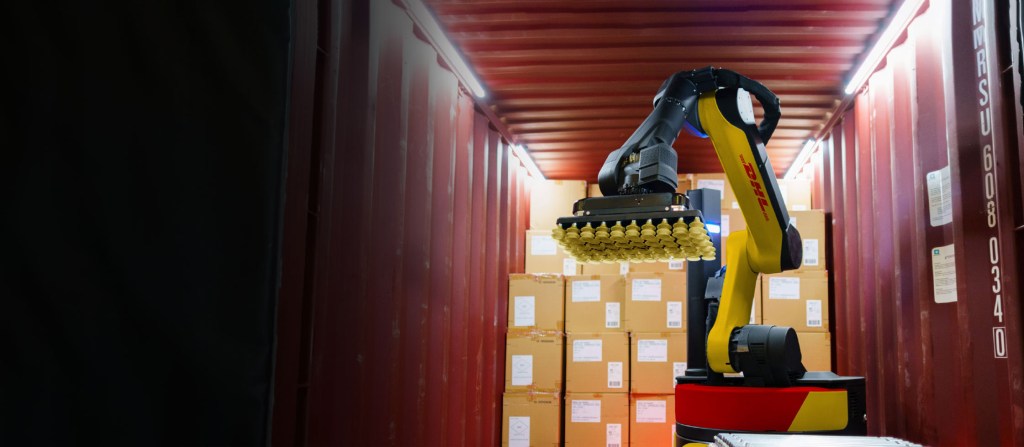
Logistics giant DHL Group announced a purchase order with Boston Dynamics in May for 1,000 more units of its package-handling “Stretch” robot. Stretch boasts case unloading rates of up to 700 cases per hour from both hot and cold trailers – with no human input necessary.

According to DHL’s news release, the purchase builds upon a warehouse technology partnership between both companies that started in 2018. In 2023, DHL’s logistics division introduced Stretch commercially in North America – and has more recently expanded deployments to Europe.

Over the past three years, DHL Group has invested over $1.17 billion in automation for its contract logistics division. DHL currently uses over 7,500 robots around the world, and more than 90% of its warehouses use at least one automation or digitalization technology.

Sally Miller, global chief information officer of DHL Supply Chain, said the company was committed to bringing robotics and automation to all of its operations and business units.

“It’s a fundamental shift that’s reshaping how we operate and elevate service for our customers,” Miller said in a statement. “Through this expanded partnership with Boston Dynamics, DHL will take a more active role in shaping and directing robotics development alongside key partners, focusing on building more resilient, responsive and smarter solutions that address the unique challenges of our company. Together, we’re setting new standards for the logistics industry.”

Making warehouse automation affordable

Better technology is also becoming more affordable. On Tuesday, Kentucky-based automation company Brightpick launched “Autopicker 2.0,” its first multi-purpose warehouse robot capable of matching human-level performance.

According to a news release, Autopicker 2.0 features physical AI and picking-in-motion software. The robot delivers on average 70 to 80 picks per hour, and can operate 24/7 at a cost of $1,900 per month.

Calculating for a 40 hour work week, that would be equivalent to paying a human worker just under $12 per hour – with the added perk of constant operability. The release stated that hundreds of Brightpick’s robots are operating using the company’s “Intuition” intelligent fleet orchestration software in warehouses worldwide.

“Autopicker 2.0 is the first robot to deliver both human-level speed and versatility in real production environments,” Jan Zizka, co-founder and CEO of Brightpick, said in a statement. “Its unique form factor gives it additional advantages, including higher vertical reach, faster navigation, and longer battery life. Through our RaaS [robotics-as-a-service] model, customers can deploy it for as little as $1,900 per month – making advanced automation more accessible than ever.”

Read more on robotics-as-a-service here.

Editor’s note: A previous version of this story incorrectly stated Interact Analysis’ report forecasted a “market dip” for the autonomous mobile robots market. This is not the case, rather the firm has lowered its own projections for market growth by 18% through 2027 due to global economic and political turbulence.

Air Hong Kong graduates to all-A330 freighter fleet

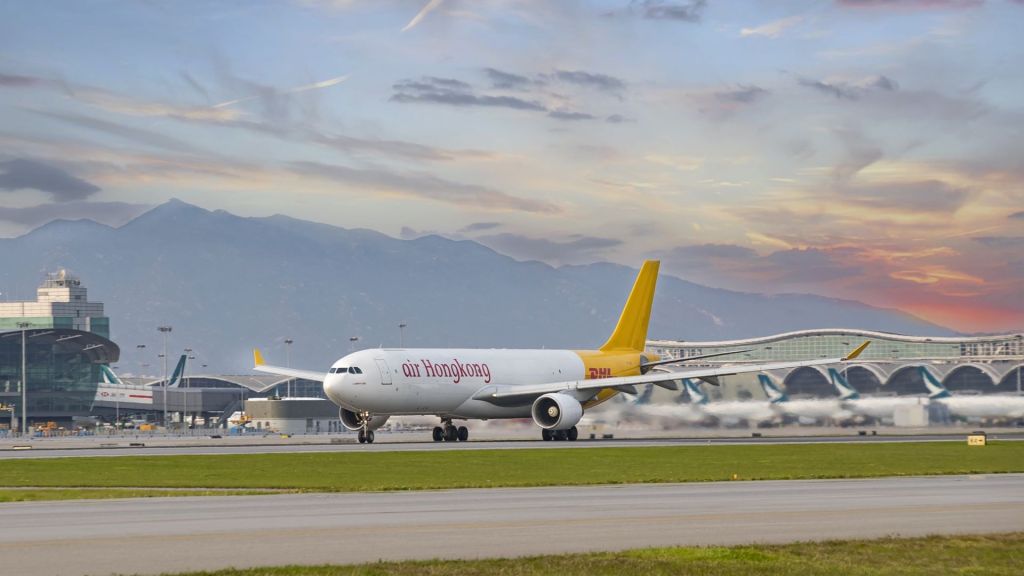
A yellow-tailed Air Hong Kong cargo jet begins its takeoff.

Air Hong Kong, a freighter subsidiary of Cathay Pacific Airways and capacity provider for DHL Express, has completed a seven-year transition from an Airbus A300-600 fleet to an all-A330 airline, the companies announced Friday.

Air Hong Kong recently received its final A330 and retired the last A300-600 cargo jet. The A330 is newer and larger than the A300.

The Asian carrier first began operating the A300-600 on behalf of DHL Express in 2004. In 2017, Cathay Pacific acquired DHL Express’s minority stake in Air Hong Kong through a sale-leaseback of aircraft and became its sole owner. Air Hong Kong operates scheduled service for DHL between Hong Kong and major cities throughout Asia, including Tokyo and Seoul, South Korea. Aircraft are also used for occasional charter work when not on duty for DHL

With the completion of the re-fleeting programme, Air Hong Kong now operates an all-A330F fleet comprising 14 aircraft. The total includes 10 A330-300 passenger-to-freighter converted aircraft, of which Air Hong Kong is currently one of the world’s largest operators, and four A330-200 production freighters.

“The A300-600F has been a stalwart of Air Hong Kong’s fleet and an important part of our story for over two decades,” Chief Operating Officer Clarence Tai said in a news release. “The new-generation A330F brings with it considerable benefits that will enable us to further enhance our operations and services for our customers, and continue to play an important role in the ongoing growth of Hong Kong’s air cargo sector.”

Compared with the A300-600, the newer A330 provides 25% more payload (65 tons) and volume enabling more cargo to be carried, in particular e-commerce shipments. It also has a longer range capability of nearly 4,600 miles, allowing Air Hong Kong to expand to new destinations such as Bahrain and Sydney, Australia. 

FreightWaves first reported in September 2023 that DHL Express was relocating the A300-600s to its in-house European airline because of difficulty securing maintenance and other support services in Hong Kong and replacing them with A330s. Air Hong Kong was the only carrier in Asia flying the A300-600 for several years after passenger airlines switched to other aircraft and vendors invested resources accordingly. Service providers shifted their focus to other aircraft because there weren’t enough A300s in circulation to turn a profit. 

Click here for more FreightWaves/American Shipper stories by Eric Kulisch.

RELATED READING:

DHL relocates A300 freighters to Europe for better sustainment

DHL Express prepares to open $140M cargo facility at Lyons airport

DHL upsizes Hong Kong air hub

ELP Rule Threatens 10% of Truckers, Risks Carrier CSA Scores

Trump and truck

The English Language Proficiency (ELP) rule, now in effect, could significantly reduce trucking capacity.

For a decade, large truckload carriers have embraced regulations like the ELD mandate and Drug and Alcohol Clearinghouse to limit market capacity, but effects were typically short-lived. The ELP mandate, enforced by a DOT Executive Order, requires commercial drivers to demonstrate English proficiency or face out-of-service (OOS) violations. FreightWaves estimates 10% of CDL holders may lack sufficient proficiency, based on insurance executive insights.

Will carriers comply with enforcement? DOT and law enforcement officers can issue OOS violations to non-compliant drivers, a major deterrent. When DOT officers or law enforcement deem a commercial driver or vehicle unsafe, often due to hours-of-service breaches, vehicle defects, improper load securement, or driving under the influence, they issue OOS violations. The DOT now includes English language proficiency as grounds for placing a driver out of service. These violations appear on a driver’s Pre-Employment Screening Program (PSP) report for three years and affect a carrier’s Compliance, Safety, Accountability (CSA) score for two years. Poor CSA scores raise insurance costs and lower shipper rankings, discouraging carriers from risking violations.

Although the ELP mandate did not create new laws, as English proficiency requirements preexisted, it empowers DOT and law enforcement to place non-compliant drivers out of service, reversing Obama Administration guidance to overlook such violations. Like a credit score, a CSA score influences insurance rates and shipper partnerships. Shippers often query CSA scores in RFPs and onboarding to assess reliability, deprioritizing carriers with eroding scores by shifting freight to safer alternatives, lowering them in routing guides, or excluding them from contracts.

Non-compliant carriers face severe consequences. A driver under a load placed out of service cannot move cargo until compliant, risking service failures and cargo theft from stranded loads. Brokers overlooking such carriers will face disruptions, prompting shippers to avoid them to protect cargo and ensure reliability

Capacity is close to being in balance with volume, with outbound tender rejection rates sitting at 6.77%, in spite of weak truckload demand.