U.S. Transportation Secretary Sean Duffy confirmed that Federal Motor Carrier Safety Administration investigators were on-terminal at Sam Express yesterday, the Illinois-based carrier at the center of a sprawling chameleon carrier network I’ve been investigating for months, one linked to a crash in Jay County, Indiana, that killed four Amish men last year.
That’s where the easy part of this story ends.
What most people outside this industry don’t understand, what even a lot of people inside this industry don’t fully appreciate, is that the presence of federal investigators at a trucking terminal doesn’t mean what you think it means. It doesn’t automatically mean a raid. It doesn’t mean the carrier is shut down tomorrow. It doesn’t mean the government is dragging its feet if nothing visible happens next week.
What it means depends entirely on how they got there, under what authority, and which agencies were involved. Understanding that distinction is the difference between informed advocacy and armchair quarterbacking.
The Network We In The Private Sector Exposed
For those just catching up, here’s the short version.
Over the past several months, we’ve documented a network of interconnected carriers operating approximately 800 trucks out of shared terminal facilities in the Chicago metropolitan area. The network includes Sam Express Corp (USDOT 3235924), Tutash Express Inc (USDOT 3487141), KG Line Group (USDOT 3487333), AJ Partners LLC (USDOT 3617842), Altex Logistics, DVL Express, VIDMA, Tutash Express 1, Tutash Cargo LLC, and 1st Choice Logistics.
The connections aren’t speculation. They’re documented through shared terminal addresses in South Holland, Markham, and Streamwood, Illinois. Sequential DOT registrations, Sam Express and Tutash Express received their DOT numbers on the same day in September 2020, with KG Line Group registered one day later. Shared VINs: AJ Partners shares 139 VINs with Tutash Express and 36 VINs with KG Line Group, meaning the same trucks are operating under multiple DOT numbers. The same distinctive mountain logo appears on equipment registered to different companies. And KG Line Group’s president was photographed wearing a Sam Express polo at the Broker Carrier Summit in Orlando.
Tutash Express alone has recorded 57 crashes and over 1,800 inspections, with a significant violation rate. Across the network, we’re looking at nearly 100 crashes combined.
This is textbook chameleon carrier behavior. The GAO told us in 2012 that chameleon carriers are three times more likely to be involved in serious crashes than legitimate new entrants. That data hasn’t gotten better. And four men from Bryant, Indiana, Henry Eicher, 50, his sons Menno, 25, and Paul, 19, and family friend Simon Girod, 23, paid the price.
Three Doors and How the Government Can Approach a Carrier
When federal investigators show up at a trucking terminal, they’re walking through one of three very different doors. Each has its own rules, limitations, and timeline. This matters.
Door One: The FMCSA Compliance Review
This is the standard enforcement pathway, the one most carriers encounter. If FMCSA investigators arrived at Sam Express to conduct a compliance review or a focused investigation, they are bound by established procedures.
They follow the FMCSA’s Electronic Field Operations Training Manual (eFOTM), which dictates the scope, methodology, and documentation requirements for every investigation. They pull a sample size of driver qualification files based on fleet size. For a carrier of Sam Express’s size, that might mean 10 to 25 DQ files, not all of them. They review the six compliance factors: general compliance, driver qualifications, hours of service, controlled substances and alcohol, vehicle maintenance, and hazardous materials if applicable. They compare carrier records against the Motor Carrier Management Information System, the Safety Measurement System, and roadside inspection data.
A focused review, which is what most CSA-triggered investigations are, is typically non-ratable. The investigator can’t issue a Satisfactory rating, but they can downgrade to Conditional or Unsatisfactory if they discover patterns of non-compliance. The standard is generally more than 10 percent for any one type of violation, or a pattern that, in a full compliance review, would warrant a rating reduction.
The carrier gets notified of results. If the rating drops to Unsatisfactory, the carrier is ordered to cease operations, but even that process involves notification periods and opportunities for corrective action. It’s not instant.
This pathway is procedurally sound. It is also, by design, methodical. The government has to follow its own rules.
Door Two: The Imminent Hazard Out-of-Service Order
This is the nuclear option. Under 49 USC §521(b)(5)(A), the Secretary of Transportation, through FMCSA’s Field Administrators and Regional Service Centers, can declare a carrier an imminent hazard to public safety and order it to immediately cease all operations. Interstate and intrastate. From all terminals and dispatching locations.
No sample size. No eFOTM procedure. No 45-day notification window. The carrier is done.
Simultaneously, FMCSA revokes the carrier’s operating authority and suspends its USDOT number. Civil penalties run up to $33,252 per violation. Criminal penalties can include fines up to $25,000 and imprisonment. And if the carrier ignores the order, the U.S. Attorney’s Office can seek equitable relief in federal court.
We’ve seen FMCSA use this authority effectively. Monique Trucking in California. Sorbon Transport in Colorado. DND International in Naperville, Illinois, which came after a crash that killed an Illinois Tollway worker. FTW Transport in Texas. The pattern is consistent: post-crash investigations reveal egregious, systemic noncompliance, and FMCSA imposes penalties.
Given what we’ve documented in the Sam Express/Tutash network, nearly 100 crashes, 139 shared VINs between carriers, the same trucks operating under multiple DOT numbers, sequential authority registrations, and four people dead in Indiana, the evidence for an imminent hazard finding is there. Whether FMCSA takes that step depends on what investigators found on-terminal yesterday and what authority they were operating under when they walked through the door.
Door Three: The Federal Criminal Investigation
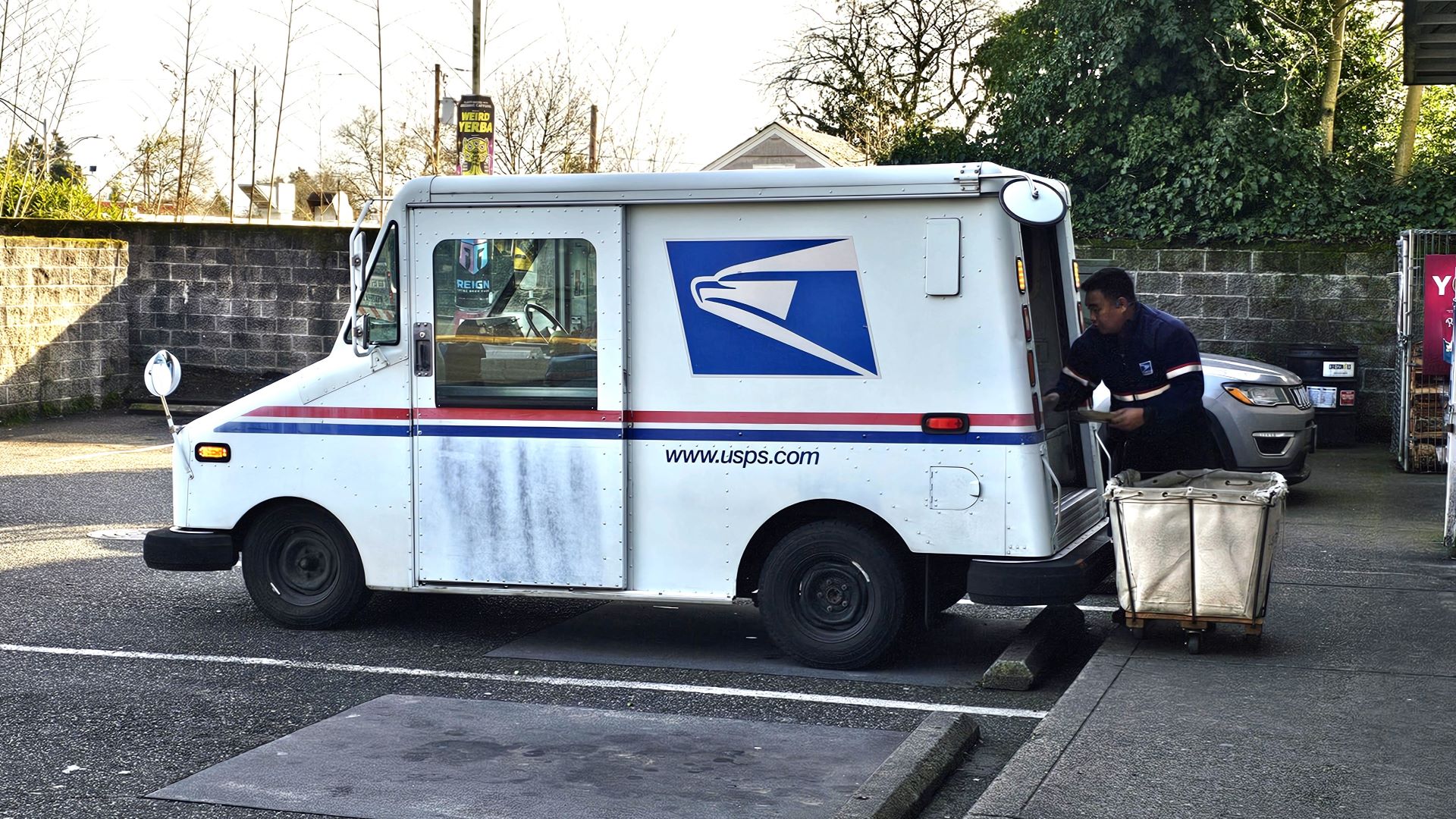
This is the Beam Brothers’ route. Mount Crawford, Virginia. One of the nation’s largest USPS mail carriers. Federal agents, not FMCSA investigators, but agents from the DOT Office of Inspector General, IRS Criminal Investigation, USPS-OIG, and Department of Labor OIG, raided the facility with federal warrants. They seized records, computers, and everything else. No sample size. No compliance review procedure. The warrants authorized them to take what the evidence supported.
That investigation ran from 2006 through a 2017 indictment, 126 counts, including conspiracy to defraud the United States, wire fraud, and money laundering. The company paid $3.25 million. The four senior officers pled guilty. The investigation revealed that management had been forcing drivers to falsify logbooks and work beyond hours-of-service limits while hauling U.S. mail under government contracts valued at over $500 million.
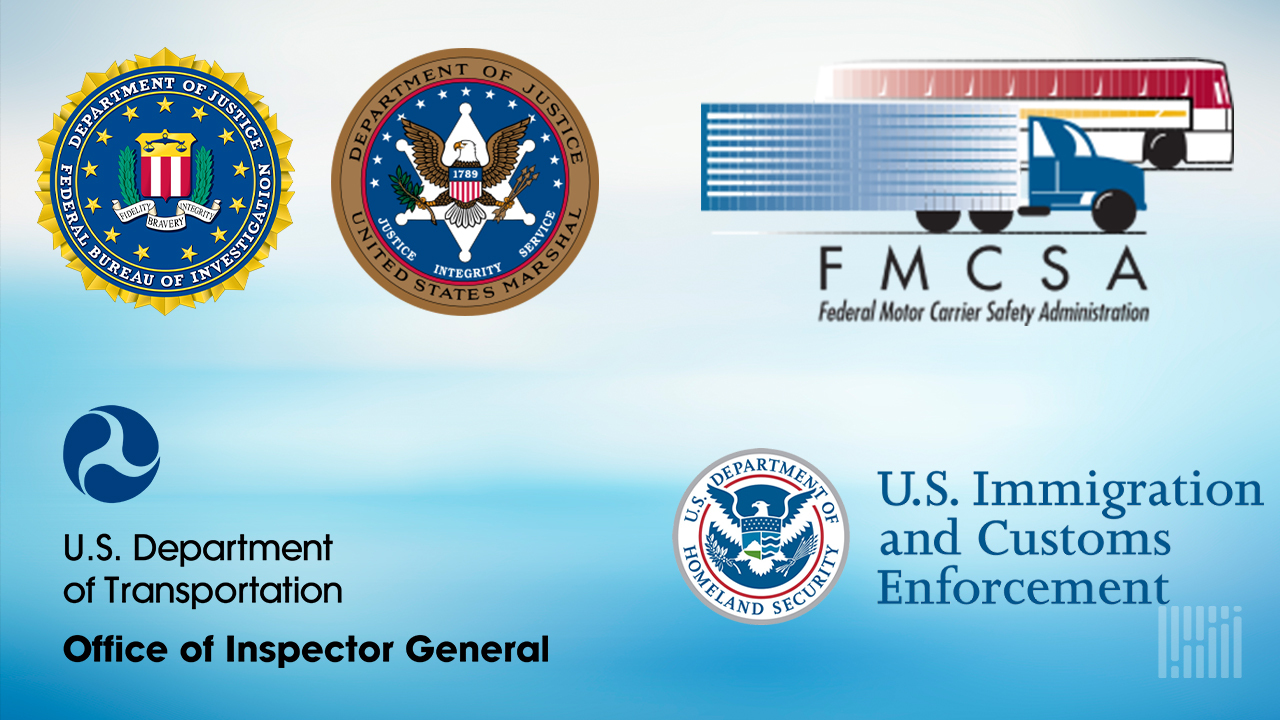
If the Department of Justice is involved in the Sam Express investigation, and the OIG, the FBI, the U.S. Marshals Service, or any other federal law enforcement entity has obtained warrants, then the rules of engagement are entirely different. They’re operating under the Federal Rules of Criminal Procedure, not the eFOTM. And the timeline, scope, and eventual outcome bear no resemblance to a compliance review.
Why This Matters. We Don’t Have Kings
I want to be very clear about something, and I want the people reading this to actually hear it.
This administration, President Trump, Secretary Duffy, and FMCSA Administrator Derek Barrs, is the most proactive, most aggressive, most hands-on leadership team the Department of Transportation and FMCSA have seen in my lifetime. And I’ve been alive for 45 years. I’ve watched every administration from Reagan to right now.
I have personally met with some of these people. I know that the data and information we have provided have been received and acted upon. I know they are hands-on. I know they care about highway safety. I know they are trying to drive change.
The receipts speak for themselves.
Secretary Duffy launched a nationwide audit of non-domiciled CDL issuance that uncovered systemic noncompliance across 19 states. California alone accounted for over 25 percent of sampled non-domiciled CDLs issued improperly, including one case in which a driver from Brazil received endorsements to drive a passenger bus and a school bus, with credentials valid months after his legal status expired. New York’s audit found 53 percent of sampled non-domiciled CDLs were issued illegally. Minnesota was at one-third. North Carolina at 54 percent.
FMCSA Administrator Barrs put it plainly: “Under the Trump Administration, states have two choices: meet our standards or face the consequences. Following the law is not optional.”
In May 2025, Secretary Duffy signed an order strengthening enforcement of English language proficiency, and more than 11,500 drivers have been placed out of service for failing to comply. By December, 7,500 CDL training schools had been shut down, nearly half of all schools on the Training Provider Registry, for failing to meet readiness standards. The agency removed nearly 3,000 training providers and placed another 4,500 under investigation in what FMCSA called the largest enforcement action ever against low-quality CDL training programs.
This is not an administration that is sitting on its hands. This is the fastest and most decisive regulatory enforcement action I have ever seen in the transportation sector. Period.
But here’s what people don’t understand, or refuse to understand, because it doesn’t fit their narrative.
We don’t have kings.
The President of the United States, the Secretary of Transportation, and the FMCSA Administrator all operate within confines. Legal confines. Procedural confines. Constitutional confines. And those constraints exist for a reason, even when they slow outcomes that feel urgent.
The Confines That Bind
Here’s how rules typically get made at the FMCSA level, because most people have no idea.
It starts with an Advance Notice of Proposed Rulemaking (ANPRM), in which the agency says, “We’re thinking about addressing this issue, and we want public input.” Then comes the Notice of Proposed Rulemaking (NPRM), which is the actual proposed rule with a public comment period. Then comes the Final Rule, which incorporates public comments and sets an effective date. The entire process can take years. Sometimes a decade. Sometimes longer.
There are congressional hearings. Committee investigations. Government Accountability Office reports indicate the GAO has been raising concerns about chameleon carriers since at least 2012. There are appropriations battles. There are Office of Management and Budget reviews. There is the Administrative Procedure Act, which requires agencies to follow specific steps before implementing regulations, and which provides grounds for legal challenge if they don’t.
And then there are the lawsuits.
This administration has faced an unprecedented volume of litigation. By late November 2025, approximately 530 lawsuits had been filed against the Trump administration, compared with fewer than 50 against the Biden administration in the same period and roughly 30 against Obama. The D.C. Circuit Court of Appeals stayed FMCSA’s interim final rule on non-domiciled CDLs in November 2025, preventing it from taking effect. A rule that was issued as an emergency action, because states were illegally issuing CDLs to unqualified foreign drivers, and people were dying on American highways, was frozen by a court order.
Think about that. The agency identified an imminent hazard. The agency took emergency action. And a court said wait.
That’s not a failure of this administration. That’s the system working exactly as it’s designed to work, with all the friction and frustration that entails. And it’s important to understand that dynamic when you’re wondering why a chameleon carrier network with nearly 100 crashes and four dead Amish men isn’t shut down overnight.
The Political Reality
The political opposition to this administration has reached a point where common-sense safety measures are being fought not on their merits, but on the identity of the person proposing them. Non-domiciled CDL reform, which protects every American on the highway regardless of their politics, is tied up in litigation because of who signed the order. English language proficiency enforcement, a requirement that has been on the books for decades and exists because a truck driver who cannot read road signs or communicate with emergency responders is a danger to everyone, becomes a political football.
Historically, policies like food safety reform, immigration enforcement, and infrastructure investment have enjoyed bipartisan support. Democrats and Republicans have both championed these causes under their own administrations. But the current political environment has devolved to a point where the substance of a policy matters less than the name on the letterhead. Common-sense proposals that previous Democratic leaders have openly supported are now reflexively opposed because of who occupies the White House.
This isn’t about left or right. This is about whether we can have an honest conversation about highway safety without letting partisan tribalism override logic. And right now, that conversation is harder than it should be.
The Resource Problem Nobody Talks About
Here’s another reality check.
FMCSA employs just over 1,000 people, and that number declined in 2025 when 169 employees (13.7 percent of the workforce) accepted Deferred Resignation Program offers as part of a broader federal workforce restructuring. Those 1,000 or so people are responsible for regulating more than 500,000 commercial trucking companies, more than 4,000 interstate bus companies, and more than 4 million CDL holders.
Around 1,000 people. Over 500,000 trucking companies.
That’s why prioritization matters. That’s why the Safety Measurement System exists, to identify the highest-risk carriers and focus limited enforcement resources where they’ll have the most impact. That’s why FMCSA relies heavily on state agency partnerships through the Motor Carrier Safety Assistance Program (MCSAP), which provides federal funding to state law enforcement agencies to conduct roadside inspections and compliance reviews.
Those state partnerships come with their own complications. Some states have adopted federal regulations wholesale. Others have carve-outs and variations. Some have their own enforcement priorities that don’t perfectly align with federal objectives.
Then there’s the immigration enforcement angle. The 287(g) program, named after Section 287(g) of the Immigration and Nationality Act, authorizes state and local law enforcement agencies to be deputized by DHS to conduct immigration enforcement functions. That’s a completely different department and a completely different statutory authority than FMCSA.
As of September 2025, DHS had signed over 1,000 287(g) agreements nationwide. But just this week, literally two days ago, Virginia’s new governor, Abigail Spanberger, signed an executive directive terminating all state-level 287(g) agreements with ICE, ordering Virginia State Police, the Department of Corrections, and other state agencies to exit the program. This reversed former Governor Youngkin’s directive that had placed state law enforcement into the immigration enforcement business.
The point isn’t to debate whether that’s good or bad policy. The point is that the regulatory and enforcement landscape is a patchwork. Federal agencies have their authorities. State agencies have theirs. Some cooperate. Some don’t. The result is a system in which a chameleon carrier network can operate 800 trucks across multiple DOT numbers from shared terminals in South Holland, Illinois, while the various levels of government determine whose jurisdiction it falls under and what procedures they need to follow.
So, Whats Next?
It depends.
If FMCSA conducted a focused compliance investigation at Sam Express yesterday, we’ll see a rating determination within a defined timeframe. If violations are found, and given what we’ve documented, it would be remarkable if they weren’t, the carrier could receive a Conditional or Unsatisfactory rating. An Unsatisfactory rating would ultimately force the carrier to cease operations, though the process includes notice and opportunity for corrective action.
If the FMCSA has enough evidence to support an imminent hazard finding, and the crash data, shared VINs, and chameleon indicators we’ve documented would seem to provide that basis, they could issue an Out-of-Service Order that shuts the carrier down immediately. However, that order applies to a single USDOT number. If they want to take down the entire network, they’d need to establish a common ownership and common control finding and either issue orders against every entity or consolidate the records as they did with J&L Trucking.
If the Department of Justice is building a criminal case and the OIG, FBI, or other federal law enforcement agencies are involved, we may not see public action for months or even years. Criminal investigations move at the pace of evidence collection, grand jury proceedings, and prosecutorial strategy. The Beam Brothers investigation took over a decade from initiation to sentencing.
The takeaway?
The fact that federal investigators were on-terminal at Sam Express yesterday tells you something important. It tells you that the people in charge are listening. It indicates that the data and reporting reaching their desks are being acted upon. It indicates that this administration, from the President to the Secretary to the Administrator, is not ignoring the problem.
They are acting responsibly, efficiently, and as aggressively as their authority allows. And in my 25-plus years in this industry, I’ve never seen faster or more decisive action from the federal government on trucking safety issues.
Push them. Hold them accountable. Be vocal. That’s how the system works. But understand that the system has guardrails, and those guardrails, frustrating as they are when four men from Jay County are in the ground, exist because we decided a long time ago that we don’t want a government that can shut down a business on a whim without due process.
We don’t have kings. And most days, that’s a good thing.
The wheels of justice may grind slowly, but yesterday, they were grinding at Sam Express.