Knight-Swift slashes H1 2024 expectation by more than half

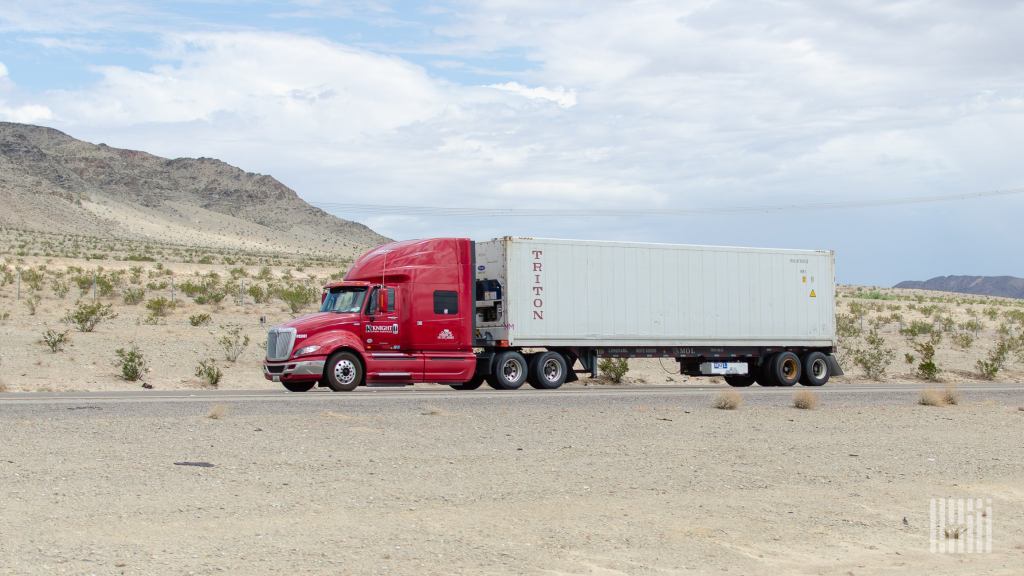
A maroon Knight Transportation tractor pulling a refrigerated Triton container

Knight-Swift Transportation cut earnings expectations by 58% for the first half of the year on Wednesday, citing an oversupplied truck market, poor weather in January and a tough start to bid season.

The company said adjusted earnings per share for the first quarter will range between 11 and 12 cents compared to a 39-cent outlook (at the midpoint of the guidance range) provided in late January. It is calling for adjusted EPS of 26 to 30 cents in the second quarter versus the previous 55-cent expectation (at the midpoint of the range).

Knight-Swift’s (NYSE: KNX) new outlook for the first quarter includes an 8-cent-per-share loss associated with the shutdown of its third-party insurance business. That unit brokered liability coverage to small carriers. It struggled to collect premiums and endured unfavorable claims developments in recent quarters. In total, it lost $125 million last year, $72 million in the fourth quarter alone.

Shortly after the company announced it was shuttering the insurance business, CEO Dave Jackson stepped down.

Analysts will likely add back the 8-cent hit to Knight-Swift’s first-quarter result as the insurance unit is being disposed. That puts adjusted EPS at 19 to 20 cents for the quarter, compared to the current consensus estimate of 29 cents.

The consensus estimate for the second quarter was 48 cents on Tuesday.

Knight-Swift said it has had to put more equipment in the spot market as it has walked away from some contractual freight.

“The early part of the bid season led to greater than expected pressure on freight rates as some shippers are still trying to push rates down further. In some cases, we have lost contractual volumes because we were not willing to commit to further concessions on what we view as unsustainable contractual rates,” a news release said.

Running more equipment in the spot market offers no rescue. Depressed spot rates are also weighing on total revenue per mile, and absent contractual commitments, equipment utilization metrics have moved lower. However, the company believes this is the best course as it positions the capacity to quickly react to any positive inflection.

It is forecasting a mid-90% operating ratio for the legacy TL business in the second quarter, with the acquired U.S. Xpress fleet seeing break-even results.

Chart: (SONAR: NTIL.USA). The National Truckload Index (linehaul only – NTIL) is based on an average of booked spot dry van loads from 250,000 lanes. The NTIL is a seven-day moving average of linehaul spot rates excluding fuel. To learn more about FreightWaves SONAR, click here.

The logistics business is not only suffering from unfavorable demand and yield dynamics, but also as the company has “diverted loads to the asset division to partially offset the contractual volume losses.” The logistics unit is expected to see 10% to 15% year-over-year (y/y) revenue growth due to the U.S. Xpress acquisition and an OR in the mid-90% range during the second quarter.

The segment posted a 93.1% OR in the fourth quarter.

The release said its less-than-truckload unit continues to see y/y volume and yield growth, but operating income will be worse than expected due to its geographic concentration in regions most impacted by winter storms. It noted LTL volumes “normalized into March and April.”

The second-quarter call for LTL is y/y revenue growth of 10% to 15% and a flat OR. (2023 second-quarter OR was 85.1%.)

Knight-Swift’s intermodal business is “approaching breakeven during the quarter with revenues down slightly year-over-year.”

The update comes one day after a big earnings miss from multimodal provider J.B. Hunt Transport Services (NASDAQ: JBHT). A tough bid season and elevated costs associated with carrying excess capacity to meet future demand were to blame for the miss.

Shares of KNX were off 4.6% at 10:21 a.m. EDT on Tuesday while shares of JBHT were down 7.6%. The S&P 500 was up 0.1% at the time.
More FreightWaves articles by Todd Maiden

California carrier and freight brokerage ceasing operations, blames AB5

A family-owned trucking company and brokerage — California Intermodal Associates Inc. (CIA), headquartered in Commerce, California — is ceasing operations after nearly 25 years, citing the state’s independent contractor law.

CEO Gabriel Chaul said he recently notified customers that he is winding down operations.

“I blame AB5 for the main reasons our company is closing,” Chaul told FreightWaves on Tuesday.

He said all hope that his company would survive faded in March after a federal judge in California rejected trucking and trade associations’ legal challenges to stop enforcement of AB5, a controversial state law that severely restricts the use of independent contractors.

“California is a hostile place to operate a business,” he said. “This law has created a hostile operating environment and an environment of unfair competition.”

Chaul said his company complied with the law and switched his owner-operators over to become a company fleet of around 30 drivers.

“We had a hard time maintaining that number because they started falling off because they were enticed by our competition that builds its business with owner-operators,” he said.

Chaul said once he notified customers that the company was fully compliant with AB5, the phones stopped ringing.

“It seems like as soon as our customers knew that we were complying with the law and hiring employee drivers and had our own assets, our costs went up by as much as 30%,” he said. “There was no incentive to use CIA anymore.”

While his company complied with the law, it largely hasn’t been enforced and other companies that continue to use independent contractors are succeeding while he has made the tough decision to close, Chaul said.

“I owe about $1.8 million to the bank. I compromised myself to try and stay afloat because of this AB5, but if the state’s not going to enforce it, I’ve decided to hang it up,” Chaul said. “I’ve made all of these efforts and nothing’s going to change, so I can’t continue digging myself a deeper and deeper hole.”

Besides his current fleet of around 30 trucks, he also provided logistical support to the trucking community with a container yard and offered warehousing services.

In an email to FreightWaves, Fabian Ibarra, a dispatcher for another Southern California-based carrier, wrote, “CIA has been a cornerstone in the logistics landscape for nearly two decades.”

“Their impact was profound; if you’ve ever moved 53-foot containers from the rail in California, chances are you’ve crossed paths with CIA in your career journey,” Ibarra said.

Chaul said he is winding down operations this week but is uncertain of his next career move.

“I’m in my 50s and started this company with my dad 25 years ago,” he said. “I tried to do everything right and run a nice company, and this breaks my heart because I have to close it.”

This is a developing story.

Read more here:


Former Tony’s Express workers, drivers say mismanagement sank company
97-year-old Illinois dairy forced into bankruptcy

Shuttered California trucking company files for bankruptcy

Illinois trucking company with 171 drivers files for bankruptcy

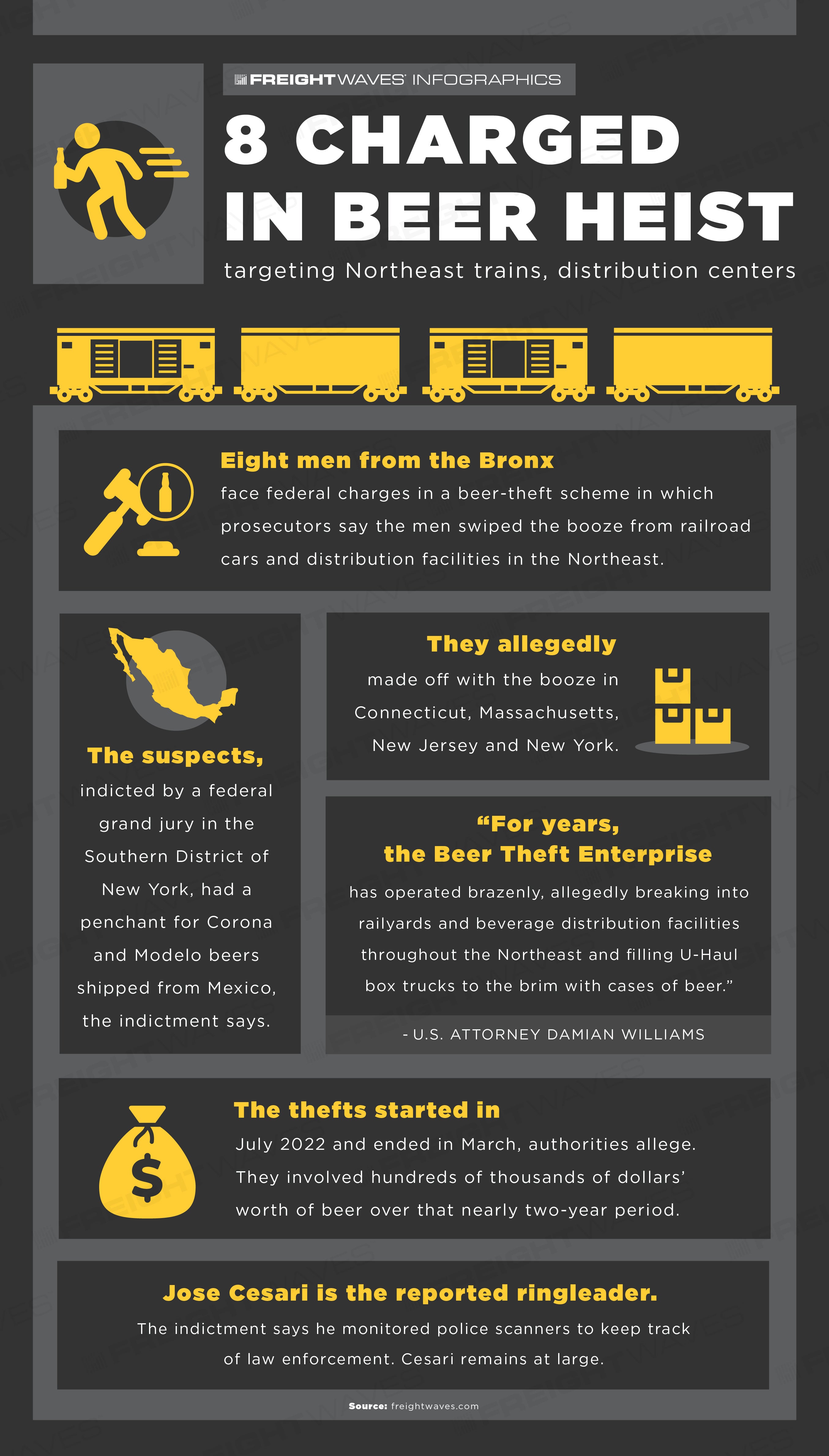
FreightWaves Infographics: 8 charged in beer heist targeting Northeast trains, distribution centers


To view more FreightWaves infographics, click here

US parcel revenue sees first decline in 7 years, report finds

U.S. parcel revenue has seen the first decline in seven years despite increased parcel volume, according to an annual report from Pitney Bowes.

The U.S. Parcel Shipping Index, released Wednesday by the global shipping and mailing company, highlighted 2023’s shifts in the carrier-competitive landscape and consumer behaviors. U.S. parcel revenue fell 0.03% from $198.4 billion in 2022 to $197.9 billion last year despite a slight parcel volume increase of 0.05% from 21.5 billion in 2022 to 21.7 billion in 2023.

Pitney Bowes expects U.S. parcel volume to reach between 23 billion and 35 billion by 2029.

Of the four largest carriers — the U.S. Postal Service, Amazon, UPS and FedEx — only Amazon grew volumes year over year at 15.7%. Amazon and the Postal Service both saw revenue growth, but UPS and FedEx experienced declines in parcel volume and revenue.

Amazon nearly tripled its shipping volumes from 2019 to 2023 — from 2 billion to 5.9 billion parcels — but it lags behind in terms of revenue. It generated $28.6 billion in revenue, less than half of UPS’ $68.9 billion and FedEx’s $63.2 billion, which Pitney Bowes says foreshadows “a secular shift in the economics of last mile delivery towards smaller parcels and cost-effective shipping services.”

“Despite the continued aftershocks of the COVID-19 pandemic, persistent inflation, and pessimistic economic perceptions, consumer spending remains resilient, primarily via a growing demand for affordable goods from global marketplaces. The result is an influx of smaller, less-
expensive, lightweight packages which drive up volumes at a lower rate of revenue-per-piece,” Shemin Nurmohamed, a Pitney Bowes executive vice president and president, said in the report. 

UPS had the largest parcel revenue market share with 35% of the market followed by FedEx with 32%. The Postal Service maintained its share with 16% and Amazon increased two percentage points to 14%.

Carrier volume

Pitney Bowes found:

  • The Postal Service handled 6.6 billion parcels, a nearly 1% decrease from 2022.
  • Amazon handled 5.6 billion parcels, up 15.7% from 2022.
  • UPS handled 4.6 billion parcels, down 10.3% from 2022.
  • FedEx handled 3.9 billion parcels, down 6.1% from 2022.
  • The “others” category handled 600 million parcels, a 28.5% increase from 2022.

Carrier revenue

Pitney Bowes found:

  • UPS generated $68.9 billion, down 6.4% from 2022.
  • FedEx generated $63.2 billion, down 3.1% from 2022.
  • The Postal Service generated $31.7 billion, up 0.08% from 2022.
  • Amazon generated $28.6 billion, up 19% from 2022. 
  • The “others” category generated $5.6 billion, up 32.5% from 2022.

J.B. Hunt’s long-term intermodal growth plan weighs on Q1 result

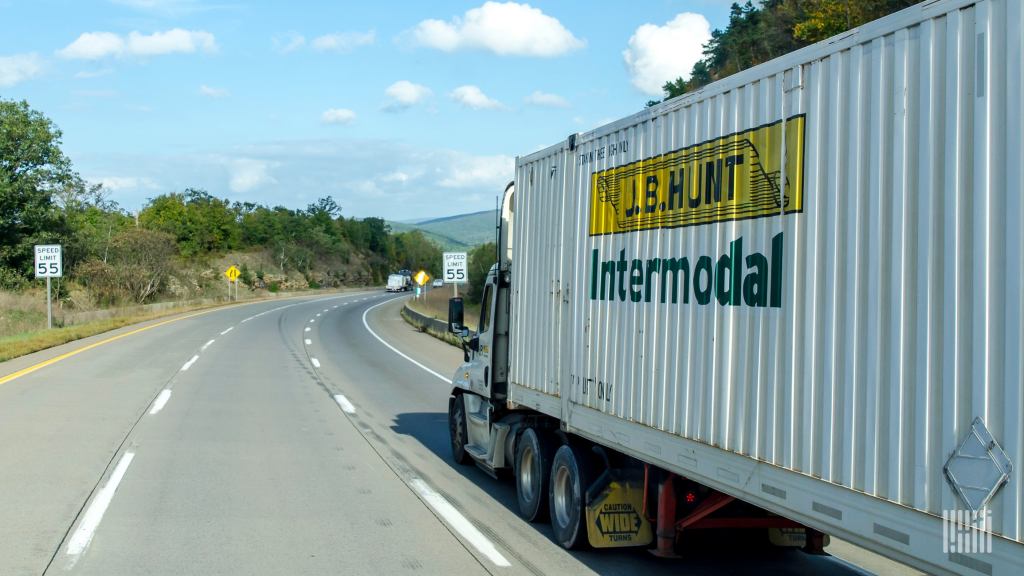
A tractor pulling a J.B. Hunt intermodal container on a highway

J.B. Hunt Transport Services said it would stay the course, increasing intermodal capacity ahead of demand to avoid the service failures the industry experienced during the pandemic. That means carrying a higher cost burden and potentially posting earnings misses like it did in the 2024 first quarter.

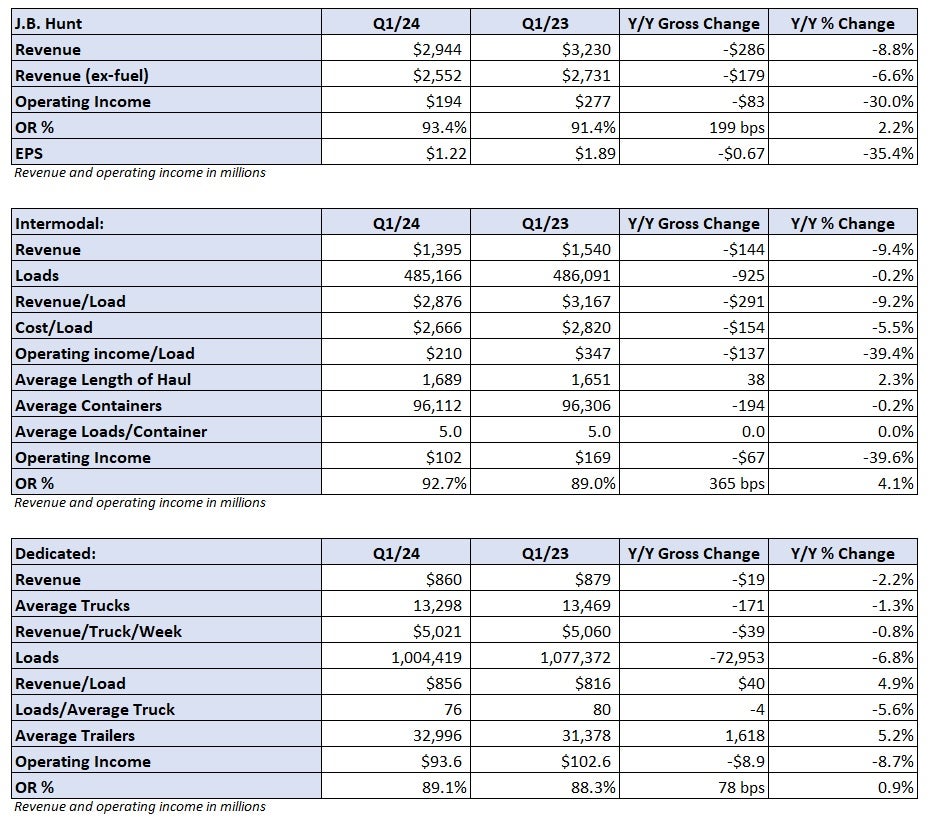
The multimodal provider reported first-quarter earnings per share of $1.22 Tuesday after the market closed, 28 cents light of the consensus estimate and 67 cents lower year over year (y/y). A higher tax rate presented a 7-cent headwind while higher interest expense was a 1-cent headwind.

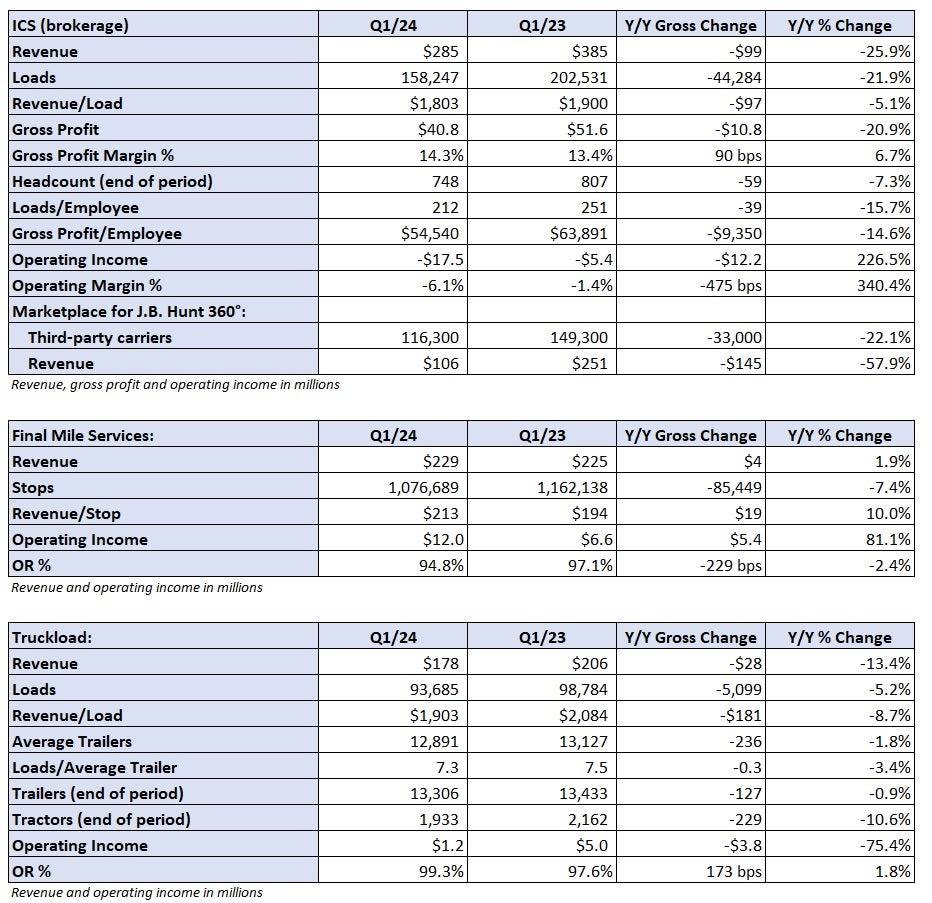
Table: J.B. Hunt’s key performance indicators – Consolidated

Intermodal revenue declined 9% y/y to $1.4 billion as revenue per load fell by a similar amount, with load counts flat with the prior year. Transcontinental loads were 5% higher y/y, largely due to a weaker comparison to the same period last year, while depressed truckload rates weighed on intermodal demand in the East, pushing volumes 7% lower.

Total intermodal traffic on the U.S. Class I railroads was 9% higher y/y in the quarter, according to the Association of American Railroads. J.B. Hunt’s (NASDAQ: JBHT) intermodal loads were down 2% y/y in January, up 3% in February and off 1% in March. The company noted price competition from both TL carriers and other intermodal providers. It pointed to a “disciplined approach” to pricing as an explanation for the loss in share.

Management reiterated a “long-term view” that the intermodal space will take share over time and said it’s comfortable growing its fleet ahead of demand. J.B. Hunt currently has 20% excess container capacity and is roughly 30,000 units shy of a goal to grow its fleet to 150,000 units.

“When we’re there to support our customer to grow the demand, it certainly bears fruit for our shareholders over the long term as those customers just gain more and more confidence in our ability to serve their needs, said Darren Field, president of intermodal services, on a Tuesday evening call with analysts.

The unit has repriced roughly 40% of its contracts for the current bid season, meaning pressure on rates will likely linger without a material change in market dynamics. Volumes were down 9% from the fourth quarter, which was worse than the normal seasonal trend. However, loads in the fourth quarter were ahead of normal seasonality. Yields fell 5% from the fourth quarter to the first.

“The problem is the negative dynamics that impacted 1Q results won’t change that quickly given JBHT’s longer pricing cycle and limited intermodal spot market opportunities,” Deutsche Bank (NYSE: DB) analyst Amit Mehrotra said in a Tuesday note to clients.

The intermodal segment reported a 92.7% operating ratio, which was 370 basis points worse y/y. The company is currently carrying $100 million in incremental expenses to maintain the capacity and resources needed for the next upturn.

Table: J.B. Hunt’s key performance indicators – Intermodal

Dedicated revenue dipped 2% y/y to $860 million as average trucks in service declined 1% and revenue per truck per week was off by a lesser amount. The unit saw some erosion in total truck needs from current customers as well as some customer bankruptcies, including its 10th-largest customer.

J.B. Hunt did sell dedicated service on 690 trucks in the quarter, “a lot stronger” than expected, after placing a total of 1,150 dedicated units last year. An 89.1% OR was just 80 bps worse y/y.

Table: J.B. Hunt’s key performance indicators – Dedicated and Brokerage

The brokerage unit reported a $17.5 million operating loss as loads fell 22% y/y and revenue per load was down 5%. The unit lost $15 million in the fourth quarter. Higher insurance expenses and integration costs from the acquisition of BNSF Logistics’ (NYSE: BRK.B) brokerage business presented headwinds.

The final-mile segment saw operating income more than double to $15.1 million as revenue per stop increased 10% y/y. The result included a $3.1 million claims benefit.

The truckload segment was barely profitable as loads slid 5% y/y and yields declined 9%.

Shares of JBHT were down 6% in after-hours trading on Tuesday.

Table: J.B. Hunt’s key performance indicators – Final-mile and Truckload

More FreightWaves articles by Todd Maiden

J.B. Hunt posts big Q1 earnings miss

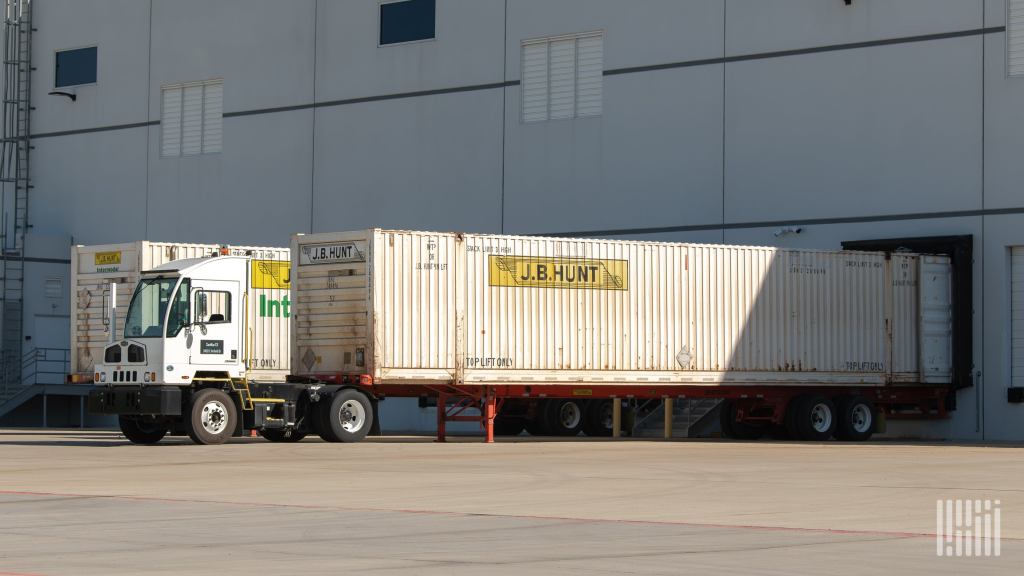
A J.B. Hunt yard truck with an intermodal container

J.B. Hunt Transport Services missed first-quarter expectations Tuesday, reporting earnings per share of $1.22 compared to the consensus estimate of $1.50. A higher tax rate was a 7-cent headwind in the quarter.

Intermodal revenue fell 9% year over year (y/y) as revenue per load was off by a similar amount (down 5% from the fourth quarter). Total loads were flat y/y but 9% lower than in the fourth quarter. A 92.7% operating ratio (operating expenses as a percentage of revenue) was 370 basis points worse than the year-ago quarter.

Management called out “weaker than expected” demand and higher wages, equipment costs and insurance premiums as the culprits. Management said in February that bid season negotiations for its intermodal and truckload offerings were soft.

Click for full report – “J.B. Hunt’s long-term intermodal growth plan weighs on Q1 result”

J.B. Hunt’s (NASDAQ: JBHT) brokerage unit reported a $17.5 million operating loss as loads declined 22% y/y, with revenue per load down just 5%. The unit lost $15 million in the fourth quarter. Higher insurance expenses and integration costs from the acquisition of BNSF Logistics’ (NYSE: BRK.B) brokerage operations were headwinds.

Dedicated revenue was off slightly y/y, the combination of fewer trucks in service and lower revenue per truck per week. An 89.1% OR was just 80 bps worse y/y.

The company’s truckload segment was barely profitable as loads and yields declined. The final-mile segment saw operating income more than double to $15.1 million as revenue per stop increased 10% y/y. The result included a $3.1 million claims benefit.

J.B. Hunt will host a call at 5 p.m. EDT on Tuesday to discuss first-quarter results.

Click for full report – “J.B. Hunt’s long-term intermodal growth plan weighs on Q1 result”

More FreightWaves articles by Todd Maiden

Bleeding blue with Kottke Trucking – Taking the Hire Road

Kyle Kottke, general manager for Kottke Trucking, joined Jeremy Reymer on a recent episode of Taking the Hire Road. The pair discussed the origins and values of the third-generation company as it approaches 90 years in business.

Kottke’s grandfather, Elmer, started hauling milk, fertilizer and feed with one truck in 1938. Today, the company boasts over 100 trucks and has established itself as a reliable name in refrigerated movements. The years in between saw a plethora of triumphs — and a fair share of hardships.

Being born into the industry, Kottke started greasing trailers in the backyard when he was about 10 years old. He jokes that this is the only job he has ever been fired from, admitting that maintenance has never been his strong suit.

After spending his childhood surrounded by trucks, Kottke decided to leave the industry and strike out on his own. He decided to study finance. That lasted about 18 months.

“I figured out I was a blue-collar guy and that the suit and tie were not exactly in my future,” Kottke said.

To this day, he owns only one suit. He pulls it out of the closet for weddings and funerals.

Kottke returned to the trucking company, and he has stayed ever since. Spending his entire life immersed in Kottke Trucking has meant that the organization’s mission — including family values and a customer-focused approach — are often a mirror of his own priorities.

In recent years, the company has adopted the term “bleeding blue” to encompass the expression of those values and priorities. The phrase – which pays homage to the color of the company’s trucks – came about as a way to succinctly summarize and communicate Kottke’s mission in the midst of a couple of acquisitions. It has stuck, allowing managers to recognize employees for “bleeding blue.”

Kottke Trucking’s strong focus on its values is also an intrinsic part of the company’s hiring process. Kottke aims to hire drivers who share its mission from the start, leading to turnover rates that hover around half of the industry average.

Beyond creating a value-driven work environment, Kottke attributes much of the company’s success to its deep appreciation for drivers as individuals. Showing that appreciation doesn’t have to be elaborate or expensive. It can be as simple as grilling burgers or sharing cell numbers.

“It doesn’t matter how much money you spend. If you don’t care, they know,” Kottke said.

Click here to learn more about Kottke Trucking.

Other highlights from this episode of Taking the Hire Road

Book recommendations: “The Five Dysfunctions of a Team” by Patrick Lencioni 

Sponsors: Career Now Brands, Carrier Intelligence, Infinit-I, Workhound, Asurint, Transportation Marketing Group, Seiza, Drive My Way, DriverReach, F|Staff, Trucksafe

Shippers must seek out experienced cross-border providers during Mexican market boom

Companies are more intrigued than ever by Mexican manufacturing prospects. Mexico unseated China as the top exporter to the U.S. for the first time in 2023 after a multi-year climb. During a similar time period, the Laredo, Texas and Tucson, Arizona markets have skyrocketed in popularity

Mexico is expected to continue to win business – and grab headlines – as the well-documented and ongoing nearshoring trend continues. In fact, foreign domestic investment in Mexico hit a record high over the past two years. 

Getting Started in Mexico

It will take several years to see the full impact of manufacturing investments in Mexico, according to Lance Dixon, Werner’s Senior Vice President of Mexico, Canada and Temperature-Controlled divisions. That is because building facilities from the ground up is inevitably a complex and time-consuming process.

That said, manufacturers with facilities already in Mexico have flexed up their operations with relative speed. In some cases, this can be as simple as adding an additional shift to an existing operation. Dixon has seen many of his customers take this route. 

Finding the Right Logistics Partner for Cross-Border

With trade between the U.S. and Mexico heating up, more and more shippers are evaluating their options when it comes to cross-border logistics partners.

While many logistics companies offer some level of cross-border services, the complexity of moving freight efficiently between Mexico and the U.S. demands an experienced and innovative partner. 

“Cross-border is very complex,” Dixon said. “It is unique compared to domestic freight in the U.S., and it brings a whole new set of challenges.”

Those challenges can include managing paperwork, understanding applicable taxes and duties and navigating differing regulations between the companies. When logistics partners are not adept or experienced at solving those issues, it can lead to frustration and costly delays.

The Power of Experience with Cross-Border

Werner has reputable expertise when it comes to cross-border, which allows it to make quick decisions without compromising quality. The company also uses its experience to navigate customer issues with finesse, due in large part to the its established relations with other players in the space, including Mexican careers. 

Dixon urged shippers to seek out this level of experience – along with the capacity to flex up as volumes grow – as they continue to assess their cross-border options. As exports from Mexico continue to climb, these relationships will prove more important than ever.

The Werner Difference 

Werner has been moving freight between Mexico and the U.S. for 25 years, growing from a dry van operation with one office and three associates to the powerhouse it is today. As of March 2024, the company boasts four offices, 150 associates, two owned terminals and four other drop yards between Texas and California. Its offerings have grown to include reefer, pure brokerage solutions, power only solutions, intermodal services and transloading. 

This powerful evolution positions Werner as one of the most experienced cross-border partners working in the space today. 

“We don’t practice any longer. We’re experts,” Dixon said. “We know what we are doing.”

Learn more about Werner’s cross-border expertise today

CMA CGM outsources new trans-Pacific service to Atlas Air 

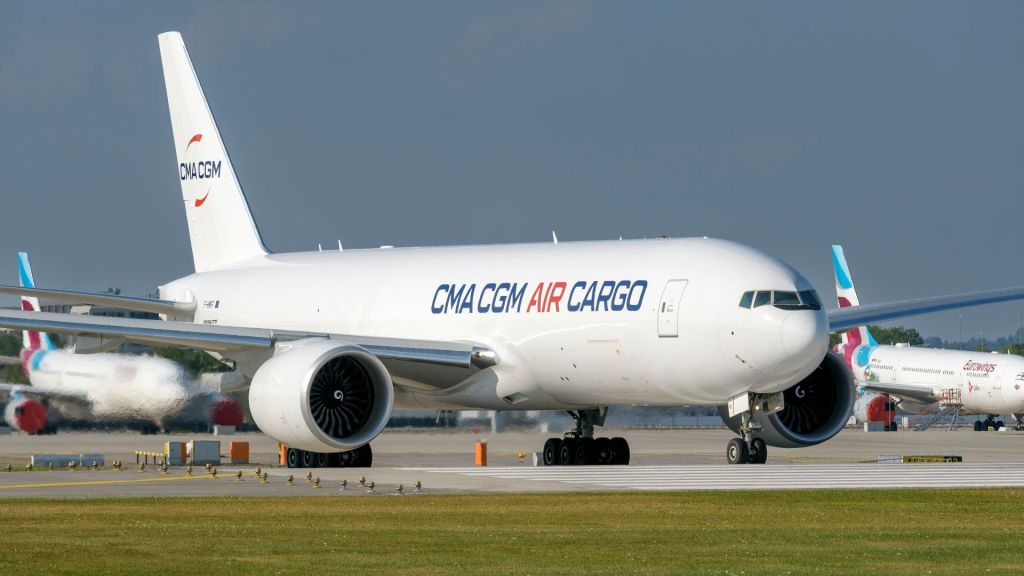
A white-hulled CMA CGM Air Cargo freighter taxis at an airport.

Ocean shipping giant CMA CGM’s startup cargo airline has hired U.S.-based Atlas Air to provide crews for the launch this year of a trans-Pacific route with new Boeing 777 freighters that were not previously disclosed. And it doubled its order for next-generation Airbus A350 freighters later this decade in its effort to develop a global network.

The airline, which was established in 2021, announced on Tuesday that it will take possession of two factory-built Boeing 777-200 cargo jets this year and one in the first quarter of 2025. It currently operates two 777s on scheduled service between Europe and Greater China but had not publicly revealed plans until now to acquire more of the large freighters.

Under its agreement with CMA CGM Air Cargo, Atlas Air will provide crews, maintenance and insurance. The Paris-based freighter airline needs Atlas Air to operate routes across the Pacific because it doesn’t have traffic rights from the United States to transport goods from another country without first stopping in its home country.

The first aircraft is scheduled for delivery in June, after which CMA CGM Air Cargo will inaugurate service between Hong Kong, Chicago and Seoul, South Korea. The freighter will be available on the popular trade lane, where capacity is still tight because of trade tensions between the U.S. and China, for the peak shipping season. The second freighter, which Boeing is expected to deliver in the fourth quarter, will connect mainland China to North America, the company said.

CMA CGM in late 2021 placed an order with Airbus for four A350 freighters but has doubled the order to eight aircraft, the company disclosed in a passing reference. Airbus’ order book, in fact, still shows four aircraft for CMA CGM. An airline spokesman confirmed the company now has firm commitments for eight of the cargo jets, which Airbus plans to begin rolling out to the market in 2026. Deliveries to CMA CGM are scheduled to continue through 2027 but could spill into 2028 because of normal adjustments producing a first-time aircraft and supply chain issues plaguing the aerospace industry.

The new aircraft represent a major investment by CMA CGM as it continues to diversify from a pure ocean carrier into an end-to-end logistics provider that can serve customers under a single brand. The company already owns Ceva Logistics, one of the largest warehousing and freight management companies in the world, and recently acquired France-based Bolloré Logistics for $5.2 billion.

CMA CGM Air Cargo’s 777s currently operate five times per week from Paris to Hong Kong and four times per week to Shanghai. The fleet also includes three Airbus A330-200 medium-widebody freighters, two of which operate under dedicated charter agreements. The third A330 provides scheduled service three times per week between Paris Charles de Gaulle Airport, Mumbai, India, and Guangzhou, China.

“Our expansion into the transpacific lane marks a turning point in the company’s history by connecting a new continent to our network and aligns with the ambition of the CMA CGM Group to offer a range of solutions to its customers,” said CEO Damien Mazaudier in a news release. “This lane opening will enable us to offer even more destinations to our customers on major routes. Today’s announcement represents a new step in the development of our business, which we aim to make global.”

Learning curve

CMA CGM Air Cargo has repeatedly shifted direction since its start.

Tuesday’s announcement follows the January dissolution of an alliance with Air France-KLM after less than a year. U.S. competition authorities made clear their opposition to the partnership operating North American routes because of how European regulators were treating U.S. carriers, but the sides were already having trouble figuring out how to coordinate operations in an uncertain market and were ready for a split.

As a newcomer to the airline industry, CMA CGM Air Cargo has struggled at times building up business. It discontinued trans-Atlantic service last spring after halting attempts to serve Chicago, Atlanta and Miami so it could focus on Asia routes. Last year, the Guangzhou service stopped in Abu Dhabi, United Arab Emirates. CMA CGM began life with four A330s that were temporarily operated by Air Belgium from Liege airport before the home base moved in 2022 to Paris.

But the airfreight market is in the midst of a strong recovery that started last fall, especially for e-commerce exports out of Asia to North America. Global air cargo volumes increased by double digits in the first quarter, which bodes well for new freighter capacity on the trans-Pacific trade lane. 

Atlas Air also provides a similar service for Mediterranean Shipping Co., but under that arrangement the four 777 freighters are owned by Atlas and provided to the startup airline through a lease that is bundled with transportation service.

CMA CGM, Air France-KLM scrap cargo alliance over US market access

Ocean carrier CMA CGM orders A350 cargo jets from Airbus

Delta Air Lines taps Peter Penseel to lead cargo division

Check Call: The hope of 2024 dashed

people gathered around a desk of computers. Check Call news and analysis for 3pls and brokers
(GIF: GIPHY)

Return to normalcy – a phrase that has been uttered repeatedly for the better part of six months. Everyone wants to know when supply chains will return to normal. 2024 was expected to be that year. A new report by the Association for Supply Chain Management and KPMG has found that despite tremendous improvements in the global supply chain community, 2024 might not be the year we return to that elusive pre-pandemic normalcy.

According to the KPMG Supply Chain Stability Index, the good thing that has happened over the past few years is that just-in-time (JIT) inventory strategies are making a tentative comeback with manufacturers, wholesalers and retailers as a balanced approach to inventory levels has returned. Meanwhile, in the labor market, the intense competition for talent is easing slightly. Lower unemployment and the growing adoption of automation are contributing to this shift.

But the index found significant challenges that are preventing 2024 from being the year that everything returns to normal. “The greatest potential disruption lies in the logistics sector, where geopolitical factors and ongoing volume fluctuations due to reshoring and nearshoring continue to be major risks. As supply chains navigate the ever-evolving path to stability in 2024, maintaining vigilance and adopting resilient strategies will be crucial for continued progress.”

To continue that move toward a more stable supply chain, it’s important to keep focusing on other areas of the sector, such as inventory optimization and the growing adoption of automation. The report detailed how companies were able to carry less inventory to meet demand in 2023, after the pandemic led to surpluses across most major industries. It also laid out the need to balance the efficiency of automation with concerns over job displacement.

2024 looks to be the end of the uneasy supply chain, and 2025 should return to normal, should the rest of the world remain stable.

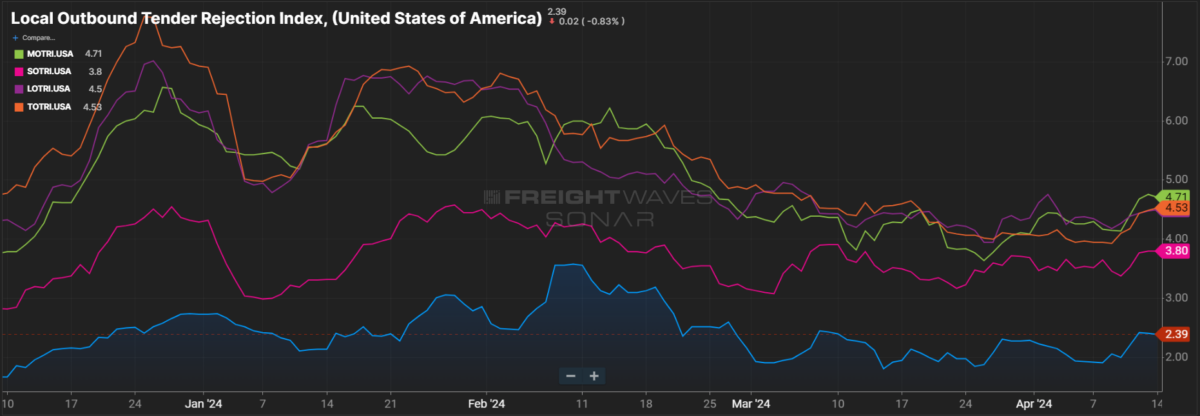
SONAR Tickers: COTRI.USA, MOTRI.USA, SOTRI.USA, LOTRI.USA, TOTRI.USA

Market Check. Outbound tender rejections reveal more than just which markets are seeing a spike in rejections that could lead to a capacity squeeze. Outbound tender rejections by length of haul are one of the key indicators of what carriers are more willing to accept. They are more indicative of the general market itself as rejection by length of haul will describe what is available and desirable. If carriers are rejecting generally desirable regional freight more frequently, it is a sign that capacity is tightening. It can also indicate the volume of freight available in each range is changing. Currently, local moves, which are loads under 250 miles, are maintaining the top spot, with midhauls of 250 to 400 miles coming in as the least desirable among carriers.

(GIF: GIPHY)

Who’s with whom? The Panama Canal is so back. More like boats are back. The Panama Canal Authority has predicted it’s the end of the canal’s dry season, which means a significant reduction to rerouting around the canal and no reducing weights for ships to make it through the canal. One could say it’s a “return to normalcy.”

The National Weather Service’s Climate Prediction Center forecasts a swift end to El Niño conditions in the coming months with 85% confidence. Good old-fashioned weather has come to be the saving grace of the canal. Without the incoming rainy season, the canal would have been center stage in the upcoming presidential election in Panama, as tricky decisions would have to be made on allowing ships to pass and ensuring drinking water gets to residents.

According to an article by FreightWaves’ Michael Rudolph, “The Panama Canal sees nearly half of all container volumes from China and East Asia pass through to the U.S. East Coast. The current drought and ensuing operational impediments have caused delays to the Port of Savannah to rise from an average of three days in May 2023 to nearly nine in late March — though the Port of Baltimore’s closure has certainly had no small impact on other East Coast ports.”

The more you know 

High schools driving students to trucking with training classes 

TCA’s Heller: Trucking has adjusted to route diversions post-Baltimore 

Borderlands Mexico: Samsara opens new office to focus on expanding cross-border trade

Scopelitis co-director: False hours-of-service log reports rise despite ELDs

Estes to open at least 20 terminals this year